
Every gardener knows the frustration of a pruner that crushes instead of slices. A ragged cut invites disease, slows recovery, and turns a quick deadheading session into a battle of raw force. The best hand pruners bypass that problem entirely—delivering clean, precise cuts that keep your plants healthy and your hands comfortable for hours.
I’m Rikta — the co-founder and writer behind Lawn Gear Lab. I’ve spent hundreds of hours comparing blade steels, handle ergonomics, and owner feedback to separate the pro-grade tools from the shelf ornaments in this narrow category.
Whether you are deadheading delicate perennials or shearing back woody shrubs, this guide dissects every pivot bolt and sap groove to help you find the best hand pruners for your specific grip, reach, and cutting load.
How To Choose The Best Hand Pruners
The right hand pruner feels like an extension of your hand. Picking one starts with understanding three core decisions: blade action, blade material, and handle fit. Get these right and you avoid torn bark, blistered palms, and tools that dull mid-season.
Bypass vs. Anvil: Know Your Cut
Bypass blades slide past each other like scissors, producing a clean shear that minimizes harm to living tissue. This makes bypass pruners the default choice for green wood, flowers, and soft growth. Anvil pruners crush the stem against a flat plate, which is better for dead wood and dried branches but can damage live stems. Some models combine both actions, giving you flexibility without switching tools.
Blade Steel and Coatings
High-carbon steel holds a razor edge longer than stainless, but requires regular oiling to resist rust. Titanium or chrome plating adds corrosion resistance without sacrificing hardness. For hobbyist use, a coated carbon blade offers the best balance. For daily professional abuse, a fully replaceable hardened steel blade wins every time.
Handle Ergonomics and Locking Mechanism
Aluminum handles save weight over steel and reduce fatigue during extended pruning. Rotating handles or cushioned grips help gardeners with arthritis or smaller hands. A thumb-operated safety lock that clicks securely—but releases without fumbling—is a non-negotiable daily-use feature. Test the grip span: a handle that is too wide forces your hand open, while too narrow cramps the palm.
Quick Comparison
On smaller screens, swipe sideways to see the full table.
| Model | Category | Best For | Key Spec | Amazon |
|---|---|---|---|---|
| Felco F2 | Premium Bypass | Professional daily use | 1-inch cut capacity, 9.25″ length | Amazon |
| Felco F 14 | Small Hands Bypass | Smaller grips & fine pruning | 7.1″ length, 18mm cut capacity | Amazon |
| Corona BP 6250 | Mid-Range Bypass | High-volume yard trimming | 1-inch cut, forged aluminum handles | Amazon |
| Haus & Garten EnduroPRO | Mid-Range Bypass | Rust resistance & ergonomics | Titanium-coated carbon steel blade | Amazon |
| ARS HP-130DX | Light Pruner | Floral snips & small hands | 2-inch carbon steel blade, 7″ length | Amazon |
| AlpineReach Pruning Shears | Bypass + Anvil Set | Budget all-purpose pruning | 2 cm cut, high-carbon steel | Amazon |
| ARS Needle Nose HP-SE45 | Narrow Nose Bypass | Dead-heading tight spots | 2-inch stainless blades, needle nose | Amazon |
In‑Depth Reviews
1. Felco F2 Pruning Shears
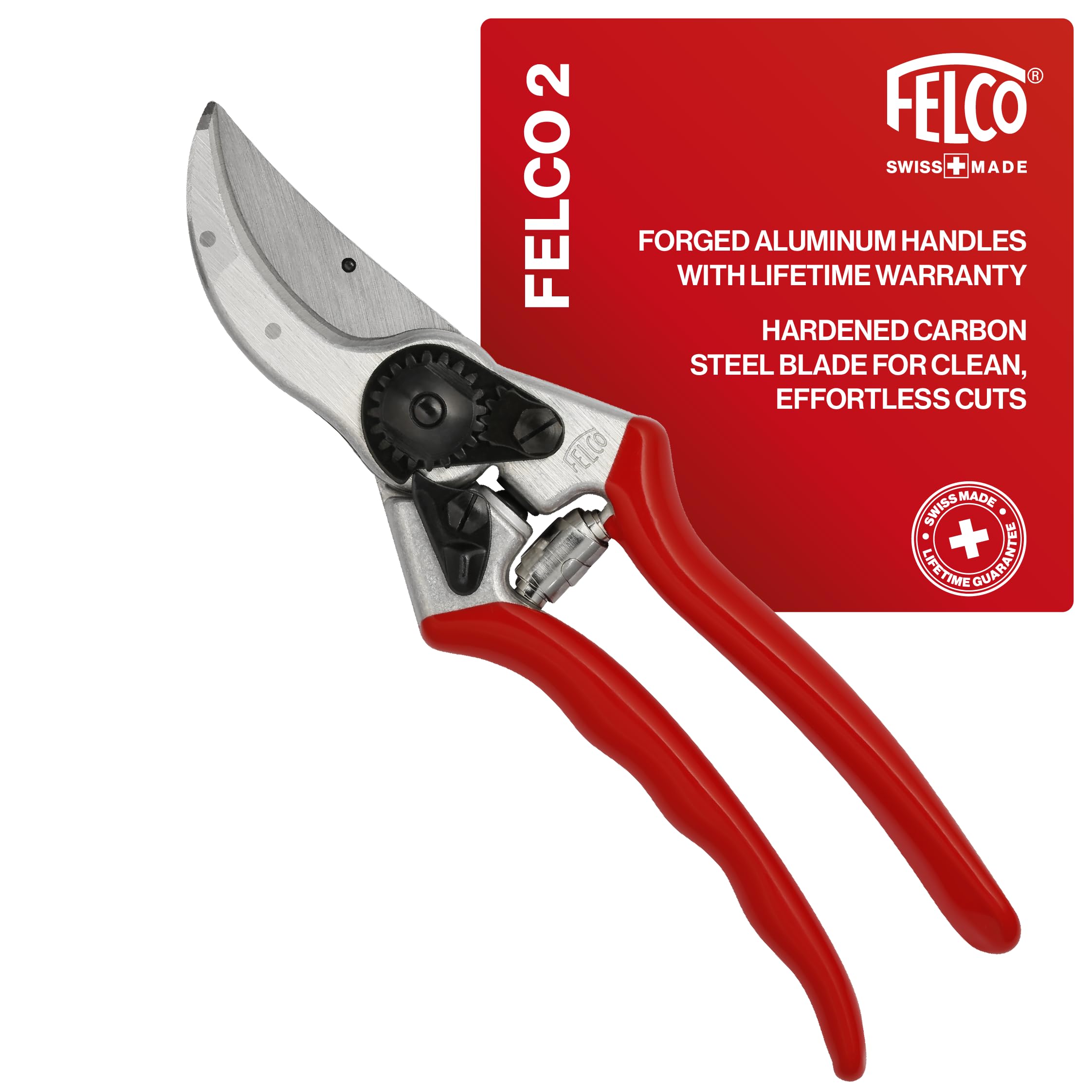
The Felco F2 has been the professional benchmark since 1948, and for good reason: the forged aluminum handles keep weight low while the hardened carbon steel bypass blade slices through wood up to a full inch thick. The pivoting head design naturally aligns your wrist, reducing strain during hours of continuous cutting. Every component—from the blade to the spring to the rubber bumper—is replaceable, which means this pruner never becomes e-waste.
Owners consistently report that the factory edge outlasts competing brands by several months before needing a touch-up. The non-slip handle coating stays planted even in wet conditions, and the angled head gives better clearance for reaching into dense shrub interiors. Professional landscapers and avid home gardeners alike consider this the gold standard.
The only real trade-off is the price point, but the total cost of ownership over a decade is lower than buying a new mid-range pruner each season.
What works
- Replaceable blade, spring, and anvil mean indefinite service life
- Forged aluminum handles stay light and resist fatigue all day
- Clean 1-inch cut capacity handles trunks without crushing
What doesn’t
- Right-hand orientation leaves lefties without the molded grip
- Initial investment feels high compared to shelf alternatives
2. Felco F 14 Pruning Shears

The Felco F 14 is purpose-built for gardeners with smaller hands or anyone who prefers a more compact tool. At 7.1 inches long, it offers a shorter lever arm that reduces the reach but increases control for fine pruning work like deadheading roses or trimming bonsai. The carbon steel alloy blade uses the same heat treatment as the F2, so edge retention is identical in a lighter package.
Owner feedback highlights the micrometric adjustment mechanism, which lets you tighten the blade pivot with a simple turn to compensate for wear before sharpening. The rubberized phalate grips provide excellent traction, though some users note that blackberry juice stains the material over time. The anvil and bypass combination gives you two cutting modes in one body.
This model works best as a secondary pruner for detail tasks or as a primary tool for gardeners with hand arthritis who need a narrower grip span. It does not have the raw leverage of the F2 for thick wood, but for stems under 18 mm it cuts with surgical precision.
What works
- Shorter frame fits hands that struggle with standard-length handles
- Micrometric adjustment bolt maintains blade alignment between sharpenings
- All parts replaceable extends usable life well beyond budget pruners
What doesn’t
- Cutting capacity is limited to 18 mm, not for thick tree branches
- Rubberized coating can stain from berry juices and dark sap
3. Corona Tools BP 6250 MAXFORGED Aluminum Bypass Pruner
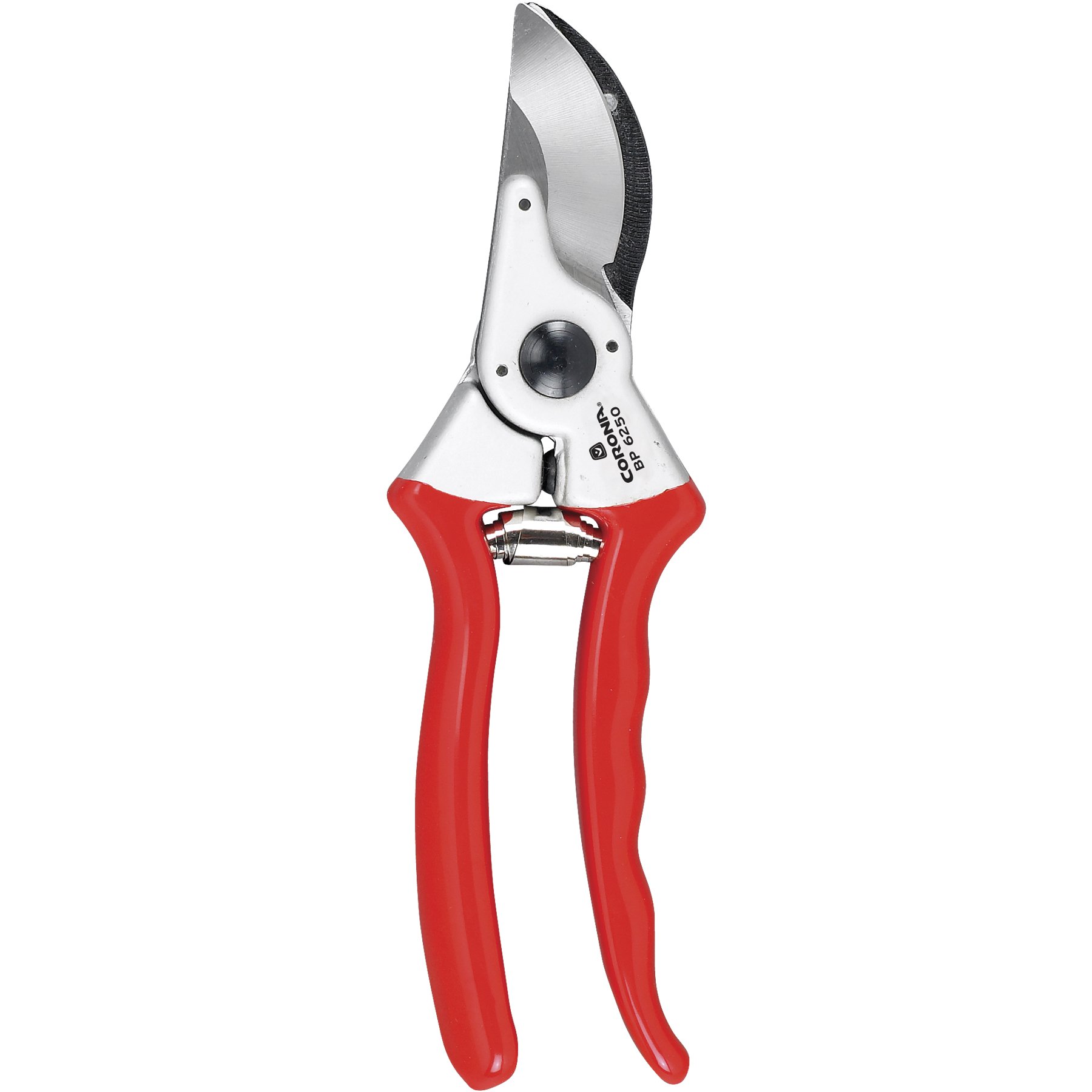
The Corona BP 6250 delivers Felco-level cutting performance at roughly half the investment. Its precision-honed forged steel blade shears through woody stems up to a full inch thick without requiring excessive hand pressure. The slant-ground narrow-profile hook and built-in sap groove prevent gumming, so cuts stay clean even when working on sticky conifers or fruit trees.
Owners with arthritis report being able to trim for four hours without hand fatigue, thanks to the contoured non-slip red grips and lightweight forged aluminum handles. The wire-cutting notch is a welcome addition for trellis maintenance, and the shock-absorbing bumper reduces jarring at the end of each cut. The thumb-operated safety lock is intuitive and does not slow down workflow.
The carbon steel blade requires cleaning and oiling to prevent rust, especially in humid climates. Several users recommend pairing it with a leather scabbard and a non-acidic lubricant to keep the pivot smooth. For part-time use, this pruner outperforms most options on the shelf by a wide margin.
What works
- Forged aluminum handles significantly cut down arm fatigue during long trimming sessions
- Self-cleaning sap groove keeps blades moving freely through sticky cuts
- Wire-cutting notch adds utility beyond just plant material
What doesn’t
- Blade rusts quickly if not wiped and oiled after each use
- Opening instructions are minimal; first-time users may need to watch setup videos
4. Haus & Garten EnduroPRO Ergonomic Bypass Pruners
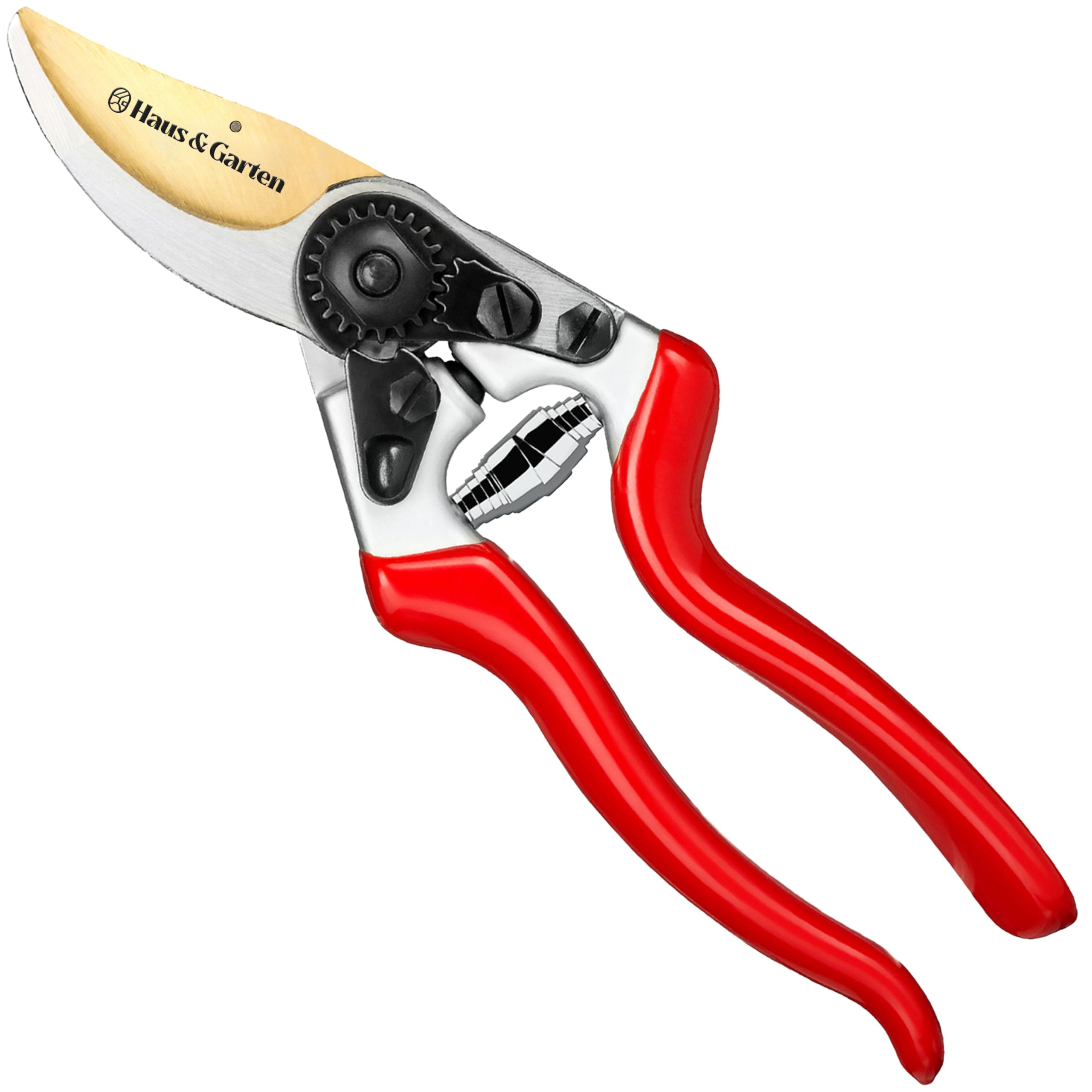
The Haus & Garten EnduroPRO stands out for its titanium-coated blade, which reduces friction and resists rust better than plain carbon steel. The Japanese-grade high-carbon steel core is heat-treated to hold a keen edge through multiple seasons of regular pruning. The heavy-duty anodized aluminum body and drop-forged handles feel solid in hand without weighing you down at 8.6 ounces total.
User reviews consistently praise the ergonomic handle alignment, which keeps the wrist in a neutral position and reduces strain on the carpal tunnel. The anti-slip soft grips provide a secure hold even when pruning in damp morning dew. The proprietary blade design uses a convex edge that glides through branches rather than crushing them.
Some users with larger hands wish the handle loop had a bit more interior clearance for gloved fingers. The pivot bolt can loosen over time and requires occasional re-tightening. For gardeners who prioritize corrosion resistance and a comfortable grip for moderate-duty pruning, this is a strong mid-range contender.
What works
- Titanium coating provides noticeable rust resistance in humid environments
- Ergonomic wrist alignment reduces fatigue compared to straight-handle pruners
- Heat-treated Japanese steel blade keeps an edge longer than budget alternatives
What doesn’t
- Handle loop is slightly tight for users wearing thick garden gloves
- Pivot bolt may need periodic tightening to maintain consistent blade gap
5. ARS HP-130DX 7-Inch Ideal Light Pruner

The ARS HP-130DX is a purpose-designed pocket secateur that excels at precision work in the flower garden. Its hard chrome-plated high-carbon steel blade measures 2 inches and uses a single-bevel grind for ultra-clean cuts on soft stems and light perennials. The soft PVC handles are explicitly shaped to fit smaller hands, making this a favorite among florists and gardeners with petite grips.
After three years of cutting wedding flowers and garden blooms, users report the blade remains sharp without any rusting, thanks to the chrome plating. The simple lock mechanism clicks securely for pocket carry but does not interfere with the cutting rhythm during use. At just 7 inches long, it tucks into an apron pocket easily.
The primary limit is branch size: this pruner struggles with anything thicker than a half-inch. Attempting to cut woody stems near that diameter can cause the thin handles to flex. For deadheading, harvesting vegetables, and floral arranging, few tools match this ARS for price-per-cut satisfaction.
What works
- Chrome-plated blade resists rust far better than bare carbon steel
- Compact 7-inch length and soft PVC grip fit small hands perfectly
- Stays razor-sharp for months of daily use on soft-stemmed plants
What doesn’t
- Handle leverage is insufficient for branches over 0.5 inches thick
- Right-hand bias limits the ergonomic fit for left-handed users
6. AlpineReach Pruning Shears Set Bypass and Anvil
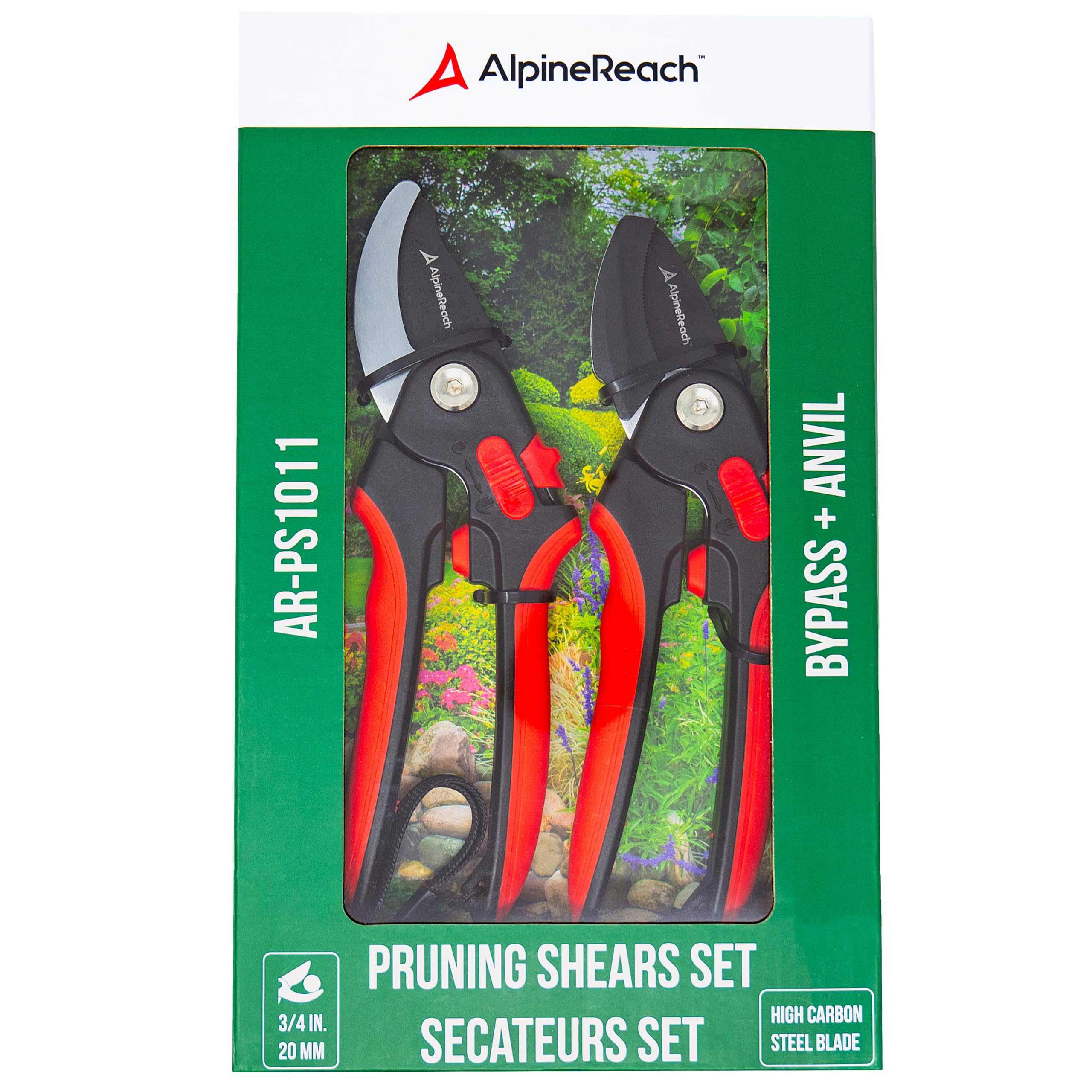
The AlpineReach set delivers two cutting modes in one tool: a bypass action for clean live-wood cuts and an anvil action for snapping through dead branches. The high-carbon steel blade with a convex edge maintains decent sharpness out of the box, and the teethed lower jaw helps grip slippery stems during the cut. The handle width adjusts via a simple latch mechanism to accommodate both small and large hands.
User reviews highlight the comfortable rubber grips and the well-placed thumb lock that is equally accessible for left- and right-handed use. The locking mechanism engages naturally without requiring you to shift your grip. For the price, the set includes everything a weekend gardener needs for general trimming tasks.
The main drawback is the anvil plate’s groove, which tends to clog with fibrous material and needs periodic cleaning. The internal spring is easier to maintain than external springs, but the overall build quality does not match the forged aluminum feel of premium competitors. It is a capable all-rounder for light to moderate yard work.
What works
- Adjustable handle width suits both small and large hand sizes
- Combined bypass and anvil functionality covers green and dead wood
- Ambidextrous thumb lock engages smoothly for both hands
What doesn’t
- Anvil cutting plate groove clogs with fiber and needs frequent cleaning
- Overall build quality feels less durable than forged aluminum alternatives
7. ARS Needle Nose Pruner HP-SE45

The ARS HP-SE45 is the specialist you reach for when standard pruner heads are too bulky. Its needle-nose profile and 2-inch stainless steel blades slide deep into tight plant intersections, making it the ultimate tool for deadheading small flowers and snipping suckers off tomato plants. The blade locks closed for safe pocket carry, and the ergonomic hand grips reduce fatigue despite the narrow body.
Owner reviews are emphatic: this pruner is the best tool they have used for fine detail work. The stainless steel construction eliminates rust concerns entirely, a major advantage for gardeners in wet climates who have lost carbon steel blades to corrosion. The streamlined reach makes it easy to precisely cut individual stems without damaging neighboring growth.
This is not a tool for heavy branches. The needle nose design limits leverage, and the cutting width maxes out around 1.81 inches. For its intended role—deadheading, herb harvesting, and precision trimming—it outperforms every other pruner in the lineup. Many users buy multiples as gifts after experiencing the cut quality firsthand.
What works
- Streamlined needle nose reaches into crown centers that standard heads cannot
- Stainless steel blade eliminates rust maintenance entirely
- Ultra-lightweight design at 0.09 kg reduces hand fatigue during repetitive snips
What doesn’t
- Cutting leverage is poor on any branch over a half-inch thick
- Narrow grip may feel unstable for users with larger hands
Hardware & Specs Guide
Cutting Capacity and Leverage
The maximum branch diameter a pruner can cleanly cut is determined by blade length, pivot position, and handle leverage. A 1-inch capacity (25 mm) is sufficient for most shrub and tree pruning, while tools with 18 mm or smaller capacities are better suited for flowers and soft growth. Longer handles provide more mechanical advantage but reduce control in tight spaces.
Blade Steel and Heat Treatment
High-carbon steel (typically 64-68 HRC) holds the sharpest edge but requires oiling to prevent rust. Titanium or chrome plating adds corrosion resistance without compromising hardness. Stainless steel blades are virtually maintenance-free but cannot match the edge retention of hardened carbon steel. Replaceable blades extend the tool’s lifespan beyond sharpening limits.
FAQ
Which blade type is better for live plants: bypass or anvil?
How often should I sharpen my hand pruners?
Final Thoughts: The Verdict
For most gardeners, the best hand pruners winner is the Felco F2 because it combines a replaceable hardened steel blade, lightweight forged aluminum body, and a proven ergonomic geometry that stands up to daily professional use. If you want a tool tailored for smaller hands and fine detail work, grab the Felco F 14. And for precision dead-heading in dense flower beds, nothing beats the ARS Needle Nose HP-SE45.