
Specs are compiled from manufacturer listings and verified buyer reviews and can change over time — please confirm the key details on the product page before buying.
If you have ever spent a Saturday yanking dandelions only to see them bounce back the same week, the problem is likely not your effort — it is your tool. A hand fork for weeding is the precision instrument that works the root, not the top, so you dig once and be done. The best ones slip into tight corners between perennials, leverage deep taproots out of packed clay, and save your wrists from the twisting that a dull trowel demands.
I’m Rikta — the founder and writer behind Lawn Gear Lab. This guide is built by comparing the manufacturers’ published specifications and the patterns across verified customer reviews, so you get each pick’s real strengths and trade-offs instead of marketing spin.
Whether you maintain a few raised beds or wage war on a whole lawn, you need a hand fork for weeding that fits your soil, your grip, and the type of weeds you fight every season.
Our Picks at a Glance


How To Choose The Best Hand Fork For Weeding
A hand fork is a simple tool — three tines on a handle — but the materials and build quality separate tools that last a single season from those that still look sharp after years in the dirt. Here is what to check before you click buy.
Steel type: stainless vs carbon
Stainless steel resists rust from wet soil and acidic compost, so it stays clean with just a rinse. Carbon steel can be stronger and hold a sharper edge, but it needs an epoxy or powder coating to stop corrosion. If you garden in damp conditions or store tools outdoors, stainless saves you maintenance. If you want a razor-like cutting edge for slicing through roots, coated carbon steel is your choice.
Handle material and ergonomics
Wood handles (ash, beech, or hardwood) absorb vibration naturally and feel warm in the hand, but they can crack if left in the rain. Rubber or soft-grip sleeves add cushion for long sessions and are nearly indestructible. The handle length also matters — a longer shaft gives more leverage for prying up deep roots, while a shorter one gives you control in tight planting beds.
Head-to-handle connection
The weakest point on nearly every broken fork is where the steel shaft meets the handle. A full tang (the metal runs all the way through the handle) or a deep socket weld resists the twisting motion that snaps cheap glued joints. Look for a visible metal collar or a rivet pin at the connection point as a sign of real durability.
Quick Comparison
| Model | Best For | Steel Type | Handle Material | Weight | Amazon |
|---|---|---|---|---|---|
| Spear & Jackson 5110WF★ Best Overall | Weeding without bending your back | Stainless steel | Comfort grip | 9.3 oz | Amazon |
| Spear & Jackson 2053NSTop Performer | Two-handed leverage jobs | Epoxy-coated carbon steel | Rubber soft-grip | 8.1 oz | Amazon |
| Berry&Bird Hand ForkPremium Pick | Quality feel and long-term use | Stainless steel | FSC ash wood | 9.6 oz | Amazon |
| Nisaku NJP100 | Slicing roots in tight spaces | Japanese stainless steel | Lacquered beech wood | 5 oz | Amazon |
| Garden Guru Hand Weeder Fork | Eco-friendly daily weeding | Rust-resistant stainless | Ergonomic grip | 8.1 oz | Amazon |
| Haliaeetus Garden Hand Fork | Heavy clay and rocky soil | Thick stainless steel | Ergonomic wood | 9.1 oz | Amazon |
| Garden Guru Dandelion Weeder | Young dandelion removal | Recycled stainless steel | FSC certified wood | 5.9 oz | Amazon |
| DeWit Small Garden Fork | Heirloom-level hand tool durability | Tempered boron steel | FSC ash hardwood | — | Amazon |
In‑Depth Reviews
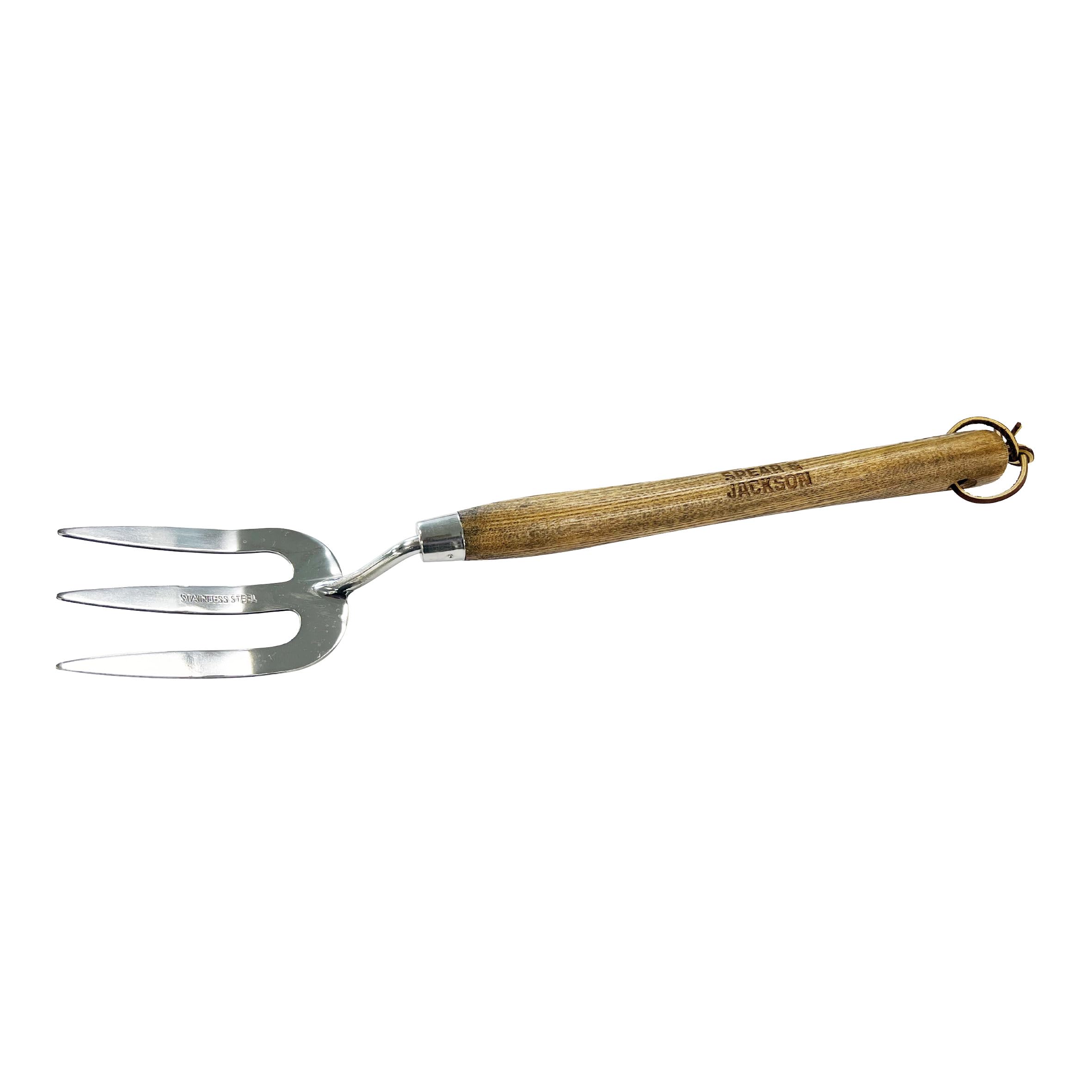
1. Spear & Jackson Stainless Steel Hand Weed Fork
Our pick — over 4.5★ from 950+ verified ratings; the strongest balance of quality and price.
The long-handle design that spares your back while staying precise between plants.
This Spear & Jackson fork delivers a serious reach — at 18.11 inches, so you work standing upright instead of hunched over. The three stainless steel prongs penetrate soil cleanly without corroding, and the 9.3-ounce weight feels solid enough to pry out deep taproots without you having to apply all your body weight. Buyers report it is “perfect for weeding around plants and in between shrubs,” which speaks to the slim profile that slips into crowded beds.
The crowd gives it a strong rating across close to a thousand owners, making it the most popular long-reach fork in this lineup. The rubber soft-grip handle cushions your palm during long weeding sessions., and the stainless build means you can rinse it and hang it wet without rust spots forming overnight.
That said, the handle has drawn attention for a different reason — on rare occasions the shaft has snapped during the first use. As buyers put it: “Handle broke on second light use by 71-year-old.” It is not a widespread failure, but anyone working heavy soil should check the handle joint before leaning in hard. The good news is the same owner noted a simple replacement handle made it work perfectly again.
Upright ergonomic design
- Long shaft (18.11 inches) lets you weed standing up, not crouching
- Stainless steel head resists rust and soil adhesion after every wash
- Wide reach between shrubs and established plants without disturbing roots
Heavy for short forks
- A few owners mention the handle-to-head joint can snap under sudden torque
- Weight of 9.3 ounces, so not your tiniest pocket tool
Best for standing weeding: If your garden involves bending over for hours, the extra length spares your lower back while still giving you precise control in flower beds and along borders.
Not for kneeling use: You need a pocket-sized tool for short sessions on your knees in a small raised bed — a compact fork moves faster for that job.
2. Spear & Jackson 2053NS Select Carbon Steel Weed Fork
A two-handed carbon steel fork that cuts through roots like a knife.
This is the pick for the gardener who needs real cutting power. Instead of stainless, Spear & Jackson uses a fabricated carbon steel head that is heat-treated for strength, then epoxy-coated to resist rust, scratches, humidity, and the alkaline compounds in soil. The short, squat head gives you leverage without the extra length, and the rubber soft-grip handle lets you apply two-handed downward pressure without your palms slipping. Buyers consistently say it is “strong, easy to hold and use” — the kind of tool you reach for when a dandelion has been growing for two years and refuses to budge.
The rubber handle makes a real difference in wet conditions or when your hands are tired. The 4.6-star rating across hundreds of reviews confirms its reliable build., and the epoxy coating means you do not have to baby this fork after use. It is a true workhorse that owners feel confident recommending.
The trade-off is that the carbon steel, even coated, is more vulnerable to rust than stainless if you chip the coating or leave it in damp soil for days. A quick rinse and dry keeps it pristine. And at an 8.1-ounce weight with a shorter shaft, it is not the tool for standing upright — you will be kneeling or bending to use it.
Tough root puller: If your soil is packed clay and you fight perennial weeds with thick taproots, the carbon steel edge and two-handed rubber grip give you the leverage you cannot get from a lighter fork.
Needs oiling: You want a long-reach tool for standing weeding, or you prefer stainless steel that you can abuse and never worry about corrosion.
3. Berry&Bird Gardening Hand Fork, Stainless Steel
A traditional ash-wood fork that feels better the longer you own it.
Where the long-reach Spear & Jackson saves your back, this Berry&Bird fork saves your hands and your sense of craft. The handle is FSC-certified ash wood from a government-controlled forest — wood that actually gets smoother with use as natural oils from your hands condition the grain. The 9.6-ounce weight sounds like a downside until you use it to break up compacted clay; the mass does the work for you. What wins people over: buyers call out quality and durability as the two most-discussed strengths, with one owner stating plainly “Mine a year and half now.”
The fork excels in flower beds and borders where you need precision around bulbs and tubers, and the ergonomic ash handle reduces fatigue during extended sessions. It is also a genuinely beautiful tool — one that makes you want to go outside and put it to work.
The catch is the weight. At 9.6 ounces it is noticeably heavier than the compact Nisaku (5 ounces) or the Garden Guru (5.9 ounces), so it is less ideal for quick spot-weeding where you want something light in a pocket or apron.
Durable stainless build
- FSC-certified ash wood handle gets smoother with age and use
- Stainless steel tines resist bending under heavy clay soil pressure
- Extra weight (9.6 oz) helps drive the fork into hard ground without extra effort from you
Heavy for its size
- Weighty, so it is not a grab-and-go pocket tool
- Wood handle needs indoor storage to avoid weather cracking over years
Enthusiast’s choice: If you treat tools as heirlooms and want a stainless fork that looks beautiful, gets better with age, and handles heavy soil without complaint, this is your daily driver.
Too weighty for quick jobs: You need a lightweight, throw-it-in-the-bucket weeder for five-minute sessions, or you store your tools in a damp shed where wood handles degrade.
4. Nisaku NJP100 Nejiri Gama Handheld Weeder-Scraper-Hoe

A Japanese draw-hoe that slices roots instead of pulling them.
This is not technically a fork — it is a hand weeder with a narrow angled blade designed for a chopping or raking motion. That distinction matters because it changes how you work. Instead of jabbing tines under a weed, you slide the 4-inch stainless steel blade flat under the surface and sever the root in one clean motion. Customers note it is surprisingly light at just 5 ounces, yet the Japanese stainless steel stays razor sharp and easily reached roots without dulling.
The blade is rust-proof and scratch resistant, made by Japanese artisans, and the 4.5-inch black lacquered beech wood handle resists moisture. The angled head lets you work under low-growing plants and around pavers, which is where a standard fork struggles. Quality is by far the most-cited attribute, followed closely by functionality and sharpness, with owners calling it “the best weeding tool I’ve ever had.”
Because this is a draw-hoe, not a digging fork, it is less effective for loosening and aerating soil in a wide area. If your main goal is to cultivate beds rather than slice individual weeds, a traditional fork is better suited to the job.
Scalpel for weeds: Work in tight beds where you need to slip between established plants, or along patio pavers and walkways, and this sharp angled blade makes fast work of individual weeds.
Not for broad soil: You want a cultivator for breaking up large patches of soil or aerating around roots — this tool is built for cutting, not for digging and turning.
5. Garden Guru Stainless Steel Hand Weeder Fork Tool

An ergonomic fork that one owner has called their favorite tool in 25 years of gardening.
The Garden Guru fork earns its value reputation through a comfortable ergonomic grip that reviewers point out alleviates palm and finger pressure during long sessions. The stainless steel tines are rust-resistant and sturdy, making this a solid choice for weeding, loosening soil, and spreading mulch in flower beds. One long-time gardener described it as the “best hand fork owned in 25 years,” praising the comfortable grip and high-quality steel that remained durable after two seasons of regular use and occasional outdoor exposure. The wider tine spread makes it particularly effective for wild violets and similar mat-forming weeds.
The tool comes with a lifetime warranty and a 90-day no-questions-asked satisfaction guarantee, which lowers the risk of trying a new brand. It is also certified carbon neutral and made from recycled materials where possible, so the eco-credentials are real. The large hang hole makes storage easy, and the 8.1-ounce weight feels well-balanced.
The durability of the tines has drawn mixed feedback — while many owners find them strong, a few report that the tines bent during use in particularly tough soil. The tines are also slightly shorter than some competing forks, though most buyers found this a negligible issue for everyday weeding.
Daily companion: If you want a comfortable, well-priced fork that handles 90% of your weeding tasks and comes with a lifetime safety net, this is the one to grab.
Weak for tough roots: You regularly work in rocky, hard-packed soil and need the absolute thickest tines — the occasional bending reports suggest a heavier-duty option might suit your conditions better.
6. Haliaeetus Garden Hand Fork, 12.3-Inch
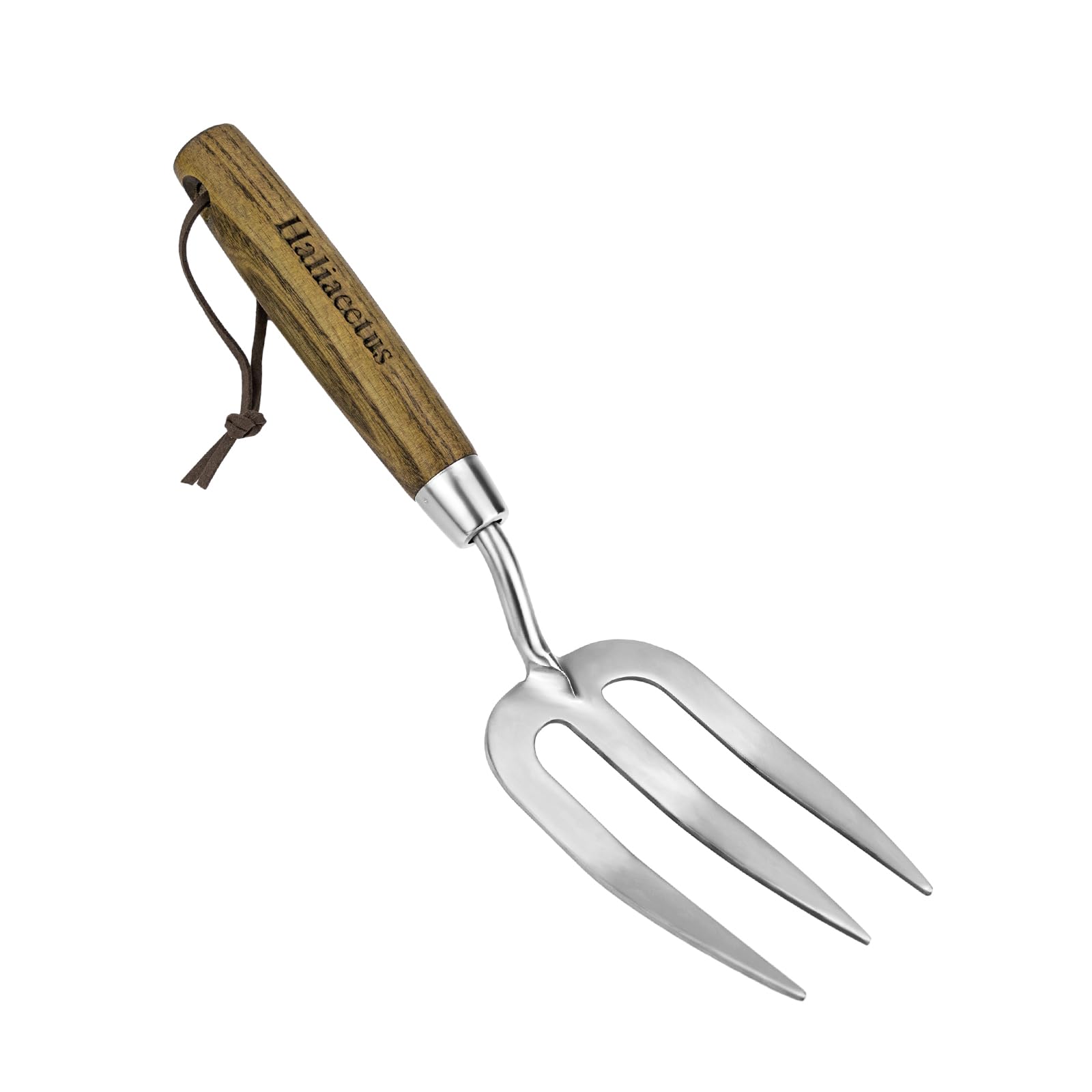
A fork that stands up to nut grass in rocky soil without bending.
The Haliaeetus fork is built around thicker stainless steel tines and a smooth welding technique designed to refuse breakage under heavy pressure. This is the tool you reach for when the soil is dry, packed, and full of surprises like buried rocks and old roots. The 9.1-ounce weight helps drive the three prongs deep, and the ergonomic wooden handle absorbs shock so your wrist does not ache after an hour of prying. One owner called it “the best thing I found to remove nut grass and weeds” — a tough weed that normally requires a dedicated specialty tool.
Buyers consistently flag functionality and durability as the two most-mentioned strengths, with the 12.3-inch length providing good leverage for a compact form. It is designed to work best in moist soil after a rain, which is when even deep-rooted perennials surrender. The lifetime warranty backs up the build quality.
There are very few complaints in the reviews, which makes sense given the 4.8 rating. The main consideration is that this fork is built for tough work, so it feels burlier in the hand than lighter weeding tools. For quick spot-weeding of small seedling weeds, it is more tool than you need.
Hard ground hero: If your garden is clay-heavy, rocky, or you battle tenacious weeds like nut grass, the thick tines and smooth weld make this fork the strongest option in this guide.
Overkill for pots: Light weeding in loose, well-maintained beds where a lighter fork moves faster and tires your hand less.
7. Garden Guru Eco Dandelion Weeder Tool

A two-prong weeder built from recycled steel that targets dandelions without digging wide holes.
This is not a traditional three-tine fork — it is a two-pronged weeder designed to grab the root of a dandelion or thistle while leaving surrounding soil intact. The 100% recycled stainless steel body is rust-resistant and lightweight at just 5.9 ounces, and the FSC certified wood handle gives it a natural feel. Buyers describe it as a “quality weed:dandelion picker” and report that it “proved very durable” after five days of digging dandelions. The clever leverage design lets you pry against the ground to lift stubborn roots without needing to kneel and wrestle.
The eco-credentials here are genuine: the steel is recycled, the wood is certified sustainable, and the company offsets all emissions from manufacturing to end-of-life. It also comes with a lifetime warranty and a 90-day satisfaction guarantee. The length is 12 inches, which makes it easy to store on a pegboard hook.
The mixed feedback on ease of use is note — while many find it effective, some struggle to push the two prongs into dry, compact soil. It works best when the ground is moist, and older, extra-long taproot dandelions may need a follow-up pass. It is not a cultivator, so if you need to aerate soil or prepare beds, a three-tine fork serves a different purpose entirely.
Dandelion destroyer: If your weeding is predominantly dandelions and thistles in a lawn, this two-prong tool extracts them cleanly without leaving craters in your grass.
Not general-purpose: This will not replace a three-tine fork for cultivating, aerating raised beds, or working around bulbs and delicate plants.
8. DeWit Small Garden Fork – Compact & Durable Cultivator

A handcrafted Dutch fork using tempered boron steel that owners call a treasured tool.
DeWit is the brand serious gardeners splurge on once and never replace. This small garden fork is handcrafted in Holland from tempered boron steel — an alloy that stays sharper and stronger than standard stainless steel. The FSC-certified ash hardwood handle is designed for ergonomic comfort, and the fork is small and light enough that it is often recommended for gardeners with smaller hands. Buyers describe it as a “treasured tool” that “feels great in the hand” and “easily digs under roots to pull up weeds.” One owner noted it held up beautifully even in hard black clay soil, the kind of ground that bends lesser forks within weeks.
The durability of the boron steel is the headline here. The head resists bending and breaking, and the lifetime guarantee means you buy this fork once. Owners call it “top quality” and note it is “worth the price” — the kind of tool you pass down rather than replace.
The honest size note: this fork runs big in the hand. One owner explicitly warned “they run very big, so watch what you buy. I have a small hand and these are very heavy.” The weight and grip circumference can be a genuine problem for smaller-handed gardeners, so if you have petite hands or arthritis, you should handle one before committing. It is also the most expensive fork in this guide, though the lifetime warranty softens the upfront cost.
Forever fork: If you want a tool built by European artisans from boron steel, backed by a lifetime warranty, and you are willing to invest in one fork that will never need replacing, this is your pick.
Too big for small hands: The handle runs large and feels heavy to gardeners with petite grips or reduced hand strength — test the feel before committing.
Understanding the Specs
Stainless steel vs carbon steel
Stainless steel resists rust and corrosion from moist soil and acidic compost, making it ideal for everyday use and easy maintenance. Carbon steel is harder and can hold a sharper edge, but it needs a protective coating (like epoxy) to prevent rust. If you store tools indoors and value a razor edge, go with coated carbon. If you prefer rinse-and-hang convenience, pick stainless.
Handle length and ergonomics
A longer handle (above 12 inches) gives you leverage to pry deep roots without bending over, which spares your lower back during long sessions. A shorter handle (under 11 inches) offers precise control in tight beds and is easier to store, but you will be kneeling or crouching. Rubber or soft-grip handles cushion your palm, while wood handles absorb vibration and feel warmer in the hand but require dry storage to last.
Tine count: two vs three
Three-tine forks are the standard for general weeding, cultivating, and aerating because they grab more soil and roots with each pass. Two-tine weeders are specialists for dandelions and thistles — they slip into the ground with less disturbance and grab the central taproot, making them ideal for lawn use where you want to avoid leaving holes.
Weight and leverage
Heavier forks (above 9 ounces) drive into hard soil with less effort from your arms, but they tire your wrist faster during repetitive work. Lighter forks (under 6 ounces) are easy to maneuver for quick spot-weeding but struggle in compacted clay. The right weight depends on your soil type and how long you usually weed in one session.
FAQ
Will a hand fork for weeding damage the roots of nearby flowers and shrubs?
Can I use a hand fork in dry, hard-packed soil?
How do I clean and store a hand fork to make it last?
Is a two-tine weeder better than a three-tine fork?
What is the difference between stainless steel and carbon steel in a garden fork?
How long should a good hand fork last?
What does a lifetime warranty on a hand fork actually cover?
Do I need a long handle or a short handle on a weeding fork?
Can I use a hand fork to transplant seedlings?
Final Thoughts: The Verdict
For most people, the hand fork for weeding winner is the Spear & Jackson Stainless Steel Hand Weed Fork because it combines an 18-inch reach that saves your back with stainless steel tines that resist rust across close to a thousand ratings. If you want a compact daily fork with design that gets smoother with age, grab the Berry&Bird Gardening Hand Fork. And for slicing through individual weeds in tight spaces without bending over, the Nisaku NJP100 Nejiri Gama is the one to reach for.
How We Picked
We do not accept paid placement. Every pick is matched to a real buyer and a real use-case; we do not hands-on test units.
Sources & Methodology
Specifications: manufacturer listings and product documentation. Review insights: verified customer reviews, as of July 2026. Pricing: not shown on this page (it changes often); check the current price via the retailer link.
As an Amazon Associate, Lawn Gear Lab earns from qualifying purchases. This does not affect which products we feature.