
Specs are compiled from manufacturer listings and verified buyer reviews and can change over time — please confirm the key details on the product page before buying.
You slice off a weed at the surface, but three days later, it is back — thicker than before. A hand forged garden hoe fixes that by cutting roots cleanly below the soil line, so you are not replaying the same fight. After reading the specs and what owners actually say, one Dutch-made tool stands out for both precision and how long it lasts.
I’m Rikta — the founder and writer behind Lawn Gear Lab. This guide is built by comparing the manufacturers’ published specifications and the patterns across verified customer reviews, so you get each pick’s real strengths and trade-offs instead of marketing spin.
Tight raised beds, a big vegetable patch, or rocky clay soil — the right hand forged garden hoe makes the difference between a chore you enjoy and a tool that rusts in the shed.
Our Picks at a Glance
How To Choose The Best Hand Forged Garden Hoe
You pick the best hand forged garden hoe by matching blade shape and handle length to your garden type and your body. A heavy, long-handled hoe that clears a field will feel clumsy in a raised bed. A delicate hand hoe will frustrate you in heavy clay. Here are the three specs to get right.
Blade Steel and Forging Quality
Look for “hand forged” in the product description, not just “forged steel.” Hand forging means a blacksmith heated the steel over 800°C (about 1472°F) and hammered it into shape. That aligns the grain structure for a tougher, sharper edge that you can re-sharpen for decades. Cheaper stamped blades are cut from sheet metal and will dull quickly and bend under heavy roots.
Handle Length and Your Back
A standard full-size hoe has a handle around 60 inches — this lets you stand upright while working, saving your lower back from bending. A hand hoe or border hoe is shorter (around 14 to 18 inches total length) and is meant for kneeling or sitting work in tight spaces. If you have back issues or cover a lot of ground, go longer. If you tend small beds, a short handle gives you more control.
Blade Shape and Action
A traditional flat hoe chops into the soil with a downward swing. A Dutch or diamond hoe uses a push-pull motion just under the surface to sever weed roots without disturbing the soil structure too much. A cultivator hoe has tines or teeth for breaking up clods and raking. Pick the action that matches your main task: weeding, digging, or soil prep.
Quick Comparison
| Model | Best For | Steel Type | Handle Length | Weight | Amazon |
|---|---|---|---|---|---|
| Dewit Dutch Hand Hoe★ Best Overall | Precision weeding in beds | Boron Steel | 18″ | 10.4 oz | Amazon |
| Original Homi Hand HoeBest Value | Versatile digging & planting | Alloy Steel | 13.5″ | 1.23 lbs | Amazon |
| KAKURI Hoe Cultivator Combo | Digging & cultivating | Carbon Steel | 14.75″ | 21 oz | Amazon |
| Truper TruPro 6-Inch Hoe | Tall gardeners, large areas | High-Carbon Steel | 60″ | 2.49 lbs | Amazon |
| Truper Tru Pro Ash Handle | Heavy-duty & mixing | High-Carbon Steel | 60″ | 2.7 lbs | Amazon |
| Dewit Diamond Hoe P-Grip | Stand-up weeding large plots | Forged Steel | 74″ | 3.5 lbs | Amazon |
In‑Depth Reviews
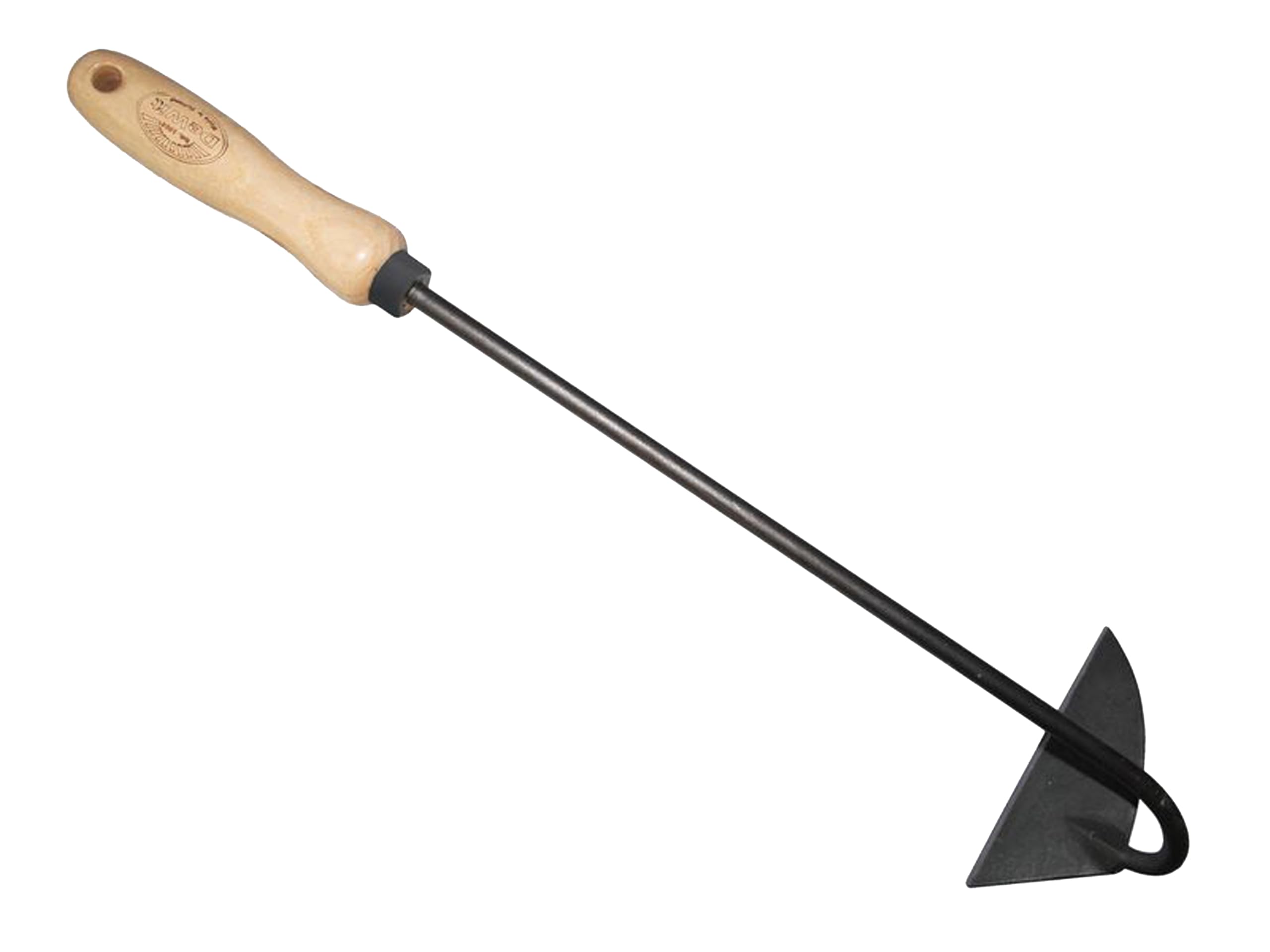
1. Dewit Dutch Hand Hoe – Right Hand | 18″ Total Length Hand-Forged Boron Steel Garden Hoe with Ash Hardwood Handle
Our pick — over 4.5★ from 150+ verified ratings; the strongest balance of quality and price.
An 18-inch precision scalpel for weeds that earned a 4.7-star average from 183 ratings.
You slice weeds just below the soil surface instead of hacking at them, and this Dewit does it with a razor edge that holds for seasons. The blade is hand-forged boron steel — a harder, tougher alloy than standard carbon steel — so it stays sharp. One owner reports theirs “lasted 20+ years with frequent sharpening.” The offset crescent blade works with a push-pull motion, so you are not swinging. At 10.4 ounces, it is remarkably light — at 10.4 ounces versus the KAKURI’s 21 ounces — which means you can flick away seedling weeds all afternoon without your wrist tiring. The handle is FSC-certified European ash wood, shaped for right-hand use, and backed by a lifetime guarantee from the Dutch maker DeWit. Quality is what owners praise most by a wide margin — 42 reviewers single it out — and the second most-discussed topic is effectiveness, with 27 owners calling it the best weeding tool they own.
The honest trade-off: some buyers report the wooden handle can loosen or split if left in the rain, and one noted the tip can chip on hidden rocks. This is a precision weeding tool for soft, maintained beds — not a pickaxe for rocky clay. If you need a heavy-duty chopping hoe for breaking new ground, the heavier KAKURI or Truper picks below will serve you better.
One last thing: the Budget Pick above has more reviews (963 to this one’s 183), but this Dewit holds a noticeably higher score at 4.7 stars versus 4.2. If you want the one tool that will likely outlast your garden gloves, reach for this.
Why it wins
- Boron steel blade — harder than standard carbon steel, easy to resharpen.
- Featherlight at 10.4 oz — the lightest tool in this roundup by a wide margin.
- Backed by a lifetime guarantee; one owner reports 20+ years of use.
Who should pass
- Not ideal for rocky or heavily compacted soil — tip can chip on hard objects.
- Wood handle needs to be kept dry to prevent splitting.
- Right-hand design only; lefties will need a different model.
Your best bet if: You maintain established beds and want the lightest, sharpest, most precise weeding tool money can buy — one that will last a generation.
Look elsewhere if: You need a full-size, heavy-duty chopping tool for breaking sod, tilling, or mixing concrete.
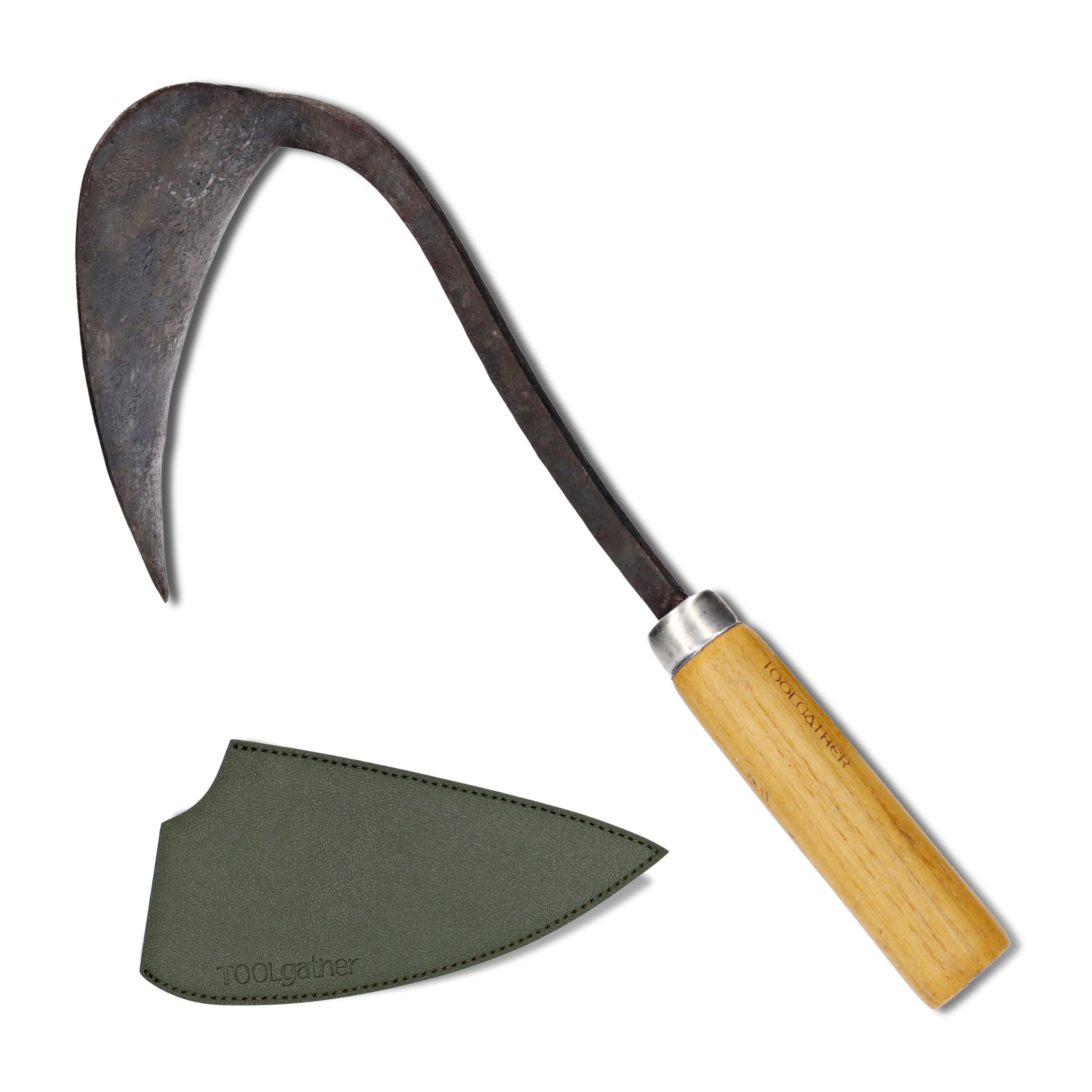
2. Original Homi Hand Hoe – Traditional Handmade Korean Garden Tool for Weeding Digging & Planting with Forged Steel & Chestnut and Acacia Wood Handle
A traditional Korean hand-forged hoe that weighs enough to dig but feels balanced enough for all-day use.
Your wrist sits naturally because of the curved neck — the “Homi” design uses a classic Korean hand-forging method called “Danjo,” where the steel is heated over 800°C (about 1472°F) and hammered by a blacksmith. The blade is alloy steel, and the handle combines high-density Chestnut and Acacia wood with a metal clamp for stability. It comes with a leather cover for safe storage, a touch you do not see on most Western hoes. Owners rate it 4.7 stars across 75 ratings, and quality is the top praise — 21 buyers call it out — with weeding performance as the second most-mentioned strength at 10 mentions. One long-time owner says “We have had one of these for years and bought this as a gift. It really cuts into the soil so easily and helps lift out weeds.” Another notes it is “the only tool I use for planting, digging, weeding.” At about 1.23 lbs, it is heavier than the Dewit hand hoe (10.4 ounces) but lighter than the KAKURI’s 21 ounces — a mid-weight balance for shallow weeding, deeper digging, and planting.
The one thing to know: the blade’s surface may show natural dark or reddish marks and a slightly flaked texture. That is not a defect — it is a signature of the hand-forging process, according to the maker. The maker instructs you to wipe it with oil and a dry cloth; do not sand it. This is for the gardener who values craftsmanship and wants a tool that does not look like a mass-produced widget.
Best for the versatile gardener: A single hand tool that weeds, digs, and plants with natural wrist alignment, backed by a 4.7-star owner consensus.
Worth noting: The steel requires oiling to prevent rust, and the wood handle, while durable, should be stored dry — same as any quality wooden tool.
3. KAKURI Hoe Cultivator Combo Hand Tiller 14-3/4″ Heavy Duty Hand Forged Japanese Steel Blade

A dual-sided Japanese hand hoe and tiller that weighs 21 ounces for serious digging power in a compact package.
You have tried to dig a planting hole with a lightweight weeding hoe and ended up frustrated — this KAKURI has the heft to move dirt. Made in Sanjo, Japan, by skilled blacksmiths, it pairs a sharp 2.5-inch wide hoe blade on one side with a 2.75-inch three-tine tiller on the other. One tool handles both cutting weeds and breaking up clods. A professional gardener with 15 years of experience calls it “the best. Its blades are sharp, the handle is long, and the tool is heavy enough to move dirt.” Another owner confirms it easily chops through “finger-sized roots” in semi-stony ground without the blade or tines bending. The handle is Japanese oak, 14.75 inches long, and the overall weight of 21 ounces gives it real heft — at 21 ounces versus the Dewit’s 10.4 ounces.
Now the caveat: out of 89 ratings (4.4 stars overall), 8 reviewers noted the head can be loose or the wedge (the small piece that tightens the head to the handle) can cause splitting. One owner bluntly says “great head, terrible handle — excessive wiggle room.” This is a fixable issue — you can sand, re-wedge, or replace the handle — but if you want a tool that is perfect from the start, the Dewit or Truper have fewer fit complaints. Versatility is the top strength owners praise (9 mentions), and the overall quality rating is 17 mentions of positive feedback. This pick suits the gardener who values multi-function over fuss-free assembly.
Ideal for the serious digger: If you need a tool that hacks through roots and tills soil in raised beds, this Japanese combo hoe delivers class-leading power-per-inch.
One honest note: The handle-to-head fit has received mixed feedback from 8 owners — be prepared to potentially tighten or adjust the wedge.
4. Truper TruPro 6-Inch Forged Garden Hoe, 60-Inch Professional Fiberglass Handle

A 60-inch fiberglass-handled hoe that lets you stand tall while chopping through weeds and soil.
You stand 6 feet tall or you have a history of lower back pain — the 60-inch length is the feature that matters most. The head is a 6-inch wide, one-piece forged high-carbon steel blade that is sharpened to slice through roots, and the fiberglass handle is commercial-grade — it will never warp, splinter, or rot like wood can. One 6-foot-tall owner with a bad back says “this really makes a difference in the garden. Far less stress on the lower back.” The 9-inch non-slip rubber cushion grip dampens vibration, so you feel less shock in your hands during long sessions. It weighs 2.49 pounds, which is moderate for a full-size hoe — heavier than the Dewit hand hoe but lighter than the 2.7-pound Truper ash model below. Owners rate it 4.3 stars across 51 ratings, with quality (8 mentions) and sturdiness (7 mentions) leading the positive feedback.
The catch: some owners mention the head bends when pulling heavy grass or digging in very hard soil. One owner says it “ships dull, needs sharpening,” and another calls the blade quality “questionable” for professional use. This is a capable tool for regular garden maintenance and weed clearing, but if you are breaking sod, mixing concrete, or working rocky ground daily, the Truper 30018 with the ash handle (next pick) is a stronger choice for similar money.
Best for the tall or back-conscious gardener: The 60-inch reach and vibration-dampening grip make this a smart choice for anyone who hates bending.
Worth considering: The blade may not hold up to heavy commercial abuse — this is a strong consumer-to-light-pro tool, not a rock breaker.
5. Truper Tru Pro Forged Garden Hoe, 60-Inch Premium White Ash Handle, 6-Inch Heavy-Duty Forged Steel Head
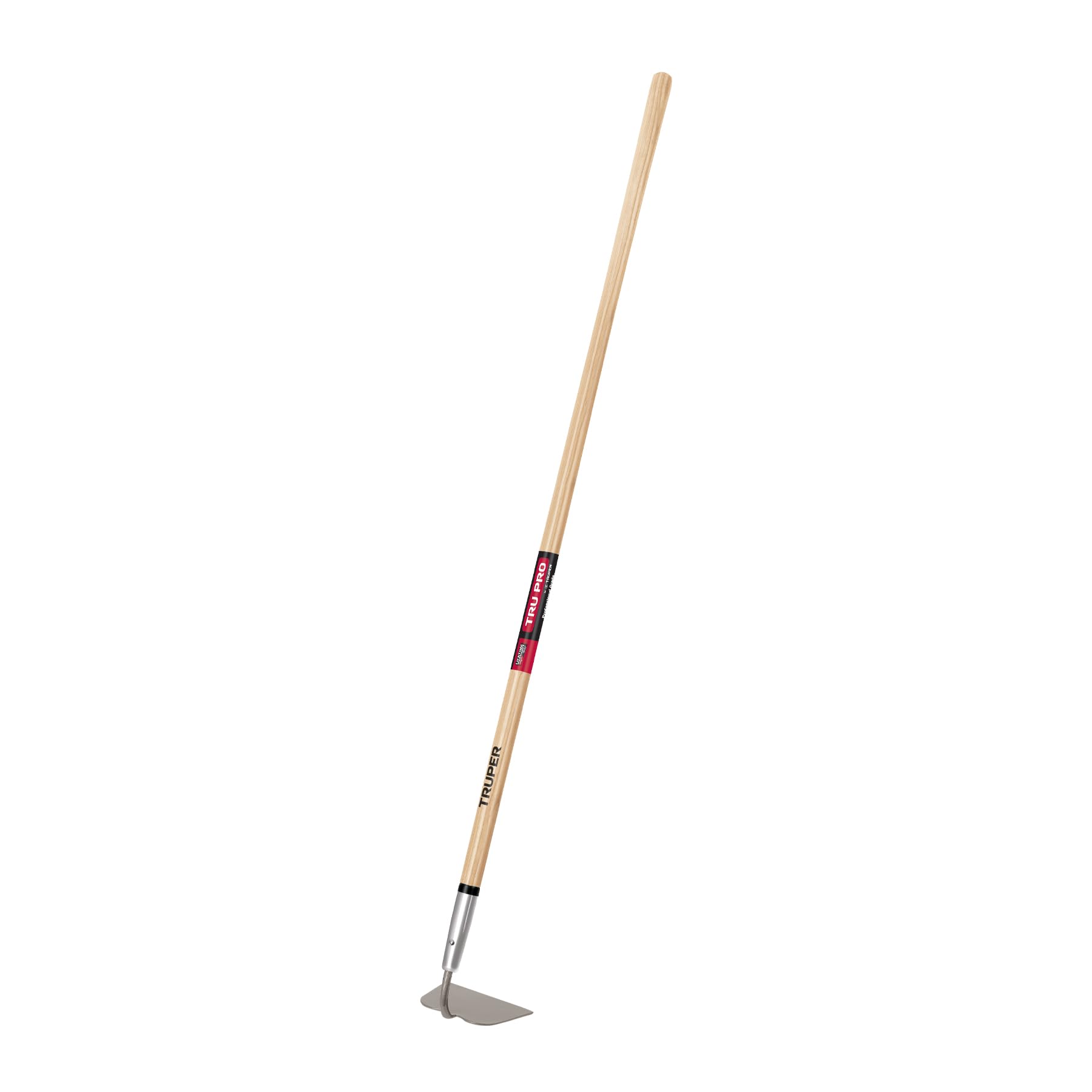
A full-size 2.7-pound hoe with a North American White Ash handle that is built for contractors, not casual gardeners.
This is the Truper 30018 model — the heavier, ash-handled sibling of the fiberglass TruPro above. Where the fiberglass model weighs 2.49 pounds, this one tips the scale at 2.7 pounds with the same 6-inch forged steel head but a premium White Ash handle. Ash is the traditional choice for heavy striking tools because it offers a combination of strength and a slight springy flexibility that absorbs shock better than a rigid fiberglass shaft. The reinforced socket design uses a tab socket and steel collar for zero wobble. Owners rate it 4.6 stars across 65 ratings, and the feedback is nearly all positive: “sturdy, long wood handle hoe” says one owner who used it to mix “8+ bags of Quikrete with ease.” Another calls it “well balanced and strong.” Quality (8 mentions) and sturdiness (7 mentions) are the top aspects owners praise.
Unlike the fiberglass Truper above, there are no complaints here about the blade bending or the edge going dull quickly. The trade-off is a little extra weight — 2.7 pounds means you will notice it more on a long day — and the ash handle, while beautiful and durable, can still split if you leave it in the rain. It also does not have the cushioned rubber grip of the fiberglass model, so hand fatigue is more of a factor. This pick is for the person who wants a traditional, rugged American-style hoe that can double as a mixing tool or a soil breaker.
Best for heavy work and traditionalists: If you break soil, mix concrete, or clear large areas and want a tool that laughs at abuse, this ash-handled Truper is a top contender.
The one thing to note: No cushioned grip and a wood handle means it demands more hand strength and care than a fiberglass alternative.
6. Dewit Diamond Hoe with P-Grip Handle-Long Handle Garden Hoe with Forged Steel Diamond Head – 4 Sharp Edges – Total 74″ L; 3.5lbs

A 74-inch long-handled diamond hoe with four sharp edges that lets you stand fully upright while weeding.
You walk down a garden row and sweep the diamond-shaped blade just under the soil surface without hunching over — that is the reach of a 74-inch handle, over six feet. The head is 2 inches by 8 inches with four forged steel edges that cut in a push-pull action, unlike a traditional hoe that requires a chopping swing. The P-Grip (a pistol-like handle at the top) gives you extra control and reduces fatigue during long sessions. It is made in Holland by DeWit, the same brand behind our #1 pick, and carries a lifetime guarantee. One owner who has used it since 2014 in heavy clay, mulch, and gravel calls it “light, works well and will seemingly last forever.” It weighs 3.5 pounds, which is the heaviest tool in this roundup.
At 4.0 stars across 38 ratings, this is the lowest-rated pick in the list, and the main reason is a recurring shipping issue: some customers note receiving a 56-inch straight handle instead of the advertised 74-inch P-grip handle. That is a seller fulfillment problem, not a tool design problem, but it is real. The blade is also quite wide at 8 inches, which means it can accidentally clip desirable plants if you work in tight spaces. One reviewer notes it excels on foot-tall weeds but struggles with larger, tougher stalks. This is the best option for clearing large areas of small weeds fast while standing, but it is not a precision tool for flower beds.
Best for large-scale stand-up weeding: If you have a big vegetable patch or field and want to clear weeds fast while saving your back, this is your tool.
Worth knowing: The blade dulls faster in rocky soil (though it sharpens easily) and the handle length you receive may vary depending on the seller.
Understanding the Specs
Forged vs. Stamped Steel
A hand forged blade is hammered into shape while the steel is over 800°C (about 1472°F). This process aligns the grain structure of the metal, making the edge tougher and easier to sharpen. A stamped blade is cut from flat sheet metal and will dull faster and bend more easily. If you see “hand forged” in the product name, you are buying a tool that a blacksmith actually made — not a machine-stamped part.
Handle Length and Material
Your handle choice determines whether you work bent over or standing up. A full-size hoe has a handle around 60 inches; a hand hoe is closer to 14-18 inches. Wood handles (ash, oak, acacia) are beautiful and absorb vibration well but need to be stored dry. Fiberglass handles never rot or splinter and are ideal for wet climates, but they transfer more vibration to your hands.
FAQ
What is the difference between a hand forged garden hoe and a regular stamped hoe?
How do I maintain a hand forged garden hoe?
What handle length is best for my height and back?
Can a hand forged garden hoe be used in rocky or clay soil?
What is the difference between a Dutch hoe and a traditional hoe?
How long does a hand forged garden hoe typically last?
Is a hand forged garden hoe worth the higher price?
What is a Homi hand hoe used for?
Can I sharpen a hand forged garden hoe myself?
Which hand forged garden hoe is best for raised beds?
Final Thoughts: The Verdict
For most gardeners, the top pick in the hand forged garden hoe category is the Dewit Dutch Hand Hoe because it combines a hand-forged boron steel blade, a featherlight 10.4-ounce weight, and a lifetime guarantee — all backed by a 4.7-star rating from 183 owners. If you need a versatile hand tool that digs, weeds, and plants with one ergonomic design, grab the Original Homi Hand Hoe. And for those who want a full-size, heavy-duty weapon against tough soil and mixing tasks, the Truper Tru Pro Ash Handle is the one to reach for.
How We Picked
We do not accept paid placement. Every pick is matched to a real buyer and a real use-case; we do not hands-on test units.
Sources & Methodology
Specifications: manufacturer listings and product documentation. Review insights: verified customer reviews, as of July 2026. Pricing: not shown on this page (it changes often); check the current price via the retailer link.
As an Amazon Associate, Lawn Gear Lab earns from qualifying purchases. This does not affect which products we feature.