
Nothing ruins a season of homegrown tomatoes and fresh salad greens faster than the discovery of fat, white C-shaped grubs gnawing through your root systems. These subterranean pests can destroy an entire vegetable patch within days, leaving plants wilted and unproductive. The challenge for any organic grower is finding a solution that removes the threat without contaminating the very food you are cultivating.
I’m Rikta — the co-founder and writer behind Lawn Gear Lab. I’ve spent hundreds of hours cross-referencing biological controls, botanical insecticides, and granular formulas against soil safety data and aggregate owner feedback to determine exactly how each works inside a working garden ecosystem.
This guide covers biological spores, beneficial nematodes, and cold-pressed oils that eliminate larvae on contact while respecting your soil’s microbial life. Here is my complete analysis to help you find the right grub killer for vegetable garden without guesswork.
How To Choose The Best Grub Killer For Vegetable Garden
Choosing a grub killer for your vegetable plot means prioritizing active ingredients that do not persist in edible tissue. Synthetic chemical insecticides like carbaryl or imidacloprid can linger in root crops for weeks. You want biological or botanical options that break down rapidly or target only the pest.
Biological Spores vs. Nematodes vs. Oils
Bacillus popilliae (milky spore) is a soil bacterium that infects Japanese beetle grubs specifically and multiplies underground for years. Beneficial nematodes (Steinernema feltiae) are microscopic roundworms that actively hunt a wider variety of grub species but require refrigeration and precise soil moisture. Cold-pressed neem oil works as a smothering spray on eggs and early-stage larvae but needs reapplication every 7-14 days.
Vegetable-Specific Safety Window
Check the pre-harvest interval — the number of days you must wait between the last application and picking. Some neem-oil products allow use up to the day of harvest. Granular insecticides often require a 14- to 30-day gap to ensure zero residue. OMRI-listed formulations give the clearest assurance for edible beds.
Application Method & Coverage
Liquid concentrates and hose-end sprays coat foliage and soil surface but wash off in heavy rain. Powders and granules must be watered in immediately to reach the root zone where grubs feed. Nematodes need soil temperatures above 50°F to remain active. Choose the format that matches your watering schedule and bed size without wasting product on pathways.
Quick Comparison
On smaller screens, swipe sideways to see the full table.
| Model | Category | Best For | Key Spec | Amazon |
|---|---|---|---|---|
| St. Gabriel Organics 15lb Granular | Granular Spore | Long-term beetle prevention | Up to 15 years soil persistence | Amazon |
| Bonide Neem Oil 128 oz RTU | Ready-to-Use Oil | Immediate grub egg & foliar pest stop | 128 fl oz with spray nozzle | Amazon |
| Ortho Lawn Insect Killer | Granular | Large-area barrier around garden edges | 20,000 sq ft coverage per bag | Amazon |
| BioLogic Scanmask Nematodes | Live Organism | Targeted multi-pest biological control | 10 million Steinernema feltiae | Amazon |
| St. Gabriel Organics 10oz Powder | Powder Spore | Spot-treatment of established grubs | 2500 sq ft coverage per bag | Amazon |
| Bonide Captain Jack’s Neem Max 16oz | Hose-End Spray | Multi-life-stage insect & disease control | 16 oz concentrate treats full garden | Amazon |
| Monterey B.t. 8 oz | Biological Concentrate | Caterpillar & worm control on leafy greens | 8 fl oz with measuring spoon | Amazon |
In‑Depth Reviews
1. St. Gabriel Organics 15 Pound Milky Spore Granular

The 15-pound granular bag of St. Gabriel Milky Spore is the most powerful long-term solution for Japanese beetle grubs in a vegetable plot. The Bacillus popilliae spores infect the grubs as they feed, multiply inside their bodies, and release billions more spores back into the soil. This self-sustaining cycle keeps the treated area virtually grub-free for up to 15 years without any reapplication needed.
USDA-certified organic status means you can apply it directly around tomato plants, pepper beds, and root crops without worrying about chemical residue in your harvest. The granular form feeds easily through a broadcast spreader, and one pass with a garden hose activates the spores. User reports confirm visible beetle reduction within a single season and near-total elimination by the second year of a three-application protocol.
The biggest trade-off is the initial investment and the delayed effect — this is not a fast-acting knockdown. It requires soil temperatures above 50°F and two to three applications spaced across spring and fall to build sufficient spore density. But for anyone who plans to garden the same plot for several years, this is the most efficient and hands-off grul barrier available.
What works
- Self-propagating spore cycle offers decade-plus protection
- Completely harmless to earthworms, bees, and pets
- Granular form stays put in wind and resists wash-off
What doesn’t
- Requires patience — visible results take one to two seasons
- Large 15-lb bag may be excessive for very small gardens
- Spreader can clog if set below 4.25 opening
2. Bonide Captain Jack’s Neem Oil 128 oz RTU
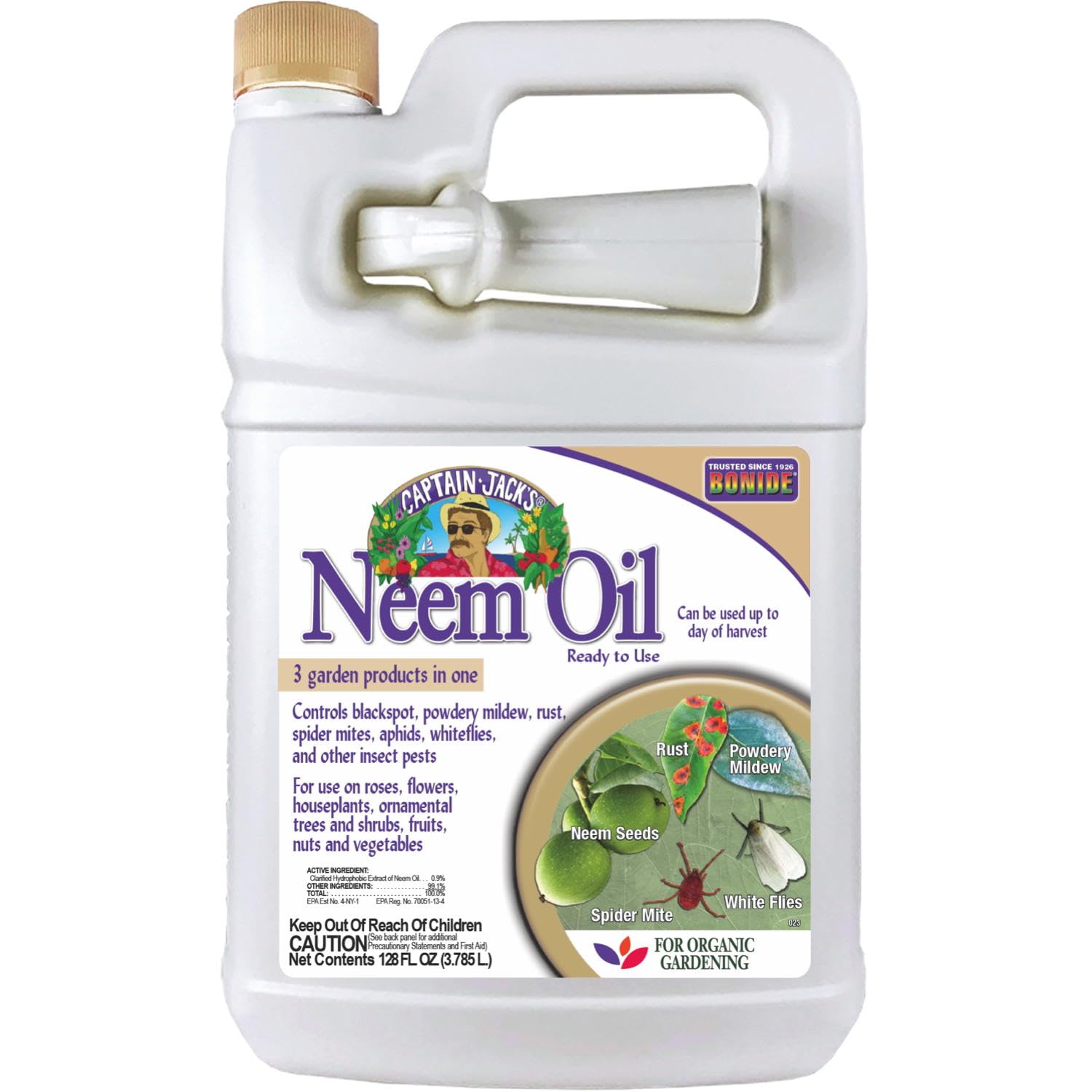
The 128-ounce ready-to-use formulation from Captain Jack’s delivers cold-pressed neem oil in a massive jug that covers an entire vegetable garden without needing to mix concentrates. Because neem oil smothers the egg and early-larval stages of Japanese beetles, applying it every 7-14 days during peak beetle flight breaks the reproductive cycle before grubs ever reach the root zone.
This product is approved for organic gardening and can be used up to the day of harvest, making it one of the safest options for salad greens and vine crops. The included spray nozzle produces a consistent mist, and users report effective control over powdery mildew simultaneously. Many owners note noticeable reduction in aphids, whiteflies, and spider mites as a bonus benefit.
The ready-to-use format is convenient but heavy to carry around a large plot. Some users object to the sulfurous egg-like smell during application, though the odor dissipates quickly after drying. The 128-ounce quantity is generous, but the single-gallon size is still best for medium to large gardens rather than commercial-scale operations.
What works
- Kills eggs, larvae, and adult insects plus fungal diseases
- Safe for use on vegetables right up to harvest day
- Large volume reduces frequency of repurchasing
What doesn’t
- Heavy 8.98-lb jug is awkward to lift and maneuver
- Earthy smell is noticeable for several hours after spraying
- Needs reapplication after rain or heavy dew
3. Ortho Lawn Insect Killer Granules 20 lb
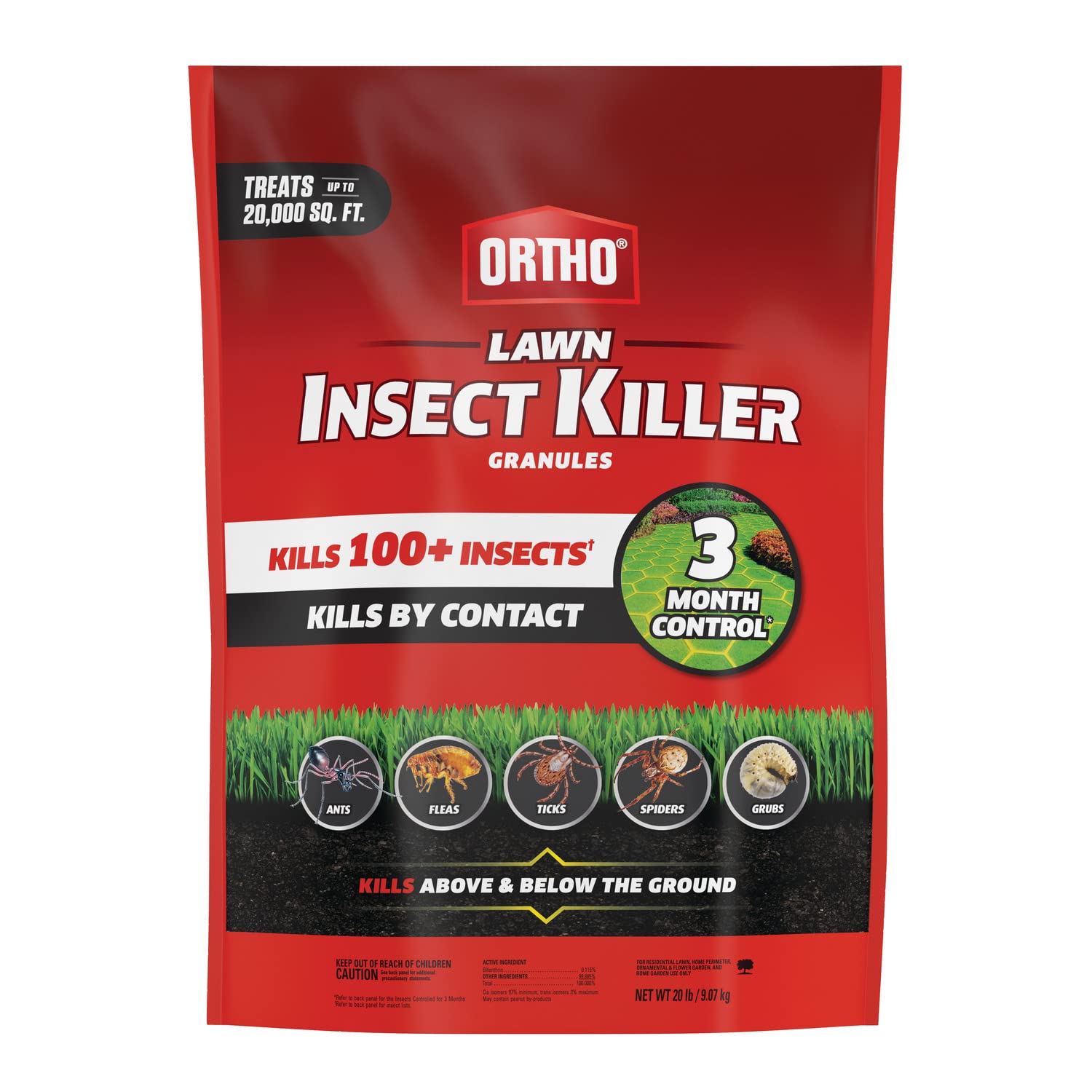
Each 20-pound bag covers up to 20,000 square feet, blanketing lawn edges and garden borders where adult beetles lay eggs before they can target your crops. The formula kills by contact and provides three months of residual control against ants, spiders, ticks, and grubs.
Application is straightforward with a broadcast spreader: distribute the granules, water them in thoroughly, and keep pets off until dry. The granular format adheres to soil well even on sloping yards, and the product label specifically covers grub control in home gardens. Multiple users confirm that a single application eliminates fire ant mounds and reduces visible insect activity for the entire growing season.
The major caveat for vegetable gardeners is the synthetic chemistry. Ortho uses Bifenthrin and Zeta-Cypermethrin, which do not carry OMRI organic certification. You must adhere strictly to the label’s 14- to 30-day pre-harvest interval for edible crops. This product is best used as a ring around raised beds rather than directly on top of root vegetables.
What works
- Massive coverage at a low per-square-foot cost
- Kills above- and below-ground pests simultaneously
- Three-month residual reduces need for re-treating
What doesn’t
- Not OMRI-listed — synthetic active ingredients
- Requires careful timing around edible crop harvest
- Hose-end mixing instructions can be finicky
4. BioLogic Scanmask Beneficial Nematodes 10 Million

The BioLogic Scanmask supplies 10 million Steinernema feltiae nematodes per application, providing living hunters that burrow into grubs, leaf miners, and fungus gnat larvae. Unlike spores that work passively, nematodes actively seek out soil-dwelling pests and release symbiotic bacteria that kill the host within 48 hours. This makes them ideal for a vegetable garden where you have identified active grub damage and need a biocontrol that works fast.
One of the strongest points of this product is its versatility. Users have reported near-total eradication of fungus gnats across dozens of houseplants and effective control of leaf miners in greenhouse setups. The microscopic nematodes are alive upon arrival if the shipping package is cool, and many owners confirm viability under a home microscope. They are harmless to earthworms, birds, and mammals.
The precision required for proper use is the biggest hurdle. The nematodes need soil temperatures above 50°F, must be refrigerated until application, and require thorough watering-in to reach the root zone. Furthermore, there are multiple nematode species for different pests — Steinernema feltiae targets fly larvae and small grubs, not the larger white grubs that some may need. Buyers must verify the correct species for their specific pest before purchasing.
What works
- Living organisms actively hunt and kill host pests quickly
- Completely safe for soil microbiome and edible crops
- Effective on multiple life stages of several insect pests
What doesn’t
- Requires refrigeration and careful handling to stay alive
- Species selection must match target pest precisely
- All nematodes used in one application — no storage for later
5. St. Gabriel Organics Milky Spore Powder 10 oz
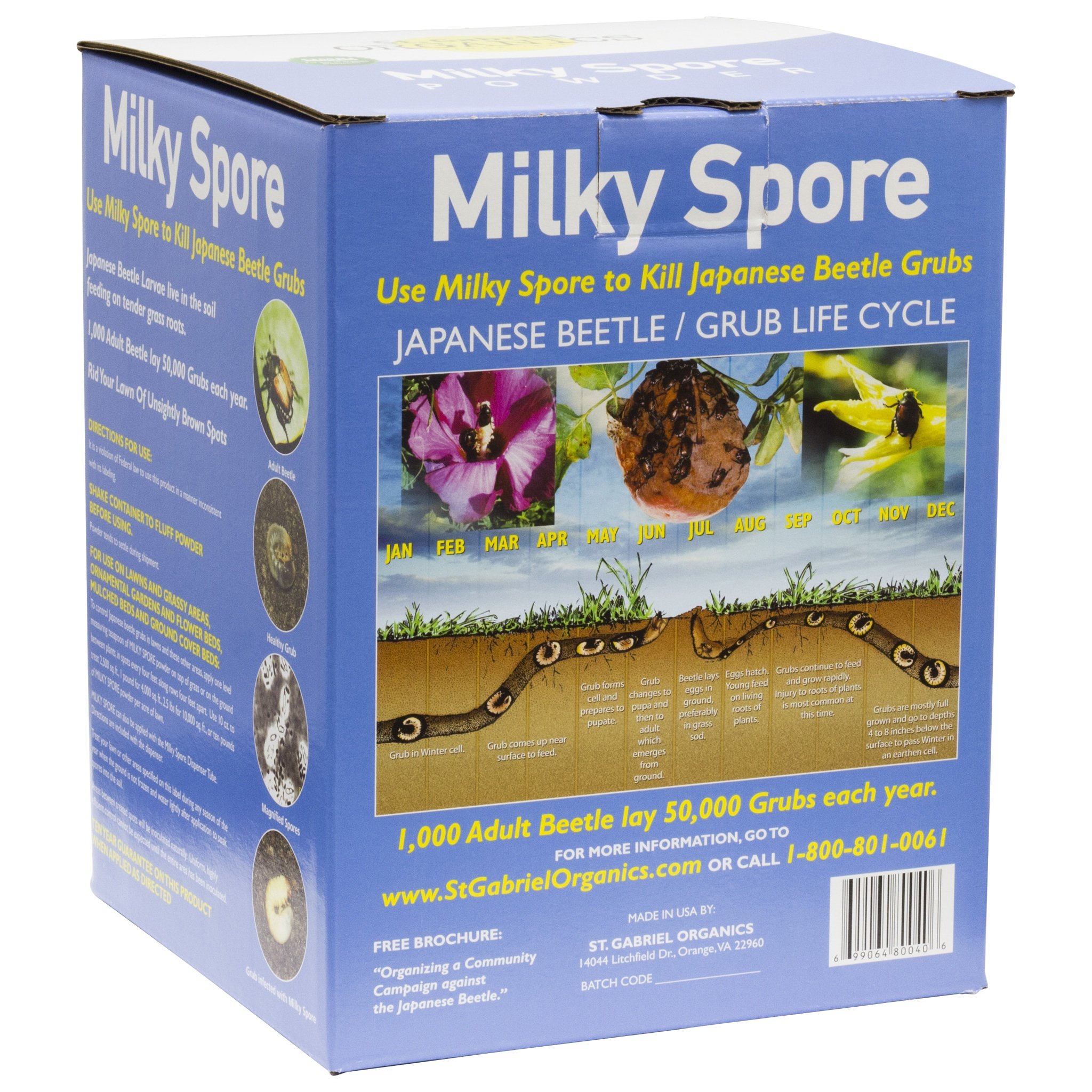
The 10-ounce powder format of St. Gabriel Milky Spore concentrates the same Bacillus popilliae found in the granular version but in a smaller bag ideal for targeted spot treatments. Each teaspoon is applied every four feet in rows, covering up to 2,500 square feet. The lighter weight makes it much easier for a small-plot gardener to apply without a spreader.
Because the powder must be watered in immediately, it integrates quickly with the soil moisture and begins colonizing the root zone. Users have reported grass regrowth and visible reduction in brown patches within a week of proper application, suggesting the spores are actively suppressing grub feeding. The product is non-toxic to honeybees, ladybugs, and earthworms — a critical feature for polyculture vegetable beds.
The 10-ounce bag looks deceptively small when it arrives, and the cost-per-ounce is higher than the granular version. Some packages arrive without printed instructions, requiring customers to look up the method online. Users need to apply it three times (spring, summer, fall) for two years to ensure full spore establishment, which demands commitment beyond a single season.
What works
- Highly concentrated spore content in a small, manageable package
- Safe for all beneficial garden insects and pets
- Self-propagating once established in soil
What doesn’t
- Small bag size can feel expensive for the volume received
- Powder is very fine and can puff during windy conditions
- Requires a multi-season application schedule for full effect
6. Bonide Captain Jack’s Neem Max 16 oz
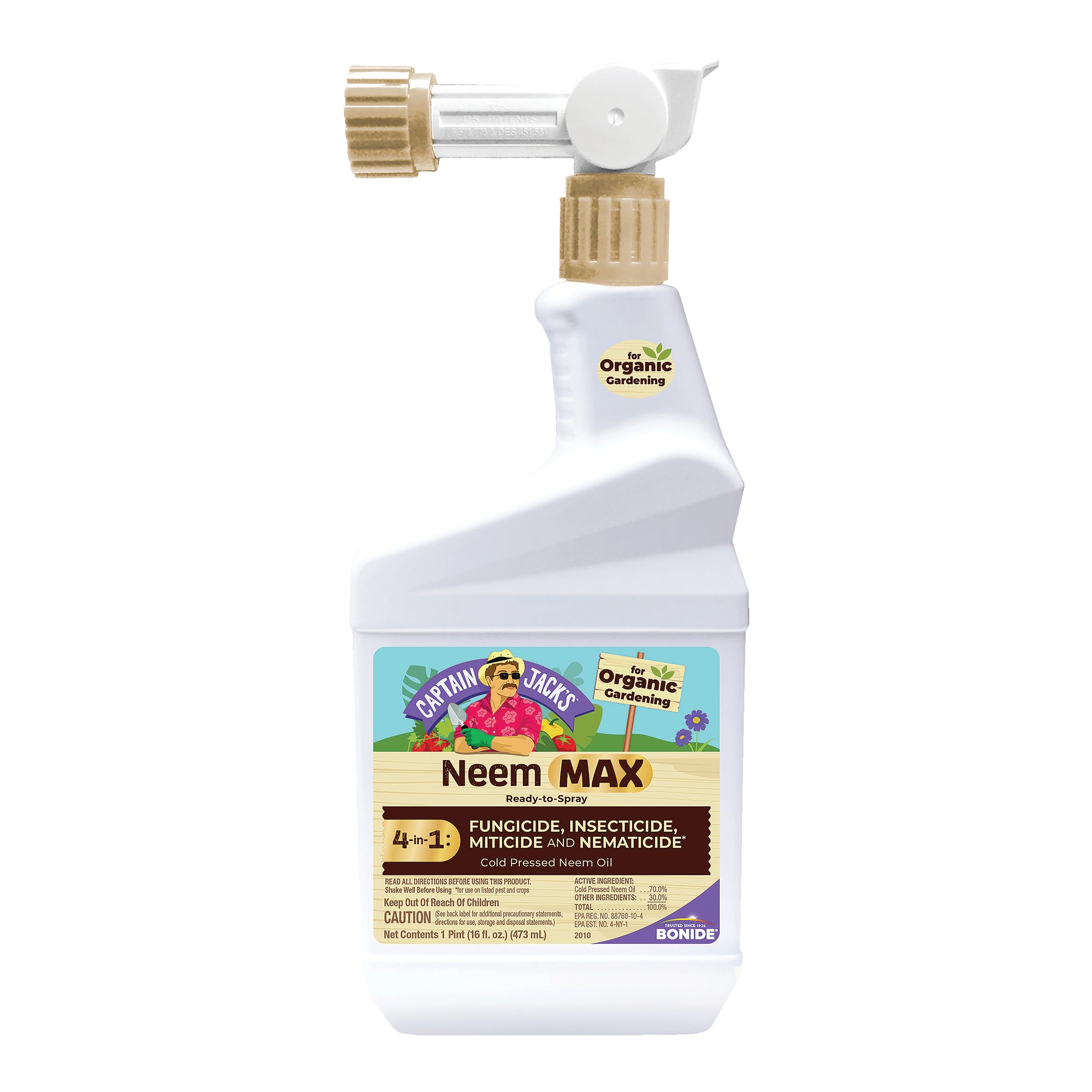
The Bonide Captain Jack’s Neem Max in the 16-ounce concentrate is the most cost-effective entry point for a vegetable gardener who wants both insect and disease protection. By attaching the bottle directly to a garden hose, the concentrate auto-dilutes to the correct ratio, covering an average vegetable bed without requiring mixing or measuring. The cold-pressed neem oil works as a fungicide, insecticide, miticide, and nematicide, giving you four modes of action in a single pass.
Approved for organic gardening, it kills eggs, larvae, and adult stages of aphids, beetles, and whiteflies. The formula also controls powdery mildew and rust on squash, tomatoes, and cucumbers — two common fungal headaches that often accompany grub damage in warm weather. Users report that the ready-to-spray system saved them significant setup time and that the solution knocked down a Japanese beetle infestation on apple trees and surrounding turf within days.
The 16-ounce bottle covers a surprising amount of garden ground, but the hose-end mechanism can fail to aspirate the thick neem oil correctly. Some owners have had to remove the siphon tube and tip the bottle upside down to let gravity feed it. A small number of units arrived with a leaking cap or the bottle only two-thirds full, which is disappointing given the otherwise excellent performance.
What works
- Four-in-one formula covers insects, mites, fungus, and nematodes
- Hose-end spray eliminates mixing steps and messy cleanup
- Organic-approved with a generous coverage rate
What doesn’t
- Thick consistency can clog the aspiration mechanism
- Package quality control is inconsistent on some units
- Needs weekly reapplication during peak pest pressure
7. Monterey B.t. 8 oz with Measuring Spoon

The Monterey B.t. concentrate is a Bacillus thuringiensis formulation specifically tailored for caterpillar and worm-type insects that attack the foliage of vegetable crops. While it does not kill soil-dwelling grubs directly, it prevents the adults of many pest species (including cabbage loopers and tomato hornworms) from maturing and laying eggs that become future root-feeding larvae. For a vegetable garden that struggles with both foliar worms and secondary grub pressure, this is a dual-purpose disruptor.
Included in the package is a measuring spoon for precise mixing, and the oil-based concentrate dissolves instantly in water. The product is OMRI-listed for organic gardening and has no effect on earthworms, honeybees, or beneficial predatory insects when applied per label directions. User reviews specifically praise its ability to clear cabbage loopers from broccoli and cilantro within days and its safety on edible plants.
The 8-ounce bottle is very small, and the price per ounce is higher than large-volume alternatives. It also targets only leaf-feeding larvae, not the established grubs that have already tunneled into your soil. If your vegetable patch has an active grub infestation in the root zone, this product should be paired with a spore or nematode treatment for complete coverage.
What works
- Selective targeting of caterpillars without harming beneficial insects
- Comes with a measuring spoon for easy dosing
- Safe to use on edible crops right up to harvest
What doesn’t
- Does not kill existing soil-dwelling grubs directly
- Small 8-oz bottle runs out quickly on large gardens
- Only effective on actively feeding leaf-eating larvae
Hardware & Specs Guide
Active Ingredient Type
The most important distinction is whether the formula uses a live biological agent (Bacillus popilliae spores or Steinernema feltiae nematodes) or a botanical extract (cold-pressed neem oil). Biologicals self-propagate in the soil but take weeks to establish. Botanicals provide immediate knockdown but require regular reapplication. Synthetics like Bifenthrin offer rapid and long residual control but come with pre-harvest restrictions that matter for edible crops.
Coverage Area Per Unit
Granular and powder formulations list coverage in square feet per bag, ranging from 2,500 sq ft (10 oz spore powder) to 20,000 sq ft (Ortho 20 lb). Liquid concentrates are measured in ounces of product per gallon of water, with hose-end sprayers diluting automatically. Nematodes are packaged by live-organism count (e.g., 10 million), with coverage varying by pest pressure. Always match the coverage to your total bed area to avoid under-dosing.
FAQ
Can I use milky spore powder directly on my tomato and pepper plants?
How long after applying neem oil can I harvest vegetables?
Final Thoughts: The Verdict
For most gardeners, the grub killer for vegetable garden winner is the St. Gabriel Organics 15 Pound Milky Spore Granular because it builds a self-sustaining spore population that eliminates Japanese beetle grubs for up to fifteen years without chemical residue. If you want immediate knockdown of eggs and adult beetles, grab the Bonide Captain Jack’s Neem Oil 128 oz RTU. And for a versatile biological approach that tackles multiple pest species simultaneously, nothing beats the BioLogic Scanmask Beneficial Nematodes 10 Million.