
Specs are compiled from manufacturer listings and verified buyer reviews and can change over time — please confirm the key details on the product page before buying.
You want a growing medium that holds just enough moisture without drowning delicate microgreen roots, and you want it ready fast — not something that needs hours of prep every time you plant a tray. The best options here are compressed coco coir bricks or pre-expanded bags, and the real difference depends on how clean they are, how much they fluff up, and if you want to mix your own or open a bag and go.
I’m Rikta — the founder and writer behind Lawn Gear Lab. This guide is built by comparing the manufacturers’ published specifications and the patterns across verified customer reviews, so you get each pick’s real strengths and trade-offs instead of marketing spin.
Choosing the right growing medium for microgreens means understanding how much you get from each brick, how clean it is for tiny seedlings, and whether you prefer a brick or a ready-to-use loose bag — and this guide lays all that out clearly.
Our Picks at a Glance

How To Choose The Best Growing Medium For Microgreens
Microgreens grow fast — you harvest in 7 to 14 days — so the medium needs to support quick root spread without holding stagnant water that rots stems. Coco coir is the standard here because it is fluffy, pH-balanced, and peat-free, but not all coir is the same. The dirt (no pun) is in the details.
Salt Content (EC) and Washing
Microgreen seeds are tiny and sensitive to salt. Coir naturally contains salts from the coconut husk. If the EC (electrical conductivity, a measure of soluble salts) is high, your germination drops and seedlings can look stunted. Look for “triple-washed” or “low-EC” on the label — it means the coir has been flushed repeatedly so the salt level is safe for delicate sprouts.
Volume Yield Per Brick
Compressed bricks tell you the dry weight, but what matters is how much finished medium you get after adding water. A 5-pound brick might yield 9 gallons; a 10-pound brick might yield 75 quarts. Match that to your tray count — a standard 1020 tray takes about 1.5 to 2 quarts of medium for a thin layer. If you are doing multiple trays, a big block saves you from buying several small bricks.
Brick vs. Pre-Expanded
Bricks store compactly and last forever on a shelf, but you need to hydrate them for 30 minutes to a few hours before planting. Pre-expanded loose coir in a bag is ready to scoop into a tray immediately — no soaking, no draining — but it takes up more storage space. Your call: patience and space-savings (brick) versus instant use (loose bag).
Quick Comparison
| Model | Best For | Expanded Volume | Weight | Form | Amazon |
|---|---|---|---|---|---|
| MODELLOR Coco Coir 4-Pack★ Best Overall | Best Overall | 9 Gallons | 5 lb | Bricks | Amazon |
| AC Infinity Instant Potting MixTop Performer | Small Batches | 3 Gallons | 2 lb | Brick | Amazon |
| Avalution 3-Pack Coco Coir | Budget-Friendly | 18 qt | 1.4 lb | Bricks | Amazon |
| Happy Trees Loose Coco Coir | Ready-to-Use | 10 Liters | — | Loose Bag | Amazon |
| Minute Soil 3-Brick Pack | Versatile Use | 4.5 Gallons | 1.89 kg | Bricks | Amazon |
| MagJo Naturals 11 lb Block | Large Volume | 17 Gallons | 11 lb | Block | Amazon |
| Vivlly Coco Coir 10 lb | Maximum Expansion | 75 Quarts | 10 lb | Brick | Amazon |
In‑Depth Reviews
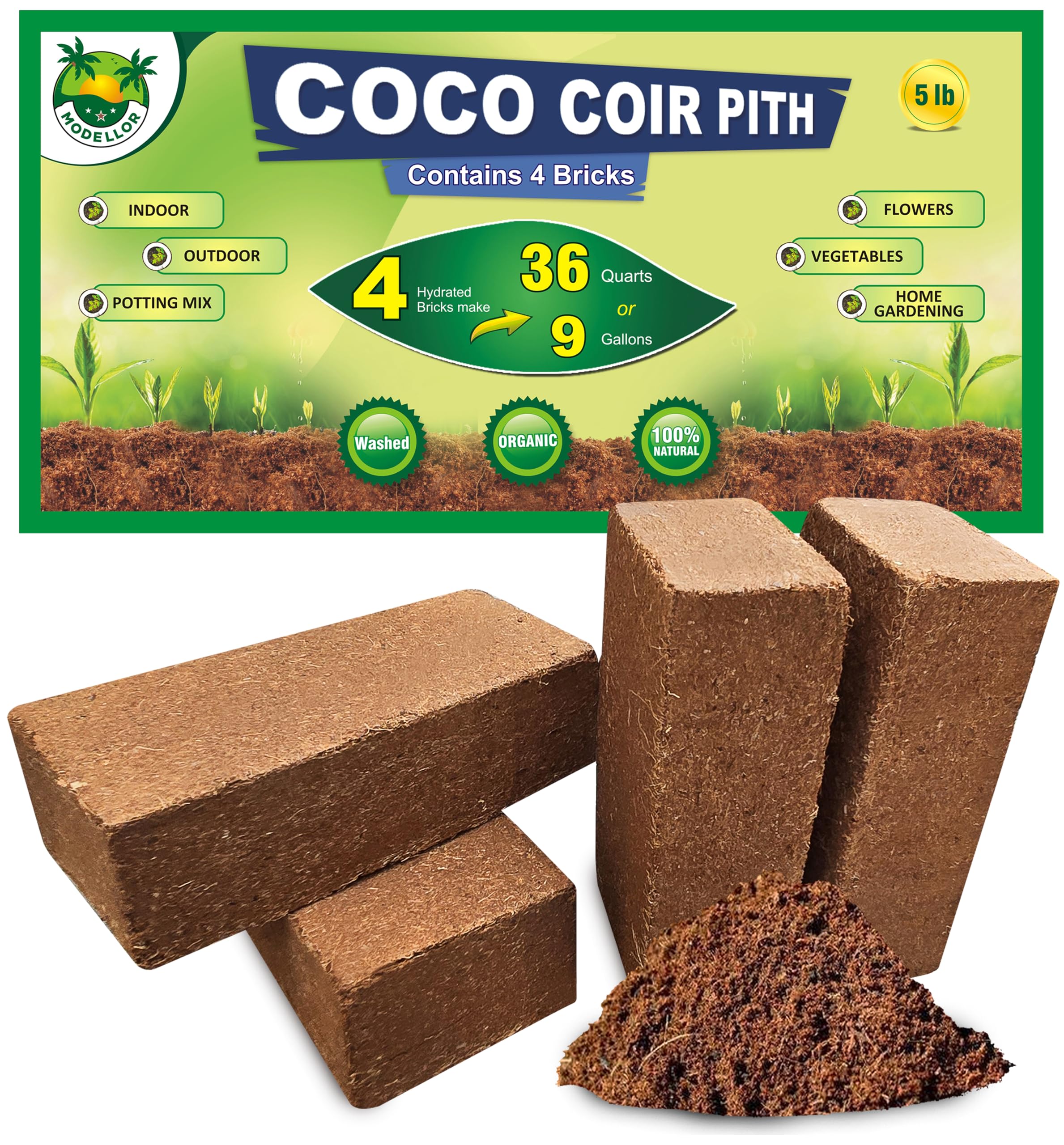
1. MODELLOR Coco Coir Bricks, 4-Pack (5 lb)
Our pick — over 4.5★ from 900+ verified ratings; the strongest balance of quality and price.
Four bricks that fluff into 9 gallons — enough volume for multiple trays straight away.
This set gives you the best balance of volume, cleanliness, and price for anyone running several trays of microgreens at once. The set of four bricks weighs 5 pounds total and expands into 9 gallons (36 quarts) of fluffy growing medium — buyers report it “hydrates fast, expands well,” which is exactly what you want when you are on a weekly sowing schedule. The triple-washed, pH-balanced coir means low salt levels, so those tiny seeds get a clean start.
Reviewers also note the texture is not too fine — airy enough for good drainage — and the bricks are odorless with no debris. For anyone looking to batch-grow microgreens without constantly reordering, this is the one.
What Stands Out
- Expands to 9 gallons — enough for several standard 1020 trays.
- Triple-washed and low-EC, so it is safe for sensitive microgreen seeds.
- Buyers consistently praise the fast hydration and clean texture.
One Trade-Off
- A few reviewers found the coir a bit too fine for their liking, though most microgreen growers prefer that consistency.
Grab it for: consistent, clean, high-volume microgreen production without messing around with small bricks.
Look elsewhere if: you only need a single tray every few weeks — a 9-gallon yield might be more than you can store.
2. AC Infinity Instant Potting Mix, 2 lb. Premium Buffered Coco Coir Brick
A buffered, triple-washed brick that fills a 3-gallon planter — perfect for small runs.
If you are growing microgreens in one or two trays per cycle, this compact brick from AC Infinity is sized more realistically. It weighs just 2 pounds and expands to 3 gallons — owners mention “one brick will fill a 3 gallon pot perfectly with room for watering,” making it easy to plan your volume without waste. The coir is buffered, which means the pH is stabilized, and the triple-wash keeps the salt content low for good germination rates.
Where this one really shines is convenience: the brick is small enough to store in a cabinet, and because it is AC Infinity, you get a brand known for consistent quality. Unlike the MODELLOR 4-pack, this is a single brick — better for getting started or for growers who prefer to buy fresh as they go rather than store a large quantity. Reviewers also say cannabis and seedlings thrive in it, a solid sign it will handle microgreens just as well.
Why It Works
- Buffered and triple-washed — ready for sensitive seeds straight out of the brick.
- 3-gallon yield is the perfect size for a single 1020 tray or a small batch setup.
- Compact brick stores easily, and reviewers praise the fine fiber texture.
The Limitation
- You get 3 gallons total versus the 9-gallon yield from the MODELLOR 4-pack, so it is not the best value for high-volume growers.
Best fit for: the home grower running a couple of microgreen trays per week who wants a small, clean brick with no leftovers.
Switch if: you are scaling up to several trays at once — the 3-gallon yield means you would need multiple bricks.
3. 3-Pack Coco Coir Bricks, Premium Organic Peat Moss Mix for Plants

Three bricks for the price of one premium block — a budget-friendly entry into coir growing.
This three-pack from Avalution gives you the lowest entry cost for trying coco coir with microgreens. The set of three bricks weighs 1.4 pounds total, and the three combined expand to 18 quarts. That is enough for several trays without committing to a big block. One buyer says “3 block will fill a standard bucket and it retains moisture very well,” which matches the use case for small growers who want to test the medium before buying in bulk.
The coir is advertised as low-EC and pH-balanced, though it is not explicitly labeled triple-washed like the premium picks above. For microgreens, you might want to rinse the expanded coir once more or use it with well-balanced water, and make sure you soak the bricks overnight — some customers note the compressed bricks are hard to break up without a thorough soak. It is a solid value option that works perfectly for seed starting and lighter microgreen runs.
The Upside
- Three bricks for the price make it an affordable way to test coir or run small batches.
- Retains moisture well, according to buyers, which helps microgreen trays stay hydrated between waterings.
- Light and compact storage compared to loose bags.
The Downside
- Not explicitly triple-washed, so the salt content may be higher than premium options — some microgreen growers may see lower germination if used straight.
Reach for this if: you want to start growing microgreens on a tight budget and do not mind pre-soaking the bricks overnight.
Consider the upgrade if: you have struggled with germination in the past — the extra cost of a washed brick often pays off in density.
4. Happy Trees Coco Coir Loose Coconut Fiber Growing Medium, 10 Liters
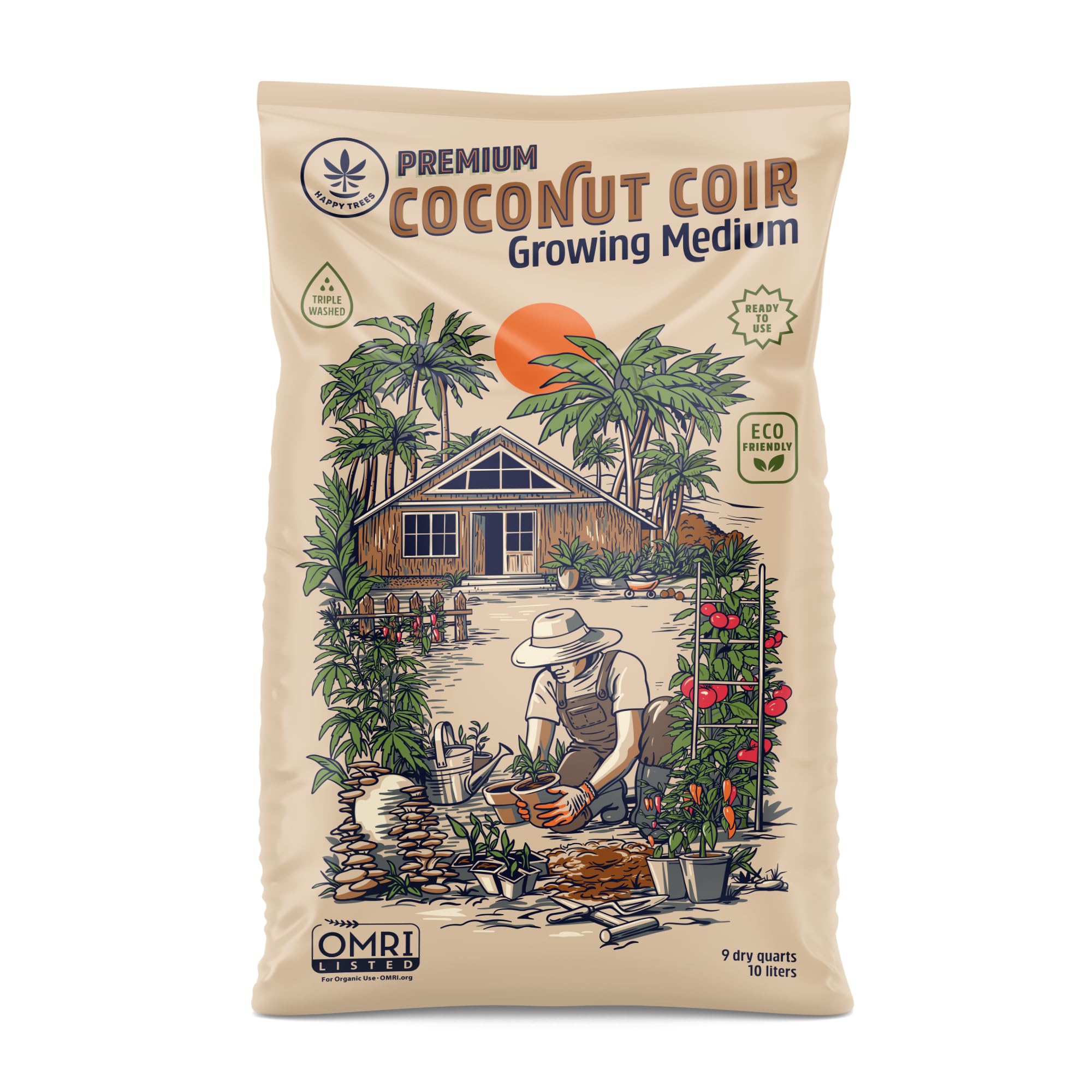
Pre-moistened and ready to scoop — no soaking required, just fill your trays.
Unlike every other product here, this one skips the brick entirely. Happy Trees sells 10 liters of loose, pre-expanded coco coir in a bag. For microgreen growers, that means zero waiting — you open the bag, scoop the medium into your trays, level it out, and sow seeds. It is triple-washed and buffered for low salt content, so it meets the same cleanliness standard as the premium brick options.
Compared to the AC Infinity brick, which needs 30-60 minutes to hydrate and drain, this bag saves you that step. The volume is moderate — enough for about 4 to 6 standard 1020 trays depending on depth. Reviewers love the ease of use, calling it a “great product for seedlings and mixing with soil.” The trade-off is that loose bags take up more shelf space than bricks, and once opened you use it up quickly, but if convenience is your top priority, this is the most direct path.
Why You Will Like It
- No hydration step — open the bag and your medium is ready for trays.
- Triple-washed and buffered for low EC, which helps microgreen germination rates.
- Soft, fluffy texture that buyers find easy to work with.
Keep in Mind
- You pay a premium for the convenience — it costs more per gallon than compressing your own bricks.
- Once opened, you should use it within a few grows to avoid mold or drying out completely.
Ideal for: the impatient grower who wants to sow microgreens immediately without faffing with water buckets and soaking bricks.
Pass if: you are a bulk grower — bricks give you far more volume per dollar spent.
5. Minute Soil – Compressed Coco Coir Grow Medium – 3 Bricks

Three bricks that expand with hot water in minutes — a flexible option for microgreens and beyond.
Minute Soil comes from Mountain Valley Seed Company, and the name says it: these bricks are designed to rehydrate quickly. You add 10 cups of water per brick, and it expands to about 1.5 gallons each — 4.5 gallons for the pack. For microgreens, that is a solid middle-ground volume, fitting between the small AC Infinity brick and the large MagJo block. Some buyers suggest using hot water for even faster expansion, which is handy when you are preparing trays.
The coir is raw and non-amended, so you control the nutrients entirely — great for microgreens since they do not need much fertilizer. Compared to the MODELLOR bricks that yield 9 gallons, this yields 4.5 gallons at roughly the same price per brick, so it is less economical for volume. But for someone who wants a versatile, OMRI-listed medium that works for seed starting, microgreens, and even soil amendment, this is a dependable choice.
What Works
- Expands fast with hot water — you can go from dry brick to filled tray in under 30 minutes.
- OMRI-listed for organic production, so it meets certified organic standards.
- Raw (no added nutrients), giving you full control over feeding during the short microgreen cycle.
What Does Not
- Volume per brick is lower than many competitors at 1.5 gallons each.
- Some buyers found the plastic packaging rips easily; you will need a bucket or zip bag for hydration.
Choose this if: you want a fast-expanding, organic-certified medium without extra nutrients, and you appreciate the small-brick format for storage.
skip it if: you need maximum volume per dollar — the MODELLOR 4-pack yields 9 gallons at a similar price.
6. MagJo Naturals 100% Pure Coco Coir (Coco Peat) 11 Pound Block

An 11-pound block that expands to 17 gallons — serious volume for serious microgreen production.
This is the largest single block on the list, weighing 11 pounds and expanding into 17 gallons of finished coir. For reference, the MODELLOR 4-pack yields 9 gallons and the AC Infinity yields 3 gallons — this MagJo block yields 17 gallons while the MODELLOR 4-pack yields 9 gallons. Buyers mention it hydrated to the 17-gallon mark with no trouble.
MagJo sources from OMRI-registered manufacturers and washes the coir to remove salts, making it suitable for organic growing. A reviewer noted a low salt content of 40 to 200 ppm TDS (total dissolved solids), which is well within the safe range for microgreens. The block is dense, so you need a large container — one buyer used a 20-gallon bin. It is slightly acidic, so keep that in mind if your water pH is already low. For a high-volume grower, this is the most efficient pick.
Biggest Strengths
- 17-gallon yield is the largest single-block volume here, perfect for multiple trays each week.
- Low measured salt content (40-200 ppm TDS) makes it safe for sensitive seeds.
- OMRI-listed sources and thorough washing mean consistent organic quality.
Considerations
- You need a very large bucket or bin (20-gallon minimum) to hydrate the whole block at once.
- The block is rock-hard — do not try to break it; soak the entire thing.
Get it for: high-volume microgreen production where you want the lowest cost per gallon and the fewest reorders.
Skip it for: small-space growers — 17 gallons of wet coir takes up a lot of room to store or use.
7. Coco Coir Brick 10 LB – Vivlly – Premium Compressed Coconut Fiber Block

A 10-pound block that turns into 75 quarts (2.5 cubic feet) — the biggest expansion ratio on the list.
That is enough to fill 7 to 10 standard seed trays, making this the clear winner for anyone growing microgreens in bulk. The manufacturer says to use 3-4 gallons of warm water for hydration, so a 5-gallon bucket will handle it comfortably.
The coir is triple-washed with an EC below 0.5 — exceptionally low salt, which means your microgreen seeds will practically leap out of the medium. It is buffered to a pH of 5.5-6.5, the balance for most greens. Reviewers point out it “absorbs water very easily” and works well for beginners and experienced growers alike. The trade-off is that the 10-pound brick is heavy and takes a little effort to break up, but the sheer volume per dollar is class-leading.
Why It Wins for Volume
- 75 quarts of finished coir — enough for up to 10 seed trays per brick.
- EC below 0.5, so salt content is minimal and germination rates stay high.
- Buffered pH (5.5-6.5) means you do not need to adjust pH for most microgreen varieties.
What to Watch
- Some buyers noted powdery dust when breaking the brick; you may want to hydrate outdoors or in a garage.
- At 10 pounds, the dry brick is heavy to move around.
Buy this if: you run a microgreen operation of any size — the cost per tray is the smallest here, and the yield is enormous.
pass on it if: you only grow a tray or two per month — you would struggle to use 75 quarts before it dries out or goes stale.
Understanding the Specs
EC (Electrical Conductivity) and Why It Matters
EC measures the amount of soluble salts in the coir. Microgreens are very salt-sensitive, especially during germination. An EC below 0.5 is ideal — seeds sprout faster and seedlings grow more uniformly. Triple-washed and buffered coir has been flushed to remove salts, so you can sow seeds directly without extra rinsing. Products like the Vivlly 10 lb block advertise EC under 0.5, which is a strong signal for clean medium.
Expanded Volume vs. Dry Weight
Dry weight (pounds) is less useful than expanded volume (gallons or quarts). A 5-pound brick might yield 9 gallons — or 3 gallons — depending on compression and the type of fiber ground. For microgreens, one 1020 tray needs about 1.5-2 quarts of medium. So a 9-gallon brick covers about 18-24 trays. That is the math that matters more than the number on the scale. Always check the “expands to” figure in the specs before choosing.
FAQ
Can I use coco coir straight from the brick for microgreens?
How much coco coir do I need per microgreen tray?
Is coco coir better than potting soil for microgreens?
Can I reuse coco coir for a second batch of microgreens?
What does “buffered” mean on a coco coir label?
Does coco coir have any nutrients for microgreens?
How do I store leftover coco coir after hydrating it?
What is the difference between coco coir and peat moss for microgreens?
Can I use coco coir for hydroponic microgreens?
Should I choose a single large block or multiple small bricks?
Final Thoughts: The Verdict
Across the board, the growing medium for microgreens winner is the MODELLOR Coco Coir 4-Pack because it balances large volume (9 gallons), triple-washed cleanliness, and a price that fits the regular grower. If you want the easiest path to filling a tray with zero waiting, grab the Happy Trees Loose Coco Coir. And for the highest volume per dollar — enough for ten trays per brick — the standout is the Vivlly 10 lb Coco Coir Brick.
How We Picked
We do not accept paid placement. Every pick is matched to a real buyer and a real use-case; we do not hands-on test units.
Sources & Methodology
Specifications: manufacturer listings and product documentation. Review insights: verified customer reviews, as of July 2026. Pricing: not shown on this page (it changes often); check the current price via the retailer link.
As an Amazon Associate, Lawn Gear Lab earns from qualifying purchases. This does not affect which products we feature.