
Specs are compiled from manufacturer listings and verified buyer reviews and can change over time — please confirm the key details on the product page before buying.
Growing tomatoes in bags instead of the ground solves a big headache: you get perfect drainage, you can move your plants to chase the sun, and you never fight rocky soil again. But the wrong bag tears mid-season, dries out too fast, or leaves your tomato roots circling into a knot.
I’m Rikta — the founder and writer behind Lawn Gear Lab. This guide is built by comparing the manufacturers’ published specifications and the patterns across verified customer reviews, so you get each pick’s real strengths and trade-offs instead of marketing spin.
With two key specs — capacity and fabric thickness — deciding whether your plants thrive, here is how the top grow bags for tomatoes really stack up this season.
Quick Picks
- HealSmart 10 Gallon 6 Pack Nonwoven Grow Bags — Best Overall
- Land Guard 10-Pack Fabric Grow Bags 5 Gallon — Best Value
- FEED GARDEN 5 Gallon Grow Bags 8 Pack — Premium Pick
How To Choose The Best Grow Bags For Tomatoes
The right bag keeps tomato roots cool, well-drained, and air-pruned (where root tips hit air and stop circling, creating a dense, healthy root ball). Pick based on these three factors — not brand flash.
Capacity: What 5 vs 10 Gallons Means for a Tomato Plant
A 5-gallon bag works for determinate (bush-type) tomatoes. For indeterminate vines that grow all season, 10 gallons gives roots room to stretch without getting rootbound. The gap is big: a bag holds 10 gallons of soil, compared to 5 gallons, which means more water retention and less mid-summer wilting.
Fabric Thickness and Feel
Standard nonwoven fabric works for one season, but 300G (300 grams per square meter) thickened fabric resists tearing and holds its shape after months of sun and watering. Look for double-stitched handles — that is the spot where cheap bags fail first.
Drainage and Airflow
Fabric pots drain through the sides, not just the bottom. That prevents over-watering and root rot, but it also means the bags dry out faster than plastic pots in hot weather, so you will water more often. That is the trade-off for healthier roots.
Quick Comparison
| Model | Best For | Capacity | Number of Bags | Fabric Type | Amazon |
|---|---|---|---|---|---|
| HealSmart 10 Gallon 6 Pack | Large indeterminate tomatoes | 10 gallons | 6 | Standard nonwoven | Amazon |
| Land Guard 5 Gallon 10 Pack | Bush tomatoes, quantity over size | 5 gallons | 10 | Standard nonwoven | Amazon |
| FEED GARDEN 5 Gallon 8 Pack | Multi-season use, durability | 5 gallons | 8 | 300G thickened nonwoven | Amazon |
In‑Depth Reviews
1. HealSmart 10 Gallon 6 Pack Nonwoven Grow Bags
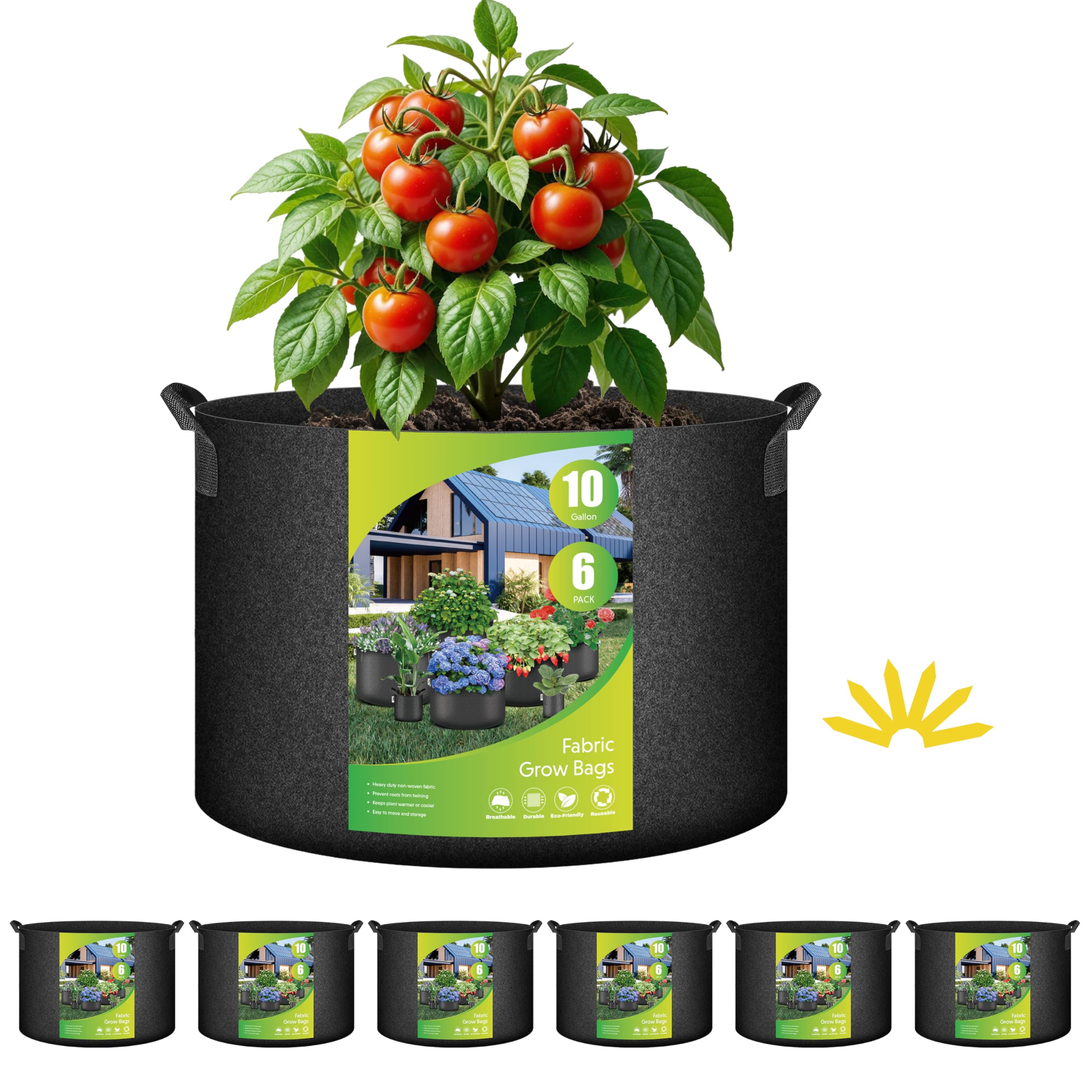
The big-bag option that gives indeterminate tomato vines room to stretch.
At 10 gallons each, these are the largest bags in this roundup — holding 10 gallons of soil versus 5 gallons in the smaller alternatives, which matters when your tomato plant grows eight feet tall and needs a deep root run. The nonwoven fabric is BPA-free and breathable, so water drains through the sides and air prunes the roots, preventing the circling that stunts growth. Buyers report “great bags for transplanting and growing plants,” with one describing them as “very well made” and easy to keep moist.
The 15.9 x 15.9 x 11.9 inch dimensions mean a wide base that won’t tip in wind, but the 6-pack count is lower than the alternatives, so if you have a long row of determinate (bush) tomatoes, you might need two orders. Unlike the 5-gallon picks below, you lose some per-plant quantity, but each plant gets significantly more root space — a smart trade for vining tomato varieties. The sturdy handles make moving them around your patio or balcony simple as the sun shifts.
Owners mention the black color absorbs heat, which can warm roots in cooler spring weather, but one buyer wished a tan option existed for less heat absorption in hot climates. The included plant labels are a small thoughtful extra for keeping track of varieties.
Why You Want It
- 10-gallon capacity — best for tall indeterminate tomatoes
- Breathable nonwoven fabric prevents root circling
- Easy to move with side handles, stores flat for reuse
- Includes 6 plant labels
The Trade-Offs
- Only 6 bags per pack — fewer total plants than the alternatives
- Black fabric can heat up in direct sun
- Standard fabric thickness, not 300G reinforced
Reach for these if: you grow tall slicing tomatoes or want maximum root space per plant.
Look elsewhere if: you are planting bush varieties and need more bags for the budget.
2. Land Guard 10-Pack Fabric Grow Bags 5 Gallon
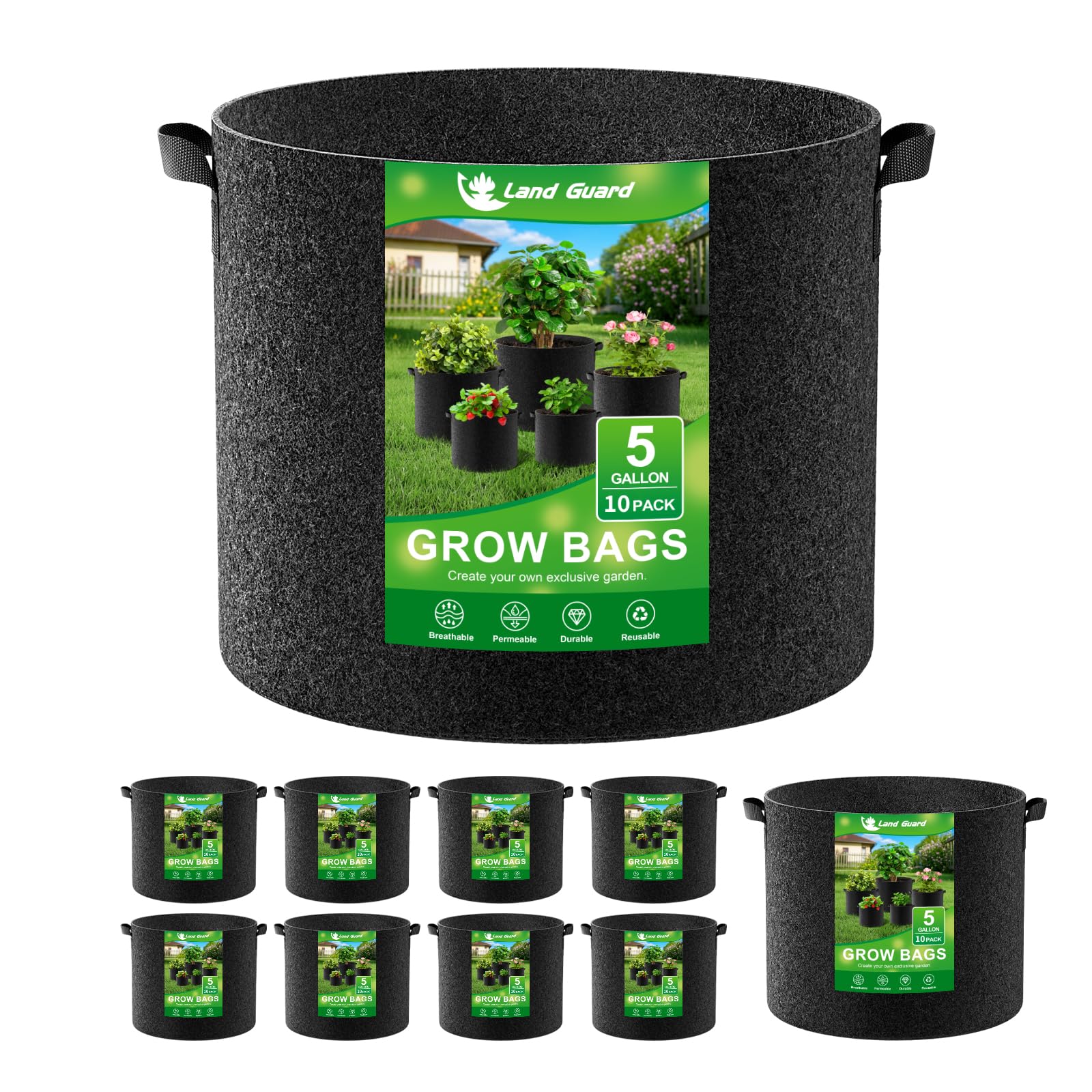
Ten bags for the cost of six, making it the high-quantity choice for planting rows.
This 10-pack gives you 10 bags versus the HealSmart 6-pack, at a similar price — ideal if you are planting a full garden of bush tomatoes, peppers, and herbs. At 5 gallons each, the bags are 9.8 x 11.8 x 11.8 inches, a compact size that fits easily on a balcony or deck without overwhelming the space. The nonwoven fabric is breathable and drains well, with buyers reporting success for a full growing season: one reviewer noted, “I’ve been using these 10-gallon Land Guard fabric grow bags for a full growing season, primarily for tomatoes, and they’ve worked great.”
Compared to the 300G thickened FEED GARDEN pick below, the Land Guard fabric is standard thickness — adequate for one or two seasons, but not designed for multi-year abuse. The handles are heavy-duty and the material stays lightweight, so you can drag a full bag across the patio without it ripping. A few buyers noticed harmless mold on the outside of bags kept consistently moist, but the plants were unaffected.
The one catch: at 5 gallons, indeterminate tomatoes may feel cramped by mid-summer if you do not prune aggressively. These bags shine for determinate (bush) varieties, zucchini, and root crops like potatoes that do not need deep taproot space. Reviewers appreciate the “nice quality, great price, perfect size” for a large makeshift garden.
Why You Want It
- 10 bags per pack — best per-dollar quantity
- 5-gallon size fits standalone and raised bed supplement
- Heavy-duty handles hold up when moving full bags
- Works with automated irrigation systems
The Trade-Offs
- Standard fabric, not as tear-resistant as 300G
- Mold can form on outside in humid conditions
- Too small for large indeterminate tomatoes long-term
Pick this if: you are planting a large number of bush tomatoes and want the most bags for the money.
skip it if: you need deep 10-gallon soil for tall vines that grow all season.
3. FEED GARDEN 5 Gallon Grow Bags 8 Pack – 300G Thickened Fabric
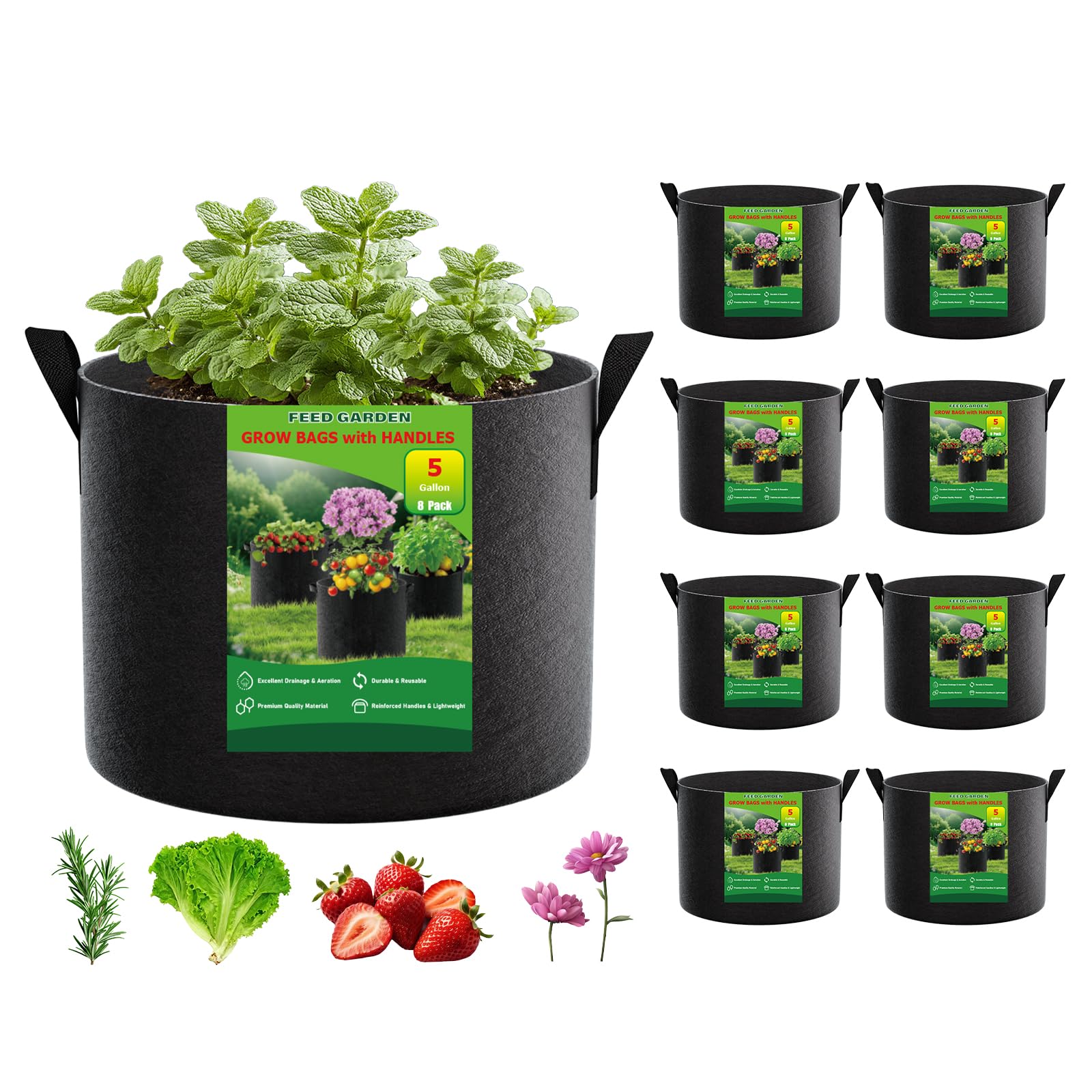
The 300G thickened fabric that survives seasons, not just one summer.
This is the bag that refuses to tear. The 300G (300 grams per square meter) nonwoven fabric is significantly thicker than standard grow bag material, resisting the rips and deformation that cheaper bags suffer after a few months of sun and soil weight. At 5 gallons and 8 bags per pack, it splits the difference between the Land Guard’s 10-pack quantity and the HealSmart’s deeper 10-gallon capacity — a solid middle option for gardeners who want durability across multiple seasons. One buyer calls them “durable fabric, strong stitching, good drainage and airflow.” Customers note multiple years of use for cherry tomatoes and potatoes.
The reinforced double-stitched handles are the standout upgrade: you can grab a fully-soil-filled bag by one handle without the stitching pulling apart, making it easy to chase sunlight across a patio. The bags drain fast — almost too fast in hot weather, as reviewers warn they “dry faster than plastic pots in heat, requiring more frequent watering.” That is the price you pay for preventing over-watering and root rot.
At 11.8 x 11.8 x 9.8 inches, the bags are slightly shorter than the Land Guard, so they hold a bit less soil depth. For determinate tomatoes, peppers, and herbs that is fine, but a big indeterminate variety will need the 10-gallon HealSmart instead. The folds-flat storage is a real bonus for apartment gardeners with limited winter space.
Why You Want It
- 300G thickened fabric — resists tearing for multi-season use
- Double-stitched handles hold weight well
- Excellent drainage and airflow for healthy roots
- Folds flat, lightweight for off-season storage
The Trade-Offs
- 5-gallon capacity limits tall indeterminate tomatoes
- Dries faster than plastic pots — need more frequent watering
- 8-pack gives fewer bags than the 10-pack Land Guard
Buy it for: a durable bag that will still look good next year, for medium-sized plants and bush tomatoes.
Consider something else if: you need 10 gallons per plant or the lowest possible upfront cost per bag.
Understanding the Specs
Capacity: 5 vs 10 Gallons
This is the single most important decision. A 5-gallon bag gives a determinate (bush) tomato enough space to fruit well. An indeterminate (vining) tomato needs 10 gallons to let roots spread freely — otherwise it gets rootbound, the plant shows signs of stress, and yields drop. Match the bag to the variety you are planting.
Fabric Thickness (300G vs Standard)
Standard nonwoven fabric (around 150-200G) works for one season but can stretch and tear when moved. 300G fabric is 300G versus standard 150-200G — it resists tearing, holds its shape when wet, and survives multiple seasons of sun and handling. The trade-off is slightly less airflow, but for most gardeners the durability wins.
Drainage and Air Pruning
Fabric bags drain through the entire surface, not just small bottom holes. This prevents waterlogged soil and root rot, and it triggers air pruning: when root tips reach the fabric edge and hit oxygen, they stop circling and branch out inside the pot. That creates a dense mat of roots that absorbs nutrients better than a twisted-up rootball from a plastic pot.
Handle Construction
Handles take the most stress when you drag a full bag across a patio. Look for double-stitched or reinforced handles — single-stitch handles often rip out mid-season. The FEED GARDEN bags use this reinforcement; the HealSmart and Land Guard bags use standard side handles that work fine for occasional repositioning.
FAQ
Is 5 gallons enough for a tomato plant?
Will a 10-gallon bag fit on a balcony?
How many grow bags do I need for a tomato garden?
Can I reuse fabric grow bags next year?
Do grow bags dry out too fast for tomatoes?
Will mold grow on fabric grow bags?
What size grow bag is best for cherry tomatoes?
Are black grow bags bad for roots in hot climates?
Can I use grow bags indoors for tomatoes?
How long do fabric grow bags last?
Final Thoughts: The Verdict
For most tomato gardeners, the grow bags for tomatoes winner is the HealSmart 10 Gallon 6 Pack because its 10-gallon capacity gives indeterminate vines the room they need to produce heavy yields. If you want the most bags for the budget and focus on bush tomatoes, grab the Land Guard 10-Pack 5 Gallon. And for multi-season durability with reinforced handles, the standout is the FEED GARDEN 300G 8 Pack.
How We Picked
We do not accept paid placement. Every pick is matched to a real buyer and a real use-case; we do not hands-on test units.
Sources & Methodology
Specifications: manufacturer listings and product documentation. Review insights: verified customer reviews, as of July 2026. Pricing: not shown on this page (it changes often); check the current price via the retailer link.
As an Amazon Associate, Lawn Gear Lab earns from qualifying purchases. This does not affect which products we feature.