
Specs are compiled from manufacturer listings and verified buyer reviews and can change over time — please confirm the key details on the product page before buying.
If you have ever yanked a root-bound plant out of a plastic container, you already know the problem — the circling roots choke the plant long before it reaches your table. Fabric grow bags solve that in one simple move: they expose roots to air, which naturally prunes them and forces the plant to branch out instead of tangling up. The real question is which one holds up through a full season of sun, rain, and repeated watering without falling apart.
I’m Rikta — the founder and writer behind Lawn Gear Lab. This guide is built by comparing the manufacturers’ published specifications and the patterns across verified customer reviews, so you get each pick’s real strengths and trade-offs instead of marketing spin.
Whether you are planting tomatoes on a balcony or potatoes in a raised bed, the right fabric bag makes the difference between a root system that thrives and one that stalls. Here is everything you need to know before picking the best grow bags for plants for your space.
Our Picks at a Glance

How To Choose The Best Grow Bags For Plants
Fabric grow bags look simple, but the small differences between them determine how long they last and how well your plants grow. Here are the three specs that matter most for a smart buy.
Fabric Weight and Thickness
The weight of the nonwoven fabric is listed in grams — 300G is the baseline for a bag you can rely on for more than one season, while 500G is noticeably heavier and tougher. Lighter bags (below 300G) tend to sag, tear at the seams, or develop holes by mid-summer. Heavier fabric also holds its shape better when filled with damp soil, so the bag does not slump over.
Size and Capacity
Capacity is measured in gallons, and the number you choose directly affects what you can grow. A 5-gallon bag is the minimum for a single tomato or pepper plant. A 7-gallon bag gives roots more room to spread, which often means larger harvests. A 15-gallon bag is what you want for potatoes or sprawling vegetables. The trade-off is simple: bigger bags hold more soil and stay moist longer, but they are heavier to move once filled.
Handle Construction
A filled fabric bag can easily weigh 30 to 60 pounds, so handles that tear off mid-move are a real problem. Look for reinforced handles — webbing straps or doubled-over fabric that is stitched into the body of the bag with an X-pattern. Handles that are just loops of the same thin fabric as the bag itself are the first thing to fail.
Quick Comparison
| Model | Best For | Capacity | Fabric Weight | Quantity | Amazon |
|---|---|---|---|---|---|
| Cavisoo 5-Gallon 24-Pack★ Best Overall | Best Overall | 5 gallons | 300G | 24 | Amazon |
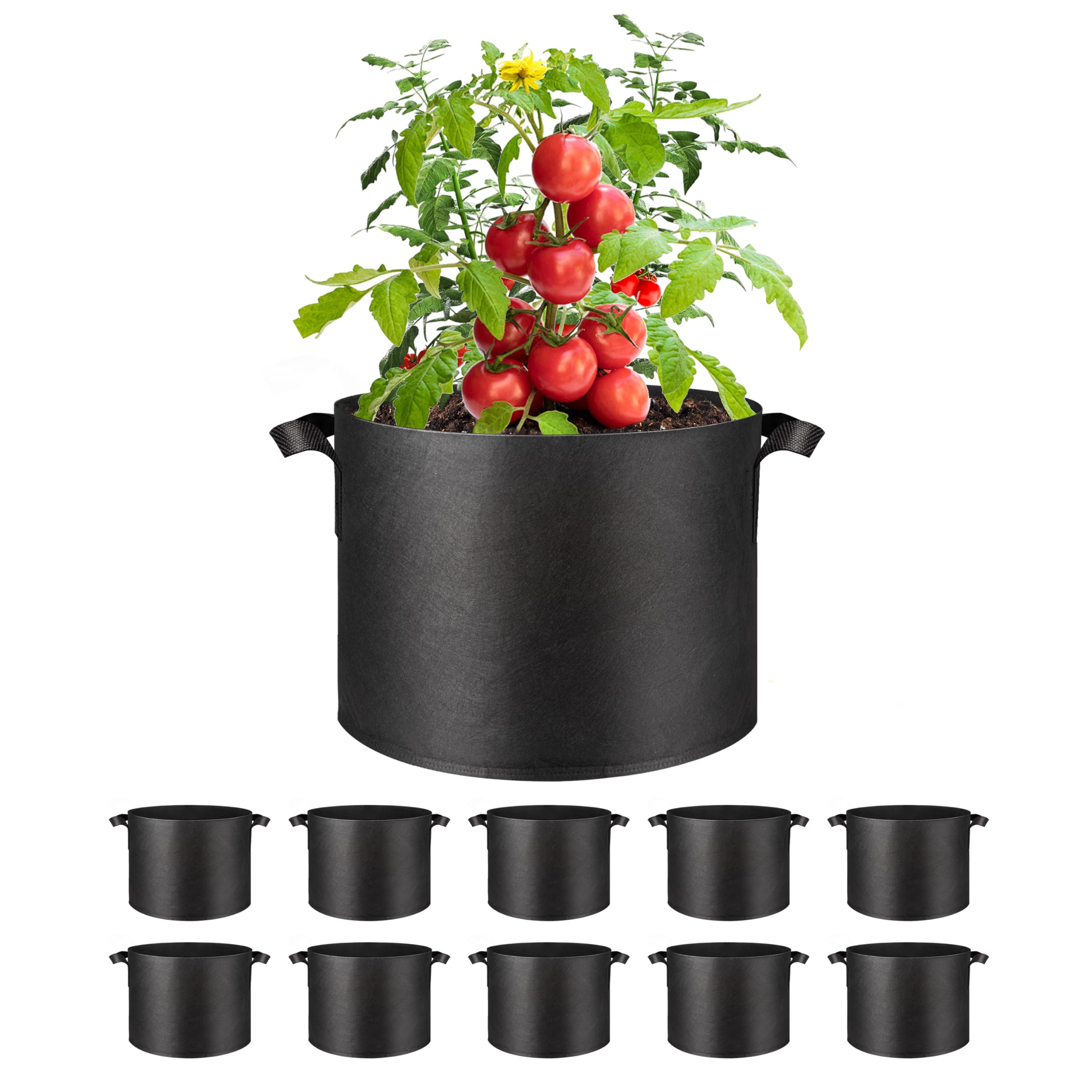
| Simple Deluxe 5-Gallon 10-PackTop Performer | Top Performer | 5 gallons | 300G | 10 | Amazon |
| HealSmart 7-Gallon 6-Pack | Best Value | 7 gallons | — | 6 | Amazon |
| NACHLYNN 7-Gallon 5-Pack | Premium Pick | 7 gallons | — | 5 | Amazon |
| AC Infinity 3-Gallon 5-Pack | Compact Pick | 3.4 gallons | 500G | 5 | Amazon |
| PAMAZY 15-Gallon 4-Pack | Best Display | 15 gallons | — | 4 | Amazon |
In‑Depth Reviews
1. Cavisoo 24-Pack 5 Gallon Grow Bags
Our pick — over 4.5★ from 850+ verified ratings; the strongest balance of quality and price.
Nearly 900 owners agree this is the bag to start with — durable, cheap per bag, and proven for years.
The thing everyone raves about with these bags is how well they hold up: the 300G thick nonwoven fabric is built to be reused for over three seasons, and the reinforced polypropylene webbing handles use X-shaped stitching that does not rip when you drag a full bag across the patio. At 5 gallons each, they are roomy enough for tomatoes, cucumbers, or a single potato plant — one gardener reports growing several vegetables successfully with roots that poke through the bottom and release cleanly like velcro.
The honest trade-off here is watering frequency. Because the fabric breathes so well, water runs off quickly — one owner who tracked it carefully reports that in 80s°F weather the bags need watering twice a day, and three times a day when temperatures hit the 90s°F. Some owners note brown runoff that suggests a bit of soil loss with each watering. If you are an in-ground gardener used to watering once a week, this change in rhythm takes some adjusting.
The quality and the value for money are the most-discussed positives — durability alone earns high praise from 28 owners — while the drainage gets mixed reactions because the same feature that prevents root rot also demands a more attentive watering schedule. For the price per bag, this set makes sense for anyone starting a large container garden or replacing plastic pots for a whole season.
Why owners keep buying them
- 300G nonwoven fabric lasts multiple seasons — one owner reports reusing them for over 3 years
- Reinforced webbing handles with X-stitching hold up under full bags
- Breathable material prevents root circling for healthier root systems
The watering adjustment
- Dries out fast — needs twice-daily watering in 80s°F, three times in 90s°F
- Some buyers report soil loss through brown runoff during watering
Best for: Gardeners starting a big container garden on a budget who want a proven bag that lasts multiple seasons and are ready to water daily.
Not for you if: You are an inconsistent waterer — the breathable fabric means this bag dries out too fast to skip a day in hot weather.
2. Simple Deluxe Grow Bags 5 Gallon 10 Pack
Thick, tough felt-like material that holds more soil than you expect from a 5-gallon bag.
Quality is the single most-praised feature here — 35 owners call it out — and it shows in the 300G thickened nonwoven fabric that owners describe as tough and felt-like. One gardener reports that the thick material holds as much as a full wheelbarrow load of soil, and another notes that the double-thick, double-stitched handles let you carry a heavy pot by a single handle without it tearing. The BPA-free fabric is also highly permeable, meaning roots get air-pruned just as well as with any premium brand.
What sets this bag apart is its moisture retention relative to other fabric pots. Multiple owners mention that it holds moisture better than standard plastic pots — one gardener switching from plastic to these Simple Deluxe bags noticed that their peppers grew faster than the same peppers planted directly in the ground. The 12 x 12 x 10 inch dimensions give it a stable, squat shape that does not tip over easily, and the fabric is thick enough that the bag holds its shape without sagging even when fully filled.
The double stitching on the handles and the overall construction durability are what earn it the Top Performer slot. The quality is consistent enough that owners say they will reuse them next season. At 10 bags per pack, this is a focused, reliable set for the patio gardener who would rather buy once than replace bags halfway through summer.
What makes it stand out
- 300G thickened nonwoven fabric — owners call it tough and felt-like, holding its shape when full
- Double-thick, double-stitched handles let you carry a pot by one handle without tearing
- Retains moisture better than standard plastic pots — one owner found peppers grew faster in these bags
One thing to note
- Some owners have not tested the handles fully so long-term handle durability is unconfirmed in all cases
Reach for this if: You want a thick, well-built 5-gallon bag that holds moisture better than typical fabric pots and comes with handles tough enough to carry solo.
Think twice if: You need more than 10 bags for a large garden — the 24-pack above gives you more bags for a similar overall investment.
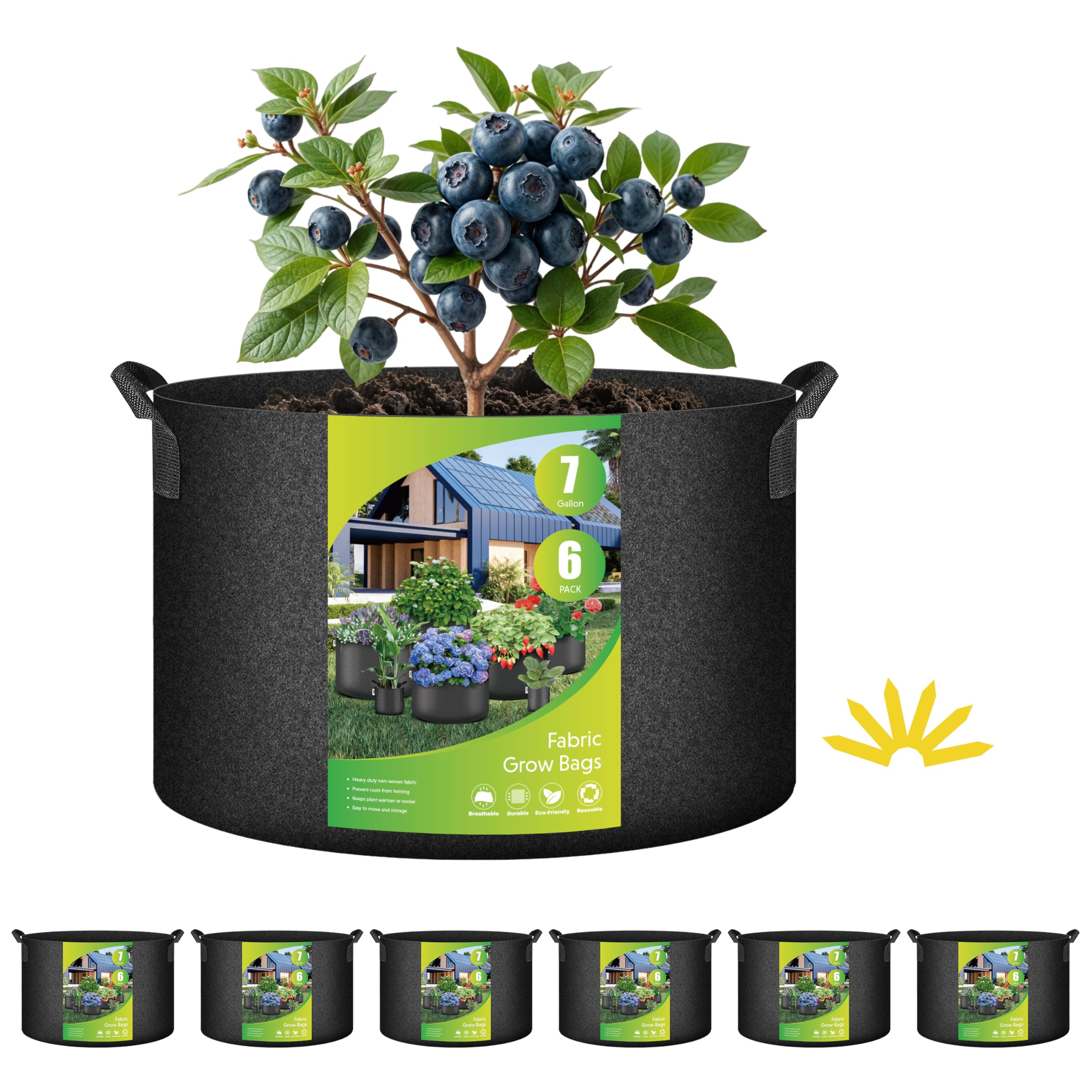
3. HealSmart 7 Gallon 6 Pack Nonwoven Grow Bags
A roomier 7-gallon bag that gives your tomato and pepper roots the extra space they crave.
Durability and quality are tied as the most praised aspects here — 39 owners call out each — and the HealSmart bags earn that trust through thick, quality BPA-free nonwoven fabric that owners describe as having just the right thickness without being heavy. The bags measure 14.3 inches in diameter and 9.9 inches tall, and that extra 2 gallons over a standard 5-gallon bag makes a real difference: one owner growing potatoes noted that the opening stays wide enough to let sun in even before the bag is fully filled, which is great for starting spuds.
The handles are sewn into the body and owners find them useful for moving pots around, though the real value here comes from the included 6 plant labels — a small addition that saves a separate purchase. The bags drain well and keep soil moist without staying waterlogged. One gardener grew lettuce on a small balcony and reported that the drainage was excellent and the single-plant-per-bag approach worked perfectly for a compact space.
The catch is size perception: 33 owners have mixed opinions about whether these bags are big enough for vegetables. While the 7-gallon capacity is a step up from the standard 5-gallon bag, some gardeners who expected a larger soil volume for sprawling plants like full-sized tomatoes found the dimensions a bit short for their needs. For a balcony or small raised bed where you can move bags around, this set delivers great value with the labels included.
Where it wins
- 7-gallon capacity gives roots more space than a 5-gallon bag — the opening stays wide for starting potatoes
- BPA-free nonwoven fabric with a thickness owners praise — durable enough to reuse
- 6 plant labels included, saving a separate purchase for organized gardeners
Where it falls short
- Size gets mixed reactions — some owners find 7 gallons smaller than expected for larger vegetable plants
Grab this for: Balcony and small-space gardeners who want a step up from 5-gallon bags without jumping to 10 gallons — the labels are a bonus.
Look elsewhere if: You grow sprawling tomatoes or large root vegetables — some owners found the 7-gallon size limiting for full-sized plants.
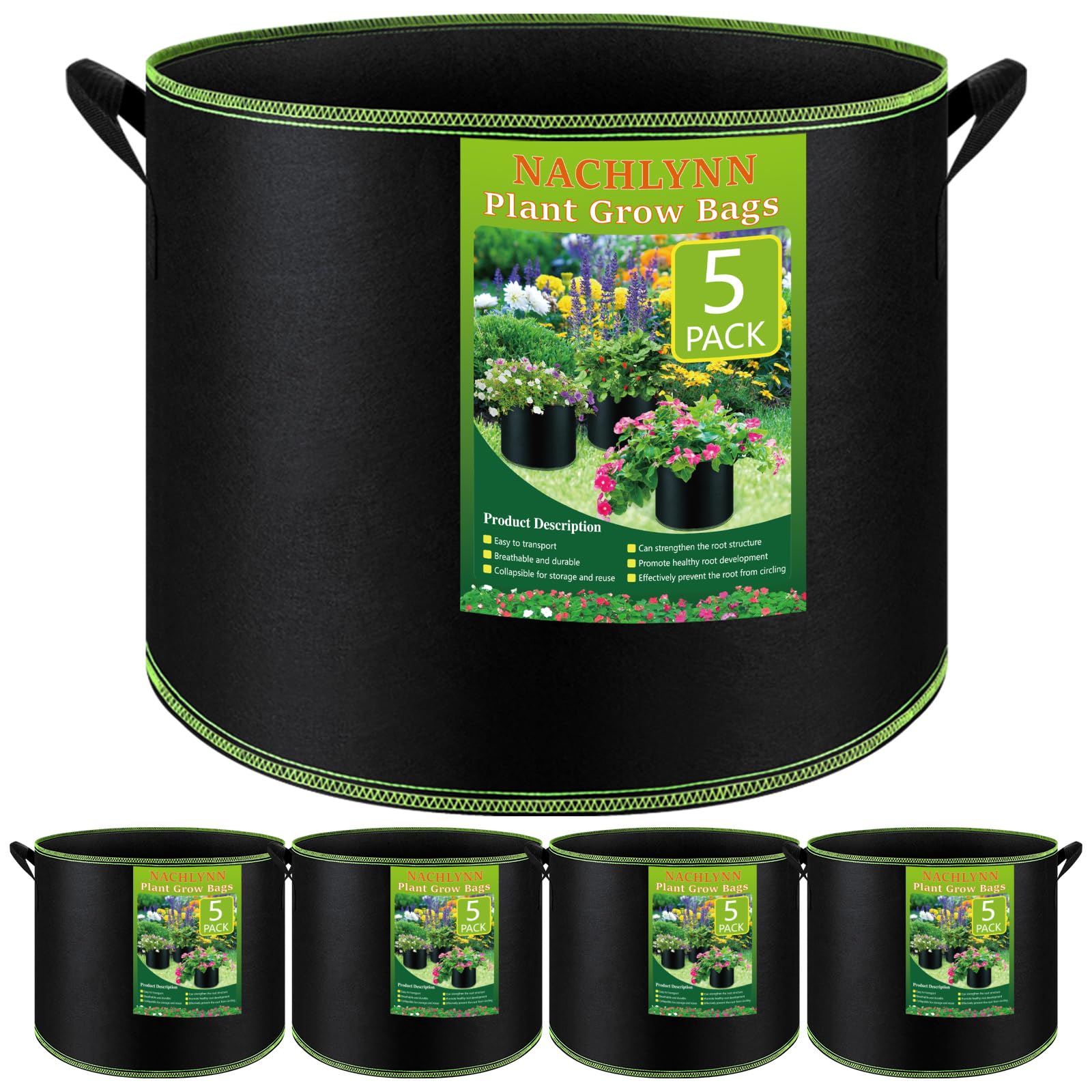
4. NACHLYNN 5-Pack 7 Gallon Grow Bags
Self-supporting fabric that does not flop over — this bag stays standing even when half-full.
Quality wins the day here with 26 owners naming it the top reason to buy, and the NACHLYNN bags deliver on a simple but critical detail: they do not sag. One gardener put it bluntly — “I love how they support themselves and don’t flop over” — which is a bigger deal than it sounds because a sagging bag reduces soil volume and can crush roots. The thickened nonwoven fabric at 13.8 inches in diameter and 11 inches tall gives you a 7-gallon capacity with a taller profile than the HealSmart bags, which some owners prefer for deeper root vegetables.
The handles are reinforced and thickened, sewn directly into the bag body, and the bags are breathable enough to prevent excess water from pooling while promoting healthy root growth. A gardener using these for tomatoes on a patio reports that the plants thrive with good drainage and the bags fit neatly into a small trellis setup. When the season ends, the bags fold flat for compact storage and can be washed and reused.
The 18 owners with mixed opinions on size are the main signal here — same as the HealSmart pick, 7 gallons works great for medium plants but some gardeners pushing toward larger harvests wish they had gone bigger. At 5 bags per pack, this is a mid-quantity set for the gardener who wants fewer, higher-quality bags rather than a bulk pack of standard ones.
Why owners choose it
- Self-supporting fabric holds its shape — one owner says “they support themselves and don’t flop over”
- Reinforced and thickened handles sewn into the bag for safe movement when full
- Breathable nonwoven fabric prevents waterlogging while promoting root health
The honest caveat
- Size gets mixed reactions — some owners find 7 gallons limiting for larger vegetable plants and wish they sized up
Pick this if: You want a bag that stays standing without flopping — ideal for a tidy patio setup with a small trellis.
Pass if: You need a bulk quantity of bags for a large garden — the 5-pack works for focused planting, not a massive crop.
5. AC Infinity Square Heavy Duty Fabric Pots, 3 Gallon 5-Pack

The thickest fabric in this round — 500G — and a square shape that fits grow tents like a puzzle.
Quality is the most-discussed positive at 29 mentions, and the AC Infinity bags justify that reputation with a 500G nonwoven fabric that is a clear step above the 300G standard. Owners mention that the stitching and fabric feel genuinely sturdy — one gardener who had bags that disintegrated after a year says the AC Infinity ones “wear like iron and seem larger than other 3 gallon bags.” The square shape is a practical advantage for growers using tents or shelves, because the flat sides eliminate wasted triangular gaps that round bags leave behind.
The true capacity is 3.4 gallons — slightly above the labeled 3 gallons — and the BPA-free fabric includes fabric loops for plant stakes, so you can run a stake through the loop to train climbing plants without puncturing the bag’s interior. The nylon handles are set into reinforced stitching, and owners find the bags lightweight enough to carry even when full of damp soil. One gardener using these in a grow tent specifically appreciates the square shape for maximizing floor space.
Sturdiness and drainage get mixed reactions from a smaller set of owners — 18 mention sturdiness as a mixed point, meaning some found the bag less rigid than expected, and 6 give drainage a mixed rating, likely because the thick fabric holds moisture differently than thinner bags. For smaller plants like peppers, chili peppers, or herbs in a controlled indoor or tent environment, this is a precision tool rather than a bulk generalist.
What earns the premium
- Industry-leading 500G thick nonwoven fabric — owners say they “wear like iron” and last longer than standard bags
- Square shape with flat sides boost space in grow tents and on shelves — no wasted triangular gaps
- Fabric loops allow plant stake passthrough for training climbing plants without bag damage
Not for everyone
- Sturdiness is mixed — some owners expected a more rigid bag from the thick fabric
- At 3.4 gallons, too small for tomatoes or sprawling vegetables — best for herbs, peppers, and tent use
Reach for this if: You grow in a tent or on a shelf and need square bags that pack tight — the 500G fabric is built for years of reuse.
Not for you if: You want large bags for tomato or potato plants — 3.4 gallons is sized for compact crops only.
6. PAMAZY 4Pcs 15 Gallon Potato Grow Bags with Harvest Window

A 15-gallon bag with a clever harvest window — open the flap instead of digging up the whole plant.
The most innovative feature in the entire list is the dual-window design on these PAMAZY bags. A clear visible window on top lets you check soil moisture and root development without guessing, and a bottom harvest window with a hinge flap lets you pull potatoes or carrots directly out of the side of the bag without digging up the entire plant. The hinge design keeps soil from spilling out when you open the flap — a detail that one owner notes is a thoughtful upgrade over basic window bags.
Quality and sturdiness lead the praise here — 28 and 25 owners respectively — and the bags are made from polypropylene nonwoven fabric that drains well while retaining moisture. One gardener who started potatoes on March 17 reports the plants are “thriving and towering over the tops” by mid-spring. The reinforced extended handles are stitched from the bottom for extra support, which matters because a 15-gallon bag filled with damp soil can easily weigh over 100 pounds. The set comes with 4 bags at 15 gallons each — a serious amount of growing space for root crops.
The honest limitation is practical: the windows may let in light, which is not ideal for potatoes that prefer darkness, and the flap hinges could loosen over time with repeated use. One owner also notes that the bags may slump if not filled gradually, so you need patience when setting them up. For any gardener growing potatoes, carrots, or other root vegetables where harvesting without damage matters, these bags justify their higher-end position through the window alone.
The smart design
- Dual-window design — clear top door for moisture checks and bottom harvest flap with hinge to prevent soil spill
- Reinforced extended handles stitched from the bottom support the full 15-gallon weight
- Quality and sturdiness are the most-praised aspects — 28 and 25 owners respectively
What to watch for
- Windows may let in light that is not ideal for potatoes that prefer darkness
- Flap hinges may loosen over time with repeated harvesting — treat them gently
- Bag may slump if not filled gradually — needs patient soil addition
Best for: Potato and carrot growers who want to harvest without destroying the plant — the window feature genuinely works.
Not for you if: You grow in a sunny spot where light entering through the windows could affect light-sensitive root crops.
Understanding the Specs
Fabric Weight (G)
The number printed on the bag — like 300G or 500G — refers to the weight of the nonwoven fabric in grams per square meter. A higher number means denser, thicker material. 300G is the standard for bags that last a couple of seasons. 500G is noticeably tougher and tends to hold its shape better, but it also costs more and can feel stiffer when folding for storage.
Air Pruning and Root Circling
When a root tip reaches the edge of a fabric bag, it hits air instead of a solid wall. That air exposure kills the tip (air pruning), which forces the root to branch sideways and create a dense, fibrous root system. In a plastic pot, the same root would hit the wall and circle around, eventually strangling the plant. Fabric bags prevent circling entirely by design.
Gallons vs. True Capacity
Some bags list a “true capacity” that is slightly higher than the rounded label — AC Infinity’s 3-gallon bag holds 3.4 gallons, for example. Always check the official specs rather than just the title. A bag’s usable volume also depends on how much it slumps: a bag that holds its shape gives you the full gallon capacity, while a sagging bag reduces space for roots.
Handle Construction Types
There are two main handle types. Reinforced webbing handles (polypropylene straps sewn into the bag) are the strongest and do not stretch. Fabric loop handles (cut from the same nonwoven material as the bag) are cheaper but can tear under the weight of wet soil. Look for X-shaped stitching where the handle meets the bag — that reinforcement spreads the load across more fabric.
FAQ
How long do fabric grow bags last?
Do grow bags need drainage holes?
Can I grow tomatoes in a 5-gallon grow bag?
What size grow bag do I need for potatoes?
How often should I water plants in fabric grow bags?
Can I reuse fabric grow bags season after season?
Do fabric grow bags prevent root rot?
Are square grow bags better than round ones?
Final Thoughts: The Verdict
For most gardeners, the grow bags for plants winner is the Cavisoo 5-Gallon 24-Pack because the 300G fabric durability, reinforced webbing handles, and sheer quantity per pack give you a proven bag that nearly 900 owners trust across multiple seasons. If you want thicker fabric and square shape for a tent or shelf setup, grab the AC Infinity 3-Gallon Square Pots — the 500G material is the toughest in this round. And for root-crop gardeners who have dug through an entire bed just to find three potatoes, the PAMAZY 15-Gallon Bags with the harvest window is the one to reach for: open the flap, pull your crop, and leave the plant undisturbed.
How We Picked
We do not accept paid placement. Every pick is matched to a real buyer and a real use-case; we do not hands-on test units.
Sources & Methodology
Specifications: manufacturer listings and product documentation. Review insights: verified customer reviews, as of July 2026. Pricing: not shown on this page (it changes often); check the current price via the retailer link.
As an Amazon Associate, Lawn Gear Lab earns from qualifying purchases. This does not affect which products we feature.