
Specs are compiled from manufacturer listings and verified buyer reviews and can change over time — please confirm the key details on the product page before buying.
A greenhouse is only as strong as what it sits on. You can buy the best frame and the clearest panels on the market, but if the base buckles in a storm or rots after one season, your plants pay the price. That is why a greenhouse with a proper floor matters — it is the foundation that keeps everything upright, dry, and usable year after year. This guide cuts through the marketing to find the greenhouses that deliver a real, load-bearing floor you can actually walk on and work from.
I’m Rikta — the founder and writer behind Lawn Gear Lab. This guide is built by comparing the manufacturers’ published specifications and the patterns across verified customer reviews, so you get each pick’s real strengths and trade-offs instead of marketing spin.
Whether you are starting seedlings in spring or protecting tender perennials through winter, a solid floor keeps your greenhouse anchored and your tools organized — this is what makes the difference between a structure you fight with and one that just works. That is exactly why finding the right greenhouse with floor is the single biggest decision you will make for your backyard growing setup.
Our Picks at a Glance
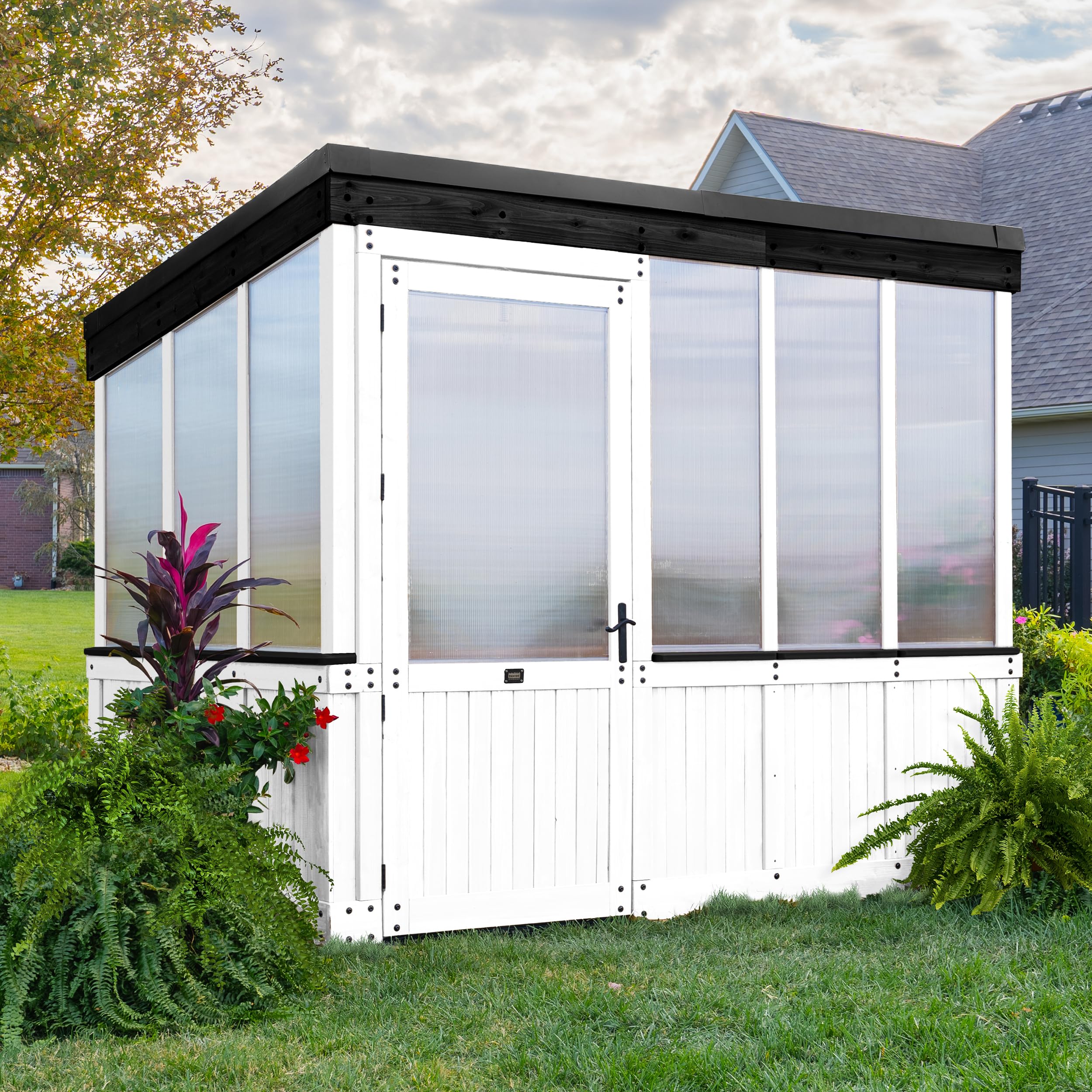

How To Choose The Best Greenhouse With Floor
A greenhouse floor does more than just give you a place to stand. It spreads the weight of the entire structure, prevents ground moisture from rotting your frame, and stops pests from digging up through the soil. Here are the three things to get right before you buy.
Frame Material: Wood vs. Aluminum
Wood, especially cedar, naturally resists decay and handles heavy snow loads without bending. But it is heavy — expect to anchor it on a permanent base. Aluminum is lighter, rust-resistant, and easier to assemble, but it needs a solidly built internal floor or ground anchor to keep it from lifting in high winds. Wood wins on brute strength; aluminum wins on assembly speed and corrosion resistance.
Polycarbonate Thickness and UV Protection
The panels let light in, but they also take the weather. Cheaper greenhouses use single-wall panels that yellow after a few seasons. Look for twin-wall or 4mm polycarbonate — it traps a layer of air for insulation and blocks harmful UV rays without blocking the light your plants need. The data shows that 4mm twin-wall panels block up to 99.9% of UV, which prevents leaf burn while keeping the interior warm.
Ventilation and Door Design
A greenhouse traps heat fast. If you cannot vent that heat, your plants cook on the first sunny afternoon. An adjustable roof vent is non-negotiable. Sliding doors save interior space, while hinged doors seal tighter. Lockable doors matter if you have children, pets, or expensive tools inside.
Quick Comparison
| Model | Best For | Frame Material | Dimensions (L x W x H) | Weight | Amazon |
|---|---|---|---|---|---|
| Backyard Discovery Willow★ Best Overall | Year-round serious gardening | Cedar Wood | 114.25″ x 72.75″ x 94″ | 571 lb | Amazon |
| Palram Canopia MythosTop Performer | Proven long-term durability | Aluminum / Galvanized steel base | 120″ x 72″ x 84″ | 96.3 lb | Amazon |
| 6X8FT MilleLoom | Budget-friendly starter | Aluminum | 94.8″ x 70.8″ x 75.6″ | 77.6 lb | Amazon |
| Garvee 6 x 10 FT | Mid-sized value with water management | Aluminum | 120″ x 72″ x 76″ | 89.6 lb | Amazon |
| AirWire 8×12 FT | Large space on a budget | Aluminum | 142.3″ x 93.7″ x 81.3″ | — | Amazon |
| MCombo Wooden | Small-space stylish growing | Wood | 57.9″ x 28.5″ x 80.5″ | 109.8 lb | Amazon |
| MUPATER 8′ x 12′ | Heavy-duty wooden walk-in | Cedar Wood | 144.7″ x 101.97″ x 90.55″ | 283 lb | Amazon |
In‑Depth Reviews
1. Backyard Discovery Willow 9′ x 6′
Our pick — over 4.5★ from 100+ verified ratings; the strongest balance of quality and price.
A cedar fortress that laughs at storms and keeps your plants cozy through winter.
This greenhouse is in a league of its own for the floor. The 100% cedar wood frame gives you a solid, walk-in base that supports the entire structure — at 571 pounds. You are not bolting this to a patio; you are building a permanent garden room. The all-weather durability is backed by real testing: the Pro-Tect system handles up to 2,800 pounds of snow load (about 30 inches of snow) and winds up to 100 mph, as long as you anchor it per the manual. Owners confirm this: “That first heavy storm and wind came through and it stood solid.” The 54 square feet of interior space gives you 13 linear feet of fixed staging shelves, plus a built-in workstation.
The ventilation is comprehensive: You get both a temperature-activated exhaust fan and an easy-open window for natural air circulation, plus a PowerPort with three electrical outlets and three USB ports. That means you can run a heater, a fan, and grow lights without extension cords snaking across the floor. The exterior and interior hose hook-ups make watering a one-step job. Assembly is a project — pre-cut, pre-drilled, and pre-stained pieces with the BILT app guidance — but the accuracy of the pre-drilling is praised as “amazing” by owners.
The trade-off is the commitment. At 571 pounds and roughly 9.5 feet by 6 feet, this is not something you move after the first season. The roof caulking requires care; some owners suggest using gaskets. But the 5-year warranty and the sheer weight of the cedar frame mean this is the one pick that genuinely feels built to outlast your gardening hobby.
Why it dominates
- 100% cedar frame with natural decay resistance
- Withstands 100 mph winds and 2,800 lb snow load
- Built-in PowerPort with 3 outlets and 3 USB ports
- Temperature-activated exhaust fan for automatic venting
- Exterior and interior hose hook-ups for easy watering
What to plan for
- Heavy unit at 571 lb requires permanent placement
- Roof caulking is tricky — owners recommend extra care
- Assembly takes serious time despite excellent pre-drilling
Best for: The serious home gardener who wants one greenhouse that handles snow, wind, watering, and power without compromise.
Not for: Anyone who needs a portable structure or wants to finish assembly in a single weekend.
2. Palram Canopia Mythos 6′ x 10′
A lightweight frame with a decade of owner stories proving it can take a beating.
This greenhouse has been in backyards for long enough to have a real track record. The 4 mm twin-wall polycarbonate panels block up to 99.9% of UV rays, diffusing harsh sunlight so your plants get light without leaf burn. The rust-resistant aluminum frame is paired with a galvanized steel base that forms the floor — it supports snow loads of 15.4 pounds per square foot and wind gusts of 56 mph when anchored properly. Buyers report surviving five years of snow, rain, high winds, and hail with no damage to the frame, door, or hinges. The internal temperature ranged from 60°F to 115°F, so you need a heater for cold nights.
Where the Mythos stands apart from budget aluminum kits is the detail work. The adjustable roof vent, built-in rain gutters, and lockable handle with magnetic catch are features usually found on much more expensive models. The door is a sliding hinged design that seals tighter than the budget options. But the assembly is the big caveat — it is a picture-only 56-page manual, and owners consistently say it takes two people two full days. One owner called the door section “a nightmare,” noting panels can slide out and the door sags diagonally without a metal cross brace.
The huge owner community (hundreds of reviews) means you will find fixes for every quirk. The most common advice: anchor it immediately, use duct tape on panel edges to stop rattling, and add a louvered vent for better airflow. The 5-year limited warranty adds confidence. This is not an easy build, but it is a proven one.
What holds up
- Twin-wall 4mm polycarbonate blocks 99.9% UV
- Snow load capacity of 15.4 psf and wind rating of 56 mph
- Built-in rain gutters and lockable door with magnetic catch
- Rust-resistant aluminum frame with galvanized steel base
What slows it down
- Picture-only 56-page manual makes assembly frustrating
- Anchor kit not included — structure must be secured immediately
- Door requires extra bracing to prevent sagging
Ideal for: The DIY gardener who values proven long-term durability over an easy Saturday build.
Look elsewhere if: You want a greenhouse you can assemble solo in under eight hours.
3. MCombo Wooden Greenhouse 57.9″
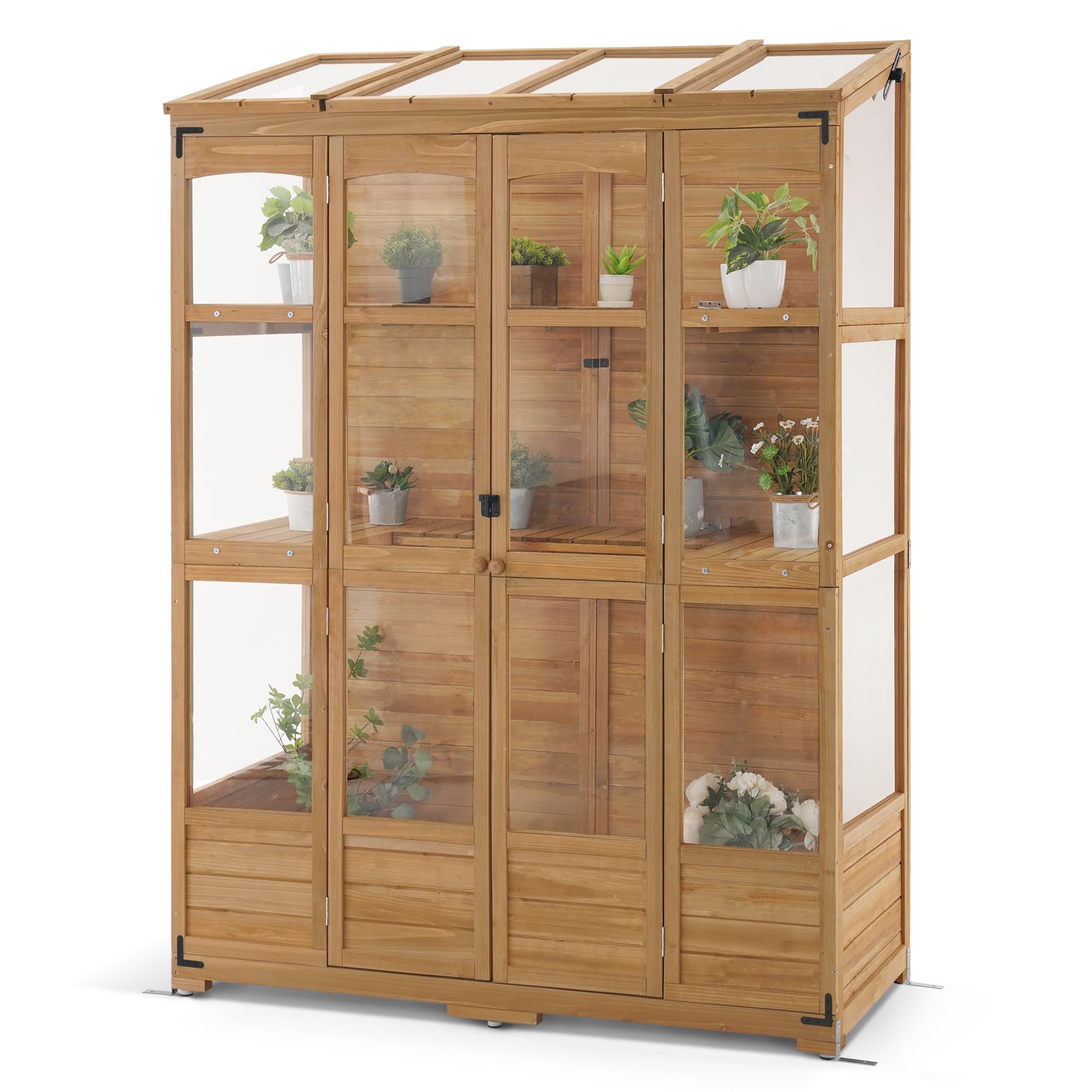
A compact wooden greenhouse that looks like furniture and actually keeps cats out.
This is the greenhouse for the gardener with limited patio space and an eye for design. At 57.9 inches long, 28.5 inches wide, and 80.5 inches tall, it fits into a corner that larger kits cannot reach. The wood frame is a natural look that owners call “beautiful” and “stunning.” But the real win is the floor — the reinforced metal brackets and two anti-fall devices give you a stable, walk-in base that feels solid underfoot, unlike the flimsy aluminum bases on some budget options. One owner raves: “It keeps my plants perfectly safe from my cat and other animals.”
The two-tier shelves inside provide good organization for seedlings, small plants, and hand tools. The openable roof bolts let you tilt the roof for ventilation in warm weather, which is essential for such an enclosed space. Assembly takes about six hours solo or three hours with two people, and the instructions are detailed with labeled pieces — a welcome change from the picture-only manuals common in this category. However, the wood does come with some puttied-over flaws, and owners recommend using power tools rather than the included manual screwdriver to avoid fatigue.
The biggest honest caveat: the price. Multiple owners say it is effective and attractive, but not worth the full retail. One owner said it “should be less expensive” by about. The sturdiness gets mixed feedback — it is not built for heavy snow loads or high winds like the Backyard Discovery. But for a sheltered backyard spot with moderate weather, this is a genuinely attractive and functional little grow house.
What stands out
- Wooden frame with reinforced metal brackets for stability
- Two-tier shelves for organized plant and tool storage
- Openable roof bolts for adjustable ventilation
- Compact dimensions fit small patios and balconies
What to keep in mind
- Not built for heavy snow loads or extreme wind
- Price feels high relative to the materials used
- Wood putty covers some flaws in the finish
Choose it for: A small-space, look-good greenhouse where you need a solid floor and pest protection.
Move on if: You need a large, weather-beating structure or feel the price-to-size ratio is off.
4. MUPATER 8′ x 12′ Walk-in Greenhouse
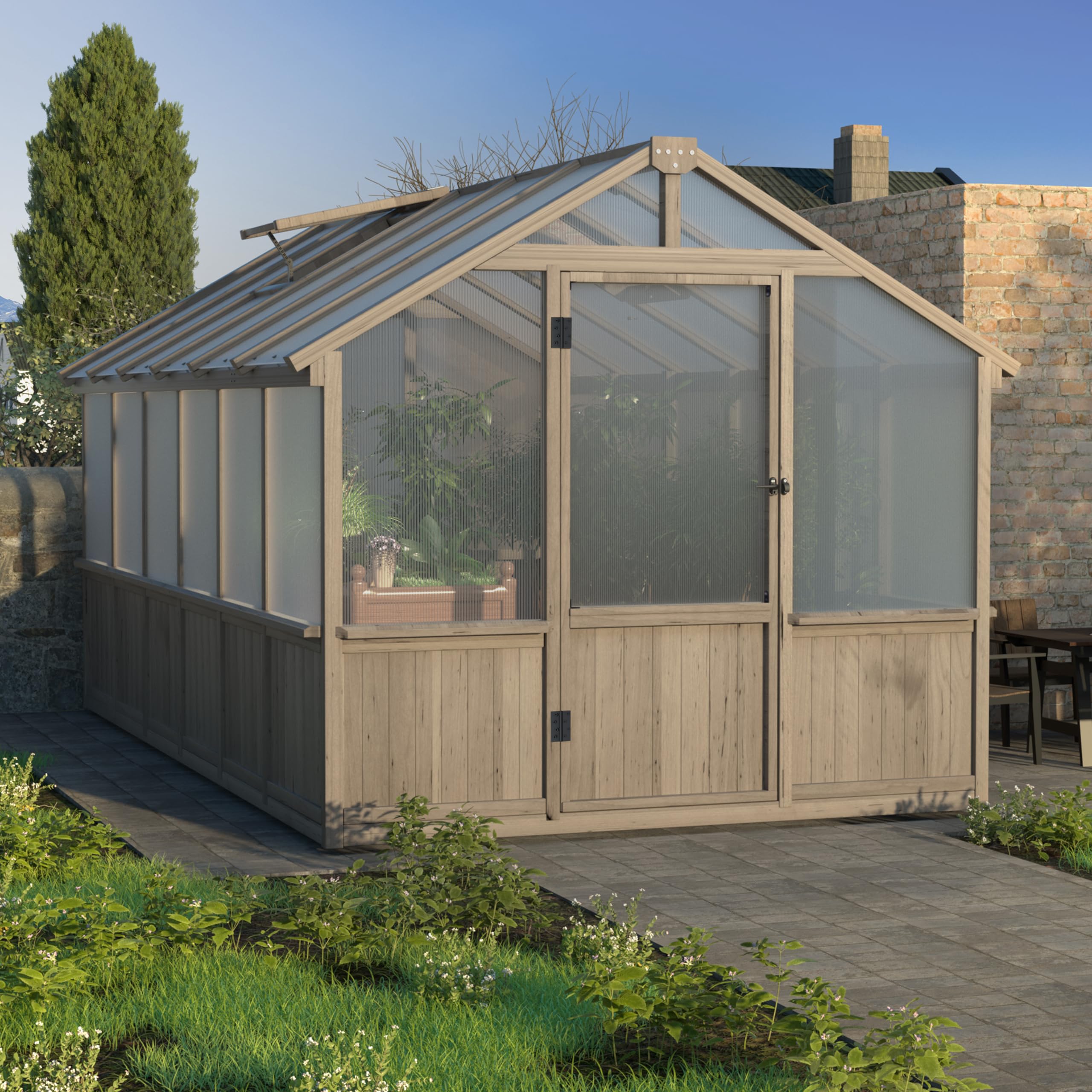
A cedar walk-in that gives you 12 feet of growing space with a floor you can actually dance on.
This is the largest wooden greenhouse in this list, and the floor is its defining feature. At 144.7 inches long, 101.97 inches wide, and 90.55 inches tall, you get a genuine walk-in space — the door height of 71.4 inches means most adults can stand upright inside. The heavy cedar wood base is substantially more stable than an aluminum frame. The published weight capacity of 1,000 pounds on the floor confirms that this is built to hold heavy shelving, bagged soil, and multiple large pots. The 6 mm multi-layer polycarbonate panels provide 99.99% UV protection
Ventilation comes via the window with an adjustable opening angle, plus the roof can be propped open using bolts on the frame sides. The lockable front door gives you security, and the size is big enough to add furniture and turn the space into a “dynamic party room,” as the specs suggest. Assembly requires two or three people, and the item ships in four boxes that may not arrive simultaneously. Owners call the instructions clear and the quality excellent, but note that five misaligned holes with screws protruding inside is a known issue that requires workarounds. One owner recommends caulking the outside to prevent leaks — a smart precaution for any wooden greenhouse.
The snow load capacity is 18 pounds per square foot, and the wind rating is 56 mph, which is comparable to the Palram Mythos but with a much heavier wooden floor. This is the pick for someone who wants the warmth and stability of wood but needs the largest possible footprint without stepping up to a permanent shed-style structure.
Spacious strengths
- Massive 144.7″ x 101.97″ floor area with 1,000 lb weight capacity
- 6mm multi-layer polycarbonate panels block 99.99% UV
- Heavy cedar frame is more stable than aluminum alternatives
- Lockable door with 71.4″ door height for comfortable entry
Assembly challenges
- Four boxes may not arrive at the same time
- Some misaligned holes with protruding screws reported
- Requires two to three people plus a full day of work
Go for it if: You need a large walk-in cedar greenhouse with a genuinely heavy-duty floor for shelving and tools.
skip it if: You want a quick, single-box assembly or have a limited area — this one is big and takes planning.
5. Garvee 6 x 10 FT Greenhouse
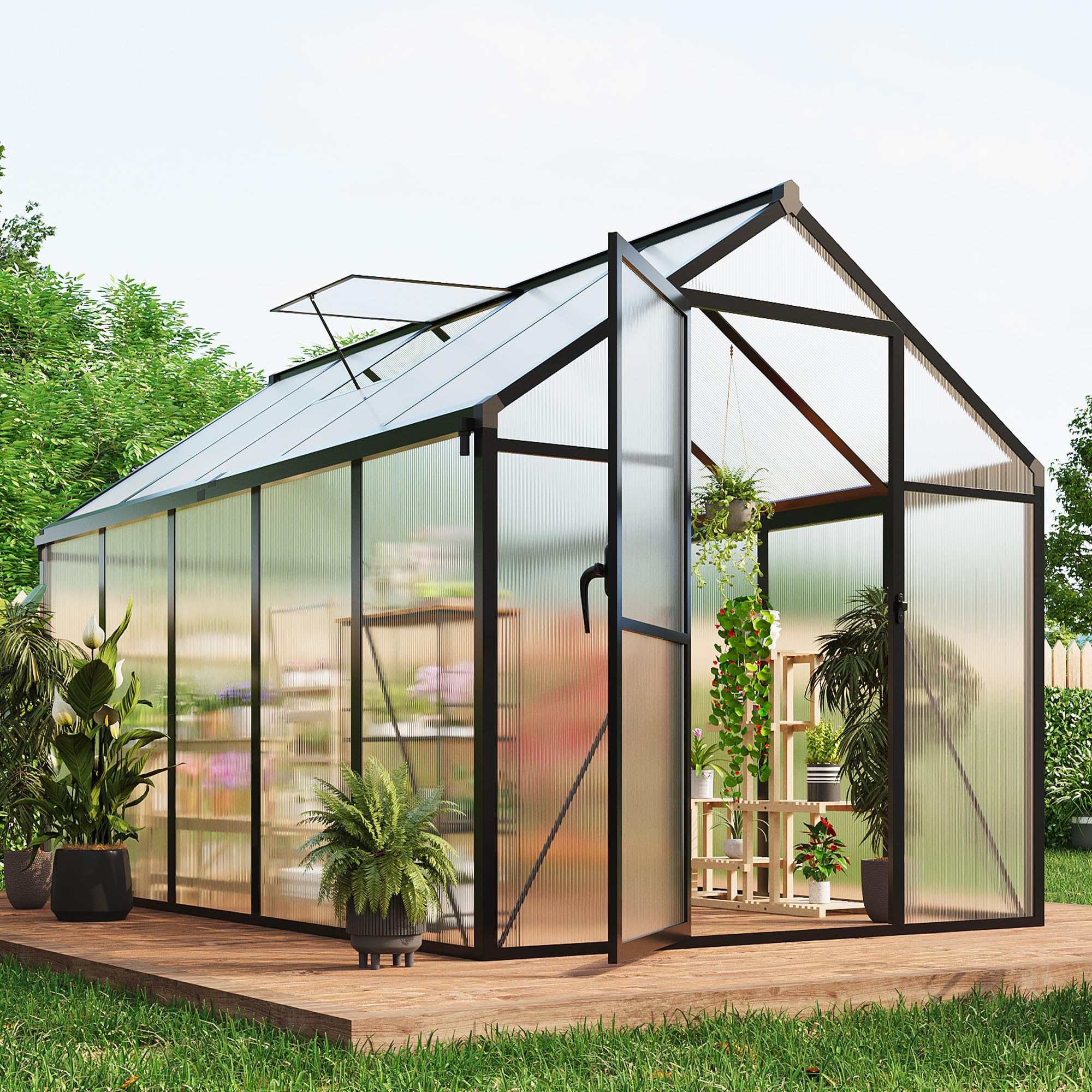
A 10-foot aluminum grower with a smart gutter system that waters your plants for you.
The Garvee brings one feature that no other greenhouse in this list offers: a built-in water gutter system along the sides. This channels rainwater into a collection point, giving you a sustainable source for your plants. It is a genuinely practical feature that saves you from hauling a hose every time. At 120 inches long, 72 inches wide, and 76 inches tall, the 6×10-foot footprint matches the Palram Mythos for length but is slightly shorter in height. The slide-in polycarbonate panel system is claimed to make assembly 40% faster and 35% more secure than conventional methods — and owners generally confirm the build is manageable, though two people are needed and the instruction manual is frustratingly sequenced.
The frame is aluminum, which keeps the weight at 89.6 pounds — easy to move if needed, but requiring a good anchor system. The adjustable roof vent gives you airflow control, and the lockable door is standard for the category. Build quality gets the most positive mentions from owners, with several calling it “sturdy and functional” after assembly. But the sturdiness feedback is mixed: one owner had to make many adjustments because it “does not stay together,” while others call it sturdy. This variability suggests the build quality depends heavily on how precisely you level the base and tighten every connection.
The Garvee is a solid step up from the cheapest aluminum kits thanks to the gutter system and the slide-in panel design. It ships in two separate boxes, so be patient for both to arrive. If you can manage the assembly quirks — leaving hardware loose during panel fitting, then tightening — you end up with a functional, mid-sized greenhouse at a reasonable investment.
What works
- Rainwater gutter system for sustainable plant watering
- Slide-in panel design speeds up assembly
- Aluminum frame is rust-resistant and easy to move
- Adjustable roof vent for temperature control
What needs patience
- Instruction manual has confusing step sequencing
- Sturdiness depends heavily on precise assembly
- Ships in two boxes that may not arrive together
Pick this if: You want rainwater collection and a longer 10-foot growing row in an aluminum frame.
Not for: Impatient assemblers or anyone who expects rock-solid stability without careful leveling and anchoring.
6. AirWire 8×12 FT Walk-in Greenhouse
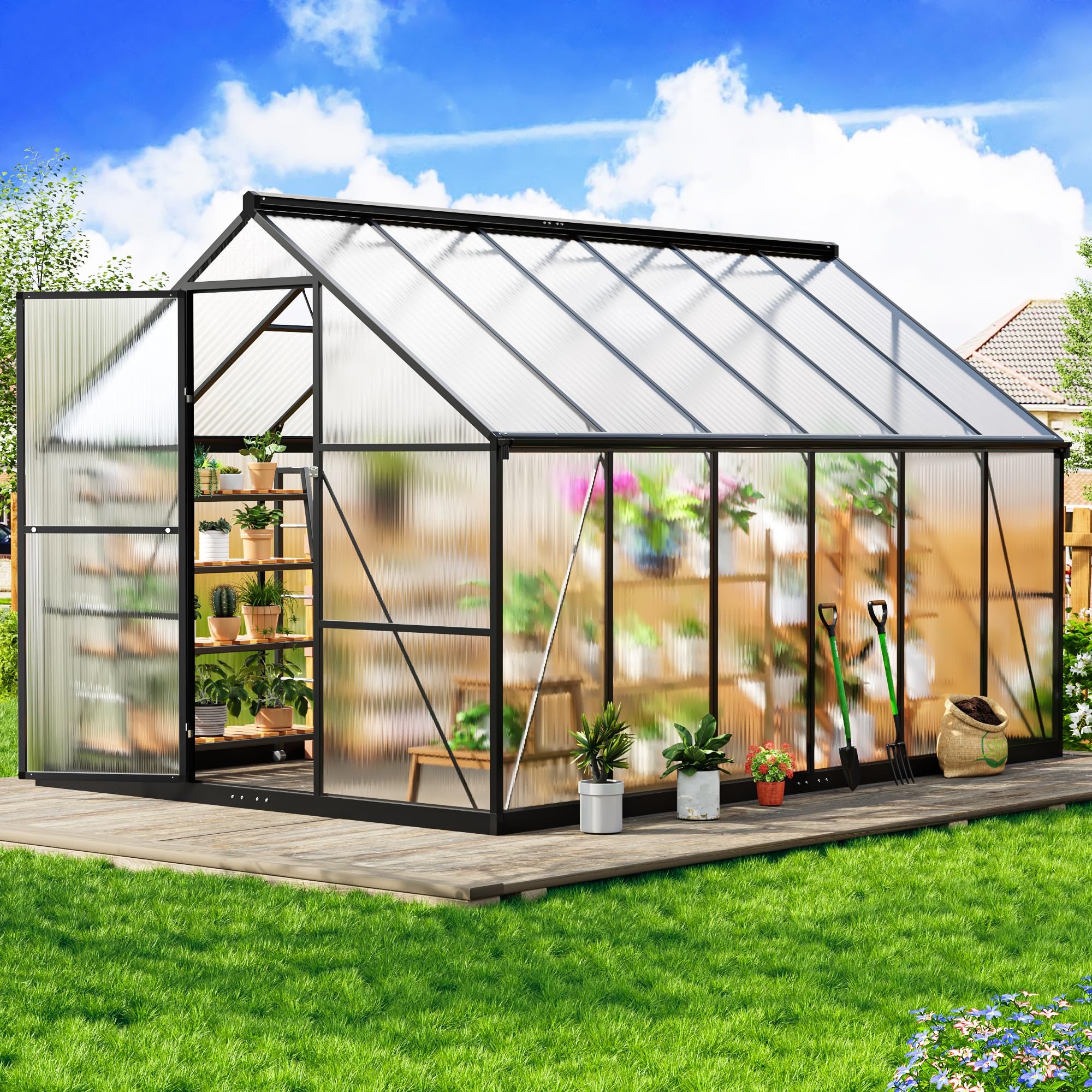
An 8×12 walk-in that trades premium materials for sheer size at a friendly price.
This greenhouse measures 142.3 inches long and 93.7 inches wide. The 4 mm thick 720g double-layer polycarbonate panels and reinforced aluminum alloy frame are decent for the money. The slide-in panel system promises 20% faster installation than standard greenhouses, and owners confirm the assembly is “fairly easy” over two days, though the instructions could be better. The adjustable roof vents and sliding door with locking closure give you basic temperature control and security.
Where the AirWire shows its budget roots is in the materials. Owners note that while the structure is “very strong and sturdy” after anchoring, it is lightweight enough to need separate ground anchors (zip ties are a popular DIY solution). The panels have a UV reflective side that must face outward, but the instructions may contradict themselves on which side. Some panels arrived bent from shipping, and the gutters may not fit perfectly. The greenhouse is simply not designed to be disassembled and moved each spring — it is a permanent installation once assembled.
At this size and price, the AirWire is the perfect starter greenhouse for someone who needs maximum square footage on a budget. The 8×12 footprint gives you enough room to walk inside, arrange multiple shelving units, and overwinter a significant number of pots. Just budget for extra anchoring materials and a full day of assembly with a helper.
Why size wins
- Massive 8×12-foot footprint at a very attractive price
- 4mm 720g double-layer polycarbonate for insulation
- Slide-in panel system is genuinely faster to install
- Adjustable roof vents and locking sliding door
Where corners show
- Lightweight frame absolutely needs ground anchoring
- Panels may arrive bent; gutters may not align perfectly
- Instructions have contradictory panel-side information
Best for: The budget-conscious grower who needs a huge walk-in space and is willing to reinforce it with DIY anchoring.
Casualties: Anyone who wants premium build quality, perfect panels from the start, or a greenhouse they can move annually.
7. 6X8FT MilleLoom Greenhouse
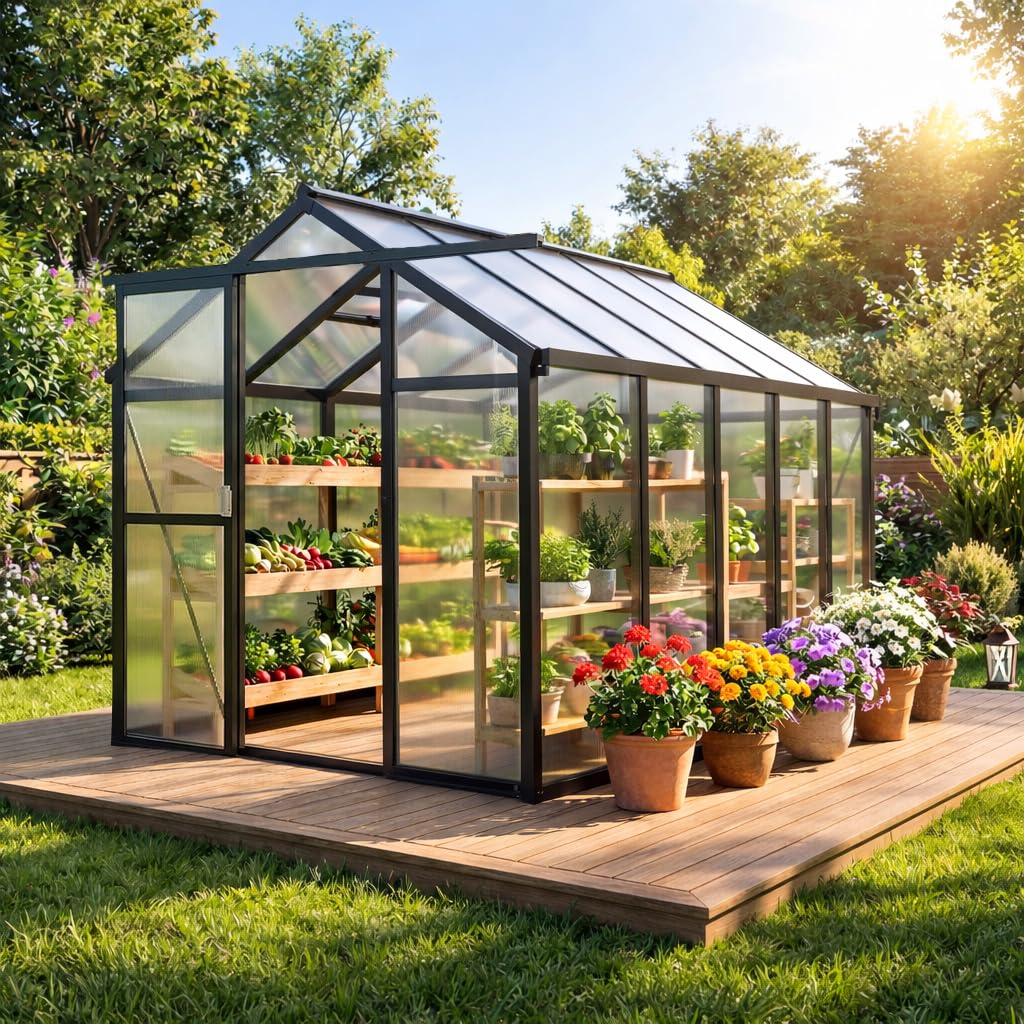
A compact aluminum grower that fights above its weight class in venting.
At 94.8 inches long and 70.8 inches wide, this compact 6×8-foot greenhouse, but it packs two vents — the same number as the Backyard Discovery unit. It has two vents, whereas the Garvee has only one vent. The aluminum frame keeps the total weight at just 77.6 pounds, making it the lightest full-framed greenhouse in this list. That makes it easy to position and reposition, but it also means the structure feels less substantial in wind. The heavy-duty aluminum frame and shatter-resistant polycarbonate panels are decent for the price tier, with UV-resistant coating to prevent plant burn.
The sliding door and adjustable roof vent give you basic climate control, and the assembly is described as easy by some owners, taking around five hours total. But the reviews are sharply divided. Negative feedback centers on the small, short screws that feel inadequate for the structure, the hatch window that lacks secure closure, and door tracks that can derail. One owner explicitly reported that “strong winds blew out panels and bent sky vent.” Another owner who liked the final result noted that the polycarbonate panels arrived bent and that the narrow, shallow tracks required caulking to hold the panels in place.
This greenhouse is for the patient DIYer who understands it needs reinforcement. The general consensus from successful owners is to build a sturdy base (2x12s recommended), use your own tools (an impact driver helps), and leave hardware loose during assembly to get panels to fit. The price is the lowest on a square-foot basis, but the trade-off in hardware quality and wind resistance is real.
What punches above
- Two vents for better airflow than most budget greenhouses
- Very lightweight at 77.6 lb for easy positioning
- UV-resistant polycarbonate panels included
- Lowest entry price of any full-size walk-in
What needs work
- Small, short screws feel inadequate for the structure
- Panels and tracks may require caulking for a secure fit
- Wind can blow out panels without reinforcement
Consider it for: A very tight budget where double vents are a priority and you are comfortable with DIY reinforcement.
Walk away if: You want a low-maintenance greenhouse that can withstand heavy weather from the start.
Understanding the Specs
Snow Load
This is the amount of weight the roof can handle before collapsing, measured in pounds per square foot (psf). If you live in a region that gets more than a dusting, push for 15 psf or higher. The Palram Mythos handles 15.4 psf, while the Backyard Discovery can take an extreme 2,800 pounds total — roughly 30 inches of snow. The budget aluminum kits often do not publish this spec, which tells you they are not designed for serious winter weather.
Polycarbonate Panel Thickness
Measured in millimeters, this is the single best predictor of insulation and durability. Cheaper single-wall panels are 3mm or less and offer almost no thermal break. Twin-wall or multi-layer panels at 4mm or 6mm trap air between layers, keeping the greenhouse warmer at night and cooler during the day. The MUPATER uses 6mm panels. Thicker panels also resist hail and debris impacts much better than thin ones.
FAQ
Does a greenhouse with floor need a separate foundation?
How much snow can a polycarbonate greenhouse handle?
Can I leave my greenhouse up all year round?
What is the difference between a sliding door and a hinged door on a greenhouse?
How many people are needed to assemble a walk-in greenhouse?
Will a greenhouse with floor prevent pests and animals from getting in?
How important is UV protection in greenhouse panels?
Can I use a greenhouse on a wooden deck or patio?
Final Thoughts: The Verdict
For most buyers, the greenhouse with floor winner is the Backyard Discovery Willow because it combines a genuine cedar floor, an integrated electrical system with USB ports, and proven 100 mph wind resistance into one package. If you want a proven, lightweight performer with a huge owner community, grab the Palram Canopia Mythos. And for the biggest walk-in wooden space at a fair price, the MUPATER 8′ x 12′ is the one to reach for.
How We Picked
We do not accept paid placement. Every pick is matched to a real buyer and a real use-case; we do not hands-on test units.
Sources & Methodology
Specifications: manufacturer listings and product documentation. Review insights: verified customer reviews, as of July 2026. Pricing: not shown on this page (it changes often); check the current price via the retailer link.
As an Amazon Associate, Lawn Gear Lab earns from qualifying purchases. This does not affect which products we feature.