
Specs are compiled from manufacturer listings and verified buyer reviews and can change over time — please confirm the key details on the product page before buying.
Trees need vertical clearance, but most backyard greenhouses top out around six feet. The best greenhouse for trees provides enough headroom for both plants and the gardener.
I’m Rikta — the founder and writer behind Lawn Gear Lab. This guide is built by comparing the manufacturers’ published specifications and the patterns across verified customer reviews, so you get each pick’s real strengths and trade-offs instead of marketing spin.
Whether you are raising citrus trees in cold climates or starting a private nursery, you need a greenhouse with real headroom. That is exactly what this roundup of the greenhouse for trees is designed to help you find — no stuffy tunnels, no wasted space, just tall, tested structures that let both you and your plants breathe.
Our Picks at a Glance

How To Choose The Best Greenhouse For Trees
Trees require more vertical space and structural support than typical vegetable greenhouses. They need vertical clearance, strong structural support for top-heavy growth, and a stable internal temperature during the vulnerable sapling years. Here is what separates a tree-ready greenhouse from a basic veggie tunnel.
Height and Headroom Come First
A greenhouse under six feet forces you to prune your tree or let it hit the roof. For any tree-growing setup, look for a structure with at least a six-foot peak height and, ideally, a wall height around six feet so the usable space extends all the way to the sides. Taller interiors allow you to keep trees indoors longer before transplanting.
Frame and Cover Hold the Line Against Weather
A tree canopy catches wind the same way a sail does. That means the frame has to resist twisting, and the cover has to stay anchored. Wood frames (cedar, for instance) offer natural decay resistance and hold screws better than thin metal tubes. Aluminum frames are lighter and rust-proof, while galvanized steel offers the highest rust resistance and rigidity. For the cover, polycarbonate panels give you insulation and impact resistance that PE fabric cannot match.
Ventilation Prevents a Tree-Sized Overheat
Greenhouses can reach 140°F on sunny days, which is fatal for young trees without ventilation. Adjustable roof vents, side windows, and exhaust fans are not optional upgrades; they are survival equipment. The more vents, the better your ability to bleed hot air at the peak where it collects.
Assembly Realism: Plan for a Weekend, Not an Hour
Walk-in greenhouses, especially the larger models here, typically take two people and anywhere from six to twenty-five hours to assemble. A few come with clear, step-by-step instructions and labeled parts; others rely on picture-heavy manuals that require patience. If you do not enjoy puzzles, look for kits with pre-drilled holes and interactive app guides.
Quick Comparison
| Model | Best For | Max Height | Frame Material | Number of Vents | Amazon |
|---|---|---|---|---|---|
| Backyard Discovery Willow 9×6★ Best Overall | Premium all-weather tree house | 94 inches | Wood (cedar) | 1 | Amazon |
| Quictent 20x10x6.6 FTBest Value | Budget tunnel with massive floor space | 78.8 inches | Galvanized steel | 8 | Amazon |
| EliteEdge 6×6 FTCompact Pick | Compact starter for small trees | 75.98 inches | Aluminum | 1 | Amazon |
| Garvee 6×10 FT | Entry-level walk-in with good headroom | 75.6 inches | Aluminum | 1 | Amazon |
| Aoodor 6×10 FT | Budget polycarbonate with gutters | 81 inches | Aluminum | 1 | Amazon |
| FLY BY YAN 8×14 FT | Large polycarbonate with triple roof vents | 77 inches | Aluminum | 3 | Amazon |
| Yardenaler 8×16 FT | Wood-frame showpiece for large trees | 90.6 inches | Wood | 2 | Amazon |
| HOWE Pavilion 14×9.5×9 FT | Extra-wide sunroom for tall trees | 108 inches | Aluminum | 2 | Amazon |
In‑Depth Reviews
1. Backyard Discovery Willow 9′ x 6′ Cedar Wood and Polycarbonate Walk-in Greenhouse Kit
Our pick — over 4.5★ from 100+ verified ratings; the strongest balance of quality and price.
Its cedar frame and polycarbonate panels withstand heavy snow and strong winds.
The Backyard Discovery Willow is a top choice for tree growers. It is built from 100% cedar wood, which gives you natural resistance to rot and decay without any chemical treatment you would worry about near your plants. The commercial-grade 4-wall polycarbonate roof and window panels hold heat 30% better than standard double-wall polycarbonate, so your saplings get consistent temperatures through cold nights. And the numbers back the confidence: the Pro-Tect tested design withstands up to 2,800 pounds or 30 inches of snow load, plus winds up to 100 mph when anchored properly.
The interior gives you 54 square feet of space with 13 linear feet of fixed staging shelves and a built-in workstation. A temperature-activated exhaust fan handles forced ventilation, and the single easy-open window lets you circulate air for pollination. The patented PowerPort puts three electrical outlets and three USB ports right at your fingertips — no extension cords snaking through the door. Both exterior and interior hose hook-ups make watering a straight shot from the spigot.
Assembly is the main time investment. The kit arrives pre-cut, pre-drilled, and pre-stained across eight boxes. Many buyers report spending 21 hours solo or several weekends with a partner, though the interactive BILT app and clearly labeled parts earn consistent praise for keeping the process on track. The few who encountered a damaged door had it replaced at no cost.
You get 94 inches of headroom (7 feet 10 inches at the peak) so most young trees can stand upright without bending. But this model has only 1 roof vent — compare that to the Quictent’s 8 vents, which gives you far less hot-air escape on sunny days.
What owners praise most
- Quality and materials earn the top praise — the cedar is thick, the polycarbonate feels commercial-grade
- Assembly instructions are clear; the BILT app helps even first-timers build it without guesswork
- Withstands 40+ mph winds without flexing, as several owners mention after storm season
What to know before you build
- Roof caulking is tricky — many owners swap the provided caulk for silicone
- At 259 kg (571 pounds), this is a permanent structure, not something you move later
- Single vent means you may want to add a second window or fan for hot climates
Grab it if: you want a heirloom-quality greenhouse that handles heavy snow, strong wind, and year-round use without flinching.
Look elsewhere if: you need a budget option or something you can assemble in a single weekend — this one demands patience.
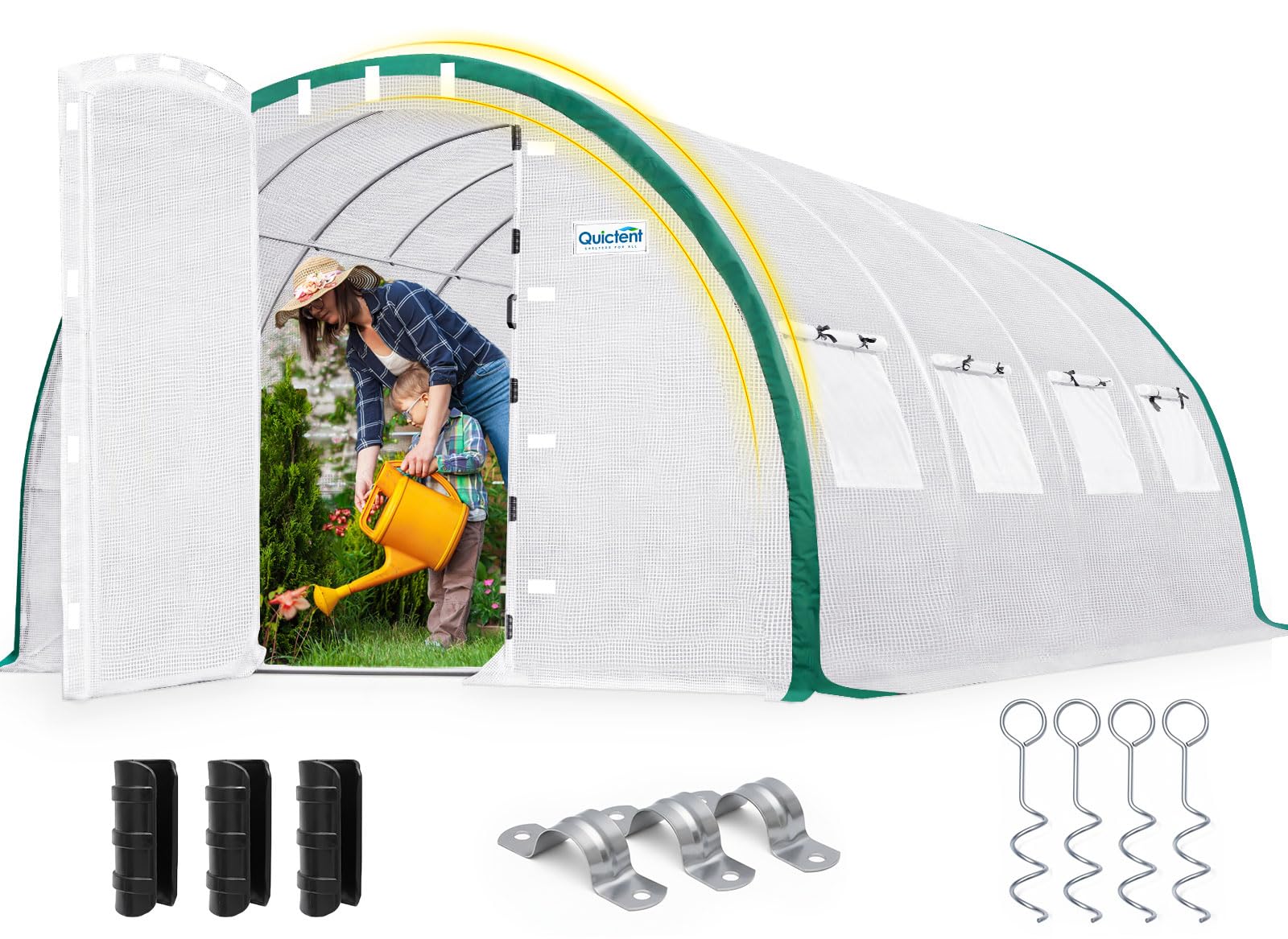
2. Quictent 20x10x6.6 FT Premium Greenhouse for Outdoors with 2 Door Frames
A massive 200-square-foot tunnel that costs less than a weekend getaway.
If floor space matters more than curb appeal, the Quictent delivers in a big way. The interior measures 236.3 inches long by 118.2 inches wide — that is 20 feet by nearly 10 feet — giving you enough room for rows of potted trees, a potting bench, and still space to walk. The height hits 78.8 inches, which fits most standing adults and young fruit trees without crown rubbing.
The structure relies on 0.7mm thickened galvanized steel tubing for the frame, reinforced with extra crossbars on the top to shed snow and water before it pools. The cover is a 150GSM PE mesh fabric with a UV inhibitor and Oxford seam-reinforcement along high-stress points. It transmits 85% of sunlight, and the 8-inch overlong bottom skirt can be buried in soil for winter insulation. Eight mesh screen windows wrap around the perimeter — a vent count that dwarfs most other greenhouses here (the Backyard Discovery Willow has 1 vent for comparison). Customers note that covering the ventilation windows dropped interior temperature from 140°F to 90°F, which is the difference between thriving trees and wilted leaves.
The patented dual swing-door frames open 180° and lock, a major upgrade over zipper-entry models that tear after a season. Setup is straightforward enough that one owner assembled it with a 4-year-old helper, though having a second set of hands makes the crossbars easier. Quictent backs it with lifetime parts replacement for connectors and stakes, plus 365-day complimentary components for main parts.
Why it wins on value
- 200 square feet of growing space at a fraction of what polycarbonate kits cost
- 8 mesh windows give you temperature control that pricier greenhouses cannot match
- Doors swing 180° open — you can wheel in potting trays or a cart without squeezing
The trade-offs
- PE fabric cover is less insulating than polycarbonate; you may need a heater in deep winter
- Assembly instructions are adequate but could be clearer — lay everything out before starting
- An occasional missing clamp or part requires a call to customer service (they ship replacements promptly)
Best for: budget-minded growers who want maximum square footage for seedling trees and are fine with a PE-covered tunnel over a glass-like build.
Not for you if: you need a greenhouse that looks like a garden showpiece or provides heavy insulation below freezing.
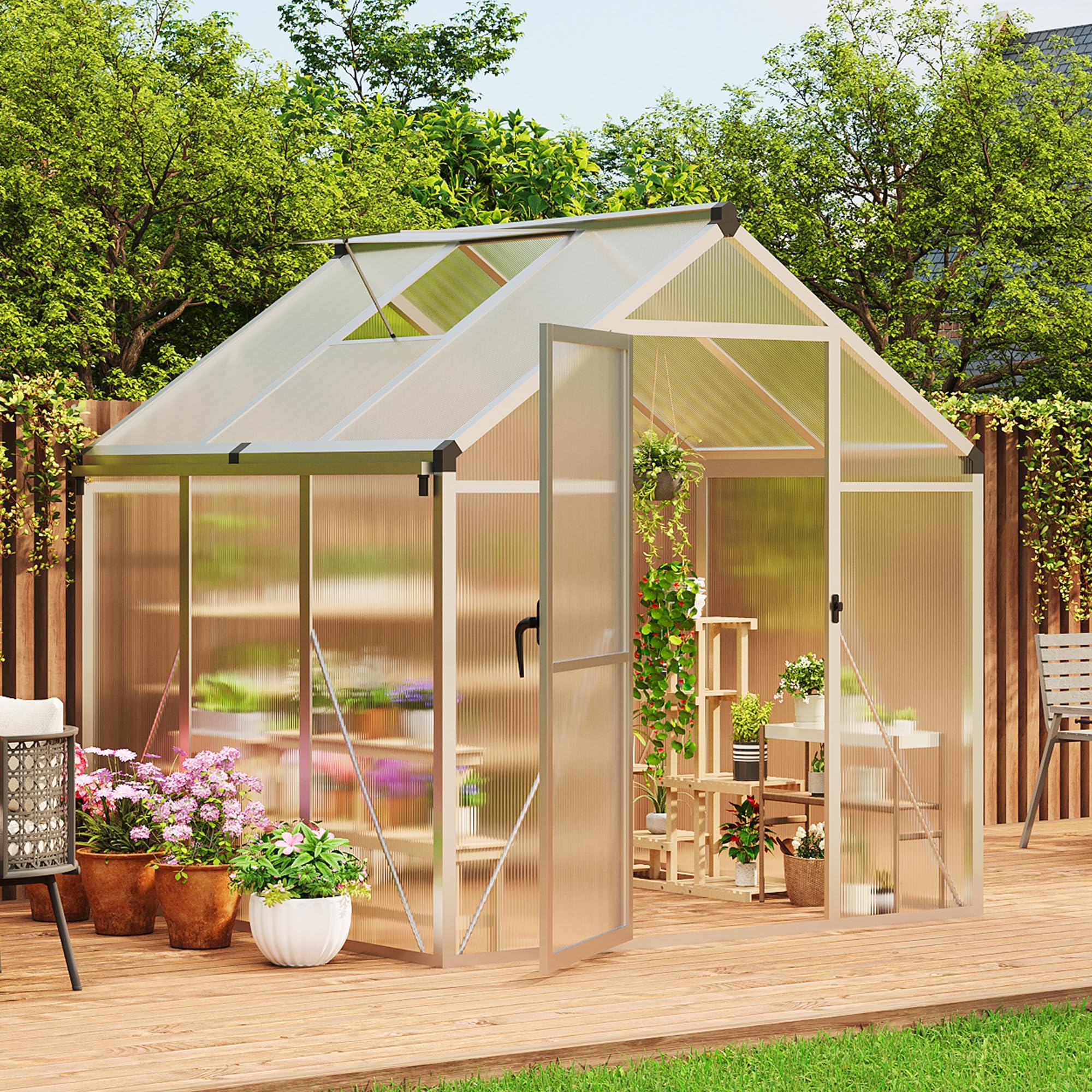
3. EliteEdge 6 x 6 FT Outdoor Greenhouse
A tidy square footprint with polycarbonate panels and a lockable door for small yards.
The 6×6 FT EliteEdge is the smallest greenhouse on the list, but it still squeezes in 75.98 inches of peak height — enough for a dwarf citrus tree or a few tall saplings. The polycarbonate panels and aluminum frame give it a clean, modern look that fits a patio or backyard corner without overwhelming the space. An adjustable roof vent provides the basic ventilation taller plants need to avoid heat stress, and the integrated guttering channels rainwater into a collection system for watering.
Assembly is the main challenge here. The panel system requires compressing polycarbonate boards to wedge them into black connectors, which some owners found frustrating until they figured out the technique. A few owners reported that a 5-foot-2-inch user could touch the roof peak, so this is not a greenhouse for tall tree varieties or for very tall gardeners. One owner reported a missing base piece and difficulty reaching customer service, though others built it successfully over a few days.
For what it offers, the compact size keeps the price low, but the mixed review pattern means you should confirm all parts are present before you start assembling. The included hardware and the aluminum frame are solid — flexibility is easier with more realistic expectations about the build process.
The honest read: this is a budget-friendly polycarbonate option for small trees and modest yards, but the assembly difficulty and limited height means it works best for shorter species and patient builders.
Reach for it if: you have a compact space and need a lockable, polycarbonate greenhouse on a budget.
Think twice if: you need vertical clearances over 6 feet or prefer a straightforward assembly.
4. Garvee 6×10 FT Greenhouse

A walk-in with aluminum framing and PET panels that goes together faster than most.
The Garvee stretches 6 feet wide by 10 feet long with a height of 75.6 inches, fitting a row of medium-sized trees or a mix of pots and shelving. What stands out is the build speed: the manufacturer claims PET panels boost assembly speed by 40% and security by 35% compared to traditional panel methods. Owners confirm it — one pair finished in 3.5 hours, another solo builder took 8 hours spread over three days. The aluminum frame resists rust, and the polycarbonate-style panels include UV coating to protect foliage from sunburn while letting through the light for growth.
The single adjustable roof vent works in tandem with lockable doors to manage airflow. Some owners note that anchoring is essential: without it, the greenhouse can shift in wind. One owner lost a unit to wind after a month, but several others report it withstood high winds without trouble when bolted down. The built-in guttering and drainage system help manage rainwater, keeping the base from pooling.
At 55 pounds, this is one of the lighter walk-in models, so moving and positioning it is realistic. The sturdiness earns the most mentions by far — owners consistently call it sturdy when properly anchored to a foundation.
What works well
- Fits a person 6 feet 4 inches tall without ducking — genuine standing room for tree care
- Assembly is genuinely faster than most polycarbonate kits; 3.5 hours with two people is realistic
- Panel UV coating gives you sun protection without sacrificing light transmission
The honest downsides
- Wind resistance depends heavily on anchoring — bolt it to concrete blocks or a wood base
- Instructions rely mostly on pictures; you will need patience to match parts
- Not recommended for deep-snow climates without reinforcing the roof
Go for it if: you want a fast-building, tall-enough walk-in with good ventilation and UV protection for your trees.
skip it if: you live in a high-wind zone or expect heavy snow loads without a reinforced base.
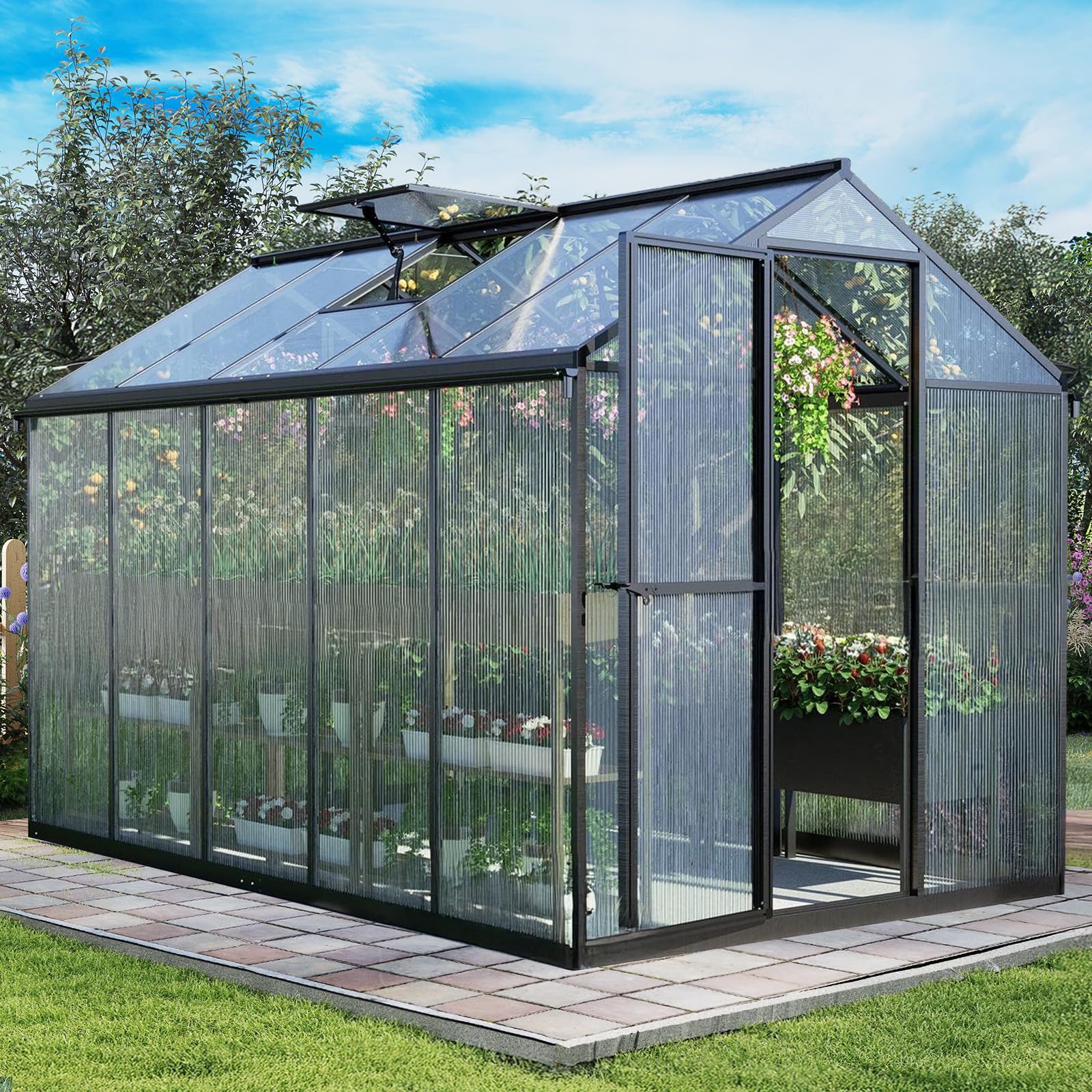
5. Aoodor 6 x 10 Ft Walk-in Greenhouse with Gutter
An 81-inch-tall polycarbonate walk-in with actual gutters on both eaves.
The Aoodor stands out for a simple but rare reason: built-in gutters. The eaves on both sides channel rainwater to drainage outlets, preventing the pooling that rots wood bases and attracts mosquitoes. That feature alone makes a difference when you are growing trees that need consistent moisture without a flooded floor. The 81-inch height gives you an extra few inches of clearance compared to other 6×10 models, which matters when you are moving pots or working around a branching canopy.
The aluminum frame keeps the weight down while resisting rust, and the polycarbonate panels claim light transmission comparable to glass. An adjustable skylight vents hot air that collects at the peak — a common problem in greenhouses that trap heat near the crown of your trees. The lockable two-sided door provides access from either direction, which is handy when your hands are full of potting mix.
Assembly gets mixed marks. Some owners completed it in a day; others describe the process as “wonky” and suggest keeping everything tight as you go. A few units arrived without clear panels, though customer service resolved that quickly at no cost. The flimsy label some reviewers give it likely stems from under-anchored builds — on a solid foundation, the frame holds up well.
The verdict: a mid-range polycarbonate greenhouse that brings real drainage and skylight ventilation to the table. The 81-inch height is a tree-friendly bonus, but assembly patience is required.
Pick this one if: rainwater management and extra vertical inches are your priorities over absolute sturdiness.
Not for you if: you want a heavy-duty frame that withstands abuse without careful anchoring.
6. FLY BY YAN 8×14 FT Outdoor Polycarbonate Greenhouse with 3 Roof Vents
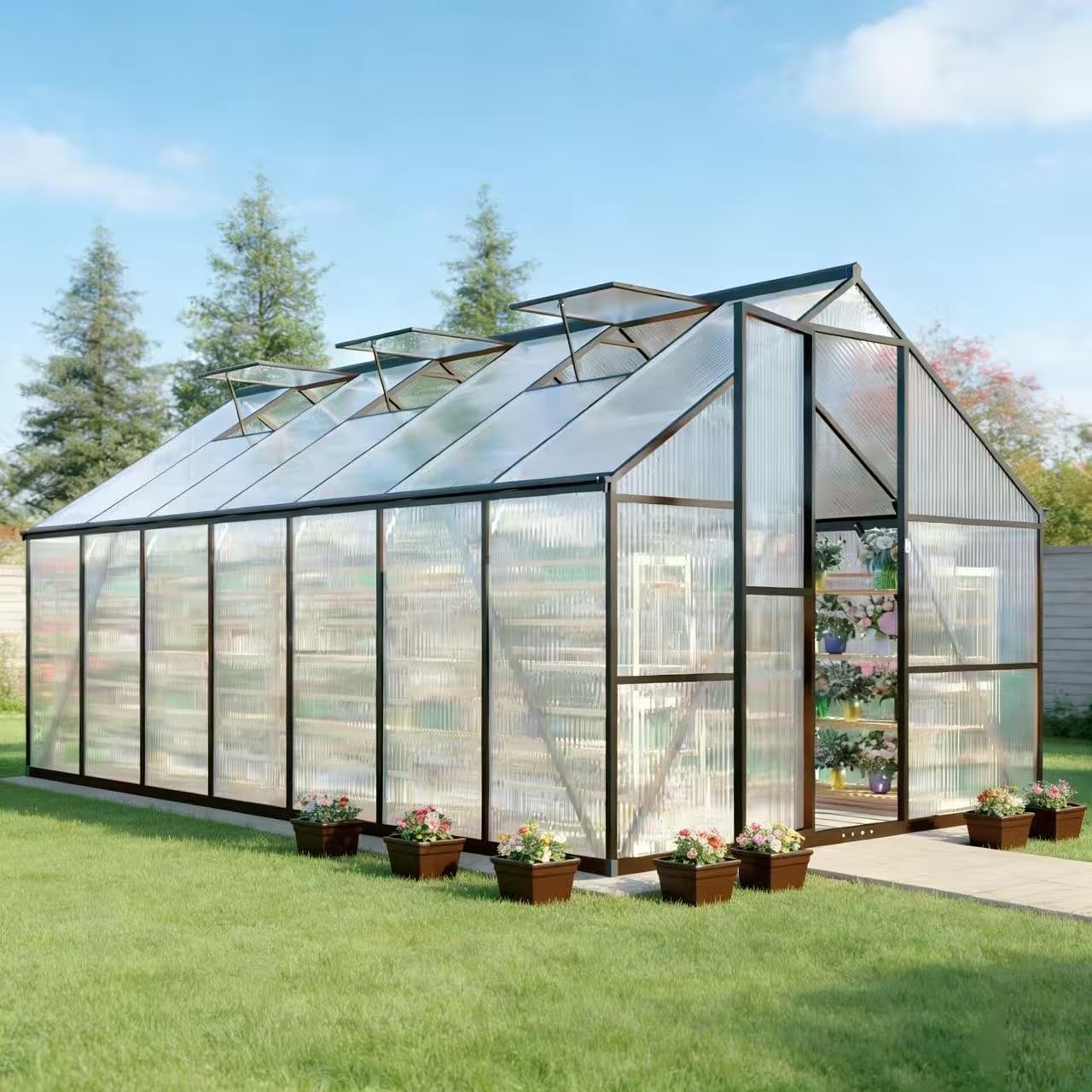
Three roof vents and reinforced aluminum for serious summer heat management.
This greenhouse attacks the biggest threat to young trees head-on: overheating. Three adjustable roof vents sit at the peak where heat collects highest, giving you exit points for the rising hot air that can cook saplings in minutes. The 720g/m² polycarbonate panels are thicker than the standard 4mm offerings, providing better impact resistance and insulation. The aluminum frame and added structural fittings are designed to survive all weather conditions without rust or sag.
You get 112 square feet of growing space from the 8×14 foot footprint. The 77-inch peak height lets medium trees fit, and the lockable single door plus adjustable side windows work with the roof vents to create cross-breeze airflow. A rain gutter system wraps around the base to channel water away. Assembly uses a slide-in panel system tested through 500+ iterations — the brand claims it speeds up assembly by 40% and improves stability by 35% compared to traditional builds. A wrench and gloves come in the box.
That said, assembly is still a project. Reviewers point out that it takes 4 people about 6 hours or more, and one reviewer called it the worst purchase they made due to misaligned parts. The sturdiness earns the most praise — 24 owners single it out positively — but assembly earns the most discussion and is marked mixed by Amazon.
The strengths
- Triple roof vents give you temperature control the single-vent greenhouses cannot provide
- 720g/m² polycarbonate is noticeably denser and more insulating than budget-tier panels
- Survives violent storms and heavy winds according to multiple verified owners
The catches
- Assembly is not quick for everyone — plan for two full days with help
- A pallet or concrete base is essential to prevent cold air leaks from the bottom
- Instructions can be unclear; some owners misaligned gutters and windows as a result
Reach for this if: you are serious about climate control and need a large, well-ventilated greenhouse with heavy-duty panels.
Think twice if: you need a weekend-friendly assembly or you want a taller peak than 77 inches.
7. Yardenaler 8×16 FT Greenhouse with 6MM Thick Polycarbonate Wooden Frame
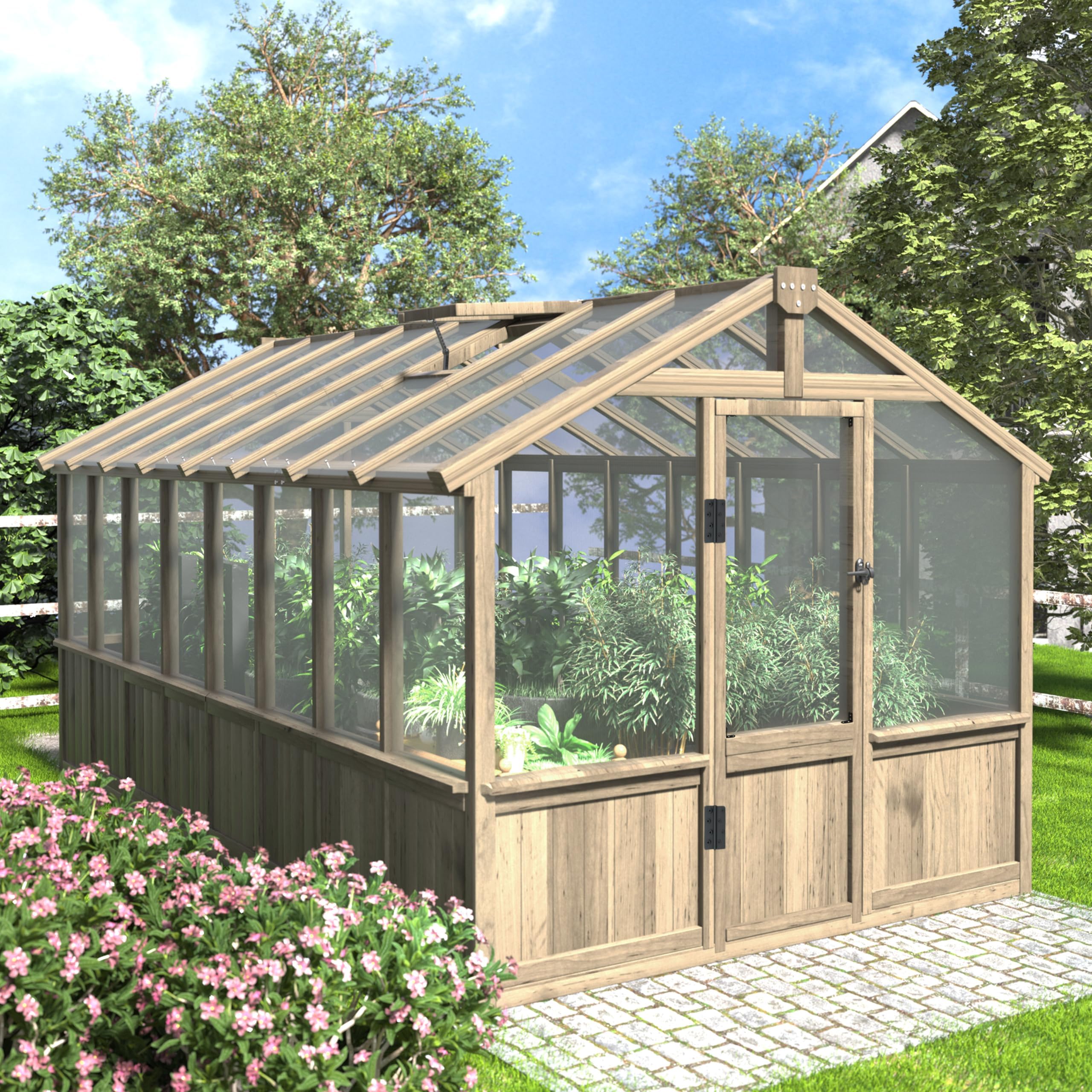
A 90.6-inch wooden beauty built to hold up against snow, wind, and seasons of use.
The Yardenaler is the tallest wood-frame greenhouse here at 90.6 inches — that is a full 7 feet 6 inches of clearance at the peak, enough for a small lemon tree and a tall gardener alike. The frame uses multi-layer polycarbonate panels that advertise high light transmission with UV protection, blocking harmful rays while letting plants photosynthesize. The adjustable roof opens up to a 45-degree angle, giving you precise control over how much hot air escapes at the peak. Two vents provide the air exchange that tree canopies demand.
The interior footprint is substantial: 96 inches wide by 190.2 inches deep — over 15 feet of length — so you can arrange multiple tree rows without crowding. The light mocha brown cedar-like finish makes it look more like a garden building than a functional greenhouse, which increases backyard appeal. Owners praise the sturdiness; several report it survived 50-70 mph winds and blizzards with no snow intrusion after being properly anchored to a foundation. The 427-pound weight (almost a quarter ton) tells you this is a permanent structure, not a seasonal tent.
The main trade-off is the polycarbonate film adhesion. Some owners note the frosted film does not stay adhered well, and one reported a leak around the vent window in rain. Assembly is manageable for motivated builders, especially on a pre-built wood platform, but hiring help for the heavy lifting is not a bad idea.
Best for: serious gardeners who want a wood-frame home for their trees that doubles as a backyard focal point. It is a lot of money and a lot of weight, but the height and durability justify the investment.
Buy it for: the 90.6-inch peak height, the adjustable 45° roof, and a wood frame the brand says is tested against blizzard conditions.
pass on it if: you prefer a lighter, modular greenhouse or want to avoid dealing with panel film issues.
8. HOWE 14×9.5×9 FT Pavilion Styled Greenhouse
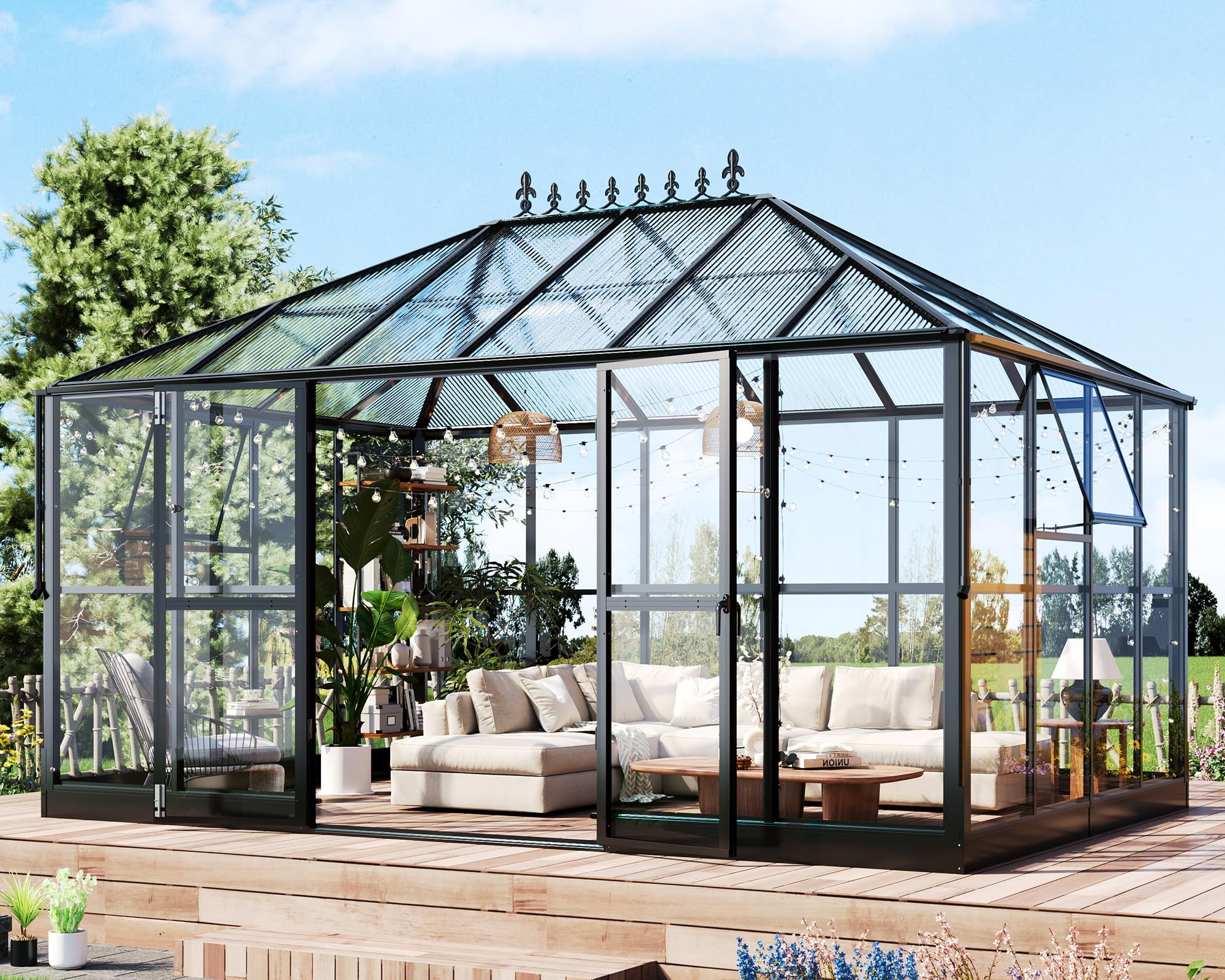
The only greenhouse here tall and wide enough to call a sunroom for full-grown trees.
The HOWE Pavilion greenhouse is the heavy hitter of the list: a 14-foot-wide by 9.5-foot-deep structure with a 9-foot peak height. That 108-inch ceiling gives you room to stand a full-size avocado or fig tree inside, and the 6-foot wall height means the usable space wraps around the sides rather than sloping away. The double swing doors are wide enough to bring in large pots or wheelbarrows without squeezing. If you plan on growing trees to transplant size rather than just seedlings, this is the structure that gives you the years of vertical clearance you need.
The hybrid panel system uses transparent endurance panels alongside 6mm PC panels, balancing light transmission and insulation. Two windows provide air circulation, and the Victorian roof crest design keeps birds from perching and dropping on your polycarbonate. Six structural posts (4 corner + 2 middle) plus expansion screws anchor it firmly, and owners confirm it handles Michigan snow loads and 25mph windstorms without trouble. One owner reported winter performance: 15°F outside, 81°F inside — the panels hold heat effectively.
Assembly is the main hurdle at this size. The picture-based instructions are less precise than written guides, and typical build times range from a 10-hour sprint with four people to 25 hours for a two-person team. Several owners recommend building the roof in a garage and moving it into place, and a solid wood deck or concrete platform is strongly preferred over gravel. The window opening hardware gets fair criticism for being flimsy, but the overall frame stability earns consistent praise once assembled.
What makes it exceptional
- 108-inch peak is the tallest on this list — no tree will outgrow it anytime soon
- Winter heat retention is dramatic: 15°F outside, 81°F inside
- 6-foot wall height means you can line the walls with shelves and still have room to stand
The realities
- Assembly is serious work — plan for two full days and at least two helpers
- Instructions are picture-heavy and sometimes unclear; expect to redo steps
- Window opening system feels less durable than the rest of the frame
Choose this one if: you want the most headroom possible, the widest doors, and the ability to keep trees warm in freezing winters.
Think twice if: assembly complexity or the window hardware bothers you — this one demands commitment.
Understanding the Specs
Peak Height vs. Wall Height
The peak height is the tallest point in the center of the greenhouse. The wall height is how tall the side walls are before the roof starts sloping. For trees, wall height matters more — it determines how far from the center you can place a tall sapling without hitting the roof. A 6-foot wall height gives you usable vertical space across most of the floor, while a low-walled greenhouse wastes the edges.
Polycarbonate vs. PE Covers
Polycarbonate panels are rigid, impact-resistant, and provide good insulation — they trap heat better on cold nights and diffuse light to prevent leaf burn. PE (polyethylene) fabric covers are cheaper, lighter, and transmit more sunlight, but they tear more easily and offer less temperature stability. For tree growing, polycarbonate is generally worth the extra money if you are in a colder climate.
Snow Load and Wind Ratings
A snow load rating tells you how much weight the roof can hold before collapsing. The Backyard Discovery Willow handles 2,800 pounds or 30 inches of snow — that is enough for a serious northern winter. A greenhouse without a stated snow load rating requires you to clear snow manually after each storm. Wind ratings matter because trees catch wind like sails; a 100 mph wind rating (like the Willow) is best for open, exposed yards.
Ventilation Count and Placement
More vents do not automatically mean better ventilation — placement matters. Roof vents at the highest point are most effective because hot air rises. The Quictent has 8 mesh windows, while the Backyard Discovery Willow has just 1 vent. If you live in a hot climate, a greenhouse with multiple roof vents or side windows gives you the temperature control that tree seedlings need to avoid cooking on a sunny day.
FAQ
Can I grow fruit trees in a greenhouse?
How tall does a greenhouse need to be for trees?
Will a polyethylene greenhouse keep trees warm in winter?
Do I need a foundation for a greenhouse?
How many vents do I need for tree growing?
Is wood or aluminum frame better for trees?
Can I assemble a large greenhouse by myself?
What is the warranty on these greenhouses?
Final Thoughts: The Verdict
For most people, the greenhouse for trees winner is the Backyard Discovery Willow 9×6 because it gives you 94 inches of cedar-framed headroom, a snow load rating built for real winters, and a temperature-activated exhaust fan that kicks in on hot days. If you want the most square footage for the lowest cost, pick the Quictent 20x10x6.6 FT — 200 square feet and 8 vents at a fraction of the price. And for the tallest option on this list — 108 inches of clear height — the HOWE Pavilion 14×9.5×9 FT is the one to choose if you are serious about raising trees that need room to grow.
How We Picked
We do not accept paid placement. Every pick is matched to a real buyer and a real use-case; we do not hands-on test units.
Sources & Methodology
Specifications: manufacturer listings and product documentation. Review insights: verified customer reviews, as of July 2026. Pricing: not shown on this page (it changes often); check the current price via the retailer link.
As an Amazon Associate, Lawn Gear Lab earns from qualifying purchases. This does not affect which products we feature.