
Specs are compiled from manufacturer listings and verified buyer reviews and can change over time — please confirm the key details on the product page before buying.
Starting seeds indoors is a gamble every spring — too little light and they stretch into weak, leggy stems; too dry and they never break the surface. A purpose-built greenhouse for seed starting changes the odds, giving you a controlled, humid microclimate where germination happens in days, not weeks. The right pick keeps moisture locked in, delivers consistent light, and spares you the daily worry of a windowsill draft.
I’m Rikta — the founder and writer behind Lawn Gear Lab. This guide is built by comparing the manufacturers’ published specifications and the patterns across verified customer reviews, so you get each pick’s real strengths and trade-offs instead of marketing spin.
The truth is, not every model delivers on its promise, but the best options here hold humidity in the low 70s, fit standard tray sizes, and come with grow lights that keep seedlings stocky and green. This is your no-fluff guide to the greenhouse for seed starting that actually works.
Our Picks at a Glance


How To Choose The Best Greenhouse For Seed Starting
Seed starting is different from growing mature plants. Your seedlings need consistent warmth, high humidity, and 12–16 hours of bright light every single day — and a greenhouse designed for this stage delivers all three. Here is what separates a great seed-starting setup from one that leaves you with weak transplants.
Humidity Retention and Ventilation
The first week after sowing is critical. Seeds need a warm, humid environment — typically above 70% relative humidity — to soften the seed coat and trigger germination. A good seed-starting greenhouse traps that moisture inside with a clear cover or dome. Look for models with adjustable vents so you can gradually lower humidity as seedlings harden off. A dome that seals too tight without vents can trap excess condensation and lead to damping-off disease.
Grow Light Quality and Positioning
Natural winter sunlight through a window is weak and uneven. Integrated grow lights solve this, but not all are equal. Full-spectrum LEDs (400-780nm) mimic natural sunlight and keep seedlings compact instead of leggy. The light must be close — within a few inches of the seedling tops — so a greenhouse with adjustable shelf heights or a light bar that can be lowered is a major advantage. A built-in timer saves you from forgetting to turn the lights on or off.
Capacity That Matches Your Seed Trays
Standard 1020 trays (roughly 10 by 20 inches) are the industry norm for seed starting. Your greenhouse needs to fit these flat. Check the internal shelf dimensions — many compact greenhouses are too shallow to hold a full 1020 tray. Also consider the number of shelves. A 4-tier unit lets you start multiple sets of seeds at different stages, doubling or tripling your output without taking up more floor space.
Quick Comparison
| Model | Best For | Size (H x W x D) | Grow Light | Shelves/Trays | Amazon |
|---|---|---|---|---|---|
| Barrina CX60★ Best Overall | Complete tabletop system | 23″ x 23″ x 23″ | 40W Full Spectrum LED | 1 shelf / 2 x 72-cell trays | Amazon |
| Miracle-Gro 4-TierBudget Champion | Budget vertical space | 57″ x 23″ x 17″ | No | 4 shelves | Amazon |
| GOONMILL 80-Cell KitBest Starter Kit | All-in-one starter kit | 5.5″ x 14.6″ x 9.9″ | Full Spectrum LED (timed) | 2 trays, 80 cells total | Amazon |
| Ohuhu 4-Tier Mobile | Moving with the sun | 62″ x 29″ x 19″ | No | 4 shelves (22 lbs each) | Amazon |
| SOLIGT 144-Cell Kit | Self-watering trays | 6.7″ x 11.8″ x 8.5″ | No | 6 trays, 144 cells total | Amazon |
| Grandhom 4-Tier | Outdoor seed protection | 65″ x 27.6″ x 19.7″ | No | 4 shelves (22 lbs each) | Amazon |
| RooTrimmer 1020 5-Pack | High-capacity tray system | 9.8″ x 22.1″ x 10″ | No | 5 trays, 7.3″ tall domes | Amazon |
| SpeePlant 4-Tier | Grow light + tent combo | 59″ x 27″ x 19″ | 60W (3x20W bars) | 4 shelves (22 lbs each) | Amazon |
| Bstrip 4-Tier | Dimmable lighting control | 61.8″ x 26.8″ x 19.3″ | 60W (4x15W, dimmable) | 4 shelves | Amazon |
In‑Depth Reviews
1. Barrina CX60 Indoor Greenhouse with Grow Light
Our pick — over 4.5★ from 150+ verified ratings; the strongest balance of quality and price.
A cube-shaped seedling sanctuary that keeps everything you need inside one tidy footprint.
This Barrina CX60 is the rare all-in-one that actually works for seed starting right from the start. The 23 x 23 x 23-inch tabletop greenhouse pairs an EVA tent with a full-spectrum 40W LED light bar, so you get humidity and light in one package — no extra purchases. The EVA material (a flexible, rubbery plastic) traps warmth and moisture far better than thin PVC, which is why buyers report humidity holding steady in the low 70s.
At 1.75 kg (roughly 3.9 lbs), this greenhouse is remarkably light to move around; the Miracle-Gro 4-Tier weighs 3.92 kg (about 8.6 lbs). The built-in timer on the light lets you set consistent day lengths without remembering to flip a switch. Buyers confirm it fits two 72-cell seed trays side by side, which means over 140 seedlings in a single unit. The stainless steel frame and zippered door keep the structure tight, and assembly is tool-free.
What wins people over
- Size and functionality are the most-praised features — buyers love the compact cube that holds multiple trays.
- Humidity retention is a standout: the EVA cover holds moisture in the low 70s, exactly where seeds need it.
- Assembly is a genuinely quick, tool-free process that takes minutes, not an afternoon.
The trade-off
- No bottom tray or waterproof base means you need a waterproof surface underneath — a leak can damage furniture.
- The 23-inch height is perfect for seedlings but too short for taller plants later in the season.
Grab it if: you want a self-contained, light-and-humidity seed-starting station that fits on a tabletop and handles 100+ seedlings.
Think twice if: you need a greenhouse that grows with your plants into maturity — this one stays compact.
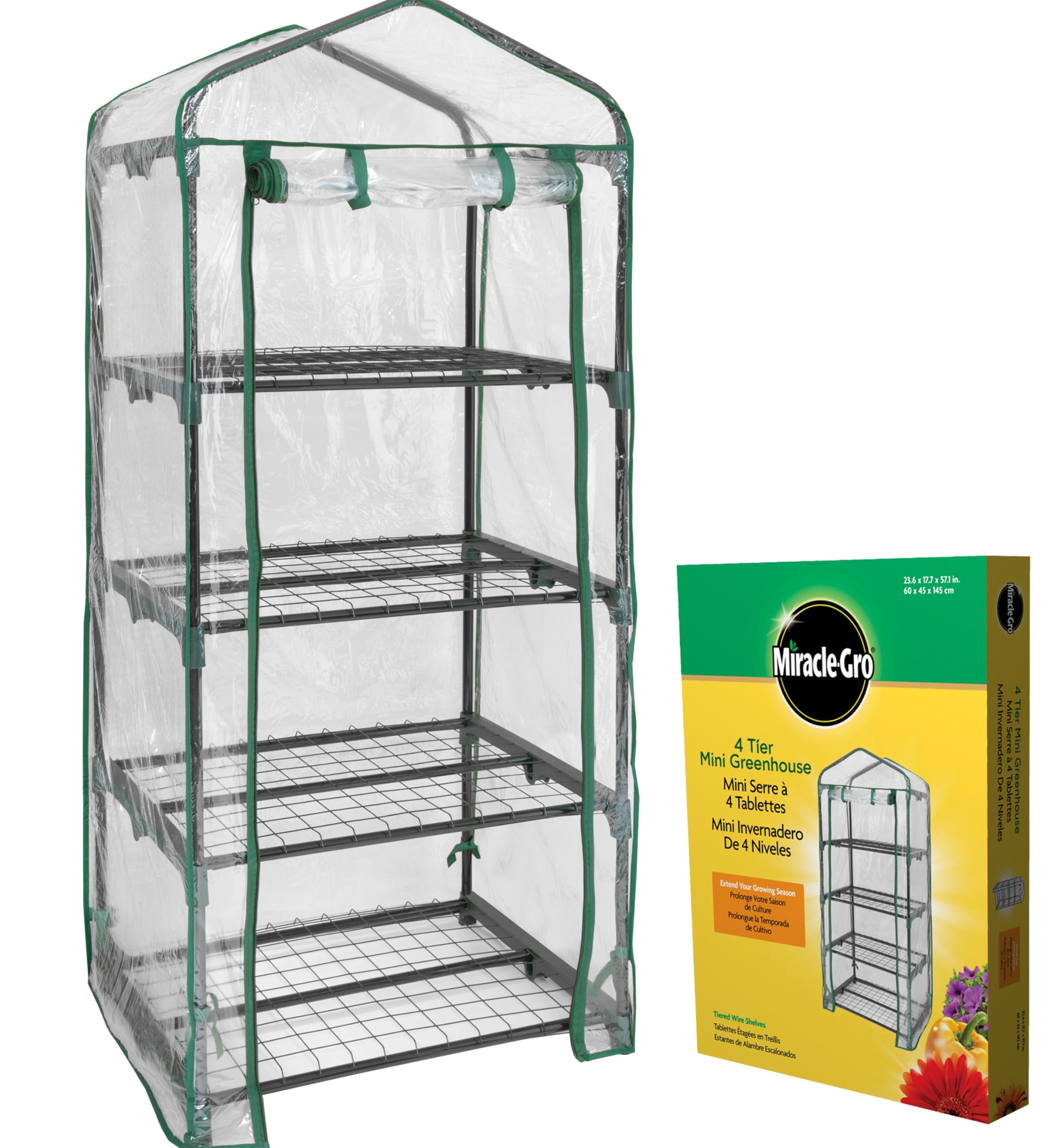
2. Miracle-Gro 4-Tier Mini Greenhouse
Vertical, cheap, and surprisingly roomy — the budget shelf stack that scales your seed starts.
If you have floor space and a tight budget, this Miracle-Gro 4-Tier is the volume play. The 57-inch tall frame with four wire mesh shelves gives you layers of seed-starting real estate, and the cover is a 4.4 oz. clear PVC that filters UV rays. The roll-up zipper door lets you access any shelf without taking the whole cover off — a small design win when you are rotating trays daily.
Weighing 3.92 kg (about 8.6 lbs), it is a heavy-duty unit; the Barrina CX60 weighs 1.75 kg (roughly 3.9 lbs), and owners say the tubular steel frame feels solid once assembled. The real-world catch is that the cover acts like a sail in wind — owners mention it needs aggressive anchoring outdoors. Without added ventilation, mold risk climbs, and the shelves themselves can wobble without zip-tie reinforcement. Treat it as a season-extender or indoor starter rack, not a permanent outdoor structure, and it delivers tremendous value for the price.
The buyer reality: The crowd consensus is that assembly is easy and the value is unbeatable for starting seedlings indoors or on a covered patio. “Easy assembly, effective cold protection, great value” is how one owner sums it up. The recurring advice is to anchor it well and add a small fan for airflow.
Reach for this if: you need to boost vertical seed-starting space at the lowest possible cost and plan to use it on a sheltered porch or indoors.
Look elsewhere if: your setup is fully exposed to wind — this cover needs protection or heavy anchoring to stay upright.
3. GOONMILL Seed Starter Tray with Timed Grow Light
A two-pack tray kit with built-in lights that promises controlled germination from day one.
This GOONMILL kit bundles two 40-cell trays with full-spectrum LED grow lights, humidity domes, and even small gardening tools — everything you need for a first seed-starting run. Each cell is 1.5 inches square and 2.1 inches deep, giving roots enough room before transplanting. The lights offer 3 timing functions (3, 6, or 12 hours), 5 brightness levels, and 3 color modes, so you can dial in the spectrum for each growth stage.
The self-watering base with a capillary mat (a fabric strip that draws water up into the soil) keeps moisture consistent without overhead watering that disturbs seeds. The honest downside shows up in reliability: several customers note the LED strips failing or shorting out within the first two months. The germination results when the lights work are excellent — seeds sprout within a week — but the light longevity is the biggest variable here.
Value angle: When the lights function properly, this is among the most complete kits available for the price. “Seeds sprout within a week and can be planted in large quantities” sums up the successful experience owners describe. The question is whether your unit arrives with a fully working light system.
Best for: budget-conscious gardeners who want a single-box solution with lights and trays, and are comfortable troubleshooting a potential light replacement.
skip it if: reliability is your top concern — the light failure reports are too common to ignore.
4. Ohuhu 4-Tier Mini Greenhouse with Wheels
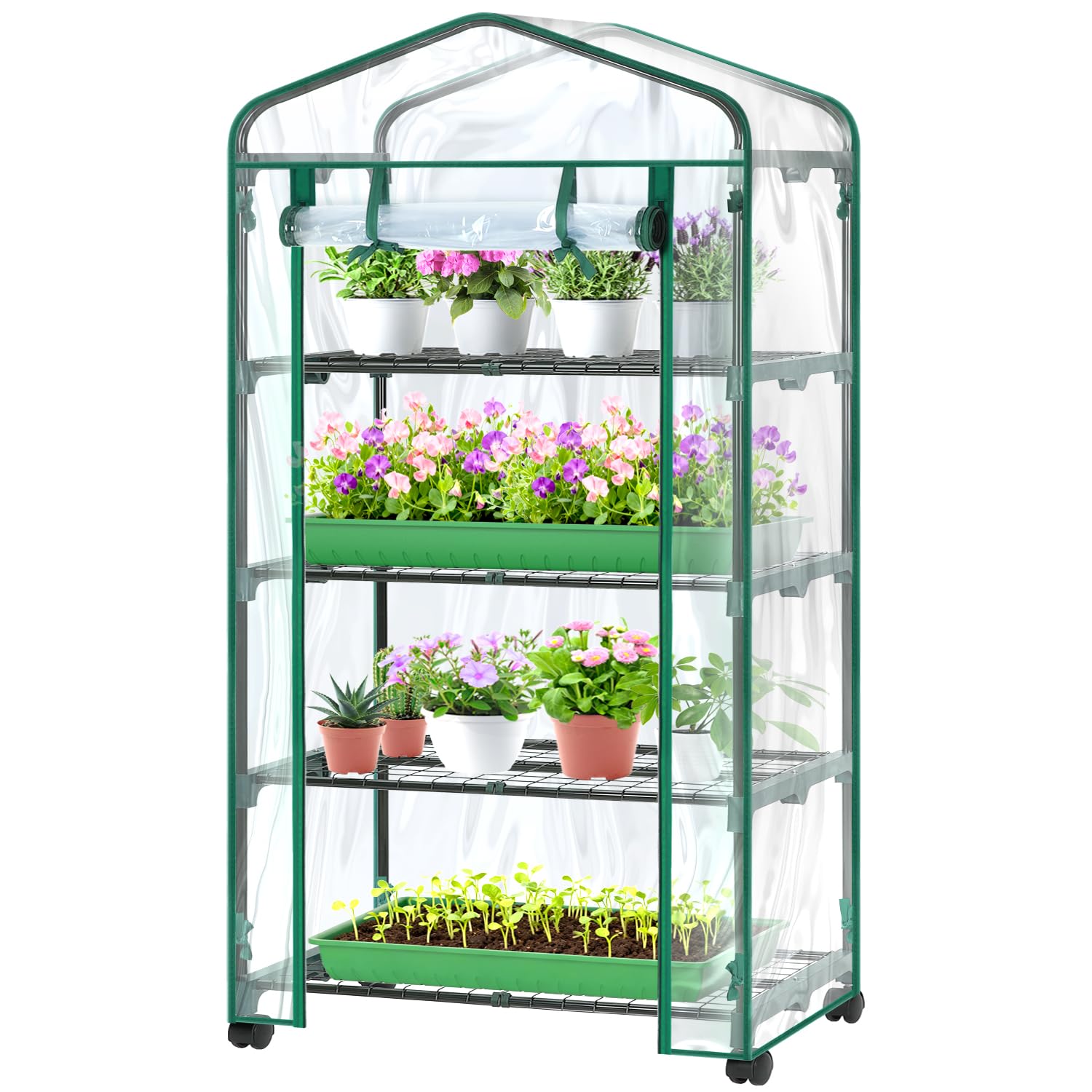
A wheeled greenhouse that chases the best light across your patio or living room.
The Ohuhu 4-Tier stands 62 inches tall with four lockable casters, making it the most mobile option for seed starting. The 95% light-transmitting PVC cover lets through nearly all available sunlight, and the reinforced steel frame holds up to 22 lbs per shelf. Assembly is straightforward — picture instructions and no tools needed — and reviewers point out assembling it solo in about 20 minutes.
The shelf design is a smart upgrade: a center bar prevents the wire racks from sagging under heavy trays, and clips lock the shelves into place. The cover uses both a zipper and Velcro for the door, which buyers like for ease of access. The sturdiness gets mixed feedback — some find it solid, others note it feels light — but for indoor or sheltered outdoor use, this greenhouse is stable enough for seed trays. The cover is not built for full-sun, all-summer UV exposure, so plan to use it in a partly shaded or indoor spot.
What owners praise most
- Assembly is the top-mentioned positive — clear instructions and a 20-minute build time.
- The wheels let you roll the greenhouse from a sunny window to a seed-starting station easily.
- Compact enough for small areas but tall enough to hold standard 1020 trays on multiple shelves.
The honest trade-off
- The PVC cover and lightweight frame are not meant for prolonged outdoor sun exposure — best used indoors or on a covered patio.
- No integrated grow lights, so you will need to add your own light bars if starting seeds in a dim room.
Perfect for: anyone who wants to move their seed-starting setup between indoor and outdoor spots as the weather changes.
Not ideal if: you plan to leave the greenhouse in full sun all summer — the cover will degrade faster.
5. SOLIGT Self Watering Seed Starter Trays 6 Pack
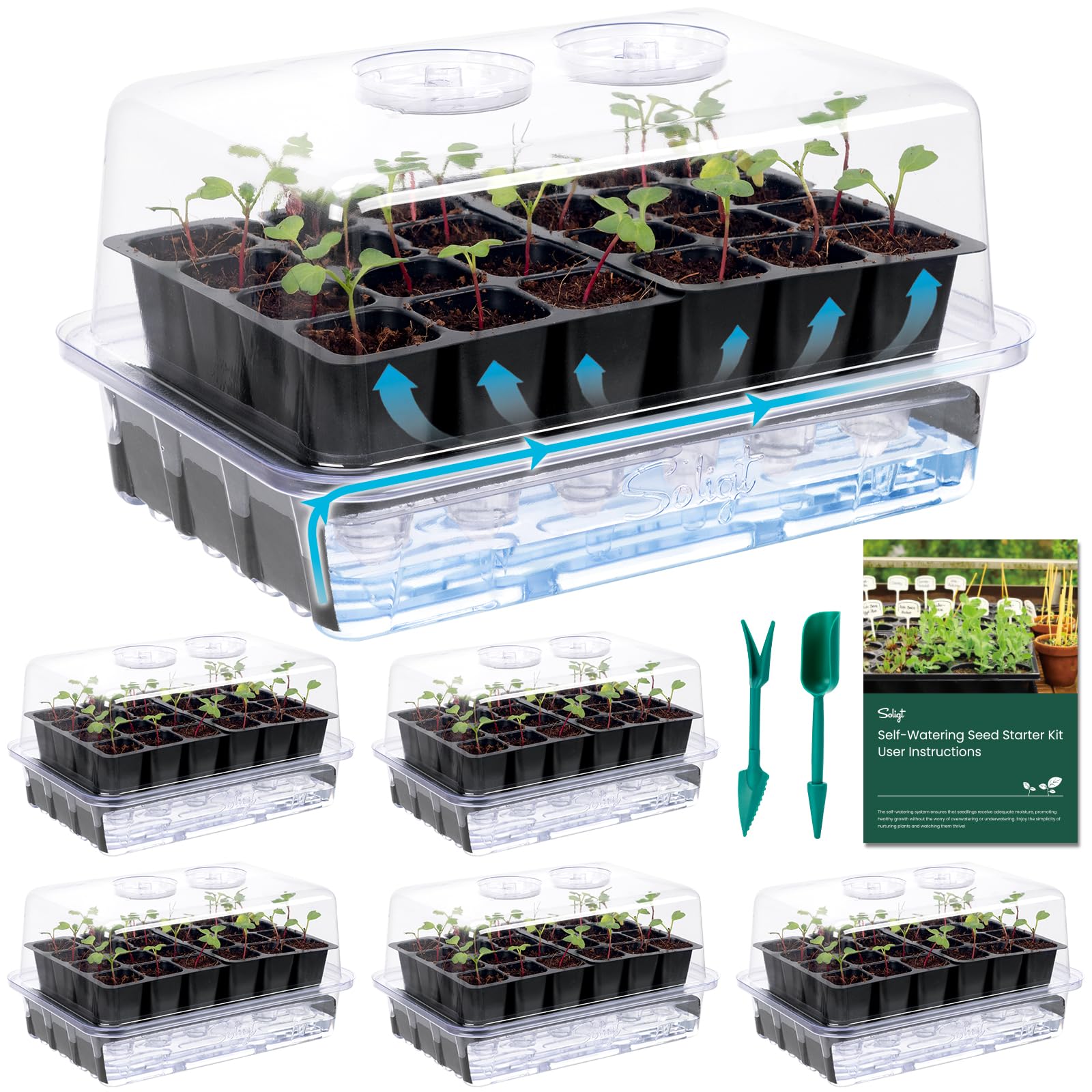
A six-tray system that waters from below so you never disturb a germinating seed.
The SOLIGT kit is built for volume — six trays, each with two 12-cell inserts, giving you 144 individual planting cells. The self-watering design uses a clear bottom tray and a capillary mat: fill the reservoir to about 3/4 inch deep (the “S” in the SOLIGT logo on the tray marks the fill line), and the mat wicks moisture up into the cells. This eliminates overhead watering, which can wash away tiny seeds or compact soil.
Each cell measures 1.5 inches per side and 2.17 inches deep — deeper than the GOONMILL cells, giving roots more vertical room before transplanting. The humidity domes have adjustable vents so you can gradually lower humidity as seedlings harden off. Quality is the most-praised aspect: buyers describe the plastic as extra-thick, and they report no warping or cracking after multiple uses. The size gets mixed notes — some wish the cells were larger for slower-growing plants like peppers — but for starting vegetables, herbs, and flowers at scale, this system is tough to top.
Performance note: The most-discussed praise is the quality of the thick plastic and the effective capillary watering system. Germination improvement is the second most-cited benefit, with many owners reporting noticeably higher sprout rates compared to peat pots or basic trays.
Choose this for: high-volume seed starting where consistent bottom watering and durable trays matter more than fancy lights.
Pass on this if: you only need a dozen plants and do not want to store six trays between seasons.
6. Grandhom 4-Tier Mini Greenhouse with Wheels
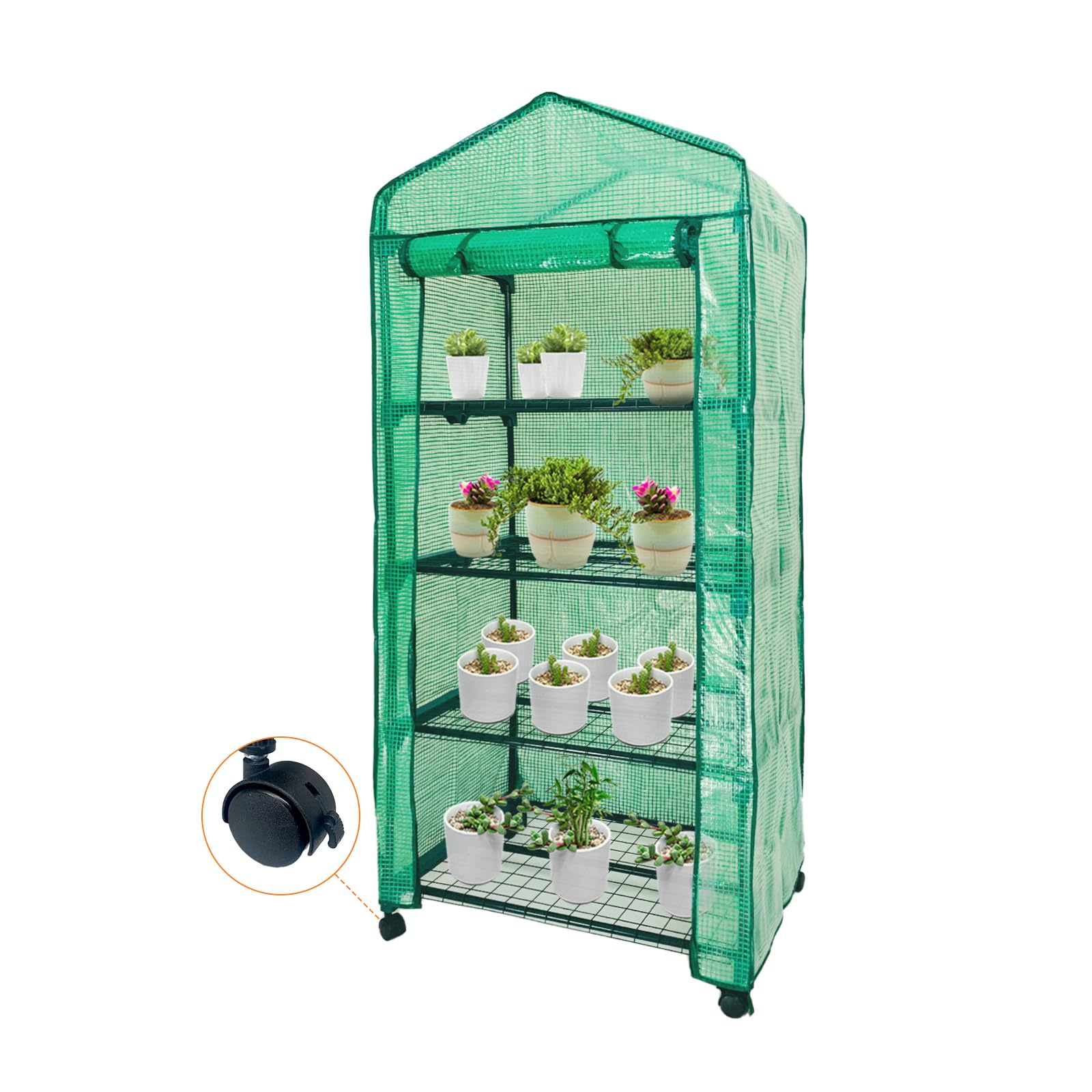
A budget outdoor greenhouse with wheels that shields seeds from squirrels and cold wind.
The Grandhom 65-inch tall greenhouse uses a green polyethylene (PE) cover — a thicker, more UV-resistant material than basic PVC — for outdoor seed starting. The 4-tier steel frame holds up to 22 lbs per shelf, and the roll-up zipper door combined with four screen vents gives you airflow control that prevents overheating on sunny days. The casters have brake functions so you can lock it in place once you find the right spot.
Owners who use it outdoors report it protects germinating seeds from squirrels, heavy rain, and cold wind — a real advantage for early spring starts on a patio. The shelf design has a minor flaw: the front door requires tying two short strings to keep it rolled up, which some find fiddly compared to a toggle or magnetic closure. The shelves are not the most rigid, but distributing weight evenly with trays solves the issue. At 10.6 lbs, it is heavy enough to feel substantial but still rolls easily.
Owner takeaway: “Perfect size to get my garden started early,” is the common refrain. The material and vent setup make this the strongest budget option for outdoor seed starting, especially if you need protection from wildlife.
Best for: outdoor seed starting on a deck or patio where you need protection from critters and weather but not a full permanent structure.
Consider something else if: you need rock-solid shelves that can hold heavy soil bags — the wire racks are adequate for trays, not bulk.
7. RooTrimmer 1020 Tray 5-Pack with Tall Dom
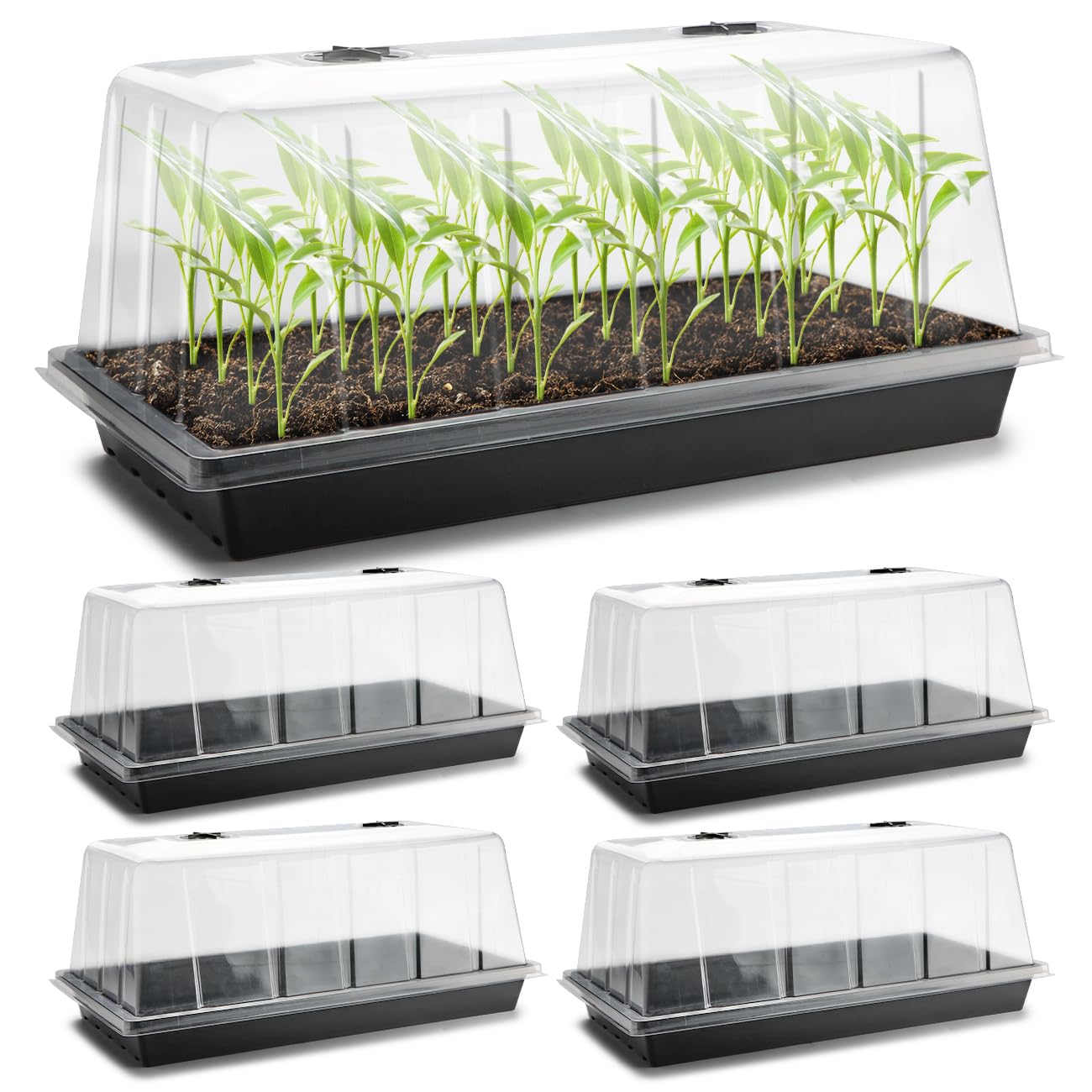
Industrial-grade trays with towering domes that let seedlings grow tall before transplanting.
These RooTrimmer 1020 trays are designed for serious propagators. The standard 10×20-inch footprint fits most grow shelves and heat mats, but the dome is what stands out: 7.3 inches tall instead of the usual 3 to 4 inches. That extra vertical space means you can keep seedlings under the dome longer — until they develop true leaves and a strong root system — without the leaves pressing against the top. The fully clear PET and PP plastic (polyethylene terephthalate and polypropylene) boost light transmission for compact growth.
The tray base has no drainage holes, which makes it ideal for bottom watering and hydroponic setups — no leaks on your furniture. Sturdiness is the most-praised aspect by a wide margin; owners call the plastic thick and far more durable than flimsy name-brand alternatives. The lid does not snap on tightly — it sits on top — but it retains moisture effectively, which is what matters for germination. A small number of shoppers say missing parts or unresponsive ventilation, so check the pack on arrival.
What makes it a standout
- The tall 7.3-inch dome gives seedlings weeks of extra protected growth before transplanting.
- Thick, heavy-duty plastic withstands repeated growing cycles without cracking — owners call it “much sturdier than other trays.”
- No-hole base keeps your space clean and works perfectly for bottom watering.
The catch
- The dome does not snap into place — it rests on the tray, which means it can slide off if bumped.
- A few units arrive with missing pieces, so inspect the pack right away.
Perfect for: serious seed starters or microgreen growers who need reusable, durable trays that let seedlings stretch upward under a dome.
Not for: anyone who needs a single set — you are buying five trays and five domes, so be ready for a lot of planting.
8. SpeePlant 4-Tier Indoor Greenhouse with Grow Lights
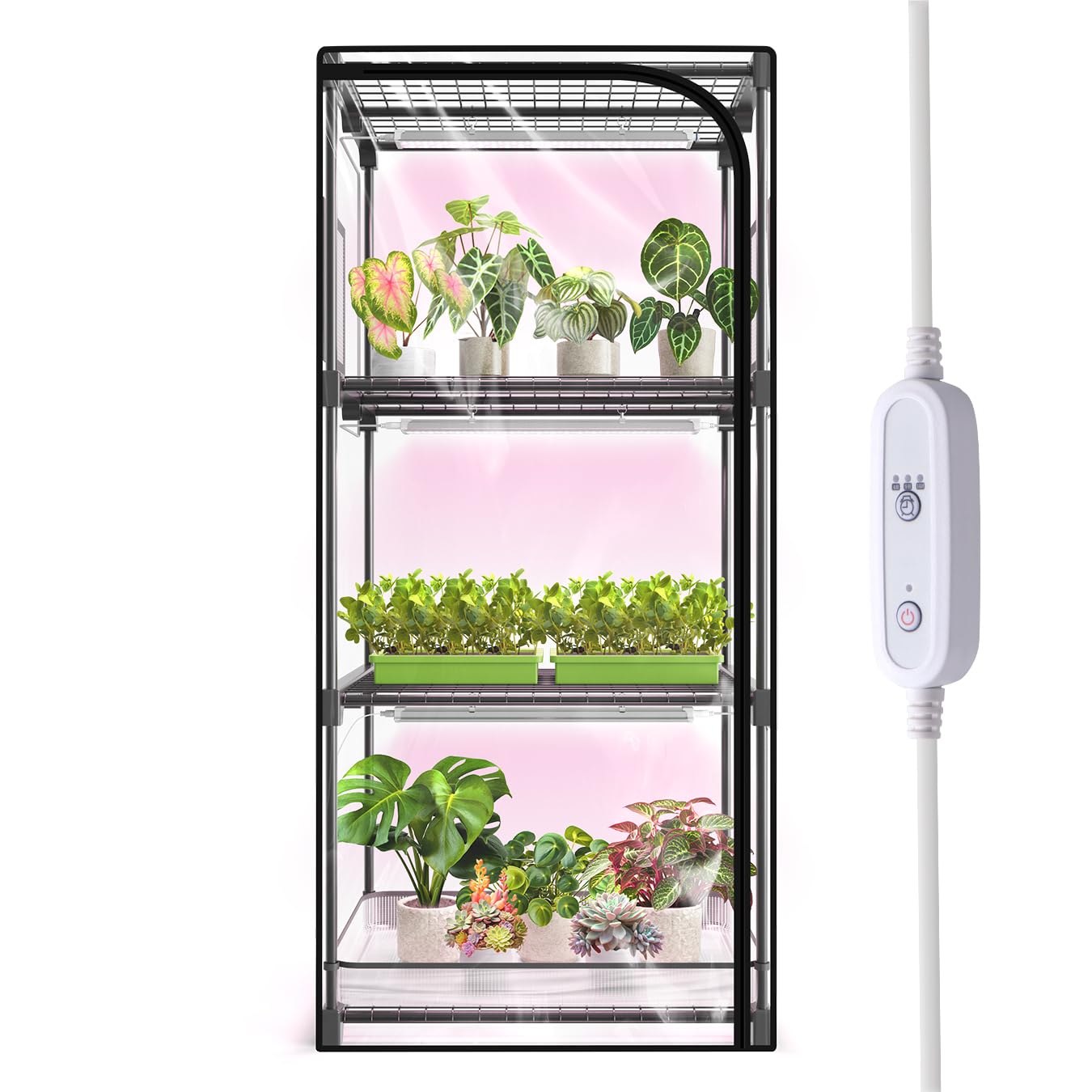
A tall indoor tent with three light bars and a timer that remembers your schedule.
The SpeePlant greenhouse combines a 59-inch tall, 4-tier shelf unit with three 20W full-spectrum LED light bars for a total of 60W of lighting. The lights emit a pink-white spectrum (400-780nm) that mimics natural sunlight and promotes photosynthesis without the harsh glare that bothers eyes. Each shelf supports up to 22 lbs, and the shelves can be adjusted or removed to fit taller plants. The waterproof PVC cover has a ventilation window on the side and a spill-proof bottom pouch to catch drips.
The timer is the clever part: it offers 4/9/14-hour auto on/off settings with a memory function that recalls your last timing mode, even after unplugging. That means one setup and you are done for the season. Assembly is the most-praised feature — owners say it takes about 15 to 20 minutes with no tools. The lights get mixed feedback: while they work well for seed germination, some users find the lights positioned too high off the bottom shelf, which can cause leggy seedlings on that tier. The side window Velcro also tends to rip with regular use.
Owner verdict: “Very easy to setup only took me 20 minutes to build and very light so you can move it around,” summarizes the assembly experience. For seed starting, the lights do the job, but you may need to rotate shelf positions to keep seedlings from stretching.
Reach for this if: you want a complete indoor seed-starting station with a smart timer and enough headroom for medium-sized plants to mature.
Consider an alternative if: you rely heavily on the bottom shelf — the fixed light position there tends to be too far from seedlings.
9. Bstrip 4-Tier Indoor Greenhouse with Dimmable Grow Lights

A premium indoor station with dimmable lights that let you fine-tune brightness from seedling to transplant.
The Bstrip greenhouse is the most feature-rich option here. The four 15W full-spectrum LED bars (60W total) cover the 400-780nm range and offer 7-level dimming from 15% to 100% brightness, plus three light color modes (yellow, pink, mixed) and three timer settings (3, 6, or 12 hours). That level of control means you can start seeds under intense full brightness and gradually dial it down as they acclimate to normal indoor light.
The frame is built from rigid steel tubing with plastic connectors between sections for stability. The dimensions — 26.8 by 19.3 by 61.8 inches — fit standard 10×20-inch seed trays, and the 4-tier design accommodates up to 8 trays total. The dual-zipper roll-up door gives full access. A notable weak point: the magnets that hold the light bars in place are not strong enough, and some units arrive with a defective plug (smashed prongs). The light bars may require reconfiguring the connector cable to all work. Weighing 7.39 kg (about 16.3 lbs), this is the heaviest pick, which contributes to its sturdy feel.
what separates it
- 7-level dimming and 3 color modes give you precise control over light intensity for every growth stage.
- Sturdy steel frame with thick plastic connectors feels built to last for many seasons.
- Holds up to 8 standard 1020 seed trays — serious capacity for a single unit.
The downside
- The light bar magnets are weak, causing the bars to fall out of position with minor bumps.
- Defective plugs and wiring issues appear in enough reviews that the seller’s responsiveness is a concern.
Choose this for: precise light control and maximum seed tray capacity in a single, sturdy indoor greenhouse.
Hesitate if: you need everything to work perfectly from the start — the light attachment and wiring are not as polished as the rest of the build.
Understanding the Specs
Full Spectrum (400-780nm)
A grow light that emits a range of wavelengths similar to natural sunlight — including both blue light for compact leafy growth and red light for flowering and root development. For seed starting, a full spectrum light keeps seedlings from stretching into weak, leggy stems. The ideal is a light capable of reaching 1000+ PPFD (photosynthetic photon flux density) at a 6-inch distance, though most built-in lights in this category run closer to 300-500 PPFD, which is fine for the first 3-4 weeks of growth.
Self-Watering (Capillary Mat System)
A wicking fabric that sits under the seed cells and draws water up from a reservoir below. This keeps the growing medium evenly moist without overhead watering that can dislodge seeds or compact the surface. The key spec is the reservoir depth — about 3/4 inch is standard — and the mat must touch the bottom of the reservoir to work. For seed starting, this system reduces the risk of both overwatering (which rots seeds) and underwatering (which stops germination).
1020 Tray (Standard 10×20 Inch Format)
The universal nursery tray size that fits most heat mats, grow light stands, and shelving units. A true 1020 tray measures roughly 10 inches wide by 20 inches long by 1-2 inches deep. Any greenhouse claiming compatibility with standard trays must have internal shelf dimensions at least 21 inches wide and 11 inches deep to accommodate them sitting flat. This format is the industry standard because it boost surface area under lights without wasting space.
Humidity Dome (Tall vs. Standard)
A clear plastic cover that seals over a seed tray to trap moisture and heat, creating a mini greenhouse effect. Standard domes are about 3 to 4 inches tall, which is fine for the first 10-14 days. Tall domes (7+ inches) allow seedlings to grow longer under cover, delaying the hardening-off process until the plant has stronger stems. The trade-off is that taller domes take up more vertical shelf space, so check your greenhouse height before buying.
FAQ
Can I use a regular grow light instead of the one that comes with the greenhouse?
How often do I need to water seeds in a self-watering tray?
Will a greenhouse with a PE cover last multiple seasons outdoors?
What size greenhouse do I need for starting 100+ seedlings?
Do I need a heat mat under the seed trays in a greenhouse?
Are humidity domes necessary for seed germination?
Can I use these greenhouses for plants other than vegetable seedlings?
How do I clean and store a mini greenhouse between seasons?
What does a timer on the grow light actually do for seed starting?
Should I choose a tabletop or a floor-standing greenhouse for seed starting?
Final Thoughts: The Verdict
For most buyers, the greenhouse for seed starting winner is the Barrina CX60 because it is the only pick that delivers an integrated grow light, proven humidity retention in the low 70s, and enough space for two 72-cell trays — all in a stable, lightweight tabletop unit with a 2-year warranty. If you want to boost vertical capacity and do not mind providing your own lights, the Ohuhu 4-Tier on wheels gives you mobility and four sturdy shelves for roughly the same footprint. And for starting huge volumes of seeds with low-maintenance bottom watering, the SOLIGT 144-cell system delivers quality trays that owners praise for lasting season after season without cracking.
How We Picked
We do not accept paid placement. Every pick is matched to a real buyer and a real use-case; we do not hands-on test units.
Sources & Methodology
Specifications: manufacturer listings and product documentation. Review insights: verified customer reviews, as of July 2026. Pricing: not shown on this page (it changes often); check the current price via the retailer link.
As an Amazon Associate, Lawn Gear Lab earns from qualifying purchases. This does not affect which products we feature.