
Standing water, muddy boot prints, and constant weed growth turning your greenhouse into a swamp are symptoms of one mistake: the wrong floor. A proper greenhouse floor isn’t just about looks—it dictates drainage, insulation, cleanliness, and how easily you can move pots and trays without tripping over uneven ground.
I’m Rikta — the co-founder and writer behind Lawn Gear Lab. I’ve spent months cross-referencing material tensile strengths, load ratings, drainage coefficients, and UV resistance data, then layering in verified owner feedback to cut through the marketing and find the flooring that actually works under the humidity and weight of a real greenhouse.
From interlocking deck tiles that handle 27,000-pound loads to soft PVC mats that drain in seconds, my analysis covers every serious option to help you find the best greenhouse flooring for your specific structure and climate.
How To Choose The Best Greenhouse Flooring
Greenhouses trap moisture, heat, and organic debris—a recipe for slippery surfaces and fungal growth if the floor can’t shed water fast. Your choice depends on whether you prioritize drainage speed, insulation for seedling trays, or load-bearing capacity for heavy pots and shelving units.
Water Permeability vs. Comfort
Woven PP fabrics and rigid paver grids excel at letting water pass through, but they offer zero cushion for your knees. Rubber drainage mats and EVA foam tiles provide comfort and insulation but may trap moisture beneath them if the base is not sloped. Match the floor’s permeability to your watering method—overhead irrigation demands rapid drainage, while bottom-watering benches can handle a slower-drying surface.
Tensile Strength & Load Rating
Greenhouse flooring must support fully saturated grow bags, heavy ceramic pots, and the weight of a wheelbarrow. Woven fabrics with 400+ lbs tensile strength prevent tearing when gravel is placed on top. Rigid paver systems rated to 27,000 lbs per square foot are overkill for hobby greenhouses but essential for commercial propagation spaces where rolling rack systems are used.
Installation & Modularity
Interlocking tiles and snap-together grids eliminate the need for glue or tools, making them ideal for growers who may reconfigure layouts seasonally. Roll-out fabrics and rubber mats require cutting to fit around base framing and anchoring with stakes or pavers to prevent shifting from foot traffic.
Quick Comparison
On smaller screens, swipe sideways to see the full table.
| Model | Category | Best For | Key Spec | Amazon |
|---|---|---|---|---|
| Vodaland HexPave | Rigid Paver | Heavy-duty commercial greenhouses | 27,000 lbs load capacity | Amazon |
| Big Floors DuraGrid | Grid Tile | High-traffic greenhouse pathways | Self-draining open grid design | Amazon |
| Xspec EVA Foam Tiles | Foam Mat | Propagation bench areas | 1-inch thick reversible foam | Amazon |
| VEVOR Interlocking Tiles | PVC Mat | Wet bench flooring | 50-pack, 0.6-inch drainage pins | Amazon |
| Uniboho Rubber Mat | Rubber Mat | Entrance & mixing station areas | 0.31-inch thickness, drainage holes | Amazon |
| Drymate Tent Mat | Waterproof Liner | Seedling germination zones | Waterproof rubber backing | Amazon |
| Grassclub Weed Barrier | Woven Fabric | Under-gravel greenhouse floors | 400 lbs tensile strength | Amazon |
In‑Depth Reviews
1. Vodaland HexPave Permeable Pavers

The Vodaland HexPave system is purpose-built for the extreme end of greenhouse flooring—commercial propagation houses, overwintering structures packed with heavy pots, or any space where a wheelbarrow rolls daily. Each 22-7/8 x 19-7/8 inch grid is molded from 100% recycled PPE plastic and handled a staggering 27,000 lbs of load during testing with a proper gravel base. The 488-unit pack covers 1,450 square feet, making this the definitive solution for large-scale operations.
Cellular confinement design allows rainwater to percolate directly through the hexagonal openings while the plastic grid prevents gravel migration and rutting. Owners report that after two years of use on private roads and shed bases, the grids held their shape with minimal aggregate top-up. The hex pattern stabilizes the surface so thoroughly that even a heavy tractor with tire chains will not displace the gravel fill.
Installation requires no tools beyond a level and a rubber mallet—each grid interlocks with its neighbor using built-in tabs. Some users noted that the kit ships with fewer ground anchors than ideal for loose soil bases, so budgeting for extra stakes is recommended. The upfront investment is significant, but for growers who need a permanent, zero-maintenance floor that never rots or tears, this is the endgame choice.
What works
- Industrial load rating handles heavy shelving and rolling racks without sinking
- Snap-together assembly covers large areas quickly without tools or adhesive
What doesn’t
- High upfront investment compared to fabric or foam alternatives
- Limited ground anchors included for stabilizing on loose soil
2. Big Floors DuraGrid Deck Tiles

The DuraGrid tiles from Big Floors offer a middle ground between soft mats and rigid pavers, using a patented open-grid design that drains water instantly while providing a stable, non-slip walking surface. Each 12×12 inch tile features a 0.63-inch profile with textured top surface that maintains traction even under constant hose-down conditions. The 40-pack covers exactly 40 square feet—ideal for a greenhouse center aisle or potting bench area.
Weather resistance is the standout feature here: the UV-stabilized formulation resists cracking and fading despite continuous exposure to sunlight and high humidity. Owners have installed these on patios, in pool bathrooms, and over damp basement floors, consistently praising how the tiles raise the walking surface above standing water. A rubber mallet is required to snap the interlocking tabs together securely, and once assembled, the tiles are difficult to separate without a flat screwdriver to pry the clips apart.
While the surface is comfortable enough for barefoot walking, it remains firm—if you want cushion for kneeling, pairing these with a separate foam pad is necessary. The bottom of each tile has small sharp feet designed to grip the base, so sweeping the area before installation prevents punctures to an underlying waterproof membrane. A professional-looking upgrade that transforms a muddy gravel floor into a clean, dry workspace.
What works
- UV-stabilized material withstands direct sunlight without becoming brittle
- Patented drainage channels prevent any standing water on the surface
What doesn’t
- Requires rubber mallet for assembly and a tool for disassembly
- Firm surface offers no cushioning for extended kneeling
3. Xspec 1″ Extra Thick EVA Foam Tiles

For greenhouse owners who spend hours kneeling at propagation benches or transplanting trays, the Xspec EVA foam tiles deliver shock absorption that rigid surfaces cannot match. Each 24×24 inch tile measures a full 1 inch thick and interlocks via puzzle-piece edges to create a seamless padded floor. The 12-tile set covers 48 square feet, which is enough for a dedicated repotting zone or a comfortable standing mat in front of shelving units.
The steel pattern embossed on both sides improves traction significantly compared to smooth foam mats, and the reversible design effectively doubles the lifespan. Owners with home gyms, kids’ play areas, and even indoor dog crates have reported that the tiles withstand heavy point loads—one user placed an 800-pound cable machine on them with zero permanent indentation. The water-resistant surface wipes clean with a damp cloth, though standing water left for hours can seep between tile seams.
The primary limitation for greenhouse use is that Xspec explicitly recommends indoor use only. Direct UV exposure will degrade EVA foam over time, so this product is best under a roof or shade cloth. Some initial off-gassing scent is normal and fades within a day. A smart choice for the comfort-focused grower who already has a well-drained base layer underneath.
What works
- 1-inch thickness provides genuine knee and back relief during long planting sessions
- Reversible double-sided design with textured grip pattern extends usable life
What doesn’t
- EVA foam degrades under direct sunlight—requires covered greenhouse position
- Water can seep between tile seams if flooding occurs
4. VEVOR Modular Interlocking Drainage Tiles
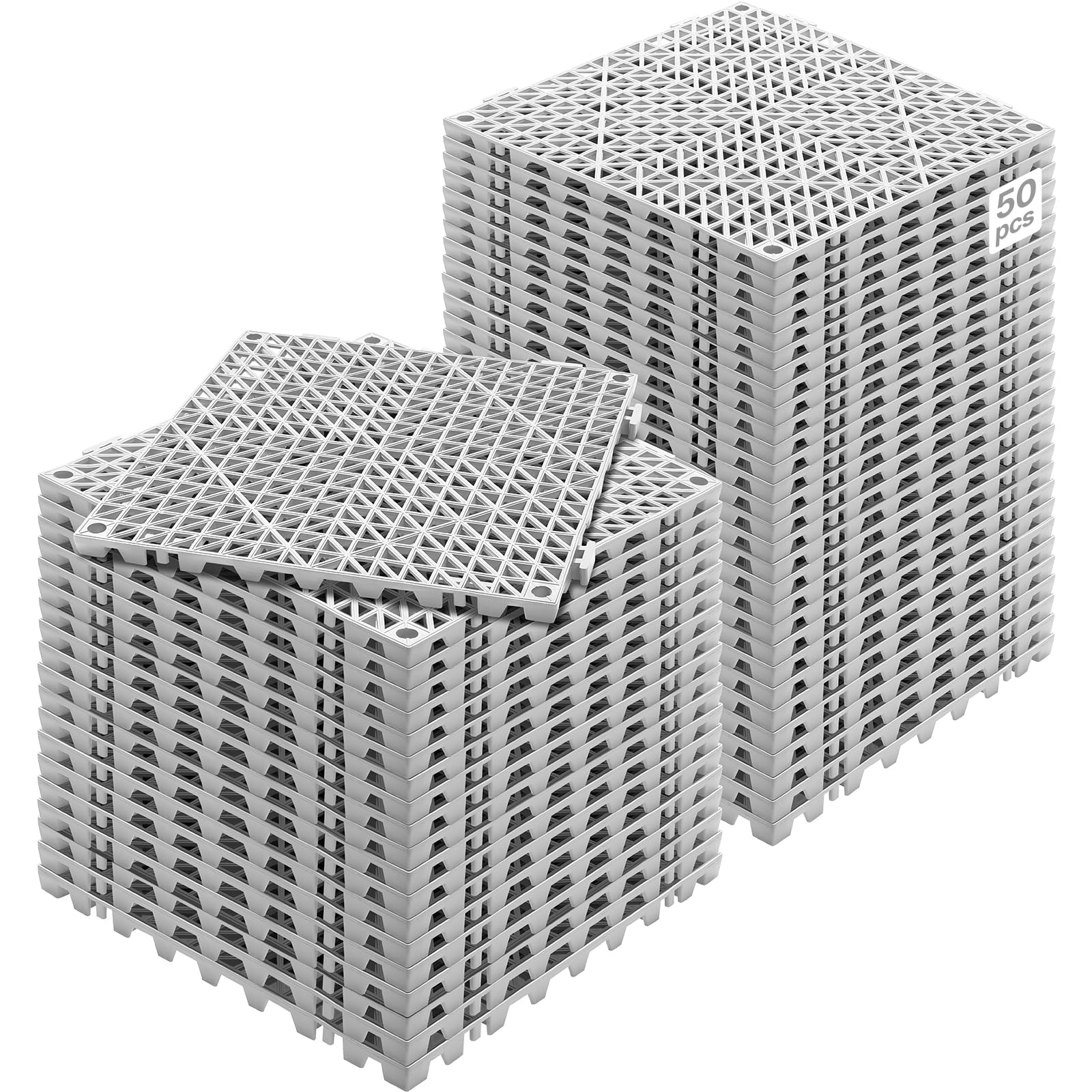
The VEVOR interlocking tiles solve a problem that plagues greenhouse owners—how to keep the floor dry without sacrificing comfort. Each 12×12 inch PVC tile has 0.6-inch raised support pins that lift the walking surface above the subfloor, creating a continuous air gap for rapid evaporation and drainage. The 50-pack covers 50 square feet, making it a practical choice for a complete small greenhouse floor or the wet area around an automated irrigation system.
Multiple owners have tested these tiles under extreme conditions, with one reporting that they held up perfectly under an 800-pound motorcycle and a 800-pound lawn tractor with tire chains. Despite looking like a simple drainage mat, the PVC compound is noticeably sturdy yet remains pliable enough to cut easily with a utility knife for irregular edges around greenhouse base frames. The interlocking tabs snap together securely without glue, and the entire assembly can be picked up and moved if you need to reconfigure the greenhouse layout.
A strong chemical smell upon unboxing is the most common complaint, though this dissipates within one to two days of airing out. The tiles resist hair and oil buildup, rinsing clean with a hose, which makes them suitable for combining with potting soil mixing stations. For small to medium greenhouses where a balance of drainage, durability, and reasonable cost is the priority, these tiles hit the mark.
What works
- Raised support pins create air gap that dries surface faster than flat mats
- Proven durability under heavy equipment without cracking or deforming
What doesn’t
- Strong chemical odor requires 1-2 days of airing out after installation
- Debris can get trapped under tiles—requires lifting for thorough cleaning
5. Uniboho Rubber Drainage Mat

The Uniboho rubber mat brings commercial kitchen drainage technology into the greenhouse at a price point that undercuts nearly every other option. Measuring 60 x 35 inches with a 0.31-inch thickness, this mat features large hexagonal holes that channel water, spilled potting mix, and mud directly through the mat rather than pooling on the surface. The polyester and rubber compound provides a non-slip grip that stays put on concrete, wood, tile, and even vinyl subfloors without adhesive.
Multiple verified owners confirm that the rubber has substantial weight and stays flat immediately after unrolling, unlike cheaper mats that curl at the edges. The drainage holes are large enough that fine soil particles pass through rather than clogging the surface, and the mat rinses clean with a garden hose. Users have deployed it in garage potting stations, greenhouse entrances, and around pool areas, consistently noting that the hexagonal pattern reduces slipping hazards significantly compared to solid floor mats.
The downside is a strong rubber odor that lingers for the first several days—one owner found it too strong for indoor use and moved it to an outdoor garage. The 60-inch length covers a generous work zone but may need multiple units to cover an entire greenhouse floor. A straightforward, durable choice for high-traffic zones like the entrance or mixing station where mud and water are constant.
What works
- Large hexagonal drainage holes prevent water pooling even during heavy hose use
- Heavy rubber weight keeps the mat flat without curling or shifting
What doesn’t
- Strong rubber chemical smell persists for several days after unboxing
- Requires multiple units to cover an entire greenhouse floor area
6. Drymate Tent Carpet Mat

Designed originally as a camping tent liner, the Drymate mat has found a second life as a greenhouse floor solution for growers who prioritize insulation and softness over rigid drainage. The top layer is a felt-like polyester carpet (made from over 50% recycled fibers) that feels warm underfoot and traps dirt and fallen leaves before they spread across the greenhouse. The rubberized waterproof backing prevents any capillary moisture from the ground below from soaking upward.
At 60 x 74 inches, the mat is large enough to cover the soil aisle of a small hobby greenhouse or serve as a cushioned pad under a propagation bench. It is fully trimmable without fraying, allowing you to cut around base frame legs for a tailored fit. Cleaning involves vacuuming or hosing off with mild detergent, and the mat dries quickly in sunlight. Owners who use their greenhouses in winter appreciate how the carpet layer insulates against cold concrete or soil floors.
The mat is not designed for standing water—while it handles splashes and humidity, pooling water will eventually seep through the edges. The polyester top also attracts pet hair and fine dust, requiring more frequent cleaning than smooth-surface flooring. A solid option for the decorative or lounging area of a greenhouse rather than the heavy watering zone.
What works
- Felt top provides warm, comfortable surface for barefoot greenhouse walking
- Rubber backing creates an effective moisture barrier from ground dampness
What doesn’t
- Not suitable for areas with standing water or heavy overhead irrigation
- Polyester fabric attracts dust and pet hair, requiring regular vacuuming
7. Grassclub Weed Barrier Landscape Fabric

For greenhouse owners who build their flooring on a gravel base, the Grassclub weed barrier serves as the foundational layer that separates soil from aggregate while preventing weeds from pushing up through the greenhouse floor. Made from 3.2 oz high-density woven polypropylene, this 3-foot by 300-foot roll provides massive coverage—900 square feet total—for less than entry-level rubber mats. The 400 lbs tensile strength rating means it can support a layer of pea gravel or decomposed granite without tearing under the weight.
The woven structure allows air and water to pass through freely, preventing the anaerobic conditions that can develop under solid plastic sheeting. The fabric cuts easily with scissors for wrapping around foundation tubes and can be secured with standard landscape staples.
Initial water beading was noted by one user—water pooled on the surface before gradually absorbing—which makes this a sub-base layer rather than a finished walking surface. Covered with gravel, however, the water passes through effectively within seconds. An excellent budget-friendly foundation for a multi-layer greenhouse floor system where the fabric acts as the bottom barrier beneath gravel and drainage mats.
What works
- 3.2 oz woven PP density blocks weed penetration while allowing water flow
- 400 lbs tensile strength handles gravel topping without stretching or tearing
What doesn’t
- Water may bead on the surface initially rather than passing through immediately
- Not a finished walking surface—requires gravel or stone topping layer
Hardware & Specs Guide
Load Capacity
Rigid paver systems like the Vodaland HexPave handle up to 27,000 lbs per square foot when installed on a compacted gravel base, making them suitable for heavy equipment storage. Woven weed barrier fabrics provide structural reinforcement but do not prevent gravel from shifting under point loads. Foam and PVC mats distribute weight across the tile surface but can indent permanently if heavy shelving legs are placed directly on them without a load-spreading plate.
Drainage Rate
Open-grid tiles and rubber drainage mats with large hexagonal holes achieve near-instantaneous drainage—water passes through in under one second during heavy hose flow. Woven PP fabrics allow water percolation at a slower rate depending on soil compaction beneath them. Solid-backed mats and foam tiles create a barrier that requires the subfloor to be sloped for runoff to reach the edges, otherwise water may pool on top of the waterproof layer.
FAQ
Can I use regular indoor carpet in a greenhouse?
Should I put greenhouse flooring directly on top of dirt?
How thick should greenhouse rubber mats be?
Final Thoughts: The Verdict
For most gardeners, the greenhouse flooring winner is the Vodaland HexPave because it delivers permanent weed suppression, instant drainage, and industrial load capacity without any rotting, tearing, or UV degradation. If you want cushioned comfort for kneeling during transplanting, grab the Xspec EVA Foam Tiles. And for a budget-friendly foundation layer under gravel, nothing beats the Grassclub Weed Barrier Fabric in terms of coverage per dollar.