
Specs are compiled from manufacturer listings and verified buyer reviews and can change over time — please confirm the key details on the product page before buying.
A greenhouse that dips below freezing overnight doesn’t just stunt your plants — it wipes them out. And the biggest mistake greenhouse owners make is grabbing any random space heater designed for a bedroom, only to find the fan barely moves air or the safety shut-off kills power in the middle of a freeze. You need something that circulates warm air evenly, handles the damp and dust of a greenhouse environment, and runs reliably through the coldest nights without tripping breakers. This guide focuses on heating methods — from quiet PTC (positive temperature coefficient) ceramic panels that self-regulate, to forced-air units that blast warmth across the whole bench, to infrared models that warm objects rather than the air — and matches each to a real greenhouse size.
I’m Rikta — the founder and writer behind Lawn Gear Lab. This guide is built by comparing the manufacturers’ published specifications and the patterns across verified customer reviews, so you get each pick’s real strengths and trade-offs instead of marketing spin.
Below, you will find eight greenhouse-tested electric heaters ranked by real-world performance for the best greenhouse electric heater; the focus stays on BTU output, thermostat accuracy, durability in high-humidity spaces, and the actual coverage area each unit can reliably warm.
Our Picks at a Glance
How To Choose The Best Greenhouse Electric Heater
Choosing an electric heater for a greenhouse depends on matching the heat output to the space volume, not just the square footage. A small 100-square-foot greenhouse with tall shelving may need a higher BTU unit than a larger but shorter hoop house because warm air rises and the bulk of the plant leaves sit at ground level where you actually need the heat.
Match BTU output to your greenhouse volume
British Thermal Units (BTU) measure how much heat the unit can push into the air per hour. As a rule of thumb, a 1,500-watt heater produces about 5,100 BTUs, which comfortably handles a 120- to 150-square-foot greenhouse in moderate winter climates. For a greenhouse larger than 250 square feet, look at units with 10,000 BTUs or more to avoid the heater running non-stop without ever reaching the set temperature. Running a unit that is undersized burns more electricity and stresses the heating element, often leading to early failure.
Choose the right heating method for your setup
Forced-air heaters use a fan to blow air across a hot element, warming the entire space quickly but also circulating dust and drying the air around leaves. PTC ceramic heaters offer a safer alternative — the ceramic element self-regulates temperature, rarely gets hot enough to ignite nearby material, and the built-in fan runs at a lower speed, which is gentler on seedlings and cuttings. Infrared heaters warm objects (soil, pots, benches) rather than the air, making them a smart pick for an unheated greenhouse where you want the root zone to stay warm even if the ambient air dips. Each method suits a different growing style, so your choice should align with what you are trying to protect — mature vegetables, start seeds, or overwinter dormant potted plants.
Check thermostat accuracy and dead zones
A thermostat with a wide dead zone (the gap between when the heater turns on and off) can create temperature swings of 10°F or more, which stresses plants and forces the heater to waste energy. Look for units with a user-adjustable or narrow dead zone — the best performing models stay within 2-3°F of the set point. Also, consider whether the thermostat is built into the heater body (exposed to the same temperature as the greenhouse) or comes with a remote sensor probe. Remote probes let you position the heater in one spot and measure the temperature where the plants actually sit, giving you much more accurate control during sub-freezing nights.
Quick Comparison
| Model | Best For | Heat Output (BTU) | Coverage Area | Heating Method | Amazon |
|---|---|---|---|---|---|
| Dura Heat EUH1465★ Best Overall | Budget-friendly small greenhouse heating | 5,120 | Up to 250 sq ft | Forced air (ceramic) | Amazon |
| Spider Farmer SFAlso Great | Tent growers who need precision | 1,808 (530W) | Small tents (up to ~80 sq ft) | PTC ceramic | Amazon |
| AC Infinity THERMOFORGE T7Premium Pick | Smart app-controlled grow tents | 3,412 (1000W) | Medium tents (4×4 ft) | PTC ceramic | Amazon |
| VIVOSUN AeroFlux 700W | Tent growers wanting VPD control | 2,388 (700W) | Small-to-mid tents (up to 4×4 ft) | PTC ceramic | Amazon |
| DR. INFRARED HEATER DR218 | Overwintering plants in unheated greenhouses | 10,236 (3000W) | Up to 600 sq ft | Radiant infrared | Amazon |
| Bio Green PAL 2.0/US | Small, damp greenhouse spaces | 2,560 / 5,120 (selectable) | Up to 120 sq ft | Forced air | Amazon |
| iPower 1500W | Continuous-use humidity-heavy setups | 5,118 (1500W) | Small greenhouses (up to ~160 sq ft) | Forced air | Amazon |
| Dura Heat EUH1500 | Extremely quiet small-space spot heating | 5,120 | Up to 250 sq ft | Forced air | Amazon |
In‑Depth Reviews
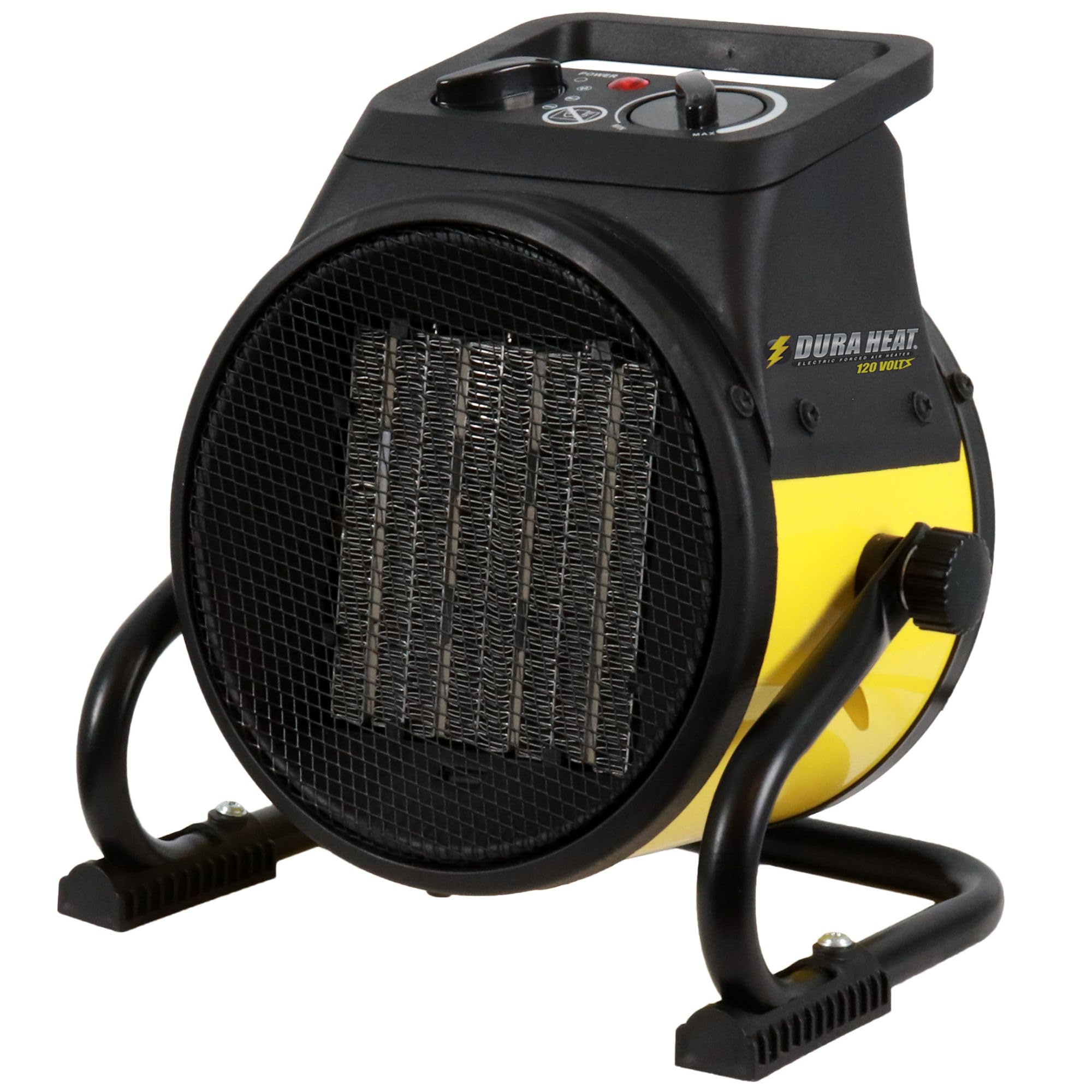
1. Dura Heat EUH1465 Electric Forced Air Heater, 5120 BTU
Our pick — over 4★ from 800+ verified ratings; the strongest balance of quality and price.
The rugged steel box that just keeps blowing heat, season after season.
The Dura Heat EUH1465 is the budget-friendly workhorse of this guide, and it earns the Best Value label honestly — not because it’s cheap, but because its 4.3-star average across 810 ratings is supported by owners who have run it for years . It delivers 1500W of PTC ceramic forced air (5,120 BTUs) covering up to 250 square feet, with a rugged steel body that looks and feels like it belongs in a workshop rather than a living room. The built-in thermostat lets you dial in the temperature, and the overheat protection circuit is a simple but essential safety layer for unattended greenhouse use.
Buyers across the reviews converge on the same story: this is a “small but mighty” unit that handles small greenhouses and uninsulated structures easily. One owner reports using it for three years to heat a 6×6 metal building at a sawmill with “basically 0 maintenance” and no problems. Another ran it all winter in Colorado cold, keeping a small enclosed porch at safe temperatures, and it “never overheated or shut off.” The metal cabinet and easy-grip handle make it genuinely portable at just 8.5 inches tall and roughly 7 inches deep. The honest limits are that the heat output is rated for 250 sq ft as a maximum, so it’s not the primary heater for a large greenhouse; and some owners note it needs regular dusting since the forced air picks up debris. The steel construction is tough but the fan noise is noticeable — this is not a silent heater.
Why it wins on value
- 810 ratings with a solid 4.3-star average, backed by years of owner experience
- Steel body and 5,120 BTUs cover up to 250 sq ft at a fraction of premium-unit cost
- PTC ceramic element self-regulates, reducing fire risk and extending lifespan
The honest trade-off
- Fan noise is noticeable — not for silent greenhouse operation
Reach for this if: you want a no-frills, rugged heater for a small greenhouse or workshop that can take a beating and keep running.
Look elsewhere if: silence or a digital thermostat with fine control matters more than raw durability.
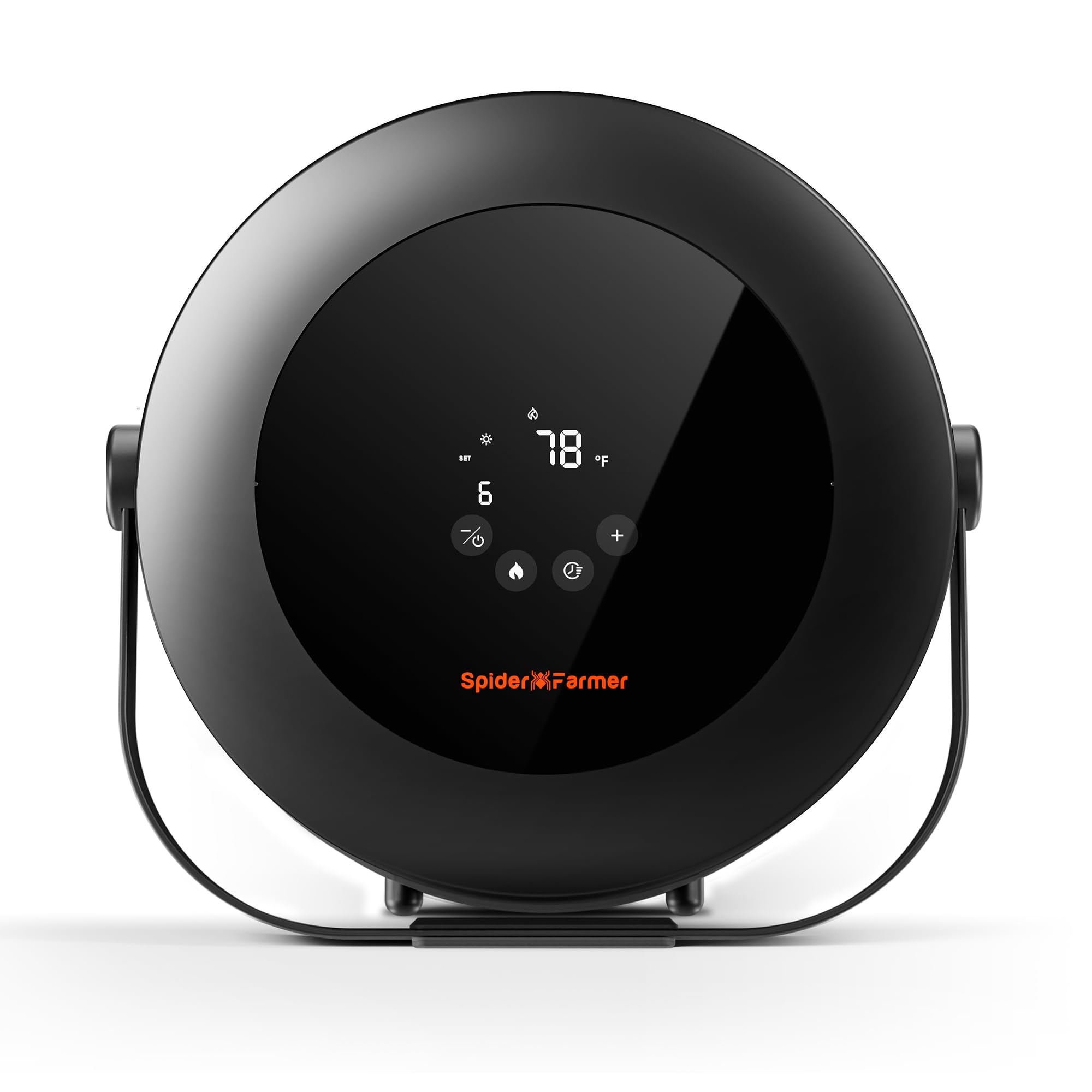
2. Spider Farmer Grow Tent Heater, 530W
The quiet engineer that keeps a grow tent from cooking or freezing your plants.
The Spider Farmer SF heater is purpose-built for a greenhouse environment, and it shows in the details that most space heaters miss. It uses PTC (positive temperature coefficient) ceramic heating at 530 watts — a lower wattage than some competitors, but it intentionally avoids the harsh, dry blast that can stress seedlings. The built-in temperature sensor monitors the space in real time and, crucially, uses a temperature zone regulation design with a 3°F dead zone (set temperature minus 3°F turns on, plus 3°F turns off). That avoids the rapid on-off cycling that wears out cheaper heaters and creates temperature swings that confuse plants. You get 10 adjustable heat and fan speed levels, plus four modes: Normal Open, Temperature All-day, Temperature Daytime, and Temperature Night mode, all programmable through a 24-hour timer.
The included 160cm hose lets you route the gentle warm air away from the unit so it doesn’t blow directly onto foliage — a frequent cause of leaf burn in smaller tents. Owners have used this for over five months straight with no issues, describing the settings as “pretty straightforward” and praising how it “achieves the target temperature with ease.” The 4.3-star average across 199 ratings backs up the reliability. The main limitation is that the 530W output is best suited for tents rather than large open greenhouses — the feedback is clear that it can struggle in especially cold climates or bigger setups, so it earns its spot for the tent crowd who value precision over raw power.
What makes it the top pick
- Temperature zone regulation maintains a narrow 3°F dead zone to prevent rapid cycling that can stress plants
- Programmable 24-hour timer with four modes for overnight and away-from-home heating
- Quiet operation with 160cm hose to prevent direct hot airflow on leaves
One honest trade-off
- 530W output means it fits small-to-mid tents best, not large greenhouses
Reach for this if: you run a grow tent or small greenhouse and want programmable temperature control that won’t cook your seedlings.
Look elsewhere if: your greenhouse is larger than about 80 square feet and you regularly face sub-freezing temperatures — you’ll need a higher-BTU unit.
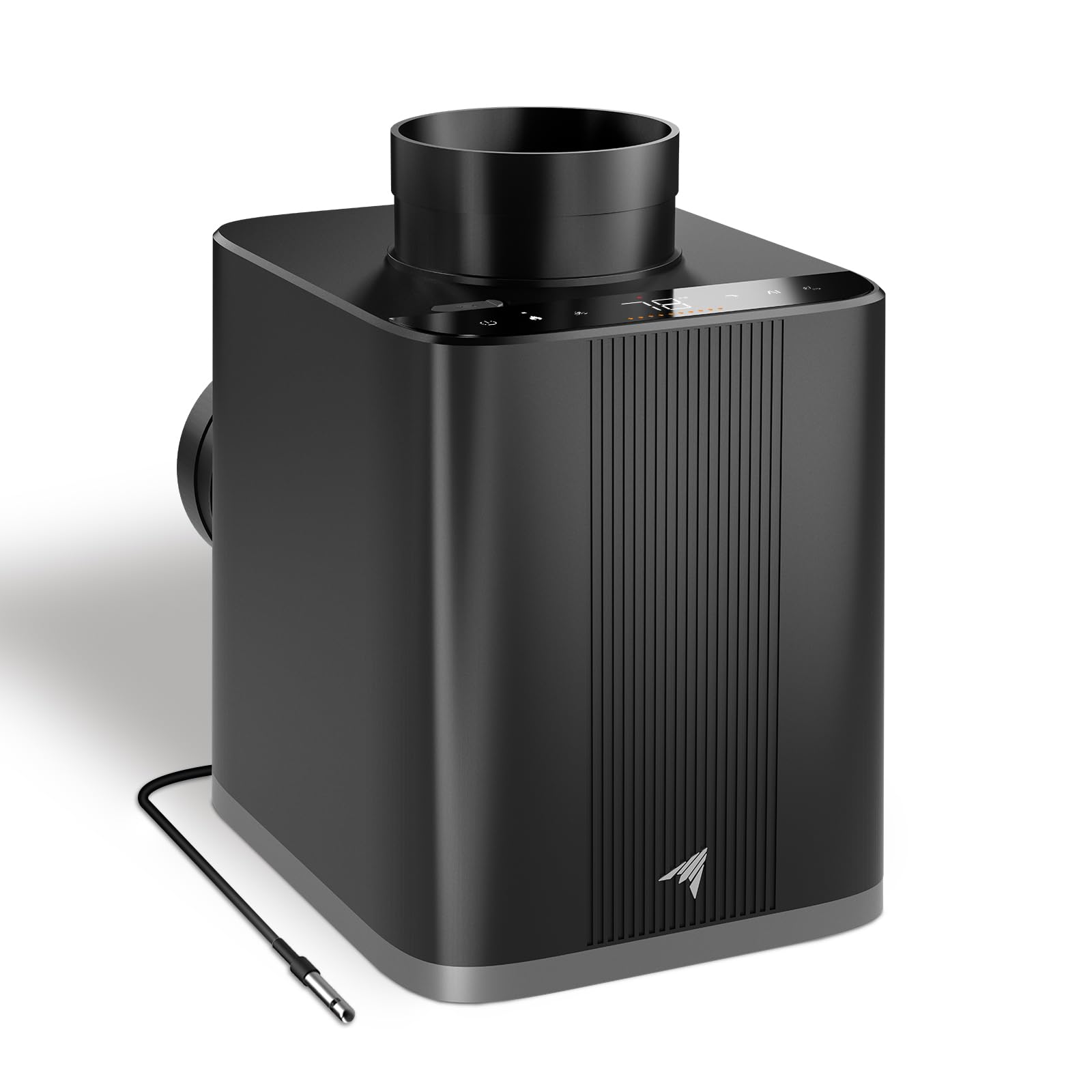
3. AC Infinity THERMOFORGE T7, 1000W
The compact powerhouse that brings adaptive AI heat to a 4×4 tent.
At 1000 watts, the AC Infinity T7 delivers 3,412 BTUs — but it achieves that output while remaining remarkably compact at just 8.66 x 7 x 10 inches. The standout feature is its “adaptive AI”: a sophisticated PWM (pulse-width modulation) controller paired with individual PTC ceramic plates that delivers 10 true heat levels, so the heat output is continuously adjusted to hold a precise target temperature rather than cycling on and off in a wide dead zone. The dual-port design means you can duct warm air directly into the grow space or create a closed-loop setup for maximum efficiency.
Owners consistently note that the T7 “can easily heat a 4×4 tent no problem” and praise its ability to maintain stable temperatures for sensitive tropical plants. The VPD (vapor pressure deficit) and temperature programming is managed through AC Infinity’s UIS controllers, enabling WiFi app connectivity, advanced automations, and data tracking. While the “adaptive AI” label most accurately describes a very sophisticated PID controller rather than artificial intelligence, the real-world result is the same — temperature holds steady without the wild swings that stress plants. The 4.7-star rating is the highest in this guide, and while the review count is still small at 45, the early owner feedback is universally confident in its build and performance. The price sits at the premium end, but compared to the VIVOSUN AeroFlux below, the T7 offers a wider versatility for a modest step up.
Split-second heat control: Ten true heat levels from PTC plates plus dual ducts means you can dial in exactly the climate your plants need — no guessing, no overshoot.
This is for: serious plant hobbyists or small commercial tent growers who want app-level control and enough power to handle mid-winter cold.
skip it if: you only need a spot heater for a very small greenhouse and the premium cost isn’t justifiable — the Spider Farmer will cover that ground for less.
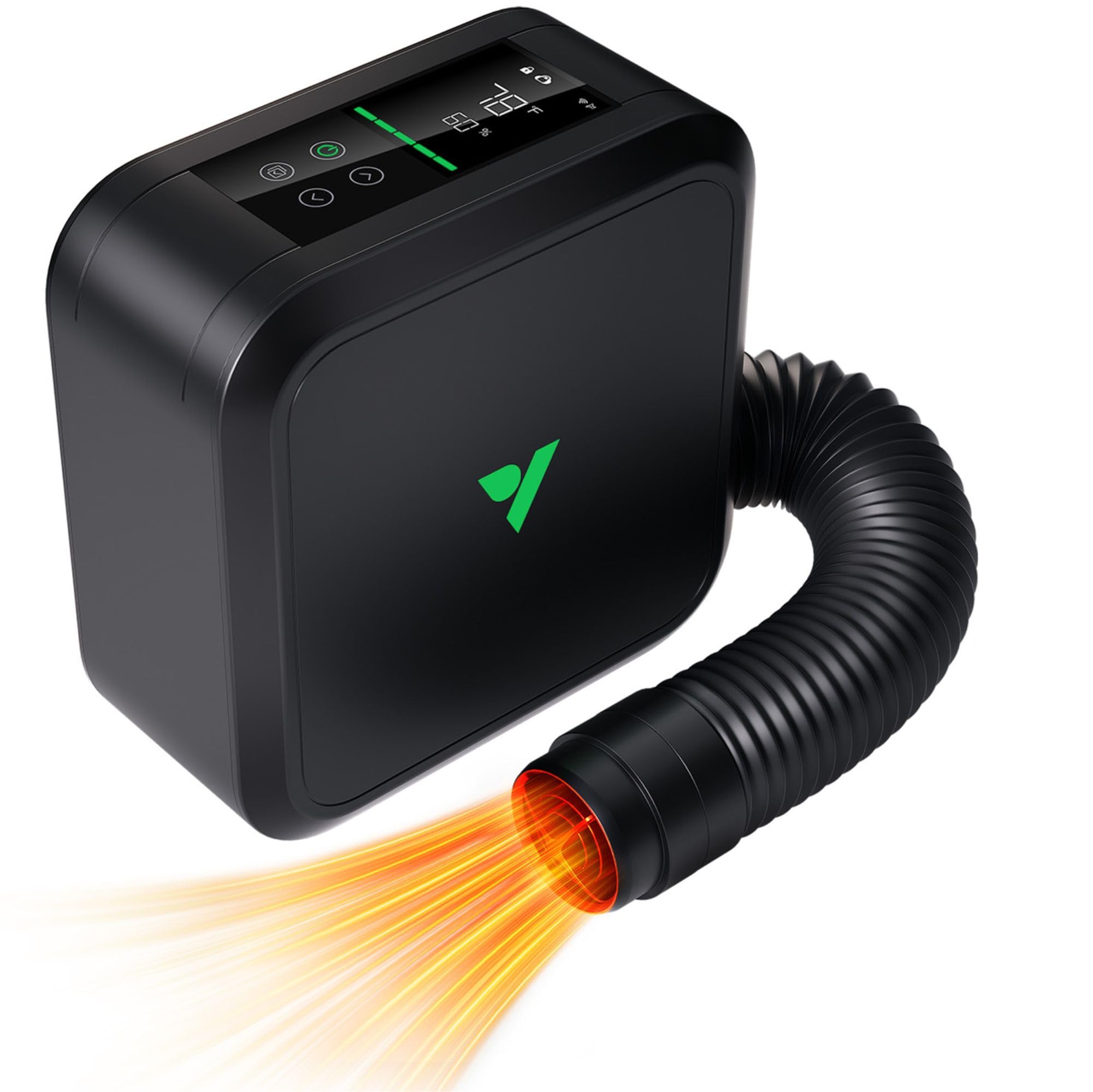
4. VIVOSUN AeroFlux 700W PTC Grow Tent Heater
The tent heater that tracks VPD so you don’t have to guess when to adjust the heat.
VIVOSUN’s AeroFlux brings 700 watts of PTC heat (about 2,388 BTUs). Where it really differentiates itself is the VPD (vapor pressure deficit) sensor — a high-precision probe that tracks both temperature and VPD changes in real time, then auto-adjusts the heat output to support the transpiration rate of your plants. That is a feature usually found in much more expensive environmental controllers, and it makes a meaningful difference for growers pushing for faster, healthier development.
The unit offers 5 adjustable heat levels and connects to the VIVOSUN app, where you can program day/night modes using the Recipe feature — essentially creating a custom climate calendar for each growth stage. Built-in safety features include V0 flame-retardant materials, tip-over protection (a switch that cuts power if the heater falls), and overheat shutoff. The Functionality (41 mentions) and Temperature control (26 mentions) are the most positively discussed aspects by owners, who consistently describe it as “reliable and well-built” with precise temperature and VPD control. The downsides are the mixed reviews on value and the fact that some owners note it doesn’t heat up fast enough for larger tents. At this price tier, you are paying for the VPD intelligence and the brand’s ecosystem integration, which the AC Infinity T7 matches at a slightly higher price point with more heat output.
Smart climate assistant: The VPD tracking takes the guesswork out of tent heating — set your target and the heater adjusts itself in real time.
Best for: tent growers who obsess over VPD and want app-based day/night temperature recipes.
Think twice if: you are working with a larger greenhouse — the 700W output is tune for smaller enclosures.
5. DR. INFRARED HEATER DR218-3000W

The infrared beast that warms objects instead of air, perfect for damp greenhouses.
This is the only unit in the lineup that uses radiant infrared heating, and it makes a big difference in how you think about greenhouse warmth. At 3000 watts (about 10,236 BTUs) it covers up to 600 square feet. Instead of blowing hot air around, the DR. INFRARED HEATER warms surfaces directly: the soil, the pots, the benches, and the plants themselves. That means on a freezing night, the root zone stays warmer even if the ambient air temperature dips slightly, which overwintering plants handle much better than a constant blast of forced hot air.
The IPX4 splash-proof rating is a critical spec here — it means the heater is protected against water splashing from any direction, so a drip from condensation or watering overhead won’t short the electronics. It requires a 240V, 20A outlet (a standard dryer plug), so check your greenhouse electrical setup before ordering. Buyers report it holds up well: one buyer in Houston kept a 6×8 ft greenhouse at 42-48°F during a 22°F freeze. Another called it “reliable, easy to use.” The big caveat from a few experiences is that the thermostat wiring on some units has failed — two instances describe burnt wiring and sparking. That is rare but serious enough to note that you should monitor the cord and connection periodically, especially if the unit runs near-continuous through a winter.
What makes it special
- Radiant heat warms soil and pots, not just the air — ideal for overwintering root systems
- IPX4 splash-proof rating means it is safe to use in a damp greenhouse with overhead irrigation
- 600 sq ft coverage is more than double most 1500W units, matching large or multiple greenhouses
What to watch for
- Needs a 240V, 20A outlet — most standard greenhouse outlets are 120V
Reach for this if: you have a large greenhouse or unheated structure and want to keep the root zone warm without drying the air to a crisp.
Look elsewhere if: you don’t have a 240V outlet available — this unit will not run on standard 120V household power.
6. Bio Green PAL 2.0/US Palma Electric Fan Heater
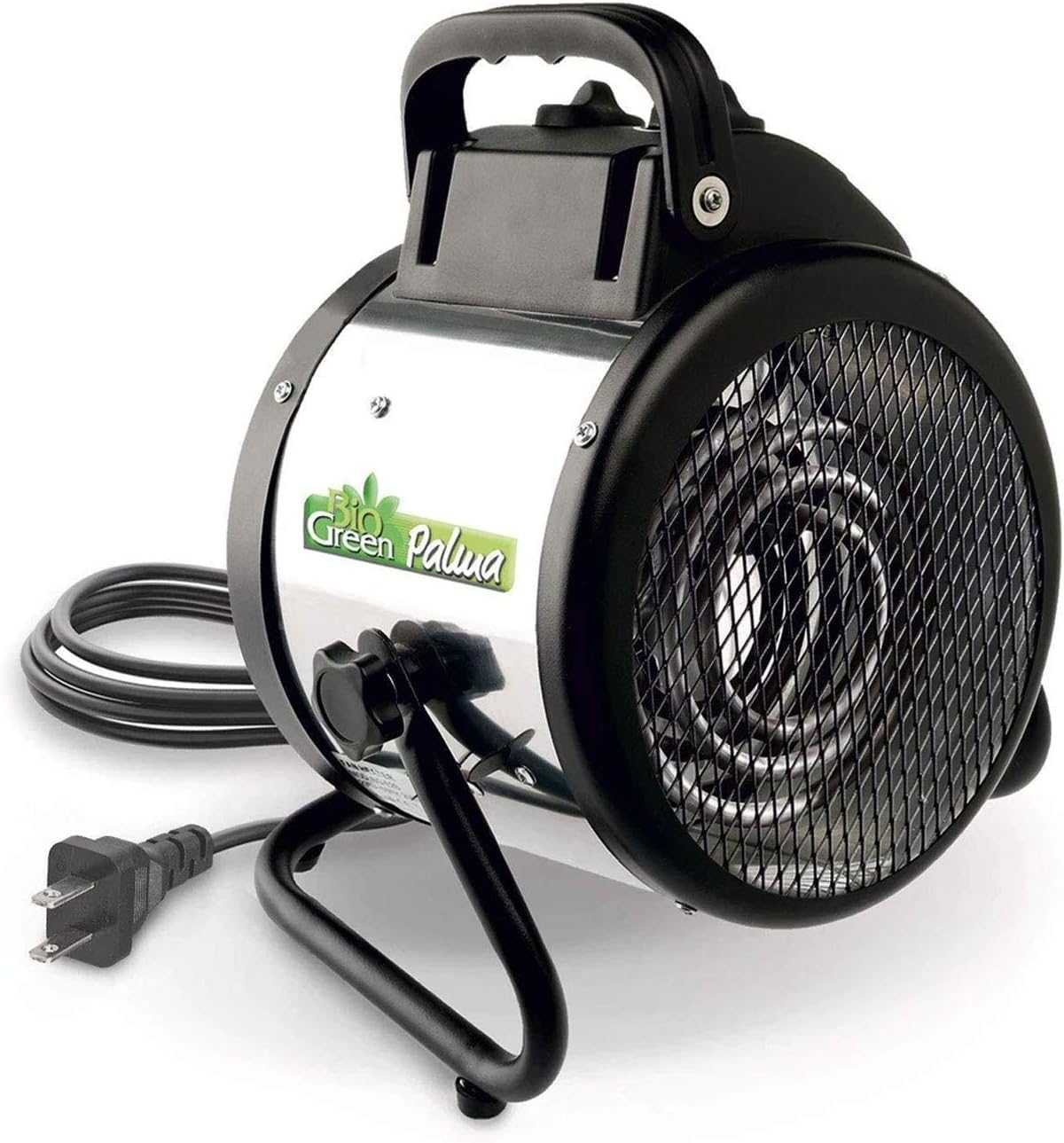
The European standard for greenhouse heating, with a splash-proof fan mode for summer air circulation.
The Bio Green Palma is designed specifically for greenhouses, not borrowed from a workshop or garage. It features two separately adjustable forced-air heating elements: one at 2560 BTU (750W) and both together at 5120 BTU (1500W), so you can match the heat output to the size of the space without full power every time. The steplessly adjustable thermostat covers a range from 32°F to 185°F, and the unit includes a dedicated air circulation mode — flip a switch and it becomes a fan that moves up to 4,317 cubic feet of air per hour without generating heat, helping prevent heat buildup around leaves during the warmer months.
The IPX4 splash-proof rating means it is rated to withstand rain and irrigation water splashes, a non-negotiable feature for a heater that lives in a damp greenhouse. Owners cite the Palma brand for exceptional loyalty — one customer bought it three times for orchid and vanilla greenhouses, noting that the first unit lasted more than five seasons. The internal thermostat is described as “uncalibrated” by some owners, who recommend pairing it with an external digital thermostat for accuracy. The 3.9-star average is dragged down by a significant mixed-reliability signal: 83 owners mention reliability, with some units failing after only a few nights. The safest approach is to buy from an authorized dealer and respect the listed coverage of 120 square feet.
Dual-purpose design: The fan-only mode keeps air moving in summer without heat, giving you year-round hardware for your greenhouse.
Best for: small greenhouses (up to 120 sq ft) where you need both winter heat and summer circulation in one unit.
Think twice if: your greenhouse is larger than 120 square feet or you need a rock-solid thermostat from the start — plan on adding an external controller.
7. iPower 1500W Electric Heater Fan, Portable
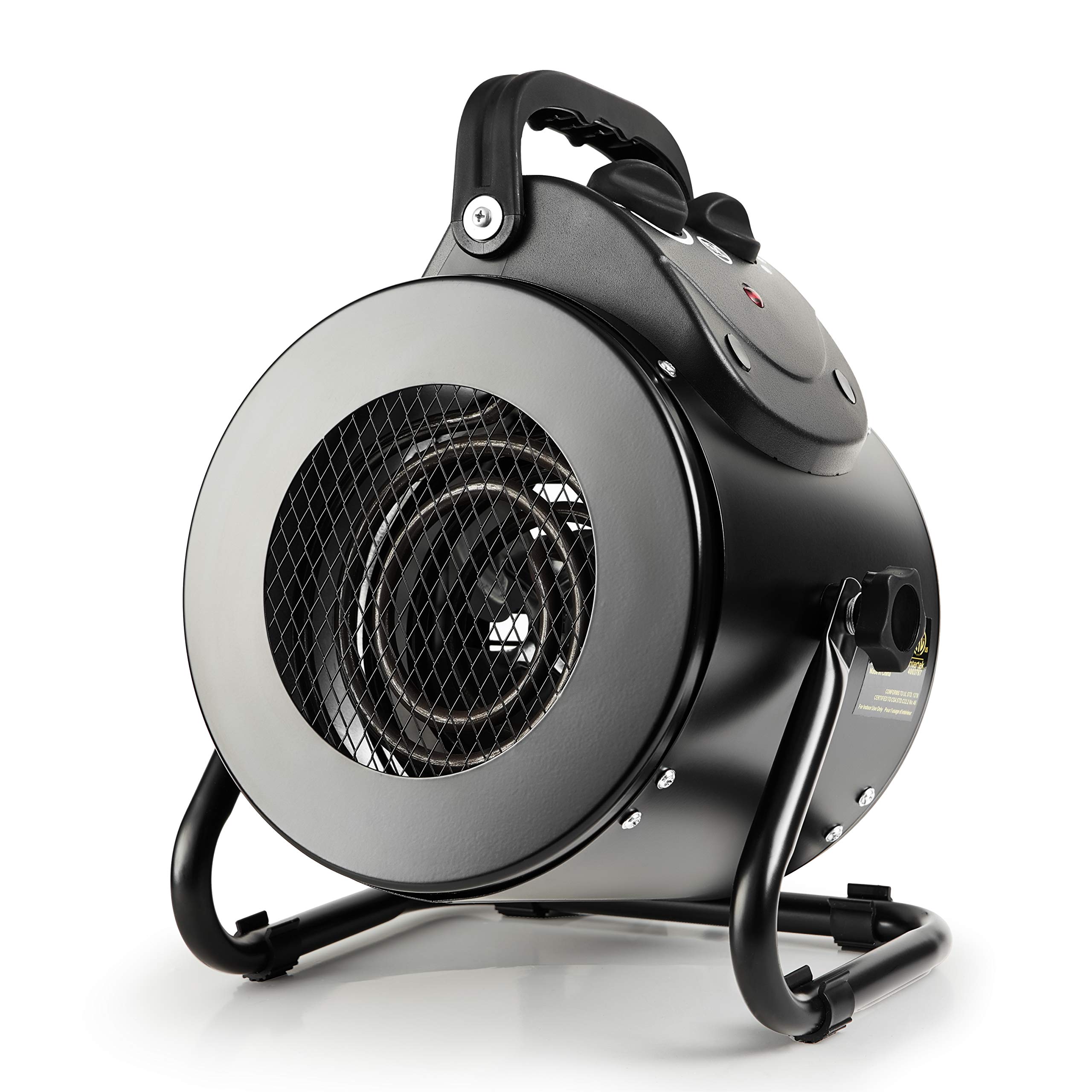
The one that thrives at 90% humidity when other heaters short out.
The iPower 1500W forced-air heater is the most polarizing unit in this guide — a 3.9-star average with 891 ratings, but also the one owners point to as uniquely suited for extreme humidity environments. Its floor-standing body is taller than most (13.8 inches high) and moves 4,500 cubic feet of air per hour, which helps prevent mold formation in an enclosed growing space. The key review comes from a mushroom greenhouse that ran this heater for six continuous months at 65-90% humidity, and it “kept temps 55-65°F all winter in Pacific Northwest” without failing.
The mixed reviews cluster around reliability: some owners mention the temperature control knob breaks off (one failure after four months), and the fan output is described by a vocal minority as “barely blows and produces very little heat.” But a pattern in the review data is that initial complaints often reverse after further use — the same buyer who called it a 500-watt heater later said “it works fine, it just takes awhile to heat up” and it ended up doing “a great job in my greenhouse.” The contradictory heat output is likely due to the heating element taking 10-15 minutes to reach peak performance rather than blasting heat instantly. This is a heater to consider if your greenhouse is routinely damp (mushrooms, tropicals) and you need a unit that can run nearly 24/7, but you should budget for a possible early control failure and see the slow warm-up as normal rather than defective.
Humidity champion: The 4,500 CFH fan and floor-standing design keep air moving in extreme moisture conditions, which is a killer feature for mushroom growers.
This is for: growers running continuous heat in the 60-90% humidity range who accept the warm-up delay.
pass on it if: you need immediate heat output the second you turn it on — the element takes 10-15 minutes to reach full power.
8. Dura Heat Electric Forced Air Heater EUH1500, 5120 BTU
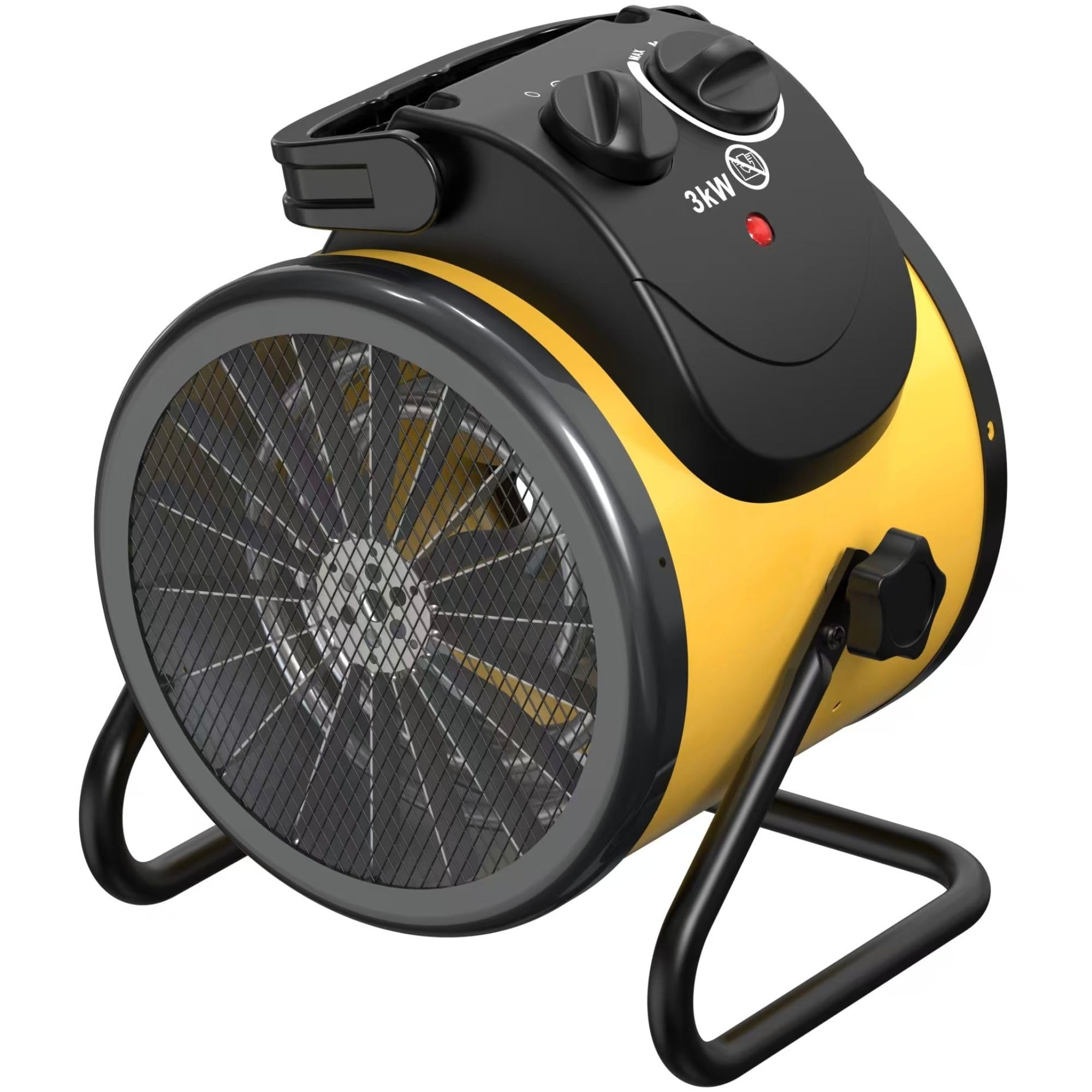
The quietest heater you can plug in, but don’t expect it to fight a hard freeze.
The Dura Heat EUH1500 is the sibling of the EUH1465 above, sharing the same 5,120 BTU output and 250 sq ft coverage, but with a critical difference: it uses a stainless steel heating element instead of PTC ceramic, and the fan spins at one fixed low speed. The result is a heater that owners call “extremely quiet” — the fan is so gentle that you have to check the manual because it seems like it’s not running. That makes this a very different tool: if you need a silent heater for a greenhouse near a bedroom window or a workspace where noise is a problem, this is the pick.
The quiet operation comes at a direct cost in heating performance. The single-speed fan runs noticeably slow, and reviewers report that the heating element does not get as hot as expected — the air coming out is “just slightly warm” rather than a hot blast. One owner’s verdict sums it up: “this may work for a small closet but not a room or garage.” For a greenhouse, think of this as a supplemental heater that takes the chill off a small area (a 10×12 ft bench or a seedling station) rather than a primary heater that can raise the temperature 20°F in a hard freeze. The 3.4-star average is the lowest in this guide, reflecting the heat-output disappointment. The stainless steel element and cabinet build quality are solid, but buyer expectations need to match the reality of a low-speed, low-temperature forced-air design.
Silent zone heater: If fan noise drives you crazy, this is the only unit in the lineup that runs quietly enough for a bedroom-adjacent greenhouse — but only for small spaces.
Best for: a very small greenhouse (under 100 sq ft) where noise is the primary concern and you only need to take the edge off the cold.
Not for: anyone in a sub-freezing winter climate who expects this to be the sole heat source — it lacks the air velocity to push warmth across a room.
Understanding the Specs
BTU versus Watts
Wattage is the electrical input (how much power the heater draws from the wall). BTU (British Thermal Unit) is the actual heat output going into the air. A typical 1500W heater produces about 5,100 BTUs, which is the standard for small-to-medium greenhouses up to around 250 square feet. Do not compare heaters by wattage alone — a 530W unit with efficient PTC ceramic heating can hold temperature more steadily in a small sealed tent than a 1500W forced-air unit that cycles on and off in wide swings.
PTC vs Forced Air vs Radiant
PTC ceramic elements self-regulate temperature — as the element heats up, its electrical resistance increases, reducing power draw and preventing overheating without a separate circuit. Forced-air heaters use a fan to blow air over a hot metal element or ceramic plate, warming the space quickly but also moving dust and drying the air. Radiant (infrared) heaters warm objects and surfaces directly rather than the air, making them ideal for unheated greenhouses where you want the root zone to stay warm without losing all the heat out of a leaky structure.
Thermostat Dead Zone
The dead zone is the temperature gap between when the heater turns off and when it turns back on. A wide dead zone (8-10°F) means the space cools significantly before the heater kicks in again, stressing plants and wasting electricity as the heater runs longer to recover. Look for models that advertise a narrow dead zone — 2-3°F — or a remote temperature sensor probe that measures temperature where the plants are, not inside the heater body where it picks up its own heat.
IPX4 Splash-Proof Rating
An IPX4 rating means the heater is protected against water splashing from any direction — a drip from overhead irrigation, condensation running down the side, or rain through a vent. This is the minimum standard for a greenhouse heater that will live in a damp environment. Models without an IPX rating are a risk if they sit near a water source or under a leaky roof panel.
FAQ
Can I use a regular household space heater in my greenhouse?
How many BTUs do I need for my greenhouse size?
What is the difference between a PTC heater and a fan-forced heater?
Will a greenhouse heater trip my breaker?
What does VPD mean on a greenhouse heater?
Is it safe to leave a greenhouse heater on overnight?
Can a greenhouse heater dry out my plants too much?
How long does a greenhouse electric heater typically last?
Final Thoughts: The Verdict
For most greenhouse and tent growers, the top pick is the Spider Farmer 530W because its temperature zone regulation and programmable timer mean you can set it and trust it not to cook or freeze your plants overnight — and it does so with the quiet, gentle heat of PTC ceramic that won’t stress seedlings. If you have a 4×4 tent and want app-level control with VPD tracking, grab the VIVOSUN AeroFlux for its 40% stronger PTC element and day/night Recipe feature. And for a large unheated greenhouse where the root zone needs protection from hard freezes, the DR. INFRARED HEATER 3000W is class-leading — its 600 sq ft coverage and splash-proof build mean it can overwinter your plants without drying the air. The final piece of advice: match the heater’s design to your greenhouse’s most extreme condition, whether that is humidity, a 240V outlet availability, or the quiet operation your neighbor expects.
How We Picked
We do not accept paid placement. Every pick is matched to a real buyer and a real use-case; we do not hands-on test units.
Sources & Methodology
Specifications: manufacturer listings and product documentation. Review insights: verified customer reviews, as of July 2026. Pricing: not shown on this page (it changes often); check the current price via the retailer link.
As an Amazon Associate, Lawn Gear Lab earns from qualifying purchases. This does not affect which products we feature.