
Specs are compiled from manufacturer listings and verified buyer reviews and can change over time — please confirm the key details on the product page before buying.
That bag of gravel you grab off the shelf can either save your houseplants or slowly drown them – it all depends on picking the right size and type for what you are actually growing. The wrong gravel holds water against the roots and creates a soggy mess; the right one lets air flow freely and keeps the soil light enough that roots can breathe.
I’m Rikta — the founder and writer behind Lawn Gear Lab. This guide is built by comparing the manufacturers’ published specifications and the patterns across verified customer reviews, so you get each pick’s real strengths and trade-offs instead of marketing spin.
if you need a top dressing to block fungus gnats or a drainage layer that prevents root rot, this breakdown of the best gravel for plants gives you the practical trade-offs between weight, size, and function so you buy the right bag the first time.
Our Picks at a Glance


How To Choose The Best Gravel For Plants
The right gravel does two things: it keeps soil from splashing out during watering and it stops the top layer from staying wet long enough to breed gnats. But different gravels behave very differently depending on whether you use them as a top dressing, a drainage layer, or a soil amendment.
Size matters more than you think
Small gravel (around 1/4 inch or smaller) packs together tightly, which actually slows drainage if used as a bottom layer. Large pebbles (over an inch) leave big air gaps but look clunky in small pots. For most houseplants, a grain size between 1/8 inch and 3/8 inch gives the best balance of airflow and stability on top of the soil.
Material: porous vs solid
Porous rocks like lava stone and pumice absorb a little water and release it slowly, which helps prevent the soil surface from drying out too fast. Solid river rocks and polished pebbles do not absorb water at all – they sit on top and block evaporation. That makes polished pebbles better as purely decorative covers and porous gravel better for plants that like consistent moisture around their roots.
Weight and pot mobility
A bag of real stone gravel can add several pounds to a planter. If you move your plants around frequently or have large pots on shelves, look for lighter alternatives like recycled plastic gravel that weighs much less while still creating air pockets at the bottom of the pot.
Quick Comparison
| Model | Best For | Weight | Size | Material | Amazon |
|---|---|---|---|---|---|
| FANTIAN Pea Gravel★ Best Overall | Everyday top dressing | 4.91 pounds | 1/4 inch | Natural river rock | Amazon |
| Anothera Black Lava RockPro Grade | Soil aeration mix | 3 pounds | 1/8-1/4 inch | Volcanic rock | Amazon |
| RooTrimmer Polished PebblesBest Display | Showy pot decor | 5 pounds | 0.8-1.5 inch | Polished stone | Amazon |
| Pulovin Jade Pebbles | Elegant indoor pots | 2.29 kg | 3/8-3/4 inch | Natural stone | Amazon |
| NUPICK Coarse Sand | Soil amendment | 2.67 kg | 1-2 mm | Silica sand | Amazon |
| Arqlite Smart Gravel | Lightweight drainage | 4 pounds | 1/2-1 inch | Recycled plastic | Amazon |
| Avalution Lava Mix | Succulent gritty mix | 3.51 kg | 7 liters | Volcanic rock blend | Amazon |
| Calofulston White Pebbles | Large decorative coverage | 6.79 kg | 3/8-1/2 inch | Polished rock | Amazon |
In‑Depth Reviews
1. FANTIAN 5 lbs Aquarium Gravel, Pea Gravel for Fish Tank, 1/4 Inch Decorative River Rocks
Our pick — over 4.5★ from 900+ verified ratings; the strongest balance of quality and price.
The pea-sized workhorse that handles everything from succulents to fish tanks without splashing soil everywhere.
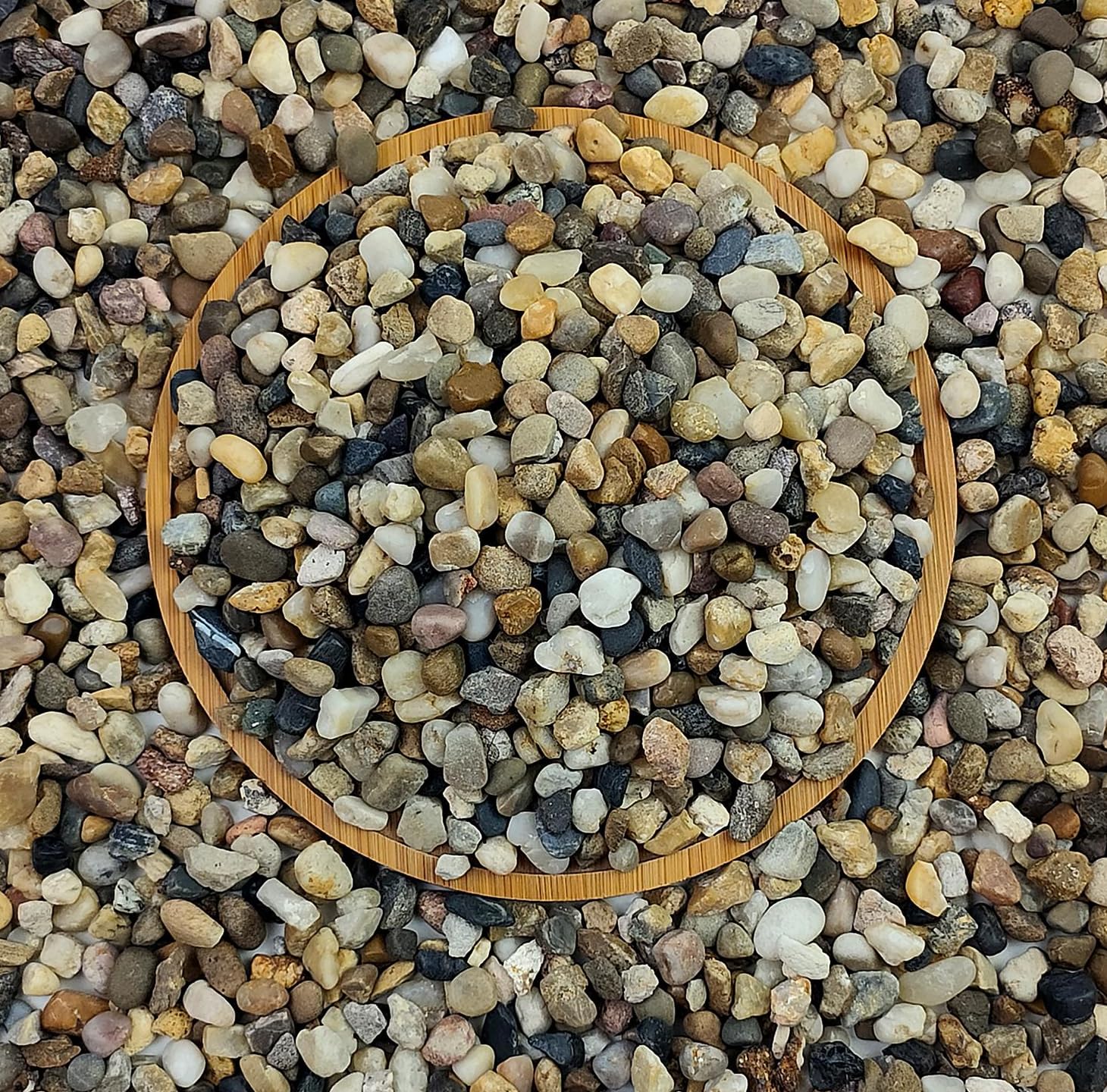
The 1/4 inch size is the balance for most plant owners. It is small enough to form a neat top layer that prevents soil from washing out during watering, yet loose enough that air still reaches the potting mix. At just under 5 pounds (the bag weighs 4.91 pounds), it adds noticeable heft to a pot without being a back strain to pour. Unlike many decorative gravels sold as “wet look” in pictures, this one ships dry and looks darker after you rinse it – which owners confirm happens quickly.
Buyers report it “looks great in 10-gallon tank, easy to clean,” and several note it works perfectly as a succulent pot topper to stop fungus gnats. The biggest surprise: the bag runs a little lighter than some expect because household scales can read in pounds-and-ounces mode. For a single 10-inch pot you will have enough for a solid 1/2 inch top layer, but you may want a second bag if you plan to cover multiple large planters.
The natural mixed colors hide new dirt well, so the top dressing stays presentable between water changes. A few owners who expected more volume for the price point note that competitive options sometimes offer larger bags for similar cost, but the clear customer consensus is that the quality and color variety justify the spend.
Pea gravel versatility: The appearance – over four dozen owners single out how natural the mixed tones look once rinsed. It does not look like uniform factory gravel; it looks like the bottom of a clean streambed.
Dusty out of bag: One bag will not give you a deep layer across a whole arrangement. If coverage depth matters, order two bags upfront.
Best for aquariums: You want one bag that works equally well as an aquarium substrate, a succulent top dressing, and a small-scale landscape gravel without looking artificial.
Skip if need polish: You need to cover a raised bed or a large outdoor garden path – this is a 5-pound bag designed for pots and small tanks.
2. Anothera 3lb Black Lava Rock for Plants, 1/8–1/4 Inch Horticultural Volcanic Rock
The porous black stone that actively pulls water away from roots instead of just sitting on top of soil.
Lava rock is fundamentally different from river pebbles because it is full of tiny air holes. Those pores act like little sponges – they absorb excess water and then release it slowly back to the plant, which is exactly what succulents and cacti need to avoid root rot. This bag weighs 3 pounds and uses 1/8 to 1/4 inch pieces that are small enough to mix directly into potting soil for better aeration.
Buyers confirm that these “1/2″ lava rocks improve potting mix aeration and drainage; hold and slowly release water; effective as top dressing to reduce moisture loss and look natural.” The dark charcoal color provides strong contrast against green leaves, and owners of bonsai trees and succulents especially like how it makes the soil surface look like a natural forest floor. A few note that the 3-pound bag feels smaller in volume than expected – it is lightweight for its size because the rock is porous – so plan for two bags if you need to cover a large planter.
The lava rock does not fade or break down over time, and rinsing once before use removes the fine dust that naturally comes with crushed volcanic stone. It works equally well as a bottom drainage layer and as a decorative top dressing.
Sharp lava texture: Porosity. No other gravel in this category actively manages moisture levels the way lava rock does – it creates air pockets that keep soil from compacting.
Stains light pots: The volume-to-weight ratio means a 3-pound bag is physically smaller than a 3-pound bag of solid stone. Be prepared to buy two if you are mixing it into soil rather than using it as a thin top layer.
For drainage focus: You are growing succulents, cacti, or any plant that hates sitting in wet soil. This lava rock does the active work of drainage that solid pebbles cannot do.
Not for top dressing: You want a bright, glossy top dressing that matches a modern decor – this looks natural and matte, more at home in a rustic or zen setting.
3. RooTrimmer Rocks for Plants 5 Lbs, 0.8–1.5 Inch High Polished Pebbles
The glossy, jewel-like stones that turn a plain pot into a decorative centerpiece while keeping pets out of the soil.
These are not subtle garden stones – they are high-polished pebbles that catch light and add a wet-look shine even when dry. The size range of 0.8 to 1.5 inches means they are noticeably larger than pea gravel (the FANTIAN picks above), so they work best as a top dressing for wide-mouthed pots where individual stones are visible. One owner received 5.7 pounds in their bag, slightly over the listed weight, and described them as “fairly large, shiny rocks.”
The smooth finish and amber-and-cream tones make them a natural fit for indoor cactus planters and clear glass vases where the stones are part of the display. Owners praise the “variety of colors makes visually appealing display” and note the polished surface does not attract dust the way matte stone does. Because they are fairly large, they also do a great job of deterring house pets from digging in potted soil – the stones are too big and slippery for a cat to push aside.
The main catch is the size: a few buyers expected smaller gravel and found these too big for a 5-gallon fish tank. If you need a fine top dressing, these are not it. But if you want a decorative rock that looks more like a piece of jewelry than a landscaping supply, the gloss factor wins.
High polish shine: The shine – owners use words like “shiny” and “glossy” consistently, and the polished surface makes colors pop in a way matte stone cannot match.
Slick when wet: The 0.8 to 1.5 inch range is too large for small pot openings or narrow-neck vases. You need a pot with at least a 6-inch diameter opening for these to look proportional.
Decorative choice: Appearance is your top priority and you want a glossy, decorative finish that turns a pot into a display piece. Works great with clear vases and visible top dressings.
Avoid for rooting: You need a functional drainage layer or a fine-grained top dressing for small pots – these are display rocks first and functional gravel second.
4. Pulovin 5 lbs Jade Pebbles for Indoor Plants, 3/8″ Plant Gravel
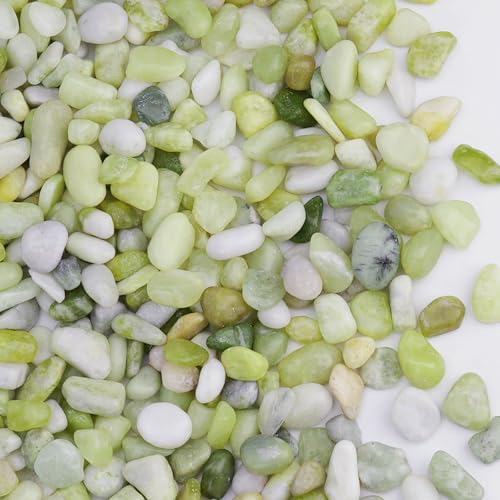
The subtly colored pebbles in creamy white, apple green, and light brown that bring a calm, earthy elegance to any indoor planter.
These jade-toned pebbles stand out from the crowd of mixed-color gravels by offering a restrained palette that leans toward soft greens and warm neutrals. The 3/8 to 3/4 inch size range puts them right between the tiny pea gravel and the large polished pebbles above – big enough to stay visible but small enough to work in a standard 6-inch pot. Owners consistently call them “beautiful stones” and note that no cleaning is needed before use because they arrive dust-free.
The real-world feedback is impressive: one owner used a single 5-pound bag to cover the soil of an indoor Ficus tree but recommends 7.5 pounds for a thicker layer. Another uses them to stabilize jars outdoors, noting they are heavy enough not to tip in the wind. The appearance rating is the highest aspect by a wide margin – 49 owners specifically mention how good they look – and the quality rating follows closely at 42 mentions. A small number of owners suspect some stones may be painted rather than naturally colored, so if you prefer 100% natural untreated stone, that is worth noting.
The weight (2.29 kg or roughly 5 pounds) gives a planter a grounded feel without being excessive. For bamboo plants in glass vases, these are particularly popular because the soft green tones echo the bamboo’s own color.
Calming jade color: The color palette. The jade mix is genuinely different from the standard “river rock multicolor” – it looks curated and intentional, not like a random scoop from a streambed.
Pale after rain: A few buyers believe the color is applied rather than natural. If you need certified untreated natural stone for a sensitive aquarium setup, check the listing closely.
Zen garden pick: You want a clean, modern look for indoor pots and glass displays. The jade palette works beautifully with pale green foliage and white planters.
Skip for heavy pots: You prefer a rough, natural, unpolished look or you need a pure untreated gravel for aquarium use where painted stones could leach.
5. NUPICK 1-2mm Coarse Sand for Plants, 6lb Horticultural Sand for Succulents
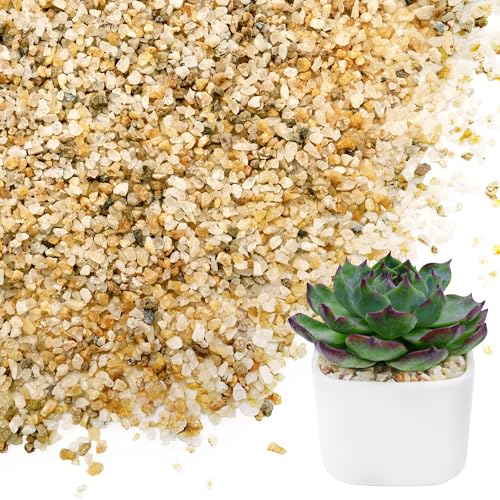
The gritty sand that fixes compacted soil and eliminates fungus gnats by starving their larvae of moisture.
This is not gravel in the traditional sense – it is a coarse silica sand with grains measuring 1 to 2 millimeters, closer to sugar crystals than to pebbles. Its job is to mix into potting soil at a roughly 1:3 ratio to create air pockets that stop soil from turning into brick-like clumps. Owners rave that “this has gotten rid of plant gnats” because the coarse particles help the top inch of soil dry out fast enough that gnat larvae cannot survive.
The golden-beige color looks natural in pots and does not clash with green leaves. Multiple owners mention the sand is larger and smoother than regular beach sand, which means it does not compact into a hard surface the way fine play sand does. One owner reported the bag arrived bigger than expected, giving good coverage for two good-sized plants. The plant suitability aspect leads at 21 mentions, and the sand quality aspect follows at 17.
The key difference from the gravels above: this is a soil amendment, not a top dressing. You mix it into the soil matrix itself rather than layering it on top. That makes it the right choice if your goal is to change the drainage behavior of your potting mix from the inside out rather than adding a surface layer.
Fine sand texture: The coarseness. It is gritty enough to aerate soil effectively but not so sharp that it damages tender roots. Owners of sansevieria and aloe specifically praise how their plants responded.
Blows in wind: The value-for-money and cleanliness aspects are rated MIXED. Occasional bags may contain more dust than expected, so plan to rinse before mixing if you are using it in a sensitive hydroponic or aquarium setup.
Seed starting aid: Your potting soil stays wet too long or you are battling fungus gnats. Mixing in this coarse sand transforms dense bagged soil into a free-draining mix.
Not for succulents: You need a visible top dressing that sits on the surface – this sand is too fine for that purpose and will wash into the soil during watering.
6. Arqlite Smart Gravel | Eco-Friendly Plant Drainage, 1-Gal Regular Size

The plastic pebble that weighs three times less than stone gravel while still creating air pockets at the bottom of every pot.
This is not a gimmick – it is legitimately smart design. Arqlite Smart Gravel is made from 100% recycled plastics in the USA, and the resulting material is dramatically lighter than the river rock and lava alternatives (the bag weighs only 4 pounds for a full gallon). The 1/2 to 1-inch pieces are designed specifically as a drainage layer, not a top dressing. They sit at the bottom of a pot and create a reservoir of air space that keeps roots from sitting in standing water.
Owners highlight the drainage as the top benefit – 19 owners mention it specifically. The lightweight nature is the second biggest praise at 14 mentions. Several customers note that using this gravel in large planters makes the pots much easier to move around compared to filling the bottom with heavy real stone. One owner used it as a top dressing to block fungus gnats and confirmed it “allows airflow, cute look, easy to remove.”
The recycled plastic material means these pebbles will never break down, never leach minerals into the soil, and never degrade like clay pebbles can over time. One gallon covers up to four pots with a 6-inch base, which is efficient coverage for indoor gardeners with multiple plants. Some owners wish the bag contained more volume for the price, and the regular size may not be sufficient if you need to fill five or more pots at once.
Eco-friendly source: Weight. If you move plants around for seasonal light or have large pots on shelving, switching to this plastic-based gravel saves serious back strain compared to real stone.
Uneven grain size: It looks visibly manufactured – these are not natural-looking pebbles. If you want a top dressing that mimics natural river stone, this is not the look you want.
Green buyer pick: You need a lightweight drainage layer for large or numerous pots, or you want an eco-friendly option made from recycled plastics. Excellent for indoor planters that get carried to the sink for watering.
Skip for precision: The appearance of natural stone matters to you or you need a top dressing that looks like real gravel from a garden path.
7. Avalution 7lb Mix Horticultural Lava Rock Pebbles Pumice Gritty Mix

The professional-grade gritty blend that serious succulent growers add to their soil to mimic the volcanic conditions cacti evolved in.
This is not a single type of rock – it is a formulated blend of lava rock and pumice that is designed to be mixed into potting soil (or used as a standalone semi-hydroponic medium). The 7-liter bag (weighing 3.51 kg) is the largest volume option in this list, giving you enough material to amend a whole batch of potting mix for multiple plants. The quality aspect leads the reviews at 49 mentions, tying it with the FANTIAN river rock for the most-praised spec in its category.
Owners use it as a top dressing, as a soil amendment, and even as a standalone growing medium for semi-hydro setups. One owner specifically notes it “works great for my plants! I use it like I would PON” – a popular inorganic growing medium. The “vibrant array of colors” mentioned in the listing means these pebbles are not plain black like standard lava rock; they include lighter minerals that add visual interest. The dustiness aspect is the most-discussed negative, with 26 owners noting the bag needs thorough rinsing before use. Once cleaned, the colors come out vividly.
The size is mixed according to reviews – some pieces are smaller than expected – but the drainage function is consistently praised. The blend works equally well for Hoya, Rhipsalis, and succulents, and several owners note they extend the expensive mix by adding cheaper chicken grit without losing performance.
Mixed porous rocks: The quality. At 49 mentions the quality leads all aspects, and the blend formulation really does create a better texture for roots than single-type gravel can.
Dusty fines: The dust. Multiple reviews warn that this needs serious rinsing before use – it is not ready-to-go straight from the bag. Plan for an extra 10 minutes of prep time.
Aeration blend: You have multiple succulent pots or you want to experiment with semi-hydroponic growing. This blend gives you the structure you need without having to mix three different products yourself.
Not for display: You want a no-prep decorative top dressing that goes straight from bag to pot – the rinsing requirement here is real.
8. Calofulston 15lbs White Rocks, 3/8 Inch Small White Pebbles for Plants

The big bag of bright white pebbles that covers a whole patio planter or a fish tank bottom in one order.
At 15 pounds this is the heaviest bag in the list, and the 3/8 to 1/2 inch white pebbles are described as roughly jelly-belly sized by owners. The color is the defining feature: white rocks that create a clean, modern look that contrasts sharply with dark green leaves and black soil. The listing estimates around 4,000 stones per bag, which gives you enough coverage for multiple large pots, a full aquarium bottom, or a birdbath lining.
Reviewers point out they are “smooth multicolored pebbles” – despite being called “white rocks,” the stones actually contain subtle earthy variations that keep them from looking like sterile plastic. The plant suitability aspect leads the reviews at 24 mentions, tied with the appearance at 25. One owner specifically sums it up: “they’d be perfect for a pot, to add that shine.” The polished and waxed finish means they stay bright even after watering, unlike matte white gravel that can look dull when dry.
The size is consistent at jelly-bean scale, which is smaller than the RooTrimmer polished pebbles but larger than the FANTIAN pea gravel. That makes them a middle-ground option for anyone who wants a visible pebble that still fits under a pot’s rim. The notice in the listing recommends soaking the stones in boiling water (not boiling the stones themselves) and brushing them clean before use, particularly for aquarium applications.
Bright white hue: The quantity. 15 pounds is enough to complete a project in one go without ordering a second bag, and the white color brightens up any pot or raised bed.
Shows dirt fast: The “white” description is slightly generous – these are light-colored pebbles with natural variations, not pure white like marble chips. If you need uniform blinding white, check the reviews for real photos first.
Clean look choice: You have a large project – covering a raised bed, filling multiple large pots, or refreshing an entire fish tank setup. The bulk bag saves you from buying multiple smaller bags.
Skip for low maintenance: You only need a small amount for a single 4-inch pot – the 15-pound bag is physically heavy (6.79 kg) and takes up significant storage space.
Understanding the Specs
Particle Size
The single most important spec for gravel is its grain diameter. 1/4 inch pea gravel creates a tight but breathable top layer that blocks soil splash. 1/8 to 1/4 inch volcanic rock pieces are ideal for mixing into potting soil. Anything above 1/2 inch leaves air gaps large enough that small pots lose top dressing stability, but those larger pieces work well as a bottom drainage layer where you want big air pockets.
Porosity vs Density
Solid stone (river rock, polished pebbles) does not absorb water – it deflects it. That makes it good for decorative top dressings that keep the soil surface dry. Porous stone (lava rock, pumice) absorbs water into its internal structure and releases it slowly, which helps regulate soil moisture levels. For plants that hate wet feet, porous gravel mixed into the soil creates a buffer that prevents overwatering damage.
FAQ
Can I use aquarium gravel on my houseplants?
How much gravel do I need for a 6-inch pot?
Should I use gravel at the bottom of pots for drainage?
Does lava rock change soil pH?
Can I use decorative pebbles for semihydro growing?
How often should I clean plant gravel?
Will heavy gravel damage my pots?
Which gravel is best for stopping fungus gnats?
Final Thoughts: The Verdict
For most people, the best gravel for plants winner is the FANTIAN Pea Gravel because the 1/4 inch size works equally well as a top dressing, a fish tank substrate, and a soil topper for succulents – and the near-consensus from thousands of owners confirms it just works. If you want active moisture management that prevents root rot, grab the Anothera Black Lava Rock. And for a lightweight alternative that makes moving large pots easy, the Arqlite Smart Gravel is the one to reach for.
How We Picked
We do not accept paid placement. Every pick is matched to a real buyer and a real use-case; we do not hands-on test units.
Sources & Methodology
Specifications: manufacturer listings and product documentation. Review insights: verified customer reviews, as of July 2026. Pricing: not shown on this page (it changes often); check the current price via the retailer link.
As an Amazon Associate, Lawn Gear Lab earns from qualifying purchases. This does not affect which products we feature.