
Specs are compiled from manufacturer listings and verified buyer reviews and can change over time — please confirm the key details on the product page before buying.
Picking the wrong bag of gravel for your gardening is an easy way to waste money. That bag you thought would cover a flower bed might be half the size you pictured, or so sharp-edged it feels wrong to touch. This guide cuts past the guesswork — it tells you which stone size actually stops weeds, which one drains fast enough for succulents, and which bag gives you the most coverage for your dollar.
I’m Rikta — the founder and writer behind Lawn Gear Lab. This guide is built by comparing the manufacturers’ published specifications and the patterns across verified customer reviews, so you get each pick’s real strengths and trade-offs instead of marketing spin.
The list below covers everything from tiny pea gravel for potted plants to large river rocks for walkways and drainage, so you can confidently choose the best gravel for gardening that matches exactly what your yard needs.
Our Picks at a Glance

![[18 Pounds] Aquarium Gravel River Rock](https://m.media-amazon.com/images/I/71pcKhrhS7L.jpg)
How To Choose The Best Gravel For Gardening
Gravel is not just gravel. Before you buy, you need to match the stone type, size, and finish to the specific job you are doing — whether that is topping a potted succulent, lining a garden path, or building drainage into a flower bed. Here are the three decisions that matter most.
Stone Size: The 1/4‑Inch vs. 1‑Inch vs. 2‑Inch Rule
Tiny pebbles around 1/4 inch (6-8mm) work beautifully as a top layer for potted plants — they stop soil from splashing and keep fungus gnats away, but they are not heavy enough to stay put in a windy, open bed. Once you move outdoors to a walkway or a large flower bed, bigger stones in the 1‑ to 2‑inch range hold their position and control weeds far better. Very large 2‑ to 3‑inch rocks are meant for heavy-duty landscaping like drainage swales or fountain surrounds, where you want visual mass and long‑term erosion control.
Polished vs. Natural Finish
A polished, wax-coated stone catches the sun and looks great in a glass vase or a modern garden design, but that coating can cause issues in an aquarium or if you want the rock to grip soil without sliding around. Natural, unpolished river rock has a matte surface that locks together better on walkways and doesn’t introduce any wax or dye into the environment. For purely decorative indoor pots, go polished. For functional landscaping and drainage, choose natural.
Weight and Bag Size — Pounds Do Not Equal Volume
This is the most common surprise. A 20‑pound bag of 2‑inch river rocks fills far less space than a 20‑pound bag of 1/4‑inch pea gravel, because the larger stones have bigger air gaps around them. Always measure the area you want to cover and check the bag’s approximate volume (some brands list cubic feet or ounces in the specs). In general, a 10‑ to 15‑pound bag is enough for a few large pots or a small decorative border, while a 20‑pound bag will handle a modest flower bed or a path.
Quick Comparison
| Model | Best For | Weight | Stone Size | Finish | Amazon |
|---|---|---|---|---|---|
| FANTIAN 10 lbs Pea Gravel★ Best Overall | Small pots & aquariums | 10 lbs | 1/4 Inch | Natural | Amazon |
| Avalution Lava Rock PebblesPremium Pick | Succulent soil amendment | 18 lbs | Mixed small | Natural | Amazon |
| [18 Pounds] Aquarium Gravel River RockBest Value | Large aquariums & ponds | 18 lbs | 1–2 Inch | Polished | Amazon |
| NUPICK 16lb River Rocks | Bird baths & pest control | 16 lbs | 1–2 Inch | Polished | Amazon |
| Pulovin 15 lbs River Rocks | Vases & polished displays | 15 lbs | 1–1 1/2 Inch | Polished | Amazon |
| Calofulston 15lbs White Rocks | Bright white ground cover | 15 lbs | 3/8–1/2 Inch | Polished | Amazon |
| TOPEMAI Black River Rocks | Modern dark landscapes | 15 lbs | 1–2 Inch | Polished | Amazon |
| FANTIAN 20 lbs Mexican Beach Pebbles | Large garden beds & walkways | 20 lbs | 2–3 Inch | Natural | Amazon |
| SHIZWU 20LB Pea Gravel | Heavy-duty potting & craft | 20 lbs | 1/4 Inch (4–8MM) | Natural | Amazon |
In‑Depth Reviews
1. FANTIAN 10 lbs Pea Gravel
Our pick — over 4.5★ from 900+ verified ratings; the strongest balance of quality and price.
The tiny stone that punches above its weight for every small-space garden job.
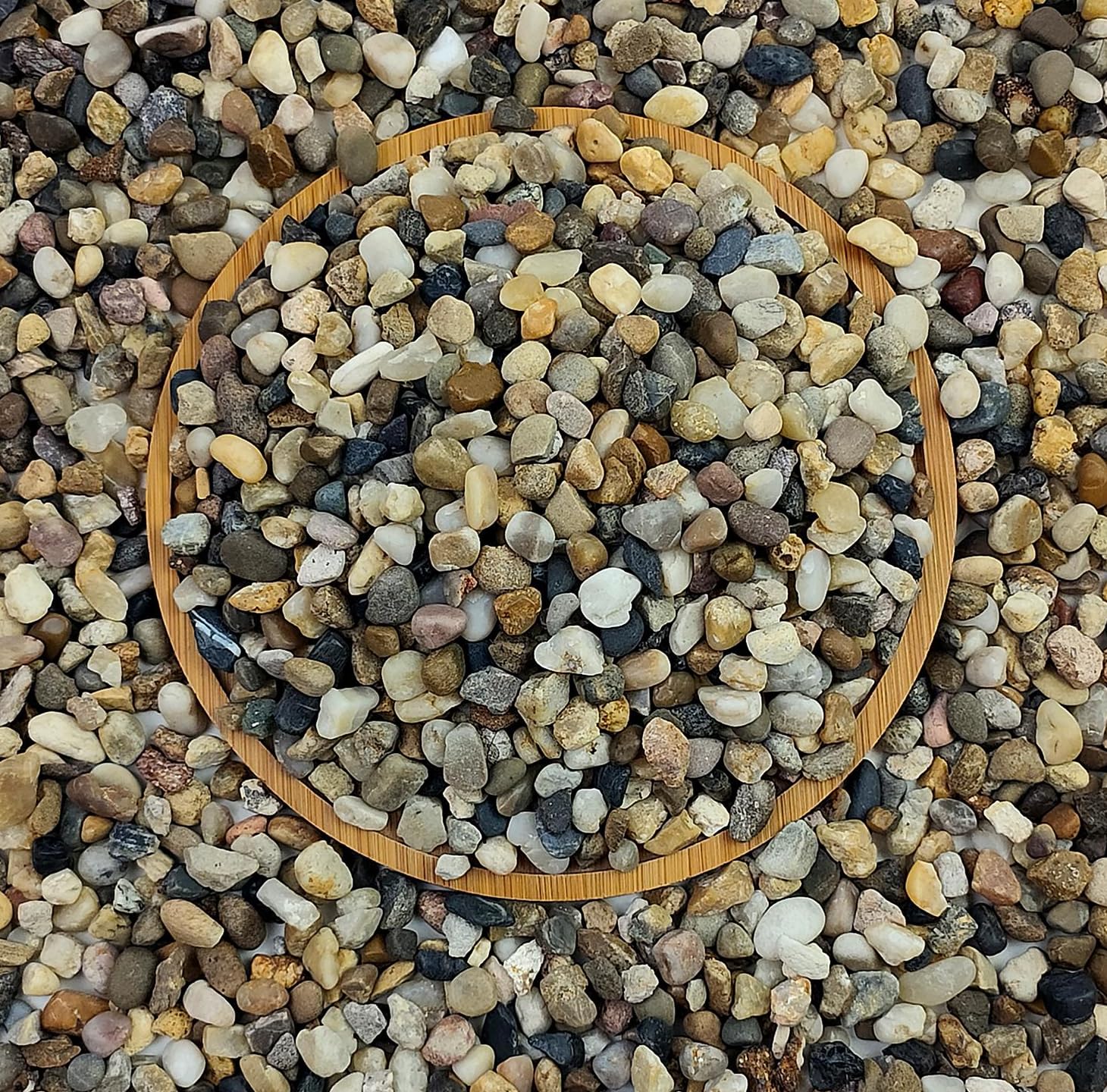
This is the crowd favorite for good reason. The 1/4-inch size is small enough to work as a top dressing in succulent pots, where it helps stop fungus gnats and keeps the soil from splashing during watering, yet it is also perfectly at home in a small fish tank or as a clean layer in a glass vase. Owners consistently praise its natural look — the colors are varied and do not look fake or dyed.
One bag weighs 10 pounds, which is noticeably less than some of the 18- and 20-pound competitors on this list. If you are covering a medium flower bed, you will need multiple bags. But for its target use — pots, small tanks, and decorative indoor displays — the size and price are a near-perfect match. Buyers report it barely needs rinsing and does not cloud water, which saves you a step over most natural gravels. A few owners do note that for deep tank substrates you may want a second bag.
smooth natural finish
- Appearance is the top praise — the natural multicolor mix looks even better underwater or wet
- Rinses clean with very little dust, so it is ready to use fast
- Size is ideal for small pots, succulent soil covers, and 10-gallon tanks
dusty on arrival
- 10 pounds covers less ground than most expect — it is a small bag by volume
- A handful of owners find it slightly pricey for the amount you get
small fill jobs: you need a clean, attractive gravel for indoor plants, small aquariums, or decorative vases.
high-traffic paths: you are covering a large garden bed or walkway — you will need several bags to do the job.
2. Avalution Lava Rock Pebbles
Not a decorative stone — a functional soil tool that changes how your plants drink.
This is not the bag to buy if you just want to prettify a vase. Avalution’s lava rock is a lightweight, porous volcanic stone (18 pounds per bag) engineered for soil drainage. When you mix it into potting soil, the jagged, airy texture creates gaps that let water flow through fast, preventing the root rot that plagues succulents and cacti in dense soil. Owners use it as a top dressing, as a semi-hydroponic medium, and amending mixes for Hoya and Rhipsalis with great results.
The biggest practical catch here is dustiness. Multiple buyers emphasize that you must rinse this material thoroughly before use — it arrives with a fair amount of fine grit. Once cleaned, the stones reveal subtle grey and earthy colors that look natural in clear glass jars or as a top coat on bonsai pots. Owners rate the drainage effectiveness very highly, and many say their plants respond better than with standard potting mix alone. If you are a succulent enthusiast or you battle overwatering, this is the one tool your soil mix needs.
excellent heat retention: This is the only pick on the list designed to be mixed into soil rather than just placed on top of it. The porous structure pulls water away from roots, making it ideal for cacti and succulents.
succulent toppers: serious plant enthusiasts who want to improve soil drainage for succulents, cacti, or semi-hydro setups.
barefoot areas: anyone who wants a purely decorative, dust-free stone for a vase or walkway — this needs a wash cycle first.
3. [18 Pounds] Aquarium Gravel River Rock
Heavy, smooth, and natural-looking — the anchor buy for a medium-sized landscape project.
At 18.41 pounds, this bag gives you noticeably more heft than the 10-pound FANTIAN bag (88% more, by the numbers), which makes it a smarter starting point for a real garden bed or a pond surround. The stones measure 1 to 2 inches and come lightly polished to a smooth, rounded finish that is easy on bare feet — an important detail if you are using them near a walkway or a water feature. Owners mention the multicolor mix of browns, blacks, and whites looks convincingly natural once in place.
One honest caveat: the polish layer includes a wax coating that some owners found required extra cleaning. Multiple buyers describe needing to tumble the rocks in hot water and vinegar to remove it before adding them to an aquarium. If you are using them strictly outdoors in a flower bed or as mulch replacement, that step is irrelevant. For aquarium use, budget 15 minutes for cleanup. The trade-off is a stone that keeps its color and shine for years without fading.
aquascaping: outdoor garden beds, tree rings, or pond borders where you want a natural look and substantial weight that stays put.
heavy planters: a quick, no-prep aquarium setup — you will need to wash off the wax coating first.
4. FANTIAN 20 lbs Mexican Beach Pebbles

Big, natural, and unpolished — the right rock when you need real ground coverage.
These are not the tiny pebbles for a succulent pot. The FANTIAN 20-pounder delivers large 2- to 3-inch river rocks that work best in open garden beds, around trees, along walkways, and for erosion control. The stones are natural (unpolished, no added dyes), with a matte finish that looks at home in a rustic or native-plant landscape. Owners use them for flower beds, bird baths, fire pit perimeters, and even as wedding ceremony stones that guests later place in the garden.
The most common surprise with this bag is the volume-to-weight ratio. Because the rocks are large, 20 pounds fills less space than you might expect — the bag itself is dense but not sprawling. This is a frequent note in reviews: measure your area before you buy and be prepared to order multiple bags for a large bed. Owners also note the stones arrive clean but with a natural dust layer. The mixed colors draw praise consistently. This is the go-to if you want a true, untreated river rock for a substantial outdoor project.
decorative vases: landscaping a medium to large garden bed, creating a dry creek bed, or lining a walkway with big natural stones.
uniform bedding: 2- to 3-inch rocks are heavy and cover less ground per bag than smaller pea gravel — calculate square footage first.
5. Pulovin 15 lbs River Rocks
High-gloss and uniform — the stone that makes a glass vase or planter pop.
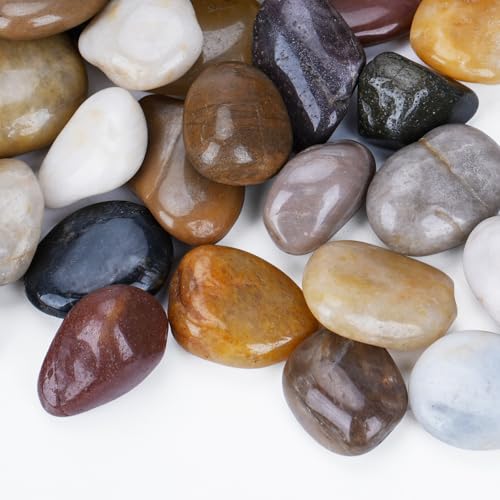
If your goal is visual impact in a clear vase, a terrarium, or a polished planter display, the Pulovin 15-pound bag delivers a notably high-shine finish. The rocks range from 1 to 1 1/2 inches and are polished to a glossy surface that owners describe as “dazzling.” The color mix includes pure white stones alongside various earth tones, which makes the overall bag look bright and intentional rather than muddy.
Owners who bought these for planters report the uniform size and high-gloss texture instantly upgrades the look of a pot — one buyer who used them to cover ugly soil in multiple planters said friends immediately asked where to buy them. The downsides are worth noting: some buyers found the sizing less consistent than advertised, with a few broken or larger odd pieces mixed in. And the value-for-money sentiment is mixed, meaning some feel the 15-pound bag is a bit light for the price. But for pure decorative punch in a vase or a small garden accent, this one leads.
garden borders: decorative displays in large glass vases, terrariums, or high-end planter top-dressing where shine matters.
aquarium bottom: covering a large ground area or a functional aquarium — the polish can introduce wax into water.
6. Calofulston 15lbs White Rocks

A clean white canvas for potted plants and patio decor that reflects light beautifully.
This is a single-color (white) polished pea gravel, sized between 3/8 and 1/2 inch — roughly the size of a jelly bean, as one owner described it. The consistent white tone creates a crisp, modern look that contrasts well with green foliage and dark soil. Owners use it for potted plants, bird baths, patio decorations, and earthy bohemian decor projects.
The bag weighs 15 pounds and contains about 4,000 individual stones, making it a generous volume for covering multiple pots or a small decorative border. Polished and waxed by design, these pebbles are smooth and shiny right out of the bag. Just be aware that the white color shows dirt more easily than multicolor mixes, and the small size means they can shift around in windy or high-traffic outdoor areas. For indoor pots and sheltered displays, they are an excellent bright accent.
bright white pop: The uniform white color makes foliage stand out and keeps the display looking intentional rather than random.
contrast accents: clean, bright top-dressing for indoor plants, decorative vases, and patio pots where you want a polished white look.
dark mulch: you need ground cover in a high-traffic or outdoor area where white stones will show dirt quickly.
7. NUPICK 16lb River Rocks
A versatile bag that does everything from bird baths to cat-proofing potted plants.
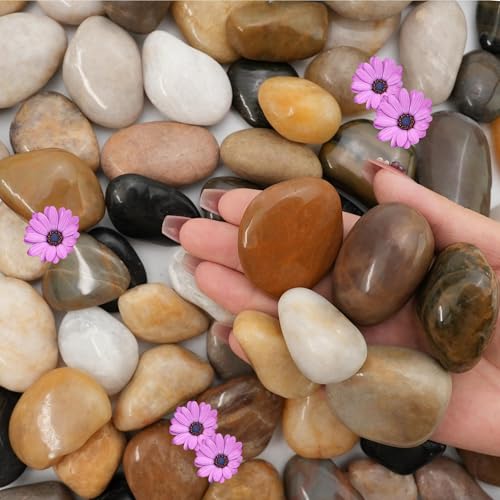
The NUPICK 16-pound bag is a strong all-rounder for the middle of the price range. The 1- to 2-inch polished stones are smooth and ready to use, and owners have found creative uses for them — stopping cats from digging in potted soil, adding weight to crocheted amigurumi dolls, and filling small water features. A buyer who bought a 2-pound bag for a water feature was surprised by how many stones came in it, which speaks to the generous count.
Quality and appearance are the most-praised aspects here. The stones have a polished finish that shines after a rinse, and the color is described as more dark gray than true black. The main trade-off is that the size can be inconsistent — some owners expected a more uniform 1-inch stone but received a mix that included noticeably larger pieces. Additionally, value-for-money gets mixed reviews: the 16-pound bag works beautifully for smaller projects, but if you need to cover a large area, you may want to look at the larger bulk bags on this list.
path filler: small decorative projects, bird baths, potted plant topping, and craft uses where you want smooth, polished stones.
display bowls: large-scale landscaping where uniform size across many square feet matters.
8. TOPEMAI Black River Rocks

Deep, glossy black stones that create a dramatic, modern look in any garden or vase.
If you want a clean, dark accent that contrasts sharply with green plants and light-colored mulch, these polished black rocks deliver. The 15-pound bag contains about 100 stones in the 1- to 2-inch range — a relatively low piece count because each rock is large. The polished surface and wax coating give them a mirror-like shine that owners love for its “beautiful sheen in the sun.” They are used in front yards, at cemeteries, around downspouts, and as vase fillers.
The 10-year warranty from TOPEMAI is a standout assurance that is rare in this category. The main honest note from owners is that the value-for-money rating is mixed — some feel the 15-pound bag is on the pricey side for the ground coverage it provides. A buyer also noted that in dusty climates (like West Texas), the shiny surface shows dust easily and requires a feather duster to keep looking clean. For modern, minimalist garden design or indoor decor where you need a bold dark element, these polished black stones are the standout choice.
deep black color: The glossy black finish is unique among the picks here, creating a sleek, contemporary look that works well for modern landscapes and floral arrangements.
modern gardens: modern landscapes, black-and-white garden themes, vase fillers, and accent areas where a deep, glossy stone stands out.
bright landscapes: you want a low-maintenance stone that hides dust and dirt between cleanings.
9. SHIZWU 20LB Pea Gravel

The heavy 20-pound bag of fine natural gravel that gives you volume and versatility.
At 20 pounds, this is the biggest bag of fine pea gravel on the list. The stones measure 4–8mm (roughly 1/4 inch) and are natural and uncoated — no wax, no polish, just pure river gravel. This makes it suitable for any application where you do not want chemicals or coatings touching your plants or aquarium water. Owners use it as a coarse sand alternative in soilless potting mixes, as a top layer for cactus planters, in resin crafts, and in 7- to 10-gallon aquariums.
The coarse texture is a real asset. As one owner pointed out, it will not simply wash out of a soilless mix and can form a drainage barrier in regular potting soil. The aesthetic feedback is positive — the colors are natural and varied. The most common note is that it requires thorough rinsing before use, especially for aquariums, where it can take a few filter cycles to clear the water. For the buyer who wants the largest quantity of fine, natural gravel in one bag, this is the pick.
concrete mix: crafters, resin artists, aquarium keepers, and succulent growers who need a large, clean, natural gravel at a fine grain size.
crack filling: a dusty first rinse — washing it well before use is essential, particularly for aquariums.
Understanding the Specs
Stone Size: 1/4 Inch vs. 1-2 Inch vs. 2-3 Inch
Stone size determines the real-world function of your gravel. Fine gravel around 1/4 inch (6–8 mm) packs tightly, stays in place in pots, and creates a good barrier against gnats, but it can wash away in heavy rain. Medium stones (1–2 inches) are the balance for general landscaping — they stay put, provide good drainage, and are large enough to look intentional. Large rocks (2–3 inches) are for statement areas, erosion control, and spaces where you want the rock itself to be a visible design element rather than a background filler.
Polished vs. Natural (No Wax)
A polished stone has been tumbled and often coated with a thin layer of paraffin wax to enhance its shine and color. This looks fantastic in a vase or a modern planter, and the smooth surface is pleasant to touch. However, that wax coating can be a problem in aquariums (it can leach or affect water clarity) and may cause the stones to slide around more in a garden bed. Natural, unpolished stones have a matte texture that locks together on a path or slope and are completely inert in water, making them the safer choice for fish tanks and functional landscaping.
Weight: What a Pound Really Buys You
This is the spec that trips up most first-time gravel buyers. A 20-pound bag of 2-inch rocks covers far less square footage than a 20-pound bag of 1/4-inch gravel because larger stones leave more air space between them. Always estimate by volume (cubic feet) if the listing provides it, or by the approximate diameter of the area you want to cover at a 1- to 2-inch depth. A rule of thumb: one 20-pound bag of 1/4-inch pea gravel covers roughly 1.5 to 2 square feet at a 2-inch depth. Larger rocks will cover less than half that.
Color Consistency and Natural Variation
Remember that natural river rocks are exactly that — natural. No two bags will have the exact same mix of colors, shapes, and sizes. Some products specify “mixed color” and will include browns, blacks, whites, and greys in varying proportions. If you need a very specific aesthetic (all white stones for a design project), buy a dedicated single-color product and be prepared for some natural variation in shade. Polished products tend to have more consistent color due to the coating process, while natural gravel is more varied by nature.
FAQ
How much gravel do I need to cover a 2×2 foot flower bed?
Can I use polished gravel for my fish tank?
What is the difference between pea gravel and river rock?
Will gravel stop weeds from growing in my garden bed?
Is lava rock the same as river rock for gardening?
How do I clean gravel before placing it in a planter?
Will white gravel stay white after it rains?
Can I use 1/4 inch pea gravel for a garden path?
How many pounds of gravel do I need for a standard 10-gallon aquarium?
Is it safe to use any gravel for edible vegetable gardens?
Final Thoughts: The Verdict
For most people, the gravel for gardening winner is the FANTIAN 10 lbs Pea Gravel because it nails the most common use cases — indoor plants, small tanks, and decorative pots — with a natural look and minimal dust. If you want a functional soil tool that prevents root rot, grab the Avalution Lava Rock Pebbles. And for large, natural river rocks that handle a serious landscaping project, the FANTIAN 20 lbs Mexican Beach Pebbles is the one to reach for.
How We Picked
We do not accept paid placement. Every pick is matched to a real buyer and a real use-case; we do not hands-on test units.
Sources & Methodology
Specifications: manufacturer listings and product documentation. Review insights: verified customer reviews, as of July 2026. Pricing: not shown on this page (it changes often); check the current price via the retailer link.
As an Amazon Associate, Lawn Gear Lab earns from qualifying purchases. This does not affect which products we feature.