
Specs are compiled from manufacturer listings and verified buyer reviews and can change over time — please confirm the key details on the product page before buying.
Walking down a garden path should be a simple pleasure, not a slosh through mud or a battle with weeds pushing through cheap stone. The right gravel turns a soggy, uneven stretch into a stable, tidy, and genuinely attractive part of your yard. The trick is finding a load that is the right size, weight, and look for your specific project — and that is exactly where most people get stuck.
I’m Rikta — the founder and writer behind Lawn Gear Lab. This guide is built by comparing the manufacturers’ published specifications and the patterns across verified customer reviews, so you get each pick’s real strengths and trade-offs instead of marketing spin.
The most important decision for your pathway is stone size and how much coverage each bag actually provides. This guide breaks down the best gravel for garden path use, matching each option to a specific project scale and budget.
Our Picks at a Glance
How To Choose The Best Gravel For Garden Path
Choosing gravel for a path means balancing coverage, comfort, and appearance. Get these three factors right and your path stays put for years.
Stone Size and How It Feels Underfoot
Smaller gravel, around 0.2 to 0.4 inches, packs down tighter and feels more solid to walk on. Larger stones, such as those between 1 and 2 inches, settle with more gaps, which can feel uneven unless you use a thicker layer. For a garden path you walk on daily, stones near the 3/8-inch range do not shift around as much as big river rocks.
Bag Weight vs. Actual Path Coverage
A 10-pound bag of 1/4-inch pebbles covers a single pot or a very small stepping-stone border. A 40-pound bag of pea gravel, by contrast, can handle a short garden walkway, roughly a couple inches deep. The key spec to check is not the bag weight alone but the stone size, because smaller stones pack more coverage per pound than larger, chunkier rocks leaving big air gaps.
Shape Matters for Path Stability
Angular, crushed stone tends to lock together and resist spreading underfoot better than smooth, round river pebbles, which can roll. For a path that has to hold up to foot traffic without scattering, pea gravel or crushed granite is the wiser choice than polished decorative river rocks. Use the round, polished stones for lower-traffic areas like borders and planter beds.
Quick Comparison
| Model | Best For | Stone Size | Bag Weight | Material | Amazon |
|---|---|---|---|---|---|
| Rahato 15 lbs White Rocks★ Best Overall | Border & Planter Accents | 1-2 inches | 15 lbs | Stone | Amazon |
| FANTIAN 40 lbs White RocksPremium Path | Premium Garden Paths | 1-2 inches | 40 lbs | Stone (Matte) | Amazon |
| Engine 109 Pea Gravel 40 LBSTop Performer | Walkway Stability | 3/8 – 1/4 inch | 40 lbs | Gravel | Amazon |
| MIGHTY109 Granite Pea Gravel 40 Lbs | Decorative Pathways | 1/8 inch average | 40 lbs | Crushed Granite | Amazon |
| Mulctun 45LB Natural Grey Gravel | Bulk Path Projects | 0.8-1.8 inches | 45 lbs | Natural Stone | Amazon |
| Garrdeen 45LB Polished River Stones | Finished Path Surface | 1-2.2 inches | 45 lbs | Natural Stones | Amazon |
| CJGQ 18lb Smooth River Rocks | Small Accent Paths | 1/4 inch | 18 lbs | Rocks | Amazon |
| Virekm 10 lb Mixed Color Pebbles | Potted Plant & Aquarium | 0.4 inch | 10 lbs | Landscaping Pebbles | Amazon |
| LOOIOOJ 10lbs Natural Gravel Pebbles | Small Planter Cover | 1/5 inch | 10 lbs | Stone | Amazon |
In‑Depth Reviews
1. Rahato 15 lbs White Rocks
Our pick — over 4.5★ from 200+ verified ratings; the strongest balance of quality and price.
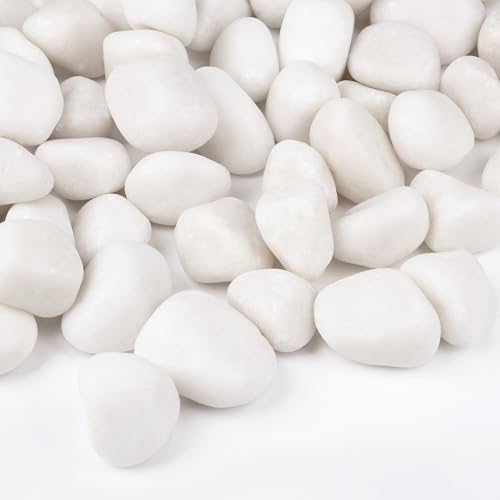
Bright white, smooth stones that are landing on planter duty more than paths.
The overwhelming buyer consensus is that these rocks are beautiful, well-polished, and uniform in size. Owners mention they are “very nice landscaping rocks and nice size” and use them to add weight to potted plants so they do not blow over. The appearance leads all positive mentions, with size and quality close behind.
The narrow use-case is the limitation here: at 15 pounds in a decorative white stone, this is not a bulk pathway solution. It is a bag for filling a planter, topping a small vase base, or making a very short, low-traffic border accent. The stones are 3 inches thick in the bag, which feels dense, but buyers who expect to cover a walkway will quickly run out. Owners are nearly unanimous in their 5-star satisfaction — but they are using it for the right project.
What Owners Rave About
- Appearance is the #1 most-praised — “very pretty” and “beautiful white”
- Smooth, polished texture; uniform size is appreciated
A Note on Scope
- 15 lbs is an accent bag — not enough for even a short garden path
Use it for: adding a beautiful white rock finish to a large planter that sits on your path edge.
Not for: actually covering a walkway surface.
2. FANTIAN 40 lbs White Rocks for Landscaping
The bag that delivers serious visual punch and surprising substance for a proper walkway.
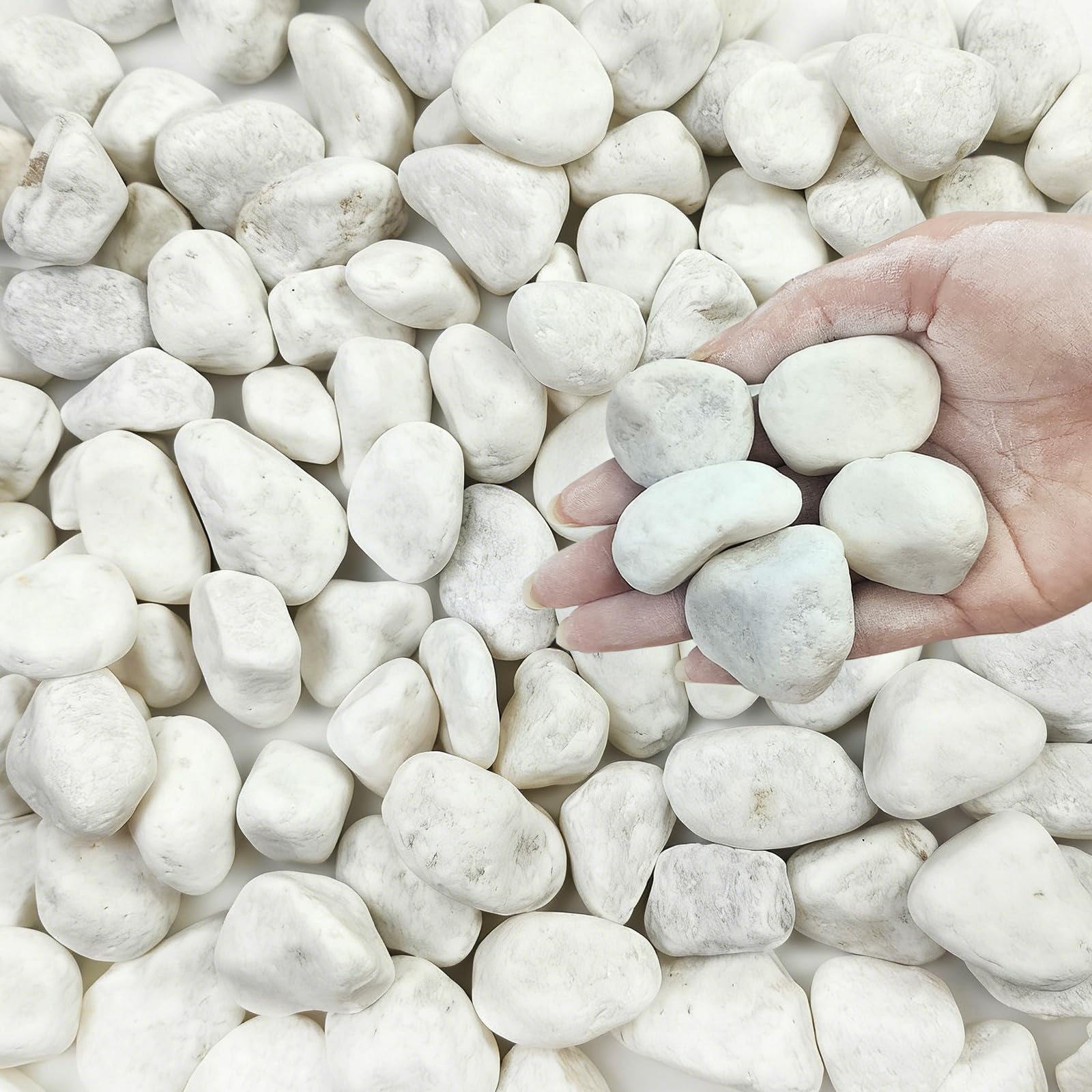
This is the largest and heaviest bag among the premium options, and it earns its spot as the top pick because of what owners consistently report: the stones arrive beautiful, stay beautiful, and cover real ground. The 40-pound bag holds stones that measure 1 to 2 inches, with a matte finish that looks natural and far more expensive than most bagged gravel. More than 500 buyers have left feedback, and the overwhelming praise centers on the appearance — it is the single most praised aspect by a wide margin.
A small but honest note: the manufacturer clearly states that the surface has its own natural powder from processing and shipping, and owners confirm a rinse is needed before the stones look their best. Some also find the stones larger than expected — one buyer called them “really large” after realizing no size options were available. That means this bag is best for a medium garden path where you want bold, white-gravel presence, not for a stepping-stone crack filler.
Owner’s Verdict
- Appearance is the stand-out — 51 owners single it out, calling them “beautiful” and noting they “stay green in the garden”
- Quality is widely praised — 25 buyers highlight it
The Trade-Off
- Size earns mixed feedback — 32 owners say the stones run larger than expected
- Value for money is a mixed point — 14 mention the cost as significant
Reach for this if: you want a single, heavy bag that covers a sizable path and you love the look of big, matte white rock.
Think again if: you need a precise, small stone for filling between stepping stones.
3. Engine 109 40 LBS Grey Pea Gravel
The no-surprises workhorse that creates a stable, slip-free walking surface.
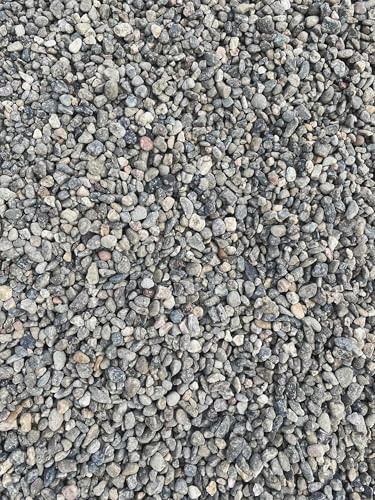
If you are laying down a genuine garden path that gets walked on daily, this pea gravel is the practical champion. The average stone size sits between 3/8 inch and 1/4 inch — the classic, interlocking pea gravel range that packs down firmly and resists scattering. The 40-pound bag is the same weight as the FANTIAN bag above, but the smaller, angular rocks give you more surface coverage per pound because they settle with fewer air gaps. Owners use it for stabilizing slopes, keeping weeds down, and covering mud. One noted it was a “practical choice for stabilizing any sloped area and keeping weeds down.”
The only honest complaint? Some wish the bag were bigger than 40 pounds. That is a compliment disguised as a negative: it means the product works exactly as described, and once you see the results you just want more. This is the pick for someone who cares more about function and less about the pure decorative wow factor of large white stones.
Why Owners Love It
- Stops mud and suppresses weeds, exactly as advertised
- Practical pea gravel size stays put underfoot
The Only Downside
- A few owners found 40 lbs runs out faster than they hoped for big projects
Grab this if: you want a stable, walkable path that does the hard work without demanding to be the star of the garden.
skip it if: you need a decorative, large-stone look or have a tiny project that would be overwhelmed by 40 lbs.
4. MIGHTY109 Granite Pea Gravel 40 Lbs
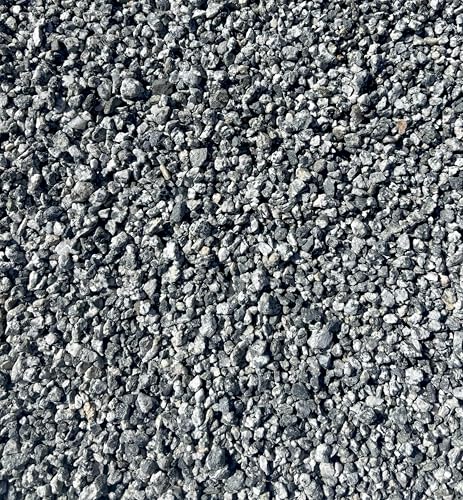
Crushed granite that locks together tight, with a light gray-blue tone that feels upscale.
This is the most compact stone in the bunch — an average diameter of 1/8 inch, which makes it feel almost like a coarse sand underfoot. That fine texture means it packs into a dense, hard-wearing surface that is excellent for pathways, and some owners used it as a leveling base before laying pavers. The stone is crushed granite, not smooth river rock, so it edges the Engine 109 pea gravel on stability. Color-wise, buyers call it a “very light gray” that trends much lighter than the product photos suggest.
The customer service gets genuine praise — one reviewer had a shipping mix-up and the company reportedly responded within minutes and sent a correct replacement immediately. The biggest practical complaint is the box durability: one box arrived broken during shipping, which is a concern given the 40-pound weight on cardboard. This one shines for a pathway where you want a finer, almost sandy feel and a lighter gray tone that contrasts with dark soil.
Strong Points
- Very fine, crushed granite locks together for a stable path
- Customer service is responsive and helpful
Watch Out For
- Much lighter gray than the photos — may not match existing darker gravel
- Shipping box can break under the weight
Best fit: a decorative path area where you want a refined, light stone that feels compact underfoot.
Not for you if: matching an existing, darker gravel color is critical.
5. Mulctun 45LB Natural Grey Gravel

A 45-pound bulk bag of grey rock that covers ground — but you will need to rinse first.
This is the heaviest bag on the list by weight (45 pounds), and the stones range from 0.8 to 1.8 inches, a solid medium-large size that works for a garden path where you want substantial rock presence. The matte finish gives it a modern, low-gloss aesthetic that feels intentional, not dusty. The manufacturer explicitly warns that these stones accumulate dust and need a 2-3 rinse before use — and buyers confirm this, with some calling the initial powder “a mess.”
Coverage is the major point of tension: multiple buyers report that this bag covers less area than expected. One wrote it barely fills a 4-by-6-inch area, describing it as “disappointing coverage” for the price. Those who rinsed and used it for flower pot drainage or a small accent border were happy, but anyone expecting this single bag to cover a full path will be underwhelmed. This one is a premium accent bag for small, high-grooming areas — not a budget-friendly pathway bulk solution.
What Works
- Hefty 45 lb bag of natural grey stone with a modern matte finish
- Works well for small drainage layers and pot covers after rinsing
The Reality Check
- Coverage is much less than most expect — multiple owners feel it is expensive for the area it covers
- Significant powdery dust that requires thorough washing
Ideal for: a small, high-visibility accent bed or border where 45 lbs of grey stone is enough.
Look elsewhere if: you are covering a full garden walkway — you will need several bags.
6. Garrdeen 45LB Polished River Stones
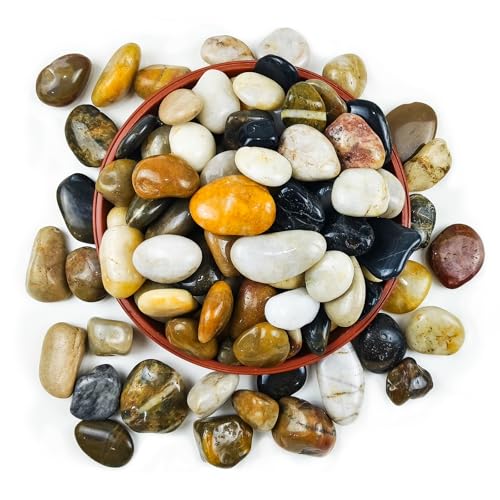
A counted box of 740 polished stones that feel more like a craft project than bulk gravel.
This is a completely different approach: instead of a loose bag of gravel, you get approximately 740 to 750 individually machine-polished and waxed river stones, each between 1 and 2.2 inches. The unit count (740) tells you exactly what to expect for coverage — each stone is a distinct object, not a scoop of pea gravel. The finish is polished and shiny, with earthy mixed colors (beige, gray, white, brown) and no dyes. For a finished path surface or a decorative border, this is the premium choice. Owners call them “absolutely lovely” and note no broken stones.
The honest trade-off is clear: the per-pound cost is significantly higher than the bulk pea gravel options above. More than one buyer commented that they found cheaper alternatives at a local hardware store for the same “rocks.” This bag is for the buyer who values the polished presentation and the guarantee of 740+ whole, uniform stones, not for someone trying to cover a large path on a budget.
Why It Stands Out
- Each stone is machine-polished and waxed — owners call them “absolutely lovely”
- No broken stones reported; exact count (740) means no guesswork on coverage
The Noticeable Catch
- Perceived as expensive for the amount — some say they found the same at Lowe’s for less
Reach for this if: presentation counts — for a polished, high-end finish on a narrow path or border where each stone is on display.
Think twice if: you need to cover a long path at a reasonable cost per square foot.
7. CJGQ 18lb Small Smooth River Rocks
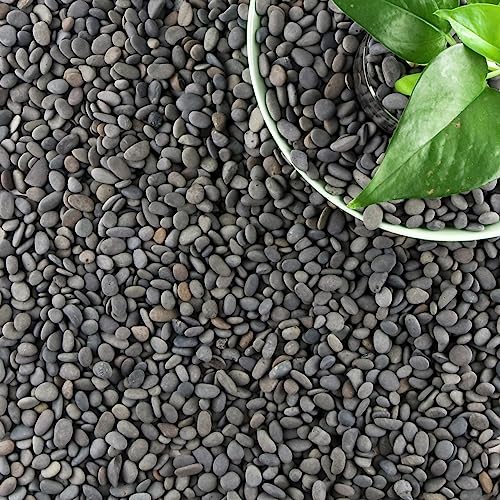
A tidy 18-pound bag of 1/4-inch pebbles that handles tiny spaces and planter duties.
These river rocks are on the smaller end of the spectrum — approximately 1/4 inch in diameter — which makes them suitable for an accent border on a narrow path or, more commonly, as a top-dressing inside plant pots. The round, smooth shape means they are easy to work with by hand and look clean and uniform. Owners find them useful for lifting plants inside a pot, covering soil, and for smaller projects like a mini olive tree.
The biggest pattern across reviews is the mixed reaction to the size — many complain the stones are too small for painting projects, and the dustiness is a recurring theme. One owner spent “about an hour” washing them to match the product photo. For a genuine garden path, these are too small and too round to lock together well; foot traffic would scatter them. They are better for the look of a path border or for use inside a planter box on the edge of a path.
Owner Sentiment
- Quality is the most-praised aspect — 31 owners call it good
- Compact, uniform size works well for potted plants and small accent borders
The Honest Truth
- Size is divisive — 30 reviewers find them too small for many projects
- Dusty and needs washing; value for money is the most-flagged negative aspect
Perfect for: a small, tidy border accent on a path where you pour a thin line along the edge, not the main walkway surface.
Not for: a full garden path — these pebbles will scatter under walking traffic.
8. Virekm 10 lb Mixed Color Pebbles
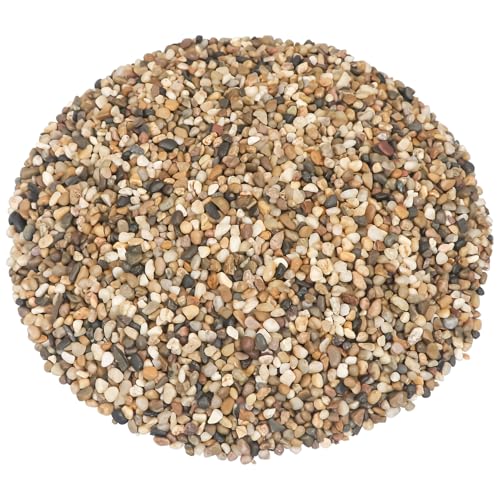
A light, mixed-color pebble that covers two pot bases and costs a few dollars.
At 10 pounds and a friendly price, this is the entry-level bag of small (0.4 inch) pebbles in a mix of browns, whites, and greens. The colors are the most-praised feature, with buyers calling them “nice,” “love the colors,” and appreciating how they brighten a planter or aquarium. One reviewer noted that their 6-pound bag covered two planter bowl bases and loved them. The pebbles are “lightly polished” for a smooth finish that is safe for handling.
The main caution from owners is that this is a small amount of material. Multiple buyers warn to “read the weight / amount carefully” — rocks are deceptively heavy, and 10 pounds looks smaller in the bag than you might expect. The packaging also earned some frustration, with one report of the outer bag opening and the inner netting having a hole, causing a spill. This is not a path gravel; it is a craft and planter filler for someone who wants a small bag of attractive mixed-color pebbles.
Top Praises
- Color is the most-praised — 28 owners single it out
- Small, smooth finish works well for aquariums and plant tray humidity
Most Common Gripes
- You do not receive much for the price — value for money is “Mixed”
- Packaging may not hold up during shipping
Best for: a small decorative layer on a potted plant or a few inches of aquarium gravel.
Not for: any garden path larger than a pot base.
9. LOOIOOJ 10lbs Natural Gravel Pebbles
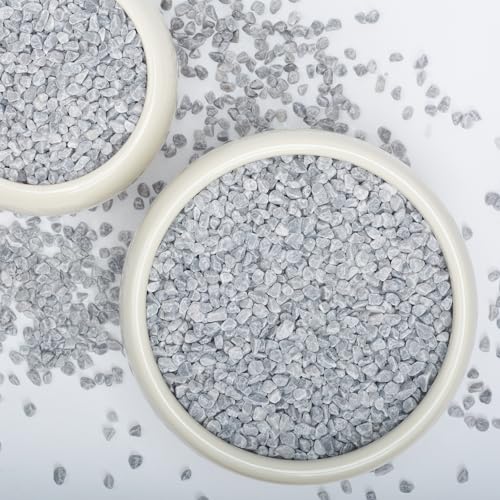
The smallest, most pebble-like gravel on the list, at 1/5 inch — true aquarium territory.
These natural gravel pebbles are a fraction of an inch (just 0.2 inches thick and 0.2 inches in diameter), making them a class below even the typical pea gravel for walkways. The size receives the most mixed feedback by far — some owners call them “perfect size” for small fish tanks, while others flatly state “too small.” The quality, which wins the most positive feedback, describes a natural, consistent pebble that matches the photos.
The manufacturer recommends rinsing thoroughly before use, and owners confirm the pebbles come “pretty dirty.” The small size means they are not suitable as a walking surface for a garden path — they will scatter, dig into the soil, and shift with every step. They are at home in a small fish tank, a terrarium base, or as a top dressing in a succulent planter. The grey color is understated and does not steal attention from the plants.
What Works
- Quality is the most-praised aspect — 8 owners call it good
- Natural, soft grey color looks good in planters and aquariums
The Limits
- Size is “Mixed” — several find it too small for many uses
- Needs thorough rinsing due to dust and dirt
Reach for this if: you need a tiny, uniform pebble for a desktop terrarium or nano fish tank.
pass on it if: you are buying gravel for a garden path.
Understanding the Specs
Stone Size (Diameter in Inches)
This number tells you how big each individual stone is. A 1/4-inch pebble packs down tight and feels firm underfoot — great for a stable path. A 1-to-2-inch river rock leaves larger gaps, so you need a deeper layer to avoid an uneven feel. For a garden path you walk on daily, aim for 3/8 inch or smaller; use the big rocks for low-traffic borders.
Bag Weight vs. Coverage
The bag weight (in pounds) is a shortcut for knowing how much ground you can cover, but stone size skews it: a 40-pound bag of 1/4-inch pea gravel covers more square footage than a 40-pound bag of 1.5-inch rocks, because the bigger stones stack with more air between them. Always check the bag weight alongside the stone size — a small rock in a heavy bag means the best coverage value.
Stone Shape: Round vs. Crushed
Round, polished river rocks roll underfoot and move sideways when you step on them. Crushed or angular gravel (like pea gravel or crushed granite) locks together like puzzle pieces, creating a stable walking surface that resists shifting. If your path gets real foot traffic, crushed stone is the only way to go. Smooth pebbles belong in decorative borders and planters, not under your shoes.
Matte vs. Polished Finish
A matte surface gives a natural, subdued look that does not glare in sunlight — it mimics a dry riverbed. A polished, waxed finish makes each stone shiny and vibrant, ideal for a decorative showpiece path or a high-impact border. The trade-off is that polished stones can feel slippery when wet and show scratches more easily. Choose the finish that matches whether your path is for looking at or walking on.
FAQ
How deep should I lay gravel for a garden path?
Should I put a weed barrier fabric under the gravel?
Will 40 pounds of gravel cover a whole garden path?
Can I use aquarium gravel for a garden path?
What is the difference between river rock and pea gravel for a path?
Do I need to wash gravel before putting it on my path?
Will white gravel stay white on a garden path?
How do I stop gravel from spreading onto my lawn?
Which type of gravel is best for a steep path?
Is it okay to pour gravel directly over dirt or grass?
Final Thoughts: The Verdict
For most people laying down a walkable garden path, the gravel for garden path that combines coverage, stability, and honest value is the Engine 109 40 LBS Grey Pea Gravel — its 3/8-to-1/4-inch crushed stone packs down tight and covers real ground. If you want a premium look that creates a bold, white statement on the path, grab the FANTIAN 40 lbs White Rocks, knowing you will need to rinse them first and possibly buy more than one bag for a larger area. And for a high-polish, stone-by-stone decorative finish, the Garrdeen 45LB Polished River Stones delivers a gorgeous, counted result for smaller, high-grooming paths.
How We Picked
We do not accept paid placement. Every pick is matched to a real buyer and a real use-case; we do not hands-on test units.
Sources & Methodology
Specifications: manufacturer listings and product documentation. Review insights: verified customer reviews, as of July 2026. Pricing: not shown on this page (it changes often); check the current price via the retailer link.
As an Amazon Associate, Lawn Gear Lab earns from qualifying purchases. This does not affect which products we feature.