
Specs are compiled from manufacturer listings and verified buyer reviews and can change over time — please confirm the key details on the product page before buying.
You add a thin layer of gravel on top of your flower-pot soil to stop fungus gnats from breeding, prevent soil from splashing when you water, and give your pots a finished look. The catch is that not every bag of pebbles works the same way. Pick the wrong size or material and you can trap moisture against the stem instead of letting it drain away.
I’m Rikta — the founder and writer behind Lawn Gear Lab. This guide is built by comparing the manufacturers’ published specifications and the patterns across verified customer reviews, so you get each pick’s real strengths and trade-offs instead of marketing spin.
Whether you are covering soil in a succulent pot, adding a drainage layer to a planter without a hole, or want your houseplant collection to look intentional, this guide to the best gravel for flower pots breaks down which rocks, pebbles, and clay balls actually deliver.
Our Picks at a Glance
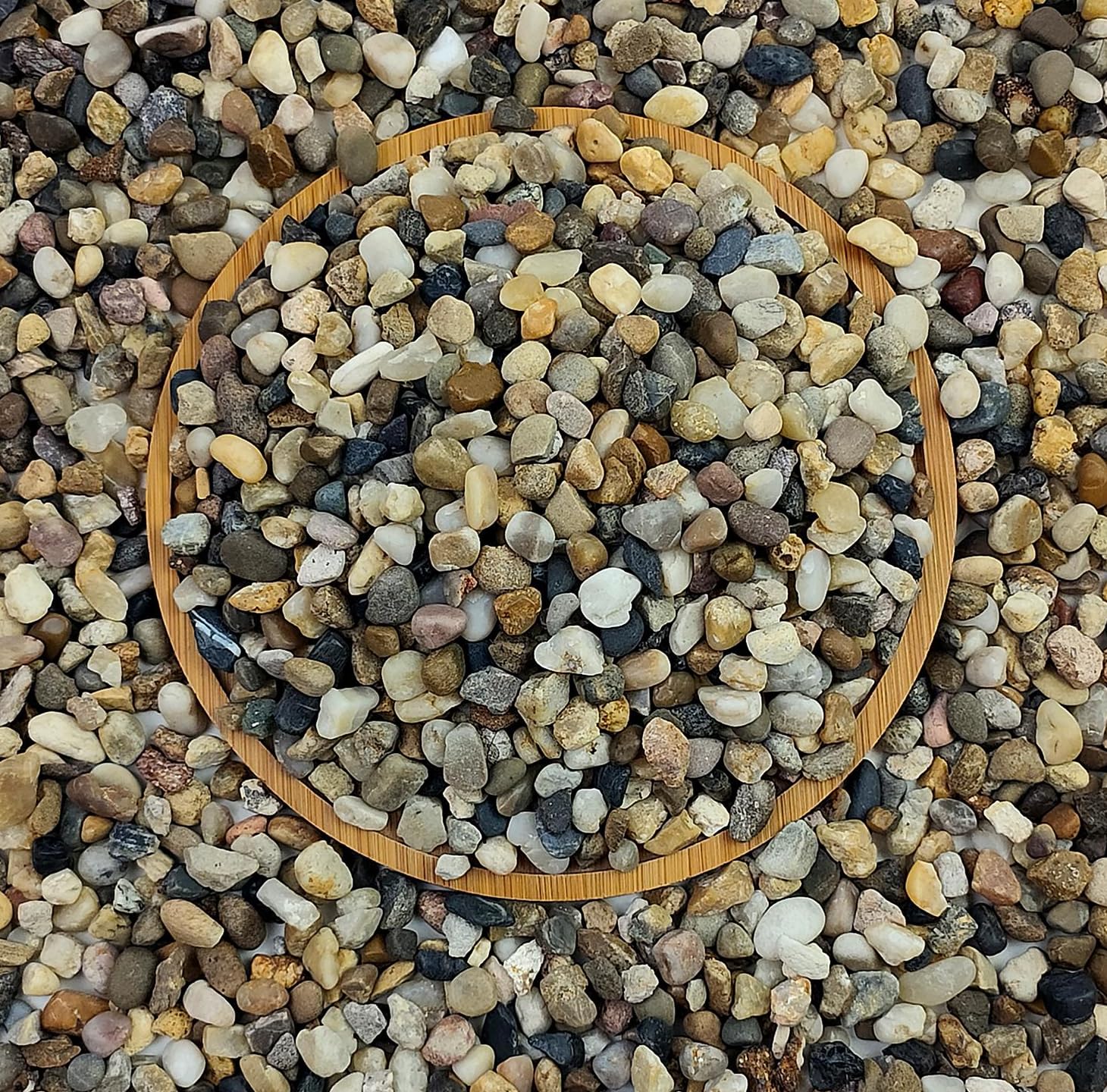


How To Choose The Best Gravel For Flower Pots
Gravel for flower pots does two jobs. As a top dressing (the layer you see), a half-inch layer on the soil blocks fungus gnats, holds moisture in, and stops dirt from splashing onto leaves or tabletops. As a bottom drainage layer (hidden under the soil), coarser material fills the pot base to let excess water escape the root zone. The right choice depends on your pot type, your plant, and if you want purely functional or also decorative gravel.
Particle Size Matters
Pebbles around one-quarter inch (roughly 6-8mm) are the balance for top dressing. They are large enough to let air circulate but small enough to create a dense barrier that gnats cannot burrow through. Smaller grains, like sand, can compact and trap water against the soil surface. Stones much larger than half an inch leave gaps that gnats and soil mites can crawl through.
Natural Stone vs Polished Gravel vs Clay LECA
Natural river rocks have an earthy, matte finish and are typically the cheapest per pound. Polished pebbles, like agate or tumbler-polished river stone, add shine and color but cost more — better for glass vases or pots in visible living areas. Lightweight expanded clay aggregate (LECA) balls are baked clay that soaks up and slowly releases water. That makes them ideal for a bottom drainage layer or semi-hydroponic setups (growing plants in water with a clay medium). LECA is much lighter than stone, which matters if you move your pots around.
Cleanliness and Dust
Most gravel arrives with fine dust from processing and transit. Buyers agree that a quick rinse in a colander or bucket, until the water runs clear, prevents that dust from clouding your soil or staining light-colored pebbles. Some brands advertise themselves as pre-washed — but even those benefit from one rinse before they touch your pot.
Quick Comparison
| Model | Best For | Weight | Particle Size | Material | Amazon |
|---|---|---|---|---|---|
| FANTIAN Pea Gravel★ Best Overall | Budget top dressing | 5 lb | 1/4 in | Natural river rock | Amazon |
| Aqua Natural Midnight PearlAlso Great | Top dressing & drainage | 9.9 lb | 2-4 mm | Natural river pebble | Amazon |
| Halatool Green AgatePremium Pick | Decorative top dressing | 2.2 lb | 9-15 mm | Polished agate stone | Amazon |
| Pulovin Pebbles | Indoor plant pots | 5 lb | 3/8-1/2 in | Polished river stone | Amazon |
| FANTIAN Pumice Mix | Succulent/cactus soil mix | 5 lb | 1/4 in | Lava stone mix | Amazon |
| Arqlite Smart Gravel | Lightweight drainage layer | 4 lb | 1/2-1 in | Recycled plastic | Amazon |
| TOYPOPOR River Rocks | Small terrariums | 6 lb | 1/4 in | Natural river rock | Amazon |
| Legigo LECA Balls | Hydroponics & drainage | 10 lb | 4-16 mm | Baked clay | Amazon |
In‑Depth Reviews
1. FANTIAN 5 lbs Aquarium Pea Gravel
Our pick — over 4.5★ from 900+ verified ratings; the strongest balance of quality and price.
The cheapest per-pound option that still looks natural on a pot.
If you are covering soil on a dozen small succulent pots or need a bulk bag for a weekend repotting project, this is the one to load into the cart. At 5 pounds, the FANTIAN pea gravel delivers a straightforward, no-frills river rock that does exactly what gravel should do: improve drainage, stop soil splash, and sit there looking earthy. The 1/4-inch average size is right in the balance for top dressing — large enough to let air through but small enough to create a dense barrier against fungus gnats.
Owners specifically call out the appearance and the size as the two strongest features. One buyer who put it in succulent pots said it “should help stop the fungus gnats while dressing up the pots.” The natural mixed tones keep it neutral, so it pairs with any pot color. The bag is packaged dry, which means the stones arrive looking darker than the product photos — but once they hit the soil and catch ambient light, the colors even out. A small practical note: the bag weight registers around 4.91 pounds on a scale, so you are getting close to the promised 5 pounds.
Why it wins on value
- 5 pounds covers a lot of small pots for the money
- 1/4-inch size is the ideal gnat-blocking range
- Neutral colors match any pot style
Where it cuts corners
- Not polished — matte finish looks purely functional, not decorative
- Some buyers found the bag smaller than expected for the price
- Dry bag makes stones appear darker than the listing photos
Grab it for: budget-friendly top dressing on a large number of small pots, or for any utilitarian project where you just need drainage, not dazzle.
skip it if: you want shiny polished stones or a bag that covers a deep drainage layer in one go.
2. Aqua Natural Midnight Pearl Gravel
The heavyweight bag that doubles as a plant-dressing workhorse.
This is the bag to grab when you have a row of pots and want one consistent, natural-looking gravel that does both jobs — top dressing and drainage layer. At 9.9 pounds, the Midnight Pearl gives you serious coverage. Buyers report using a thin layer across six houseplants from a single bag. The 2-4mm pebbles are graded consistently, so no oddball oversized stones throw off the look. The color is a dark, peppered brown with lighter translucent flecks — not flashy, but it disappears under green foliage like a natural forest floor.
What wins people over most is the appearance. The small, smooth stones really do look like polished river gems once they hit the pot. The bag arrives triple-washed and kiln-dried (baked to remove moisture in a kiln), so there is almost no dust. Most owners give it a quick rinse and call it done. It is also sourced from New Zealand, which matters if you want to keep your gardening choices environmentally thoughtful. The only catch on the size front: at 2-4mm, these are fine pebbles. Great for a neat top layer, but if you want a chunky drainage base that creates big air pockets, you will want something larger — like the Arqlite Smart Gravel’s 1/2-1 inch pieces.
What owners love
- Nearly dust-free out of the bag; rinsing is optional for most
- 10-pound bag covers multiple pots — “thin layer on 6 plants” is a real testimonial
- Natural speckled color looks expensive without being flashy
The trade-off
- Fine 2-4mm grade is too small for a chunky bottom drainage layer in large planters
- Dark color may hide decorative stones if you want a bright contrast on top
Reach for it when: you need a single go-to gravel for top-dressing a batch of houseplants or creating a clean natural layer in terrariums.
Think twice if: you want large, chunky stones for deep pot drainage or very bright colored pebbles for a statement planter.
3. Halatool Natural Green Agate Stones
Polished agate that turns a flower pot into a centerpiece.
If your flower pot sits on a desk, entryway table, or any spot where people actually look at it, these green agate stones are the difference between “that’s a nice plant” and “wow, that whole arrangement is beautiful.” The stones are naturally polished — not dyed — so the clear greens and occasional brown carnelian flecks stay vibrant permanently and will not fade in sunlight. Each stone measures 9-15mm (roughly 0.35-0.6 inch). That is large enough to lie flat as a neat top dressing but small enough to fit into a vase neck or fairy-garden dish.
The thing everyone raves about is the appearance — 65 mentions in reviews make it the most-discussed trait by a big margin. Owners put them in aquariums, resin projects, and planters, and they say photos cannot capture how much light the polished surfaces catch. One reviewer noted that the bag is small at 2.2 pounds, but the coverage area surprised them once the stones were laid out — they spread further than expected. These agate stones are also weather-resistant, so they work outdoors on a patio table or around a pool without fading.
One-liner verdict: The prettiest top dressing in this list, period — but the 2.2-pound bag covers only a few small pots, so budget accordingly if you have a shelf full of plants.
Best for: visible pots, glass vases, and anyone who wants the gravel itself to be a design element.
Watch out for: the small bag weight — 2.2 pounds goes fast if you have more than two or three medium pots.
4. Pulovin 5 lbs Pebbles for Indoor Plants

Soft pastel pebbles that bridge the gap between natural and decorative.
These are not your standard brown-and-gray river rocks. The Pulovin pebbles come in creamy white, light apple green, and light brown — colors that look intentional without being gaudy. At 3/8 to 1/2 inch, the stones are slightly larger than the fine gravels from Aqua Natural, which makes them a strong choice for a top layer that stays put even when you water aggressively. Owners use them to cover soil in Ficus pots, line glass vases for bamboo, and as a base for terrariums. One buyer mentioned that the full 5-pound bag just covered the soil surface of an indoor Ficus tree and recommended buying a second bag if you want a thicker layer.
The stones arrive highly polished and clean. Most owners mention they need zero rinsing before use. The smooth, lightly polished finish catches light when wet but stays subtle when dry, so the pot does not look like a craft project. The one honest note from the review pages: a few stones appear to be painted rather than naturally colored, though that is a minority observation. For the weight, the color variety and 5-pound bag are tough to top for a mid-sized indoor pot collection.
The short take: A versatile mid-range option that gives you enough weight to cover a medium pot and enough color to make it look intentional — not just dumped-on gravel.
Reach for it if: you want a polished look without spending agate-level money, and you need a 5-pound bag to cover several pots.
Pass on it if: you insist on 100% naturally colored stones — a minority of buyers flagged possible paint on some pieces.
5. FANTIAN Succulent Cactus Soil Pumice Mix
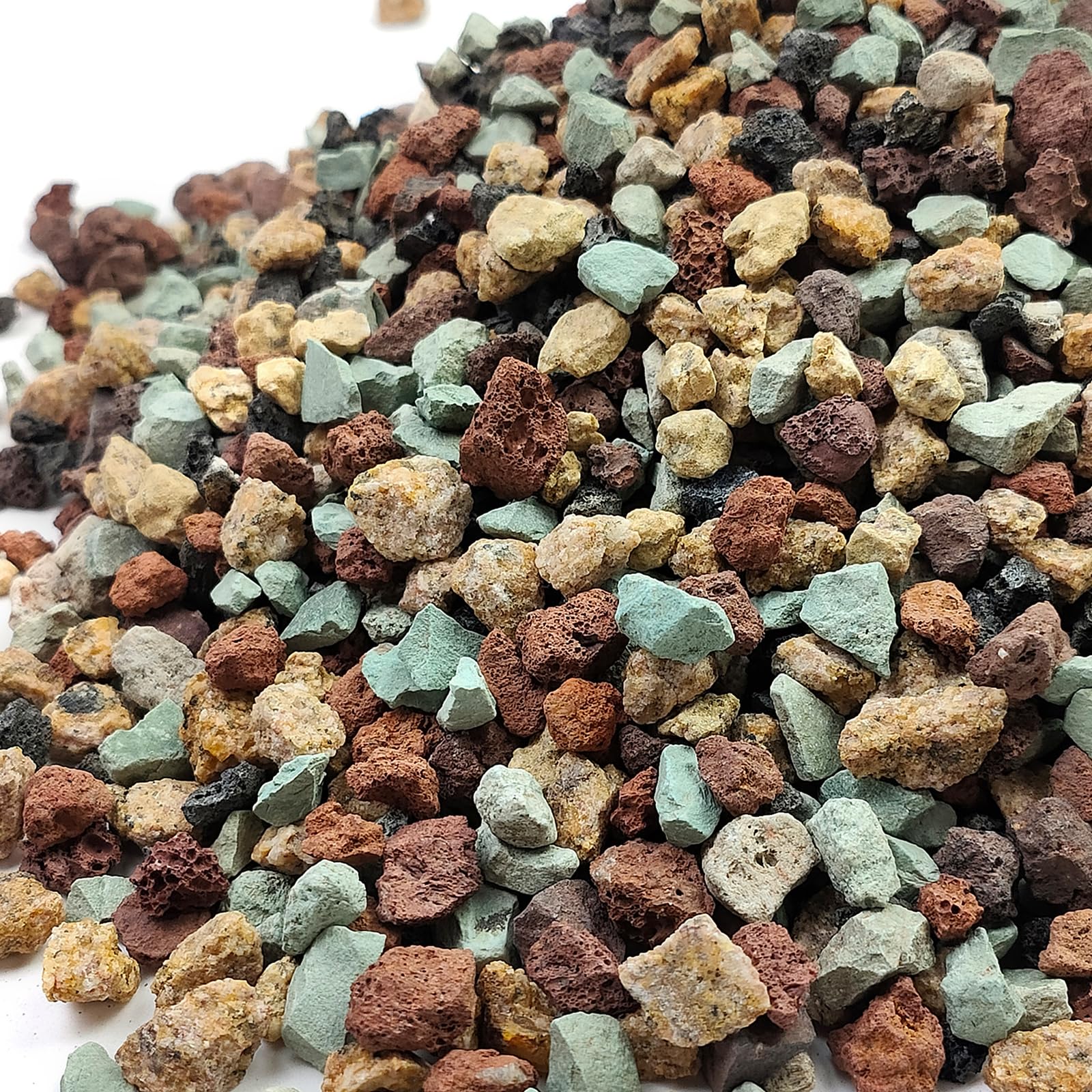
A porous gravel mix engineered specifically for succulents and cacti.
This is not just gravel — it is a blend of lava stone, Maifanitum stone (a mineral-rich volcanic rock), and green zeolite (a porous mineral that absorbs excess moisture), all sifted to a 1/4-inch (5-8mm) grade. That matters because succulents and cacti need fast-draining soil that does not stay wet for days. These porous particles actively pull water away from the root zone. You can use it as a standalone potting mix, mix it with peat or perlite (a lightweight volcanic glass that improves aeration), or top-dress a pot to keep the soil surface dry. Owners who bought it multiple times describe it as their new go-to for cactus and succulent repotting.
The quality and versatility get the loudest praise from buyers. Multiple reviews note that the porous lava rock provides good drainage while also retaining a light amount of moisture that the roots can access slowly — the best of both worlds for plants that hate sitting in wet soil but still need occasional humidity. The dust factor is the recurring note: the bag contains some fine residue from transit, and owners universally recommend rinsing the mix before use. A buyer who mixed it with succulent soil said it gave the soil “better drainage” and also worked as a decorative topper.
The bottom line: If you keep succulents or orchids, this is more useful than standard pea gravel — it is a functional soil amendment, not just a top layer.
Best for: succulent lovers, orchid growers, and anyone who mixes their own gritty potting blend.
Note the grit: plan to rinse the bag thoroughly — the dust content is the most common buyer caveat.
6. Arqlite Smart Gravel

The plastic alternative that keeps your pot light and your conscience clear.
This is not a stone at all — it is a recycled-plastic gravel alternative made in the USA, and it is up to 3 times lighter than mineral gravel. For anyone who moves their pots around for seasonal sunlight or cleans under them regularly, that weight difference is a real daily convenience. The 1/2 – 1-inch pieces are chunkier than the fine gravels from Aqua Natural or FANTIAN, which makes the Arqlite more suited for a bottom drainage layer than a smooth top dressing. One bag covers up to four pots with a 6-inch base, according to the manufacturer.
Owners lean on the drainage performance as the top reason to buy. The gravel keeps soil loose, prevents compaction, and lets water flow through freely — exactly what you need at the bottom of a pot that lacks drainage holes. A buyer noted it worked “great for drainage in indoor plants” and allowed them to use pots “without drainage holes” safely. The recycled-material angle is a genuine bonus, but the chunkier size is the real differentiator: if you want that fine, soil-hugging top dressing look, this is not it. It works best as a hidden functional layer beneath the soil.
Verdict: The best choice for lightweight drainage layers and eco-conscious gardeners, but pass on it if you want a decor-style top dressing.
Reach for it when: you need a light, functional drainage layer for pots you move frequently or pots without drainage holes.
Not for: visible top dressing — the 1/2-1 inch recycled plastic pieces look functional, not decorative.
7. TOYPOPOR 6lbs Natural River Rocks
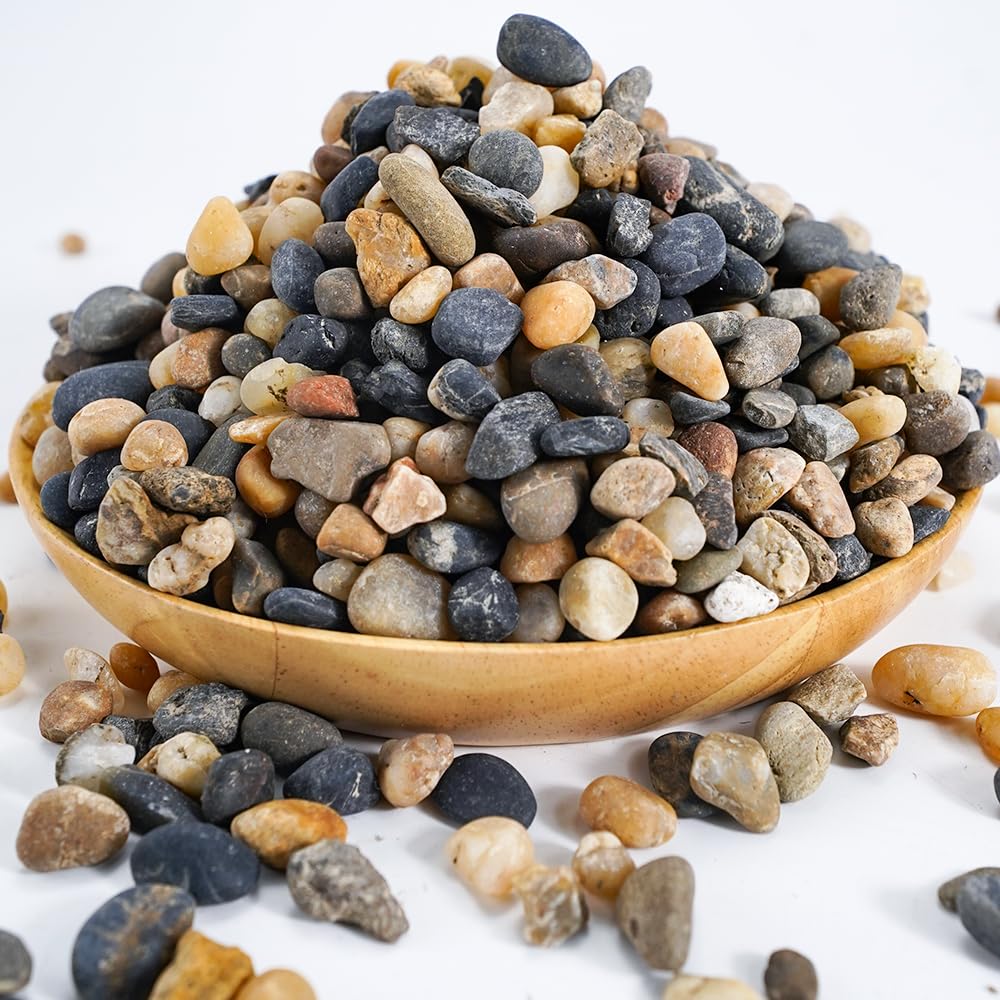
A solid, no-nonsense 6-pound bag for small-scale projects.
This bag delivers exactly what the label says: natural river rocks, 1/4 inch average, in a 6-pound bag. The stones are multicolored — browns, tans, and soft grays — and they work as a functional top dressing for flower pots, a base layer for terrariums, or even a substrate in a small aquarium. Owners building terrariums specifically praise the size for fitting neatly into small glass containers without looking oversized. The “commercial grade” rating on the specs suggests these have been screened more tightly than basic landscape gravel, so the size consistency is good.
The honest feedback from the review pages is split on value: the 6-pound bag is not huge, and several buyers felt the price per pound is higher than expected for natural, unpolished river rock. The cleanliness also gets mixed marks — some bags arrive with noticeable dust and require a thorough rinse. That said, for a small terrarium or a handful of 4-inch pots, this bag gives you enough volume to finish the job without leftover gravel sitting in your garage.
One-line verdict: A decent natural option for small projects, but the value proposition is weaker than the bigger bags on this list.
Best for: a single terrarium build or a few small pots where you want natural, multicolored river rock.
Consider another if: you are covering multiple large pots — the value per pound is not as strong as the Aqua Natural or FANTIAN bags.
8. Legigo 10 LB Organic Leca Clay Pebbles

The clay ball that stores water and releases it slowly to thirsty roots.
Lightweight expanded clay aggregate (LECA) works differently than stone gravel. These baked clay balls are porous: they soak up water and fertilizer through their surface and release it back to the roots as the surrounding environment dries. That makes them ideal for a bottom drainage layer in a regular pot, or as a full growing medium for semi-hydroponic plants (growing in water with a clay medium). The Legigo bag gives you 10 pounds of 4-16mm balls — enough to fill the base of several large planters or to convert a few pots to a semi-hydroponic setup.
Quality is the most-cited strength, with owners noting very few broken pieces or fragments in the bag. The clay does arrive dusty, which is standard for LECA — owners recommend soaking the balls for 24 hours before use, then rinsing until the water clears. Once prepped, the pebbles turn a warm reddish-brown and look surprisingly elegant in a glass vase. One buyer using them as a top dressing on succulents called them “the best anti-squirrel stuff” because the loose balls sit on top of the soil and deter digging. The biggest practical edge: the color shifts from light (dry) to dark (wet), so you can see at a glance whether the pot needs water. Unlike the non-porous Aqua Natural gravel, these clay balls actively manage moisture rather than just sitting on the surface.
Why LECA shines
- Porous structure stores and slowly releases water — excellent for lazy waterers
- 10-pound bag covers a lot of pot bottoms or a full hydroponic setup
- Color-change indicator (light when dry, dark when wet) is genuinely helpful
What requires patience
- Must be soaked and rinsed thoroughly before use — a 24-hour prep is normal
- Not a traditional top dressing; the round balls can roll off the soil surface
- Dustiness is a mixed experience — some bags are cleaner than others
Reach for it when: you want a functional drainage layer that also regulates moisture, or you are exploring semi-hydroponic growing.
Pass on it if: you simply need a flat, stable top dressing — the round clay balls do not sit as neatly as crushed gravel.
Understanding the Specs
Particle Size (mm / Inch)
This number tells you how coarse or fine the gravel is. For a top dressing that blocks fungus gnats, aim for roughly 6-8mm (about 1/4 inch). Smaller particles compact and trap moisture. Larger particles leave gaps that gnats and soil mites can crawl through. For a bottom drainage layer, bigger is fine — 1/2 inch and up creates the air pockets that water needs to drain through.
Porous vs Non-Porous Material
Natural river rock and polished agate are non-porous — they do not absorb water, so they sit on top of the soil as a purely decorative or mechanical barrier. Lava rock and baked clay (LECA) are porous — they pull water into their surface and release it slowly. Porous materials are better for mixing into soil or using as a drainage layer because they regulate moisture; non-porous stones are better for a dry top dressing that keeps soil splatter off leaves.
FAQ
How thick should the gravel layer be on top of my flower pot?
Can I use aquarium gravel for my flower pots?
Does gravel at the bottom of a pot actually help drainage?
Will polished pebbles fade in sunlight outdoors?
What size gravel is best for preventing fungus gnats?
How do I clean gravel before putting it in my flower pot?
Can I mix gravel directly into the potting soil?
Is LECA better than gravel for flower pots?
How many pots will a 5-pound bag of gravel cover?
Can I reuse gravel when I repot my plants?
Final Thoughts: The Verdict
For most plant owners, the best gravel for flower pots overall is the Aqua Natural Midnight Pearl Gravel because it combines the largest bag weight (9.9 lb) with a consistent 2-4mm size that works for both top dressing and drainage, and it arrives almost dust-free — no extra prep work before you pour it into the pot. If you want a polished decorative layer that turns a plain plant into a centerpiece, grab the Halatool Natural Green Agate Stones — 65 reviewers mention the appearance, making them the most visually striking option by a wide margin. And for succulent growers who need a functional soil amendment rather than just a decorative top layer, the FANTIAN Pumice Mix provides the porous drainage that cacti and orchids actually need to thrive.
How We Picked
We do not accept paid placement. Every pick is matched to a real buyer and a real use-case; we do not hands-on test units.
Sources & Methodology
Specifications: manufacturer listings and product documentation. Review insights: verified customer reviews, as of July 2026. Pricing: not shown on this page (it changes often); check the current price via the retailer link.
As an Amazon Associate, Lawn Gear Lab earns from qualifying purchases. This does not affect which products we feature.