
Specs are compiled from manufacturer listings and verified buyer reviews and can change over time — please confirm the key details on the product page before buying.
Standing water in plant pots or muddy patches in your garden usually point to one thing: the wrong gravel. Picking the right stone for drainage means the difference between roots that rot and plants that thrive, or a yard that stays wet for days after rain. This guide breaks down six different gravel options, what each one actually does for drainage, and who should buy which.
I’m Rikta — the founder and writer behind Lawn Gear Lab. This guide is built by comparing the manufacturers’ published specifications and the patterns across verified customer reviews, so you get each pick’s real strengths and trade-offs instead of marketing spin.
You will find the real differences in weight, particle size, and material across each bag, all explained in plain terms to help you choose the best gravel for drainage for your project without guessing.
Quick Picks
- CJGQ 18LB Black Lava Rocks for Plants — Best Overall
- Avalution 15lb Mix Horticultural Lava Rock — Best Value
- Granite Pea Gravel 40 Lbs. Crushed Decorative — Premium Pick
- 40 LBS Grey Pea Gravel – Landscape Rocks — Top Performer
- CJGQ 18lb Aquarium Gravel for Plants — Compact Pick
- Planterhoma 11 Pounds Mix Horticultural Lava — Budget Champion
How To Choose The Best Gravel For Drainage
To pick the right drainage gravel, you need to match the stone size and material to your project. A small potted succulent needs something very different from a landscaping drainage bed or a dry creek bed.
Particle Size and Shape
For drainage, you want spaces between the stones for water to flow through. Uniformly sized rocks around 1/4 to 3/8 of an inch (about pea-size) generally drain best. Irregular, crushed stone locks together less than smooth pebbles, which can slow water flow in some situations. Very fine gravel smaller than 1/8 inch can pack down and trap water, making drainage worse.
Material Porosity
Porous materials like lava rock or pumice can absorb some water and release it slowly, which helps with soil moisture regulation but means they hold water rather than letting it all pass through right away. Dense materials like crushed granite or river pebbles don’t absorb water, so more of the water moves straight through the gaps between stones.
Bag Weight vs. Coverage Area
Heavier bags (like 40 lbs) cover more area for landscaping projects like pathways or drainage beds. Lighter, smaller bags (like 11 lbs) are practical for mixing into potting soil or topping a few houseplant pots. Check how many square feet or cubic feet the bag’s volume claims to fill, not just the pound weight.
Intended Use: Potting Mix vs. Landscape Base
Gravel added to potting soil (a soil amendment) improves aeration and drainage inside the pot. Gravel placed at the bottom of a container creates a drainage layer that keeps roots out of standing water. Gravel spread on top of soil (top dressing) prevents erosion and slows evaporation. Gravel used in a landscape bed or pathway handles rainwater runoff and ground-level drainage. Each use calls for a different stone size and material.
Quick Comparison
| Model | Best For | Weight | Material | Stone Size | Amazon |
|---|---|---|---|---|---|
| CJGQ Black Lava Rocks | Potting mix amendment & drainage layer | 18 lbs | Volcanic Lava Rock | ~1/2 inch | Amazon |
| Avalution 15lb Lava Rock Mix | Succulent & cactus soil amendment | 15 lbs | Lava Rock mix | 2-4 mm | Amazon |
| Granite Pea Gravel 40 Lbs | Landscaping beds & dry creek beds | 40 lbs | Crushed Granite | ~1/8 inch | Amazon |
| Grey Pea Gravel 40 Lbs | Walkways & landscape drainage beds | 40 lbs | Stone | 1/4 – 3/8 inch | Amazon |
| CJGQ Aquarium River Rocks | Top dressing & decorative drainage | 18 lbs | Natural River Stone | Small pebble | Amazon |
| Planterhoma Lava Rocks | Small pots & DIY projects | 11 lbs | Lava Rock | 2-3 mm | Amazon |
In‑Depth Reviews
1. CJGQ 18LB Black Lava Rocks for Plants

The 1/2-inch porous stones work as both a drainage layer and a soil improver, covering more uses than any other pick here.
You get both a drainage boost and root protection from one 18-pound bag. The porous nature of these 1/2-inch (about 12 mm) lava rocks absorbs excess water and releases it gradually, which prevents root rot at the bottom of a planter while also holding onto what the plant needs. The maker describes them as 100% natural with no artificial fillers or dyes, so you are not adding anything artificial to your soil.
Unlike the 40 lbs pea gravel options that are purely for landscaping, this bag also works as a soil additive mixed directly into potting earth. At 18 lbs it is a manageable size for moving around the yard versus the heavier 40-pound bags. The stones average about 1/2 inch and have slight variations in shape, which gives a more natural look as top dressing.
Buyers report these are a solid middle ground between tiny 2-3 mm grit and large landscaping stones — large enough to create air pockets in soil but not so big they look out of place in a houseplant pot. The one trade-off is that the bag is heavier than the 11 lbs Planterhoma option, so if you just need a small amount for a few pots, the extra weight may be overkill.
Why pick this one
- Porous rock helps prevent root rot by absorbing excess water
- Versatile as both a soil additive and a top dressing layer
- Natural composition with no artificial chemicals or dyes
One thing to know
- 18 lbs is overkill if you only need a handful for a single small pot
Who it fits: Gardeners who want one bag that works both as a drainage layer in pots and as a soil amendment for larger container plants.
When to pass: If you only own a few tiny succulents and need the smallest possible bag, the 11 lbs lava rock option is more practical.
2. Avalution 15lb Mix Horticultural Lava Rock Pebbles
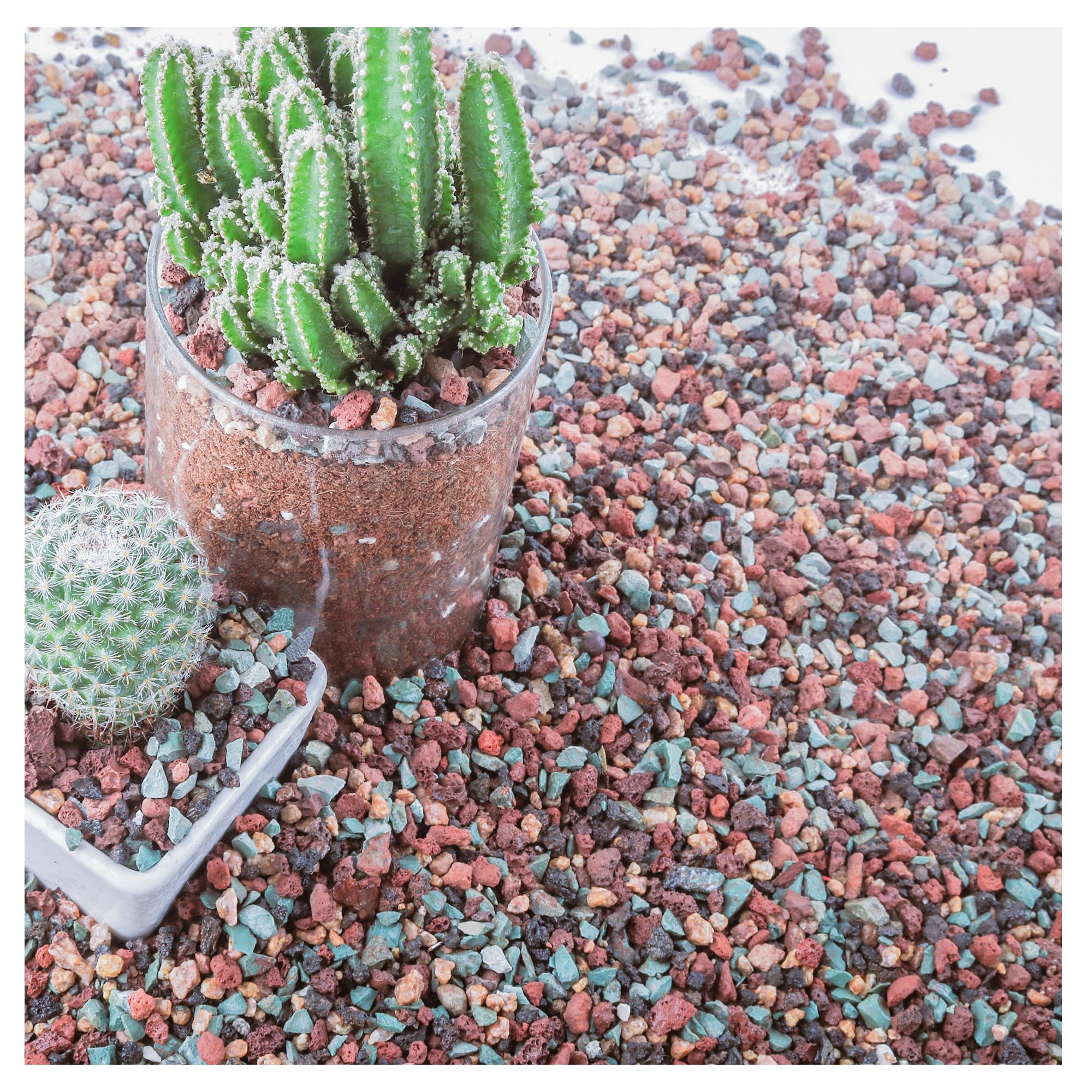
The fine 2-4 mm grit is made for mixing directly into soil for succulents and cacti, unlike the larger CJGQ stones meant for drainage layers.
This bag is engineered specifically for drought-tolerant plants that hate wet feet. The 2-4 mm (about 1/10 to 1/6 inch) particle size is smaller than the CJGQ black lava rocks above, making it a better match for mixing directly into succulent and cactus potting soil rather than just sitting at the bottom of a pot. The maker calls it a professional-grade formulation that strikes a balance between well-draining soil and providing necessary nutrition.
At 15 lbs it sits right between the 11 lbs and 18 lbs lava rock options, offering a middle weight that gives you enough material for several pots without having to store a massive bag. Buyers also report it works for neutralizing soil pH, which is a bonus for fussy plants that need specific acidity levels. The mix of colors also makes it a good fit for fairy gardens and terrariums where looks matter, unlike the uniform black CJGQ lava rock.
The main thing to note is that the 2-4 mm size is small enough that it will not create large air pockets on its own the way the 1/2-inch CJGQ lava rocks do. It works best blended into soil rather than used alone as a bottom drainage layer.
What stands out
- Small 2-4 mm grit mixes evenly into potting soil without creating giant air gaps
- Helps neutralize soil pH, which matters for acid-sensitive plants
- Colorful mix adds visual appeal to terrariums and top dressing
What to consider
- Too fine to work as a standalone drainage layer at the bottom of large pots
Reach for this if: You are building custom potting mixes for succulents, cacti, or bonsai and need a gritty amendment that blends in evenly.
Look elsewhere if: You need coarse 1/2-inch stones for a thick drainage base in a deep planter — the CJGQ black lava rocks or a pea gravel would work better.
3. Granite Pea Gravel 40 Lbs. Crushed Decorative Granite
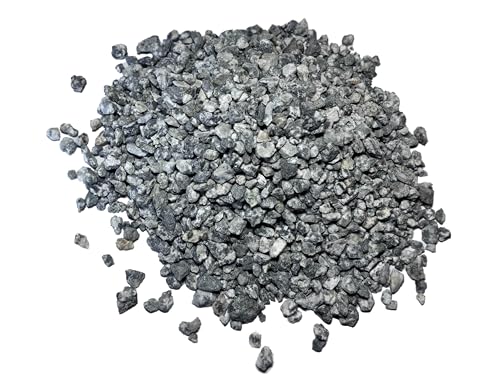
Its 1/8-inch crushed granite particles pack tighter than the looser 1/4-to-3/8 inch grey pea gravel, so it creates a denser, more stable surface for paths.
This is crushed granite, not lava rock, and the difference matters for drainage. Granite is a dense, non-porous material, so water does not soak into the stones at all — it flows through the gaps between them. The average stone diameter is about 1/8 inch (roughly 3 mm), which is smaller than the 1/4-to-3/8 inch grey pea gravel, meaning the pieces pack a bit tighter. Owners mention the color is a very light gray with white and blue tones, and one reviewer noted it was lighter than pictured, so it did not match their existing darker gray gravel.
The 40-pound bag gives you serious coverage for outdoor projects like dry river beds, pond edges, and pathways. One buyer mentioned, “Used for a cactus rock garden in the center of the driveway,” and loved how the small size and light color made the cactus stand out. Compared to the 40 lbs grey pea gravel, this granite option has a much smaller average diameter (1/8 inch vs 1/4 to 3/8 inch), so it creates a denser, more stable surface that is less likely to shift underfoot on a pathway.
It is better for decorative landscaping and weed suppression than for building a fast-draining base layer.
What you get
- Large 40-pound bag gives substantial coverage for landscape beds or pathways
- Dense crushed granite does not absorb water, so all water moves through gaps
- Attractive light gray with white and blue mineral tones for visual appeal
One real catch
- 1/8-inch particles can compact over time and slow drainage compared to larger pea gravel
Best for: Decorative landscaping like dry creek beds, cactus gardens, and pathway borders where you want a dense, stable, light-colored surface.
Not ideal for: The bottom of a large planter where you need fast, unobstructed water flow — the 1/2-inch lava rock or larger gravel is better for that.
4. 40 LBS Grey Pea Gravel – Landscape Rocks
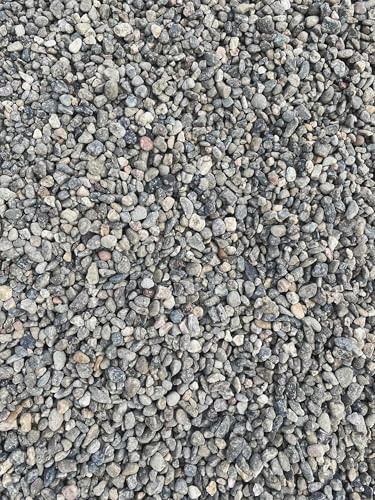
The stones between 1/4 and 3/8 inch (about 6 to 10 mm) leave bigger gaps than the 1/8-inch crushed granite, so water moves through faster and the layer stays open.
This is what most people picture when they think of drainage gravel. The 1/4 to 3/8 inch stones are the balance for letting water flow freely through a landscape bed or behind a retaining wall. Unlike the 1/8-inch crushed granite above, these larger stones leave bigger gaps between each other, so water moves through quickly and the layer stays open rather than compacting into a solid mass.
The 40-pound bag matches the Granite Pea Gravel in weight, but the stone size is noticeably bigger — 1/4 to 3/8 inch versus 1/8 inch. That makes this bag the better choice for actual drainage projects like French drains, gravel trenches, or a thick base layer under a patio. The maker states it works for flower beds, trees, shrubs, pathways, and driveways. It is a straightforward, no-frills landscaping rock.
The downside is purely aesthetic. It is plain grey gravel without the interesting mineral tones of the crushed granite. If looks are a priority in a visible part of your yard, the granite or a colored lava rock may be more appealing, but for pure function this is tough to top.
The clear strength
- Larger 1/4-3/8 inch stones create open gaps that drain faster than smaller gravel
- Heavy 40-pound bag covers significant ground for drainage beds and pathways
- Versatile enough for driveways, walkways, flower beds, and drainage trenches
The trade-off
- Plain grey color lacks the visual appeal of granite or mixed lava rock
Grab this for: Functional drainage projects where water flow speed matters more than surface appearance — French drains, gravel pits, and pathway bases.
skip it if: Your project is a visible decorative bed or rock garden where color and texture are part of the design.
5. CJGQ 18lb Aquarium Gravel for Plants

Smooth river pebbles that improve drainage while keeping the look clean and polished, but they roll more than angular stone.
This bag is different from the lava rock options because it uses natural river stones without sharp edges. The smooth, round pebbles are safer for fish tanks and less likely to scratch surfaces if used as a decorative top dressing. The maker says this gravel resists fading, so it keeps its color longer in direct sun compared to dyed stones. At 18 lbs it matches the weight of the CJGQ black lava rocks but uses a denser, non-porous material.
For drainage, the smooth shape means the pebbles nestle together but leave small gaps for water to pass through. Unlike crushed materials, they do not lock together tightly, so water flow stays consistent. The intended uses are very broad — it works in plant pots, flower beds, fish tanks, terrariums, vase fillers, and even as ground cover. The manufacturer rates it as commercial grade, which suggests decent durability for repeated use.
The catch is that smooth round pebbles can shift and roll more easily than angular crushed stone, so they are not ideal for a path or walkway where you want a stable surface. They work best in contained areas like a planter or a decorative bed with a border.
What makes it different
- Smooth, rounded edges make it safe for aquarium use and gentle on hands
- Resists fading so the color stays consistent in outdoor sun
- Versatile for indoor and outdoor use including planters, fish tanks, and terrariums
Where it falls short
- Round pebbles shift and roll easily, so they are unstable underfoot on pathways
Choose this if: You need a decorative, multi-purpose gravel that works in fish tanks and on top of houseplant soil without sharp edges.
Not the best choice if: You need a stable walking surface for a pathway — angular crushed gravel or pea gravel holds in place better.
6. Planterhoma 11 Pounds Mix Horticultural Lava Rocks

This 11-pound bag is a third the weight of the heavy 40-pound pea gravel options, making it the easiest to carry for a few houseplants.
If you only have a few pots or a small fairy garden, carrying home an 11-pound bag is much easier than wrestling a 40-pound sack of pea gravel. These Planterhoma lava rocks measure just 2-3 mm in diameter — about the size of coarse sand or fine grit — making them the smallest stones in this lineup. They are porous and natural, which helps with drainage and aeration when mixed into potting soil, and unlike organic mulch, lava rock does not break down over time.
The tiny particle size means they are best used as a soil amendment mixed directly into your potting mix rather than as a drainage layer at the bottom of a pot. At 2-3 mm they are too small to create the air gaps that larger 1/2-inch stones provide. Compared to the 2-4 mm Avalution lava rocks, these are slightly finer and come in a lighter, more affordable bag. The manufacturer describes them as ready to use right out of the bag but recommends washing them first to remove dust.
The limitation is coverage. At 11 lbs you get about a third of the weight of the 40-pound pea gravel options, so for any landscaping-scale project you would need multiple bags. It is a product designed for indoor plant care and small-scale DIY, not for building a garden path.
The practical advantage
- Light 11-pound bag is easy to carry and store compared to 40-pound options
- Porous lava rock helps regulate soil moisture and won’t degrade like organic mulch
- Versatile for small DIY projects including terrariums, vase fillers, and top dressing
The real limitation
- 2-3 mm particles are too fine to create a fast-draining standalone layer in a large pot
Reach for this if: You have a few houseplants or succulents and need a small, affordable bag of drainage grit to mix into their soil.
Look elsewhere if: You are working on a full landscaping project — the 40-pound bags of pea gravel or crushed granite will serve you better.
Understanding the Specs
Particle Size (Measured in Millimeters or Inches)
This is the single most important number for drainage. Smaller particles (2-4 mm) are good for mixing into potting soil to add air pockets and prevent compaction. Larger particles (1/4 to 3/8 inch or about 6-10 mm) create wide gaps between stones, which lets water move through quickly. A size like 1/2 inch (about 12 mm) is a middle ground that works as a drainage layer on its own. If the stones are too fine (under 1/8 inch), they can pack together and trap water rather than draining it.
Weight per Bag (Measured in Pounds)
Bag weight tells you how much material you are getting but does not directly measure drainage speed. A 40-pound bag of dense crushed granite covers more ground but is heavy to carry. An 11-pound bag of porous lava rock weighs less for the same volume because the rock itself has air pockets inside it. For a large project, you generally want a heavier bag. For a few houseplants, a lighter bag is more practical. A 15-18 pound bag is a solid middle ground that gives you enough for several medium pots.
FAQ
Will gravel at the bottom of a pot help drainage?
What size gravel drains fastest?
Is lava rock or pea gravel better for drainage?
How much gravel do I need for a drainage trench?
Can I use aquarium gravel for plant drainage?
What is the difference between 2-4 mm and 1/2 inch lava rock for drainage?
Does crushed granite drain as well as pea gravel?
How many bags of gravel do I need for a 10×10 foot area?
Will gravel help with muddy areas in my yard?
Can I mix different gravel sizes together for better drainage?
Final Thoughts: The Verdict
Across the board, the gravel for drainage winner is the CJGQ 18LB Black Lava Rocks because the 1/2-inch porous stones work well as both a drainage layer and a soil amendment, covering more use cases than any other option. If you need a professional soil mix specifically for succulents and cacti, grab the Avalution 15lb Lava Rock Mix. And for a large landscaping drainage project, the standout is the 40 LBS Grey Pea Gravel for pure water flow.
How We Picked
We do not accept paid placement. Every pick is matched to a real buyer and a real use-case; we do not hands-on test units.
Sources & Methodology
Specifications: manufacturer listings and product documentation. Review insights: verified customer reviews, as of July 2026. Pricing: not shown on this page (it changes often); check the current price via the retailer link.
As an Amazon Associate, Lawn Gear Lab earns from qualifying purchases. This does not affect which products we feature.