
Spring is the one window when your lawn decides if it will be the envy of the block or a patchy, weedy mess for the rest of the year. The problem is that a shelf full of bags and bottles all claim to be the fix — and picking wrong means you feed the weeds instead of the grass, or you apply something too late to stop crabgrass from taking over. This guide cuts through the marketing so you know which granular or liquid formula actually fits your yard, your schedule, and your tolerance for reapplying.
I’m Rikta — the co-founder and writer behind Lawn Gear Lab. This guide is built by comparing the manufacturers’ published specifications and the patterns across verified customer reviews, so you get each pick’s real strengths and trade-offs instead of marketing spin.
Whether you need a fast green-up for a worn lawn or a pre-emergent barrier that stops weeds before they poke through, knowing the difference between a 28-0-0 nitrogen bomb and a 18-0-4 combo feeder will save you both time and frustration with your best grass treatment for spring.
How To Choose The Best Grass Treatment For Spring
Spring treatments fall into two camps: fertilizers that feed your grass and pre-emergents that stop weed seeds from germinating. Some products do both, but you need to know what your lawn actually needs before you buy.
NPK Ratio — The Three Numbers That Tell You Everything
The three numbers on any bag or bottle (for example 16-4-8) stand for Nitrogen-Phosphorus-Potassium. In spring, you want a higher first number because nitrogen drives that green color and leaf growth you want after winter dormancy. A 28-0-0 formula is all nitrogen and zero phosphorus or potassium, which is great for a quick green-up but does nothing for root strength or weed control. A balanced 16-4-8 feeds the whole plant.
Granules vs. Liquid — Speed vs. Convenience
Granular fertilizers (the kind you spread with a walk-behind spreader) release nutrients slowly over weeks, so you apply once and forget it for a month or more. Liquid concentrates mix with water and go on with a hose-end or tank sprayer, giving you faster results because the nutrients hit the soil and leaves immediately. The catch is you usually have to reapply every 14 days with liquids, while a good granular product like the GreenView lasts up to 12 weeks with one application.
Pre-Emergent Herbicides — Stop Weeds Before They Start
A pre-emergent (usually containing the active ingredient prodiamine) creates a chemical barrier in the top layer of soil. When weed seeds try to germinate, they hit that barrier and die before you ever see them. The critical timing is early spring, before soil temperatures reach about 55°F consistently — once crabgrass and other weeds have sprouted, a pre-emergent is useless and you need a post-emergent spray instead. Products like The Andersons Barricade combine pre-emergent with fertilizer so you feed the grass and block weeds in one pass.
Quick Comparison
On smaller screens, swipe sideways to see the full table.
| Model | Category | Best For | Key Spec | Amazon |
|---|---|---|---|---|
| GreenView Fairway Formula | Granular | Slow feed through spring | 10,000 sq. ft coverage | Amazon |
| The Andersons Barricade 18-0-4 | Granular + Pre-Emergent | Weed prevention + feeding | 5,000 sq. ft coverage | Amazon |
| Petramax 28-0-0 Liquid | Liquid Concentrate | Fast deep green color | 128 fl oz concentrate | Amazon |
| Lawnbox Grass Genie 10-0-6 | Organic Granular | Pet-safe organic feeding | 2,500 sq. ft coverage | Amazon |
| Yard Mastery 0-0-7 Prodiamine | Pre-Emergent Granular | Large-area weed prevention | 15,000 sq. ft coverage | Amazon |
| The Andersons Barricade 50 lb | Pre-Emergent Granular | Pro-grade weed barrier | 14,200 sq. ft coverage | Amazon |
| PetraMax 16-4-8 Liquid | Liquid Concentrate | Balanced quick feed | 32 fl oz concentrate | Amazon |
In‑Depth Reviews
1. GreenView Fairway Formula Lawn Fertilizer 33 lb Bag

The GreenView Fairway Formula wins the top spot because one 33-pound bag covers 10,000 square feet — double the coverage of many competing bags in its price tier — and feeds your lawn for up to 12 weeks without you having to reapply. This is the right choice if you have a medium to large yard and want a single spring application that carries your grass through until summer heat hits.
It uses 63% slow-release nitrogen (27-0-5 NPK mix), which means the grass gets a steady dose of food rather than a surge that leads to uneven, floppy growth. Buyers report that it “feeds your lawn for 12 weeks, which will get it good and ready for the summer heat,” and many note their grass greened up in just a couple of days after a rain. The zero-phosphate formula also protects nearby waterways if you have a stream or pond.
The only honest limit is that it contains no weed preventer — this is purely a fertilizer, so you will still need a separate pre-emergent application if crabgrass is a problem in your area. That said, as a standalone spring feed, it is the most efficient and effective option for the money, delivering thick, dark green growth with the least effort of any product here.
Why it’s great
- One 33 lb bag covers 10,000 sq ft — twice the area of many competitors
- 63% slow-release nitrogen feeds consistently for up to 12 weeks
- Quick green-up visible in days after rain or watering
- No surge growth patterns; even, steady grass development
Good to know
- No pre-emergent herbicide included for weed control
- Large bag (33 lb) requires a spreader with adequate hopper capacity
2. The Andersons 18-0-4 Barricade Fertilizer with Pre Emergent Weed Control 18 lbs
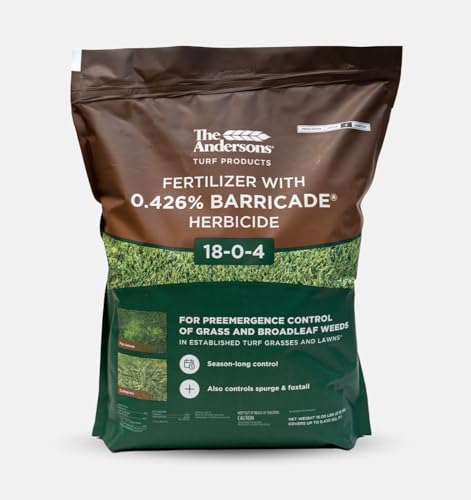
Compared to the top-pick GreenView, which only feeds, the Andersons Barricade adds 0.426% prodiamine to stop 30 types of grass and broadleaf weeds before they germinate, plus an 18-0-4 fertilizer to green up your lawn at the same time. This gives it a clear advantage if crabgrass and broadleaf weeds are your main spring headache.
One buyer who applied it to a zoysia lawn in Texas called it an “annual must do yard treatment” and noted that after three weeks they had “no weeds and mowed 3 times all at 6 inch tall grass.” The patented DG (dispersible granule) technology means the tiny particles dissolve quickly when you water them in, so the prodiamine moves straight into the soil instead of sitting on top of the turf. Just know that this does not kill existing weeds — you need it down before they sprout, typically in early spring when soil temps hit 55°F.
Choose the Andersons over the GreenView if weed prevention is your top priority and you want to combine two steps into one application. The 18-pound bag covers 5,000 square feet, which is half the coverage of the GreenView, but the downside is you get built-in crabgrass control that the GreenView simply does not offer.
Where it shines
- Combines fertilizer (18-0-4) with pre-emergent weed control in one application
- 0.426% prodiamine prevents 30 types of weeds including crabgrass and poa annua
- DG Technology granules dissolve rapidly upon watering for faster soil penetration
- Trusted professional-grade formula made in the USA
Worth noting
- Covers only 5,000 sq ft per bag — less than half the area of the GreenView
- Will not kill weeds that have already sprouted; timing is critical
3. Petramax Liquid Nitrogen Fertilizer 28-0-0 NPK 1 Gallon

The scenario that calls for the Petramax 28-0-0 is simple: your lawn came out of winter looking yellow, patchy, and tired, and you want it deep green in days, not weeks. This liquid concentrate delivers a massive 28-0-0 nitrogen punch — 70% of it is quick-release, so the grass absorbs it immediately and the color change is visible within a week. The remaining 30% is slow-release, giving you a small tail of continued feeding between applications.
One gallon of concentrate treats up to 25,600 square feet at maintenance rate (5 ounces per gallon of water), which is four times the volume of the smaller PetraMax 16-4-8 bottle at 32 fluid ounces. Mixing is straightforward: 5 oz per gallon of water for maintenance, or 10 oz per gallon if you are correcting a nitrogen deficiency. Buyers who use it consistently say “this stuff works great and my lawn has never been so green” and many call themselves repeat customers. It works on warm-season and cool-season grasses alike.
The standout spec callout here is the ratio of quick-to-slow release (70/30 split) — most liquid nitrogen products are all quick-release, which causes a rapid flush of growth that fades fast. The Petramax gives you the instant green with a bit of staying power, making it the fastest spring recovery option in this lineup.
What stands out
- Ultra-high 28-0-0 nitrogen formula delivers visible green-up in days
- 1 gallon concentrate treats up to 25,600 sq ft at maintenance rate
- 70% quick-release for immediate results + 30% slow-release for extended feeding
- Works on all grass types including warm and cool season
The trade-offs
- Requires reapplication every 14 days for continuous feeding
- Zero phosphorus and potassium — no root or stress tolerance support
4. Lawnbox Grass Genie 10-0-6 100% Organic Spring Grass Fertilizer 16 lb Bag
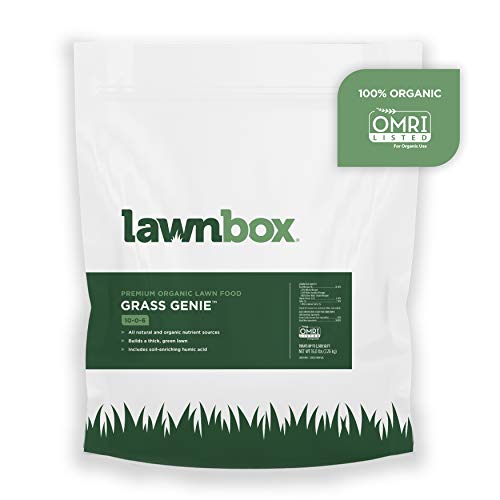
The single number that matters most in this category is not the NPK ratio — it is the fact that the Lawnbox Grass Genie is 100% organic with no animal byproducts, manures, biosolids, or synthetic chemicals. The 10-0-6 formula delivers both quick and slow-release nitrogen for a green-up that lasts about 6 weeks, and it includes humic acid to improve soil health rather than just feeding the grass blades.
The trade-off is coverage: a 16-pound bag covers only 2,500 square feet, which is a quarter of the GreenView’s coverage for a similar price point. For a half-acre lawn you would need multiple bags, making the per-square-foot cost notably higher than granular synthetic options. One buyer summed up the real appeal perfectly: “Quick green up for the lawn and super safe for my dog with an autoimmune disease.” Other reviewers consistently mention the peace of mind that comes with knowing the yard is safe immediately after application.
This is a price-to-performance trade you accept willingly if organic ingredients are non-negotiable for you. It is not the most economical way to cover a large yard, but for a small to medium lawn where safety comes first, the Grass Genie is the clear frontrunner.
The upsides
- 100% organic with no animal waste, biosolids, or synthetic chemicals
- Safe for kids and pets to use the yard immediately after application
- Contains humic acid for improved soil health
- Quick and slow-release nitrogen for up to 6 weeks of feeding
Keep in mind
- Only covers 2,500 sq ft per bag — expensive per square foot for large lawns
- Not available for sale in CA or OR
5. Yard Mastery 0-0-7 Granular Prodiamine Pre-Emergent Herbicide Fertilizer 45 lb Bag
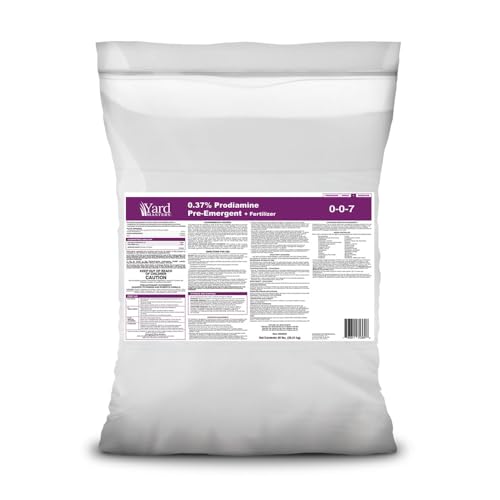
What you actually get at this lower price is a single 45-pound bag that blankets 15,000 square feet when applied at the standard rate of 3 pounds per 1,000 square feet — the biggest coverage champion in this lineup. If you have a large property and your main spring concern is stopping crabgrass and poa annua (annual bluegrass) before they start, this is the most efficient product for the job by raw coverage area.
It contains 0.37% prodiamine as the active ingredient, targeting the same weeds as the Andersons Barricade but in a pure pre-emergent formulation with no fertilizer mixed in. The 0-0-7 NPK means it adds a small amount of potassium (7) for general plant health but zero nitrogen and zero phosphorus. That makes it a companion product to use alongside a separate spring fertilizer — you put this down first in early spring, then feed with something like the GreenView a week or two later. One reviewer who has used it for seven years says it is “very effective” but warns to check spreader compatibility because the granules are large and yellow.
Choose the Yard Mastery over the smaller Andersons Barricade if your yard exceeds 5,000 square feet and you prefer to separate your weed prevention from your feeding. The 45-pound bag gives you three times the coverage of the Andersons Barricade 18-pounder for a modest increase in upfront cost, which makes it a better value play for large properties — and the exact budget buyer it is perfect for.
Why we’d pick it
- Massive 15,000 sq ft coverage from a single 45 lb bag
- 0.37% prodiamine stops crabgrass, poa annua, and 30+ weed types
- Pure pre-emergent with no extra fertilizer — flexible for custom feeding plans
- Proven effective by users who have relied on it for 7+ years
A few caveats
- Large yellow granules may not fit all spreaders — check compatibility first
- Dosage instructions not printed on the bag; you may need to contact the manufacturer
6. The Andersons Barricade 50 lb Bag
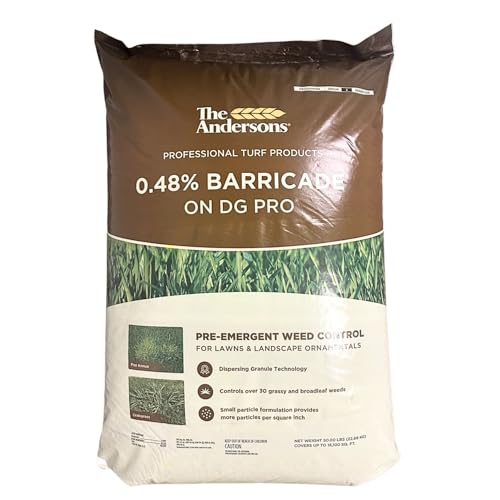
The Andersons Barricade 50 lb Bag is perfect for the homeowner who wants the highest concentration of prodiamine (0.48%) available in a consumer-grade granular pre-emergent and prefers to keep weed control separate from fertilization. It is designed strictly for early spring and fall application and covers 14,200 square feet at the standard rate, placing it just behind the Yard Mastery in total coverage but ahead on active-ingredient density.
The DG Pro formulation (dispersible granule technology) creates more particles per square inch of chemical, which means the prodiamine distributes more evenly across the soil surface and creates a more consistent weed barrier. One reviewer with two years of use said it was “effective for 2 years, better than Preen” and noted they had no weeds except for occasional dandelions. Other users mention it works on Bermuda grass and is easy to apply with a standard spreader. One limitation is that like all pre-emergents, timing is everything — apply it too late and the weeds you wanted to stop will already be up.
The reason to choose the 50-pound Barricade over the combination 18-0-4 version is concentration. If you already have a spring fertilizer you like, this pure pre-emergent gives you the highest prodiamine percentage (0.48% vs. 0.426%) and lets you dial in your weed control separately from your feeding schedule. The one weakness to keep in mind: because this product contains no fertilizer, it will not green up your lawn, so you must pair it with a separate feeding plan to avoid a pale, undernourished yard.
Strong points
- Highest prodiamine concentration (0.48%) among the granular options here
- DG Pro formulation provides more particles per square inch for better coverage
- Covers 14,200 sq ft — ideal for large properties
- Trusted by turf care professionals for early spring and fall applications
Before you buy
- Contains no fertilizer — you need a separate feeding product
- Will not kill existing weeds; must be applied before weed seeds germinate
7. PetraMax Liquid Lawn Fertilizer 16-4-8 Concentrate 32 oz
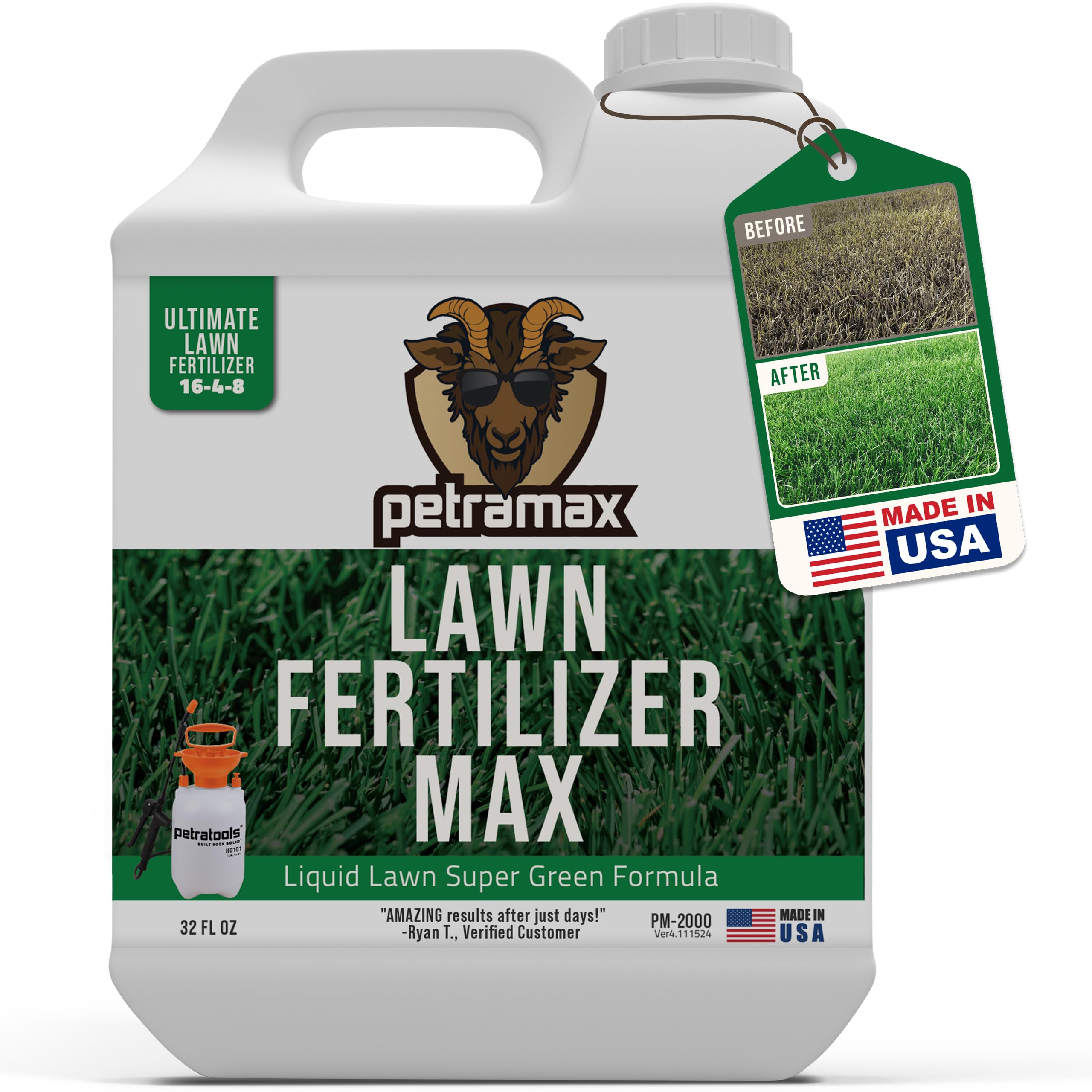
The PetraMax 16-4-8 sits at the entry-level price point in this lineup but offers a genuinely balanced 16-4-8 NPK mix that includes phosphorus for root development and potassium for heat and drought tolerance — nutrients that the pure nitrogen products skip entirely. At 32 fluid ounces, one bottle treats up to 25,600 square feet at maintenance rate, which is the same coverage as the Petramax 28-0-0 gallon jug despite being one-quarter the liquid volume (a 4.0x gap in bottle size).
The 2-in-1 quick and slow-release nitrogen gives you a visible green-up within days while the slow portion keeps feeding between your 14-day application cycles. The added humates and potassium encourage deeper root growth, which helps your lawn survive summer stress better than a nitrogen-only feed would. One reviewer noted “No improvement after use” and received a full refund, so results can vary based on your starting soil condition and whether you follow the mixing instructions carefully. The majority of reviews are positive, though, with users calling it a good value for the balanced nutrition.
Choose the PetraMax 16-4-8 over the cheaper 28-0-0 if your lawn needs more than just nitrogen — if you have thin soil, shallow roots, or a history of summer heat damage, the phosphorus and potassium in this formula address issues that pure nitrogen simply cannot fix. For a balanced liquid feed that supports the whole plant, this is the most affordable path.
What we like
- Balanced 16-4-8 NPK provides nitrogen, phosphorus, and potassium for full plant health
- One 32 oz bottle treats up to 25,600 sq ft at maintenance rate
- Includes humates for deeper root development and potassium for heat tolerance
- Dual quick/slow release nitrogen for immediate green-up with extended feeding
The downsides
- Some users report no visible improvement; results depend on soil condition
- Requires reapplication every 14 days for consistent feeding
Understanding the Specs
NPK Ratio
The three numbers on any fertilizer bag (for example 16-4-8) represent the percentage of Nitrogen, Phosphorus, and Potassium in the mix. In spring, a higher first number (nitrogen) pushes out the green leaf growth you want after winter. Phosphorus supports root development, and potassium helps the grass handle heat and disease stress. A 28-0-0 product delivers massive nitrogen but zero root support, while a balanced 16-4-8 feeds the whole plant.
Slow-Release vs. Quick-Release Nitrogen
Quick-release nitrogen is water-soluble and enters the plant immediately — you see results in days, but it fades fast and can burn the grass if you over-apply. Slow-release nitrogen breaks down gradually over weeks or months, feeding the lawn steadily without a surge. Products like the GreenView contain 63% slow-release nitrogen for a single application that lasts up to 12 weeks, while liquid concentrates like the Petramax are mostly quick-release and require reapplication every 14 days.
Prodiamine and Pre-Emergent Herbicides
Prodiamine is the active ingredient in professional-grade pre-emergent weed killers. It creates a chemical barrier in the top inch of soil that stops weed seeds from germinating. The concentration matters: 0.48% prodiamine (as found in The Andersons Barricade 50 lb bag) delivers a stronger barrier per granule than 0.37% or 0.426% formulations. Pre-emergents must be applied before soil temperatures reach 55°F consistently — after weeds have sprouted, this product is useless and you need a post-emergent spray instead.
Coverage Area
Coverage is listed in square feet per bag or bottle and tells you how much area the product will treat at the recommended application rate. A 10,000 square foot bag like the GreenView is designed for medium to large lawns (roughly a quarter-acre lot), while a 5,000 square foot bag suits smaller yards. Liquid concentrates list coverage at maintenance rate versus deficient rate — you get more area per bottle if you are just maintaining existing grass rather than correcting a severe deficiency.
FAQ
When should I apply spring grass treatment for the best results?
Can I apply a pre-emergent and fertilizer at the same time?
What does the NPK ratio on a spring fertilizer mean?
Is liquid or granular fertilizer better for spring?
Final Thoughts: The Verdict
For most people, the best grass treatment for spring winner is the GreenView Fairway Formula because one 33-pound bag covers 10,000 square feet and feeds your lawn consistently for up to 12 weeks with zero guesswork. If you want built-in weed prevention that stops crabgrass before it starts, grab the The Andersons 18-0-4 Barricade. And for a fast, dramatic green-up that corrects nitrogen deficiency in days, the standout is the Petramax 28-0-0 Liquid Nitrogen.