
Specs are compiled from manufacturer listings and verified buyer reviews and can change over time — please confirm the key details on the product page before buying.
If you have ever watched a freshly sown patch of grass get washed away by the first rain, you already know the pain a grass seed roller solves. You need seed-to-soil contact — a firm press that locks each grain against the dirt so it germinates instead of blowing into the neighbor’s yard. The question is: which roller puts down that pressure without breaking its own frame or your back?
I’m Rikta — the founder and writer behind Lawn Gear Lab. This guide is built by comparing the manufacturers’ published specifications and the patterns across verified customer reviews, so you get each pick’s real strengths and trade-offs instead of marketing spin.
You need a grass seed roller that matches your yard size, whether you own a tractor, and how much water you can carry — across nine models, from a compact 20-inch drum to a 400-pound tow-behind beast, the choice depends on those three factors.
Our Picks at a Glance


How To Choose The Best Grass Seed Roller
A grass seed roller is a simple machine — a drum you fill with water or sand to add weight, then roll across the ground. But three specifications will determine whether it does the job or sits in the shed.
Capacity and actual working weight
The drum’s gallon rating tells you how much water it holds. More water means more downward force, which presses seed into the soil. A 10-gallon roller loaded with water weighs roughly 83 pounds. A 28-gallon roller pushes about 270 pounds. For leveling sod and pressing new seed into a prepared bed, heavier is generally better — but only if your machine (or your own legs) can pull it. Filling with sand instead of water adds even more heft, but sand is harder to drain.
Drum material: poly vs steel
Polyethylene drums cannot rust and resist dents. They are lighter empty and easier to store. Steel drums are stronger and can take rougher terrain, but they can rust if the powder coating chips, and a dented steel drum is a permanent problem. For occasional home use on a maintained lawn, poly is the smarter choice. For rocky ground or construction prep, a steel frame with a poly drum gives you the best of both.
Push, tow, or push/tow combination
A push-only roller is fine for a small garden bed but exhausting on a quarter-acre lawn. A tow-behind rollers hitches to a lawn tractor, ATV, or garden tractor and can cover a lot of ground fast. The most versatile designs offer a removable handle so you can push in tight corners and tow across open stretches. If you own a riding mower with a hitch, a tow model with a 36-inch-wide drum will save you hours.
Quick Comparison
| Model | Best For | Capacity | Drum Width | Weight (empty) | Amazon |
|---|---|---|---|---|---|
| Brinly 270 lb★ Best Overall | Best Overall | 28 gal | 24″ | 37.3 lb | Amazon |
| Agri-Fab 45-0606Top Performer | Premium tractor-grade | 400 lb w/ water | 36″ | under 50 lb | Amazon |
| VEVOR 400 lb TowBest Value | Large properties | 400 lb capacity | — | 43.3 lb | Amazon |
| VINGLI 20 Inch | Budget-friendly DIY | 10.5 gal | 20″ | 21.1 lb | Amazon |
| ARNOT 13×24 | Solid mid-range value | 13 gal | 24″ | 21 lb | Amazon |
| IRONMAX 24 Inch | Simple performance | 13 gal | 24″ | — | Amazon |
| VEVOR 13 Gal | Ease of use | 13 gal | — | 22.7 lb | Amazon |
| Goplus 17 Gal | Larger coverage | 17 gal | 36″ | 30 lb | Amazon |
| Goplus Tow-Behind | Tractor users | 17 gal | 36″ | 31 lb | Amazon |
In‑Depth Reviews
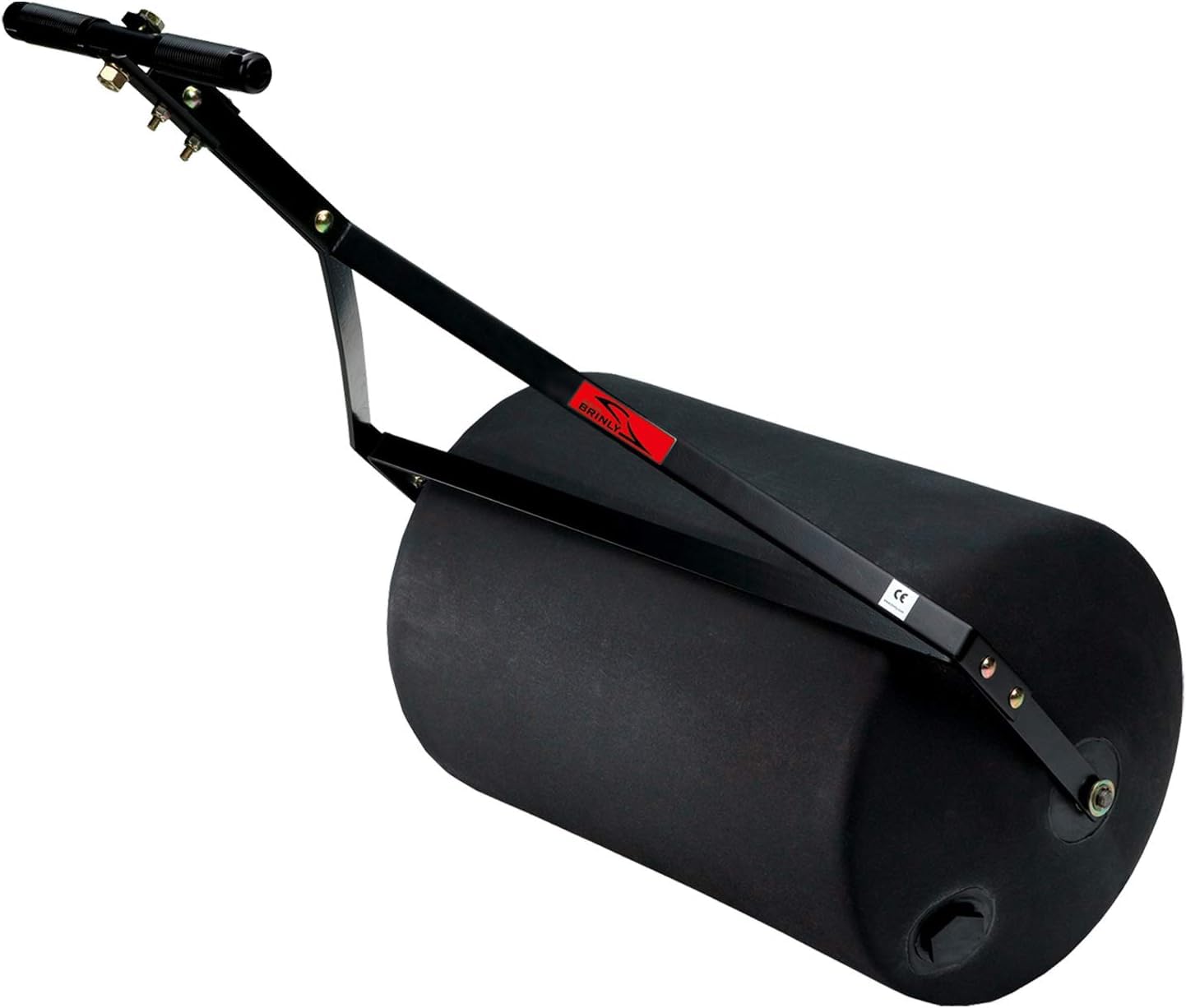
1. Brinly 270 lb. Combination Push/Tow Poly Lawn Roller
Our pick — over 4★ from 450+ verified ratings; the strongest balance of quality and price.
The crowd-favorite American-made roller that does both push and tow without rust worries.
This roller solves the two biggest frustrations in the category. A poly drum (a plastic drum that resists rust and dents) means it will never rust or dent — a real advantage over steel drums that show pitting after one season. The new Easy-Turn Tethered Plug keeps the drain cap attached to the drum, so you never hunt for it in the grass after draining. The 28-gallon capacity turns into 270 pounds of water, heavy enough to press seed into bare soil and flatten frost heaves (bumps from frozen ground), yet the empty roller weighs 37.3 pounds and can be pushed by hand for tight areas around flower beds.
The instructions draw genuine praise for clarity — parts come in separate, labeled bags. The handle detaches for towing behind a tractor, and the steel frame uses nylon locknuts that hold tight. A few owners note that the rubber handle grips could be more snug, and the handle joint can pinch bare skin on sharp turns if you are not wearing gloves. But by almost any measure, this is the most complete package for a homeowner who wants versatility without sacrificing build quality.
Compared to the VINGLI below — which holds 10.5 gallons and weighs 21.1 pounds empty — the Brinly holds 28 gallons (a 2.7x gap) and spans 48.33 inches in depth vs the VINGLI’s 12.6 inches, giving it a much longer footprint for stable rolling. The trade-off is size: you need storage space.
Worth the premium for: the rust-proof poly drum, the 2-year warranty, and the push/tow flexibility that covers both a small garden and a tractor-pulled lawn.
One honest caveat: the handle pinch point is real — wear gloves on tight turns. Also, leaving it full on a hot driveway can create a flat spot on the drum; tip it up or drain it.
Reach for this if: you want one roller that works as a hand-push for seed beds and a tow-behind for the main lawn — no second purchase needed.
Think twice if: your yard is under 2,000 square feet; the 28-gallon drum is overkill for a small patch, and a lighter 13-gallon model will be easier to maneuver.
2. Agri-Fab 45-0606 18″ x 36″ Tow Behind Poly Lawn Roller
A 3-year-warranty, American-made poly roller built for lawn tractors and serious acreage.
Agri-Fab is the name that comes up when homeowners graduate from push rollers. This model uses an 18-inch diameter poly drum that extends 36 inches wide, so one pass covers three feet of ground. Filled with water, it delivers 400 pounds of weight — enough to tamp down new sod and press seed into a prepared bed. The empty weight is under 50 pounds, which means one person can lift it onto a trailer or tip it to drain through the side plug.
Assembly takes about 15 minutes with no special tools, and the drum fills from a standard garden hose. Owners who pull it behind a riding mower report that even a half-fill in spring gives the lawn a professional athletic-field look. The poly drum shrugs off moisture, and the 3-year limited warranty on manufacturing defects gives confidence that budget rollers lack. Build quality gets high marks across the board — the frame connects solidly to a tractor hitch, and the 36-inch width balances coverage with maneuverability around trees.
The one shortcoming is the lack of a push handle. This is a tow-only roller, so if you do not own a lawn tractor, ATV, or garden tractor, it is not for you.
Best suited for: anyone with a riding mower and a half-acre or larger lawn. The 36-inch width and 400-pound water weight make short work of seed beds and uneven ground.
Honest trade-off: no push option and no printed instructions included — the assembly is straightforward but a diagram would help first-timers.
Who it is for: the tractor owner who wants a durable, American-made roller with a warranty that backs it up.
Who should skip: anyone relying on arm power alone — you need a hitch and a tow vehicle.
3. VEVOR Tow Behind Lawn Roller, 400 lbs Capacity
A 400-pound-capacity tow roller with two water inlets for faster filling.
VEVOR takes the big-roller concept and adds a thoughtful twist: two separate water inlets, so you can fill one or both sides depending on how much weight you need. The LLDPE drum (linear low-density polyethylene) resists impacts and weather, and the heavy-duty steel frame supports up to 400 pounds of sand or water. The extended hook—5 cm long—hitches to common ATV and tractor models without adapters.
Assembly is straightforward, with most owners reporting no leaks and a solid ride. It tackles mole runs, levels soil after tilling, and presses seed into the ground across large lawns and farm fields. When empty, the 43.3-pound frame leans against a wall or hangs in a shed. The sealed plugs stay attached during work, so you do not lose them in tall grass.
A few owners note that draining every last bit of water can be tedious — the plug sits on the side, and tilting the drum helps. The plastic drum feels thick but may not survive hitting a sharp rock at speed; keep it on turf for the longest life. Still, for the price, this is a legitimate 400-pound-class roller that competes with models costing significantly more.
What wins people over
- Two fill inlets for quicker setup
- Sealed, tethered plugs that do not get lost
- 400-pound max weight flattens mole runs and seed beds
The honest trade-offs
- Draining fully takes effort — a manual pump helps
- Tow-only design; no push handle for tight corners
- Plastic drum needs care around sharp obstacles
Go for it if: you need a heavy tow roller on a mid-range budget and have an ATV or tractor.
Consider something else if: you plan to roll over rocky or debris-filled ground — a steel drum may hold up better.
4. Goplus 17 Gal Push/Pull/Tow Behind Steel Lawn Roller

A 36-inch-wide steel drum that covers ground fast without emptying your wallet.
Width is the standout spec here. At 36 inches, this roller is 50% wider than a typical 24-inch model, meaning fewer passes across the same lawn. The 17-gallon capacity holds roughly 142 pounds of water, which is enough for seeding and light leveling on established turf. The powder-coated steel frame resists rust, though a few buyers report surface rust appearing after a couple of days of use — a quick dry-store routine helps.
Assembly is straightforward, and the U-shaped handle makes pushing and pulling comfortable. The roller also works as a tow-behind if you have a hitch. The consensus is that it is “better than renting” — you can get two uses out of it for the cost of a single rental fee. On soft ground after rain, it presses seed into the soil effectively. Going uphill when full is a workout, but you can drain some water to lighten the load.
The rubber plug can develop a tiny drip leak, and the side bolts need a mallet to seat properly during assembly. But for a wide-coverage roller at this price point, the Goplus earns its keep.
Why owners like it
- Wide 36-inch drum covers ground quickly
- U-shaped handle is comfortable for push and pull
- Adjustable weight — drain water to go uphill
What to watch for
- Some units show early surface rust
- Rubber fill plug can leak slightly
- Assembly requires hammering side bolts
Reach for it if: you have a medium-to-large lawn and want to cut rolling time with a 36-inch pass.
Pass if: you need a rust-proof tool for wet climates — the steel drum requires careful drying.
5. Goplus Push/Tow-Behind Lawn Roller, 17 Gallon with Detachable Handle

A tow-friendly version of the 17-gallon Goplus with a handle that detaches for tractor use.
This is the sibling of the previous Goplus model, tune for users who plan to tow behind a lawn tractor or ATV. The 17-gallon steel drum holds water or sand, and the handle detaches so you can pin the roller directly to a trailer hitch with a latch. The powder-coated finish fights rust, and the scraper bar clears debris from the drum as it rolls.
Owners mention that it levels problem areas in a few passes and compacts seed beds effectively. A 12-year-old user hooked it to a lawnmower and rolled the whole yard without issue. Assembly is simple, and the 36-inch width is a productivity booster for those with a half-acre or more. The rounded edges prevent lawn damage during turns.
The recurring complaint is the snap-in plug — it does not always seal perfectly and can leak. A screw-in plug would be more reliable. The drum is also steel, so storing it dry is essential to prevent rust spots.
Designed for: the gardener who wants to switch between push mode for seeding and tow mode for the main lawn — the detachable handle makes that smooth.
Fair warning: the fill plug is a snap-fit, not a threaded seal. If water weeping bothers you, keep a spare rubber plug on hand.
Best for: owners with a riding mower who still need hand-push capability for tight beds.
Skip if: you are sensitive to minor plug leaks and do not want to rig a fix.
6. VINGLI 20 Inch Lawn Roller Water Filled Pull Behind

An entry-level steel drum that gets small DIY jobs done for the lowest cost.
At 10.5 gallons and 21.1 pounds empty, this VINGLI roller is the lightest and most affordable pick. It is aimed squarely at the one-time user who needs to level sand for a small paver project, press in a patch of seed, or roll down mulch after rain. The steel drum is durable enough for occasional use, and the U-shaped handle makes pushing and pulling manageable.
Assembly takes minutes — attach the handle, hook it to the drum, and fill. The 20-inch width (compared to the Brinly’s 24-inch and the ARNOT’s 24-inch) is noticeably narrower, so it works best for smaller tasks. Owners praise its value for money, noting that it is cheaper than renting a roller for a weekend. The rounded drum ends prevent turf damage on turns.
The honest downsides: a few customers note a tiny hole in the drum that leaks water over time, and the build quality is mixed — some call it flimsy for heavy use. The actual capacity has also been disputed; one owner expected 16 gallons and found it closer to 6. For serious lawn-leveling or repeated use, the step-up models are a better long-term investment.
What it does well
- Very affordable — costs less than a one-day rental
- Light and easy to store when empty
- Quick assembly, no special tools
Where it falls short
- Occasional leak at the fill hole or drum seam
- Not heavy enough for major leveling or large lawns
- Mixed build quality — best for light, infrequent use
Choose this for: a single weekend project like pressing seed into a small bare patch or leveling sand for a kiddie pool.
Look elsewhere if: you plan to roll your entire lawn every spring — the steel drum and snap plug may not hold up.
7. ARNOT Lawn Roller, Heavy-Duty Push/Tow, 13×24-Inch, Green

A 24-inch-wide steel roller that owners call a real handy tool for yard work.
The ARNOT strikes a sensible middle ground: 13 gallons of water gives about 108 pounds of working weight, and the 24-inch width is wide enough to cover ground efficiently without being cumbersome to push. The steel drum has a plastic coating to resist rust, and the U-shaped handle is comfortable for both push and pull modes. Owners describe it as “not too big or wide” and easy to store.
Assembly requires your own tools, but the process is straightforward. Filling via the side plug is simple, and the drum accepts sand or water. People use it for rolling sod, pressing seed, and even flattening sand for paver bases. The price is noticeably lower than the premium poly models, yet the ratings are solid — the consensus is that “for the price you pay, it is well worth it.”
The plug can be the weak point. One owner broke the plug on removal and replaced it with a flexible alternative. Another received a drum with minor dents from packaging — these usually came out once water and heat expanded the metal. If you need a simple, no-fuss roller for a typical suburban lawn, this is a strong candidate.
Where it shines: the 24-inch width works for both push-behind seeding and tow-behind lawn care without feeling oversized.
Watch out for: the included plug is plastic and can snap — handle it gently or have a replacement ready.
Get this if: you want a solid, no-nonsense roller for a medium lawn at a price that leaves room in the budget for grass seed.
Think twice if: you need a drum that can sit full of water for days — the plastic plug may leak under sustained pressure.
8. IRONMAX 24 Inch 13 Gallons Push/Pull Steel Lawn Roller

A straightforward steel roller that buyers love for the price and leg workout.
The IRONMAX is built around a simple idea: a steel drum, a U-shaped handle, and the option to fill with water or sand. The 13-gallon capacity (48 liters) gives you roughly 108 pounds of water weight, which handles seed pressing and light leveling. The high-strength steel frame is coated with anti-rust paint for outdoor storage. The rounded ends prevent lawn damage, and a metal scraper bar clears debris from the drum as you roll.
Owners appreciate how easy it is to assemble — one review notes he put 80 pounds of sand inside and it worked great. Another describes it as his favorite purchase of the year, saying it saved money versus professional lawn service. The ergonomic handle makes push-and-pull comfortable, and the drum drain plug seals effectively when closed.
Minor complaints include the cotter pins (bobby pins) wearing out quickly, and some units may need a simple hardware upgrade. The steel drum can rust if stored wet, so drying it after each use is wise. For the price, this is a functional tool that meets the basic need: pressing seed into soil without fuss.
Why it works: it does exactly what a grass seed roller should — no gimmicks, just a heavy drum on a solid frame.
The catch: the cotter pins are thin and may need replacing; keep a few spare clips in the shed.
Pick this if: you need a budget-friendly roller for a small-to-medium lawn and you are comfortable with a basic steel tool.
skip it if: you want rust-proof construction or a premium warranty — the poly models offer better longevity.
9. VEVOR Lawn Roller 13 Gallon, Heavy Duty Steel, U-Shaped Handle

A 13-gallon steel roller with good functionality and a smart tethered plug.
VEVOR’s smaller entry holds 13 gallons (46 liters) of water or sand. The heavy-duty steel frame supports the drum, and the U-shaped handle lets you push or pull across the yard. The tethered plug stays attached, so it will not vanish in the grass. A metal scraper rod clears mud and debris from the drum surface as it rolls, keeping the ride smooth.
Functionality is the most-praised aspect. Reviewers point out no leaks, easy assembly, and good results pressing new seed into the soil. The roller is light enough to transport empty but heavy enough at capacity to flatten seed beds and smooth out small bumps. One owner noted the grass “came up better than ever with the help of the roller.” It works well for rolling in lighter dirt and peat moss on top of new seed.
The honest limitation: it is not heavy enough for major leveling projects like filling deep ruts or flattening a bocce court. Draining every last bit of water is a chore — a manual pump helps get the last few cups out. And some owners find the drum smaller than expected, so check the 13-gallon spec against your expectations.
Where it delivers: for the specific job of rolling grass seed into prepared soil, this roller performs reliably without leaking.
What it is not: a heavy-duty leveling tool. If you need to move soil or flatten serious unevenness, look at the 400-pound-capacity models instead.
Buy it for: seeding, light top-dressing, and smoothing a small-to-medium lawn — it does those jobs well.
Avoid if: draining water is a deal-breaker for you — the side plug does not empty every drop without tilting or pumping.
Understanding the Specs
Water capacity in gallons
The gallon rating tells you how much weight you can add. A gallon of water weighs about 8.3 pounds. Multiply the gallon number by 8.3 to get your working weight. A 13-gallon roller presses down with roughly 108 pounds; a 28-gallon roller pushes around 230 pounds. Sand is heavier — roughly 13 pounds per gallon — so switching from water to sand increases the load without needing a larger drum. Choose a capacity that matches your towing vehicle’s pulling strength or your own pushing stamina. Too much weight on a small tractor can damage the turf or strain the hitch.
Drum width
The width of the drum determines how many passes you need to cover your lawn. A 20-inch drum is maneuverable and works well for garden beds and narrow strips. A 24-inch drum is the standard balance — wide enough for efficient coverage, narrow enough to push by hand. A 36-inch drum cuts your rolling time nearly in half but is typically tow-only. If you own a zero-turn mower or a garden tractor with a hitch, the wider drum is a major time saver. For hand-pushing, stick with 24 inches or less to keep the effort manageable when the drum is full.
Drum material
Polyethylene drums (a type of plastic) are the low-maintenance choice. They do not rust, resist dents, and are lighter when empty. They cost more but last for years with minimal care. Steel drums are cheaper and feel sturdy, but the powder-coated finish can chip, and any scratch exposes the metal to moisture. Rust is the primary failure mode for steel rollers in humid climates. If you plan to store the roller in a damp garage or leave it outdoors, a poly drum is worth the premium. For dry-climate users on a budget, a steel drum with diligent drying after use can still serve well.
Push vs tow vs combination
Push rollers are controlled by a U-shaped handle you walk behind — good for small lawns, garden beds, and areas a tractor cannot reach. Tow-behind rollers attach to a lawn tractor, ATV, or UTV and cover ground fast. Combination rollers have a detachable handle so you can push in tight spaces and tow across open areas. If you own a riding mower, get a tow or combination model. If you only have a walk-behind mower and a small yard, a push roller is sufficient. The combination design adds a few pounds but eliminates the need for two separate tools.
FAQ
Should I fill a grass seed roller with water or sand?
How many passes do I need with a grass seed roller?
Can I use a grass seed roller on wet grass or mud?
How do I store a grass seed roller to prevent rust or damage?
What size grass seed roller do I need for a quarter-acre lawn?
Will a grass seed roller damage new grass or seedlings?
Do I need a special hitch to tow a lawn roller?
How much does it cost to fill a grass seed roller with water?
Can I leave water in the drum between uses?
What is the difference between a push roller and a tow-behind roller?
Final Thoughts: The Verdict
For most buyers, the grass seed roller winner is the Brinly 270 lb. Combination Push/Tow Poly Lawn Roller because its rust-proof poly drum, 28-gallon capacity, and push/tow versatility handle everything from a backyard seed patch to a tractor-pulled spring leveling without compromise. If you want a wide 36-inch drum that covers ground fast behind a lawn tractor, grab the Agri-Fab 45-0606 — an American-made poly roller with a 3-year warranty and 400 pounds of water weight. And for the budget-conscious DIYer who only needs a roller for a single project or a small patch, the VINGLI 20 Inch provides the lowest-cost entry into the category.
How We Picked
We do not accept paid placement. Every pick is matched to a real buyer and a real use-case; we do not hands-on test units.
Sources & Methodology
Specifications: manufacturer listings and product documentation. Review insights: verified customer reviews, as of July 2026. Pricing: not shown on this page (it changes often); check the current price via the retailer link.
As an Amazon Associate, Lawn Gear Lab earns from qualifying purchases. This does not affect which products we feature.