
Specs are compiled from manufacturer listings and verified buyer reviews and can change over time — please confirm the key details on the product page before buying.
You want the grass out of your flower bed without killing the petunias. Grab a non-selective spray and you scorch everything; grab the wrong selective formula and you waste money on something that does not work. A handful of selective grass killers do exactly what they say on the bottle, and this guide puts them head-to-head so you pick the right one on the first try.
I’m Rikta — the founder and writer behind Lawn Gear Lab. This guide is built by comparing the manufacturers’ published specifications and the patterns across verified customer reviews, so you get each pick’s real strengths and trade-offs instead of marketing spin.
You are fighting Bermuda in your dymondia ground cover or spot-treating tall fescue around your roses. Your grass killer for gardens depends on one thing: does it kill the grass and leave your ornamentals alone — or not?
Our Picks at a Glance

How To Choose The Best Grass Killer For Gardens
The whole point of a garden grass killer is that it targets grassy weeds (Bermuda, crabgrass, tall fescue, foxtail) while leaving your broadleaf ornamentals, shrubs, and ground cover untouched. Get the selection wrong and you either nuke your flowers or watch the grass shrug it off.
Active Ingredient — The Real Decider
Look for fluazifop (found in Ortho Grass B Gon and Fusilade) or sethoxydim. These chemicals interrupt grass-specific enzymes that broadleaf plants do not have. That is the mechanism that lets you spray a patch of Bermuda growing through your daylilies and kill only the grass. Glyphosate-based products are non-selective and kill everything — skip those for flower beds.
Ready-to-Use vs Concentrate
Ready-to-use (RTU) spray bottles, like the 24-ounce Ortho options, are grab-and-go for small patches and spot treatments. They cost more per ounce but require no measuring or mixing. Concentrates like Fusilade II or Agrisel GrassOut Max need a sprayer and careful mixing (typically 0.2 ounces per gallon), but they cover far more ground and let you dial in the dose for tougher grasses like Bermuda.
Patience — These Are Not Instant Killers
Selective grass killers work slowly — expect 7 to 14 days to see browning, often needing a second application 5 days to a week later. That is not a sign of failure; it is the chemical working its way through the root system. Buyers who expect overnight results are the ones who write the frustrated reviews.
Quick Comparison
| Model | Best For | Active Ingredient | Coverage Area (sq ft) | Form / Volume | Amazon |
|---|---|---|---|---|---|
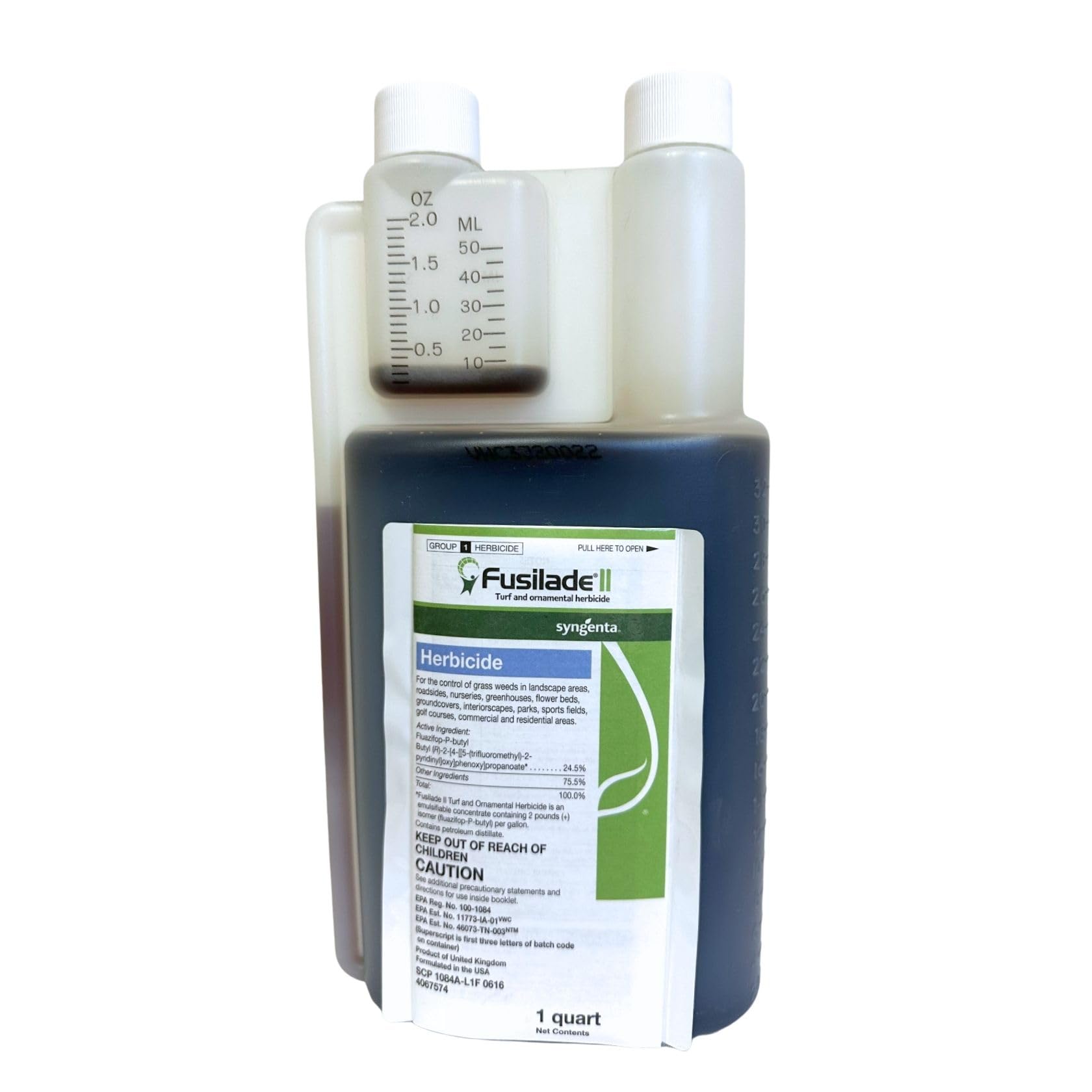
| Fusilade II★ Best Overall | Heavy Bermuda control in Zoysia | Fluazifop | 1,000 sq ft | Concentrate / 1 Quart | Amazon |
| Ortho Grass B Gon (RTU 2-pack)Best Value | Quick spot-treatment in flower beds | Fluazifop | – | RTU Spray / 48 oz total | Amazon |
| Ortho Lands B-Gon (4-pack) | Protecting ground cover and ornamentals | Fluazifop | – | RTU Spray / 96 oz total | Amazon |
| Agrisel GrassOut Max | Large-area, economical treatment | Sethoxydim | 7,272 – 15,294 sq ft | Concentrate / 16 oz | Amazon |
| Ortho Weed & Veg Killers RTU | Budget-friendly small patches | – | – | RTU Spray / 24 oz | Amazon |
In‑Depth Reviews
1. Fusilade Selective Herbicide II
Our pick — over 4★ from 400+ verified ratings; the strongest balance of quality and price.
The heavy hitter that surgically removes Bermuda from Zoysia lawns without collateral damage.
This is the concentrate that came up most in owner reports for serious Bermuda battles. Buyers consistently describe mixing it at a rate of 0.2 oz per gallon of water with a non-ionic surfactant and watching the Bermuda die back within two weeks while the surrounding Zoysia (or fescue, or ornamentals) kept growing. One owner in Texas nailed the balance at 0.15 to 0.18 oz per gallon in hot climates, killing 90% of Bermuda with only minor stunting. The active ingredient is fluazifop, the same chemistry used by the pros, and it covers 1,000 square feet per quart.
The catch is the price tag — this is the most expensive per-ounce option here. It also requires a sprayer and careful mixing; you cannot just grab it and squirt. The crowd favorite is clear: effectiveness is what owners praise most, and the active ingredient gives it an edge over the Ortho products for tougher jobs.
One more honest note: Bermuda requires multiple treatments to truly suppress, not just a single pass. Several experienced owners plan a spring overseed and a follow-up perimeter application. This is not a low-maintenance solution — it is a tool for the committed gardener.
What The Experts Reach For
- Extremely effective on tough Bermuda — kills 90%+ with proper dosing
- Concentrate format means you control the mix rate for different grass types
- Proven safe on Zoysia, fescue, and ornamental plants when used as directed
The Practical Trade-offs
- Requires a sprayer and surfactant — not grab-and-go
- Premium price, though it covers a decent area per quart
- Higher rates (0.4-0.6 oz/gal) can stunt Zoysia — you need to test on a small patch first
Reach for this if: You have a serious Bermuda problem in a Zoysia or fescue lawn and you are willing to mix and test rates for the best outcome.
Look elsewhere if: You want a ready-to-use bottle for a quick spot-spray on a small flower bed — the RTU options below are simpler for that job.
2. Ortho Grass B Gon Garden Grass Killer RTU (2-pack)
The reliable easy-button for flower-bed spot treatments — no mixing, no measuring.
This two-pack of ready-to-use Grass B Gon is the convenience leader. You literally point the spray nozzle at the crabgrass growing through your Irises and pull the trigger. Buyers report it killed grass in flower beds without harming Irises or shrubs — the review pages sum it up: “Killed the grass but did not harm Irises.” The formula becomes rainfast (waterproof) one hour after you apply it, which is a practical perk when you are squeezing in treatment between unpredictable showers.
The honest trade-off: results are not instant. Some buyers wish it worked faster, and a few found it ineffective on particularly stubborn grass. The data notes that effectiveness is more of a mixed bag here than with the Fusilade concentrate. For small problem areas like a patch of grass creeping into a dymondia or Iris bed, this is the easiest starting point. For a full-scale invasion, you would need the concentrate.
The 2-pack gives you 48 ounces total, which is enough for repeated spot-treatments through a season. It is also the best value in the RTU category, beating the single-bottle options on cost per ounce.
Grab-and-Go Perks
- Ready to spray — no mixing, no sprayer required
- Selective formula targets grass, spares Irises and shrubs
- Rainfast in one hour — fits into unpredictable weather windows
Know Before You Buy
- Effectiveness varies — some reviews report it did not work on stubborn grass
- Coverage is limited to spot use; not economical for large areas
- Shipping damage can cause leaks — inspect the package on arrival
Best for: A quick, mess-free spot-treatment in small flower beds or around shrubs where you need to protect ornamentals.
Think twice if: You are dealing with a large infestation or a tough Bermuda stand; the stronger concentrate is a better match.
3. Ortho Lands B-Gon Grass Killer for Landscapes (4-pack)

The patient pick that erases grass from ground cover without harming the plants you paid for.
This 4-pack of 24-ounce bottles uses fluazifop (the same active ingredient as Fusilade) in a ready-to-use format that is glyphosate-free. The standout real-world story here comes from a buyer who researched it before buying and used it to kill grass growing in their dymondia silver carpet “without killing the dymondia itself.” It worked great, and that is the pattern across owners: the grass fades over a week or two while the ornamentals, ground covers, and shrubs stay green. The formula is designed for use around evergreens, shade trees, and non-bearing tree crops and vines.
That said, several owners note it works slowly. One called it a “life saver” but added the caveat that it takes a while for the unwanted grass to die. The clover may survive, which is actually by design — this product targets grassy weeds, not broadleaf weeds like clover — but if you were hoping for a broad-spectrum garden clean-up, this is not it.
Because the 4-pack comes for about the price of two individual bottles, it stretches further for repeated spot applications through a season. It is a sound choice for the gardener who wants a selective, ready-to-use spray that they can reach for repeatedly without worrying about harming their landscape investment.
A trusted repeat-buy: Owners say “this product works good” and “I keep several containers of the Grass B-Gon every summer” — the loyalty is real. The trade-off is patience; you will not see overnight results, and a few buyers find it too slow for their liking.
Get it for: Protecting dense ground cover (dymondia, silver carpet) or mixed ornamental beds from grass invasion without risking a second planting.
skip it if: You want a faster-acting formula or need to kill broadleaf weeds too.
4. Agrisel GrassOut Max Weed Killer
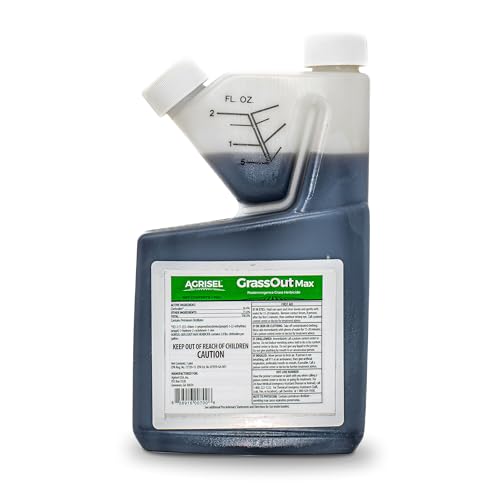
The economical concentrate that treats a whole landscape with a minimal bottle.
At just 1.1 to 2.3 ounces per 1,000 square feet, this 16-ounce bottle covers between 7,272 and 15,294 square feet — far more than any other product here. That makes it the right pick for a gardener with a few large beds or a long border to defend. The active ingredient (the data does not name it, but the category suggests sethoxydim-based) targets over 50 types of grassy weeds without harming broadleaf ornamentals. One owner reports using it around okra and squash with good results: the grass took 7 to 10 days to die, but it died, and the vegetables finally had room to grow.
The honest trade-off: effectiveness gets mixed reviews in the data. Some owners swear by it, while others found it ineffective. The advice from satisfied buyers is to be patient — one owner said it took 3 applications to kill thick grass without harming ground cover — and to follow the label strictly. The slower action is inherent to selective herbicides; they are not scorched-earth sprays.
It is also note that the “Tip and Pour” bottle design aims for easy mixing, but you still need your own sprayer. Safety is another mixed point: some owners mention it is safe around pets when used as directed, while others have concerns. The EPA approval is a solid baseline, but always follow the label for your specific situation.
Stretch your dollar: By coverage per ounce, this is the most economical option. The catch: customers note variable results, so test on a small patch before committing a whole bottle. Those who have patience and follow the directions find it works — notably on grasses in dense ground cover where manual removal is impossible.
Choose this if: You have a large garden area to treat and want the most coverage per dollar — and you are comfortable with a concentrate plus sprayer.
Look elsewhere if: You want grab-and-go convenience or a product with more consistent owner reports across all conditions.
5. Ortho Grass B Gon Garden Grass Killer RTU (24 oz single)
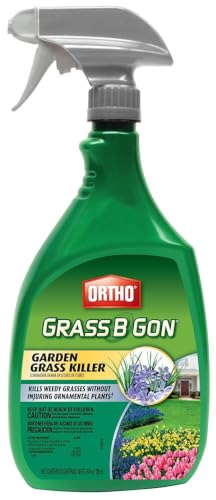
The no-commitment trial bottle — good for a single patch, not a campaign.
This is the entry-level RTU bottle that lets you test selective grass killing without spending much. The formula targets crabgrass, tall fescue, Bermuda, and Kentucky bluegrass in flower beds and around shrubs, and it becomes rainfast in one hour. A few happy reviewers point out it killed grass in flower beds from overseeding without damaging the desirable plants.
The honest response: owners call this one “mixed.” For every buyer who says it killed the grass as claimed, another says it did nothing — as shoppers say, “sprayed this product on the grass I wanted killed and it didn’t kill any of it.” The single 24-ounce bottle does not go far; for larger areas, the 2-pack is better value. The product literature notes that two applications 5 days apart are often needed, so budget for a second pass.
This is the right pick for someone who is not sure whether a selective grass killer will suit their garden, or who has a very small patch of grass to eliminate. If you are a more serious gardener, the 2-pack of the same formula (our Product 2) gives you double the volume for a small step up in price, and the effectiveness track record is similar.
What It Gets Right
- Lowest entry price — test selective spraying without major investment
- Truly ready-to-use; no mixing or sprayer needed
- Rainfast in one hour for flexible application around the forecast
What To Watch For
- Effectiveness is inconsistent — some owners got zero results
- Small volume (24 oz) runs out fast; plan for reapplication
- Works slowly; takes time and often a second treatment
Perfect for: A very small flower-bed patch or a first-time user who wants a low-cost trial of selective grass killing.
Better to skip if: You have a serious grass problem — the 2-pack or the Fusilade concentrate are more reliable for real invasions.
Understanding the Specs
Fluazifop vs Sethoxydim (Active Ingredients)
These are the chemical names for the selective herbicides that kill grass but leave broadleaf plants alone. Fluazifop (used by Ortho Grass B Gon and Fusilade) works by blocking an enzyme only grasses need to produce fatty acids — the grass starves and dies over 7 to 14 days. Sethoxydim (used by Agrisel GrassOut Max) does the same thing but through a slightly different pathway. Both are effective, but fluazifop has a longer track record in consumer products and more owner reports to judge by.
Concentrate vs Ready-to-Use (RTU)
Concentrate (Fusilade II, Agrisel GrassOut Max) comes as a liquid you mix with water in a pump sprayer. It works out much cheaper per square foot and lets you adjust the dose for the specific grass type. Ready-to-Use (RTU) comes pre-mixed in a trigger spray bottle — more expensive per ounce, but you grab it and go. For a single small patch, RTU is fine. For a whole garden border, the concentrate saves money and effort on repeat trips to the store.
FAQ
Will a grass killer for gardens hurt my flowers or shrubs?
How long does it take to see results from a selective grass killer?
Can I use grass killer for gardens on my lawn?
What is the difference between Ortho Grass B Gon and Ortho Lands B-Gon?
Is Fusilade II safe for Zoysia grass?
How do I apply a concentrate grass killer correctly?
Will a grass killer for gardens kill crabgrass?
Is it safe to use grass killer for gardens around pets?
Can I use a grass killer for gardens on edible crops like vegetables?
Why does my grass killer say it is waterproof in one hour?
Final Thoughts: The Verdict
For most people fighting grass in flower beds and ornamentals, the best grass killer for gardens is the Fusilade Selective Herbicide II — it has the strongest owner-confirmed track record on tough Bermuda when you use the right dose. If you want a ready-to-use spray that requires zero measuring, grab the Ortho Grass B Gon 2-pack for spot treatments around Irises and shrubs. And for the largest coverage area at the lowest cost per square foot, the Agrisel GrassOut Max concentrate stretches further than anything else here — just be patient with the 7- to 10-day wait for results.
How We Picked
We do not accept paid placement. Every pick is matched to a real buyer and a real use-case; we do not hands-on test units.
Sources & Methodology
Specifications: manufacturer listings and product documentation. Review insights: verified customer reviews, as of July 2026. Pricing: not shown on this page (it changes often); check the current price via the retailer link.
As an Amazon Associate, Lawn Gear Lab earns from qualifying purchases. This does not affect which products we feature.