
Specs are compiled from manufacturer listings and verified buyer reviews and can change over time — please confirm the key details on the product page before buying.
You have a lawn and a flower bed, but where they meet looks messy — a ragged line that no amount of trimming seems to fix. Grass border edging solves that by giving you a physical barrier that stops creeping roots and keeps mulch exactly where it belongs, so the edge stays sharp all season without you having to re-cut it every week.
I’m Rikta — the founder and writer behind Lawn Gear Lab. This guide is built by comparing the manufacturers’ published specifications and the patterns across verified customer reviews, so you get each pick’s real strengths and trade-offs instead of marketing spin.
Below, you will find the strongest options for grass border edging, chosen based on real-world performance, how easy they are to install, and which materials actually hold up to weather and yard work.
Our Picks at a Glance
How To Choose The Best Grass Border Edging
Grass border edging is not a one-material-fits-all category. The right choice depends on your soil type, the shape of your beds, and how much time you want to spend on installation. Here are the three factors that matter most.
Material: Metal vs. Plastic vs. Rubber
Metal edging — usually galvanized steel (steel treated with zinc to prevent rust) or powder-coated alloy (alloy coated with a baked-on paint finish) — delivers the stiffest barrier and is the best option for keeping aggressive grasses like Bermuda from tunneling under. Plastic edging, typically made from polyethylene (PE, a common flexible plastic) or high-density polyethylene (HDPE, a denser, more UV-resistant type of plastic), is lighter, easier to cut into tight curves, and will never rust, but it can become brittle over time in direct sun. Rubber edging, made from recycled material, combines heavy weight with flexibility and is the most forgiving option if you run over it with a mower or tractor.
Height and Depth
The above-ground portion of the edging determines how visible the border is and how well it contains loose mulch. A 4-inch or 5-inch height is enough for most flower beds. The below-ground depth is what stops grass roots — a 2-inch buried depth can slow surface runners, but a 4-inch or deeper buried section is what truly blocks creeping rhizomes (underground stems that send up new shoots). If you are fighting Bermuda grass, look for a product that sits at least 6 inches tall so that several inches can go below the soil line.
Installation Method
Hammer-in edging with integrated stakes is the fastest route — you basically pound the pieces into softened ground with a mallet. Trench-and-backfill edging requires you to dig a narrow channel first, but it creates a straighter, more permanent line and is better for hard or rocky soils. Some kits include spikes separately, and the quality of those spikes (metal vs. plastic) is a common pain point in reviews. If your ground is dense clay or full of roots, pre-softening with water or pre-drilling pilot holes can save frustration.
Quick Comparison
| Model | Best For | Material | Total Length | Height | Amazon |
|---|---|---|---|---|---|
| Beuta Polyrock Bricks★ Best Overall | Realistic stone look, easy install | Resin | 48 in. per section | 2.25 in. | Amazon |
| GTSABWAY Corrugated MetalTop Performer | Deep barrier against tough roots | Metal | 40 ft | 6 in. | Amazon |
| FunFanso Plastic with Spikes | Quick no-dig installation | Plastic | 33 ft | 2 in. | Amazon |
| Land Guard Corrugated Metal | Longest run for large yards | Metal | 50 ft | 6 in. | Amazon |
| Master Mark Terrace Board | Flexible curves, wood-grain look | HDPE Plastic | 40 ft | 5 in. | Amazon |
| Worth Garden Metal Strips | Rustic powder-coated finish | Galvanized Steel | 33 ft | 4.5 in. | Amazon |
| EcoBorder Recycled Rubber | Heavy-duty, mower-proof border | Rubber | 24 ft (6 x 4 ft) | 2.75 in. | Amazon |
In‑Depth Reviews
1. Beuta Landscape Edging Polyrock Bricks
Our pick — over 4.5★ from 900+ verified ratings; the strongest balance of quality and price.
Looks like real cobblestone and snaps together in minutes.
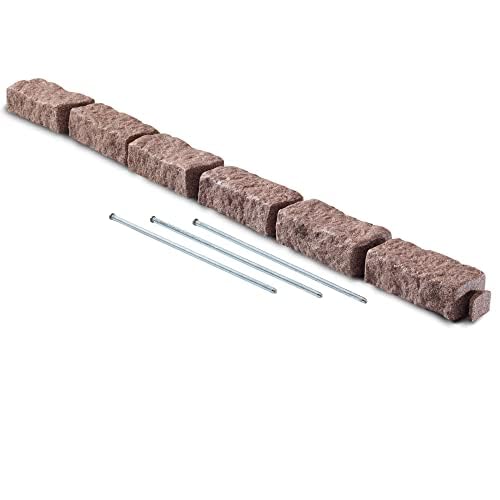
This is the pick for anyone who wants the look of stone pavers without the digging. Each 48-inch-long brick section is made of lightweight resin (a durable synthetic material), so you can position it yourself, and it interlocks with a simple system that uses three spikes per section. The crowd favorite is the appearance — owners regularly say it looks “better in person” and the granite-like texture is convincing enough that visitors do not realize it is resin until they touch it. The top positive aspect is easy installation with 180 buyers singling it out.
The trade-off is that at 2.25 inches tall, this is a low-profile border. It will define a bed beautifully and stop surface mulch migration, but it is not tall enough to block deep grass roots like Bermuda. If you need a root barrier, the GTSABWAY metal edging option below (which runs 6 inches high) is a better fit. For a clean, furniture-like edge around flower beds or a rock garden, though, this is the most visually satisfying option on the list — and it is made in the USA.
Why Owners Love It
- Appearance actually fools people — the resin has a realistic stone texture and color variation
- Interlocking design with three included spikes per section means no special tools needed
- Sturdy enough to hold shape through all four seasons without cracking
The Honest Caveat
- 2.25-inch height is purely decorative edging — it will not stop aggressive creeping grass roots
- Each 48-inch section covers a relatively short span, so large yards require many packs and the cost adds up
Grab these if: you want a finished, high-end stone border without the weight or cost of real pavers.
Think twice if: your main goal is blocking invasive grass — you need a taller, buried barrier.
2. GTSABWAY Corrugated Garden Edging, 6″ x 40 Ft Pre-Rusted
The steel barrier that aggressive grass roots actually hit and stop.
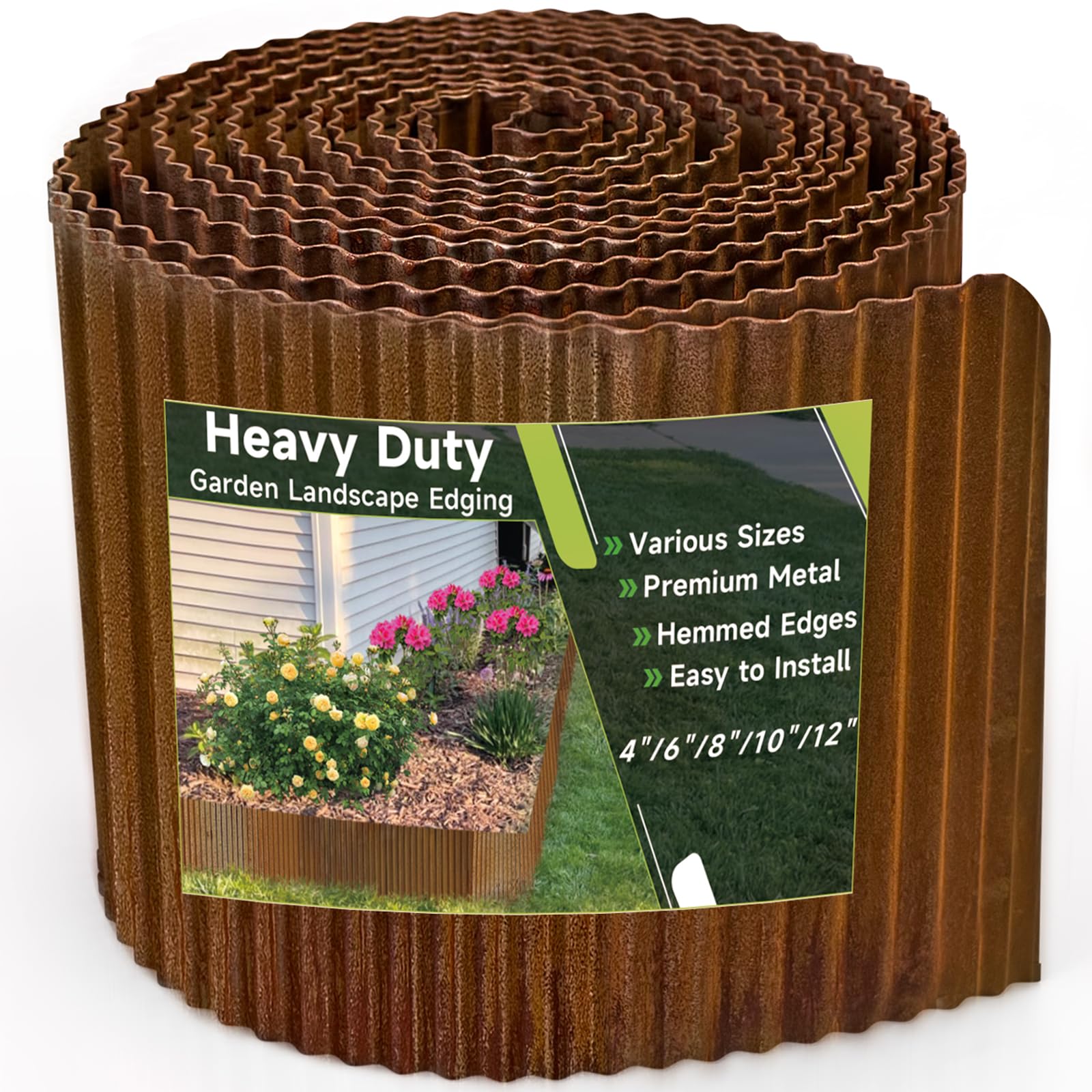
This is the no-nonsense solution for anyone fighting Bermuda grass or crabgrass that creeps under flimsier borders. The edging stands 6 inches tall, and as buyers report, it “keeps out bermuda grass roots if weed-eaten outside” — meaning you can bury several inches below ground while still having enough above ground to contain mulch. Made from high-quality metal, it is corrugated (ridged in a repeating wavy pattern) for stiffness yet flexible enough to bend into curves or circles without cracking. The pre-rusted finish is a deliberate style choice that gives a rustic patina, and owners say the galvanized steel underneath feels sturdy and not flimsy.
Installation is straightforward: wet the soil, push the edging in, or dig a shallow trench for harder ground. The 40-foot roll runs 480 inches long, compared to the 24-inch-long FunFanso plastic strip — a massive single-run coverage for large beds. The most-discussed aspects are installation and quality, with 58 and 56 buyers respectively giving them positive marks. The only real hesitation buyers mention is that the “pre-rusted” look may be more weathered than expected, so if you prefer a clean silver finish, the Land Guard black version or a powder-coated alternative might suit you better.
The definitive root-blocker: At 6 inches tall and made of sturdy galvanized steel, this is the best pick on the list for physically stopping invasive grass. The 40-foot continuous roll means fewer joints and fewer weak points. If your yard has aggressive rhizomes, this is the barrier they will not cross.
Best for: anybody who needs a tall, buried barrier to stop creeping grass and wants a single continuous run.
Not ideal if: you prefer a bright, uniform finish — the pre-rusted patina varies and may look more worn than expected.
3. FunFanso 2-Inch x 33 FT Landscape Edging with 50 Spikes
A plastic border that goes in with a hammer and covers a lot of ground.
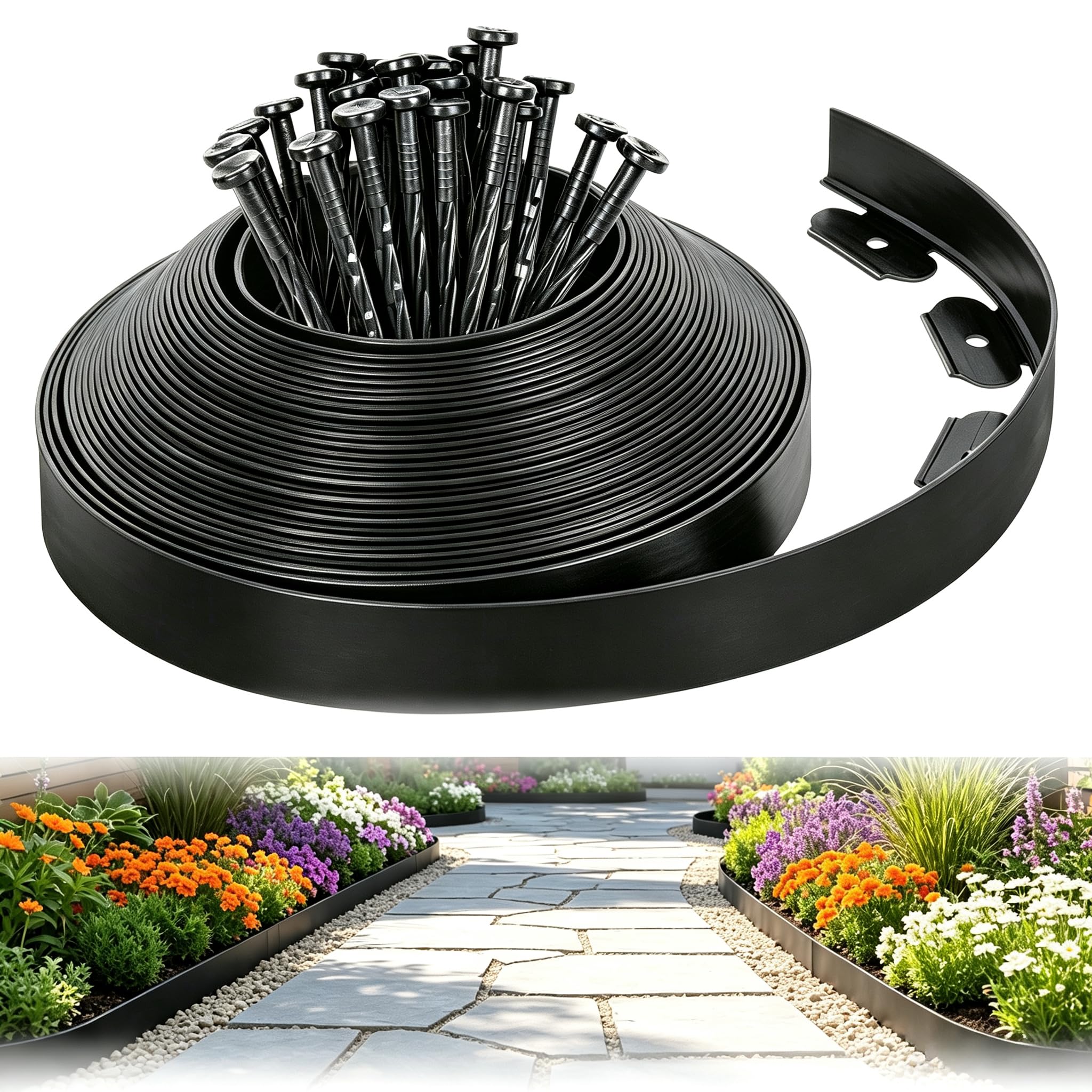
This kit gives you 33 feet of edging and 50 stakes — the seller explicitly notes they provide 20 more spikes than competing sets of the same size, so you will not run out of anchors halfway through the project. The edging itself is made from polyethylene (PE), a plastic that bends easily into curves without snapping and will not rust over time. Installation is pure no-dig: you lay the strip where you want it and hammer the spikes through the pre-formed holes to pin it down. Owners call it “so easy” and note it “looks nice around the garden bed.” The top positive aspect is ease of installation, with 93 buyers specifically praising it.
The honest catch is the stakes. While the kit includes plenty of them, the tips can break off when you drive them into hard or rocky soil. The advice from owners is to pre-soak hard ground or use a pilot hole to avoid snapping the plastic tips. At 2 inches tall, this is a low-profile border — it defines the line between grass and bed but will not stop deep-rooted weeds from tunneling underneath. For a quick, cheap way to make a garden bed look tidy, it is tough to top the value.
What Works
- 33-foot length plus 50 stakes is generous — enough for a typical backyard bed without buying extra packs
- PE plastic bends easily for curved beds and resists rust and rot
- No trenching or special tools required — just a hammer and a few minutes
The One Annoyance
- Stake tips can snap if you hammer them directly into dry or compacted soil; pre-soaking or drilling pilot holes helps
- At 2 inches tall, the barrier is purely cosmetic — it will not stop aggressive grass roots
Reach for this if: you want a fast, cheap way to neaten up a garden bed edge this weekend.
Look elsewhere if: you need a deep underground barrier against invasive grass or have very hard clay soil.
4. Land Guard Corrugated Garden Edging Border, 6″ x 50 ft
Fifty feet of rigid metal edging for the yard that needs continuous runs.
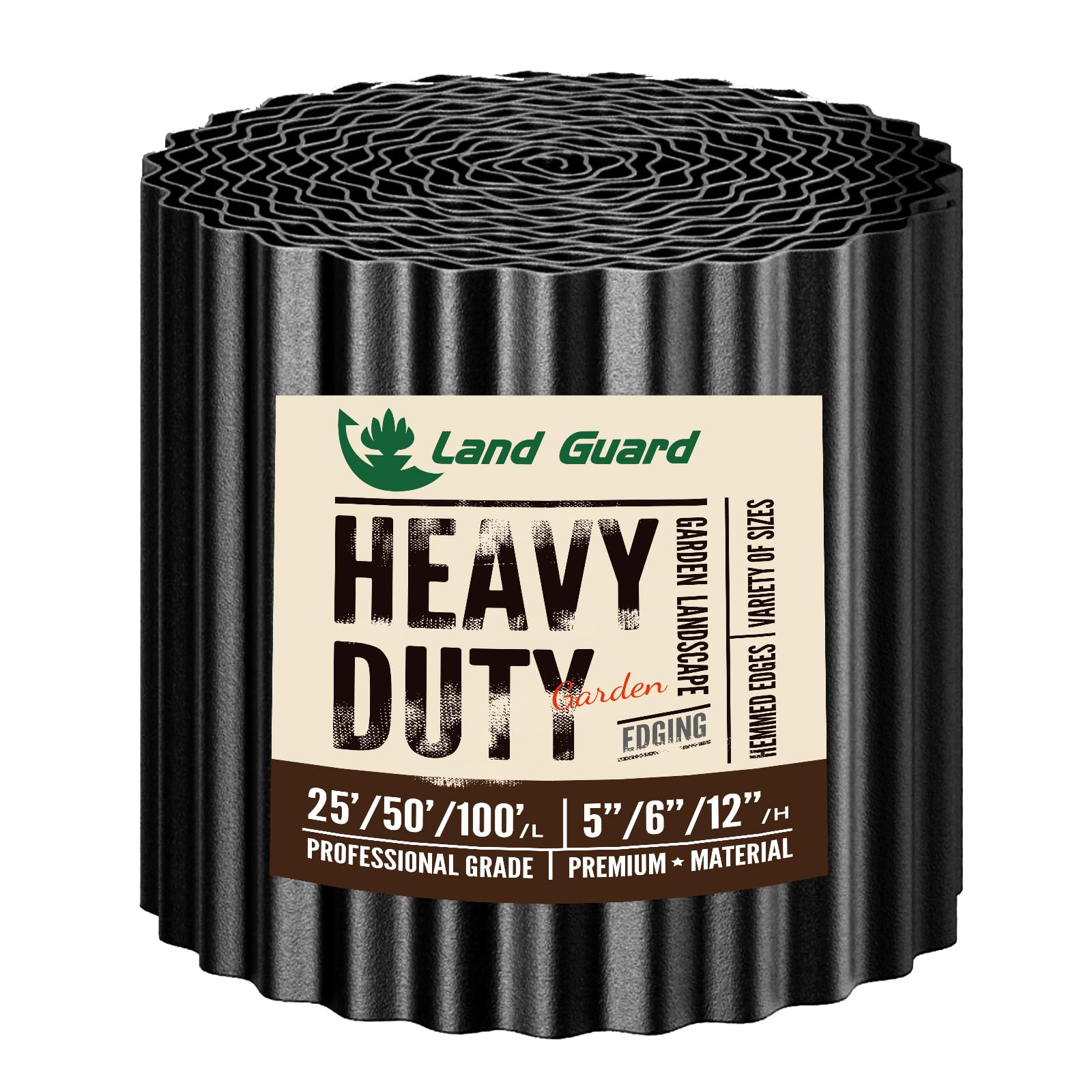
Where the GTSABWAY roll runs 40 feet, this Land Guard version gives you 50 feet — a full 600 inches — in a single black coil. At 6 inches tall, it provides the same deep barrier capability as the other metal options: plenty of height to bury several inches below grade and still have visible border above. The metal is galvanized and then given a black coating, so it resists corrosion while blending into dark soil or mulch. Owners mention it is “sturdy and easy to install,” using a piece of wood and a rubber mallet to tap it in place, and that it is “flexible around corners” without losing shape. The utilitarian corrugated look is clean but industrial — it prioritizes function over decorative flair.
The number of buyers rating this product is the highest on the list at 993 ratings, which gives strong statistical confidence in its 4.3-star score. The most discussed aspects are its ability to separate garden areas effectively and the easy installation. The trade-off compared to the GTSABWAY is purely aesthetic: this comes in a uniform black finish rather than a rustic pre-rusted look. If you want a modern, non-ornamental edge that simply does the job for a very long run, this is the one.
The coverage king: 50 feet of 6-inch-tall galvanized metal is the longest single-run option here. It is tough, flexible enough for gentle curves, and the black coating keeps it from being an eyesore. The utilitarian look means it is best for beds where the plantings, not the border, are the star.
Ideal for: large gardens or long straight beds where a single continuous piece avoids unsightly joints.
Skip if: you want a decorative stone, brick, or wood-grain appearance — this is purely functional metal.
5. Master Mark Terrace Board, 5 in. x 40 ft with 10 Stakes

A wood-grain plastic border that bends into tight curves without breaking.
Master Mark has been manufacturing HDPE (high-density polyethylene) plastics since 1966, and the Terrace Board shows that experience. The 5-inch-tall strip has a textured wood-grain pattern that looks more natural than smooth plastic edging, and it is flexible enough to follow curved beds without kinking. The installation method is straightforward: you bury about 1.5 inches of the board in a shallow trench, then use the included stakes to lock it in place. Owners emphasize it is “easy to install” and “stays put,” though a few note the material in recent years feels thinner than the original version from several years ago.
The 40-foot length covers a substantial area, and the 5-inch height gives enough visible presence to create a clean, finished border. The most-praised aspects are quality (66 buyers) and edging (43 buyers). The catch is that the thin plastic can look a bit wavy if you do not warm it in the sun first. Buyers recommend laying it flat in direct sun for a couple of days before installation, which softens the material and lets it lie straighter. For a budget-friendly bender board with a natural look, this is a solid choice.
The curves specialist: HDPE plastic is inherently more flexible than metal and will not rust, making this the best pick for serpentine beds. The wood-grain texture is a nice touch over plain black plastic. Just plan ahead and let it sun-warm before you stake it down for the straightest result.
Best for: curved flower beds and pathways where you need a flexible, natural-looking border that resists rot.
Not for: areas with heavy foot traffic or mower bumping — the thinner plastic can bend or crack under repeated impact.
6. Worth Garden 33 ft. Galvanized Steel Landscape Edging, 10-Pack
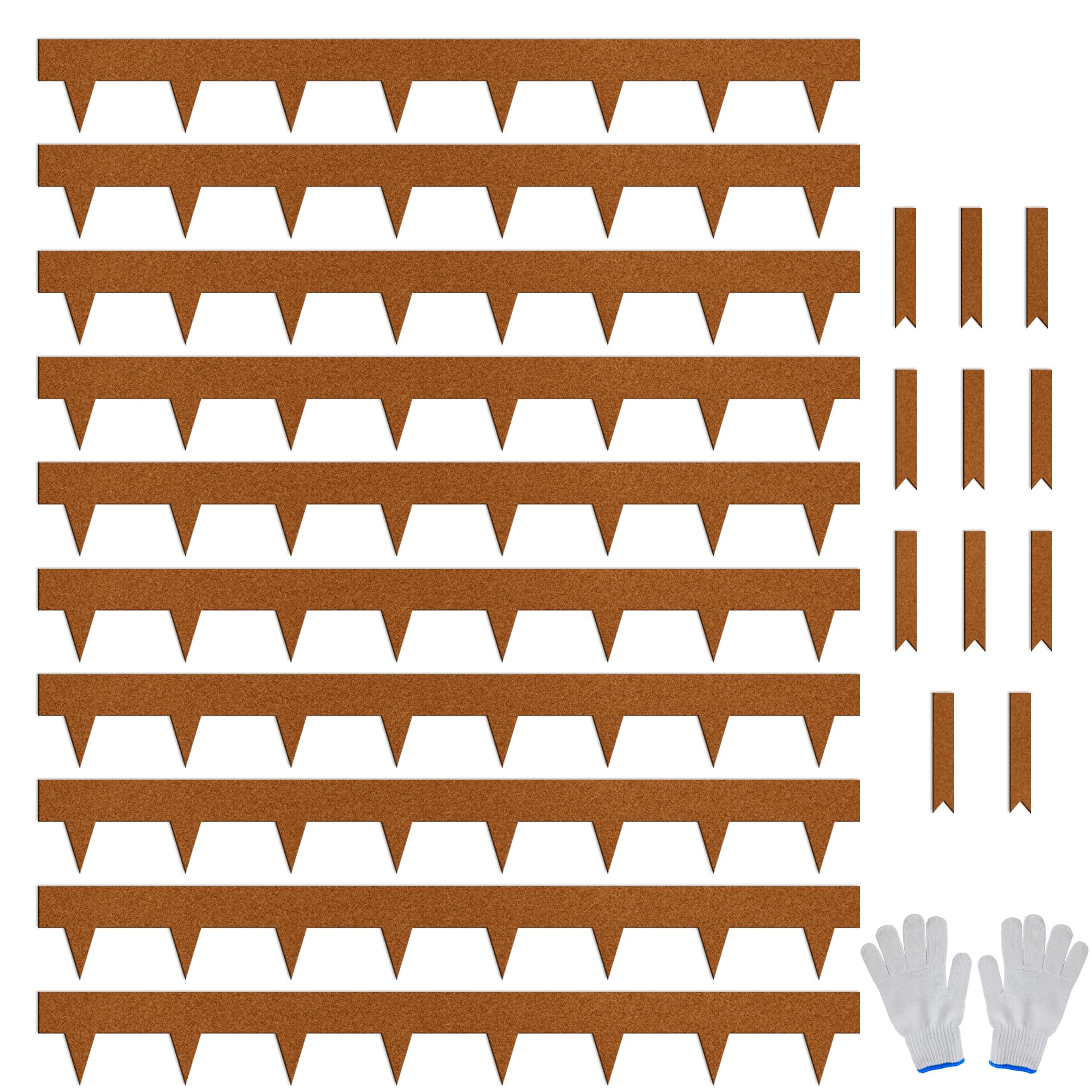
Ten individual metal strips that align for a precise, furniture-like edge.
Most metal edging comes on a continuous roll. This Worth Garden set takes a different approach: ten separate 40-inch strips that you connect end-to-end for a total of 33 feet. Each strip is made from 1.5 mm thick galvanized steel and coated with a rust-colored powder coating (a baked-on paint finish) that gives the look of aged metal without actually shedding rust particles onto the ground or staining walkways. The strips are 4.5 inches tall, with a built-in 2.5-inch stake section that drives into the ground, leaving 2 inches visible above the soil. Owners say it “bends for curves” and “cuts with a hacksaw” for custom lengths.
The most-discussed aspect is ease of installation (51 buyers), followed closely by quality (42 buyers). The individual-strip design makes it easier to handle than a long unruly roll — no fighting with springy coils. The trade-off is that the strips are not continuous, so each joint is a potential weak point if ground heave or frost shifts the soil. For smaller, defined beds where you want a crisp, low-profile metal border with a rustic powder-coated look, this is a strong option. The higher price reflects the thicker steel and the coating process.
The Strengths
- 1.5 mm thick galvanized steel is the thickest metal option here, resisting bending under pressure
- Powder-coated rust finish looks aged without the mess of actual rust flaking off
- Individual 40-inch strips are easier to transport and handle than a 40-foot coiled roll
The Weak Point
- Segmented design means multiple joints that can separate if frost heaves the ground
- Rust-colored coating is a specific look that will not suit formal or modern garden designs
Pick this for: contained beds or pathways where you want a thick, rigid metal border with a rustic finish.
Move on if: you need one continuous long run without joints — a coiled roll like the GTSABWAY or Land Guard is better.
7. EcoBorder Black Recycled Rubber 4 ft Lawn Edging, 6-Piece Box

Heavy L-shaped rubber sections that a mower will not shatter.
This is the heaviest, most durable material on the list. Each 48-inch section of EcoBorder is made from recycled rubber and formed into an L-shape — the vertical leg stands 2.75 inches tall and blocks grass, while the horizontal leg sits flat on the ground and gives a clean mowing strip that you can run a wheel over. The weight is substantial: each section weighs over a pound, and the six-piece box totals 6.75 pounds. Owners say it “looks great and is durable,” giving a “polished look” to foundation beds while keeping mulch in place. The top positive aspects are easy installation (105 buyers) and durability (81 buyers).
The rubber construction means this edging will not rust, rot, crack in the sun, or shatter if you accidentally hit it with the lawnmower. It is also flexible enough to follow gentle curves. The most common owner frustration is the plastic joining pegs and spikes — they can break if you hammer them too hard. Several owners recommend replacing the plastic pegs with 3/16-inch dowel rods or metal spikes for a permanent installation. At 2.75 inches tall, it is a low-profile border that does a great job of defining the line and stopping surface runners, but it will not stop deep taproots or aggressive rhizomes like a 6-inch metal barrier would.
The mower-proof option: Recycled rubber is virtually indestructible in normal yard use — it flexes on impact rather than cracking. The L-shape creates a natural mowing edge that keeps the trimmer string away from your bed plants. The plastic stakes are the weak link; plan to upgrade them for a permanent install.
Perfect for: front-yard foundation beds where you want a heavy, clean-looking border that can handle mower and trimmer contact.
Not for: blocking deep creeping grass roots — this is a surface-level barrier, not a deep underground wall.
Understanding the Specs
Height and Burial Depth
The total height of the edging determines how much you can bury below ground versus how much stays visible. A 2-inch edging works for decorative borders, but if you are fighting Bermuda or crabgrass, you usually need at least 6 inches of total height so that 3 to 4 inches can sit underground as a root barrier. The visible portion (usually 2 to 3 inches) is what contains mulch and defines the visual line.
Material Rigidity vs. Flexibility
Metal edging (galvanized steel or alloy) provides the stiffest barrier and is best for straight lines and mild curves, but it can kink if bent too sharply. Plastic edging made from PE or HDPE bends more easily for tight curves and will never rust, but it can become brittle after years in direct sun. Rubber edging combines weight with flexibility — it will not crack and is the most forgiving if you run into it with yard equipment.
Stake Count and Quality
The number of stakes included determines how frequently you can anchor the edging, which directly affects how straight it stays over time. More stakes generally mean a more secure hold, especially in loose soil. The material of the stake matters too: metal stakes drive in more reliably and rarely break, while plastic stakes are more likely to snap if you hit a rock or dry clay. Several owners of plastic-staked kits recommend pre-drilling or softening the ground first to avoid breakage.
Single-Piece Rolls vs. Segmented Sections
Continuous rolls (40 or 50 feet) give you one uninterrupted barrier with no weak joints, making them ideal for long straight runs. Segmented sections (individual 40-inch strips or 48-inch bricks) are easier to transport and handle, and they allow you to replace a damaged section without replacing the whole run, but each joint is a potential separation point if the ground shifts.
FAQ
Will plastic edging hold up in freezing winters?
How deep should I bury grass border edging to stop creeping grass?
Can I use metal edging if I have inground sprinklers?
Does powder-coated metal edging actually rust?
How do I cut metal edging to a custom length?
Is L-shaped rubber edging better than straight strip edging for mowing?
What is the difference between plastic edging and HDPE edging?
How many stakes do I really need per section?
Can I install border edging without digging a trench?
Final Thoughts: The Verdict
If you want one dependable pick, the grass border edging winner is the Beuta Polyrock Bricks because it combines the best-looking stone appearance with genuinely easy installation and solid durability at a mid-range price. If you need a tall barrier to stop invasive Bermuda grass, grab the GTSABWAY Corrugated Metal — its 6-inch height and 40-foot continuous run are the strongest root defense here. And for a budget-friendly weekend project that instantly neatens a bed, the FunFanso Plastic with 50 Spikes offers the most stakes per dollar and the simplest installation of the bunch.
How We Picked
We do not accept paid placement. Every pick is matched to a real buyer and a real use-case; we do not hands-on test units.
Sources & Methodology
Specifications: manufacturer listings and product documentation. Review insights: verified customer reviews, as of July 2026. Pricing: not shown on this page (it changes often); check the current price via the retailer link.
As an Amazon Associate, Lawn Gear Lab earns from qualifying purchases. This does not affect which products we feature.