
Specs are compiled from manufacturer listings and verified buyer reviews and can change over time — please confirm the key details on the product page before buying.
Your lawn looks fine, but you notice water pooling on top of the grass instead of soaking in. That is a sign of compacted soil — it is the silent enemy of a thick, green lawn. Water beads on the surface, fertilizer rolls into the gutter, and your grass roots simply cannot push deeper. The fix is clear: you need a machine that punches or pulls cores of soil to let the ground breathe. But the market is crammed with push rollers, step aerators, and heavy tow-behind units, each promising the same result, and it is easy to pick the wrong one for your yard size and soil type.
I’m Rikta — the founder and writer behind Lawn Gear Lab. This guide is built by comparing the manufacturers’ published specifications and the patterns across verified customer reviews, so you get each pick’s real strengths and trade-offs instead of marketing spin.
This guide examines nine different approaches to solving that issue, from a lightweight hand tool to a 78-pound trailer, so you can confidently choose the best grass aerator machine that matches the size of your lawn, your soil’s toughness, and your own tolerance for physical effort.
Our Picks at a Glance


How To Choose The Best Grass Aerator Machine
The first question to answer is lawn size. A small yard under half an acre is perfectly suited to a manual step or roller aerator — you will get a workout, but you will also save money and storage space. For anything over half an acre, a tow-behind unit that hooks to your riding mower is the only sane choice.
Spike vs. Core (Plug) Aeration
Spike aerators punch solid tines into the ground to create holes. They are simpler and cheaper, but in heavy clay soil, they can actually compact the edges of the hole, making the problem worse. Core aerators pull a real plug of soil out of the ground and leave it on the surface. This physically removes compaction and is the preferred method for serious lawn health, though the tools are often heavier and more expensive.
The Importance of Weight
Every aerator’s ability to penetrate soil depends on weight. A manual step aerator might weigh only 5 pounds, relying entirely on your body weight to force the tines in. A rolling spike drum weighs around 30 pounds and often has a chamber to add sand for extra force. Tow-behind models have dedicated weight trays that can hold up to 150 pounds of concrete blocks or water tanks. If you have rock-hard clay, you need a machine that lets you add serious ballast.
Tine Materials and Durability
Cheaper aerators use standard steel tines that bend on the first rock they hit. Heat-treated or galvanized steel, like the Brinly models use, resists bending and rust much longer. Stainless steel tines, found on some Landzie products, are the gold standard for corrosion resistance but come at a premium. For a sandy or loamy lawn, standard steel is fine; for rocky clay, pay for the stronger material.
Quick Comparison
| Model | Best For | Type | Weight | Max Ballast | Amazon |
|---|---|---|---|---|---|
| Brinly 40″ Tow Plug Aerator★ Best Overall | Large Lawns | Plug (Core) | 63.9 lbs | 150 lbs | Amazon |
| Craftsman 40″ Tow Plug AeratorBest Value | Large Lawns (Value) | Plug (Core) | 78.8 lbs | 140 lbs | Amazon |
| Landzie AeroCore RollerCompact Core Puller | Core Aeration, Easy Rolling | Plug (Core) | 50.8 lbs | Built-in | Amazon |
| Seeutek 18″ Push Spike Aerator | Small Yards on a Budget | Spike | 22 lbs | 220 lbs | Amazon |
| Landzie 42″ Step Core Aerator | Tight Areas & Small Lawns | Plug (Core) | 5.6 lbs | Body weight | Amazon |
| Brinly SAT2-40BH-P Tow Spike Aerator | Large Lawns (Budget) | Spike | — | 150 lbs | Amazon |
| Lawnira 30-Tine Roller Aerator | Medium Lawns (Easy Push) | Spike | 30 lbs | Sand fill | Amazon |
| Hubiiett 24″ Roller Aerator | Medium Lawns (Deep Spikes) | Spike | 32 lbs | 70 lbs | Amazon |
| AVVA Patented Rolling Corer | DIY Core Aeration Workout | Plug (Core) | 43.4 lbs | Sand fill | Amazon |
In‑Depth Reviews
1. Brinly Tow Behind Plug Aerator with Universal Hitch, 40″
Our pick — over 4★ from 950+ verified ratings; the strongest balance of quality and price.
The tow-behind unit that pulls real 3-inch plugs without breaking a sweat.
If you have a quarter-acre or more, this Brinly is the kind of investment that pays off every spring and fall. It uses 24 heat-treated, 16-gauge steel plugging spoons that dig into compacted soil and pull out cores up to 3 inches deep — and the design is narrower with sharpened ends, which buyers report makes penetration noticeably easier than other units. The build is all-steel, with a fully enclosed weight tray that accepts up to 150 pounds of concrete block, water jugs, or whatever you have on hand. That weight capacity is the key figure: at 63.9 pounds base versus the Seeutek 22-pound push model, and the tray adds up to 150 pounds of ballast for the hardest clay.
A single transport lever lifts the tines off the ground so you can cross a driveway or sidewalk without tearing up the surface — the 10-inch semi-pneumatic rubber tires handle the rolling. The universal hitch attaches to nearly any lawn tractor or zero-turn mower with a single pin. Buyers consistently call it “well-built” and note that while the assembly takes a couple of hours, the directions are clear and all parts are included. A common tip from owners: grease the axle during assembly and run the ground wet the day before for the cleanest plug extraction.
The Standout Specs
- Removes up to 3-inch deep soil plugs — real core aeration, not just poking holes
- Weight tray holds up to 150 pounds, letting you add serious ballast for hard soil
- Three independently rotating tine sections minimize turf damage on turns and uneven ground
Things to Know
- Assembly can take around 2 to 3 hours, and the instructions have been noted as somewhat confusing for the initial setup
- At 63.9 pounds, it is heavy to maneuver by hand, though the tow design eliminates the need to lift it
The call for you: This is the machine for anyone with a large lawn who wants real core aeration without renting a gas unit every season.
Look elsewhere if: Your lawn is smaller than a quarter-acre or you do not own a riding mower — this needs a tow vehicle.
2. Craftsman 40 Inch Tow Behind Lawn Plug Aerator
A contractor-grade trailer that stores upright and tackles up to 1.5 acres.
At 78.8 pounds, this Craftsman is the heavyweight of the tow-behind list and it shows in the ground penetration. It has 24 galvanized steel coring points that pull plugs up to 3 inches deep, and the wide weight tray accepts up to 140 pounds of ballast, making it a close match to the Brinly’s performance for a slightly lower price. It is built by Agri-Fab in Sullivan, IL, and covered by a 3-year limited warranty, which is the longest coverage of any unit in this roundup.
The lift-handle release system lets you engage and disengage the tines easily during transport, and the frame is designed to store vertically against a wall — a real space saver if your garage is tight. Owners mention that it handles 1.5 acres of property without issue, and it is hardy enough to pierce hard, rocky soil where cheaper models bent. The recurring note from the review pages is the assembly time (around 2 to 3 hours) and a small quirk where the transport lever can pop off on bumps — a bungee cord fixes it. The consensus is that for the price, this is a solid, durable machine.
Smart money move: If you need to cover a full acre and want the longest warranty at the best price, this Craftsman is the play — just set aside an afternoon for assembly and keep a bungee handy for the lever.
3. Landzie AeroCore Rolling Lawn Aerator
A rolling core aerator that finally makes plug pulling easy.
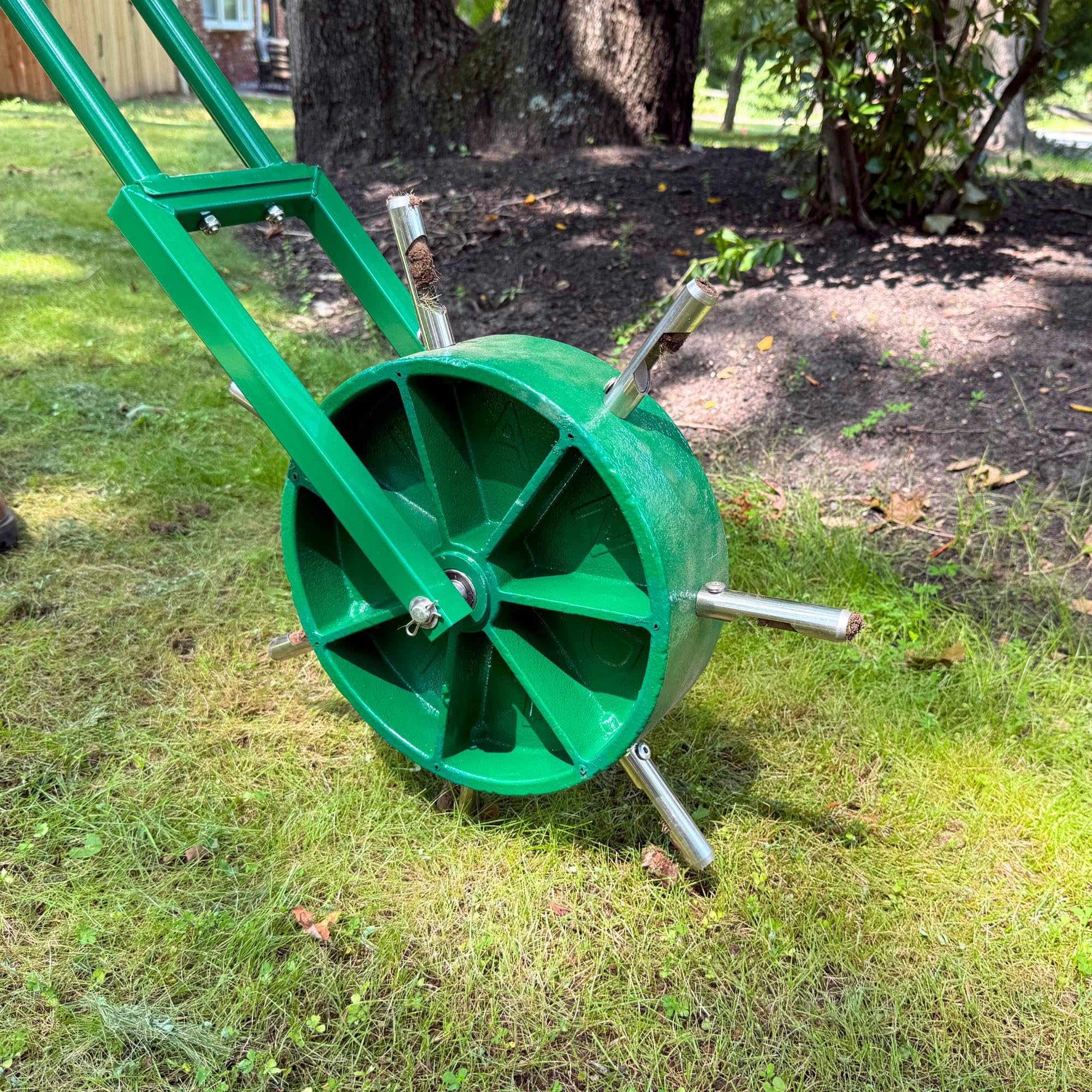
Most manual aerators require you to step down hard and rock the tool back, but the Landzie AeroCore changes the game with a rolling design that moves forward and backward to remove cores. It has 7 stainless steel hollow tines with chamfered edges — wide-diameter openings that eject soil plugs as they roll, so the tool does not clog up mid-job. At 50.8 pounds, it is heavy enough to penetrate tough soil without needing extra sand or weight, yet the rolling mechanism makes it feel much lighter to operate than a step tool.
Buyers praise the build quality, calling it an “excellent product” and noting the laminated instructions and included wrenches make assembly quick. A 4,500-square-foot lawn takes about two hours. The main trade-off is that it is undeniably a workout — owners emphasize you need to be ready for the physical effort, especially on slightly dry ground. It is also priced at a premium, but the thinking is that it pays for itself by eliminating the need to rent a gas-powered unit for three seasons.
Who should reach for this: The homeowner with a medium lawn who wants real core aeration benefits but does not want the engine maintenance of a rental — and is willing to earn their results with a physical push.
4. Brinly SAT2-40BH-P Tow Behind Spike Aerator, 40″

Brinly’s spike option that brings tow-behind speed to hard-packed ground.
If your soil is more sand than clay and a core aerator feels like overkill, this spike aerator from Brinly offers a faster, lighter alternative that still hooks behind your tractor. It uses 11 tine stars with 8-inch diameters, each packing 12 spike tips that penetrate soil up to 2 inches deep. The standout feature is the patent-pending 3-D tines made from galvanized steel — they resist rust and bending in compacted soil.
The all-steel frame uses a 5/8-inch solid steel axle with nylon spacers between each star, which adds durability during tight turns. The rigid weight tray holds up to 150 pounds, matching the bigger Brinly plug aerator’s capacity, and a single lever engages transport wheels for crossing driveways. Owners overwhelmingly praise its functionality and quality, though they note assembly is tricky — the tines are extremely sharp, so gloves are non-negotiable — and a few mention that the wheel nuts can loosen over time and recommend replacing them with nylon lock nuts.
The right scenario: This is for the rider-mower owner with fairly loose or sandy soil who wants to aerate quickly and frequently without the depth of a coring unit.
5. Landzie Original Hollow Tine Lawn Aerator Tool – 42 Inch
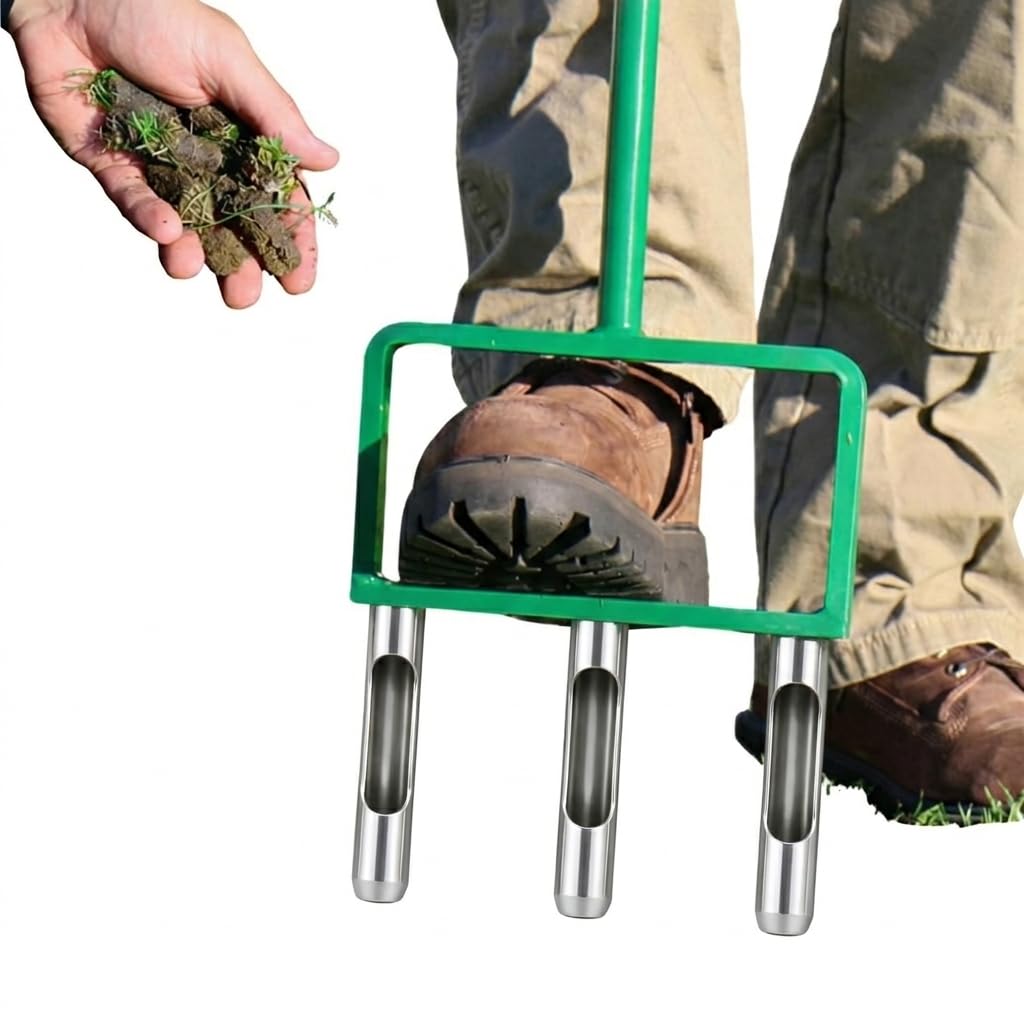
A 5.6-pound step tool that delivers real core plugs in tight spots.
At just 5.6 pounds, this Landzie step aerator might look like a toy, but the three solid stainless steel tines are built for serious plug pulling. It uses a revolutionary beveled design the company claims is clog-free — soil cores enter the tine and are pushed out the top as you step down, leaving a plug on the lawn. The tool arrives fully assembled with no instructions needed, and the replaceable tines can be removed for cleaning or sharpening.
Buyers confirm that it is very effective, especially on moist soil, and praise its quality and construction. The big catch is physical effort: customers note that a 1,200-square-foot lawn on compacted new-build soil is a brutal workout, and the tool struggles on dry, hard ground unless you water first. The tines occasionally clog if the soil is too wet, though the self-cleaning design works well in most conditions. It is a perfect tool for tight flower beds or small patches between larger aeration sessions with a machine.
The perfect niche: Anyone with a very small lawn or garden beds who wants the benefits of core aeration without storing a roller or renting a machine — just be ready to sweat and water the day before.
6. Patented Rolling Lawn Aerator Compacted Soil Loosening Manual Coring Tool
A rolling corer that uses science to pull plugs with less force.
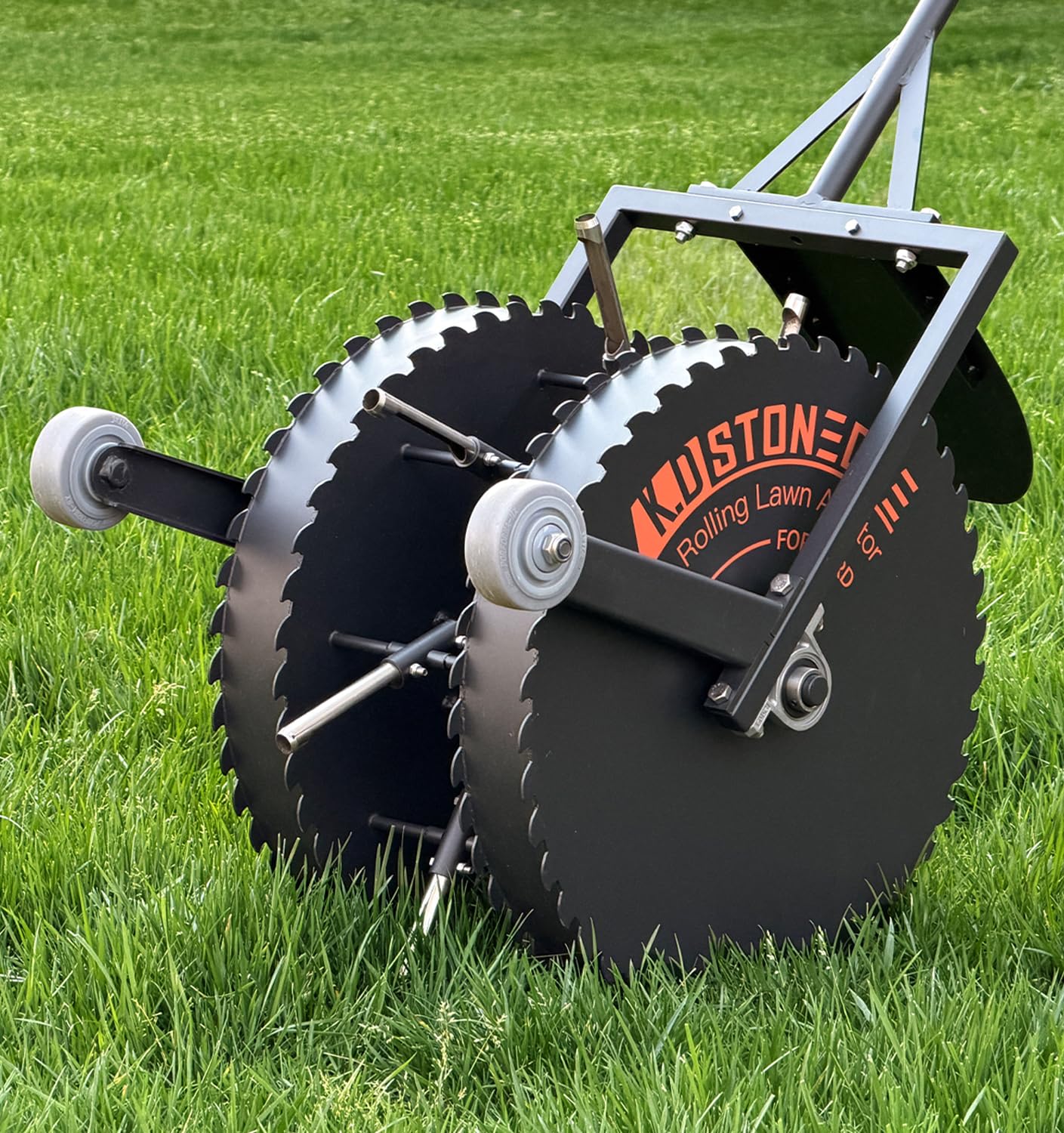
This patented design from AVVA VISION uses a rotary coring drum that is scientifically balanced to extract soil plugs as it rolls. It weighs 43.4 pounds and makes deep 2 to 3-inch holes in the ground without clogging, even in clay and through small roots. The drum has sand-fillable wheels so you can add extra weight for tougher soil, and reviewers point out that in perfect wet conditions, no sand is needed at all — the unit’s weight alone is enough for deep cores.
The feedback from the review pages is polarizing in the best way: it works brilliantly when you “run/get the speed up,” as one owner put it, but if you go too slow on hard ground, the drum can jump around. Assembly takes about 20 minutes, though the instructions are described as terrible. The handle has a slight play even with tight bolts, and tight turns can tear up turf, so concentric laps are recommended. For the DIY lawn owner who wants the benefits of core aeration and views the effort as a bonus workout, this is a clever alternative to renting a gas machine.
The honest take: This strikes a smart balance between the brute force of a tow-behind and the manual labor of a step tool — but only if you are ready to move fast and treat aeration like a cardio session.
7. 24 Inch Rolling Lawn Aerator, Heavy Duty Manual Aerator Tool
A 24-inch roller with 42 spikes that deep-penetrates red clay.
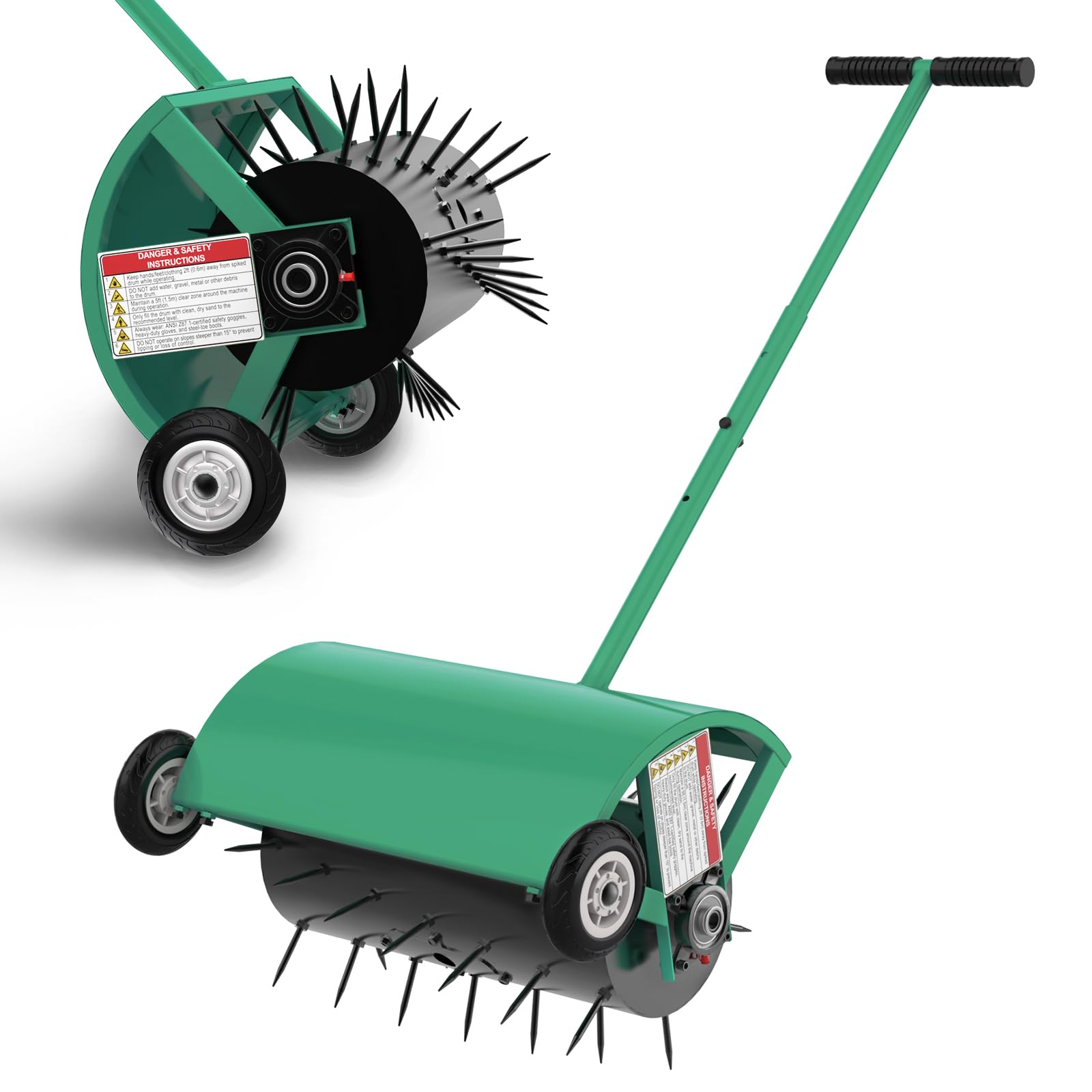
This Hubiiett rolling aerator covers more ground per pass than the 18-inch models, and its 42 spikes — each 3 inches long and heat-treated for hardness — bite deep into tough soil. Weighing 32 pounds on its own, it has a built-in weight chamber that can be filled with sand to bring the total up to 70 pounds for the hardest ground. The unique spiral spike arrangement prevents the roller from bouncing and keeps the motion smooth. Owners with heavy red clay confirm it works, though they note it takes real muscle when filled to capacity.
A 50-year welder and fabricator reviewed it and called the construction “as good as I would do it,” which is a rare endorsement from someone who builds metal for a living. The tripod handle connection with three height adjustments provides a stable, wobble-free feel, and silicone anti-slip pads keep it comfortable. The only common drawback is that at the 70-pound weight, the machine becomes very physically demanding to push, and buyers recommend pulling it backward instead of pushing forward for heavy sessions. The auxiliary silicone wheels are great for moving across a driveway without damaging the surface.
The pick for: The buyer with a medium lawn and red clay who wants deep spike penetration and is fine with a serious workout to get it — the build quality here is exceptional for the price.
8. Rolling Lawn Aerator Grass Aerator, Steel Spike Roller Aerators
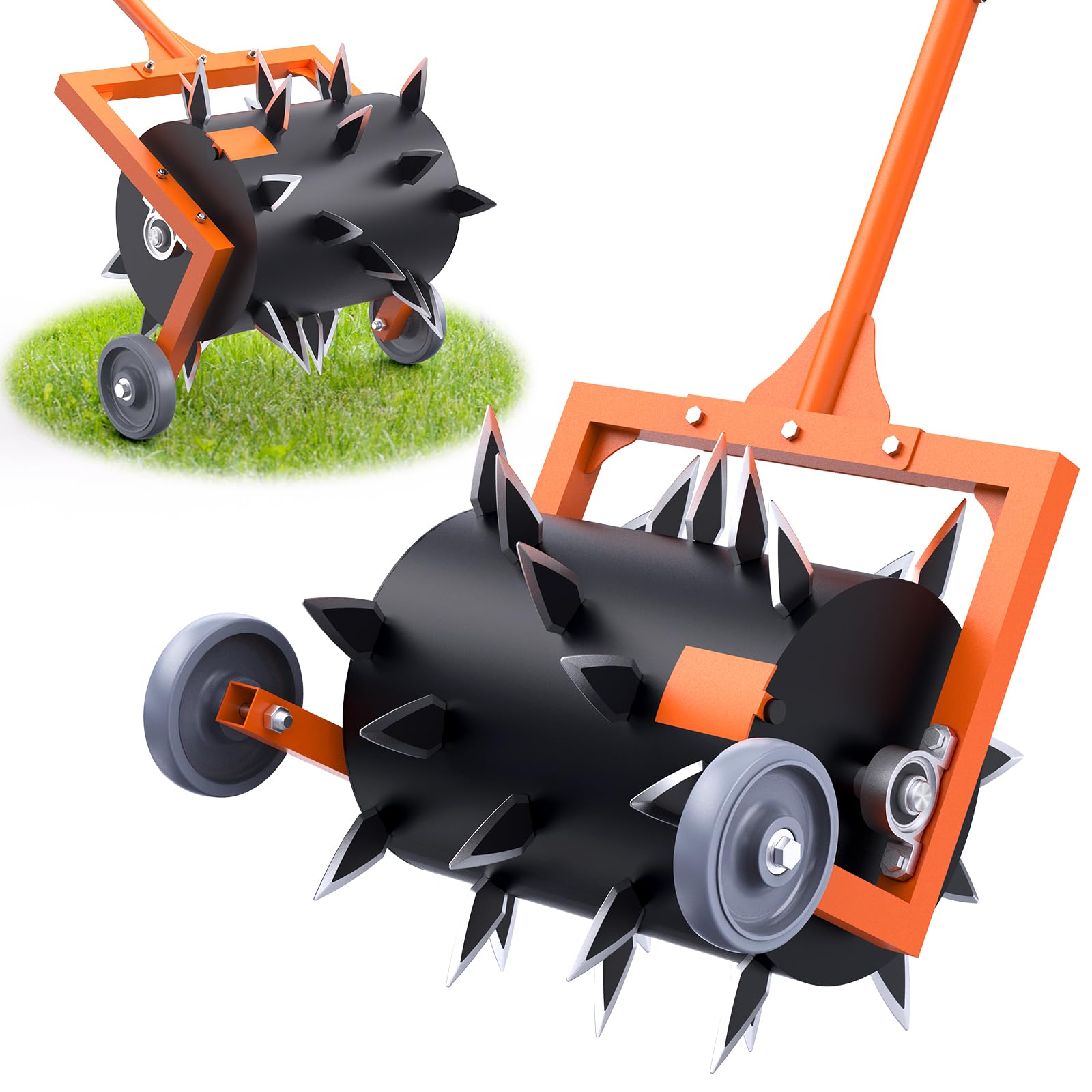
A 30-tine roller that punches 2.2-inch holes with a simple push.
This Lawnira model simplifies the whole process to a “just push and walk” operation — no stepping, no heavy lifting. It has 30 heat-treated spike tines arranged around a roller drum, each able to penetrate compacted soil to a depth of 2.2 inches. The drum itself weighs 30 pounds and can be filled with sand via the included conical funnel to increase weight for harder ground. The frame is made from orange powder-coated steel that resists rust, and the 59-inch T-handle with a cushion grip is long enough to let you walk upright without hunching over.
Shoppers say that the machine arrives mostly pre-assembled — just attach the handle and two swivel wheels, and you are done in a few minutes. They describe it as “very well built” and note that it leaves clear hole patterns in the lawn. One owner says it is a “night and day” improvement over cheaper aerators, especially for hard, compacted soil. The main drawback is that the sand-fill hopper is a bit unstable, and you need to water the lawn 12 to 24 hours before use for best results. It is a spike aerator, not a core puller, so it is best for thatch and layered soil rather than deep clay compaction.
Who it suits: Homeowners with medium lawns who want the easiest possible rolling aeration — the combination of pre-built assembly and push-to-operate design makes this the lowest-effort manual option here.
9. Seeutek 18 Inch Lawn Aerator, Upgraded Heavy Duty Manual Aerator
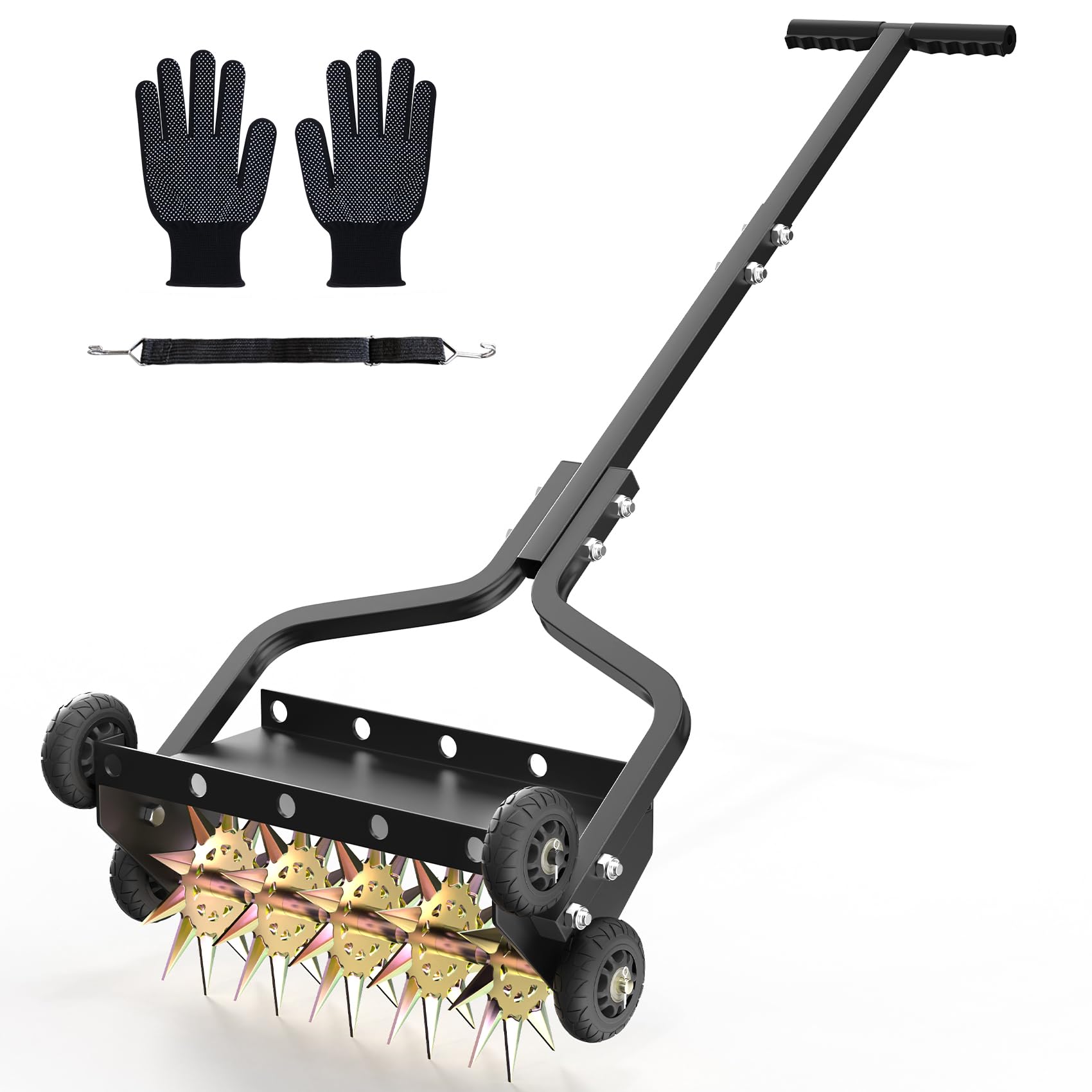
A 22-pound push spike aerator that fights above its weight class.
At just 22 pounds, the Seeutek is the lightest push spike aerator in the list, but it packs five 8-inch star-shaped tines, each with 10 sharp irregular tips that are made from thickened galvanized steel. The tines can penetrate soil up to 2 inches deep, and each star rotates independently to reduce missed spots when you turn. The heavy-duty tray can support up to 220 pounds — the highest capacity in the entire roundup — allowing you to stack concrete blocks for deeper penetration. The ergonomic T-handle adjusts to three heights, and the four rubber wheels make it smooth to maneuver.
Functionality gets the most praise from owners, with many noting it works great once you figure out the right weight balance. The consensus is that it needs about 30 pounds of extra weight to penetrate properly on grass, but more than 60 pounds makes it too hard to push. Assembly is generally easy, though one owner had a frustrating experience with missing communication from the company. The key trade-off is effort: this is a real workout tool, and buyers report it is much easier to use on a scalped or bare lawn than on thick, tall grass. It is best as a supplement between annual rental aeration sessions for small yards.
Best for you if: You have a small lawn, want the cheapest entry point to spike aeration, and do not mind a physical challenge.
Think twice if: You want to just walk behind a machine without any muscle effort, or if your soil is heavy clay that requires more than 2 inches of penetration.
Understanding the Specs
Spike vs. Plug (Core) Tines
This is the most important fork in the road. Spike tines are simple, cheap, and good for loosening the surface, but in heavy clay they can push soil sideways and make compaction worse. Plug (core) tines physically remove a 2-to-3-inch cylinder of soil, which creates permanent channels for air and water. If you have standing water after rain, go with a plug aerator.
Total Working Weight
An aerator’s weight determines how deep it goes. A 5-pound hand tool relies entirely on you pushing down. A 30-pound rolling drum might need sand added to the chamber. A tow-behind unit with a 150-pound weight tray can carry concrete blocks. The key number is the total weight on the tines — if the spec says the tray holds 150 pounds, that is the maximum ballast, not the device weight.
Material of the Tines
Standard steel tines bend on the first rock you hit in clay soil. Heat-treated or galvanized steel resists bending and corrosion much better, and stainless steel is the top tier for rust resistance. If you see “3D tines” or “patent-pending” on a spec sheet, it usually indicates a thicker or differently shaped tine that resists bending.
Transport Mode
Not all aerators can safely cross a driveway. Tow-behind models usually have a lever that lifts the tines so the unit rolls on rubber tires. Manual rollers often come with auxiliary wheels that you flip down for transport. If you plan to move your aerator across pavement between lawn sections, make sure the spec sheet mentions a transport system — otherwise you will scratch your driveway.
FAQ
Can I use a spike aerator on clay soil?
How deep should a grass aerator machine penetrate?
Will a rolling aerator damage my sprinkler system?
How often should I aerate my lawn?
Is it worth paying more for a tow-behind model?
What is the difference between a step aerator and a push roller?
Can I aerate when the soil is dry?
Does a heavier machine always mean better aeration?
What should I do after aerating my lawn?
Can I use a rolling aerator on a sloped lawn?
Final Thoughts: The Verdict
If you want one dependable pick, the best grass aerator machine winner is the Brinly 40″ Tow Behind Plug Aerator because it combines real core aeration up to 3 inches deep with a 150-pound weight tray and a universal hitch that fits nearly any lawn tractor — making it the most effective solution for the largest number of homeowners. If you want a more affordable tow-behind with a 3-year warranty, grab the Craftsman 40″ Plug Aerator. And for medium to large lawns where you prefer a rolling manual core aerator over a rental gas machine, the Landzie AeroCore is the one to reach for.
How We Picked
We do not accept paid placement. Every pick is matched to a real buyer and a real use-case; we do not hands-on test units.
Sources & Methodology
Specifications: manufacturer listings and product documentation. Review insights: verified customer reviews, as of July 2026. Pricing: not shown on this page (it changes often); check the current price via the retailer link.
As an Amazon Associate, Lawn Gear Lab earns from qualifying purchases. This does not affect which products we feature.