
Specs are compiled from manufacturer listings and verified buyer reviews and can change over time — please confirm the key details on the product page before buying.
Pruning a grapevine is a specific art — you need a tool that slips between tight trellis wires, snips a ripe cluster without bruising the fruit, and stays sharp through hundreds of cuts. A pair of cheap general-purpose shears will crush stems, gum up with sap, and leave you wrestling with the harvest. The right tool makes the job feel easy and protects next year’s growth.
I’m Rikta — the founder and writer behind Lawn Gear Lab. This guide is built by comparing the manufacturers’ published specifications and the patterns across verified customer reviews, so you get each pick’s real strengths and trade-offs instead of marketing spin.
Finding the best grape pruning tools means looking for a razor-sharp, comfortable tool that handles fine canes without crushing or tearing the vine.
Our Picks at a Glance

How To Choose The Best Grape Pruning Tools
Picking the right pruner for your vineyard or garden depends on matching the tool to the specific job. Grapevines are soft and green, but they grow in tight spaces. Here are the key factors to think about.
Blade Type and Sharpness
For green, living canes, a bypass blade (which slices like scissors) is the standard choice. It leaves a clean cut that heals fast, which is vital for a vine’s health. Anvil-style pruners, where a blade chops against a flat plate, can crush softer stems. A sharp, fine-pointed blade also helps you reach into dense foliage without damaging neighboring buds.
Cutting Capacity and Handle Reach
You need to match the tool’s cutting width to the size of your canes. A small snipper with a 0.2-inch cut is great for taking a bunch of grapes, while a larger pruner that can handle 1-inch thick wood is essential for annual dormant pruning. For high trellises, a longer reach from a pole pruner or a tool with a longer handle saves you from climbing a ladder.
Ergonomics and Weight
If you have a lot of vines to prune, comfort is everything. Look for non-slip grips and a tool that feels balanced in your hand. A heavy tool will tire your wrist after an hour. A spring-loaded mechanism helps reduce fatigue, as the tool re-opens itself for the next cut.
Quick Comparison
| Model | Best For | Blade Type | Cutting Width | Weight | Amazon |
|---|---|---|---|---|---|
| Felco F310 Pruning Snips★ Best Overall | All-round daily vineyard snips | Bypass/Anvil | 0.39 inches | 4.96 oz | Check Price |
| Double-Edge Micro-Tip ShearsPrecision Pick | Precision cuts on fine canes | Bypass | 0.18 inches | 5.44 oz | Check Price |
| CHIKAMASA B-300 Grape ScissorsCompact Champ | Fast kitchen-garden snipping | Straight | 1.4 inches | 2.4 oz | Check Price |
| Saboten 7.9″ Harvesting Shears | High-volume harvest comfort | Straight | — | 4.2 oz | Check Price |
| Gardeness 2-Pack Curved Shears | Gentle fruit picking | Curved, Serrated | 1.2 inches | 14.4 oz (pack) | Check Price |
| ARS HP-VS8Z Pruner | Pro-grade vine maintenance | Parrot Beak | — | 8 oz | Check Price |
| Gardener’s Friend Ratchet Shears | Maximum power for thick canes | Anvil | 1 inch | 7.8 oz | Check Price |
| GARTOL Cut & Hold Pole Pruner | Reaching high trellises | Bypass | 0.5 inches | 1.45 lbs | Check Price |
| Fiskars PowerGear2 Loppers | Chopping thick, woody trunks | Bypass | 2 inches | 3.9 lbs | Check Price |
In‑Depth Reviews
1. Felco F310 Pruning Snips
Our pick — over 4.5★ from 2,000+ verified ratings; the strongest balance of quality and price.
The gold-standard daily snipper feels like an extension of your hand.
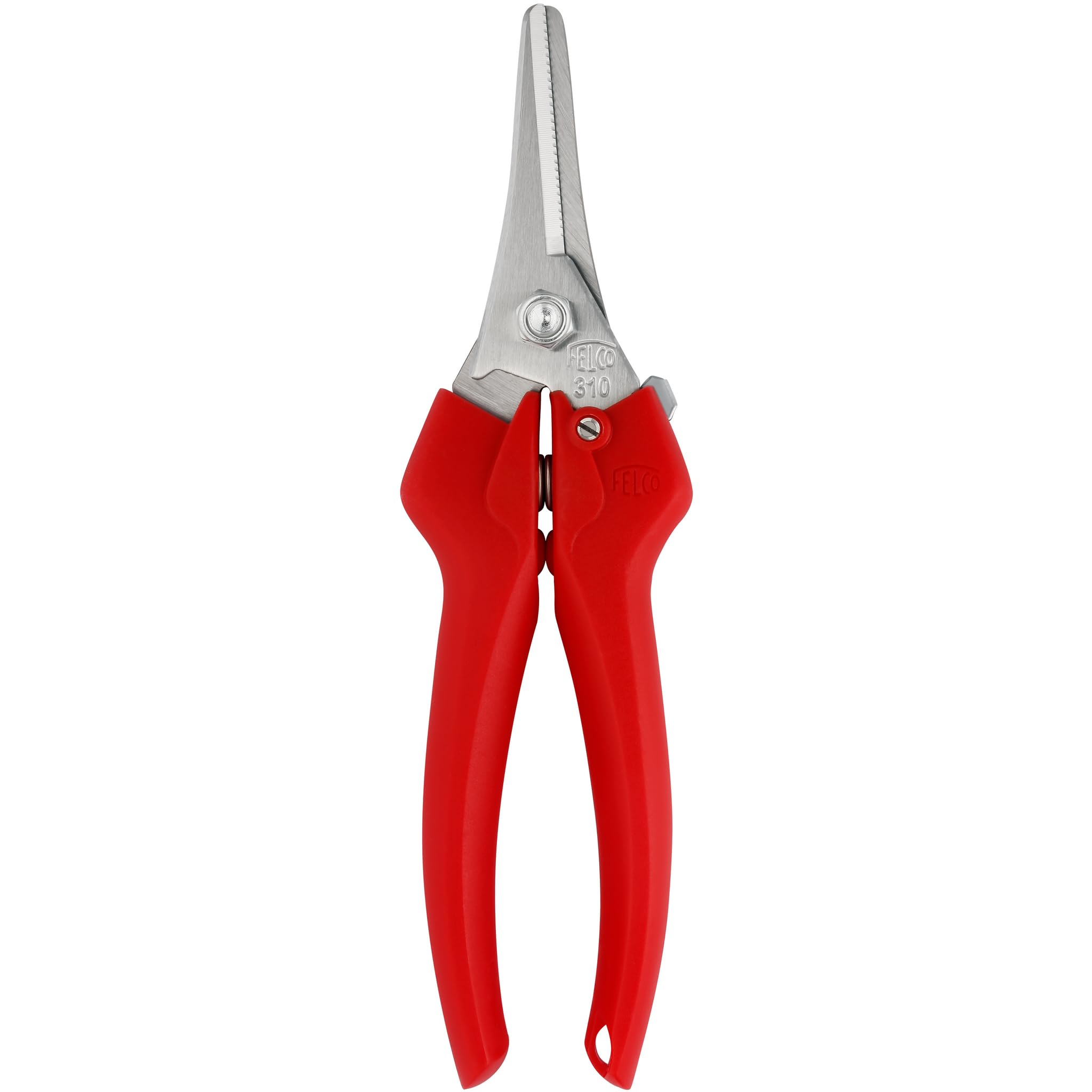
This is the tool you reach for again and again — for thinning, harvesting, and deadheading around the vine. The Felco F310 uses an alloy steel blade that owners say “stays sharp and cut cleanly for light thinning and pruning.” It cuts through green canes up to a 0.39-inch cutting width, which is plenty for the bulk of a growing season’s work. At just 4.96 ounces, it is noticeably lighter than many other mid-range pruners, and the composite handle with a serrated edge gives you a confident grip even when your hands are damp.
What wins people over is the overall build quality — it is a favorite among nearly two thousand owners, and buyers consistently praise its sharpness and ease of use. Unlike the CHIKAMASA scissors, which demand careful drying to prevent rust, the Felco’s steel head is more forgiving in a damp shed.
Why It Wins
- Razor-sharp right from the start and holds an edge well
- Lightweight and comfortable for all-day use, with an easy one-hand lock
- Versatile enough for flowers, vegetables, and fine grape tendrils
The Trade-Offs
- Not designed for thick, woody canes over half an inch
- Some owners find the value-for-money split considering other brands at similar prices
Best for: The home gardener who needs one reliable, sharp pair of snips for daily vine care and harvest.
Think twice if: You need to cut thick, dry wood — this is a fine-vine tool, not a heavy-duty branch cutter.
2. Double-Edge Garden Shears Micro-Tip Pruning Shears
A featherweight micro-tip specialist for intricate trellis work.
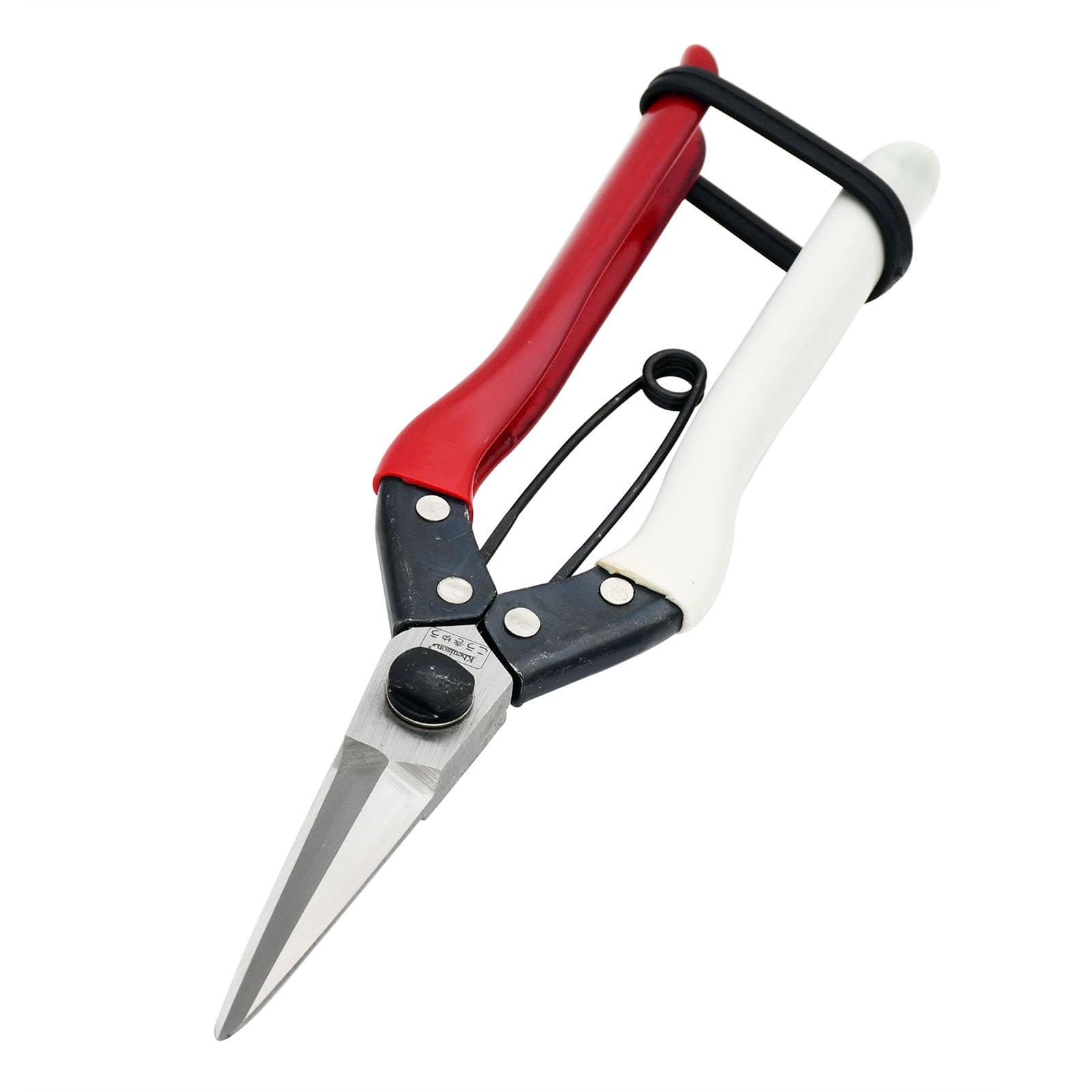
If your grapevine has tight spots where a standard pruner is too bulky, these micro-tip shears slip right in. The Double-Edge shears feature a fine point and an extra-heavy 4.5mm thick blade that handles stems up to about a fifth of an inch. At 5.44 ounces, it is heavier than the CHIKAMASA, but it cuts a 0.18-inch diameter — far narrower and more precise than the Felco’s 0.39-inch limit. The 5.12-inch opening distance is deliberately smaller than the typical 7.68-inch span, so a hand of any size works it comfortably.
Buyers report that they “handle finer precision work on thicker stems easily,” praising the sharp micro-tip for detailed bonsai and herb work. The high-carbon steel is extremely sharp, though like the Gardeness shears, it needs to be wiped and oiled to prevent rust. It is a tool for the detail work of cleaning up small shoots and harvesting individual clusters without nicking the vine.
A sharp trade-off: You get fantastic precision for fine canes, but the 0.18-inch cutting width means it stops at thin green growth — don’t expect it to tackle any woody summer canes.
Reach for this if: You spend most of your time snipping delicate shoots and harvesting fruit in tight vine spaces.
Look elsewhere if: You need one tool for both pruning and heavy branch management.
3. CHIKAMASA Compact Orange Grape Scissors B-300
The lightest snipper in the lineup, purpose-built for kitchen-quick harvests.
At just 2.4 ounces, the CHIKAMASA B-300 is barely there in your pocket — compare that to the Double-Edge shears at 5.44 ounces. It is a dedicated grape and flower scissor with a 1.4-inch cutting width, versus the Double-Edge’s 0.18 inches, so it can handle surprising bulk despite its tiny look. The blade is 35mm of high-grade carbon knife tool steel, and owners say these “small scissors easily snip small grape bunches cleanly, simplifying snack preparation.”
The trade-off for that razor-sharp carbon steel is maintenance. Owners note the blades can rust cosmetically if left wet, so a quick dry after each use is essential. The ABS plastic grip is comfortable but not as sturdy-feeling as the Felco’s composite handle. Still, for the speed of moving from vine to table, this is the most dedicated grape snipper on the list.
The verdict: If you want a single-purpose, ultra-light grape harvester that lives in your harvest basket, this is it.
A heads-up: Not a tool for big pruning days — the straight blade isn’t built for thick, woody canes.
4. Saboten 7.9″ Professional Japanese Harvesting Shears
Powerful cutting comfort that feels equal parts sharp and smooth.
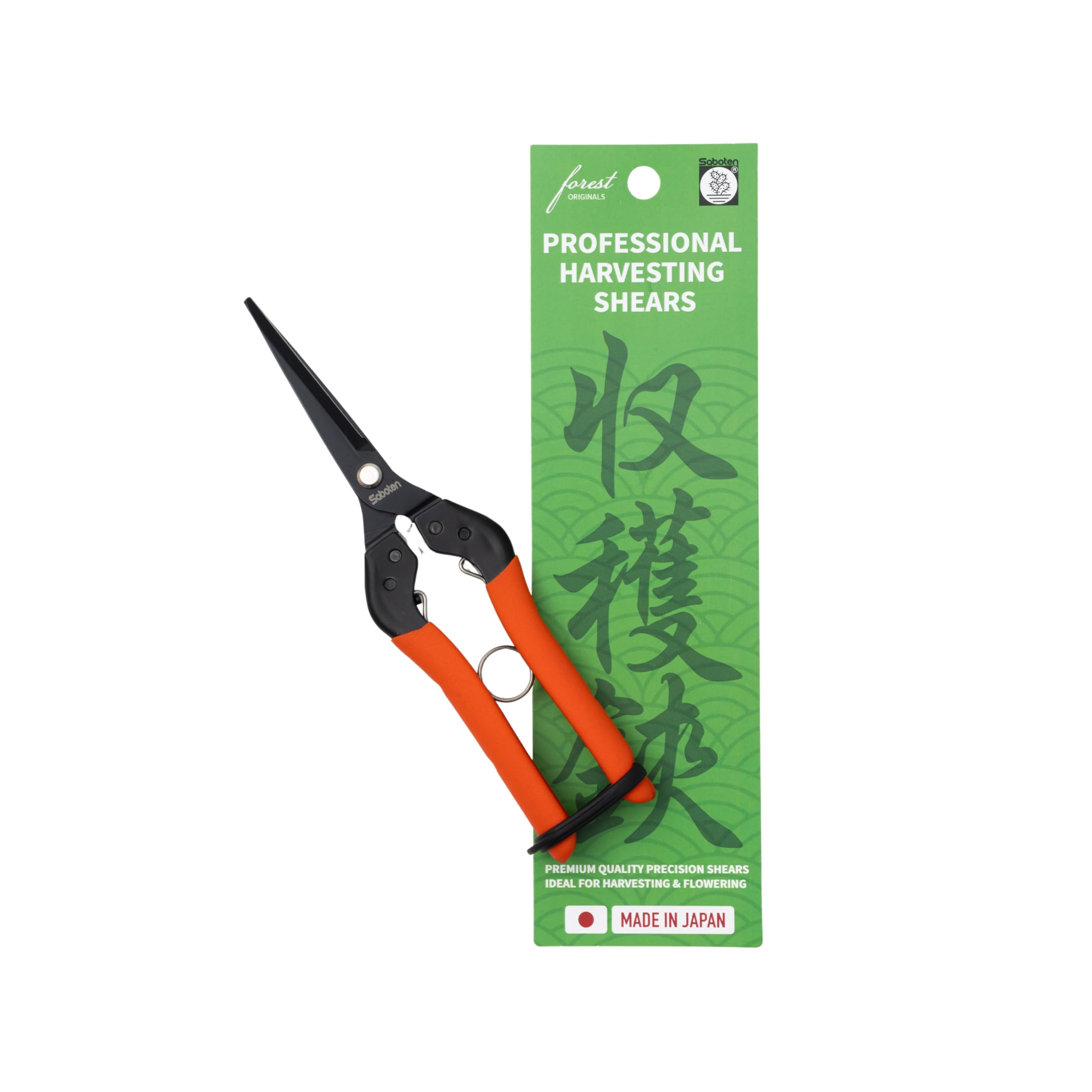
The Saboten shears bring a fluorine coating to the blade — a real advantage for anyone tired of scrubbing sticky sap off their pruners. The coating helps the stainless steel slice through green canes and reduces buildup, so a quick wipe keeps it clean. The 7.9-inch length gives you the best reach-to-weight ratio of the hand-held picks, letting you reach deeper into the foliage without bending stems.
Built in Japan, these shears earn high marks for quality and sharpness across dozens of owners. The spring-loaded mechanism and shock-absorbing cushion handle make high-volume harvesting noticeably less fatiguing than a static pair of scissors. Buyers confirm it cuts “hollow stem perennials with ease.” It is slightly heavier and larger than the Felco, but the added reach and sap-resistant blade make it a strong contender for a mid-range workhorse.
The edge it has: The fluorine coating is a genuine time-saver for anyone who prunes for more than 20 minutes at a time.
Who it fits: The gardener who wants a well-balanced, comfortable pair of shears for long afternoons in the vineyard.
Who it doesn’t: Those seeking a tiny pocket snipper — at 7.9 inches, it has more length than the CHIKAMASA.
5. Gardeness Gardening Scissor 2 PCS Curved Serrated Blade Pruning Shear
A curved blade that cradles fruit instead of crushing it.
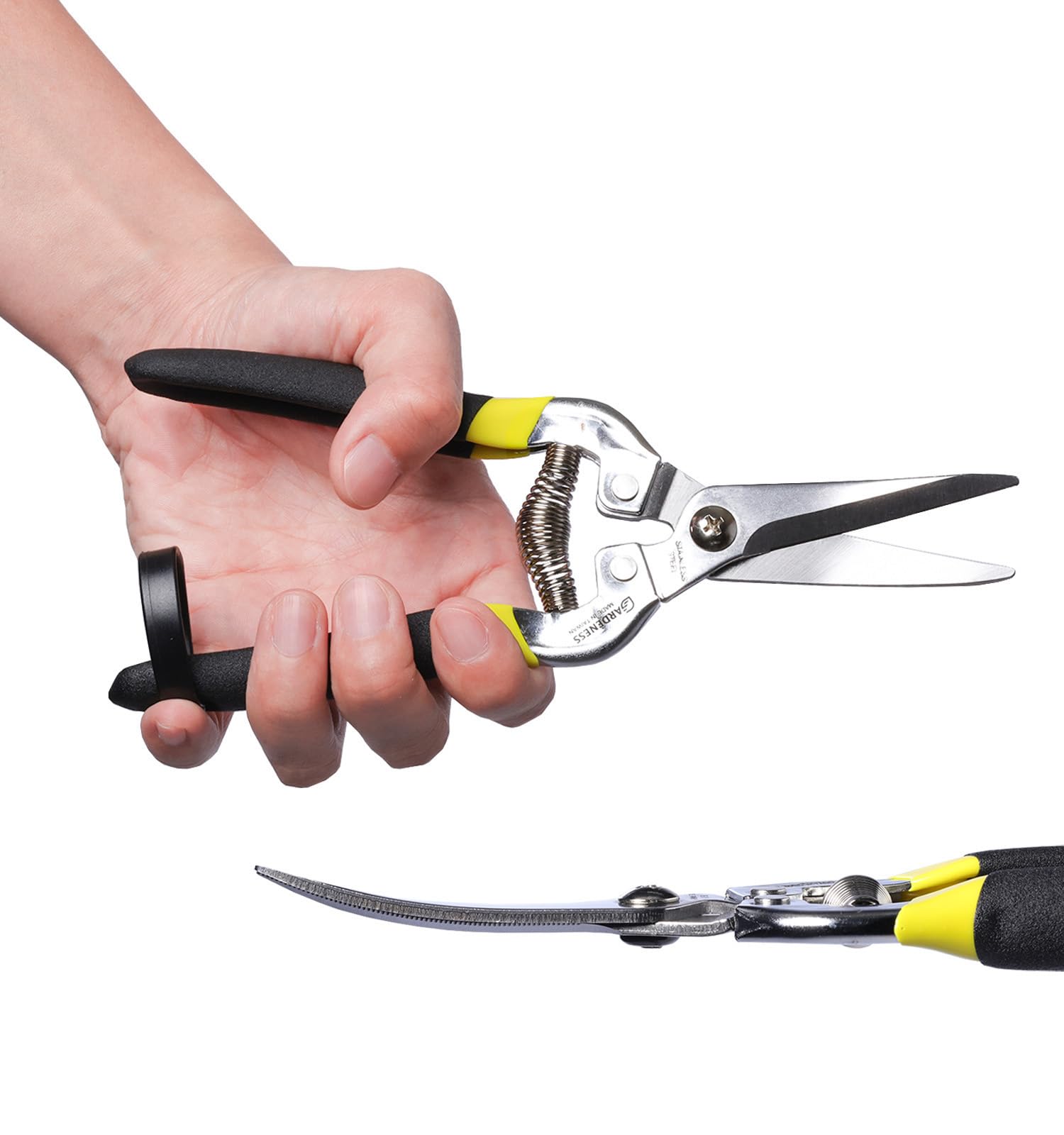
These Gardeness shears are designed with a specific mission: make fruit-picking damage-free. The curved, serrated blade glides around a grape cluster without piercing or bruising the fruit. The 1.2-inch cutting width is generous for the green stems of a harvest bunch. At 14.4 ounces for the two-pack, they have a solid feel, and the chrome-plated metal handles with PVC coating give a secure grip.
Owners appreciate the sharpness and the ability to get into small spaces, though the spring mechanism receives mixed feedback — some find it snappy and responsive, others have reported it can be stiff. The carbon steel blades need diligent drying to prevent rust, as a buyer pointed out. But the value of having two identical shears is clear: one stays in the garden, one in the kitchen or kit.
Perfect for: The harvest-focused grower who wants a dedicated pair for fruit picking and a backup ready to go.
Note: The mixed spring feedback means check the action on arrival; if it’s stiff, a drop of oil usually solves it.
6. ARS HP-VS8Z Signature Heavy Duty Pruner

A Japanese-made pruner that professionals call the best they’ve ever used.
The ARS HP-VS8Z has a reputation that precedes it in the pruning world. It uses a parrot-beak style blade with hard chrome plating to resist rust and sap. Owners with over 15 years of landscaping experience rank it above the Felco line for sharpness and durability. The 8-inch length is designed for average-sized hands, making it a precision tool for cutting live canes and small branches.
what separates it is the thoughtful engineering. The central spring ages better than the coil springs on other brands, resisting rust and maintaining lighter resistance. The squeeze-to-open up mechanism can be stiff initially but eases with use. A buyer noted it can cut “excellent on hardwood” and highlighted the superior blade edge retention. It is a serious tool for the committed pruner.
The head-to-head fact: This ARS pruner shaves significant weight off your hand compared to bulkier loppers, giving you better control on intricate cuts.
Who this fits: The serious gardener or small-scale vintner who wants a single, buy-it-for-life pruner for the bulk of their work.
Consider this: The locking mechanism has a learning curve and receives mixed feedback — practice it a few times before heading to the trellis.
7. The Gardener’s Friend Heavy Duty Ratchet Pruning Shears

The ratchet mechanism cuts thick branches in stages, requiring far less hand strength.
The ratchet mechanism on these shears is the headline feature. Instead of cutting a branch in one go, it slices in stages — making it possible to cut branches up to a full inch thick with far less hand strength. The anvil blade (which chops against a flat surface) is paired with a neoprene insert that holds the stem steady while you cut, so branches don’t slip out mid-squeeze.
This tool is a true ally for arthritic hands. Owners say it “cuts branches up to 1/2 inch easily” with no hand pain even after an hour of pruning. The lock/open up mechanism, however, gets the most negative feedback in the reviews — many find it too difficult to open, though it eases with use. The ratchet action means it is a larger, heavier tool, but for thick grapevine trunks that the Felco can’t touch, this is the right choice.
Reach for this if: You have arthritis or just want maximum leverage for thick, woody canes that other pruners can’t handle.
A fair warning: The lock is stiff at first, and the anvil design can crush green stems if you’re not precise.
8. GARTOL Cut & Hold Pole Pruner

The tool that lets you prune high vines without climbing a ladder.
When a grapevine climbs up a pergola or a high trellis, a hand-held pruner just won’t cut it. The GARTOL pole pruner extends to 51 inches, keeping your feet safely on the ground. It uses a Japanese SK5 steel bypass blade that cuts up to half an inch — perfect for green canes and small shoots overhead. The “cut and hold” feature is the real trick: a small gripper catches the branch you just cut, so you don’t have to pick fallen twigs out of the grapevines.
This is not a tool for heavy trunk pruning, but for maintenance and harvest access, it is genuinely useful. The 180° rotating handle lets you cut at awkward angles without straining your wrist. It weighs just 1.45 pounds, which is light enough to hold up for several cuts. One owner mentioned the blade lock is a button you need to find, but after that, it’s “light weight, well made and easy to use.”
Where it beats the competition: Unlike the Fiskars loppers, this is for one-handed precision overhead — you can snip and hold a single cluster or shoot without any bending.
Best for: Gardeners with tall trellises or pergolas who need to prune overhead without a ladder.
Keep in mind: Not for thick, woody branches — stick to green canes up to half an inch.
9. Fiskars 32” PowerGear2 Garden Bypass Loppers

The final word in leverage — cuts through two-inch wood with almost no effort.
This is the big gun. When a grapevine trunk has gone woody or a neglected arbor has canes an inch thick, you want the Fiskars PowerGear2 loppers. They use a patented gear mechanism that multiplies your force, slicing through branches up to 2 inches thick. Owners say it “cuts through them like butter — almost no effort required.” The 32-inch handles give you the leverage to tackle the toughest pruning jobs in your yard.
At 3.9 pounds, this is a serious tool, not a pocket snipper. The weight is a trade-off: owners note “they are heavy and your arms may get tired” and that the wide handle opening can be hard to manage in tight canopy spaces. But for durability, it is class-leading — one owner reported the tool lasted over 15 years without sharpening. It is the last tool you need for winter vineyard cleanup.
The Strength
- Cutting power is extraordinary — 2-inch capacity with minimal user strength
- Low-friction coating keeps the blade smooth and rust-resistant
- Lifetime warranty backs up the build quality
The Trade-Offs
- Heavy at 3.9 pounds, and the long handles need a lot of space
- Not suited for detailed vineyard work, only heavy branch removal
Keep this for: Annual winter pruning of old wood and cleaning up thick branches around the vineyard.
Don’t reach for this: If you only need to snip green canes or harvest clusters — the Felco or CHIKAMASA is a better daily carry.
Understanding the Specs
Cutting Width
This is the maximum thickness of a branch the tool can snip. For green grape canes and harvest stems, a 0.2-to-0.5-inch cutting width is plenty. If you plan to prune dormant, woody canes, look for a tool that handles at least 0.75 inches. A wider cutting width usually means more weight and larger handles.
Blade Coatings
Sap from grapevines is sticky and can gum up a blade quickly. Standard steel blades require wiping and oiling after each use. A low-friction coating (like fluorine or hard chrome) helps the sap slide off, meaning less cleaning time and a smoother cut. Uncoated carbon steel is incredibly sharp but demands diligent care to prevent rust.
FAQ
What is the best type of pruner for grapevines?
Can I use regular garden shears for pruning grapes?
How often should I sharpen my grape pruning shears?
What does a ratchet mechanism do and do I need it?
Is a heavy pair of loppers necessary for grapevines?
How do I clean and maintain my pruning tools?
What is the difference between a bypass and an anvil pruner for grapes?
Can I use a pole pruner for grape harvesting?
Final Thoughts: The Verdict
If you want one dependable pick, the best grape pruning tools winner is the Felco F310 Pruning Snips because it delivers a strong balance of razor-sharp quality, comfortable weight, and precision for daily vine work. If you want the ultimate in reach and power for thick trunks, grab the Fiskars PowerGear2 Loppers. And for fast, kitchen-ready snipping, the CHIKAMASA Compact Orange Grape Scissors are the lightest, most dedicated grape harvesters you can buy.
How We Picked
We do not accept paid placement. Every pick is matched to a real buyer and a real use-case; we do not hands-on test units.
Sources & Methodology
Specifications: manufacturer listings and product documentation. Review insights: verified customer reviews, as of July 2026. Pricing: not shown on this page (it changes often); check the current price via the retailer link.
As an Amazon Associate, Lawn Gear Lab earns from qualifying purchases. This does not affect which products we feature.