
Specs are compiled from manufacturer listings and verified buyer reviews and can change over time — please confirm the key details on the product page before buying.
Goosegrass laughs at a single pass. It spreads low, throws out tough seed heads, and by midsummer you are staring at a patch of wiry clumps that shrug off most sprays. The trick is stopping the next generation before it germinates. That means picking a herbicide that targets goosegrass by name on the label, not just “grassy weeds” as an afterthought. The three picks here all list goosegrass, but they go after it in very different ways.
I’m Rikta — the founder and writer behind Lawn Gear Lab. This guide is built by comparing the manufacturers’ published specifications and the patterns across verified customer reviews, so you get each pick’s real strengths and trade-offs instead of marketing spin.
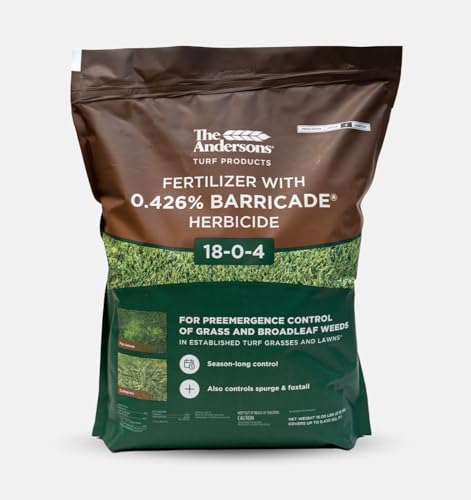
For a spring pre-emergent that feeds the lawn at the same time, go with The Andersons 18-0-4 Barricade. For a spot-spray that knocks back existing goosegrass patches, the Bonide Sedge Ender is your tool. For a granular all-in-one for both warm and cool season turf, the Bonide ProZone Weed Beater Complete is the budget-friendly broadcast option. This roundup of the best goose grass herbicide options breaks down exactly what each product does best, and where it falls short.
Our Picks at a Glance
How To Choose The Best Goose Grass Herbicide
Goosegrass thrives in compacted soil and heat. A pre-emergent (a chemical barrier you put down before seeds sprout) applied in early spring, when soil temperatures hit 55°F, is your first and best line of defense. If you missed that window, a post-emergent (a weed killer you apply to existing plants) spot spray can knock back existing plants. Your grass type — warm or cool season — decides which active ingredients are safe to use over the whole lawn.
Pre-Emergent vs Post-Emergent
A pre-emergent (like prodiamine) creates a chemical barrier in the top layer of soil. It stops goosegrass seeds from rooting. It will not kill plants already up. A post-emergent (like sulfentrazone) works on contact or through the leaf, killing the weed from the top down. Some products combine both, but you need the right timing for each.
Active Ingredient Matters
Not every weed killer touches goosegrass. Prodiamine is among the most reliable pre-emergent options, and it is the active ingredient in the highest-rated pick here. Sulfentrazone works post-emergent on goosegrass and nutsedge without harming most lawn grasses. Always confirm the label lists goosegrass before you buy — broad claims like “grassy weed control” often miss this specific weed.
Quick Comparison
| Model | Best For | Coverage | Active Ingredient | Form | Amazon |
|---|---|---|---|---|---|
| The Andersons 18-0-4 Barricade★ Best Overall | Season-long pre-emergent prevention | 5,000 sq ft | Prodiamine | Granule | Amazon |
| Bonide Sedge Ender | Targeted spot-spray on existing weeds | 8,700 sq ft | Sulfentrazone | Spray | Amazon |
| Bonide ProZone Weed Beater Complete | Pre and post control in one spread | 5,200 sq ft | Granules | Granule | Amazon |
In‑Depth Reviews
1. The Andersons 18-0-4 Barricade Fertilizer with Pre Emergent Weed Control
Our pick — over 4.5★ from 300+ verified ratings; the strongest balance of quality and price.
Stops goosegrass before it appears, and feeds your lawn in the same pass.
You put this down in early spring, when the forsythia blooms, and then forget about goosegrass for months. The active ingredient is 0.426% prodiamine, a pre-emergent that blocks goosegrass, crabgrass, poa annua, and 27 other grassy and broadleaf weeds from rooting. It comes as a dispersible granule that dissolves quickly when watered in, moving the prodiamine straight into the soil surface where the seeds are waiting.
The 18-0-4 fertilizer mix feeds the lawn with nitrogen at the same time, so you get thick green growth that crowds out anything trying to break through. Owners running a Scotts spreader report an easy, even application, and the crowd of 300+ four-and-a-half-star ratings confirms the repeat-buy habit. The recurring verdict among owners: it stops crabgrass cold and leaves the lawn the greenest on the block. “Great on my zoysia grass lawn in texas,” one buyer reports. The trade-off is you must apply it before weeds pop up — this product will not kill existing goosegrass.
Strategic pro: The prodiamine barrier lasts the whole growing season when timed right, and the fertilizer kick gives you a head start on lawn density. Unlike the Bonide Sedge Ender, this handles prevention, not cure.
Reach for it if: you want one early-spring application that prevents goosegrass and feeds the lawn at the same time. It is the single most effective preventive tool on this list. Pick the Bonide Sedge Ender instead if you already have goosegrass up and growing — this will not touch it.
2. Bonide Sedge Ender, 16 oz Ready-to-Spray Weed Killer

Takes out goosegrass down to the root without harming your lawn, using a hose-end sprayer.
When you already see goosegrass clumps in your turf, this is the product to reach for. The active ingredient is sulfentrazone, a post-emergent herbicide that kills grassy weeds — goosegrass, crabgrass, and nutsedge — by entering through the leaves and traveling to the roots. It comes as a 16-ounce ready-to-spray that attaches to a garden hose. One bottle treats between 2,000 and 8,700 square feet, depending on the dilution you choose. That is 8,700 sq ft versus the Andersons Barricade’s 5,000 sq ft, giving you flexibility for larger or smaller infestations.
It works on both warm and cool season grasses — bluegrass, ryegrass, fescue, Bermuda, and carpetgrass — so it is safe for almost any lawn type if you follow the rate. The formula is rainproof within hours, meaning you do not lose the application if a shower rolls through after spraying. Effectiveness is the most-discussed aspect in the reviews, and the consensus is clear: nutsedge and goosegrass die off within one to two weeks. “Saw die-off in 1-2 weeks, reduced infestation to 10%,” one owner notes. The catch is the sprayer’s on/off dial has a notoriously stiff lock that some owners had to free with pliers, and the liquid can be thick enough that shaking the bottle thoroughly is essential to get consistent suction.
What wins people over
- Kills goosegrass down to the root without harming Bermuda or fescue lawns
- Rainproof after drying — no re-application needed after a rain
- Covers up to 8,700 sq ft from a single 16-oz bottle
The honest limitations
- Hose-end sprayer dial can be difficult to open up; may require a tool
- Thick liquid needs vigorous shaking to spray evenly through the tube
Grab it for: targeted post-emergent control of goosegrass patches you can see today. It is the fastest way to clear an infested area without damaging your lawn. A simpler choice than the Andersons Barricade if you already have weeds, but it does not prevent future seeds.
3. Bonide ProZone Weed Beater Complete, 10 lb. Ready-to-Use Granules

A dry granule that promises to handle weeds before and after they sprout — but results vary.
This product takes a different approach: it is a granular formula that you spread with a standard fertilizer spreader, and it claims both pre-emergent and post-emergent control of goosegrass, crabgrass, nutsedge, ground ivy, and more. A single 10-pound bag covers 5,200 square feet, close to the Andersons Barricade’s 5,000 sq ft, and it is labeled safe for warm and cool season grasses alike. The key appeal is simplicity — you spread it dry, water it in, and the systemic action is supposed to move from the leaf to the root on existing weeds while also stopping new ones from germinating.
The catch is reliability. The 388 ratings average sits lower than the other two picks, and the single most-discussed aspect — effectiveness, with 72 mentions — carries a “mixed” verdict from Amazon’s own analysis. Some buyers report it wiped out every weed in the yard; others spread it exactly as directed and saw nothing die. As one buyer put it: “This product was recommended for crabgrass. New and existing, however nothing has died in my yard. Nothing!” Reviews that praise it describe slower action — some weeds needing a second application — and persistent crabgrass even after treatment. It is not that the product is bad; it is that the results are weather- and timing-dependent, and the granular form may be less reliable than a targeted spray for established goosegrass.
Honest fit: This works best as a maintenance spread on a lawn with light weed pressure, where you want convenience over precision. For guaranteed knockdown of existing goosegrass, the Bonide Sedge Ender spray is a safer bet.
Best for: the homeowner who wants one product they can broadcast across the whole lawn in spring without mixing or spraying, and who is okay with moderate results on heavier infestations. Budget-conscious buyers who weigh convenience over certainty will get the most out of this one.
Understanding the Specs
Prodiamine
This is the active ingredient in the top-rated pick. It is a pre-emergent herbicide that stops goosegrass seeds from germinating by disrupting root development at the soil surface. You apply it in early spring before soil temperatures hit 55°F. It will not kill existing weeds — timing is everything.
Sulfentrazone
A post-emergent active ingredient found in the Bonide Sedge Ender. It works by entering through the leaf tissue and moving down to the roots, killing the whole plant. It is selective, meaning it targets grassy weeds like goosegrass and nutsedge while leaving most lawn grasses unharmed.
FAQ
Can I use a goosegrass herbicide on a new lawn?
How long does prodiamine last once applied?
Is sulfentrazone safe for Bermuda grass lawns?
Will a granular weed killer work on goosegrass that is already growing?
What is the difference between crabgrass and goosegrass control?
How much area does a 16-ounce bottle of spray cover?
Can I mix a goosegrass herbicide with fertilizer in one pass?
What should I do if a granular herbicide does not kill goosegrass?
Final Thoughts: The Verdict
The best goose grass herbicide for you depends on your timing. For most buyers, the The Andersons 18-0-4 Barricade Fertilizer wins because it delivers the most reliable pre-emergent barrier — backed by a 4.6-star rating across over 300 owners — while feeding the lawn at the same time. If you need to knock back existing goosegrass patches, the Bonide Sedge Ender is the proven post-emergent spray. And for a budget-friendly broadcast option on light weed pressure, the Bonide ProZone Weed Beater Complete is the one to reach for.
How We Picked
We do not accept paid placement. Every pick is matched to a real buyer and a real use-case; we do not hands-on test units.
Sources & Methodology
Specifications: manufacturer listings and product documentation. Review insights: verified customer reviews, as of July 2026. Pricing: not shown on this page (it changes often); check the current price via the retailer link.
As an Amazon Associate, Lawn Gear Lab earns from qualifying purchases. This does not affect which products we feature.