
Specs are compiled from manufacturer listings and verified buyer reviews and can change over time — please confirm the key details on the product page before buying.
The single biggest mistake most people make when cleaning up a flower bed is grabbing a spray that can’t tell the difference between a weed and a prized petunia. You want the weeds gone — the crabgrass, the Bermuda, the clover stealing water and light from your blooms — without setting your landscaping back weeks. The right selective formula makes that possible. The wrong one turns your garden into a brown wasteland.
I’m Rikta — the founder and writer behind Lawn Gear Lab. This guide is built by comparing the manufacturers’ published specifications and the patterns across verified customer reviews, so you get each pick’s real strengths and trade-offs instead of marketing spin.
The crowd favorite for flower-bed safety comes in a concentrated pint, but the absolute fastest-acting option shows results within a day and a half. Use this breakdown of the best good weed killer for flower beds to find the one that matches your weeds, your patience level, and your garden size.
Our Picks at a Glance

How To Choose The Best Good Weed Killer For Flower Beds
Picking a weed killer for your flower beds depends on one rule above all: the formula must be selective. That means you need a product that kills grassy weeds — the crabgrass, Bermuda, quackgrass, foxtails, and Johnson grass — without harming your broadleaf ornamentals (flowering plants with wide, flat leaves), shrubs, and flowers. The other big choices are if you want a concentrate you mix yourself or a ready-to-use spray, and how fast you need to see results.
Selective vs Non-Selective
A non-selective herbicide (a weed killer that kills every plant it touches, like glyphosate) kills everything green it touches. That is fine for a patio crack or a gravel driveway, but in a flower bed it is a disaster. You want a selective herbicide that targets grass-family weeds specifically. Look for active ingredients like fluazifop-p-butyl, clethodim, or sethoxydim — these are designed to shut down grass growth while leaving broadleaf plants alone.
Concentrate vs Ready-to-Use
Ready-to-use (RTU) trigger bottles are grab-and-go convenient for small beds or spot-treating a few stray weeds. They are also expensive per square foot. Concentrate requires a separate sprayer and some mixing math, but you get a lot more coverage per dollar. If you have more than a few hundred square feet of beds, a concentrate is almost always the smarter buy.
Speed of Action
Some formulas show visible wilting within hours (contact herbicides like diquat, which burns leaf tissue on contact), but they only kill the leaves — the roots can regrow. Systemic herbicides (like fluazifop-p-butyl) take days to weeks, but they travel through the plant and kill the roots. For pernicious perennial grasses (grasses that come back year after year) like Bermuda, a systemic is the only real solution.
Quick Comparison
| Model | Best For | Active Ingredient | Coverage | Form | Amazon |
|---|---|---|---|---|---|
| Diquat Weed Killer★ Best Overall | Fast visual results (1-2 days) | Diquat | 500 sq ft | Concentrate | Amazon |
| Ferti-lome Over The TopAlso Great | Flower bed safety + big areas | Fluazifop-p-butyl | 2,000 sq ft per 8 oz | Concentrate | Amazon |
| Gordon’s Ornamec 170Top Performer | Stubborn Bermuda / Johnson grass | Fluazifop-p-butyl | — | Concentrate | Amazon |
| Hi-Yield Grass Killer | Bermuda in ornamentals | Fluazifop-p-butyl | Up to 14,400 sq ft | Concentrate | Amazon |
| Whitetail Arrest Max | Large food plots & clover beds | Clethodim | 1–4 acres | Concentrate | Amazon |
| Agrisel GrassOut Max | Targeting 50+ grass types in beds | Fluazifop-p-butyl | 7,272 to 15,294 sq ft | Concentrate | Amazon |
| Syngenta Fusilade II | Selective grass control in turf & ornamentals | Fluazifop-p-butyl | 1,000 sq ft | Concentrate | Amazon |
| Ortho Weed B Gon | Lawn-friendly spot treatment | 2,4-D / Dicamba / MCPP | — | Ready-to-Use | Amazon |
In‑Depth Reviews
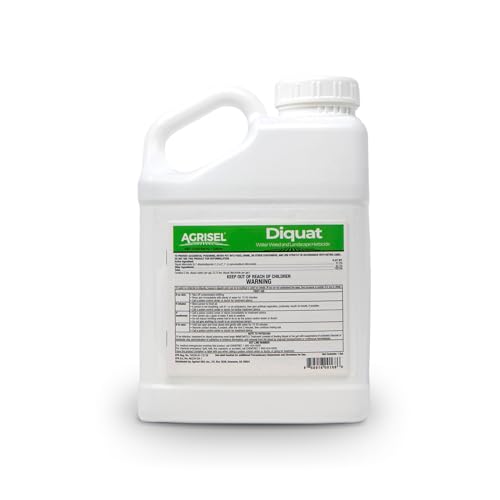
1. Diquat Weed Killer, 128 Ounces
Our pick — 4.5★ from 250+ verified ratings; the strongest balance of quality and price.
The fastest visual results in the lineup — customers note seeing weeds start dying within 24 hours after spraying.
Diquat (a contact herbicide that burns leaf tissue on contact, not a systemic) is a contact herbicide, meaning it burns through the leaf tissue it touches rather than traveling through the plant slowly. That is why the feedback is so consistent: people see results in one to two days. One typical owner report: “I used this on the weeds that popped up after all the recent rain, and within 24 hours they were already dying.” This makes it an excellent choice if you have an immediate cosmetic problem — a bed suddenly overrun after a rainy week and you want the weeds gone fast.
The catch is that a contact killer does not travel to the roots. Established perennial grasses like Bermuda will regrow from the root system within a few weeks. So this is best used as a quick knockdown tool, often combined with a systemic product for follow-up. It also has a much smaller coverage area (500 square feet) despite the 128-ounce bottle,; the Fertilome concentrate covers 2,000 square feet per 8-ounce bottle. A very small number of units have arrived with leakage problems in shipping. It is also effective on aquatic weeds in ponds, making it a versatile option if you manage both land and water features. You get speed here, but you give up root kill — unlike the systemic Fertilome, this requires repeat sprays for any perennial grass.
Speed demon: If you need visible weed death by tomorrow afternoon, this is the one. Just plan for follow-up sprays if the weeds are perennial and deep-rooted. The 128-ounce size gives you a lot of mixed solution for spot treatments.
Use it when: You need instant gratification — a bed that was fine last week and is now a weed farm. It knocks them down while you plan the long-term strategy.
Not the answer for: Persistent Bermuda, Johnson grass, or any grass with a deep root system that requires a systemic for complete eradication.
2. Fertilome 8 Oz Over The Top Grass Killer
The bed-saver that kills grassy weeds but leaves your flowers and shrubs rooted and green.
This is the pick most likely to suit a gardener with mixed beds — shrubs, roses, vegetables, and ornamentals all in one space — because the fluazifop-p-butyl formula (a systemic grass killer absorbed through leaves) is built specifically to target grass weeds while letting broadleaf plants thrive.
Buyers report that Bermuda grass in flower beds typically dies after about three weeks, confirming that this is a slow-acting systemic killer — it works from the roots up rather than just scorching the leaves. Reviewers consistently say it is safe for their roses, monkey grass, and shrubs, which come through unharmed. The main drawback is that the occasional unit arrives dented or leaking, so inspect the bottle on delivery. Unlike the faster Agrisel Diquat, you will not see dead weeds in 24 hours, so patience is required.
Slow but thorough: This is the one to reach for if you can wait a few weeks for complete kill and you value flower-bed safety above instant satisfaction. skip it if you need a quick cosmetic fix — the visible dieback takes over a week on most grass types.
Reach for this if: You want the widest safe zone around your ornamentals for the lowest cost per square foot, and you have the patience to let a systemic do its job.
Look elsewhere if: You need to see dead weeds in 24 hours, or you are treating tall grass over six inches tall where it only stunts rather than kills.
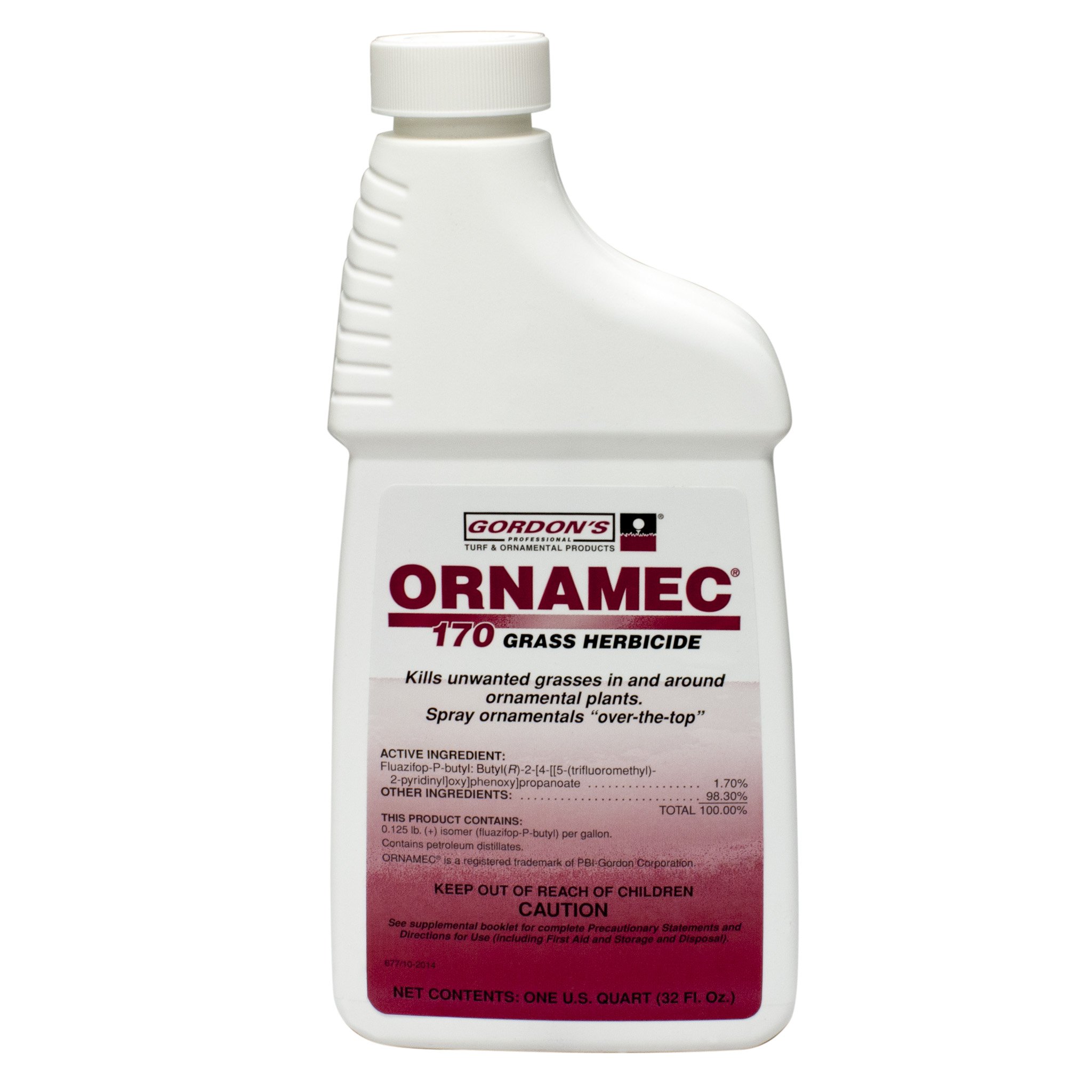
3. Gordon’s Ornamec 170 Grass Herbicide
Built for the landscaper who needs to kill stubborn perennial grasses without harming ornamental plantings.
Ornamec 170 is engineered for maintenance of landscape beds — its fluazifop-p-butyl chemistry stops grass growth within 48 hours, with full death following in one to three weeks. That two-day visible halt is similar to the Fertilome product, as both stop grass growth within 48 hours. The biggest advantage here is the grass spectrum: you get control over Bermuda grass, quack grass (a fast-growing perennial grass), torpedo grass, and Johnson grass — the perennial monsters that non-selective sprays often miss because they regrow from deep roots.
The trade-off is cost. Reviewers consistently call it pricey, but they also say a single application took care of most of the Bermuda in their beds. A few note you may need two or three coats for a complete kill on thick stands. It has a strong following among people fighting Bermuda invasions because it does not harm Kentucky Bluegrass or landscaping plants, which is a rare combination. A tiny number of units arrive with damaged packaging, but the product chemistry itself gets high marks from repeat buyers. If your problem is Bermuda, this is sharper than the Hi-Yield Grass Killer at the same job, even though both use fluazifop-p-butyl.
Perennial power: If your flower beds are fighting Bermuda, torpedo grass, or Johnson grass — the tough stuff that shrugs off weaker formulas — this is your best bet. The premium price per bottle buys control over the grass types that typically win the war.
Target it at: Established beds overrun with perennial grasses that require a strong systemic approach. One treatment gets most of the job done.
Give it a miss if: Your problem is just a few stray crabgrass clumps in a tiny bed — you would get more economical coverage from a concentrate with a longer reach.
4. Hi-Yield (31134) Grass Killer Postemergence Grass Herbicide
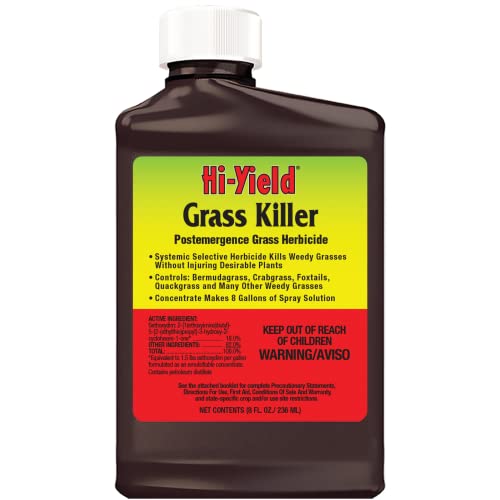
A concentrated post-emergent that gives you up to eight gallons of spray solution for the same active ingredient as more expensive bottles.
A single 8-ounce bottle makes up to eight gallons of spray solution — the same active ingredient (fluazifop-p-butyl) as the premium brands, at a lower shelf price. It targets the same grassy weed range (annual grasses that die each year and perennial grasses that return) and, like all products in this class, should be applied around vegetables, gardens, trees, shrubs, and ornamentals safely. It is an ideal economical alternative for the gardener who already knows they are dealing with grass-family weeds and does not need the prestige of a big brand name.
Reviewers regularly confirm it kills Bermuda grass in flower beds and handles crabgrass with very little damage to monkeygrass. A few report it took three to four weeks to fully kill Japanese stilt grass, and one noted the formula appeared to do nothing on tough patches after multiple applications. A recurring piece of advice that buyers pass along is that you absolutely need to add a crop oil surfactant (a sticky additive that helps the spray cling to waxy leaves) — without it, the liquid evaporates too fast to work. If you skip that step, your results may disappoint. That is an extra step you do not need with the Fertilome, though you pay more for that convenience.
Budget-conscious Bermuda fighter: This is what you want if your flower beds are fighting a specific grassy weed and you prefer a concentrate that stretches across multiple spray sessions. The additive required (crop oil) is a tiny extra cost and a big difference maker.
Pick it for: The value per gallon mixed — if you have large beds or multiple properties, this 8-ounce bottle goes a long way for the money.
Think twice if: You want an all-in-one bottle with a surfactant already added, or you need a guaranteed quick result with no extra mixing steps.
5. Whitetail Institute Arrest Max Selective Grass Control

A food-plot specialist that doubles as a flower-bed powerhouse when you need acre-level coverage without harming clover or alfalfa.
Arrest Max uses clethodim chemistry (a different active ingredient from fluazifop-p-butyl), not fluazifop-p-butyl, giving you a different mode of action against grassy weeds. That is important for rotation — if one active ingredient is starting to yield weaker results in your beds, switching to clethodim can restore full control. Coverage is its headline number: a single 16-ounce pint can treat up to four acres (about 174,240 square feet), making it by far the strongest value in this list for large-scale work. It is safe for use with clover and alfalfa, which means it is perfect for pollinator-friendly beds and wildflower patches.
Owners mention that seven days after spraying you see yellow and purple streaking in the grass, and full die-off occurs around day 13. Owners consistently report that their clover and chicory plantings remain unharmed while the grass disappears. The bottle is concentrated, so you will need a garden sprayer and crop oil for adhesion. A small number of buyers found it ineffective on specific grass types, likely because application timing or surfactant use was off. Read the label carefully before mixing. For a bed measured in acres, this gives you more coverage per dollar than the Fertilome, but it is slower to show results.
Acre-level control: If you have a large flower bed, a community garden plot, or a field border you want to keep clean, this is the most efficient concentrate by total area covered. The clethodim chemistry is a valuable tool for rotating actives.
It suits: Anyone with beds measured in acres rather than square feet, and anyone growing clover, alfalfa, or other broadleaf forage alongside their flowers.
Not for you if: You want to see dead weeds this weekend — this is a multi-week systemic, not an overnight knockdown.
6. Agrisel GrassOut Max Weed Killer, 16 Ounces
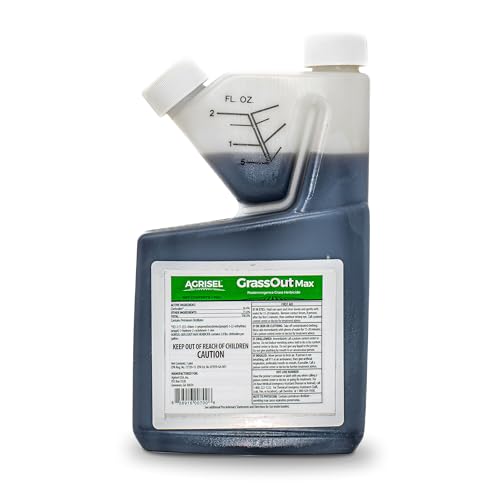
A selective that targets over 50 grassy weed types while being pet safe when dried, with a huge coverage area per bottle.
GrassOut Max brings impressive coverage numbers — its application rate of 1.1 to 2.3 ounces per 1,000 square feet means a single 16-ounce bottle covers between 7,272 and 15,294 square feet. That is a large range depending on the dilution you choose, but it puts this product in the same league as the Hi-Yield and Fertilome for area efficiency. The formula targets more than 50 types of grassy weeds without harming your flowers, shrubs, and broadleaf plants. It is also labeled as pet safe once the spray has dried, which is an important distinction for families with dogs that roam garden beds.
Reviewers point out it takes 7 to 10 days for grasses to start dying, with full results requiring patience and careful adherence to the label. One reviewer with dense ground cover grass used three sprays over time, and the grass died without harming the ground cover. However, effectiveness gets mixed marks from the broader owner community — some people find it did not work on their specific weed type, so success varies by grass species. As with most concentrates, you need a separate sprayer and careful mixing. The pet-safe label when dry is a genuine bonus that the Fertilome does not advertise, though the Fertilome is used around gardens without issue.
Large-area specialist: If you have a big bed or a border running hundreds of feet, the coverage per dollar here is excellent. The pet-safe label (when dry) is a genuine bonus for homes with outdoor dogs.
Reach for it if: Your priority is covering the maximum square footage per bottle with a formula that is gentle on broadleaf ornamentals. Good for large, established beds with annual grassy weeds.
Think twice if: You need visible results in under a week or you are treating a small, specific patch where a ready-to-use spray would be more convenient.
7. Syngenta Fusilade Selective Herbicide II, 1 Quart
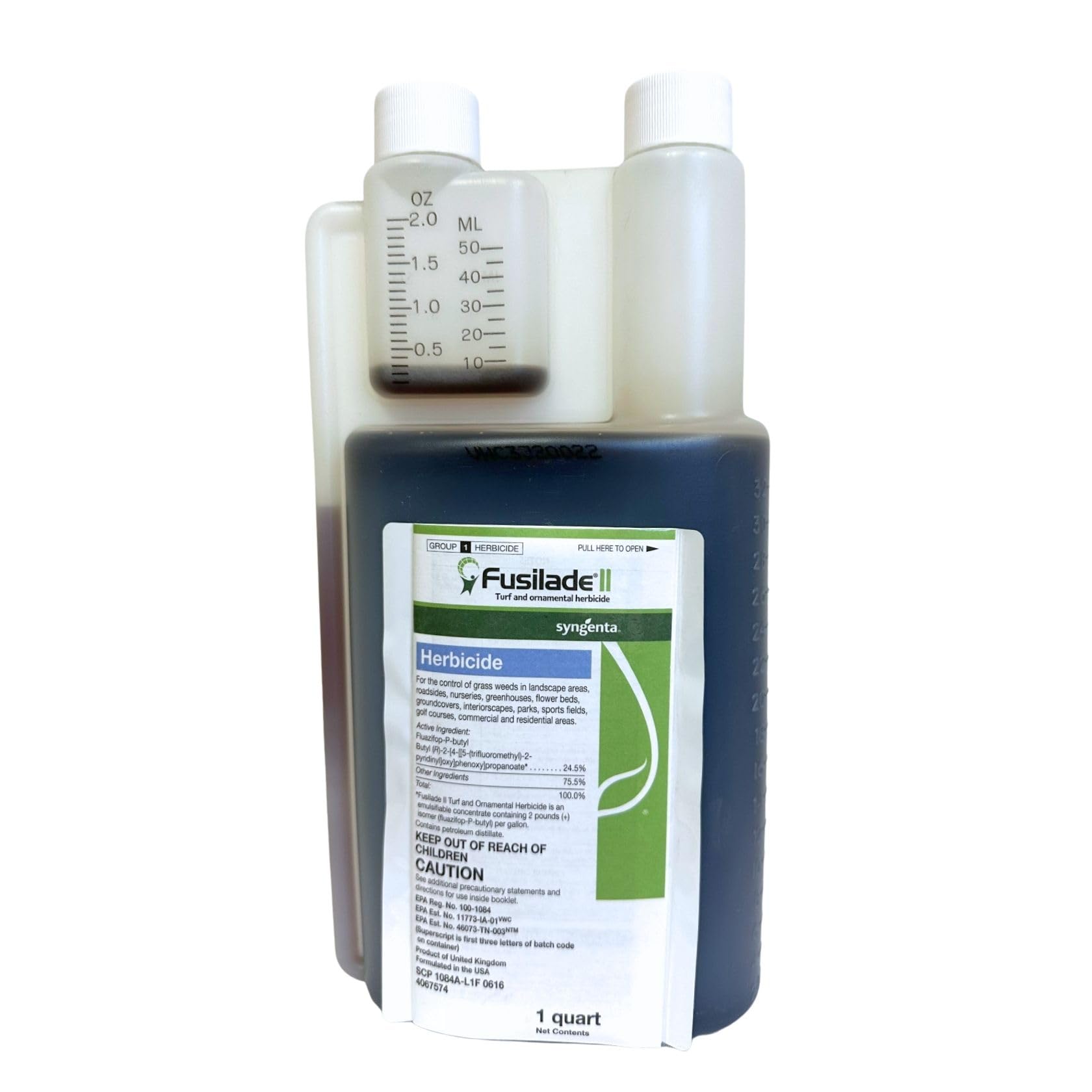
The pro-grade choice for controlled-rate spot treatments that surgically remove Bermuda from Zoysia and fescue lawns.
Fusilade II from Syngenta is the product that experienced turf managers reach for when they need precision. It is designed for both spot treatment and over-the-top application without damaging ornamental plants, and the feedback from owners is unusually detailed — people post specific ounce-per-gallon ratios they have tested. The most common recommendation is 0.2 ounces per gallon with a non-ionic surfactant (a wetting agent that helps the spray spread evenly) for Bermuda in Zoysia, killing over 90% of the invasive grass with minimal stunting. One owner in Texas found the ideal dose at 0.16 to 0.18 ounces per gallon for central Texas conditions.
Coverage is listed at 1,000 square feet per quart, which is modest compared to the huge area claims of other concentrates. That is because the intended use is precision spot treatment, not blanketing whole fields. The higher price per bottle reflects the Syngenta brand and the proven track record — this is the most consistently praised product in the group for actually killing Bermuda without collateral damage. A few shoppers say that Bermuda requires multiple treatments and that applying it during fall dormancy gives the best head start. For a small, high-value bed fighting Bermuda, this is more precise than the Ornamec 170, though that product gives more bottle for the money.
Surgical tool: If you have a specific grass-type problem in a small, high-value bed and you want the best chance of zero damage to your ornamentals, Fusilade II offers the most precise control. The detailed owner experiments with rates are a goldmine for DIY calibration.
Designed for: Anyone who wants to fine-tune their application rate and is comfortable mixing small batches with a surfactant. It is the go-to for Zoysia/fescue/Bermuda battlegrounds.
Not the choice if: You want the cheapest option per square foot for large beds — the coverage is intentionally restrained for precision, not broad area blanketing.
8. Ortho Weed B Gon Weed Killer, 24oz, RTU Trigger

A classic ready-to-use formula that targets dandelions and clover without damaging the lawn around your beds.
Ortho Weed B Gon targets broadleaf weeds in lawns — dandelions, clover, and over 250 other listed broadleaf weeds — and kills them to the root. It will not harm a lawn when used as directed. However, this is a different chemistry than the other products on this list: it is a broadleaf herbicide (kills broadleaf weeds, not grasses), not a grass-specific one. It is included here because many flower beds are adjacent to or surrounded by lawn, and the weed that is invading your beds is often the same broadleaf weed spreading through the turf.
The value here is convenience. The 24-ounce trigger sprayer is grab-and-go, requiring no mixing. Results come in hours, and the feedback is strong on ease of use and quality. The catch is effectiveness is inconsistent — for every reviewer who calls it essential for clover, another finds it left the weeds untouched. This is the nature of broadleaf weed control: different species respond differently. It is a solid complementary product to keep on hand for spot-treating broadleaf invaders in lawn areas near your beds.
Complementary tool: This is not your go-to for grassy weed invasions in flower beds, but it is excellent for maintaining the lawn perimeter around those beds. Keep it for dandelions and clover in the grass, not for Bermuda in the beds.
Best for: The lawn-to-bed transition zone where broadleaf weeds are crossing over. The no-mix trigger is ideal for spot-treating a few weeds before they take over.
Leave it for: Flower bed interiors where you need grass-specific chemistry — the 24-ounce volume is small for big beds, and the formula targets the wrong weed family.
Understanding the Specs
Active Ingredient — Fluazifop-p-butyl vs Clethodim vs Diquat
This is the chemistry that does the killing. Fluazifop-p-butyl is the most common in this lineup — a systemic (travels to the roots over one to three weeks) that is safe for broadleaf ornamentals. Clethodim (found in the Whitetail Arrest Max) works similarly but uses a different chemical pathway, which helps if weeds are starting to resist the other ingredient. Diquat is a contact killer that burns leaves within 24 hours but does not kill roots, so you need repeated sprays for perennial grasses.
Coverage Area — Square Feet Per Bottle
This tells you how far the concentrate stretches after mixing. The Fertilome covers 2,000 square feet per 8 ounces (enough for a moderate-sized bed). The Agrisel GrassOut Max covers a wide range (7,272 to 15,294 square feet) depending on your dilution rate — that is like covering a large yard. The Agrisel Diquat covers only 500 square feet despite having a 128-ounce bottle. Always compare coverage, not bottle size — a big bottle with dense application rates can run out faster than a small concentrate mixed lightly.
FAQ
Will any of these products kill my flowers if I spray carefully?
How long do I have to wait before the weeds actually die?
Can I use a lawn weed killer in my flower beds?
Do I need to add a surfactant or crop oil?
How many times should I spray to kill Bermuda grass completely?
Is it safe for pets and children after the spray dries?
What is the difference between a concentrate and a ready-to-use spray?
Can I apply this before or after rain?
Final Thoughts: The Verdict
Across the board, the good weed killer for flower beds winner is the Fertilome Over The Top Grass Killer because it offers the best balance of flower-bed safety, coverage (2,000 square feet per 8-ounce bottle), and proven performance on tough grasses like Bermuda. If you are fighting stubborn perennial grasses like Bermuda or Johnson grass, grab the Gordon’s Ornamec 170 — it stops grass growth within 48 hours and targets the hard stuff. And for large-scale beds or food plots measured in acres, the Whitetail Arrest Max is the one to reach for, with coverage stretching up to four acres from a single pint.
How We Picked
We do not accept paid placement. Every pick is matched to a real buyer and a real use-case; we do not hands-on test units.
Sources & Methodology
Specifications: manufacturer listings and product documentation. Review insights: verified customer reviews, as of July 2026. Pricing: not shown on this page (it changes often); check the current price via the retailer link.
As an Amazon Associate, Lawn Gear Lab earns from qualifying purchases. This does not affect which products we feature.