
Specs are compiled from manufacturer listings and verified buyer reviews and can change over time — please confirm the key details on the product page before buying.
The soil you choose for your vegetable garden is the single biggest decision you will make this season — it determines whether your tomato plants bear fruit by the bucketful or just limp along. The best good soil for vegetables balances moisture retention, drainage, and a steady feed of nutrients, so your plants spend their energy on growing instead of struggling. The aisle at the garden center is packed with bags that all look alike, but the ingredients inside are wildly different, and the wrong pick can mean stunted growth or even a surprise infestation of fungus gnats.
I’m Rikta — the founder and writer behind Lawn Gear Lab. This guide is built by comparing the manufacturers’ published specifications and the patterns across verified customer reviews, so you get each pick’s real strengths and trade-offs instead of marketing spin.
Whether you are filling a few patio containers or a whole raised bed, finding the right mix does not have to be guesswork — here is everything you need to pick the good soil for vegetables that will make your garden truly thrive.
Our Picks at a Glance


How To Choose The Best Good Soil For Vegetables
Picking a bag of soil is not as simple as grabbing the one with the prettiest label. Your vegetables depend on three things: a loose, fluffy structure so roots can spread easily, the ability to hold water without drowning the plant, and a steady supply of natural food. Here is what to look for before you buy.
Start with the Ingredient List
The best mixes build their base around sphagnum peat moss, perlite, and composted bark or forest products. Sphagnum peat moss holds onto moisture and keeps the soil light. Perlite (those little white volcanic rocks) creates air pockets so roots can breathe and water drains instead of pooling. Composted materials add the organic matter and microorganisms that feed your plants naturally. A bag that leans too heavy on fillers or large wood chips is a sign you are paying for bulk, not quality.
Match the Texture to Your Container
Container vegetables need a mix that is airy and drains quickly — roots sitting in water rot fast. For raised beds, you want something slightly denser that holds moisture through a hot afternoon. In-ground gardens can handle a richer, heavier blend because earthworms and natural drainage do some of the work. Always check the bag label for the intended use: many mixes are specifically formulated for containers versus the ground.
Decide Between Organic and Conventional
Organic soils use natural fertilizers like earthworm castings, kelp meal, crab meal, and composted manure. They feed the soil biology as much as the plant, building long-term fertility. Conventional mixes often include a synthetic slow-release fertilizer, sometimes guaranteeing plant growth for six months. Both approaches work, but organic blends are gentler on seedlings and avoid the chemical salts that can sometimes burn tender roots.
Quick Comparison
| Model | Best For | Volume | Key Ingredient | Fertilizer Type | Amazon |
|---|---|---|---|---|---|
| FoxFarm Ocean Forest★ Best Overall | Overall Winner | 1.5 cu ft | Aged Forest Products | Organic (Fish/Crab/Kelp) | Amazon |
| Coast of Maine Veg & TomatoPremium Organic Pick | Composted Manure Mix | 20 Qt | Composted Manure | Organic (Compost) | Amazon |
| Midwest Hearth PremiumSeed Starter | Seed Starting | 8 Qt | Peat Moss / Vermiculite / Perlite | None listed | Amazon |
| Black Gold All Organic | Gnat-Free Indoor Mix | 8 Qt (2-Pack) | Peat Moss / Compost | Organic (Compost) | Amazon |
| Miracle-Gro Moisture Control | Water Management | 16 Qt (2-Pack) | Peat Moss / Coir | Synthetic (6 Month Feed) | Amazon |
| Espoma Organic | Mycorrhizae Enriched | 8 Qt (2-Pack) | Peat Moss / Perlite / Humus | Organic (Alfalfa/Kelp/Feather) | Amazon |
| Michigan Peat Baccto | Bulk Value Bag | 50 lb | Reed Sedge Peat / Perlite | Slow-Release Synthetic | Amazon |
| Coast of Maine Bar Harbor | Lobster & Crab Enriched | 16 Qt (2-Pack) | Lobster/Crab Shell Meal | Organic (Shellfish Meal) | Amazon |
| Miracle-Gro Potting Mix (3-Pack) | Small Container Refills | 8 Qt (3-Pack) | Peat Moss / Perlite | Synthetic (6 Month Feed) | Amazon |
In‑Depth Reviews
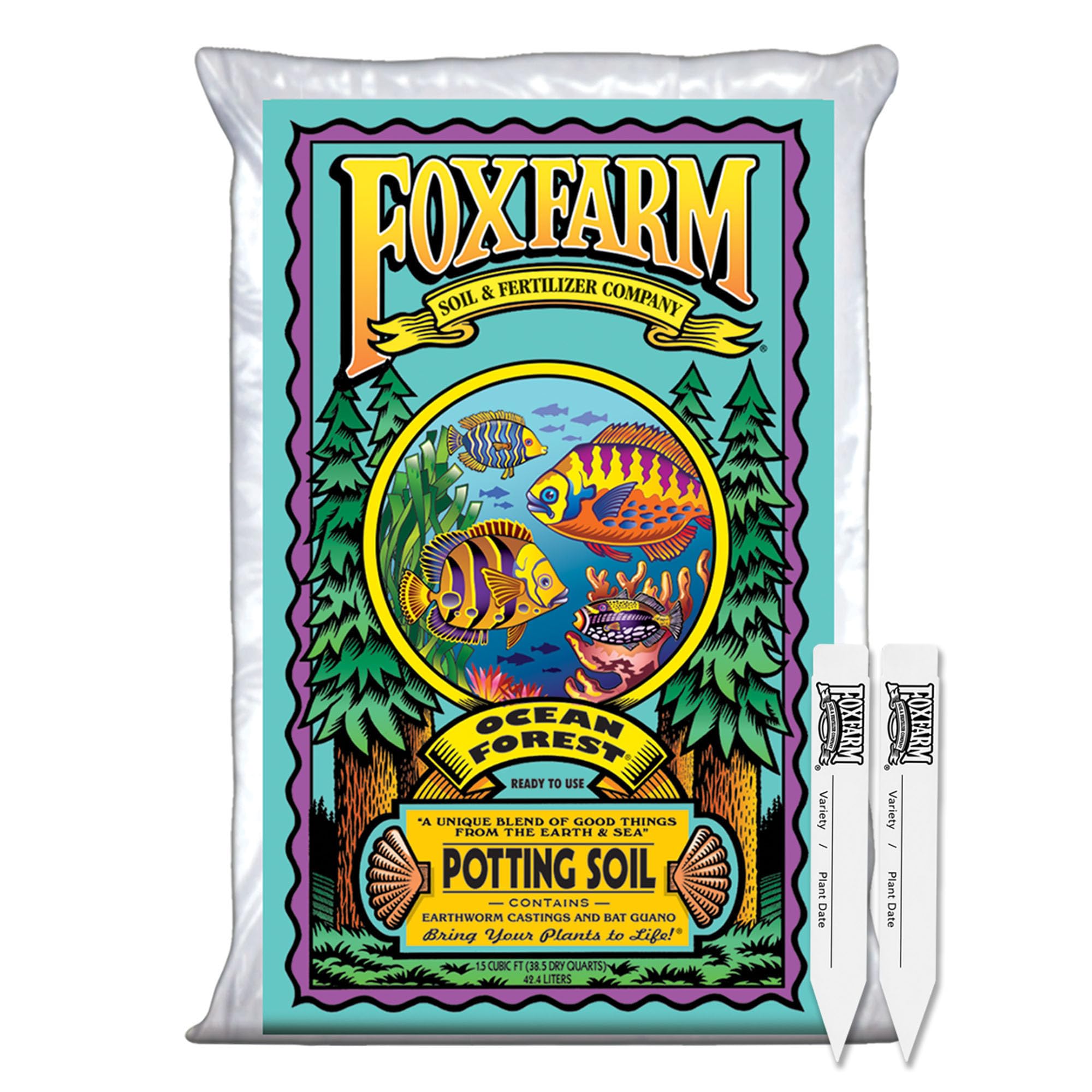
1. FoxFarm Ocean Forest Potting Soil with 2 Plant Tags, 1.5 cu ft
Our pick — over 4.5★ from 10,000+ verified ratings; the strongest balance of quality and price.
The gold standard that a side-by-side test proved beats the big-box brands.
The sandy loam is not filler; it gives excellent drainage that prevents root rot, while the peat moss and forest products hold just enough moisture around the roots. It arrives ready to use straight from the bag, no mixing, no extras needed. One seasoned gardener bought two more bags just two days after the first planting because the water absorbed immediately and the flowers looked so healthy.
Buyers report that this soil triumphed over a leading competitor in a real side-by-side test with tomato plants — same size at planting, identical daily watering, but the FoxFarm plants flourished more. The ingredient list reads like a seafood buffet: fish emulsion, crab meal, shrimp meal, earthworm castings, kelp meal, and oyster shell. At 34 pounds for the bag, it is heavy enough to fill several large containers, yet the texture stays aerated so roots can breathe. Some owners note that it is expensive compared to generic brands, but the consensus is that plants grow stronger, bloom bigger, and suffer fewer setbacks.
The bag also comes with two customizable plant tags so you can mark what you planted and when — a small bonus that serious gardeners appreciate. If you have room in your budget for exactly one bag that covers vegetables, flowers, houseplants, and seedlings, this is it.
What Wins People Over
- Quality earns the most praise by far — over 480 owners single it out as top-tier soil
- Nutrient-dense blend with fish, crab, shrimp, and kelp meals means plants rarely need extra fertilizer
- Light, aerated texture with sandy loam prevents the waterlogging that kills roots
The Honest Trade-Off
- Price is the main sticking point — many wish it cost less despite loving the results
- The 1.5 cu ft bag is heavy (34 lbs) so carrying it from the delivery spot to your garden takes some effort
- A minority report finding small bugs in the bag, though the overall feedback on bug resistance is mixed rather than strongly negative
Best For: Gardeners who want a ready-to-use, organic-rich mix that outperforms supermarket soils in side-by-side testing — especially for tomatoes, flowers, and container plants.
Think Twice If: You are on a strict budget or need to fill an entire raised bed with more than a few bags, as the premium cost adds up quickly.
2. Coast of Maine Organic & Natural Planting Soil for Vegetables & Tomatoes, 20 Qt
A lightweight, compost-heavy mix that makes tomato and zucchini plants visibly thrive.
This 20-quart bag is specifically crafted for tomatoes and vegetables, blending composted manure with sphagnum peat moss for a mix that balances moisture retention with drainage. Owners mention potting tomatoes and zucchini in 5-gallon pots and watching them grow with no sign of stress — the texture is described as “lightweight foil” that handles well. The composted manure gives it a rich, dark color that signals good organic matter, and it is OMRI listed for organic use, so you can feel confident if you are growing food for your family.
The mix is versatile enough for seeding, transplanting, or topping off in-ground beds, and the moisture balance makes it especially good for heirloom tomatoes that need to drain well. Some owners note that it can contain a few undecomposed twigs, so if you are growing very fine-rooted crops like carrots, you may want to sift it first. The recurring caveat is potential infestation — a number of customers note fungus gnats, so letting the bag dry out a bit before use or mixing in a thin layer of sand on top can help.
At 20 quarts, this bag gives you a solid 2.5 times more volume than the 8-quart premium mixes from other brands, making it a smarter buy for medium-sized projects.
Garden Verdict: This is the soil to grab when you are planting a few tomato or zucchini plants in containers and want organic, OMRI-listed ingredients. The compacted manure base feeds steadily, but be prepared to handle the occasional twig and watch for gnats.
Reach For This If: You grow tomatoes or zucchini in 5-gallon pots and want a lightweight organic mix that drains well — the plant health feedback is consistently positive among dozens of owners.
Look Elsewhere If: You need a completely clean, fine-textured soil for seed starting or tiny seedlings, as this bag can contain small undecomposed woody bits.
3. Midwest Hearth Premium Potting Soil Mix with Peat Moss, Vermiculite, Perlite, 8 Dry Quarts
A finely tuned triple blend that keeps seedlings from damping off.
With peat moss for moisture, perlite for aeration, and vermiculite for water retention, this 8-quart bag mimics what professional growers mix themselves. The texture is light and fluffy, and the pH is controlled so it works across a broad range of plants. Reviewers point out that petunias germinated beautifully, and the soil “does not appear to harden around the roots,” which is exactly what you want when transplanting delicate young vegetables. The bag is resealable, so you can use a little and save the rest without it spilling everywhere.
Some owners find the 8-quart size smaller than they imagined — enough for a few medium containers or seed-starting trays, but not for a big garden project. The value argument splits people: some call it well worth the price for the quality, others wish the bag held more. But if you are germinating seeds or repotting a handful of herbs, the clean, weed-free mix and the absence of bugs are strong selling points. Made in the USA.
This is the smallest bag in the lineup at just 8 quarts, so it is a 2.5x smaller volume than the Coast of Maine option above — choose this one for precision work like seedlings, not for filling a raised bed.
Fine-Grained Choice: Perfect for seed starting and small container herbs. The triple perlite-vermiculite-peat formula prevents the soil crusting that stops tiny seeds from emerging, and the resealable bag keeps the rest fresh.
Best For: Starting petunias, herbs, or other seeds where a light, non-compacting texture makes the difference between success and failure.
skip it if: You need to fill multiple large containers — the 8-quart size will run out fast and the per-quart cost is higher than bulk options.
4. Black Gold 1302040 8-Quart All Organic Potting Soil 2 Pack

The organic mix that one houseplant owner bought hoping it would not bring gnats — and it did not.
This two-pack of 8-quart bags offers organic soil that is rich, moist, and seems to encourage fast growth without the usual worry about uninvited pests. One owner was so nervous about fungus gnats that they tried it with “fingers crossed,” only to report not a single gnat emerged. The soil is rich enough to use on its own for container vegetables, and many gardeners describe seeing new growth within days of potting. It prevents compaction and standing water, so you do not end up with roots drowning in a mud puddle.
The recurring feedback is that the bags are smaller than they appear in photos — 8 quarts per bag fills a couple of larger pots. It is also on the pricier side per quart compared to bulk options. However, the plant growth results speak for themselves: vegetables in containers grow beautifully, and the mix stays workable without hardening into a brick around the root ball. If you are mixing it with regular potting soil as an additive, it works wonderfully in that role too.
Organic Advantage: The standout trait here is that it arrives gnat-free — a rare and welcome claim among organic soils. The texture is loose and rich, and plants in containers show visible improvement within days.
Reach For This If: You have been burned by fungus gnats in other organic soils and want a clean start for your indoor or container vegetable garden.
Think Twice If: You are filling a large raised bed — the 8-quart twin pack is better suited to a handful of pots than a whole garden plot.
5. Miracle-Gro Moisture Control Potting Mix, 16 qt. (2-Pack)

The bag that changed a gardener’s watering schedule from daily to weekly during a drought.
This two-pack of 16-quart bags is designed to absorb up to 33% more water than basic potting soil (the kind without sphagnum peat moss, coir, and wetting agents), and it protects your plants against both over- and under-watering. One buyer in a drought zone reported that after switching to this mix, their watering went from daily to weekly — a huge practical benefit for anyone who has ever lost a vegetable plant to missed watering. The mix feeds plants for up to 6 months, and the manufacturer claims it grows plants twice as big compared to unfed plants.
Buyers consistently praise the moisture control feature, noting that the soil prevents the dried-out pot problem that plagues container gardens in hot weather. The 16-quart bags are easier to carry than the huge 50-pound sacks, and the color and texture look like good, dark earth. Some owners mention that if you want more aggressive growth, you can add a liquid fertilizer along with the built-in feed, but most find the included nutrients sufficient for the first few months.
This mix uses a synthetic fertilizer, so it does not carry the same organic credentials as the FoxFarm or Coast of Maine blends, but for pure water-management performance, it leads the list.
Why It Works
- Moisture control formula absorbs 33% more water than plain soil, saving you from daily watering in summer heat
- Feeds plants for up to 6 months with built-in synthetic fertilizer — no extra mixing needed
- Plant health gets the most praise, with owners noticing immediate improvement in their vegetables
The Catch
- Synthetic fertilizer means it is not suitable for strict organic gardening
- The 16-quart bags are manageable in size, but the per-quart cost is higher than buying one giant bag
Reach For This If: You live somewhere hot or dry and want a soil that forgives the occasional missed watering — the moisture control technology genuinely reduces your watering chores.
Look Elsewhere If: You insist on organic, OMRI-listed ingredients for your vegetable garden, as this mix uses synthetic fertilizer.
6. Espoma Organic Potting Soil Mix, 8qt. bag (Pack of 2)

A mycorrhizae-enriched mix that gives roots a living head start.
This two-pack of 8-quart bags includes Espoma’s signature Myco-Tone — a blend of endo and ecto mycorrhizae that form a symbiotic partnership with plant roots, helping them access water and nutrients more efficiently. The ingredient list is a who’s-who of organic gardening: sphagnum peat moss, humus, perlite, earthworm castings, alfalfa meal, kelp meal, and feather meal. No synthetic plant foods or chemicals are used. Shoppers say that the plants take to it immediately and grow quickly, with one happy owner saying an African violet responded “very well” after transplanting.
The main friction point is that some bags arrive very dry, which means the soil can struggle to absorb water on a new plant. A good pre-soak or thorough mixing with water solves that, but it is an extra step. There are also mixed reports on germination and the occasional mention of fungus gnats, which is common with organic mixes. The 8-quart size makes it best for a handful of containers rather than large-scale projects, and some owners note that it is more expensive than many competitors per quart. However, the mycorrhizae are a genuine differentiator — no other bag in this list includes them.
Living Advantage: The Myco-Tone mycorrhizae set this apart — they literally give your vegetables a biological head start that chemical feeds cannot replicate. The organic ingredient list is comprehensive, from earthworm castings to kelp meal.
Best For: Gardeners who believe in feeding the soil biology, not just the plant — the mycorrhizae make this especially good for transplanting and root development.
pass on it if: You need a pre-moistened, grab-and-go soil that absorbs water instantly — this often arrives dry and needs a pre-soak before use.
7. Michigan Peat General All Purpose Premium Potting Soil with Perlite, 50 Pounds

The 50-pound giant that gardeners with 50+ years of experience still swear by.
This bag is a classic for a reason: it is pre-blended with rich dark reed sedge peat, perlite, and sand, plus starter and slow-release fertilizers, and it is ready to use straight from the bag. One reviewer who has been gardening for over 50 years and plants more than 200 dozen flowers each year calls it “the best potting soil we have found.” The 50-pound bag covers a lot of ground — ideal for pots, planters, containers, or raised beds. The texture is described as moist upon arrival, and the sand and perlite combination provides the drainage that prevents vegetables from sitting in water.
The honest trade-off is that this soil can feel wet and heavy in the bag, and it compacts more than some lighter mixes after watering. A few owners note that it holds moisture a little too well for some plants, so you need to be careful with plants that prefer drier roots. The slow-release fertilizer included is not organic, so strict organic gardeners will want to look elsewhere. But for sheer quantity at a reasonable per-pound value, this is the workhorse of the list.
At 50 pounds, this bag is roughly 1.5 times heavier than the 34-pound FoxFarm bag, giving you substantially more volume for filling multiple large containers or a small raised bed.
Bulk Value: The 50-pound bag is the best choice if you are filling multiple containers or a raised bed on a tighter budget. The sand-and-perlite blend ensures drainage, though the heavier texture means it compacts more than premium mixes.
Reach For This If: You have a lot of containers to fill and want a proven, no-fuss mix that experienced gardeners have trusted for decades.
Think Twice If: You need a light, fluffy texture for delicate seedlings — this mix is denser and holds more moisture than premium alternatives.
8. Coast of Maine Organic & Natural Bar Harbor Blend Potting Soil, 16 QT (2-Pack)
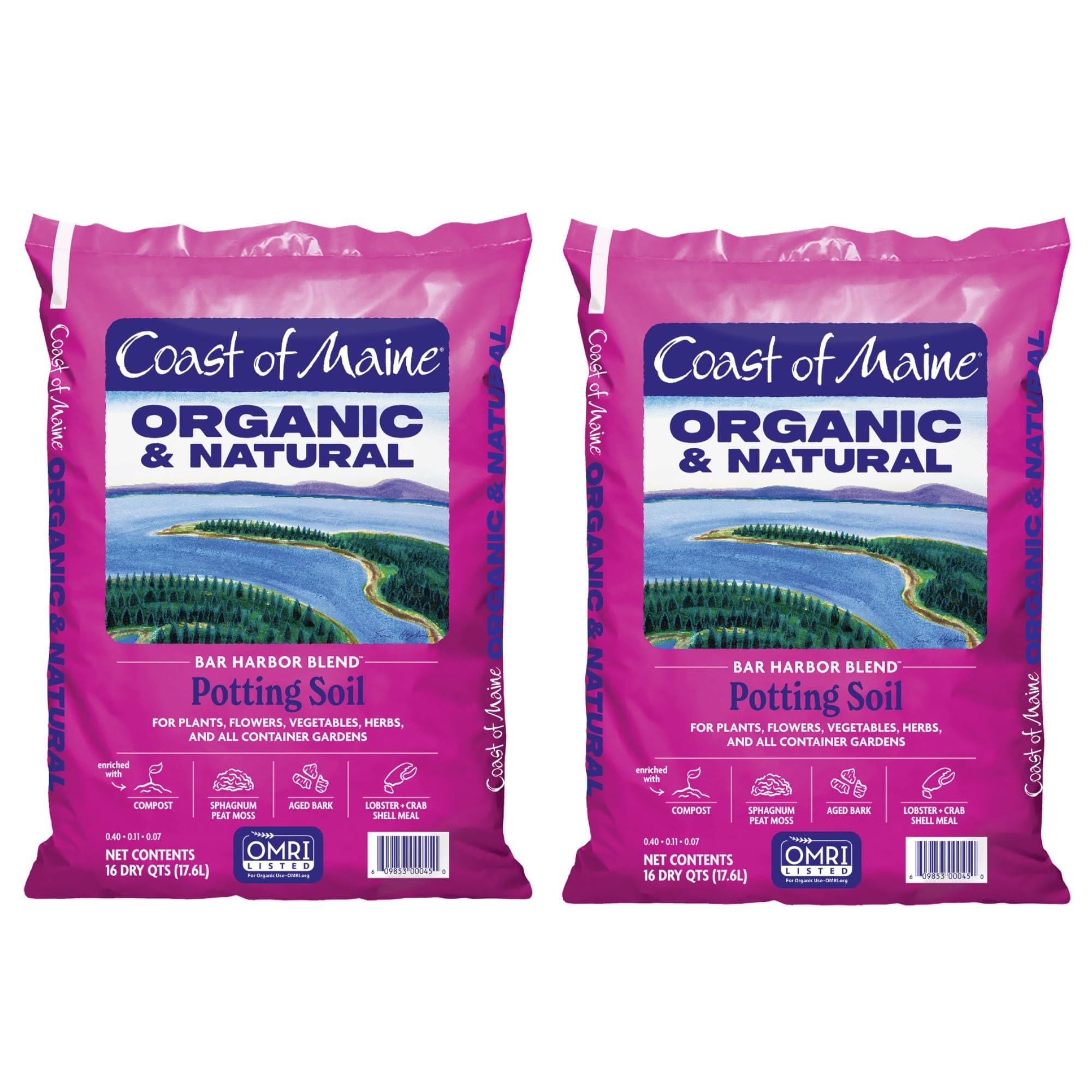
The lobster-and-crab-shell blend that made one gardener swear off their old “top brand” forever.
This 16-quart two-pack from Coast of Maine is formulated with sphagnum peat moss, compost, perlite, and — uniquely — lobster and crab shell meal and kelp meal. The shellfish meal provides a slow release of natural nitrogen and calcium, which tomato plants especially love. Buyers report that even their potatoes and peas grew “more than I even expected,” and that the soil has a dark color indicating high compost content and low peat moss filler. The texture is described as “super nice feeling,” with a balanced mix of perlite, coco coir, and compost.
The big praise here is that the soil is rich without being full of sticks and bark chunks that plague other compost-heavy blends. The OMRI-listed organic ingredients make it suitable for organic gardening, and the slow-release nitrogen from natural sources reduces the need for frequent fertilizing. On the downside, there are mixed reports on plant health — while most owners see thriving growth, a smaller number experienced disappointing results, and a few note pest challenges. The 16-quart two-pack (32 quarts total) gives you a generous amount of premium soil for raised beds or a large container garden.
This Bar Harbor Blend shares the same high quality as the Vegetable & Tomato mix from Coast of Maine, but the shellfish meal gives it an even richer nutrient profile for heavy-feeding vegetables.
Coastal Richness: The lobster and crab shell meal is the unique selling point here — it provides natural calcium and a steady nitrogen release that heavy feeders like tomatoes and squash adore.
Best For: Serious organic gardeners growing heavy-feeding vegetables like tomatoes, potatoes, and squash in containers or raised beds — the shellfish meal gives them a natural boost.
it’s not for you if: You are on a tight budget or need a guaranteed gnat-free bag, as pest resistance receives mixed feedback from owners.
9. Miracle-Gro Potting Mix, 8 qt. (3-Pack)

The three smaller bags that spare your back without skimping on growth.
This three-pack of 8-quart bags is the smart solution for gardeners who hate wrestling with a giant, heavy sack of soil. Each bag fills two 8-inch containers, and the smaller size means you can use one bag at a time without the rest drying out. The mix feeds plants for up to 6 months with built-in synthetic fertilizer, and the formula is well-draining without packing down into a hard lump. One owner says they love the smaller bags because they avoid the struggle of lugging around the large ones. The mix works equally well for outdoor and indoor planting.
The feedback on value is split: some think the quality is great for the price, while others find it expensive relative to what you get. The 8-quart bag size is a recurring discussion point — if you need to fill a big container, you will use several bags. But for potting up a few vegetable plants, herbs, or flowers, the convenience of the separate bags is tough to top. The soil does not contain organic ingredients, so strict organic gardeners should look to the FoxFarm or Coast of Maine bags, but for mainstream, reliable growth, this is a solid family of mixes.
This three-pack gives you 24 quarts total in three separate 8-quart bags — a different packaging philosophy from the 16-quart twin pack of the Moisture Control version, focused on easy handling rather than moisture management.
Back-Saver: The 8-quart bag size is the defining feature — perfect for gardeners who want excellent results without hauling a 50-pound sack. The 6-month feed eliminates the need for early-season fertilizing.
Reach For This If: You are potting up a few vegetable or flower containers and want the convenience of separate, easy-to-carry bags that do not take up much storage space.
Think Twice If: You are an organic purist or need to fill a large raised bed, where a single bigger bag would be more economical.
Understanding the Specs
Volume (Quarts vs Cubic Feet)
Soil bags come in quarts or cubic feet, and they are not the same. A cubic foot (cu ft) is about 25.7 dry quarts, so a 1.5 cu ft bag is roughly 38 quarts. The table in this article uses the same measure within each column so you can compare apples to apples — when you see a 20-quart bag next to a 1.5 cu ft bag, remember the cubic foot bag is nearly twice as large. For most container gardens, 8 to 16 quarts fills a few medium pots; raised beds need multiple bags or a single large bag.
Fertilizer: Organic vs Synthetic
Organic fertilizers (like earthworm castings, kelp meal, crab meal, and composted manure) feed the soil as much as the plant — they build long-term fertility and are gentle on seedlings. Synthetic slow-release fertilizers deliver a precise nutrient dose over a set period (often 6 months) and can grow plants faster, but they do not improve the soil biology. The best pick depends on your philosophy: organic for sustainable soil health, synthetic for immediate, controlled feeding.
Texture and Drainage (Perlite, Sand, Peat Moss)
Perlite is the small white chunks you see in many mixes — they create air pockets so water drains and roots can breathe. Sand adds weight and improves drainage in denser mixes. Sphagnum peat moss holds many times its weight in water, releasing it slowly to roots. A good vegetable soil balances all three: enough peat to hold moisture, enough perlite to drain, and enough structure (often from compost or forest products) to keep the soil from compacting into a brick.
The Role of Mycorrhizae
Mycorrhizae (pronounced my-ko-RYE-zee) are beneficial fungi that attach to plant roots and act as an extension of the root system, helping the plant absorb water and nutrients from a wider area. Some premium soils add these as a living inoculant. Not all bags include them, but when present, they give vegetables a measurable head start, especially in containers where the root zone is limited. Look for “Myco-Tone” or “endomycorrhizae” on the label if this matters to you.
FAQ
Will any of these soils work in a raised bed vegetable garden?
What does “feeds for up to 6 months” actually mean for my vegetables?
How do I prevent fungus gnats in organic potting soil?
What is the difference between potting mix and garden soil?
Can I use these soils for indoor houseplants and outdoor vegetables?
Which bag is best for starting vegetable seeds indoors?
How much soil do I need to fill a standard 10-inch plastic pot?
Do these soils contain perlite, and why does that matter for vegetables?
Can I reuse potting soil from a previous season for new vegetables?
How do I know if a potting soil is truly organic?
Final Thoughts: The Verdict
If you want one dependable pick, the good soil for vegetables winner is the FoxFarm Ocean Forest Potting Soil because it combines a nutrient-dense organic ingredient list with excellent drainage and a proven track record — it is the crowd favorite at 4.7 stars across thousands of owners. If you want a compost-heavy organic mix specifically for tomatoes and zucchini in containers, grab the Coast of Maine Vegetable & Tomato Soil. And for the gardener who needs bulk soil for a raised bed or many containers on a tighter budget, the Michigan Peat Baccto Premium 50-Pound Bag is the one to reach for.
How We Picked
We do not accept paid placement. Every pick is matched to a real buyer and a real use-case; we do not hands-on test units.
Sources & Methodology
Specifications: manufacturer listings and product documentation. Review insights: verified customer reviews, as of July 2026. Pricing: not shown on this page (it changes often); check the current price via the retailer link.
As an Amazon Associate, Lawn Gear Lab earns from qualifying purchases. This does not affect which products we feature.