
Specs are compiled from manufacturer listings and verified buyer reviews and can change over time — please confirm the key details on the product page before buying.
You spent the money on the rose bush, you planted it with care, and then it just sits there — a few leaves, maybe a single sad bloom. The difference between a rose that merely survives and one that turns into a neighborhood spectacle almost always starts below the surface. Get the soil wrong, and no amount of sun or water will fix it. Get it right, and your roses will do the heavy lifting themselves.
I’m Rikta — the founder and writer behind Lawn Gear Lab. This guide is built by comparing the manufacturers’ published specifications and the patterns across verified customer reviews, so you get each pick’s real strengths and trade-offs instead of marketing spin.
You want roses that burst with blooms all season, not just survive. The good soil for roses you choose is what makes that happen, whether you are planting in containers, refreshing a raised bed, or amending an established garden patch.
Our Picks at a Glance
How To Choose The Best Good Soil For Roses
Roses are heavy feeders with a deep root system, but those same roots are prone to rot if the soil stays soggy. The goal is a mix that holds enough moisture for the plant to drink deeply, yet drains quickly enough that the roots are never sitting in a puddle. Here is what to check before you buy.
Texture and Drainage
The ideal mix feels crumbly, not clumpy when you squeeze a handful. Ingredients like perlite (those little white volcanic rocks), coconut coir, and sphagnum peat moss create air pockets that let oxygen reach the roots. Skip any bag that feels like heavy, compacted mud — your roses will smother.
Nutrient Content and Feeding Duration
Roses bloom all season long, which means they need a steady supply of food. Many of the best mixes include a starter fertilizer that feeds for several months, saving you from weekly mixing duty. Look for ingredients like earthworm castings, kelp meal, and alfalfa meal for a natural slow-release nutrient boost.
Organic vs. Conventional
Organic soils skip synthetic chemicals and rely on natural compost and minerals. They are gentler on the soil ecosystem but sometimes cost more. If you are growing edible flowers or herbs nearby, organic can be the safer bet. For purely ornamental roses, a conventional mix with controlled-release fertilizer gets the job done efficiently.
Quick Comparison
| Model | Best For | Volume | Feeds Up To | Key Ingredient | Amazon |
|---|---|---|---|---|---|
| Miracle-Gro Indoor Mix★ Best Overall | Potted Roses Indoors | 6 qt (2-Pack) | 6 months | Sphagnum peat, coconut coir | Amazon |
| FoxFarm Ocean ForestAlso Great | Premium All-Round Growth | 1.5 cu ft | Starter charge | Aged forest products, earthworm castings | Amazon |
| Miracle-Gro Outdoor Mix | Container Roses & Veggies | 16 qt (2-Pack) | 6 months | Perlite, pre-mixed fertilizer | Amazon |
| Espoma Organic 8qt | Organic Container Mix | 8 qt | Myco-tone blend | Earthworm castings, kelp meal | Amazon |
| Espoma Organic 16qt | Larger Organic Pots | 16 qt | Myco-tone blend | Alfalfa meal, feather meal | Amazon |
| Coast of Maine Roses & Flowers | In-Ground Rose Beds | 20 qt | Composted manure | Composted manure, peat moss | Amazon |
| Miracle-Gro Expand ‘n Gro | Lightweight Bulk Fill | .33 cu ft (expands 3X) | 6 months | Natural fibers, coconut coir | Amazon |
In‑Depth Reviews
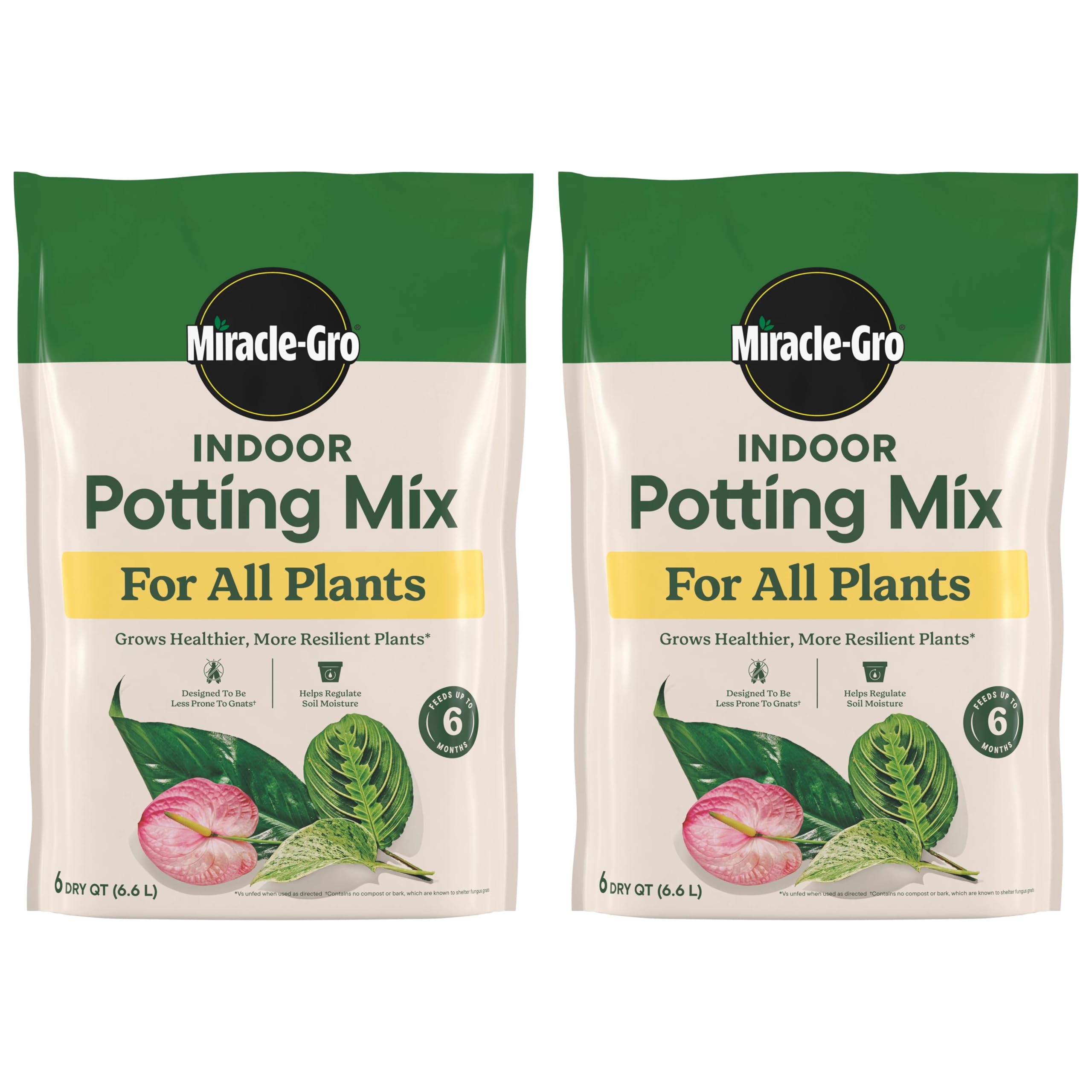
1. Miracle-Gro Indoor Potting Mix, 6 qt (2-Pack)
Our pick — over 4.5★ from 23,000+ verified ratings; the strongest balance of quality and price.
The indoor rose grower’s best friend — light, drainable, and formulated to keep fungus gnats away.
If you are growing miniature roses indoors or on a covered porch, standard garden soil is too heavy and often brings pests inside. This mix from Miracle-Gro solves that problem deliberately: it contains sphagnum peat moss, coconut coir, and perlite, but it specifically excludes compost and bark, which are the two ingredients that most commonly shelter fungus gnats. It is a smart, category-specific fix that indoor growers really appreciate. Each 6-quart bag fills four 6-inch containers, so the two-pack covers a small collection of potted roses or houseplants.
The texture is notably light and not dusty — buyers call it easy to work with, and they note that plants settle into it quickly after repotting. One owner shared that their tiny rose (named “Rosie”) not only survived the transplant but grew and bloomed, a perfect real-world test. The built-in fertilizer feeds for up to six months, which is especially handy for indoor containers where you are not regularly adding garden compost. A mild caveat: the bag is smaller than the outdoor mixes (6 quarts vs 16 quarts), so if you are repotting a large tree-size rose, you will need multiple packs. And a few owners found it too moisture-retentive for succulents or cacti — but for roses, which like consistent moisture, that is actually a feature.
Smartly designed: The explicit omission of compost and bark is a genuine advantage for indoor growers tired of gnats. Light, feeds for six months, and gets rave reviews from owners of small blooming plants.
Perfect for: indoor potted roses, windowsill growers, and anyone who has struggled with fungus gnats from standard bagged soil.
Not ideal for: large outdoor containers or garden beds — the bag size is modest and the indoor formulation lacks the bulk density outdoor roots prefer.
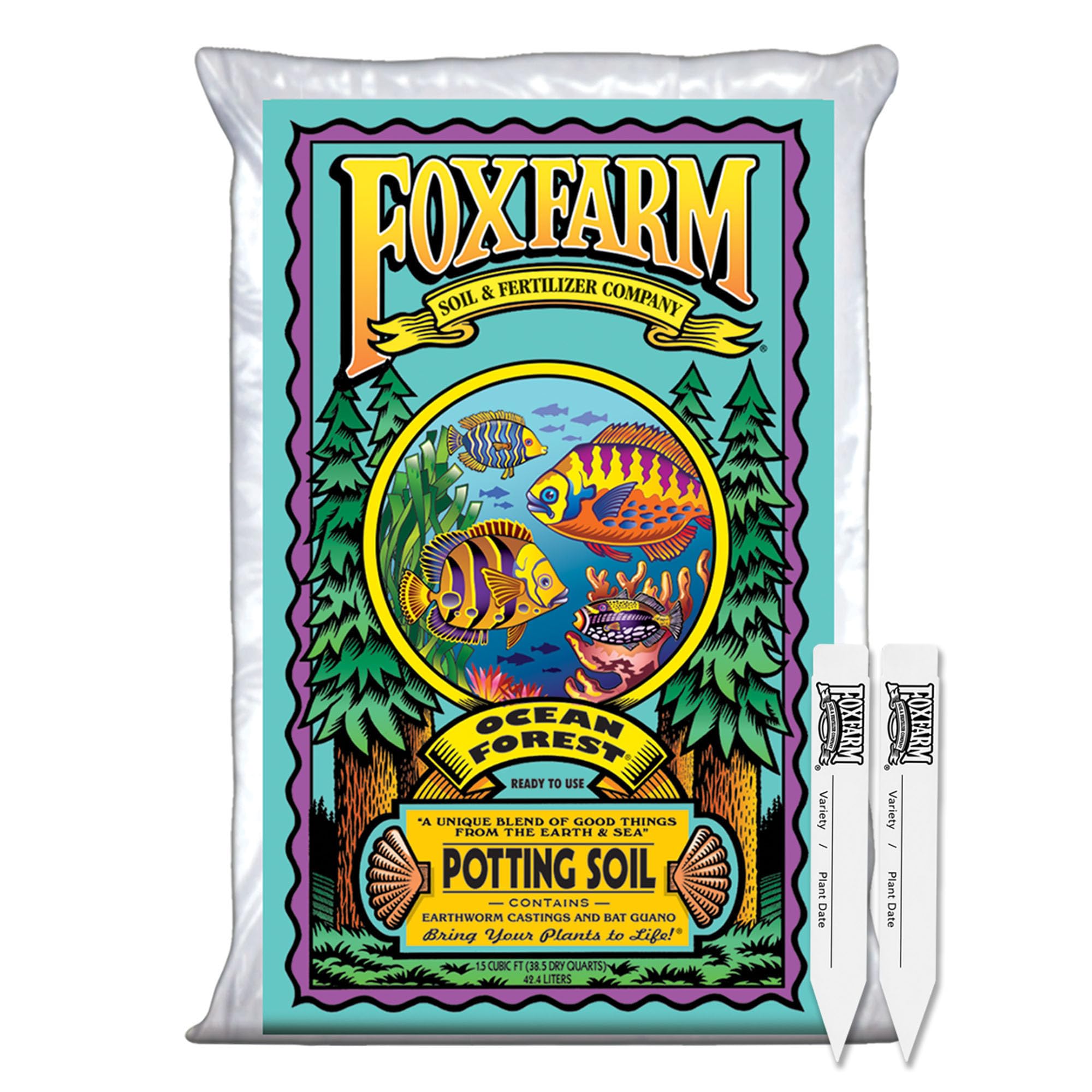
2. FoxFarm Ocean Forest Potting Soil
The gold standard gardeners reach for when they want to see their roses explode with growth.
FoxFarm Ocean Forest is the bag you grab when you are tired of guessing which nutrients your soil is missing. It arrives ready to use straight from the bag — no mixing, no supplementing. The blend of aged forest products (50-60% of the mix), sphagnum peat moss, and sandy loam creates a texture that drains beautifully while still holding moisture exactly where the roots need it. A 1.5-cubic-foot bag fills several large containers, making it a practical choice for anyone planting a whole bed of roses rather than just one pot.
What really sets this mix apart is the ingredient list under the hood. It draws from fish emulsion, crab meal, shrimp meal, earthworm castings, kelp meal, and oyster shell. That is not just marketing fluff — each component breaks down at a different rate, giving your roses a steady buffet of organic matter for weeks. Buyers report that plants in Ocean Forest dramatically outperformed those in standard big-box potting soil under identical watering conditions, proof of how the pre-mixed nutrient content removes the guesswork from feeding. The only common complaint is the price feels high compared to cheaper alternatives, but most owners conclude it is worth it for the results. The crowd rating sits around 4.7 stars, with an enormous following of growers who swear by it for everything from roses to tomatoes.
Why It Dominates
- Dense nutrient profile from fish, crab, and kelp — feeds right away without extra fertilizer.
- Aerated, light texture that prevents the root rot roses are prone to in heavier soils.
- Huge bag size (1.5 cu ft) gives you serious value for planting multiple pots or a bed.
The Trade-Off
- Costs more per bag than conventional mixes — the upfront investment is real.
- A small number of owners mention sporadic bug presence; inspect the bag before use.
Reach for this if: you want a premium, nutrient-dense soil that gives your roses the best possible start in containers or raised beds, and you are okay paying more for proven quality.
Look elsewhere if: you are on a tight budget and need to fill many large pots — the up-front cost of Ocean Forest adds up fast.
3. Miracle-Gro Outdoor Potting Mix, 16 qt (2-Pack)

The workhorse container mix that feeds your roses for half a year with zero extra effort.
This is the mix you turn to when you have a dozen pots on the patio and you need consistent results without the premium price tag. The 16-quart two-pack gives you a total of 32 quarts of soil — enough to fill two large 12-inch containers per bag, or handle a whole balcony garden. The formula is designed for outdoor container plants, which means it includes a built-in fertilizer that feeds continuously for up to six months. That takes the guesswork out of remembering to mix liquid feed every two weeks.
Owners specifically praise this for getting seeds and transplants off to a strong start. One reviewer noted using it to start tomatoes, bell peppers, green onions, butternut squash, and cantaloupe from seeds — all successfully. For roses, the rich, dark texture with visible perlite provides the drainage that container roses absolutely need to avoid yellowing leaves. The main trade-off is that moisture retention gets mixed reviews from buyers. Some find it stays wet for three weeks, which can be too long for a rose in a cool spring; others feel it dries out quickly in hot summer sun. Your mileage will depend on your climate and container material (terracotta dries faster than plastic).
Solid workhorse: Excellent quality at a reasonable bulk price, with a built-in feeding schedule that lasts through the blooming season. Best for anyone planting several outdoor containers and wanting a no-fuss, proven base soil.
Grab this for: outdoor container roses where you want reliable growth and a built-in fertilizer that feeds for the whole season.
Skip if: you need the absolute lightest, most aerated mix — this holds more moisture than a fluffy organic soil.
4. Espoma Organic Potting Soil Mix, 16 qt

An organic blend that packs alfalfa, kelp, and feather meal into every bag for serious root development.
Espoma’s 16-quart organic mix takes the same proven AP8 formula and scales it up for larger containers and more ambitious planting projects. The ingredient list reads like a gardener’s wishlist: sphagnum peat moss, humus, perlite, earthworm castings, alfalfa meal, kelp meal, and feather meal. That is a lot of natural slow-release nutrition packed into one bag. The addition of Myco-tone — a proprietary blend of endo and ecto mycorrhizae — is what really catches the eye of experienced growers. Mycorrhizae are beneficial fungi that form a symbiotic relationship with plant roots, effectively extending the root system’s reach to pull in more water and nutrients.
Buyers describe the texture as light, fluffy, and full of perlite, with no large chunks of wood or plastic debris. It works well for indoor seed starting under lights and heat mats, and owners who use it for larger transplants report that plants adapt quickly and thrive. For roses, the feather meal provides a steady supply of nitrogen, while the kelp meal delivers trace minerals that support flower production. The trade-off is the same as with many organic soils: a small number of bags have arrived with quality-control issues (gnats, stray debris). It is not a widespread problem — the majority of owners are very satisfied — but it is worth inspecting the bag when it arrives. On the whole, this is the organic pick for someone who wants a single bag that feeds from the root zone up.
Organic Edge
- Rich natural fertilizer lineup with earthworm castings, alfalfa, kelp, and feather meal.
- Myco-tone mycorrhizae for root development — a genuine biological advantage.
- Light, fluffy texture with plenty of perlite for drainage.
Check the Bag
- Occasional reports of gnats or organic debris in the bag — quality can vary per batch.
- Costs more than conventional mixes for the same volume.
Choose this if: you prefer organic ingredients and want a soil that feeds your roses naturally through the season, with the added root benefit of mycorrhizae.
Think twice if: you want a perfect, sterile mix every single time — organic means natural variability, and occasional debris is part of the deal.
5. Coast of Maine Organic Planting Soil for Roses & Flowers

The one soil on this list that was formulated specifically for roses, not just adapted for them.
Coast of Maine is a regional brand from Maine with a devoted following, and this Roses & Flowers mix is their targeted product for exactly what we are after. It blends composted manure and sphagnum peat moss with other organic components to create a soil that balances moisture retention and drainage specifically for rose varieties, flowers, and perennials. At 20 quarts, the bag is on the larger side, giving you enough to refresh a small rose bed or fill several deep containers. It is OMRI-listed for organic use, meaning the ingredients meet strict standards for organic gardening.
Owners consistently describe it as dark, rich soil that their rose bushes respond to immediately. One buyer who used it across their entire rose garden called it “worth the price” and noted it is made in the USA. The texture has some variation — visible bark particles and compost chunks — which is normal and healthy for an organic mix. The recurring point of debate is the smell. Some owners mention it smells like fresh earth with no bad odor at all. Others describe the bag as “unbelievably stinky,” with a strong compost-like smell that attracts dogs and flies until it is worked into the garden. That is a real factor if you are mixing it on a closed porch or storing it in a garage. The smell does fade once it is in the ground, but it is worth knowing before you open the bag indoors.
Rose-tailored: This is not a general-purpose mix — it was crafted for roses and flowers, with composted manure and peat moss as the main ingredients. The plant health results are excellent; the odor is buyer-dependent.
Best for: dedicated rose beds and flower gardens where you want an organic soil built specifically for the plant you are growing.
Be aware: the compost smell can be strong for the first day or two — mix it outside or be prepared for a farm-like aroma in your workspace.
6. Espoma Organic Potting Soil Mix, 8 qt

The entry-level organic mix that gives you Espoma’s proven formula in a smaller, try-before-you-commit bag.
If you are curious about organic potting soil but do not want to drop premium money on a giant bag, the 8-quart Espoma is the perfect test. It uses the same AP8 formula as its bigger sibling (sphagnum peat moss, humus, perlite, earthworm castings, alfalfa meal, kelp meal, and feather meal) but at a smaller volume and a lower entry price. The mix works for both indoor and outdoor containers, and the mycorrhizae (Myco-tone) are present in this bag too — you are not losing the root biology advantage just because you bought the smaller size.
The feedback from buyers is overwhelmingly positive, with many calling it “great quality” and noting that their plants adapted well after transplanting. The texture is easy to work with, and the organic ingredients give you a rich, dark soil that supports a broad range of plants — from vegetables and herbs to flowers and small roses. The primary caution comes from a notable minority of reviews describing bag contamination. Some owners have received bags with puncture holes, and the soil inside contained stray roots, branches, worms, fruit flies, and even eggs. That is a quality-control issue that has cropped up enough times to be worth mentioning, though the vast majority of bags arrive in good condition. If you buy this, inspect the bag and the soil before you start potting.
What Works
- Identical organic formula to the larger Espoma bags, including Myco-tone.
- Smaller bag makes it easy to try organic growing without a huge investment.
- Works for both indoor and outdoor containers — versatile enough for a single rose pot.
What to Watch
- Quality control is inconsistent — some bags show signs of damage and organic debris.
- Small volume (8 qt) means you will need multiple bags for larger projects.
Start here if: you are new to organic potting soil and want to test Espoma’s formula on a single rose pot before committing to a full garden.
Skip if: you need guaranteed sterility and consistency — the occasional bag contamination issue makes this less reliable than conventional mixes for some buyers.
7. Miracle-Gro Expand ‘n Gro Concentrated Planting Mix

A dehydrated, fiber-based concentrate that turns into light, airy soil when you add water.
This concentrated block is for you if you cannot lift heavy bags of wet soil or if you need to ship soil to a garden away from home. The.33-cubic-foot bag is lightweight and compact on the shelf. When you add water, it expands up to three times its size, yielding up to 1 cubic foot of planting mix. The natural fibers (primarily coconut coir) hold up to 50% more water than traditional potting mix, releasing it slowly as the plant needs it.
For roses, the biggest advantage is the lightweight, aerated texture. It creates plenty of air space for root development, and the mix feeds for up to six months. One 0.33-cubic-foot bag fills two 12-inch containers, which is a reasonable amount for a pair of rose bushes in pots. The downsides are real, though. This is not a traditional potting soil — it is a fiber-heavy, spongy medium. Some buyers find that it holds too much water on its own and needs to be mixed with perlite and added fertilizer to perform as expected. The instructions can be unclear about the water ratio, leading to oversaturation if you pour too enthusiastically. It is a great option as a base for making your own custom mix, or for filling large containers cheaply, but it works best when you treat it as a component rather than a ready-to-use soil.
Smart concept, requires effort: The expansion saves on shipping weight and shelf space, and the aeration is genuinely excellent for roots. But it is not a plug-and-play potting soil — plan to mix in perlite and extra fertilizer to reach rose-level nutrition.
Ideal for: gardeners who need bulk soil without the heavy lifting, or anyone who wants a light, water-holding base to customize with their own amendments.
Not for: the grower who just wants to open a bag and pot a rose — this requires mixing and patience to get right.
Understanding the Specs
Volume and Coverage
The volume of a soil bag is measured in quarts or cubic feet. A standard 8-quart bag fills a 6-inch pot about four times. A 1.5-cubic-foot bag (which equals about 45 quarts) can fill two large 12-inch containers or cover several square feet of an in-ground bed. When buying, think ahead about how many containers you need to fill — it is cheaper to buy one large bag than several small ones.
Mycorrhizae (Myco-tone)
These are beneficial fungi that attach to plant roots and help them absorb more water and nutrients from the soil. Think of it as extending the root system’s reach without the plant having to grow more roots. Not every bag has it, but for roses which are heavy feeders, a mix that includes mycorrhizae can give you a visible head start in growth and bloom size.
Fertilizer Duration (Feeds for X Months)
Some potting mixes include a slow-release fertilizer that continues feeding the plant for a set period, usually up to six months. This means you do not need to add liquid fertilizer every week — the soil does the work for you. For container roses, a mix with a six-month feeding schedule covers the entire growing season with one application at planting time.
Organic vs. OMRI Listed
Organic potting soil is made without synthetic fertilizers or pesticides. OMRI (Organic Materials Review Institute) listing is a third-party certification that verifies the product meets organic standards. If you are growing edible flowers, herbs near your roses, or just prefer not to use chemicals, look for the OMRI seal on the bag. Organic soils often rely on natural slow-release ingredients like worm castings and kelp meal instead of synthetic granules.
FAQ
Can I use regular garden soil for roses in pots?
What is the difference between potting mix and potting soil?
How often should I replace the soil in my rose pots?
Is organic potting soil better for roses?
Why does my potting soil smell bad?
Can I mix two different potting soils together?
Does soil type affect rose bloom color?
Why is there perlite in my potting mix?
Final Thoughts: The Verdict
For most gardeners, the good soil for roses winner is the FoxFarm Ocean Forest because it arrives nutrient-dense, aerated, and ready to use — no mixing, no guesswork. If you want a budget-friendly organic option that still gives you root-boosting mycorrhizae, grab the Espoma 16-Quart for larger pots, or the Miracle-Gro Indoor Mix if you are growing on a windowsill and need a gnat-proof blend. And for the rose purist who wants a soil formulated specifically for flower beds rather than adapted from a general mix, the Coast of Maine Roses & Flowers is the one to reach for.
How We Picked
We do not accept paid placement. Every pick is matched to a real buyer and a real use-case; we do not hands-on test units.
Sources & Methodology
Specifications: manufacturer listings and product documentation. Review insights: verified customer reviews, as of July 2026. Pricing: not shown on this page (it changes often); check the current price via the retailer link.
As an Amazon Associate, Lawn Gear Lab earns from qualifying purchases. This does not affect which products we feature.