
Specs are compiled from manufacturer listings and verified buyer reviews and can change over time — please confirm the key details on the product page before buying.
The right bag of soil is the difference between a harvest you brag about and a season of wilting plants. The wrong bag looks dark but hides wood filler that starves your vegetables, while the right one is a ready-to-use, living mix that feeds roots from day one. This guide compares three honest, proven picks so you know which bag to dump into your frame.
I’m Rikta, writer behind Lawn Gear Lab. This guide compares each brand’s published specs and patterns across verified customer reviews, so you get real strengths and trade-offs instead of marketing spin.
Choosing the right good soil for raised beds means the difference between weak seedlings and towering tomato plants that make your neighbors stop and ask questions.
Our Picks at a Glance
How To Choose The Best Good Soil For Raised Beds
Raised beds need a structure that stays loose, drains well, and holds enough organic matter to feed heavy-feeding vegetables like tomatoes and peppers all season. A bag labeled “garden soil” or “potting mix” is not always right for a raised bed.
Look for a living ingredient list
The best raised-bed soils include worm castings, kelp meal, or mycorrhizae (a beneficial fungus that helps roots absorb water and nutrients). These feed the soil food web instead of just filling volume. A soil that lists only compost and peat moss is likely to settle and lose steam by midsummer.
Check the texture and weight
Good raised-bed soil feels light and fluffy, not heavy and clumpy. A bag that is noticeably heavier for its size (like 40 pounds for 2 cubic feet) often signals a denser, richer blend with less filler. Lighter bags may contain more bark or wood fines that break down quickly and tie up nitrogen in the process.
Peat-free is better for the planet and your plants
Peat moss is a common ingredient, but harvesting it releases stored carbon. Some brands now use upcycled plant matter or wood fines instead, which improve water absorption and keep carbon in the ground. If sustainability matters to you, seek out a peat-free blend.
Quick Comparison
| Model | Best For | Volume | Weight | Key Additives | Amazon |
|---|---|---|---|---|---|
| Coast of Maine Castine Blend★ Best Overall | Serious vegetable gardeners | 2 cu ft | 40.3 lbs | Mycorrhizae, biochar, worm castings | Amazon |
| Espoma Organic Raised Bed Mix | Balanced organic value | 1.5 cu ft | — | Mycorrhizae, alfalfa meal, kelp meal | Amazon |
| Garden Magic Organic Top Soil | Budget filling & amending | ~1.4 cu ft | 40 lbs | Reed sedge peat, sand | Amazon |
In‑Depth Reviews
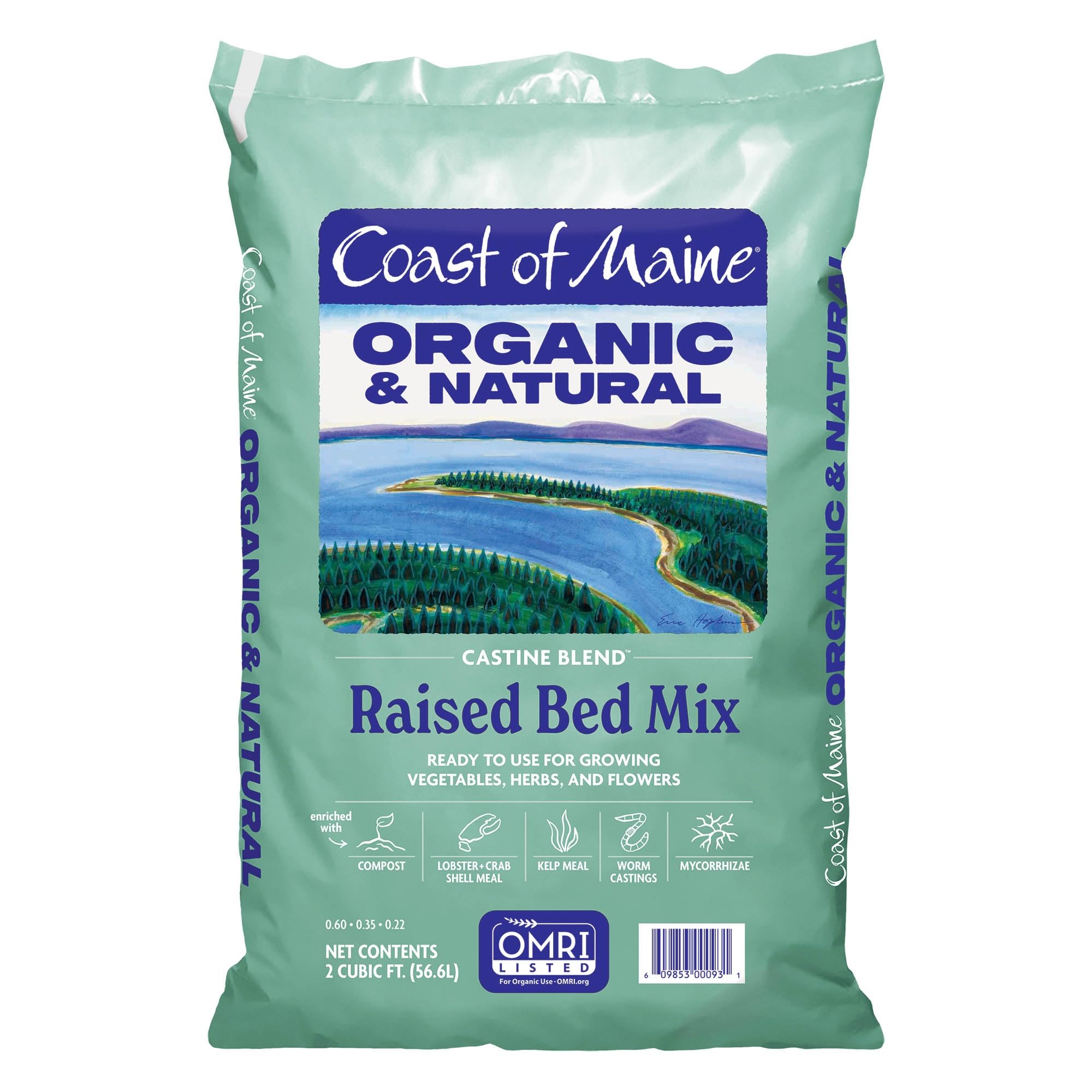
1. Coast of Maine Organic Castine Blend Soil
Our pick — over 4.5★ from 400+ verified ratings; the strongest balance of quality and price.
The 40-pound workhorse that turns raised beds into a tomato factory.
This is the soil that keeps delivering all season. The Castine Blend packs 2 cubic feet and weighs a stout 40.3 pounds — a clear signal that you are getting dense, nutrient-rich material rather than airy filler. The ingredient list reads like a fertility chart: worm castings, mycorrhizae (a beneficial root fungus that helps plants pull more water and nutrients from the soil), biochar (a stable charcoal-like material that holds moisture and houses microbes), green sand, kelp meal, and lobster and crab shell meal. Together they create the kind of living, biodiverse environment that heavy-feeding vegetables crave. Buyers report growing “pretty awesome tomatoes and sunflowers” after just one season, and long-term users have been refilling their raised beds with Coast of Maine for three years straight. The texture is soft and dark — “rich, dark, organic dirt,” with no twigs or bugs. It comes ready to use straight from the bag, so you can fill a new bed or top-dress existing plants without mixing anything. Compared to the Espoma mix, this bag is 2 cubic feet versus the Espoma’s 1.5 cubic feet, and at 40.3 pounds it gives you a dense load of organic matter per bag.
The honest trade-off is the price tag. Some owners find it expensive for the size, and a few bags have contained small debris (bits of shell or bark), which is typical for a product made from natural marine and plant ingredients rather than sanitized factory blends. If you have a very large raised bed to fill, you will need several bags and the cost adds up.
Why it dominates raised beds
- Loaded with mycorrhizae, worm castings, and kelp meal for sustained feeding
- 2 cu ft is the biggest volume of the three, saving trips to the store
- The dense, fluffy texture drains well yet holds moisture for summer heat
The honest hang-ups
- Pricier per bag than local big-box alternatives
- Occasional natural debris (shell bits) in the mix
- Heavy at 40 lbs — not easy to carry if you have mobility limits
Reach for it if: you are serious about growing heavy-feeding vegetables in raised beds and want a single-bag solution with multiple organic amendments already blended in.
Look elsewhere if: you need to fill an entire 4×8 bed on a strict budget and cannot stomach the per-bag cost of a premium mix.
2. Espoma Organic Raised Bed Mix

A clean, balanced organic mix that gives the premium pick serious competition per dollar.
Espoma is a trusted name in organic gardening, and this raised-bed mix lives up to that reputation. Each 1.5 cubic foot bag contains a rich blend of worm castings, alfalfa meal, kelp meal, and feather meal, plus a proprietary mycorrhizae blend called Myco-Tone that includes both endo and ecto mycorrhizae (two types of root-friendly fungi that improve root-to-soil contact and nutrient uptake from day one). It is ready to use straight out of the bag for new beds or to revitalize existing soil. Owners consistently praise the clean, odorless texture — one reviewer noted the “1.5 cu ft bag was perfectly sealed with no mold or dry spots,” while another in subtropical Florida highlighted its “excellent moisture retention.” The mix pours evenly, supports everything from seeds to flowering plants, and one gardener packed 9 vegetables and 12 flowering plants into it during a wet SoCal February. A single negative review pointed out a wood-heavy batch that stalled seedling growth, but the overwhelming consensus lands on positive: this is a reliable, versatile soil that delivers honest organic results.
Compared to the Coast of Maine pick, this bag is 1.5 cubic feet versus the Coast of Maine’s 2 cubic feet, but at a lower per-bag cost it is easier to buy in multiples for larger frames without the heavy 40-pound lift. Espoma also ships inside a box for extra protection, which matters when the bag needs to travel across the country.
What makes it a great value
- Packed with worm castings, alfalfa, kelp, and feather meal for steady feeding
- Myco-Tone blend covers both endo and ecto mycorrhizae for root health
- Sealed and boxed well — arrives without dry spots or mold
The occasional miss
- Some bags can contain a higher wood-to-compost ratio
- Only 1.5 cu ft means you need more bags for a full bed
- The price feels steep to a few owners despite good results
Grab it if: you want an organic, ready-to-use mix that balances cost and performance for raised-bed vegetables and herbs while staying affordable.
Think twice if: you need the absolute highest density of organic matter per cubic foot and are willing to pay a premium for it.
3. Michigan Peat Garden Magic Organic Top Soil
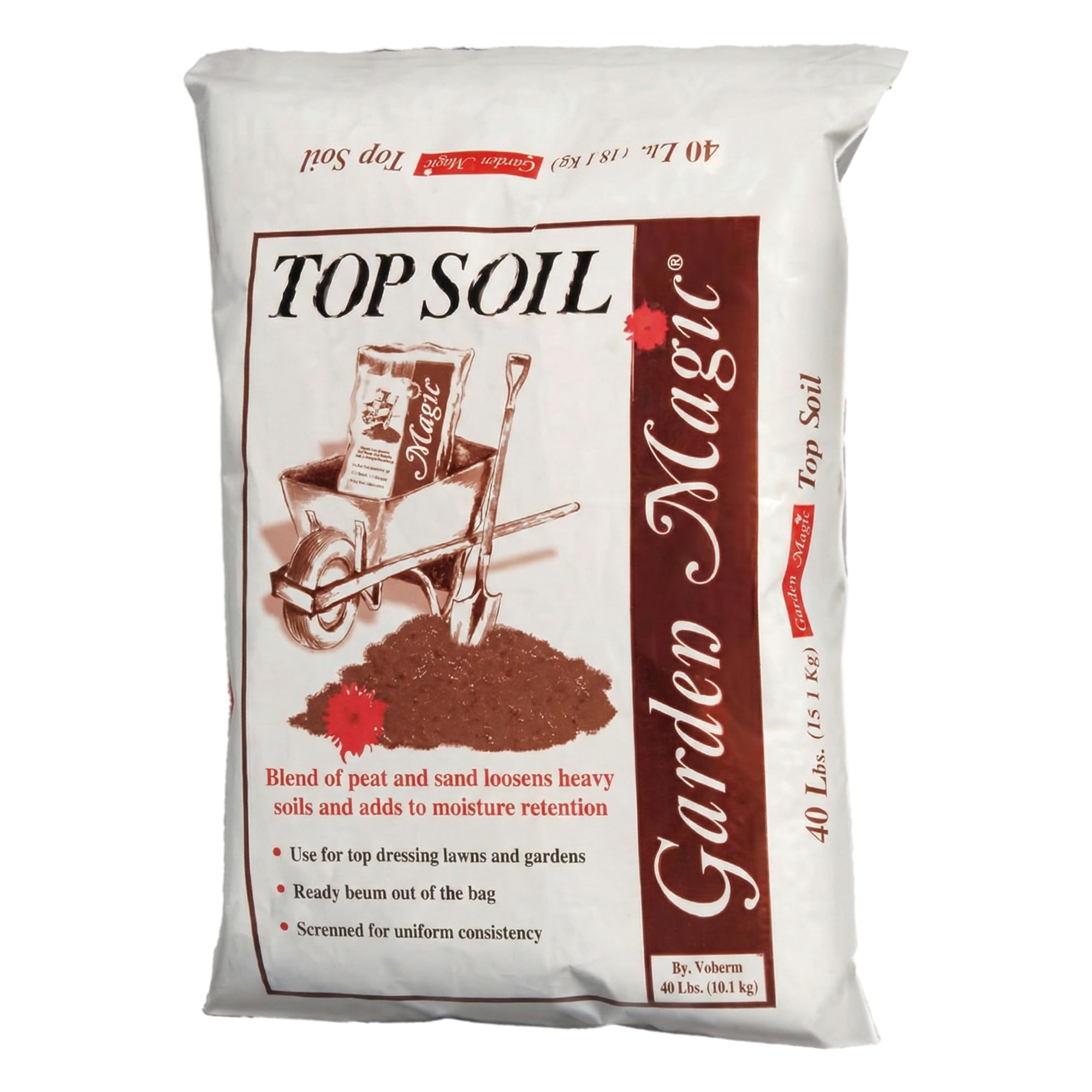
A ready-to-use, budget-friendly peat-and-sand blend that fills and improves a raised bed straight from the bag.
Garden Magic takes the no-frills route. This 40-pound bag is a dark blend of reed sedge peat and sand, formulated to hold moisture while still letting excess water drain — the balance you want in a raised bed. It pours in ready to use with no mixing, and it doubles as an amendment: worked into heavy ground it loosens clay, and in light soils it boosts moisture retention. At 40 pounds for roughly 1.4 cubic feet (40 liters), it is one of the densest bags here, so you get a lot of organic matter for the money. With a 4.6-star average across more than 3,300 ratings, it is also the most-reviewed pick in this guide, and owners lean on it as an affordable general-purpose soil for beds, containers, and lawn patching.
The trade-offs are the honest ones for a value blend. It is a general planting mix rather than a nutrient-loaded raised-bed formula, so heavy feeders will still want compost or fertilizer added, and the peat-and-sand base is heavier to haul than a fluffy compost. It is the right bag if you are filling or topping up a bed on a budget; step up to the Coast of Maine or Espoma mixes if you want a purpose-built, nutrient-rich raised-bed blend.
What stands out
- Ready to use straight from the bag — no mixing needed
- Peat-and-sand blend holds moisture yet still drains
- 4.6 stars across 3,300+ ratings at the lowest price here
Keep in mind
- General-purpose mix, not a nutrient-loaded raised-bed formula
- Heavy feeders still need added compost or fertilizer
- Dense peat-and-sand base is heavier to move than compost
Choose it for: filling or improving a raised bed on a budget with a dense, ready-to-use blend.
skip it if: you want a purpose-built, nutrient-rich raised-bed mix — reach for Coast of Maine or Espoma instead.
Understanding the Specs
Volume (Cubic Feet)
This tells you how much physical space the bag covers in your raised bed. A standard 2 cu ft bag fills roughly 2 inches of depth in a 4×4 foot bed. Larger volume means fewer bags to carry, but it also usually means a heavier bag — consider your ability to lift and pour before buying a single 40-pound sack.
Weight and Density
A heavier bag at the same volume means the soil is denser and packed with more organic matter and minerals than air or bark fillers. The Coast of Maine bag weighs 40.3 lbs for 2 cu ft, while the Garden Magic bag weighs 40 lbs for about 1.4 cu ft. Denser soil generally feeds plants longer, but it costs more and is harder to move.
Mycorrhizae
This is a beneficial fungus that forms a partnership with plant roots. It essentially extends the root system, helping the plant pull more water and nutrients from the soil. Not every bag has it, and it is one of the biggest reasons a premium bag can outperform a budget one over a full growing season.
Organic Additives (Worm Castings, Kelp, Biochar)
These are the ingredients that feed your soil as a living ecosystem rather than just filling volume. Worm castings are a gentle, slow-release fertilizer. Kelp meal supplies trace minerals. Biochar is a charcoal-like material that holds moisture and provides habitat for beneficial microbes. The more of these your bag lists, the less you will need to add fertilizer later.
FAQ
Can I use this soil straight from the bag without adding anything?
How much soil do I need to fill a 4×8 raised bed?
What is the difference between mycorrhizae and regular fertilizer?
Is peat-free soil better for my garden?
Will this soil attract bugs or mold?
Can I mix two different brands together?
How long does one bag of raised-bed soil last in the garden?
Is this safe for edible vegetables like tomatoes and peppers?
What does biochar do in raised-bed soil?
How do I know if my soil needs more drainage vs more water retention?
Final Thoughts: The Verdict
For most buyers, the good soil for raised beds winner is the Coast of Maine Castine Blend because it packs 2 cubic feet of dense, nutrient-rich organic matter with mycorrhizae and biochar that feeds heavy-feeding vegetables all season — and buyers confirm that with a near-flawless score across hundreds of owners. If you want a cleaner, more affordable organic mix that still delivers excellent moisture retention and root support, grab the Espoma Organic Raised Bed Mix. And for filling or improving a bed on a budget, the Garden Magic Organic Top Soil is the one to reach for.
How We Picked
We do not accept paid placement. Every pick is matched to a real buyer and a real use-case; we do not hands-on test units.
Sources & Methodology
Specifications: manufacturer listings and product documentation. Review insights: verified customer reviews, as of July 2026. Pricing: not shown on this page (it changes often); check the current price via the retailer link.
As an Amazon Associate, Lawn Gear Lab earns from qualifying purchases. This does not affect which products we feature.