
Specs are compiled from manufacturer listings and verified buyer reviews and can change over time — please confirm the key details on the product page before buying.
Walk into any garden center, and the wall of bagged soil can feel overwhelming. You want a rich, dark mix that drains well, feeds your vegetables, and doesn’t introduce weed seeds or pests into your brand-new raised bed. The right mix separates a season of abundant harvests from one of struggling, yellowing plants.
I’m Rikta — the founder and writer behind Lawn Gear Lab. This guide is built by comparing the manufacturers’ published specifications and the patterns across verified customer reviews, so you get each pick’s real strengths and trade-offs instead of marketing spin.
The sheer variety of blends — from all-purpose topsoil to specialized organic mixes with worm castings — can stall a buying decision. This roundup helps you cut through the noise and find the good soil for garden beds that matches your specific growing goals.
Our Picks at a Glance


How To Choose The Best Good Soil For Garden Beds
Bagged soils vary widely in composition and performance. Your choice hinges on whether you’re filling a raised bed, amending a garden patch, or potting container vegetables. Here are the key factors to weigh before you buy.
Drainage and Aeration
Roots require oxygen as much as water. A mix that stays soggy after a rain will drown your plants. Look for ingredients like perlite, pumice, or coarse sand — these create air pockets and allow excess water to drain away freely. The product information will often describe this as “enhanced drainage” or “well-draining.”
Nutrient Content and Type
Plain dirt lacks the nutrients needed for a full growing season. Most premium mixes include a starter charge of fertilizer or slow-release nutrients. Organic options rely on ingredients like worm castings, kelp meal, bone meal, or feather meal to feed the soil biology. If you see “feeds up to 6 months” on the bag, that means you can plant and water without adding extra fertilizer for a while.
Organic vs. Conventional
Organic mixes use natural, plant- and animal-based materials and are often OMRI-listed (a label from the Organic Materials Review Institute that confirms they meet organic standards). Many gardeners choose them for vegetables and herbs because they skip synthetic chemicals. Conventional mixes may include synthetic fertilizers that feed plants quickly but can burn roots if you use too much. Your choice depends on gardening style and budget.
Quick Comparison
| Model | Best For | Volume | Weight | Key Ingredient | Amazon |
|---|---|---|---|---|---|
| Miracle-Gro Potting Mix (3-Pack)★ Best Overall | All-around container & raised bed feeding | 24 qt (total) | — | Synthetic slow-release fertilizer | Amazon |
| Coast of Maine Veg & TomatoTop Organic Pick | Tomato & vegetable beds | 20 qt | 21 lb | Composted manure, peat moss | Amazon |
| Espoma Organic Raised Bed MixRaised Bed Specialist | Filling new raised beds | 1.5 cu ft | — | Worm castings, kelp, feather meal | Amazon |
| Michigan Peat Baccto Topsoil | Heavy amending & lawn patching | 50 liters | 50 lb | Reed sedge peat, sand | Amazon |
| Home & Country All Purpose Topsoil | Small container top-ups | 6 lb (pail) | 6 lb | Organic matter, nitrogen-phosphorus-potassium | Amazon |
| Brut Organic Potting Soil | Organic container & indoor plants | 1 cu ft | — | Worm castings, azomite, kelp | Amazon |
| Michigan Peat Premium Potting Soil | Versatile everyday potting | — | 50 lb | Reed sedge peat, perlite, sand | Amazon |
| Coast of Maine Castine Blend | Premium raised bed gardens | 2 cu ft | 40.3 lb | Worm castings, mycorrhizae, biochar | Amazon |
| Gaia Green Organic Living Soil | Pre-charged organic living soil | 1.5 cu ft | 35 lb | Kelp meal, bone meal, worm castings | Amazon |
In‑Depth Reviews
1. Miracle-Gro Potting Mix – For Container Plants, 8 qt (3-Pack)
Our pick — over 4.5★ from 850+ verified ratings; the strongest balance of quality and price.
The crowd favorite that feeds your plants for up to six months straight.
You get three 8-quart bags in this bundle, which together fill about six 8-inch containers. The big draw is the built-in slow-release fertilizer, so you avoid remembering a feeding schedule. The granular mix also drains well, and gardeners note it “doesn’t tend to pack down enough to be hard,” making it easy to keep loose for watering.
The flexibility here is real. Buyers report using it for both outdoor vegetables and indoor houseplants with equal success. At a crowd-pleasing 4.7-star rating across hundreds of buyers, its main trade-off is bag size — some wish each bag held a bit more volume, but the 3-pack format makes it convenient to grab and go.
What wins people over
- Feeds for 6 months — no frequent fertilizing needed
- Promoted to grow plants twice as big compared to unfed plants
- Versatile for both indoor and outdoor containers
The honest trade-offs
- Bag size feels small for large raised beds — plan for multiple packs
- Value is middle-of-the-road; some find it pricey for the volume
Reach for this if: You want a reliable, fuss-free soil for a mix of indoor pots and outdoor container vegetables, with built-in feeding covered for half a year.
Look elsewhere if: You’re filling a large raised bed and need maximum volume per dollar — the smaller bags add up faster than a single larger bag.
2. Coast of Maine Organic & Natural Planting Soil for Vegetables & Tomatoes (20 Qt)
Lightweight organic blend that revved tomatoes into fruit within a month.
This 20-quart bag weighs just 21 pounds, so it is noticeably lighter than many topsoil options. The blend of composted manure and sphagnum peat moss (a spongy moss that holds water) balances moisture retention and drainage. Owners mention “fast growth, fruit within a month in short northern season” and note they saw “no gnats or critters when opened outside.”
It is OMRI-listed for organic use, so you can feel confident using it around edible plants. The main caution: the same owner enthusiasm for results comes with a caveat that it is pricier per bag than conventional alternatives. For a few special tomatoes or a small raised vegetable patch, the payoff in plant health is clear.
Real-world verdict: The Coast of Maine delivers fast, vigorous growth in vegetables, especially tomatoes, with a lightweight, well-draining texture that gardeners love. The per-bag cost is higher, so budget accordingly for larger gardens.
Best for: Dedicated organic vegetable and tomato growers who want rapid results without synthetic inputs and value soil biology over bag size.
Think twice if: You need to cover a large area on a tight budget — the 21-pound bag goes fast in roomy raised beds.
3. Espoma Organic Raised Bed Mix – 1.5 cu ft
A clean, pre-sealed 1.5 cu ft bag designed for raised beds from seed to harvest.
Espoma packs this mix with earthworm castings, alfalfa meal, kelp meal, and feather meal — a full roster of natural nutrients. It also includes their proprietary Myco-Tone, a blend of endo and ecto mycorrhizae that help roots absorb water and nutrients. One review notes the “1.5 cu ft bag, perfectly sealed” arrived without any moldy spots, and another says it helped 9 different vegetables and 12 flowering plants thrive in cool, wet soil.
It has a fresh, clean smell without manure odor, which is a genuine relief if you’ve ever opened a bag that stinks up the garage. The only hesitation some express is the price — it’s perceived as a bit steep — but the consensus is that the growth results justify it.
Why it works
- Rich organic amendment blend — castings, kelp, feather meal
- Myco-Tone mycorrhizae boost root development
- No manure odor; pours cleanly and evenly
Fair warning
- A “little pricey” per the feedback, but results are worth it
- Best for raised beds and containers, less suited for purely in-ground use
Pick it for: Filling a new raised bed with a balanced, biologically active mix that supports a wide range of vegetables, herbs, and flowers from seed to maturity.
skip it if: You need a plain topsoil for patching the lawn or filling a deep hole — this is a premium blend for food gardening.
4. Michigan Peat Baccto Topsoil with Reed Sedge, Peat & Sand, 50 lb

A 50-pound bag of classic topsoil for heavy jobs.
Compared to the Coast of Maine blend’s 21 pounds, this bag tips the scales at 50 pounds, giving you serious coverage for the money. It is a traditional topsoil blend of reed sedge peat and sand, designed to loosen heavy native soil and hold consistent moisture. Regular buyers call it “really good, clean soil,” with one customer ordering 18 bags total across three purchases.
The quality earns consistent praise — the top aspect is quality itself, mentioned by dozens — but the bag sometimes contains twigs or wood chips, so you may need to sift it for seed-starting beds. It is excellent for top-dressing lawns, filling holes, or mixing into garden beds, but less refined than premium potting mixes.
Best for the job: When you need volume and density — the 50-pound heft covers more ground at a lower per-pound cost than any lightweight mix. Keep a sifter handy if you want a finer texture for seedlings.
Grab this for: Large-scale garden bed amendments, lawn patching, or transplanting shrubs and trees where bulk matters more than nutrient density.
Pass on it for: Container plants or seed-starting, where you want a screened, fine-textured mix free of large debris.
5. Home & Country All Purpose Topsoil 6 lb Pail
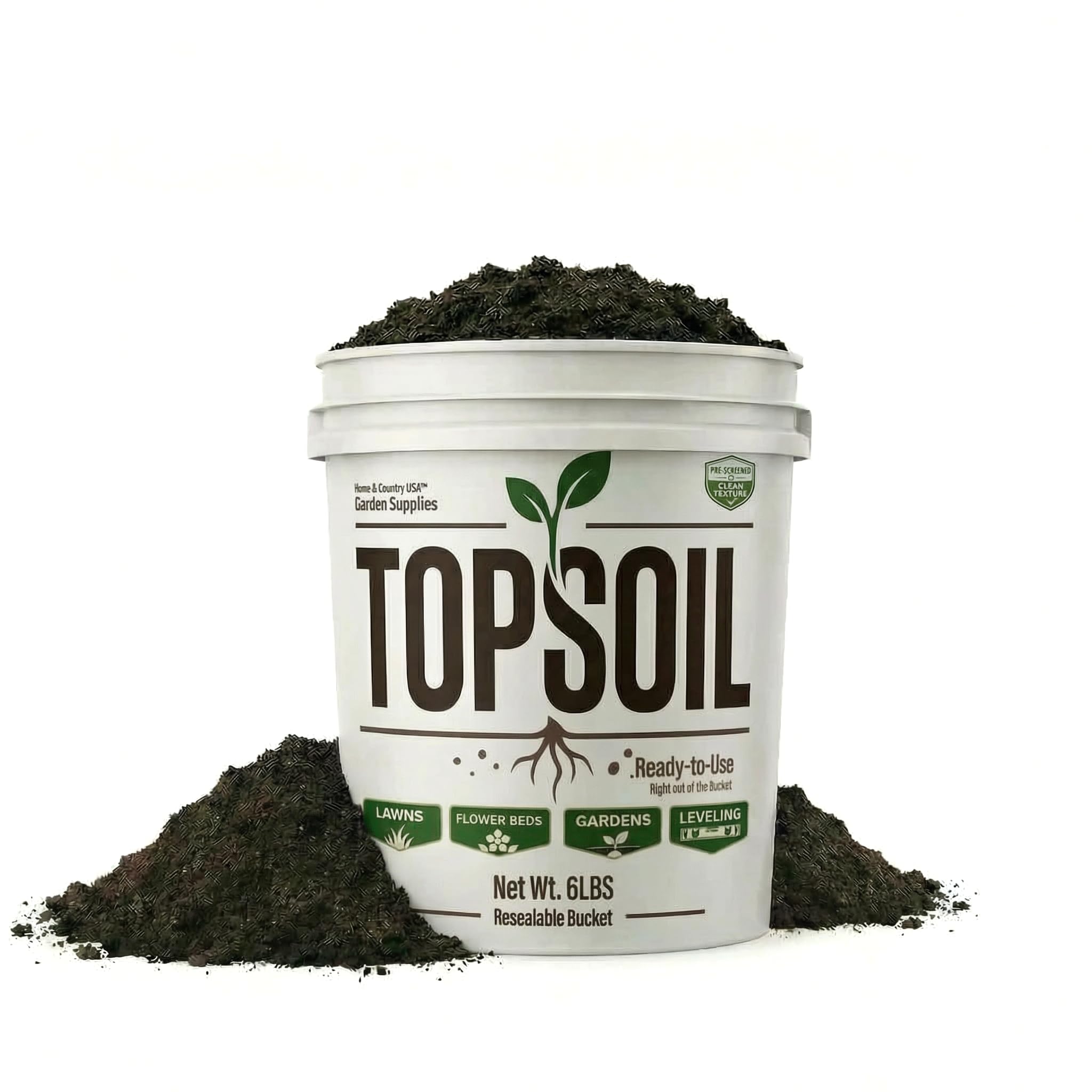
A tidy 6-pound pail ideal for small container jobs and indoor herb pots.
This is a niche pick for anyone who just needs a small amount of decent topsoil without lugging a giant bag home. The pail contains a balanced blend with nitrogen, phosphorus, and potassium for slow-release feeding. One owner called it “good dirt” and noted the bucket doubles as a handy storage container for garden gloves.
The value proposition is mixed — several buyers felt the quantity was low for the price. It works well as a quick fix for a single large pot or to refresh a few small containers, but it’s not a cost-effective way to fill a raised bed. Some also flagged a foul odor from the soil, so you may want to open it outside.
What works
- Lightweight, clean pour — no mixing needed
- Comes in a reusable pail for storage
- Decent soil quality for small projects
Honest limitations
- Small volume for the price — not a bulk solution
- Some buyers disliked the soil’s odor
Best for: Apartment dwellers or small-space gardeners who need a mess-free, compact amount of soil for a few houseplants or a single container herb garden.
Not ideal for: Anyone filling a raised bed or outside garden area — the per-cubic-foot cost is much higher than larger bags.
6. Brut Organic Potting Soil 1 cu ft
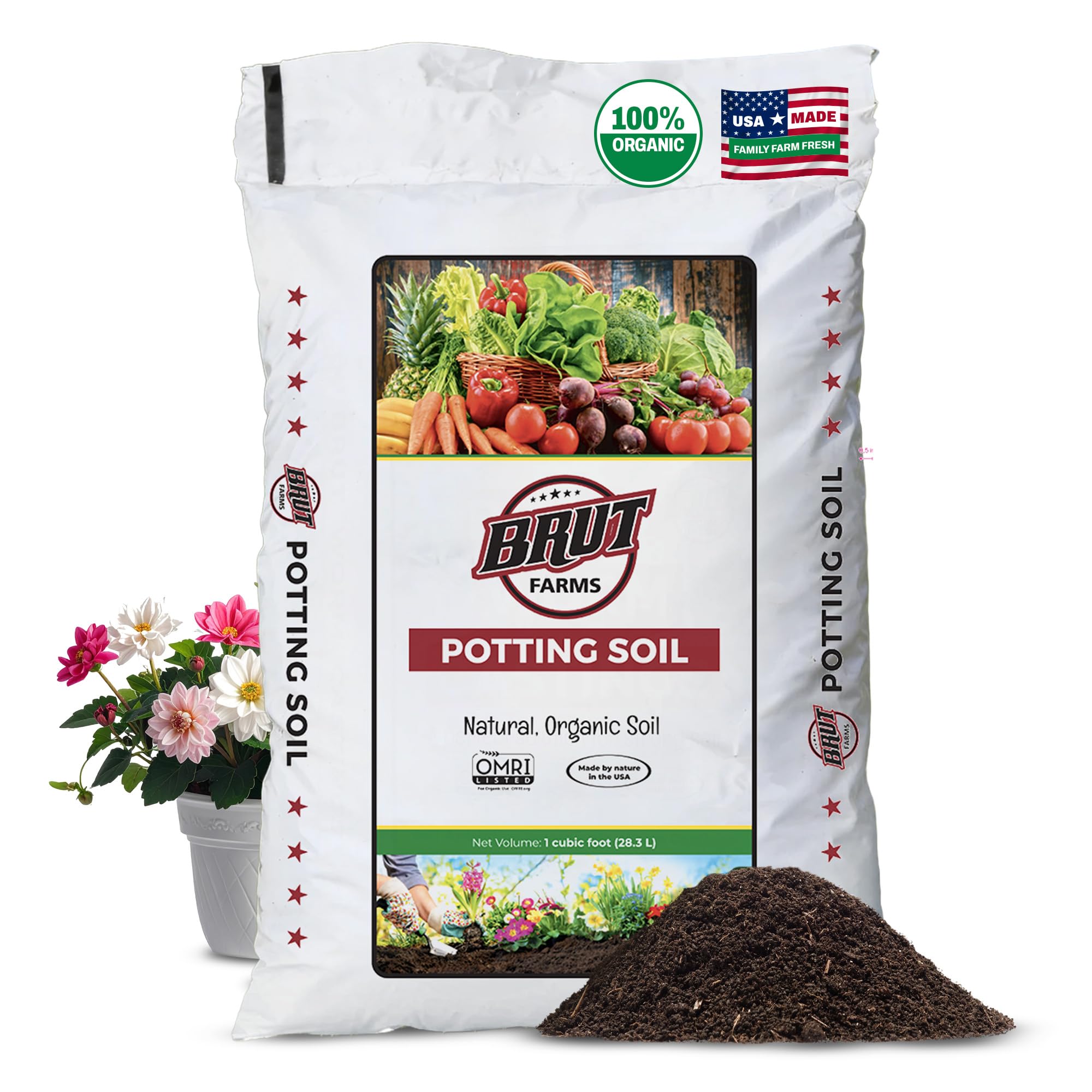
Nutrient-dense, filler-free soil packed with worm castings and trace minerals.
Brut Organic Potting Soil is OMRI-listed and made with 100% organic ingredients, including microbe-rich worm castings and trace minerals like azomite and kelp. The pH is naturally balanced between 6.3 and 6.5, which is ideal for most vegetables and flowers. Owners describe the soil as “hands down the best potting soil I’ve ever put my hands in” and note it caused “rapid deep green leaves and new growth in 2 days” for citrus and cherry trees.
The trade-off: the high organic content — especially fish and bone meal — can attract flies if left exposed outdoors. A simple top layer of sand or gravel solves the issue, but it’s worth knowing before you fill a large raised bed. The price is also on the premium side, though most gardeners find the results justify it.
Editorial take: This is an excellent soil for organic gardeners who want a biologically active, filler-free mix that feeds plants from the root level. Just plan for a thin top dressing if using outdoors to keep the nutrients contained.
Ideal for: Organic container gardens, raised beds, and indoor plants where you want a pure, chemical-free foundation with worm castings and living biology.
Be aware: The same natural ingredients that fuel growth can also attract insects if the soil is left uncovered in warm weather.
7. Michigan Peat General All Purpose Premium Potting Soil, 50 Pounds

A proven 50-pound performer with perlite for aeration and included slow-release feed.
This all-purpose mix combines dark reed sedge peat, perlite, and sand for good drainage, plus both starter and slow-release fertilizers so you don’t have to feed immediately. It is “good value for money” according to many buyers, and the quality is the most-discussed aspect by a wide margin. One owner raved: “everywhere I’ve used it I’ve had extra success with plants.”
The big 50-pound bag suits large container gardens and raised beds. A few users noted it can arrive moist and sometimes bring fungus gnats (tiny flying pests that thrive in damp soil), so you may want to let it air out before use. Overall, it is a versatile, high-value bulk potting soil for big projects.
Solid strengths
- Ready-to-use — no mixing needed
- Includes starter and slow-release fertilizers
- High-quality dark peat blend with perlite
Heads up
- Moisture retention can be too high for some plants
- Occasional gnats reported — let the bag sit open before use
Reach for this if: You need a large quantity of reliable, all-purpose potting soil for a mix of container vegetables, flowers, and shrubs, with built-in feeding included.
Look elsewhere if: You are strictly organic gardening — this mix uses synthetic slow-release fertilizers, not certified organic inputs.
8. Coast of Maine Castine Blend Soil – 2 cu ft
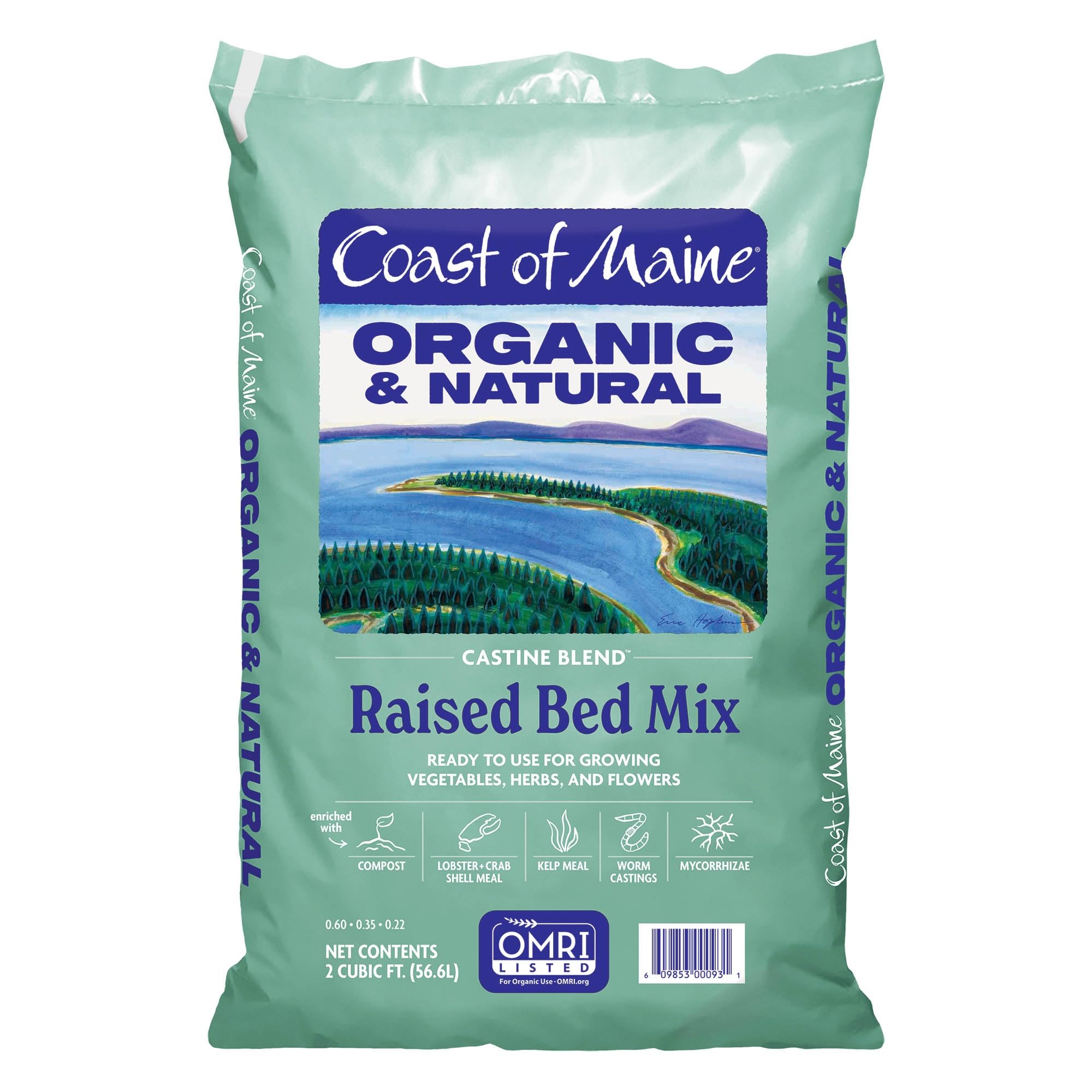
A rich, fluffy 2 cu ft blend loaded with lobster shell, biochar, and mycorrhizae.
This is the premium raised-bed mix that gardeners keep coming back to year after year. It combines worm castings, mycorrhizae, biochar, green sand, kelp meal, and lobster and crab shell meal. The texture is “light, fluffy soil” that loosens existing garden soil and improves drainage. One owner who used it for three years calls it “best soil to add to improve garden beds.”
Tomatoes and sunflowers grew “pretty awesome” in it, and the soil opens up dark, soft, and free of twigs or bugs. The main pause is the price — at 2 cubic feet and 40.3 pounds, it costs more than most options here. But for a dedicated raised bed gardener, the ingredient list and results speak for themselves.
The bottom line: Castine Blend is the gold standard for raised beds. The biodiverse, nutrient-dense composition means you can plant directly into it with confidence. Just know you are paying a premium for that marine-sourced nutrition.
Perfect for: Serious raised bed and container gardeners who want a biologically rich, ready-to-use soil that encourages strong root systems and good yields.
Not for: Budget-minded projects or in-ground beds where the cost per cubic foot would be hard to justify.
9. Gaia Green Organic Living Soil – 1.5 cu ft

Biologically active, pre-charged soil shipped in a box to prevent punctures.
Gaia Green’s living soil comes ready to use out of the bag. It is pre-loaded with kelp meal, alfalfa, bone meal, glacial rock dust, and oyster shell. The mix also includes worm castings, insect frass, and composted inputs to create a light, well-draining structure. Customers call it “one of the best out of the bag soils on the market.”
It is CDFA-registered and free from synthetic chemicals. The only real caution is that some batches arrived “totally dry,” which is not ideal for a living soil product. Still, the 4.8-star rating and high marks for ease of use make it a top-tier choice for growers who value ready-to-plant convenience.
Why it stands out
- Pre-charged with slow-release organic nutrients
- Includes worm castings and insect frass for living biology
- Well-sealed cardboard box protects the bag in transit
Know before you buy
- Some units arrive very dry — check moisture upon opening
- Premium price point; heavy product with free delivery offsets cost
Choose this for: Indoor and outdoor containers where you want a complete, living organic soil that requires no mixing, measuring, or amending — just pot and water.
Pass if: You prefer to customize your own soil blend or need a very large volume for extensive raised beds, as the price adds up quickly.
Understanding the Specs
Volume (quart, cubic foot, liter)
This is the single most important number for budgeting your project. A raised bed that is 4-feet by 8-feet by 1-foot deep needs roughly 32 cubic feet of soil. Compare bag volumes directly: a 1.5-cubic-foot bag is about 38 quarts, while a 20-quart bag is about 0.75 cubic feet. Knowing this stops you from under-ordering mid-project.
Weight
A 50-pound bag of dense topsoil is heavy to carry but may cover less volume than a lighter, fluffier organic mix that weighs only 21 pounds per bag. Weight tells you how dense the soil is — lighter bags often have more perlite or peat for aeration, while heavier bags are denser with sand and native soil for amending.
Organic vs. Synthetic Fertilizer
Some bagged soils include a synthetic slow-release fertilizer that feeds plants for a set period (like “up to 6 months”). Organic mixes rely on natural inputs such as worm castings (worm waste that adds nutrients), bone meal, or kelp meal that feed the soil biology. Neither is “better” — it depends on your gardening style and if you want to manage feeding yourself.
Mycorrhizae and Biochar
Mycorrhizae are beneficial fungi that attach to plant roots and help them absorb water and nutrients. Biochar is a form of charcoal that improves soil structure and holds onto nutrients. You see these in premium mixes as a signal that the soil supports long-term plant health rather than just a quick nutrient boost.
FAQ
How much good soil for garden beds do I need to fill a 4×8 raised bed?
Can I use potting mix instead of topsoil for raised garden beds?
What does OMRI-listed mean for garden soil?
Is it safe to use bagged soil directly from the bag without mixing?
Why does my bagged garden soil smell bad?
How long does the fertilizer in bagged soil last after opening?
Should I add perlite or peat moss to bagged topsoil for containers?
What is the difference between garden soil and raised bed soil?
Can I use the same soil for indoor houseplants and outdoor garden beds?
Final Thoughts: The Verdict
For most gardeners, the good soil for garden beds winner is the Miracle-Gro Potting Mix 3-Pack because it combines proven feeding, strong root results, and versatility across indoor and outdoor use at a crowd-favorite price. If you want an OMRI-listed organic blend tailored for vegetables, grab the Coast of Maine Veg & Tomato Soil. And for a premium raised bed foundation with marine-sourced biology, the Coast of Maine Castine Blend is the one to reach for.
How We Picked
We do not accept paid placement. Every pick is matched to a real buyer and a real use-case; we do not hands-on test units.
Sources & Methodology
Specifications: manufacturer listings and product documentation. Review insights: verified customer reviews, as of July 2026. Pricing: not shown on this page (it changes often); check the current price via the retailer link.
As an Amazon Associate, Lawn Gear Lab earns from qualifying purchases. This does not affect which products we feature.