
Specs are compiled from manufacturer listings and verified buyer reviews and can change over time — please confirm the key details on the product page before buying.
A dull pruner crushes stems instead of slicing them, which invites disease into your plants and turns a quick trim into an arm workout. You need a blade that stays sharp through a season of deadheading, shaping shrubs, and cutting back perennials. The difference between a frustrating tool and a joy to use depends on the blade steel, the handle design, and whether the maker expects you to replace the whole tool when it dulls or simply swap the blade.
I’m Rikta — the founder and writer behind Lawn Gear Lab. This guide is built by comparing the manufacturers’ published specifications and the patterns across verified customer reviews, so you get each pick’s real strengths and trade-offs instead of marketing spin.
Whether you are a weekend gardener snipping herbs on the patio or someone who spends hours each week on a serious landscape, this look at the best good pruning shears will help you match the right tool to the work you actually do.
Our Picks at a Glance

How To Choose The Best Good Pruning Shears
Before you click “buy,” three decisions define whether your new shears feel like a natural extension of your hand or a cheap gripe. Focus on the cutting mechanism, the blade material, and the handle ergonomics. Get those right and everything else — lock type, weight, included holster — falls into place.
Bypass vs. Anvil: Which Cut for What Plant
A bypass pruner works like scissors — two curved blades slide past each other to make a clean, scissor-like cut. This is the choice for live, green wood because it does not crush the stem tissue, which helps the plant heal faster. An anvil pruner has one straight blade that closes onto a flat surface (the anvil). It crushes through dry, dead branches with more leverage, but that same crushing action can damage live stems. For general garden trimming, bypass is the safer bet. If you frequently cut dry twigs or woody stubs, an anvil style earns its place.
Blade Steel: Edge Retention and Rust Resistance
High-carbon steel takes and holds a razor edge longer than standard stainless steel, which is why professional-grade shears (like those from Felco or Okatsune) use it. The trade-off is that carbon steel can rust if you leave it wet. Stainless steel resists corrosion well but does not stay scalpel-sharp as long. A middle ground is Japanese SK5 high-carbon steel or coated blades (PTFE or non-stick) that resist sap buildup and corrosion while keeping a keen edge. Your climate and how diligently you wipe the blades after use should guide this choice.
Handle Design and Grip Comfort
You will notice handle comfort about thirty minutes into a pruning session. Forged aluminum handles keep weight low — a big deal if you are carrying shears around the yard for hours. A non-slip rubber or vinyl coating adds grip when your hands are sweaty or damp. Look for an angled head (some Felco models have it) that keeps your wrist in a natural position. If you have arthritis or limited hand strength, a shock-absorbing spring that gently reopens the blades after each cut reduces fatigue significantly.
Quick Comparison
| Model | Best For | Blade Material | Cut Capacity | Handle Material | Amazon |
|---|---|---|---|---|---|
| Felco F2★ Best Overall | Best Overall | Hardened Carbon Steel | 1 Inches | Forged Aluminum / Rubber | Amazon |
| Dramm ColorPointBest for Flowers | Precision Flower Cutting | Stainless Steel | 0.25 Inches | Stainless Steel | Amazon |
| TABOR TOOLS K17AHarvest Snips | Floral & Harvest Snips | Stainless Steel | Light Stems | Stainless Steel / Comfort Coating | Amazon |
| Modern Sprout | Herb & Houseplant Trimming | High Carbon Steel | Fine Stems | Aluminum | Amazon |
| Kimura 8″ Pro | Ergonomic All-Around Use | Japanese SK5 Hi-Carbon Steel | 15 Millimeters | Aluminum / Vinyl Coated | Amazon |
| Corona BP 6250 | Mid-Range Heavy Pruning | Alloy / Carbon Steel | 1 Inches | Aluminum | Amazon |
| Okatsune 103 | Lightweight Japanese Precision | High Carbon Steel | 25 Millimeters | Polypropylene / TPR | Amazon |
| Original LÖWE 10 | Heavy Branch & Wood Cutting | Non-Stick Steel | 1.18 Inches | Wood | Amazon |
| Wablade Japanese | Premium Bonsai & Detail Work | Forged Alloy Steel | 0.59 Inches | Alloy Steel | Amazon |
In‑Depth Reviews
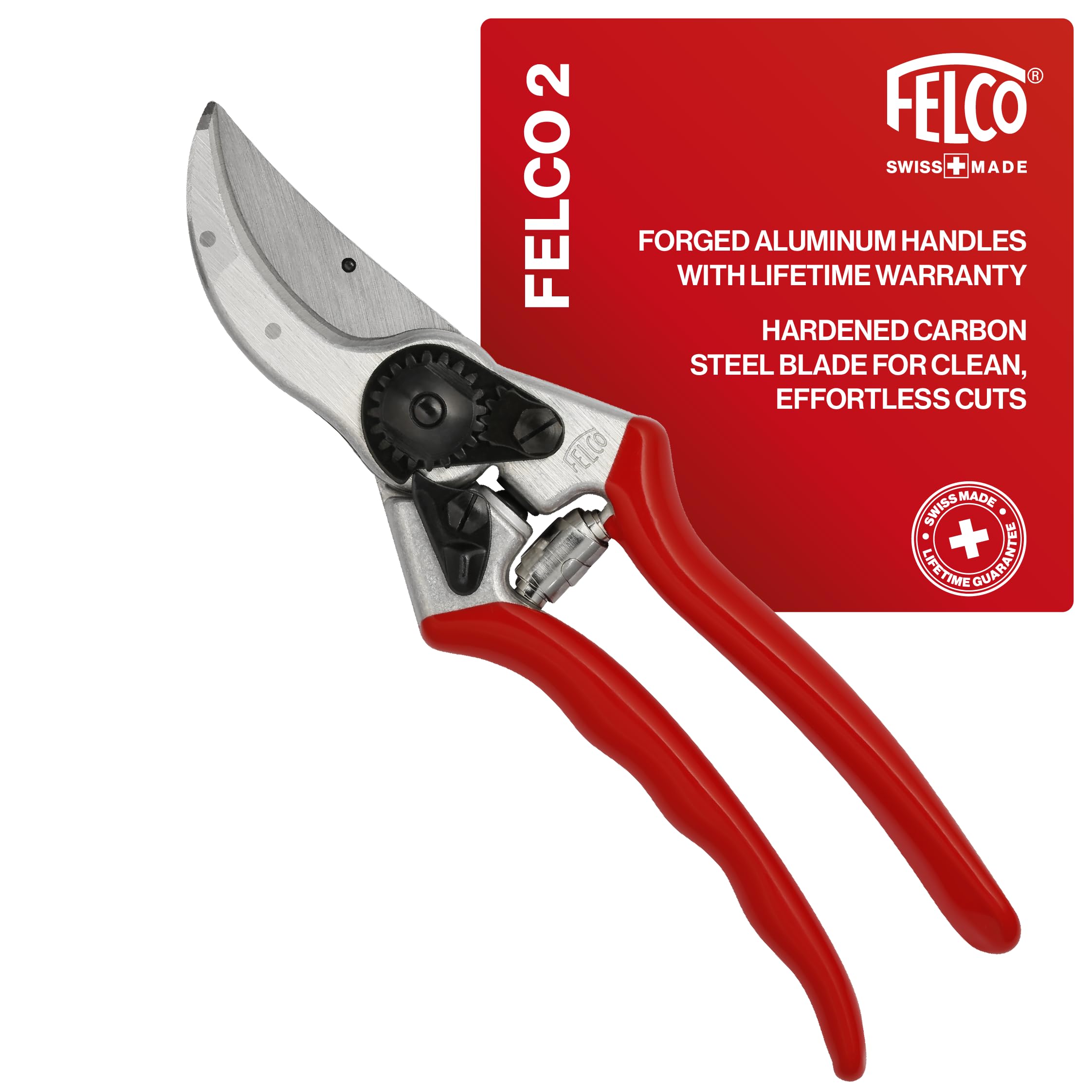
1. Felco F2 Pruning Shears – 9.25″ Swiss-Made Garden Clippers
Our pick — over 4.5★ from 14,000+ verified ratings; the strongest balance of quality and price.
The professional’s choice that makes cutting branches up to an inch thick feel easy.
This Swiss-made pruner is the benchmark for a reason. The hardened carbon steel blade stays razor-sharp through heavy use, and the forged aluminum handle keeps the tool light enough for all-day sessions without fatigue. The non-slip coating and angled head reduce wrist strain noticeably — a detail that matters when you are tackling a full hedge. At 9.25 inches long, it offers the leverage to power through thicker growth while remaining nimble enough for precise work.
What truly sets the Felco F2 apart is its repairability. Every single component — blade, spring, bolt, anvil — can be replaced or sharpened. Buyers report that even after years of use there are replacement parts available so they work as good as new. That is a decades-long ownership proposition, not a throwaway tool. The steel blade handles branches up to 1 inch thick with a single-bevel edge that slices rather than crushes.
The crowd favorite is the Felco F2 — 4.8 stars across thousands of owners, many of whom call it the last pruner they will ever buy. The only real catch is the premium cost and the fact that it is right-hand oriented, so left-handed gardeners may want to look at the Felco 9 (the left-handed version).
The Professional’s Edge
- Replaceable every part extends tool life by decades
- Forged aluminum handle is lightweight yet incredibly strong
- Non-slip coating and angled head reduce hand fatigue
- Cuts clean through branches up to 1 inch thick
The Trade-Offs
- Premium price compared to budget shears
- Right-hand orientation only
- Requires occasional cleaning and oiling to prevent rust on carbon steel blade
The lifetime tool: If you want a single pair of shears that will serve you for decades and cut any branch you throw at it, this is it.
skip it if: You are left-handed and unwilling to adapt, or your pruning is limited to occasional snipping of herbs and soft stems.
2. Dramm ColorPoint Stainless Steel Compact Garden Pruning Shears
A tiny, razor-sharp snip that makes deadheading roses and trimming herbs a one-handed delight.
These compact shears are purpose-built for fine, detailed cutting — think cutting flowers, trimming back plants, and deadheading. The stainless steel blades resist corrosion beautifully, and the fine point reaches into tight spots without mangling neighboring stems. At just 0.25 inches cutting width, this is not a branch lopper; it is a precision tool for the delicate work that bigger pruners would crush.
The ambidextrous design and sliding blade lock make it safe to toss into a pocket or apron. Owners repeatedly praise the build quality — quality and sharpness are the two most-mentioned positives, with buyers noting the shears stay sharp and rust-free over months of use. The ergonomic handle is comfortable for smaller hands and does not cause cramping during extended sessions. Available in six bright colors (this one is yellow), it is easy to spot if you drop it in the garden.
Precision partner: For snipping flowers, deadheading, and trimming small stems, this compact pruner punches far above its size and price point.
Reach for this if: You primarily work with flowers, herbs, and light pruning where a big pruner feels clumsy.
Look elsewhere if: You need to cut woody branches thicker than your pinky — this tool is not built for that.
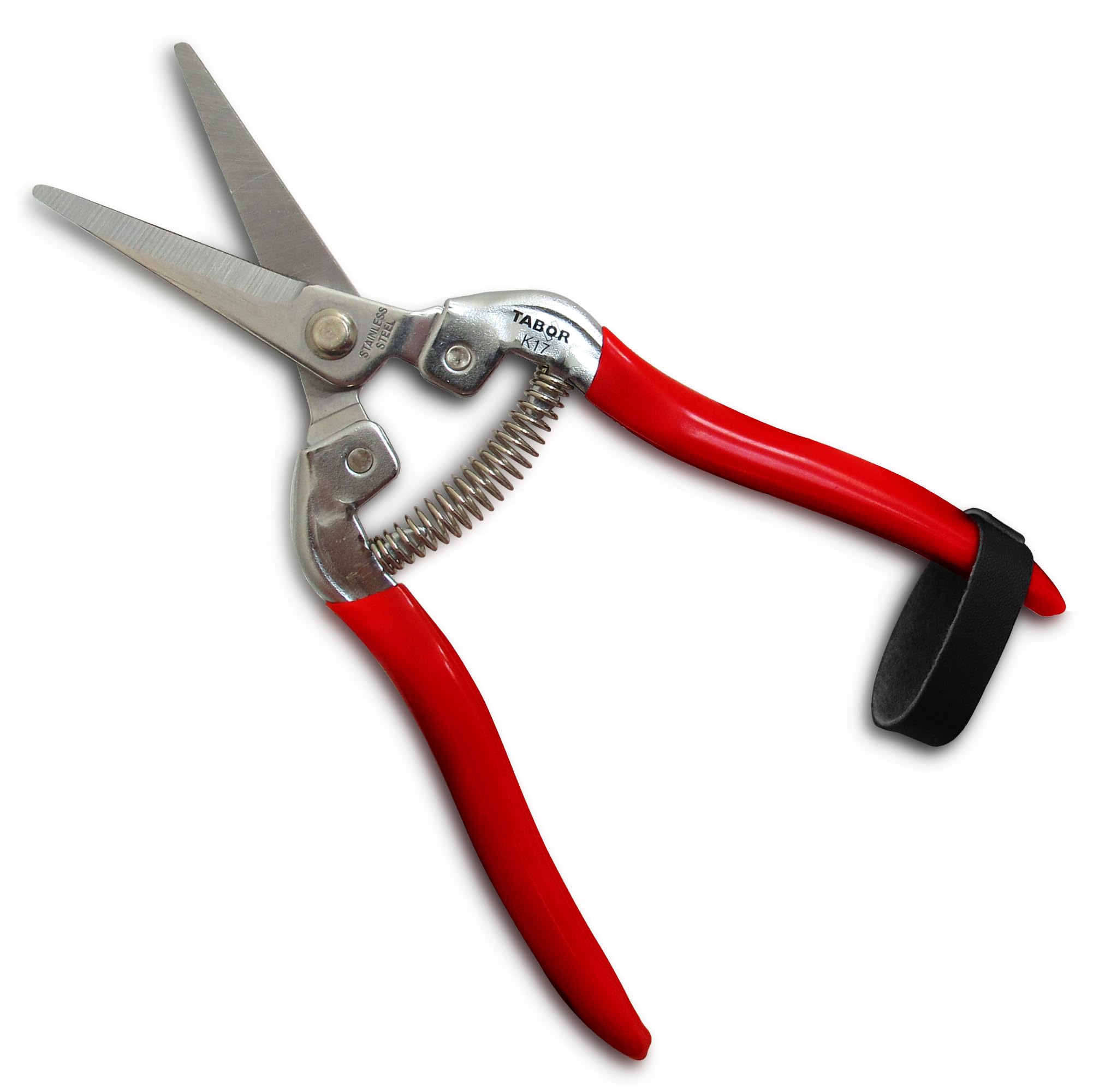
3. TABOR TOOLS K17A Pruning Shears with Stainless Steel Blades
Razor-sharp, long-reach snips that slide into tight bundles to snip stems without disturbing neighbors.
The K17A is built for florists and flower farmers — its long, pointed, thin blades reach deep into a bouquet or a tangled shrub to snip exactly one stem. The stainless steel resists rust and the non-stick coating glides through stems so sap does not gum up the works. A shock-absorbing spring opens the blades after each cut, which reduces hand fatigue significantly — a real boon for anyone with arthritis or limited hand strength.
One flower farmer calls these their second pair for harvesting hours weekly, which says a lot about their durability. The handle closure strap keeps them closed safely in a drawer or tool belt. At 7.87 inches long and 91 grams, they disappear into your hand. The only catch is they are not suitable for hard, woody stems — the blade geometry is tune for green growth and flowers. Quality and sharpness are the top praises among owners.
Florist favorite: For deadheading, harvesting herbs and vegetables, and making flower arrangements, these snips are a workhorse that handles thousands of cuts.
Grab these for: Greenhouses, hydroponics, indoor herb gardens, and any scenario where precise snips on soft stems matter.
Skip them for: Cutting hardwood branches or thick woody stems — you will damage the fine tips.
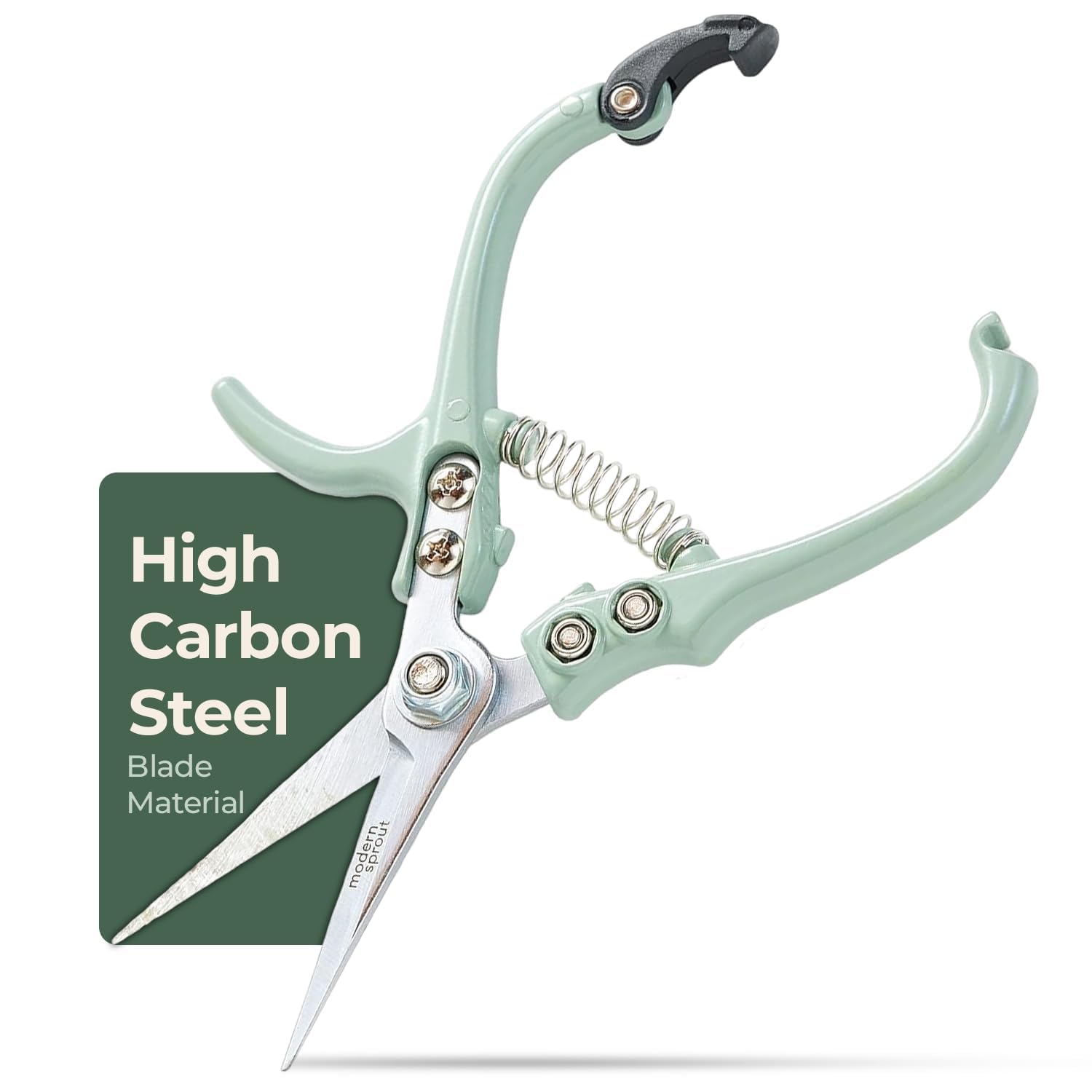
4. Modern Sprout Pruning Shears – Herb Snipping Scissors with Reusable Holster
A sleek, lightweight pruner that makes snipping basil and mint feel like a precision art.
Modern Sprout designed these shears specifically for fine-stemmed plants — basil, mint, bonsai, blooms. The high-carbon steel needle-nose blades are rust-resistant and deliver sharp cuts in tight spaces without damaging nearby leaves. The ergonomic aluminum handles reduce hand fatigue during long trimming sessions, and the easy-lock safety latch keeps the blades securely closed for safe storage in a drawer or garden bag.
Quality and sharpness are the top praises from owners, with many noting the shears work exceptionally well for trimming herbs and houseplants. The design is sleek enough to leave on your kitchen counter for daily snipping. The narrow tip is perfect for deadheading slender stems while leaving buds on the same stem intact. The included holster in sage green is a nice touch for keeping it handy. Best for finer work rather than thick branches.
Kitchen garden essential: For anyone who grows herbs indoors or out, these shears make harvesting quick and clean without damaging the plant.
Ideal for: Houseplant parents, herb gardeners, bonsai enthusiasts, and anyone who needs a precise tool for delicate stems.
Not for: Cutting branches thicker than a pencil — the needle-nose design is too fine for heavy work.
5. Kimura 8″ Pro Pruning Scissors – Premium Japanese SK5 Steel

A lightweight, ergonomic pruner with a blade so sharp it cuts through stems like butter and a grip that does not punish arthritic hands.
Kimura brings Japanese blade-making tradition to a very accessible price point. The SK5 high-carbon steel is forged in Japan and heat-treated to 59 HRC, which means the edge stays sharp for a very long time without frequent sharpening. The PTFE-coated blades resist sap buildup and rust, gliding through plants with low friction. The aluminum handles are coated in non-slip vinyl for a secure grip even when wet.
Owners highlight the extreme sharpness and ergonomic comfort, particularly for those with arthritis or carpal tunnel. The locking strap is quick to engage with a light push. At 15 millimeters cutting width, it handles small branches and general garden work with ease. A lifetime warranty backs the purchase. You get a high-end cutting feel for a mid-range outlay.
Arthritis-friendly precision: If hand fatigue or stiff joints have made pruning painful, the lightweight build and cushioned grip of these Kimura shears change the experience completely.
Perfect for: Gardeners who want Japanese blade quality and ergonomic comfort without spending Felco money.
Consider the limit: It is not designed for branches thicker than about half an inch — stay within the 15mm cutting width for best results.
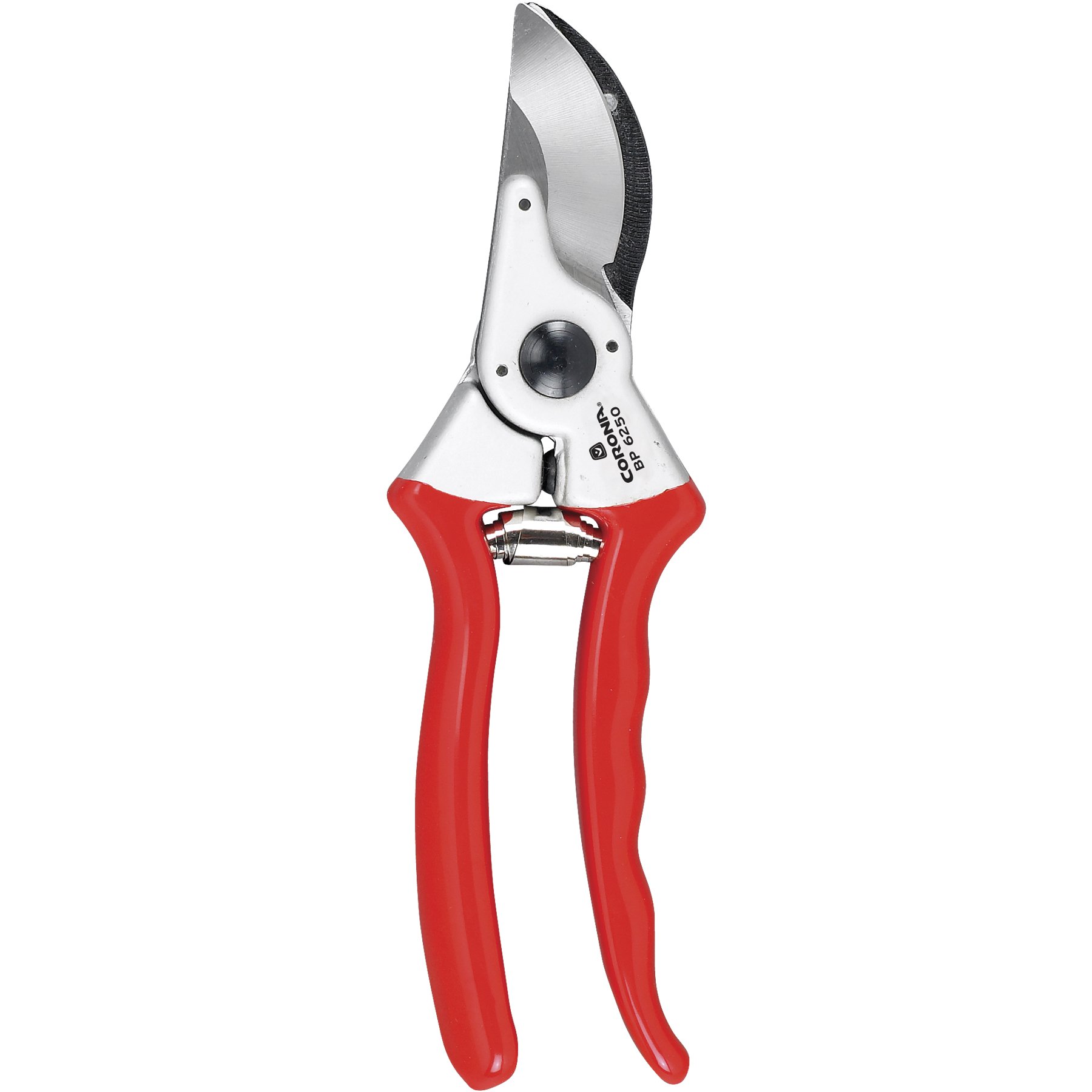
6. Corona Tools BP 6250 MAXFORGED Aluminum Bypass Pruner
A forged-aluminum pruner that delivers Felco-level performance at roughly half the cost.
The Corona BP 6250 is often mentioned in the same breath as the Felco F2 — and for good reason. It shares the same 1-inch cutting capacity and forged aluminum construction but at a more accessible price. The precision-honed forged steel blade makes smooth, scissor-like cuts that minimize plant damage. The non-slip red grips are easy to spot in grass or mulch, and the one-thumb lock is simple to operate.
Owners note that it cuts 1-inch branches easily and that hours of use produce no hand fatigue, even for those with arthritis. The blade is replaceable and the sap groove is self-cleaning. A wire-cutting notch adds versatility. The caveat is that the carbon steel blade needs cleaning and oiling after use to prevent rust — a quick habit that extends its life significantly. For the part-time gardener who wants pro-level cutting without the pro-level price, this is a serious contender.
Budget-friendly workhorse: If you need a pruner that can handle thick branches and long sessions but do not want to spend top dollar, the Corona BP 6250 is the smart compromise.
Ideal for: Homeowners with substantial pruning needs — trees, shrubs, woody stems — who value performance and value equally.
Remember to: Clean and oil the blade after use to keep it rust-free; it is not as corrosion-resistant as stainless steel models.
7. Okatsune 103 Bypass Pruners – General Purpose Medium (2020 Version)

The Japanese bypass pruner that is so well-balanced and sharp it becomes an extension of your hand.
Okatsune is a revered name in Japanese garden tools, and the 103 model is their most popular general-purpose pruner. At just 202 grams and 200mm long, it is noticeably lighter than many aluminum-handled competitors. The high-carbon steel blade, made in Japan, takes a super sharp edge that owners rave about. The polypropylene and TPR (thermoplastic rubber) handles give a comfortable, secure grip without adding weight.
Sharpness and quality are the most-praised aspects. Owners describe it as the best clipper in their collection and note that it fits the hand just right. The maximum cut diameter is 25mm (about 1 inch), so it competes directly with the Felco F2 on capacity while undercutting it on weight. It is a favorite among community gardeners and professionals who appreciate how easily it operates all day. The blade stays sharp for a long time between sharpenings.
Featherlight precision: For gardeners who prioritize balance and edge retention, the Okatsune 103 delivers a cutting experience that feels almost easy.
Choose this for: Long pruning sessions where weight matters, and if you appreciate the craftsmanship of Japanese steel.
Note: It has a smaller following in the US, so replacement parts and service are less available than for Felco or Corona.
8. Original LÖWE 10 Professional Anvil Pruning Shears with Bypass Geometry

A German-engineered anvil shear that mows through dry branches with a mechanical advantage that feels easy.
The LÖWE 10 is an unusual hybrid — an anvil shear that uses bypass geometry. What that means for you is the leverage of an anvil (great for dry, hard wood) with a cutting action that is smoother and less crushing than a traditional anvil. It cuts branches up to 1.18 inches thick, which is the largest capacity on this list. The wood handles and inward-curved lower grip keep the tool comfortable for medium-sized hands during heavy pruning work.
At 285 grams (10.05 ounces), it is not the lightest pruner, but that weight translates to solid cutting power. Owners who work in orcharding and forestry specifically praise the LÖWE over Felco and Corona for its power-to-effort ratio. The curved, corrosion-protected blade is ideal for cutting in tight branch formations. One enthusiast sums it up: “For pro performance and cost value for money, I like Lowe!” The non-stick steel blade resists sap, and the build quality feels industrial-grade.
Orchard-grade power: If you regularly cut thick, dry branches and want a tool that makes each cut feel like you are barely trying, the LÖWE 10 is a revelation.
Best suited for: Professionals and serious hobbyists who prune trees, hard wood, and dense shrubs regularly.
Keep in mind: The anvil-style cut is overkill and potentially damaging for delicate live stems — keep a bypass pruner for green growth.
9. Wablade Japanese Pruning Shears – Bypass Garden Pruner 7.9″
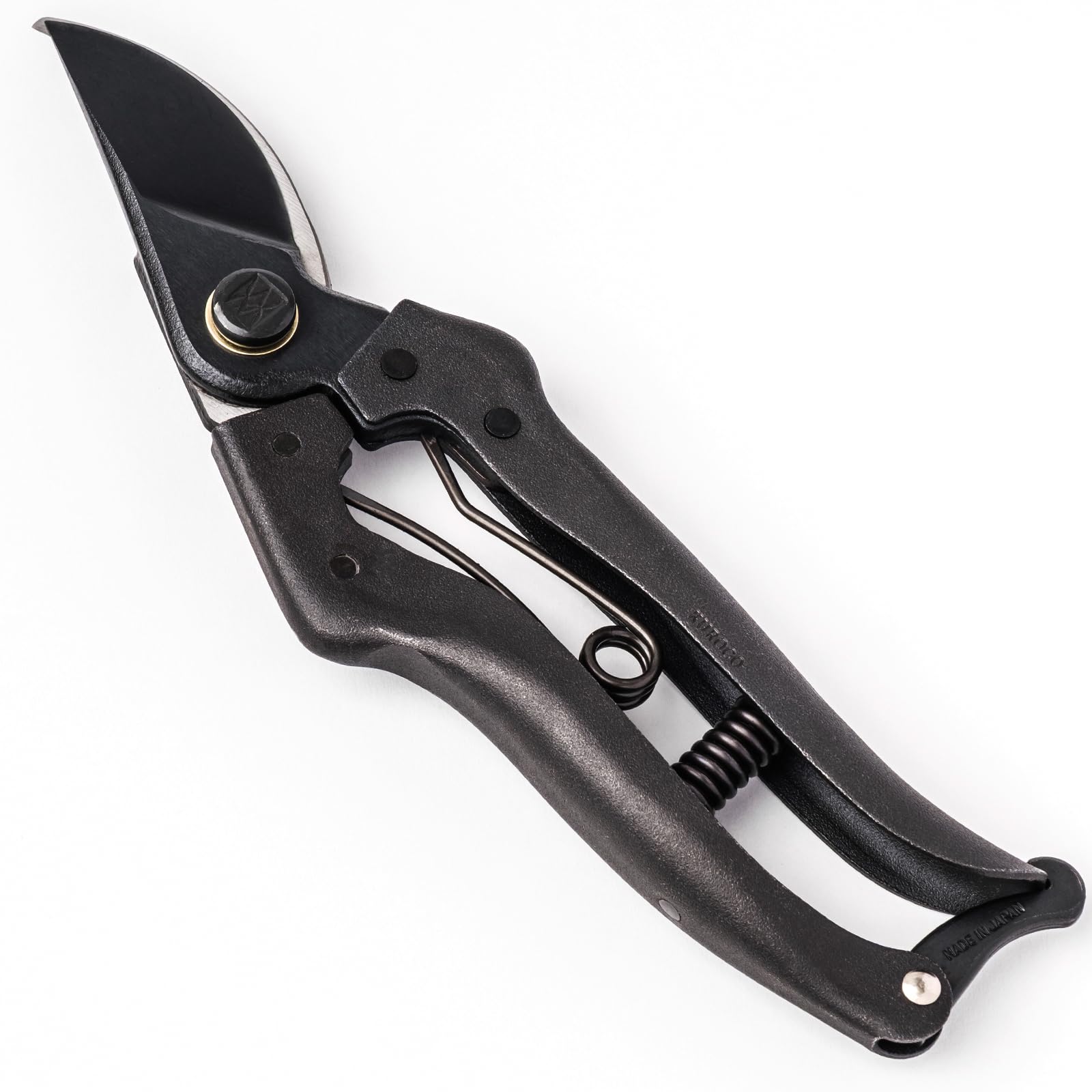
A Japanese master-crafted shear that makes cutting a branch feel like you are parting water.
Wablade shears are made in Japan with careful hand adjustment by skilled craftsmen. The forged alloy steel blade is designed for clean, controlled cutting on live branches up to 0.59 inches (15mm). The bypass blade structure passes the cutting blade by the counter blade for a smooth, stable snip. A blade support reduces flex during cutting, and the cushion spring softens the impact, making each cut feel surprisingly gentle.
At 7.9 inches long and 8.32 ounces, it is a compact tool that fits comfortably in smaller hands — owners with smallish hands describe it as a joy to hold. The blade lock keeps the blades closed for secure storage. The asymmetrical blade edge (right-hand orientation) and the overall balance have earned it a perfect near-5-star rating from early adopters, who call it “the last pruner you’ll ever buy.” It is a premium choice for gardeners who value craftsmanship and a refined cutting feel.
Artisan tool: For bonsai enthusiasts, rose gardeners, and anyone who appreciates a hand-finished tool that makes pruning a calming ritual rather than a chore.
Ideal for: Precise pruning of live branches, flowers, and bonsai where cut quality and feel matter as much as the result.
Consider before buying: At 0.59-inch cutting width, it is not built for heavy branches — this is a specialist tool for detail work.
Understanding the Specs
Cutting Capacity (Inches or mm)
This is the maximum branch thickness the shear can cleanly cut. A 1-inch (25mm) capacity handles most garden pruning — shrubs, small tree branches, rose canes. Smaller capacities (0.25 inches, 15mm) are for flowers, herbs, and delicate stems. Pushing a pruner beyond its rated capacity will either crush the branch or damage the blade edge.
Blade Material and Coating
High-carbon steel holds the sharpest edge and can be re-sharpened many times but needs oiling to prevent rust. Stainless steel resists corrosion but does not stay as sharp as long. PTFE or non-stick coatings reduce friction and sap buildup, so the blade slides through stems cleanly. Japanese SK5 and similar high-carbon alloy steels offer an excellent balance of edge retention and toughness.
Handle Material and Ergonomics
Forged aluminum handles are lightweight and strong, reducing fatigue during extended use. Plastic or polypropylene handles are lighter but less durable. Wood handles offer a classic feel and good grip but can be heavier. A non-slip rubber, vinyl, or TPR coating is critical for comfort and control, especially when your hands are sweaty or the weather is damp. Angled heads and shock-absorbing springs further reduce strain on your wrist and hand.
Bypass vs. Anvil Cutting Mechanism
Bypass pruners have two curved blades that slide past each other like scissors. They make the cleanest cut on live green wood, which helps plants heal faster. Anvil pruners have one straight blade that closes onto a flat surface (the anvil). They generate more leverage and are better for cutting dry, dead wood, but can crush live stems. Some pruners like the LÖWE 10 use anvil construction with bypass-style geometry to blend the benefits.
FAQ
What is the difference between bypass and anvil pruning shears?
Can I use pruning shears on thick tree branches?
Are Japanese pruning shears better than European ones?
How do I keep my pruning shears from rusting?
What does “replaceable parts” mean for a pruner?
Do pruning shears work for left-handed people?
How often do I need to sharpen pruning shears?
What is a PTFE coating on pruning shears?
Can I use pruning shears to cut wires or twine?
Final Thoughts: The Verdict
For most buyers, the good pruning shears winner is the Felco F2 because it combines a razor-sharp 1-inch cutting capacity with a fully repairable design that can last a lifetime — the kind of tool professionals have trusted for generations. If you want a lightweight, ergonomic all-rounder that is particularly kind to arthritic hands, grab the Kimura 8″ Pro Pruning Scissors. And for precise flower snipping and herb harvesting at a very accessible price, the compact Dramm ColorPoint is the one to reach for.
How We Picked
We do not accept paid placement. Every pick is matched to a real buyer and a real use-case; we do not hands-on test units.
Sources & Methodology
Specifications: manufacturer listings and product documentation. Review insights: verified customer reviews, as of July 2026. Pricing: not shown on this page (it changes often); check the current price via the retailer link.
As an Amazon Associate, Lawn Gear Lab earns from qualifying purchases. This does not affect which products we feature.