
Specs are compiled from manufacturer listings and verified buyer reviews and can change over time — please confirm the key details on the product page before buying.
The difference between a thriving basil plant that keeps delivering and a sad, yellowing one that bolts within weeks usually depends on what is in the bag. A good potting soil for herbs is not just dirt — it needs to drain fast enough to avoid root rot while holding enough moisture between waterings, all packed with gentle organic nutrition that fuels leafy growth instead of forcing flowers.
I am Rikta, the writer behind Lawn Gear Lab. This guide is built by comparing the manufacturers’ published specifications and the patterns across verified customer reviews, so you get each pick’s real strengths and trade-offs instead of marketing spin.
Starting your first windowsill garden or upgrading from bargain-bin mixes that turn into concrete? Finding the best good potting soil for herbs means understanding what makes a mix truly work for these tender, fast-growing plants.
Our Picks at a Glance


How To Choose The Best Good Potting Soil For Herbs
Herbs are not like your average houseplant. They need a mix that pulls double duty — quick drainage so roots never sit in water, but enough organic matter to feed quick growth cycles. Pick the wrong bag and you will battle mold, stunted leaves, or soil that turns into a hard brick.
Drainage and Aeration Are Non-Negotiable
Herb roots are sensitive to soggy conditions. You need perlite (a lightweight volcanic glass that creates air pockets), pumice, or coarse sand in the mix. These ingredients create spaces for water to flow through and oxygen to reach the root zone. If the bag feels heavy and dense, herbs will struggle.
Organic vs. Synthetic Fertilizer
Herbs like basil, mint, and cilantro grown for eating benefit from organic, slow-release nutrients. Synthetic time-release fertilizers can build up salts that burn delicate roots or alter flavor. Look for ingredients like compost, worm castings (the nutrient-rich waste from earthworms), kelp meal, or alfalfa meal instead of chemical additive lists.
Bag Size and Value
A single small pot may only need 2 quarts (about 2 liters), but filling a window-box of basil or a patio container of mint can eat through 8 quarts or more fast. Balance how many plants you plan to grow against the cost per quart — premium mixes shine for small indoor gardens, while larger bags suit outdoor container setups.
Quick Comparison
| Model | Best For | Volume | Weight | Key Ingredient | Amazon |
|---|---|---|---|---|---|
| Coast of Maine Bar Harbor Blend★ Best Overall | Overall Best | 16 qt | 14.1 lb | Lobster & crab shell meal | Amazon |
| Back to the Roots All-PurposeBest Value | Peat-Free Value | 6 qt (2-pack) | 4.4 lb | Coconut coir & yucca extract | Amazon |
| Miracle-Gro Organic IndoorBest Protection | Overwatering Protection | 8 qt (2-pack) | 9 lb | Coir & sphagnum peat moss | Amazon |
| Brut Organic Potting Soil | Premium Organic | 21 qt (2-pack) | — | Worm castings & Azomite | Amazon |
| Espoma Organic (2 cu ft) | Large Container Gardens | 2 cu ft | — | Earthworm castings & kelp meal | Amazon |
| Espoma Organic (8qt, 2-pack) | Mid-Size Indoor Pots | 8 qt (2-pack) | — | Alfalfa meal & feather meal | Amazon |
| Halatool 6QT Potting Mix | Biggest Bag for the Tier | 6 qt | — | Peat, vermiculite, & coconut bran | Amazon |
| Top Tier Genetics Herbs & Leafy Greens | Small Indoor Herb Pots | 2 qt | — | Organic matter tailored for herbs | Amazon |
| Leaves & Soul Indoor Herb Soil | Targeted Herb Blend | 2.2 qt | — | Perlite & coco coir | Amazon |
In‑Depth Reviews
1. Coast of Maine Organic & Natural Bar Harbor Blend Potting Soil
Our pick — over 4.5★ from 450+ verified ratings; the strongest balance of quality and price.
The 16-quart bag that keeps herbs fed without mystery weeds.
To get steady nutrition without adding fertilizer for weeks, this mix arrives pre-loaded with real ocean nutrients — lobster and crab shell meal, kelp meal, and compost. So your basil, mint, or parsley get a consistent diet from the start. The 14.1-pound bag is noticeably heavier than compact blends because it is packed with dense, dark compost rather than fluffy peat. Buyers report that “there were no unexpected weeds from the soil,” meaning no surprise grass sprouting in your window box.
Compared to the 8-quart Miracle-Gro pack, this 16-quart bag gives you double the volume, offering serious coverage for multiple containers without reordering. It holds water well, so you can go a bit longer between watering sessions — though a few owners add extra perlite if they want even faster drainage for finicky rosemary or thyme. At 4.7 stars, this is the highest-rated mix in the lineup, backed by hundreds of owners who say their tomatoes, herbs, and even cat grass germinate quickly and grow deep green.
What Owners Rave About
- Dense organic base means real nutrition — no weak or pale growth
- No weed seeds, no bark chunks, no junk in the bag
- Holds moisture well, reducing watering frequency
The Honest Trade-Off
- Heavier and denser than peat-based mixes — not ideal if you want ultra-light soil
- a few owners add extra perlite for plants that need faster drainage
Reach for it if: you want a true organic feed that keeps herbs happy from seedling through harvest without constant fertilizing.
Look elsewhere if: you need a very light, fluffy mix for tiny seed-starting trays — this one is rich and heavy.
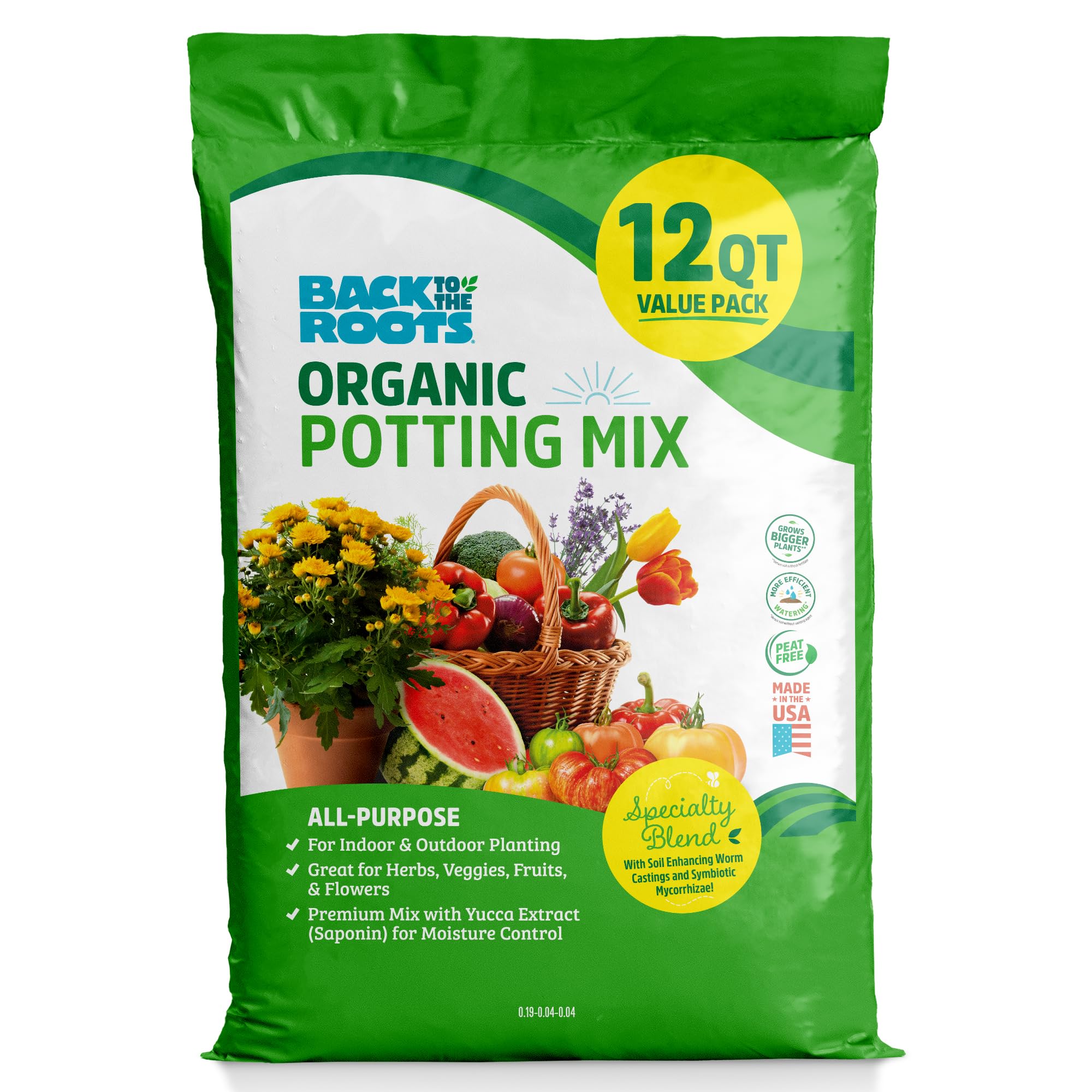
2. Back to the Roots All-Purpose Potting Mix 6 Quarts (2-Pack)
A 100% peat-free blend that comes in two bags for under the price of one premium bag.
The defining move here is coconut coir (shredded coconut husk fiber) and yucca extract — a natural moisture-managing agent that helps roots uptake water without staying soggy. It also includes dolomitic limestone to keep the pH steady around neutral, which herbs prefer. At 4.4 pounds for the two-pack, each bag is small enough to lift with one hand and easy to store. Owners say it is “great value and just what I need for 24 pots,” meaning this mix stretches nicely across a moderate indoor garden.
The biggest knock is texture: the mix contains bark particles, and owners note it is not fine enough for delicate seed-starting. It works best for transplanting larger herbs or refreshing soil in established pots. At roughly 6 quarts total, you get the same volume as the Halatool bag but for a notably lower entry point. For beginner herb growers who want an organic peat-free option without spending big, this is the practical choice.
The Crowd Verdict: “Great value” is said over and over — owners come back for multiple purchases because the price-to-performance ratio is tough to top for standard potting needs.
Best if: you want an affordable, peat-free mix for transplanting basil, mint, or tomatoes into medium-size pots.
skip it if: you need a fine-textured soil for starting seeds — the bark chunks are too big for delicate germination.
3. Miracle-Gro Organic Indoor Potting Mix, 8 qt. (2-Pack)
Designed to protect against over and under watering — the two biggest indoor herb killers.
You get a texture that buffers water thanks to responsibly sourced sphagnum peat moss and coir (coconut husk fiber). If you water too much, the soil holds air gaps so roots do not drown; if you skip a day, it releases moisture slowly. Owners mention that “plants are growing more rapidly” and that the texture is easy to use, drains well, and retains moisture without becoming mud. The 8-quart bag fills two standard 8-inch pots, and you get two bags in the pack.
At 9 pounds total, it is lighter than the Coast of Maine by a solid margin while still feeling substantial. The OMRI (Organic Materials Review Institute) listing means the organic ingredients are verified by an independent body. The main trade-off: it is designed for indoor use specifically, so if you want a versatile outdoor container soil, this one is better kept inside. For a beginner who tends to love their herbs a little too much with the watering can, this is the safety net.
What the Data Shows: Plant preference (12 mentions) and effectiveness (8 mentions) are the top positive signals — owners see their houseplants and herbs perk up noticeably after transplanting.
Go for it if: you are prone to overwatering or want a forgiving indoor mix for kitchen-window herbs.
Think twice if: you are filling big outdoor containers — the bag size and indoor formulation are not built for heavy garden use.
4. Brut Organic Potting Soil 1 CU FT (2-Pack)
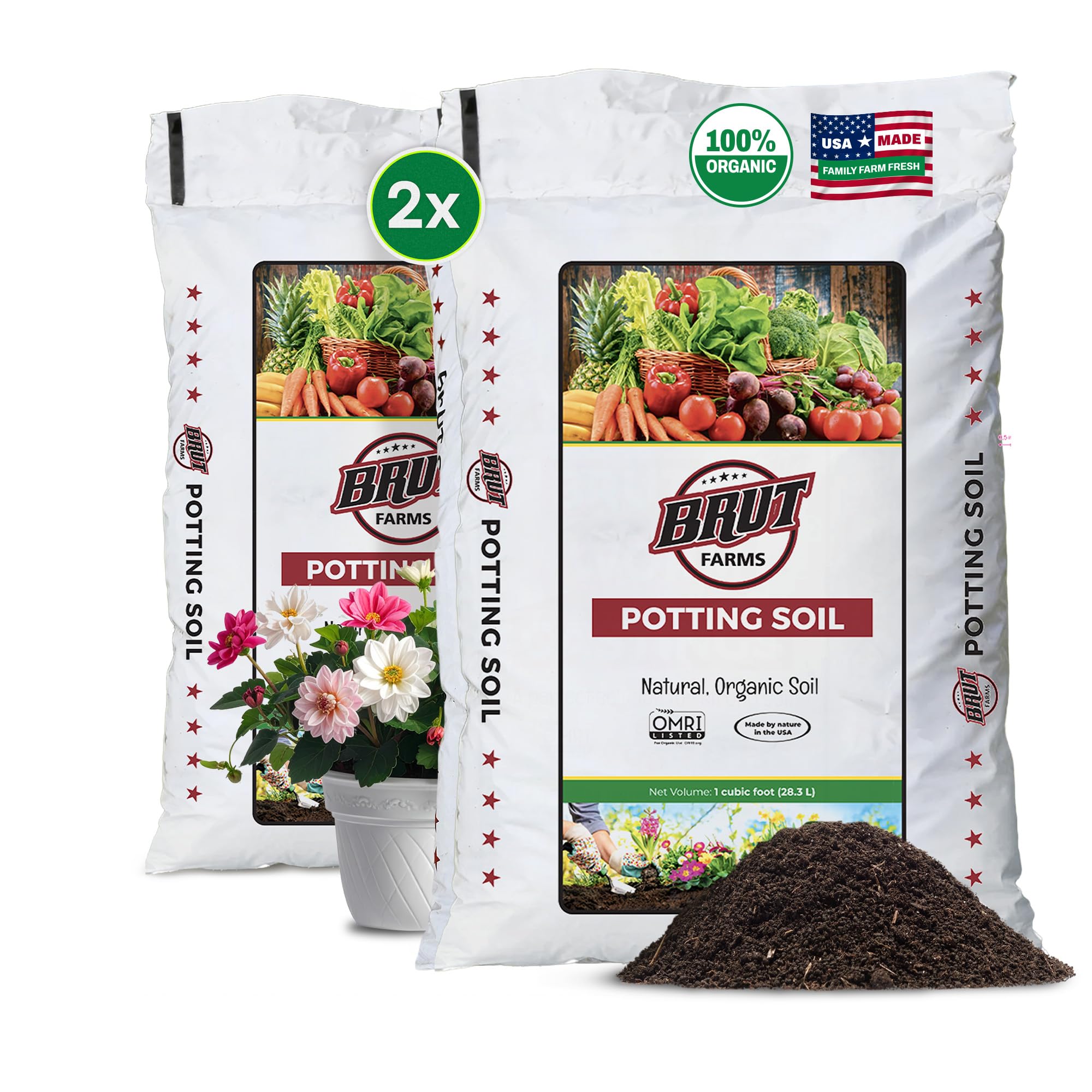
A microbe-rich, filler-free blend that growers describe as “black gold.”
Brut is packed with worm castings, Azomite (a trace mineral powder), and kelp meal — ingredients that feed the soil biology rather than just the plant. The manufacturer claims no sticks, no wood chips, no artificial fillers, and the pH is pre-balanced between 6.3 and 6.5, right in the balance for most herbs. Customers note that leaves turn “deep green” and new growth appears within days of transplanting, with one calling it “hands down the best potting soil I’ve ever put my hands in.”
At 21 quarts total across two bags, this is the largest volume in the premium tier, giving you genuine value for container gardens that extend beyond a few pots. The honest catch: the soil is rich in fish and bone meal, which can attract flies and maggots if the bag is left open outdoors. A buyer recommends topping pots with a thin layer of sand or gravel to keep pests away. If you want a true organic powerhouse and can manage the storage, this is tough to beat.
The Standout Strengths
- No filler ingredients — no bark, no sticks, just pure organic compost and minerals
- Pre-balanced pH means one less thing to worry about
- Large total volume (21 qt) for the premium tier
The Drawback
- Rich organic content can attract flies if bag sits open — seal it after use
- Premium price and shipping can be slow
Reach for it if: you want the highest organic content available and are growing a serious container herb garden that demands real nutrition.
Look elsewhere if: you are on a tight budget or want a quick-ship, no-fuss option — the price and shipping logistics are real.
5. Espoma Organic Potting Soil Mix, 2 Cubic Foot Bag

A 2-cubic-foot bag that caters to serious container gardeners with lots of pots to fill.
To get a proven organic base that you can customize, Espoma blends sphagnum peat moss, humus (decomposed organic matter), and perlite, then enriches it with earthworm castings, alfalfa meal, kelp meal, and feather meal. It also includes Myco-Tone, a proprietary blend of beneficial mycorrhizae that help roots absorb more nutrients. Owners praise it as “loamy, chunky soil that does not become dense or crusty,” and many report no gnat infestations — a common headache with cheaper indoor mixes.
One cubic foot equals roughly 30 quarts, so this 2-cubic-foot bag holds about 60 quarts — more than double the Coast of Maine bag. The honest trade-off: the mix contains very little perlite, according to multiple buyers, so you may want to add your own for extra drainage if your herbs are sensitive to wet feet. The bag is also large and can be heavy to handle, so keep a spare container or scoop ready. For the volume-to-quality ratio, this is the most economical premium choice for big projects.
Owner Consensus: Quality (41 positive mentions) and versatility (14 mentions) lead the feedback — people use it for everything from houseplants to outdoor vegetable containers with consistent success.
Best for: anyone filling multiple large containers or raised beds and wanting a proven organic base they can customize with extra perlite.
Skip if: you only have one or two small pots — a smaller bag would be more practical and easier to store.
6. Espoma Organic Potting Soil Mix, 8qt. Bag (2-Pack)

The same trusted Espoma formula in a manageable pack for medium-size indoor herb sets.
You get the same organic blend of peat moss, humus, perlite, earthworm castings, alfalfa meal, kelp meal, and feather meal as the big 2-cubic-foot version, but in a size that works for a kitchen windowsill with 3-4 moderate pots. The Myco-Tone helps roots establish quickly, which owners see as “plants taking to it immediately and growing great.” It works beautifully as both a transplanting mix and a refresh for tired container soil.
The 2-pack of 8-quart bags gives you 16 quarts total — the same volume as the Coast of Maine bag. The limitation to note: some reviewers point out that the soil arrives very dry and can be hard to rehydrate on the first watering. A few also mention fungus gnats, so pre-moistening or letting the bag breathe before use helps. For a mid-range price, you get two bags of a trusted name that outperforms most all-purpose mixes at the same tier.
The Recurring Note: “The best potting mix” appears verbatim in multiple reviews — owners value the consistent results across different plant types.
Reach for it if: you trust the Espoma brand and want a two-bag set that covers your indoor herb pots without committing to a giant bag.
Look elsewhere if: you need a finer, ready-to-use mix — this one may need pre-moistening and occasional gnat management.
7. Halatool 6QT Potting Soil Mix
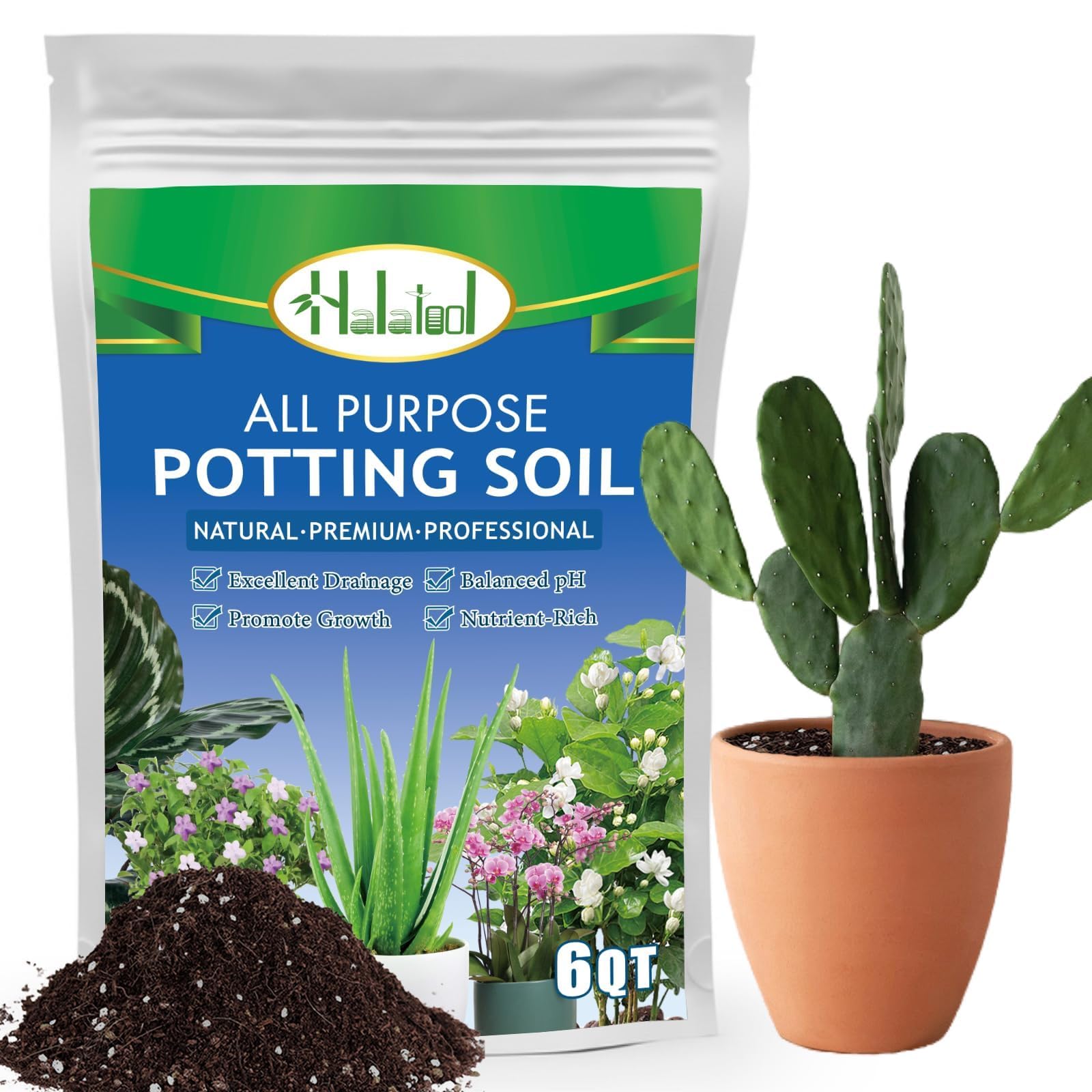
A 6-quart bag that offers solid quality with a resealable foil pouch for easy storage.
To get a clean, fluffy texture that drains well, Halatool blends peat, vermiculite (a mineral that retains water and air), perlite, humic acid, and coconut bran. Owners say their plants are “certainly thriving,” and the soil quality (39 positive mentions) is the top talking point among buyers. The resealable aluminum foil bag is a practical touch: it blocks light and keeps the soil dry between uses, which is rare at this price tier.
The biggest buyer frustration is value for money. At a mid-range price for 6 quarts, some owners feel it is too expensive for the amount, noting they could only fill one aloe pot and needed to supplement with regular soil. If you have a handful of small pots and want a clean, odor-free mix, this works. If you are filling multiple large containers, the cost per quart will push you toward the larger Espoma or Brut bags.
What Works
- Pleasant smell and clean texture — no rotten odors
- Resealable bag keeps soil fresh for next use
- Good drainage with natural ingredients
The Catch
- The price is high relative to the 6-quart volume
- Mixed results on plant health — some plants thrive, others struggle
Best if: you want a mid-size bag with a resealable pouch and prioritize odor-free storage for a small number of indoor pots.
Think twice if: you need to fill more than a few pots — the cost per quart adds up fast.
8. Top Tier Genetics Herbs and Leafy Greens Soil (2 QTS)
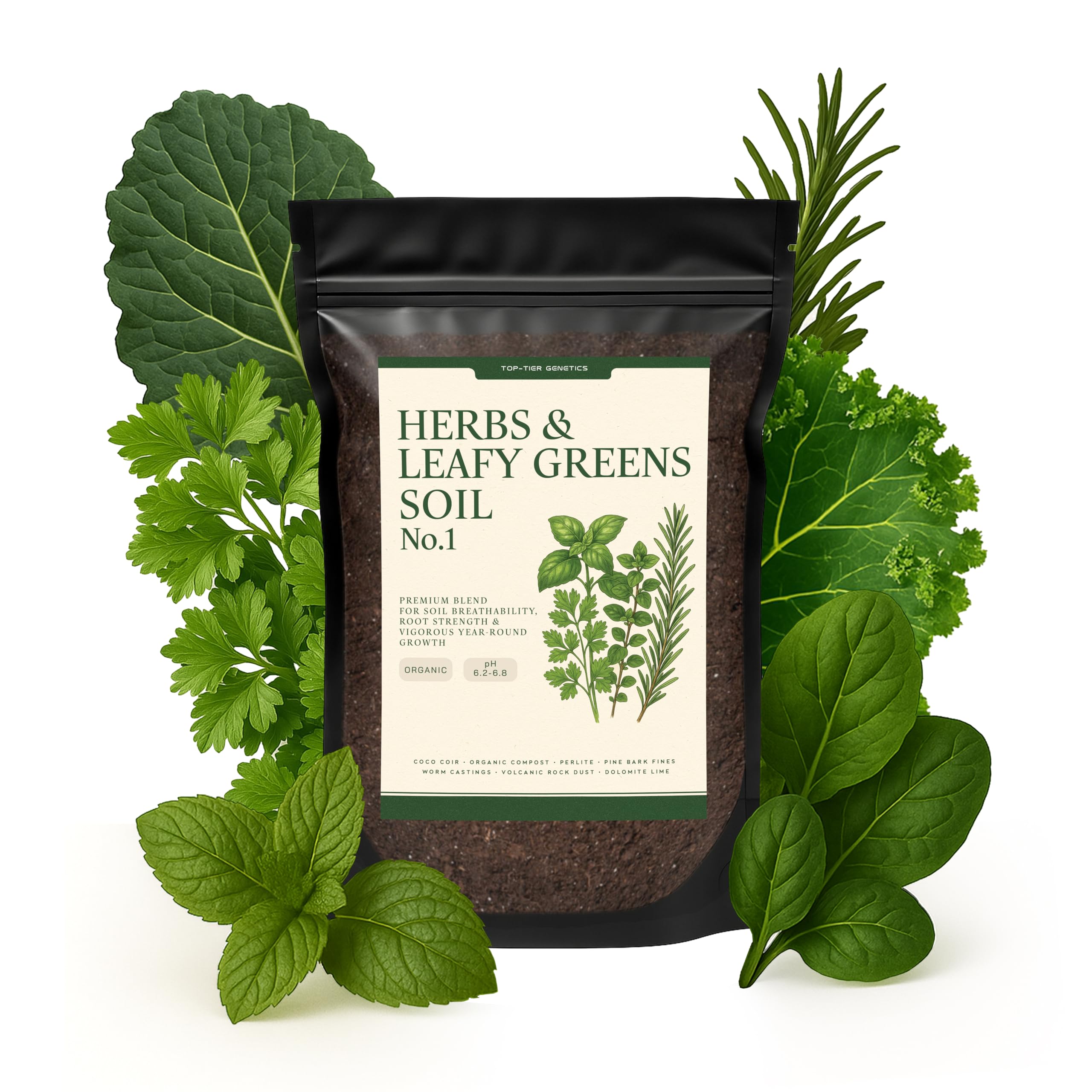
A premium small-bag mix tailored specifically for basil, mint, lettuce, and other leafy herbs.
You get a light and fluffy texture, proper drainage, and organic nutrients that support fast top growth without compaction — all built from the ground up for herbs and leafy greens. Owners love that the soil feels “rich without being heavy or clumpy,” and they report basil and mint taking off rapidly after transplanting. The texture gets special praise: no mulch or bark chunks, just consistent fine soil that roots spread through easily.
The 2-quart bag is small — about enough for a few standard pots or a single window box. Several shoppers say that once they saw the results, they wish they had ordered two bags. For a small indoor herb garden (say 3-4 pots of basil, mint, and parsley), this is a perfectly matched product. For larger projects, the small volume and higher per-quart cost make it impractical.
What the Reviews Say: Quality (11 mentions) and texture (7 mentions) are the strongest signals — owners consistently applaud the feel and the plant response.
Reach for it if: you are starting a small indoor herb garden and want a purpose-built mix that is ready to go straight out of the bag.
Look elsewhere if: you are filling multiple containers or have a large outdoor planter — you will burn through this bag fast.
9. Leaves & Soul Indoor Herb Soil Mix 2.2 Qt

Designed specifically for basil, mint, rosemary, and thyme with a focus on drainage and aeration.
Leaves & Soul targets the exact needs of kitchen herbs — good drainage, strong root support, and a texture that resists compaction. Enhanced with perlite and coco coir, the mix keeps airflow high while holding enough moisture for consistent growth. Many owners say their “herbs are growing like crazy” after transplanting, and the 2.2-quart bag is called “perfect for small condo hydroponic herb plants” by one user who appreciated the manageable size for tight spaces.
The biggest downsides come through in the feedback: a few buyers report a strong, unpleasant smell (some describe it as “rotting cheese”), and the price relative to the small bag size frustrates buyers who expected more volume. A small number also mention the soil attracted gnats. For a single-species indoor herb garden or a starter set of a few pots, the quality works — just buy with eyes open about the value-for-volume ratio and potential odor.
The Honest Picture: Soil quality (16 mentions) and plant health (10 mentions) lead the positives, but odor (7 negative mentions) and value for money are real concerns for some buyers.
Best if: you want a tiny bag specifically formulated for a few indoor herb pots and are willing to pay for targeted quality.
Skip if: you are sensitive to smells or need to fill more than 2-3 pots — the cost and volume won’t satisfy you.
Understanding the Specs
Volume and Bag Size
Potting soil is sold in quarts or cubic feet. One cubic foot equals roughly 30 quarts. A 2-quart bag handles about two standard 6-inch pots, while a 16-quart bag fills a large window box or several containers. The bigger the bag, the lower the cost per quart — but only if you actually use it all before the soil dries out in storage. Match the bag size to the number of pots you plan to fill to avoid waste or multiple reorders.
Drainage Additives
Perlite is the white, popcorn-like rock you see in good potting mixes — it creates air pockets so water drains and roots breathe. Coco coir (shredded coconut husk) and vermiculite help hold moisture without getting soggy. A mix without perlite or similar aeration material will compact over time, suffocating herb roots and inviting rot. If a bag feels heavy and dense, it probably lacks enough drainage.
Organic vs. Synthetic Nutrients
“Organic” in potting soil means the nutrients come from natural sources like compost, worm castings, kelp meal, or feather meal rather than chemical fertilizers. Organic mixes release nutrients slowly as soil microbes break them down, which is gentler on herb roots. Synthetic time-release fertilizers can push fast growth but may also cause salt buildup that burns delicate root tips. For herbs you plan to eat, organic is the safer bet.
pH Balance
Most herbs prefer a slightly acidic to neutral pH range, roughly 6.0 to 7.0. Some soils come pre-balanced with limestone (calcium and magnesium carbonate) to neutralize acidity. Soil that is too acidic can lock up nutrients, causing yellow leaves and stunted growth. A bag that does not specify pH may still work fine, but pre-balanced mixes remove one variable for beginners.
FAQ
Can I use regular garden soil for herbs in pots?
How much potting soil do I need for a typical herb pot?
Is peat-free potting soil better for herbs?
Should I add extra perlite to my herb potting soil?
Can I reuse potting soil from last season for new herbs?
What does OMRI listed mean on a potting soil bag?
Does potting soil expire or go bad?
Why does my potting soil have fungus gnats?
What is the difference between potting soil and potting mix?
Can I use cactus soil for herbs?
Final Thoughts: The Verdict
For most people, the good potting soil for herbs winner is the Coast of Maine Bar Harbor Blend because it combines real organic nutrition (lobster and crab shell meal) with a 16-quart bag that covers multiple pots, all backed by the highest owner satisfaction in the lineup. If you want an organic powerhouse that prioritizes soil biology and has no filler ingredients, grab the Brut Organic Potting Soil. And for a budget-friendly peat-free option that still delivers strong results, the Back to the Roots All-Purpose Mix is the one to reach for. Whichever bag you choose, picking a mix with real organic content and good drainage is the single best investment you can make for a thriving herb garden.
How We Picked
We do not accept paid placement. Every pick is matched to a real buyer and a real use-case; we do not hands-on test units.
Sources & Methodology
Specifications: manufacturer listings and product documentation. Review insights: verified customer reviews, as of July 2026. Pricing: not shown on this page (it changes often); check the current price via the retailer link.
As an Amazon Associate, Lawn Gear Lab earns from qualifying purchases. This does not affect which products we feature.