
Specs are compiled from manufacturer listings and verified buyer reviews and can change over time — please confirm the key details on the product page before buying.
A single tomato plant can drink a gallon of water a day during a heat wave. Let the soil dry out just once, and you risk blossom-end rot (a black spot on the bottom of the fruit caused by uneven watering) and split skins. A thick layer of mulch is your best defense: it locks moisture in, keeps soil temperature steady, and blocks weed seeds from sprouting. The winning mulch in this guide — the Gro-Med Coco Husk Chips — gives you 65 quarts of material from one 10 lb block, holds up to three times its weight in water, and keeps a neutral pH (a measure of acidity, near 7.0) so your tomato roots do not hit a nutrient lockout. That balance of volume, moisture, and clean chemistry is why it takes the top spot.
I’m Rikta, the writer behind Lawn Gear Lab. This guide compares published specs and patterns from verified customer reviews, so you see each pick’s real strengths and trade-offs instead of marketing claims.
Every product here earned its place on three things: how well it holds water, how much air it lets roots get, and how clean it stays through a full season. Whether you use raised beds or in-ground rows, the right good mulch for tomato plants saves you watering time and keeps fruit healthy from flower to harvest.
Our Picks at a Glance

How To Choose The Best Good Mulch For Tomato Plants
Tomatoes need consistent soil moisture to thrive. A good mulch for tomato plants keeps the soil damp, cool, and free of weeds, but the material you choose changes how often you water and how healthy your roots stay.
Moisture Retention is the Top Priority
Tomato roots sit in the top few inches of soil. If that layer dries out, fruit quality suffers. Look for materials that hold three times their weight in water or more—that is where coconut husk chips and straw excel—so you can water less and still avoid those dry spells.
Watch Out for Weed Seeds in the Bale
Wheat straw is a classic tomato mulch, but some bales carry wheat or grass seeds that sprout right alongside your plants. Clean, screened straw and coconut products are far safer bets. Rice hulls, being a byproduct of food processing, are naturally seed-free.
Decomposition Speed Controls Your Workload
Fast-decomposing mulches like untreated straw and rice hulls add organic matter to your soil by the end of a season—great for soil building, but you have to reapply next year. Coconut husk chips last for two seasons, so you buy once and cover two growing cycles.
Quick Comparison
| Model | Best For | Capacity (Expanded) | Weight (Dry) | Coverage | Amazon |
|---|---|---|---|---|---|
| Gro-Med Coco Husk Chips★ Best Overall | Best Overall | 65 quarts | 10 lb | N/R | Amazon |
| Plantonix Coco Chips BrickPremium Runner Up | Premium Runner Up | 15 gallons | 10 lb | N/R | Amazon |
| MODELLOR Super Washed Coco ChipsLargest Block | Largest Block | 18 gallons (2 cu ft) | 11 lb | N/R | Amazon |
| HealthiStraw GardenStraw | Best Straw Mulch | 3 cu ft | 20 lb | 100 sq ft (2–3″) | Amazon |
| Out-Grow Natural Wheat Straw | Compact Straw | 1 cu ft | 4 lb | N/R | Amazon |
| Zeedix Coco Chips (8-Pack) | Small Batch Champ | 7 quarts per brick | 1.1 lb per brick | N/R | Amazon |
| Soil Sunrise Rice Hulls | Lightest Organic | 8 quarts | 1.8 lb | 9 sq ft (2″ deep) | Amazon |
| Hull Farm Cocoa Bean Shell | Chocolate Scent | 2 cu ft | 28 lb | N/R | Amazon |
| PlantBest Coco Mulch Block | Weed Barrier Power | 16 gallons | 9.1 lb | 17.5 sq ft (1.5″) | Amazon |
In‑Depth Reviews
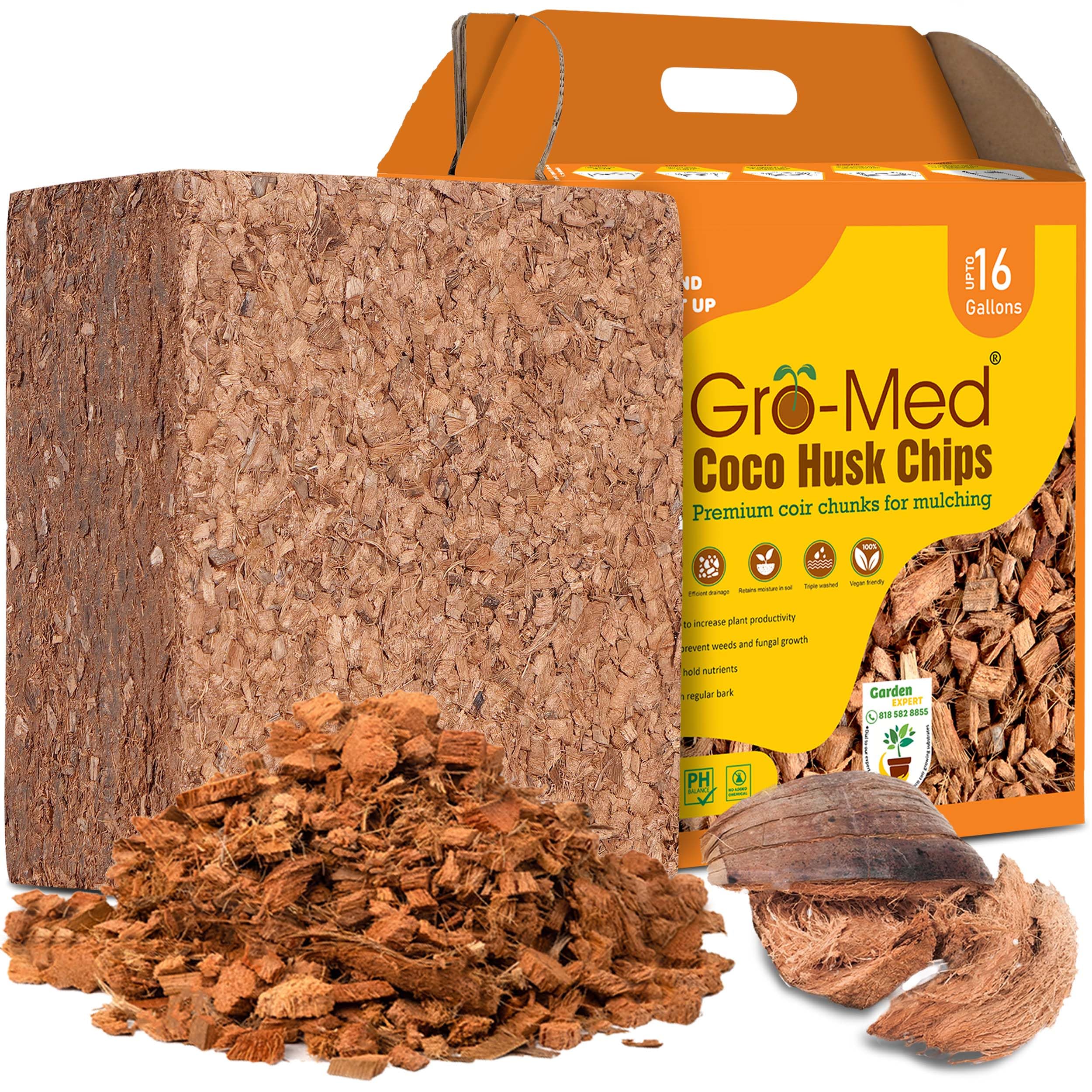
1. Gro-Med Coco Husk Chips for Plants (10lb)
Our pick — over 4.5★ from 500+ verified ratings; the strongest balance of quality and price.
The 10 lb block that turns into 65 quarts of chunky root insurance.
You get the most mulch for your money from this single compressed block. Add three gallons of warm water, wait 20 minutes, and that 10 lb dry brick expands into a full 65 quarts of husk chips — enough to cover a large raised bed or several in-ground rows. The chips are triple-washed for low EC (electrical conductivity, a measure of salt) and a balanced pH (a measure of acidity near 7.0), so they will not mess with your plant’s nutrient uptake or cause the acidity swings that some bark mulches trigger.
The real win for tomatoes is water retention. These chips hold up to three times more water than standard bark, so you skip a day or two of watering during a dry stretch. Owners consistently praise the quality (33 buyers mention it), and 29 people note healthier roots and stronger growth. The block is dense, though, and it takes a strong bucket and the full 20 minutes to break down completely.
Chunky husk texture
- Massive 65-quart yield from a single compact 10 lb block.
- Holds 3x more water than bark, reducing watering frequency.
- Low EC and stable pH prevent nutrient lockout in sensitive tomato roots.
- Versatile—use as mulch, potting mix amendment, or reptile bedding.
Needs thorough rinsing
- Block requires 20 minutes with warm water to fully expand; not instant.
- 10 lb block is heavy to handle before hydration.
- A few owners mention water absorption can be uneven if not fully broken apart.
Best for aeration: you have a large raised bed or row garden and want one block to cover the whole season without re-upping.
Skip if fine texture: you only need a few small pots and do not want to deal with a 65-quart yield.
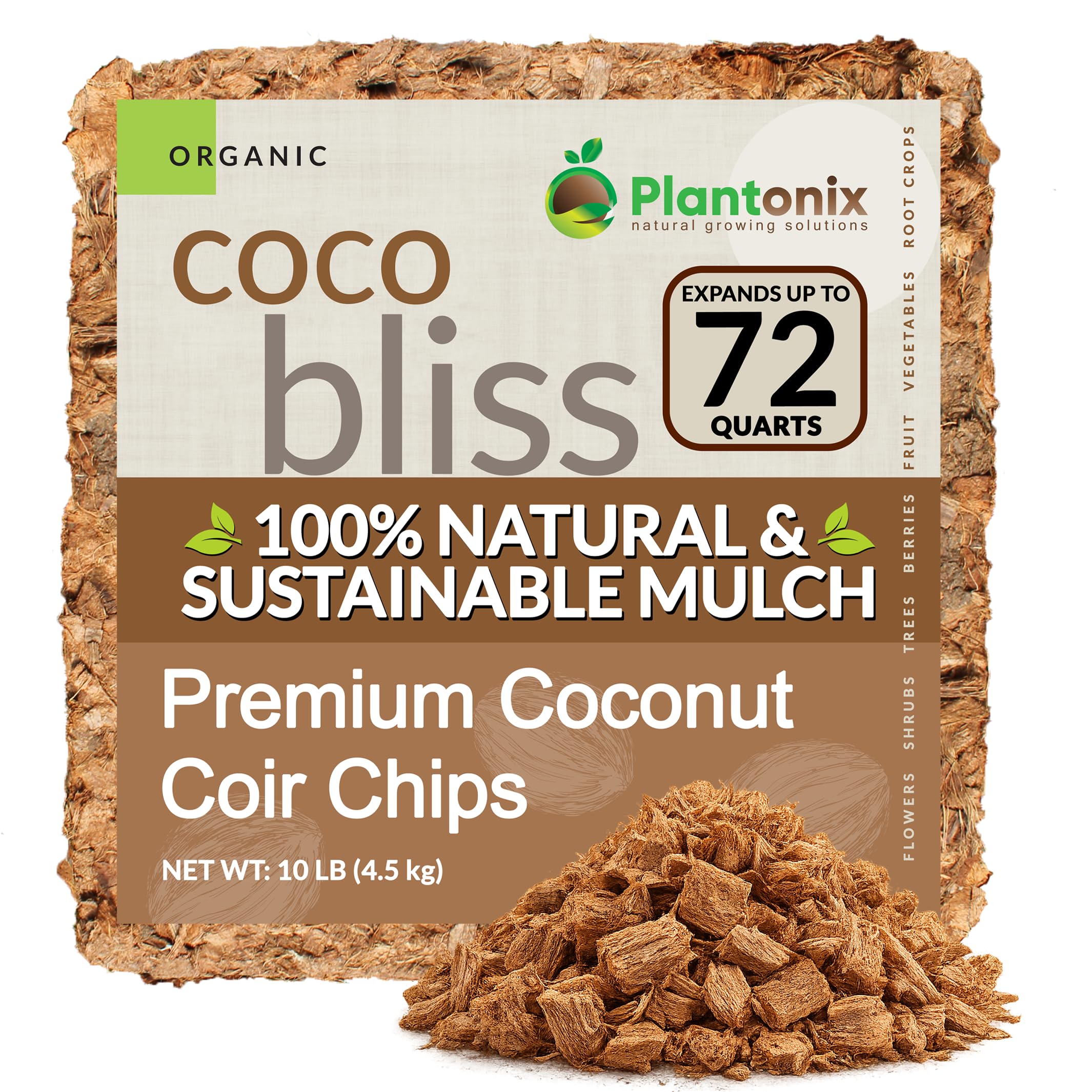
2. Plantonix Coco Chips Brick (10lb)
The 10 lb brick that uses buffered chips for low-maintenance tomato nutrition.
This brick stands out because the chips are buffered — a pre-wash that removes excess salts and potassium, so the material does not steal nutrients from your tomato feed. That matters for healthy fruit. Owners who mix these chips into potting soil report the brick expands into nicely sized pieces with less dust than standard coir, and the chips maintain moisture without turning mushy. At a 10 lb dry weight yielding 15 gallons, this pick gets 39 buyer-verified quality mentions and 18 owners praising the chip size specifically. The moisture retention gets 15 positive mentions, and owners say the chips stay light and airy rather than forming a crust like some wood mulches. The main caveat: you need a large container for hydration — a few owners say a regular bucket was too small.
Best for storage: growers who want a buffered, low-maintenance coconut chip that supports healthy roots right out of the bag.
Skip if instant use: you are looking for a loose, bagged mulch that needs zero prep—this requires soaking.
3. MODELLOR Premium Super Washed Coco Chips (10 lb)
The 10 lb block that yields a full 2 cubic feet of chunky coverage — the biggest volume per block here.
One 10 lb block from MODELLOR hydrates into 18 gallons (2 cubic feet) of loose chips. That beats the Gro-Med and Plantonix blocks in yield, giving you a deeper, fluffier layer. Owners call it the “best coco chips I’ve ever used” and note the pieces are large — ideal for mixing with bark and perlite (a volcanic glass that improves drainage) in a chunky soil blend. Drainage and aeration score high here, with 15 buyers mentioning drainage as a standout. One vegetable grower in dry New Mexico notes the chips are “heavy enough to not blow away in wind” — an advantage over lighter straw mulches. The block is dense, though, and some owners say they needed a metal tool to break it apart before soaking. Dust shows up as a mixed point for 13 buyers.
Best for purity: maximum coverage per dollar is your priority and you need a heavy, wind-resistant mulch that lasts.
Skip if budget tight: you prefer a loose, no-effort product—this block demands a strong bucket and some elbow grease to break up.
4. HealthiStraw GardenStraw (3 cu ft)
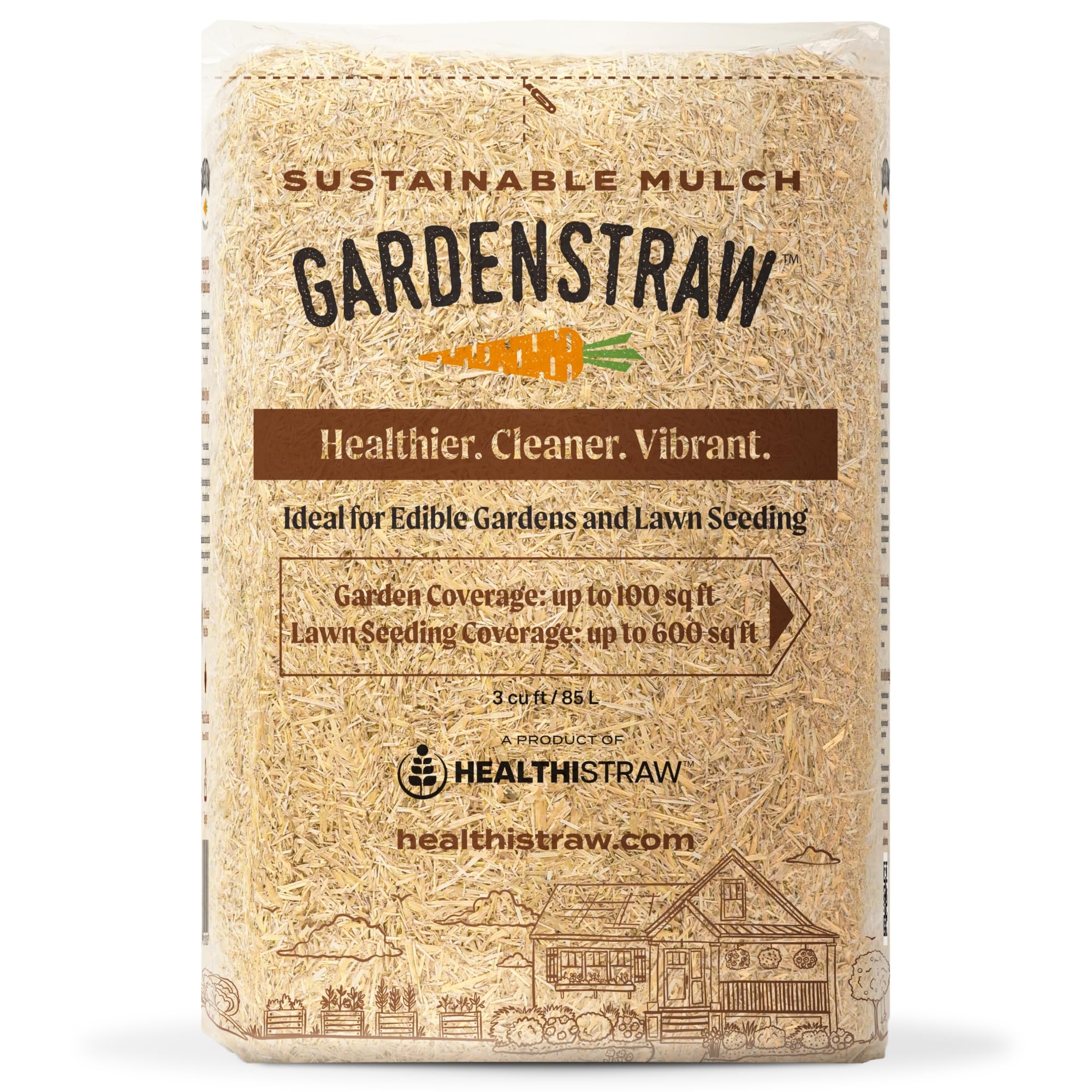
The straw bale that the maker claims cuts watering by 50% and stays put in wind.
HealthiStraw wins the straw category by solving the two big problems with bale mulches: blowing away and weed seeds. The specially cut straw fibers interlock when you water them, forming a mat that resists wind and rain. A single 3-cubic-foot compressed bale covers up to 100 square feet at a 2–3 inch layer, and the brand claims it reduces watering by up to 50% — 41 owners mention moisture retention in their reviews. What really sets this apart is the cleaning process: it is filtered to remove dust and as many seeds as possible. Owners say “there are a few seeds that sprouted but not a big deal,” while others report zero germination. The 76 quality mentions are the highest positive count in the data, and weed reduction gets 59 shout-outs. The seed situation is not perfect — 75 buyers flagged seed quantity as a mixed issue, with some bales producing more sprouts than others.
Best for mulching: traditional gardeners who want the benefits of wheat straw without the weed explosion of raw hay.
Skip if seed-free needed: you are in a windy spot and need a heavier mulch that absolutely will not shift—the interlocking helps but chips stay putter.
5. Out-Grow Natural Wheat Straw (1 cu ft)

The 1-cubic-foot bale that keeps tomato beds moist with zero additives — at just 4 lb, the lightest straw here.
This Out-Grow bale is 100% all-natural wheat straw with no chemicals or additives. At 4 pounds, you can carry it with one hand — no wheelbarrow needed. The 1-cubic-foot size fits smaller raised beds and containers, and 52 owners praise its quality. One reviewer says, “My plants are happier and stay moist most of the time.” The straw provides natural insulation for soil, keeping roots cool in summer. The trade-off is volume: at 1 cubic foot, this bale covers less area than the larger HealthiStraw, so you will need multiple bales for a big garden. And like any natural straw, a few weed seeds can occasionally appear, though owners generally call it “clean” and “low dust.”
Best for small pots: you have a small to mid-size raised bed and want a light, chemical-free straw mulch you can spread in minutes.
Skip for large beds: you are covering a large in-ground plot and need the economy of a bulk bale.
6. Zeedix Coco Chips (8-Pack)
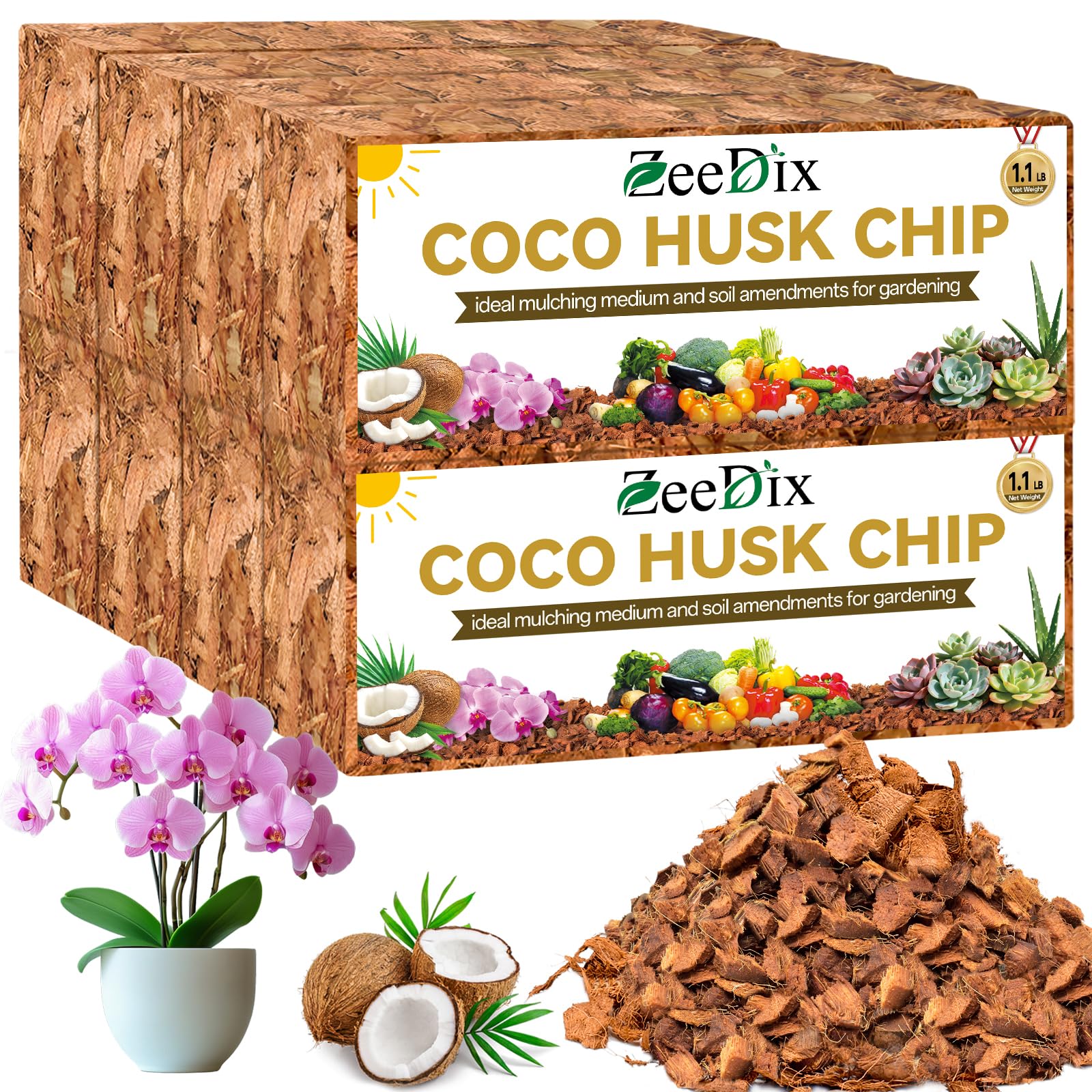
Eight individual bricks that each hydrate to 7 quarts of chips — no leftover half-block.
Zeedix solves the problem that the big 10 lb blocks create: too much volume for a small space. Each 1.1 lb brick expands to 7 quarts of loose chips — just enough for a few tomato plants or a single raised bed without half a block sitting around. The 8-pack gives you the flexibility to use one brick now and another later in the season. Owners call the chips “good quality” and note they create a “well-draining mix” that prevents waterlogging, a critical feature for tomatoes that hate wet feet. One ball python owner even uses them for reptile bedding and reports “zero issues, they hold moisture without molding.” The per-unit yield is small, so if you are mulching a full vegetable garden you will need multiple packs.
Best for trials: container gardeners and small-space growers who need the convenience of single-serving bricks.
Skip for consistency: you are feeding a large in-ground patch and want the economy of a single big block.
7. Soil Sunrise Organic Rice Hulls (8 Quarts)
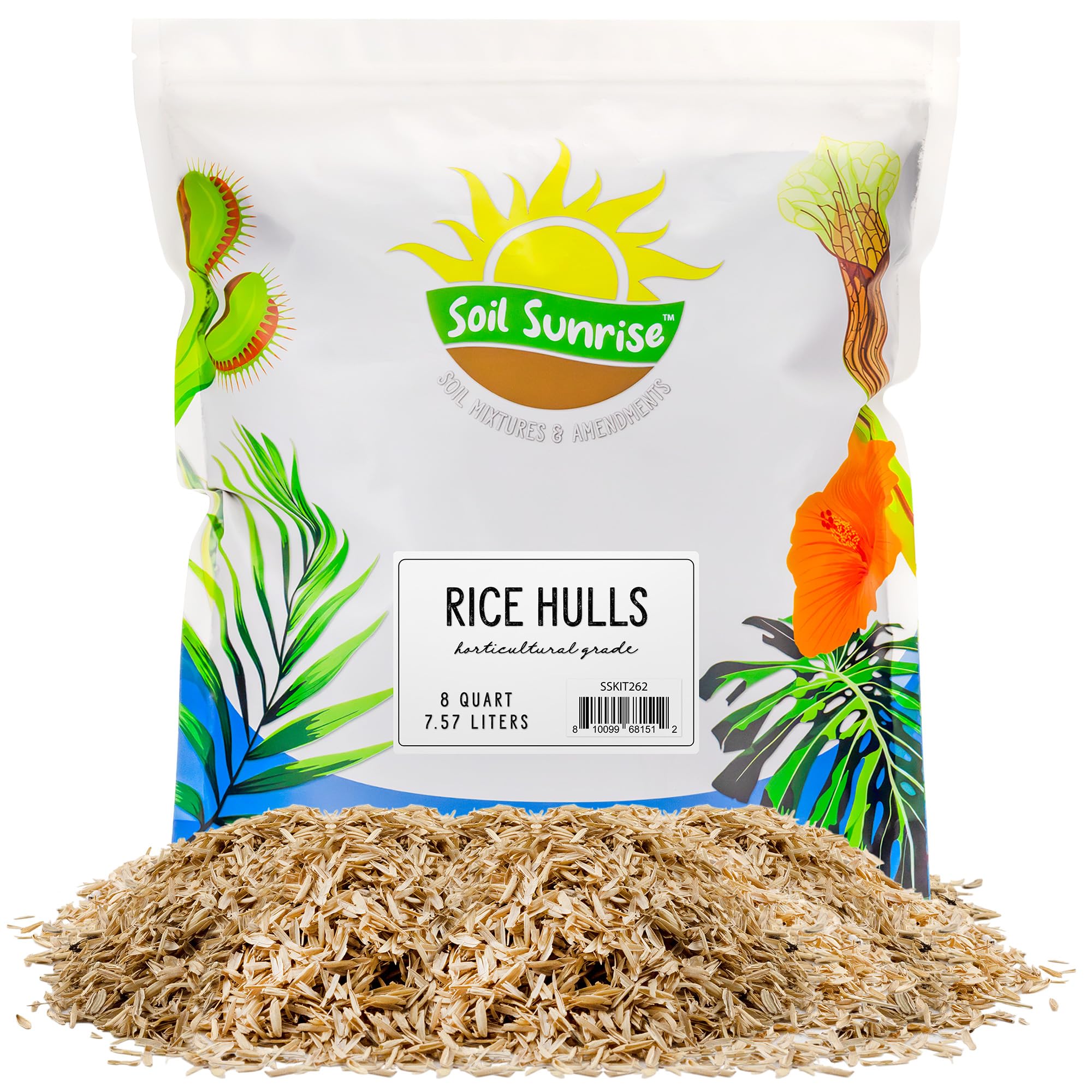
The 1.8 lb bag of rice hulls that suppresses weeds without adding a single seed — and feeds the soil as it breaks down.
Rice hulls are the gardener’s secret weapon for clean, lightweight mulch. Soil Sunrise’s bag of 8 quarts weighs only 1.8 pounds — more than 5 times lighter than a 10 lb coco block, so you can lift and spread it with zero effort. The hulls come from food processing (rice milling) and contain no additives or chemicals. Owners love it: one calls it a “great additive to my soil” and another says these hulls “worked great as a mulch for my garden plants.” The hulls provide drainage, water retention, and aeration all at once. They also release slow-release micronutrients including Phosphorus, Potassium, Calcium, and Magnesium as they break down. The 8-quart bag covers 9 square feet at a 2-inch depth. The bag size can be underwhelming when it arrives — several owners note the volume is smaller than expected.
Best for drainage: you want a completely seed-free, ultra-light organic mulch that doubles as a slow-release nutrient source.
Skip if windy area: you need to cover a large area—the per-bag volume is small and the per-quart value gets mixed reviews.
8. Hull Farm Cocoa Bean Shell Mulch (2 cu ft)

The 2-cubic-foot bag that smells like a chocolate bar every time you water — and feeds the soil with a 2.5-1-3 NPK (nitrogen-phosphorus-potassium) ratio.
Hull Farm cocoa bean shell mulch is the most dramatic sensory upgrade for a tomato bed. The 2-cubic-foot bag delivers a strong chocolate aroma that 76 buyers rave about as the defining feature. One owner says: “Smells Heavenly if You Think Chocolate is Heaven!” The scent is strongest when fresh and after watering. Beyond the smell, the shells have a natural fertilizer value of 2.5-1-3 (NPK ratio, meaning they release a mild dose of nutrients as they break down) without burning your plants. Buyers report the shells hold moisture well, suppress weeds, and resist blowing away once watered in. The dark color looks polished around tomato stems. The downsides are real. Cocoa shell mulch contains theobromine, a compound toxic to dogs if ingested in quantity, so skip it if you have a canine garden visitor. Owners also note the price has climbed, the strong scent fades after a week or two, and some report it can attract slugs and snails.
Best for garden paths: dog-free gardens where you want a luxurious, fragrant mulch that also feeds the soil with a mild 2.5-1-3 fertilizer.
Skip near house: you have dogs that roam the garden, or if you prefer a seed-free, pest-neutral mulch.
9. PlantBest Coco Mulch Compressed Block (9.1 lb)
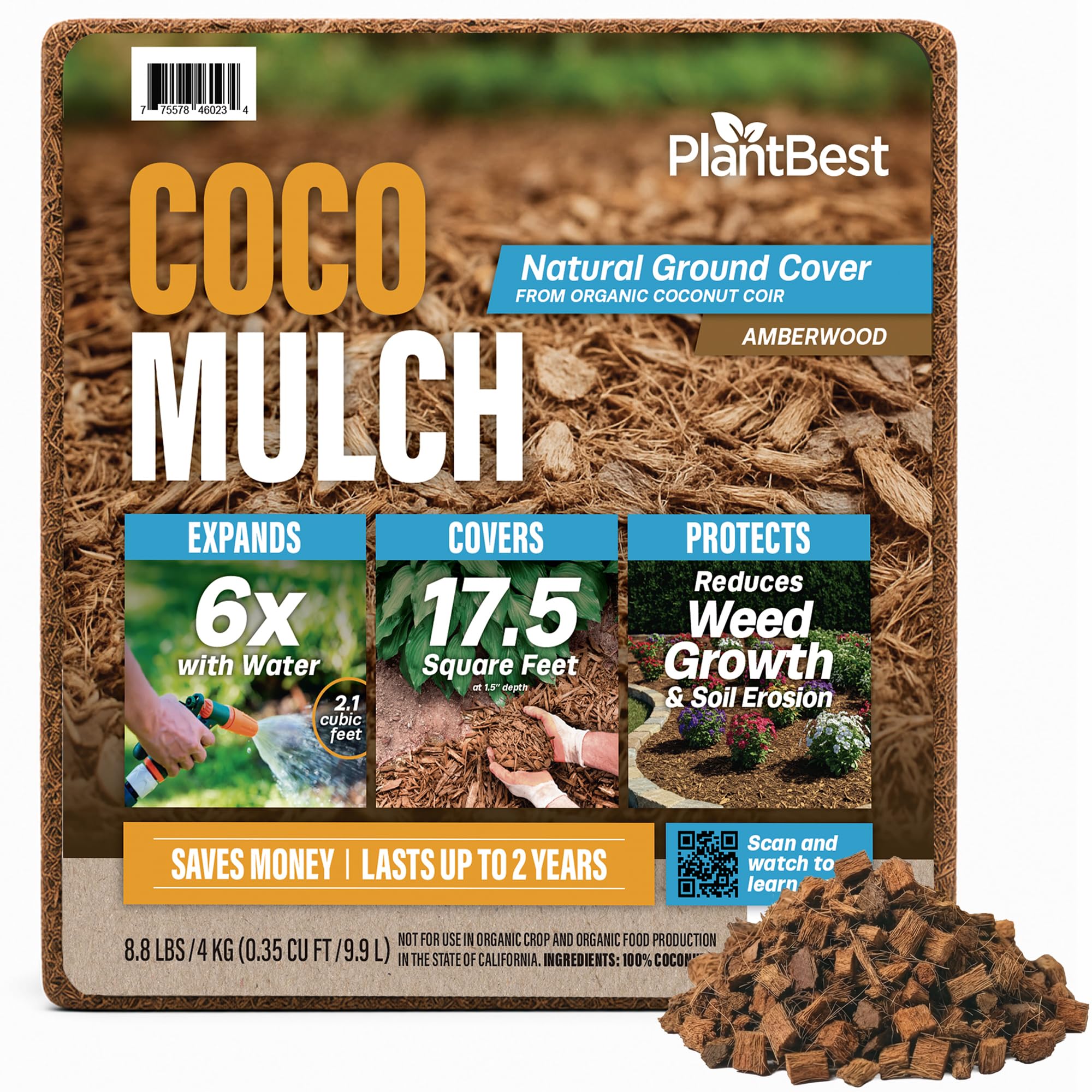
The 9.1 lb block that the maker says lasts up to two seasons and covers 17.5 square feet at a 1.5-inch depth for serious weed blocking.
PlantBest focuses on durability and specific coverage. This 9.1 lb compressed block expands to 16 gallons (about 2.5 cubic feet) and covers up to 17.5 square feet at a 1.5-inch depth — among the most precise coverage specs in the lineup. The coconut fibers and husk chips interlock to form a stable layer that the maker claims lasts up to two seasons, meaning one application gets you through two growing cycles. Weed suppression is the top-cited feature, with 40 owners praising its effectiveness. One owner in a 40-inch annual rainfall zone reports the mulch lasted “2+ years.” The value-for-money scores are the weakest in this guide — 34 buyers flag it as a negative. The block can be hard to spread evenly, needing to be broken apart by hand (rubber gloves help), and it is light enough that some owners say it can blow around before a full soak.
Best for bulk use: you want a long-lasting, heavy-duty mulch that blocks weeds for two seasons with one application.
Skip if precise volume: you need a budget-friendly option or prefer a product that is easy to spread straight out of the package.
Understanding the Specs
Expanded Yield
Most coconut and straw mulches arrive as compressed blocks or bales. The “expanded yield” number (like 65 quarts or 18 gallons) tells you how much loose material you actually get after adding water. A bigger yield means fewer blocks to buy for a large garden. For tomato beds, aim for at least a 15-gallon expanded yield per block to get a solid 2–3 inch layer across a standard raised bed.
Water Retention Capacity
This is the number that changes your watering schedule. Coconut husk chips typically hold up to 3 times their weight in water, while straw holds more air pockets but still slows evaporation dramatically. For tomatoes, which need steady moisture through fruit set, a high water-retention mulch (3x or more) means you can water every other day instead of twice daily during a heatwave.
FAQ
Can I use regular hay instead of straw for tomato plants?
How often should I replace coconut husk chip mulch?
Does cocoa bean shell mulch attract pests?
How deep should I spread mulch around tomato plants?
Will rice hulls blow away in the wind?
Is wheat straw safe for dogs?
Can I mix different mulches together for tomato beds?
How many cubic feet of mulch do I need for a 4×8 raised bed?
Final Thoughts: The Verdict
For most buyers, the good mulch for tomato plants winner is the Gro-Med Coco Husk Chips because it delivers the best balance of volume (65 quarts), moisture retention (3x water), and a neutral pH that your tomatoes will thank you for. If you want the ease of classic straw with a low-seed guarantee, grab the HealthiStraw GardenStraw. And for the sheer sensory joy of a chocolate-scented garden that also feeds your soil, the Hull Farm Cocoa Bean Shell Mulch is the one to reach for.
How We Picked
We do not accept paid placement. Every pick is matched to a real buyer and a real use-case; we do not hands-on test units.
Sources & Methodology
Specifications: manufacturer listings and product documentation. Review insights: verified customer reviews, as of July 2026. Pricing: not shown on this page (it changes often); check the current price via the retailer link.
As an Amazon Associate, Lawn Gear Lab earns from qualifying purchases. This does not affect which products we feature.