
Specs are compiled from manufacturer listings and verified buyer reviews and can change over time — please confirm the key details on the product page before buying.
Bagged soil is a lottery. You grab a bag expecting rich, dark loam — and you open it to find wood chips, twigs, and half-baked mulch that starves your grass instead of feeding it. The difference between a lawn that thrives and one that struggles starts with what is actually inside that bag. Getting it right means knowing which mix matches your dirt, your climate, and your work ethic.
I’m Rikta — the founder and writer behind Lawn Gear Lab. This guide is built by comparing the manufacturers’ published specifications and the patterns across verified customer reviews, so you get each pick’s real strengths and trade-offs instead of marketing spin.
A good lawn starts with the ground beneath it, and finding the right good lawn soil means matching the bag to your specific need — whether that is building a raised bed from scratch, patching a rutted yard, or giving tired turf a nutrient boost.
Our Picks at a Glance
How To Choose The Best Good Lawn Soil
The label on the bag tells you very little. A bag marked “topsoil” can be anything from sandy fill to compost-rich loam. You need to look past the picture on the front and read the fine print on the back — specifically what organic ingredients are actually listed and whether the texture feels right for your project.
Know Your Base Material
Most bagged soils are built on peat, coir, or sand. Reed sedge peat (a fibrous plant-based material), like the Michigan Peat products use, holds moisture well and stays fluffy even after watering. Composted manure adds a quick nitrogen hit that greens up grass fast. Coco coir (the fibrous husk of a coconut), found in the Wonder Soil mix, expands dramatically when wet and creates a light, airy root zone that drains well but still holds onto water. Choose peat for general amendment, manure for a nutrient boost, and coir for sandy soils that need help holding moisture.
Watch for Filler Content
Wood chips, bark, and large twigs are common fillers in cheap soil. They rob nitrogen from the soil as they decompose, which can turn your lawn yellow instead of green. A good bag should feel heavy for its size — a 50-pound bag of quality topsoil has almost no air space from woody debris. If the bag feels light or you can see bark pieces through the plastic, that is a red flag.
Match the Texture to the Job
Top dressing a lawn calls for a fine, screened soil that spreads evenly and sifts down to the grass crown (where the stem meets the root). Raised beds need a looser, more organic mix that holds moisture without getting waterlogged. For filling holes and patching bare spots, a sandier topsoil like the Baccto Topsoil settles in well and resists compaction (stays loose rather than turning hard). Read the description for the specific use — soil sold as “raised bed mix” is usually fluffier, while “topsoil” tends to be denser.
Quick Comparison
| Model | Best For | Base Material | Weight | Volume | Amazon |
|---|---|---|---|---|---|
| Michigan Peat Wholly Cow★ Best Overall | Nutrient Boost | Manure & Peat | 34 lb | 40 qt | Amazon |
| Old Potters Organic CompostTop Performer | Heavy Feeders | Plant-Based Compost | 25 lb | 24 qt | Amazon |
| Wonder Soil Coco Coir | Lawn Patching | Coco Coir Mix | 10 lb | 160 oz | Amazon |
| Espoma Raised Bed Mix | Raised Beds | Organic Blend | — | 1.5 cu ft | Amazon |
| Michigan Peat Baccto Topsoil | Fill & Leveling | Peat & Sand | 50 lb | 50 L | Amazon |
| Life Cycle Organics Compost | Small Beds | Organic Compost | — | 1 gal | Amazon |
| Michigan Peat All Purpose (2 Pack) | Large Projects | Peat, Sand & Perlite | 50 lb each | 0.14 cu yd | Amazon |
In‑Depth Reviews
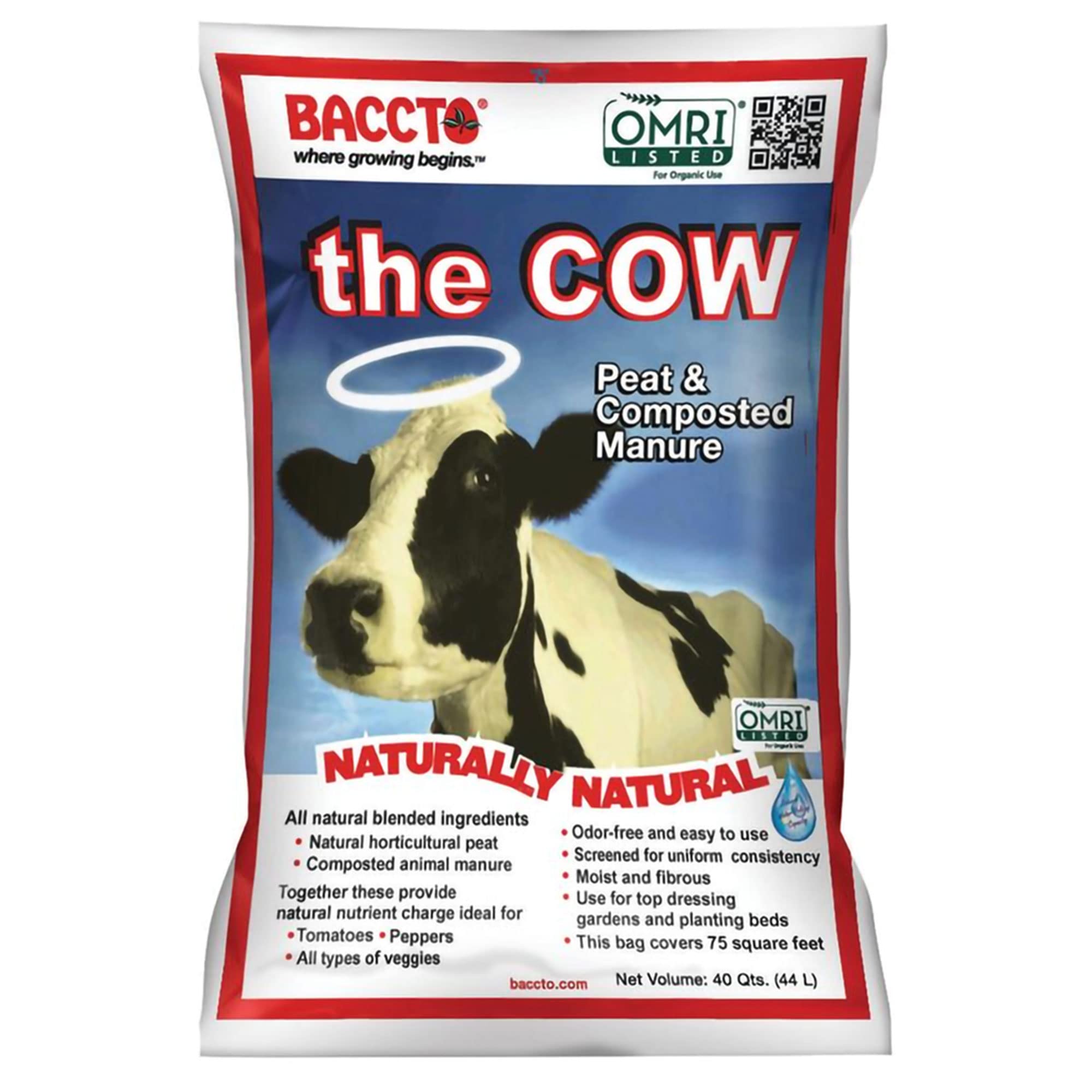
1. Michigan Peat Baccto Wholly Cow Horticultural Compost and Manure
Our pick — over 4.5★ from 250+ verified ratings; the strongest balance of quality and price.
The manure-based powerhouse that feeds lawns without the stink.
This 40-quart bag blends natural peat with composted animal manure, delivering a concentrated nutrient punch that makes tired soil come alive. The thing owners praise most is the consistent quality — the texture is uniform and screened, so you are not picking out sticks and bark as you spread it. Buyers report it works great as a top dressing, a soil amendment for vegetable beds, and even as a substrate base for mushroom cultivation.
Unlike the heavier 50-pound topsoil options in this lineup, this bag weighs 34 pounds and is noticeably more organic-rich. It holds moisture well so you water less, and the lack of odor means you can work it into flower beds near the house without regret. A 78-year-old gardener using it on old river-bottom sand reported great results mixing it with coir and perlite for raised beds — and he plans to buy again.
The one real limit here is that it is a compost and manure blend, not a standalone topsoil. If you are filling deep holes or leveling a whole yard, you will want to mix it with a sandy base like the Baccto Topsoil rather than use it straight.
What Wins People Over
- High nitrogen content greens up grass fast without chemical burn
- Truly odor-free — you can work near open windows
- Uniform, screened texture with minimal debris
The Trade-Off
- Best used as an amendment, not a standalone fill soil
- Heavier per quart than peat-only mixes at 34 lb per bag
Reach for this if: you want a potent, clean manure compost that feeds everything from lawn to vegetables without smelling up your yard.
Look elsewhere if: you need pure topsoil for leveling large areas — this works best blended.
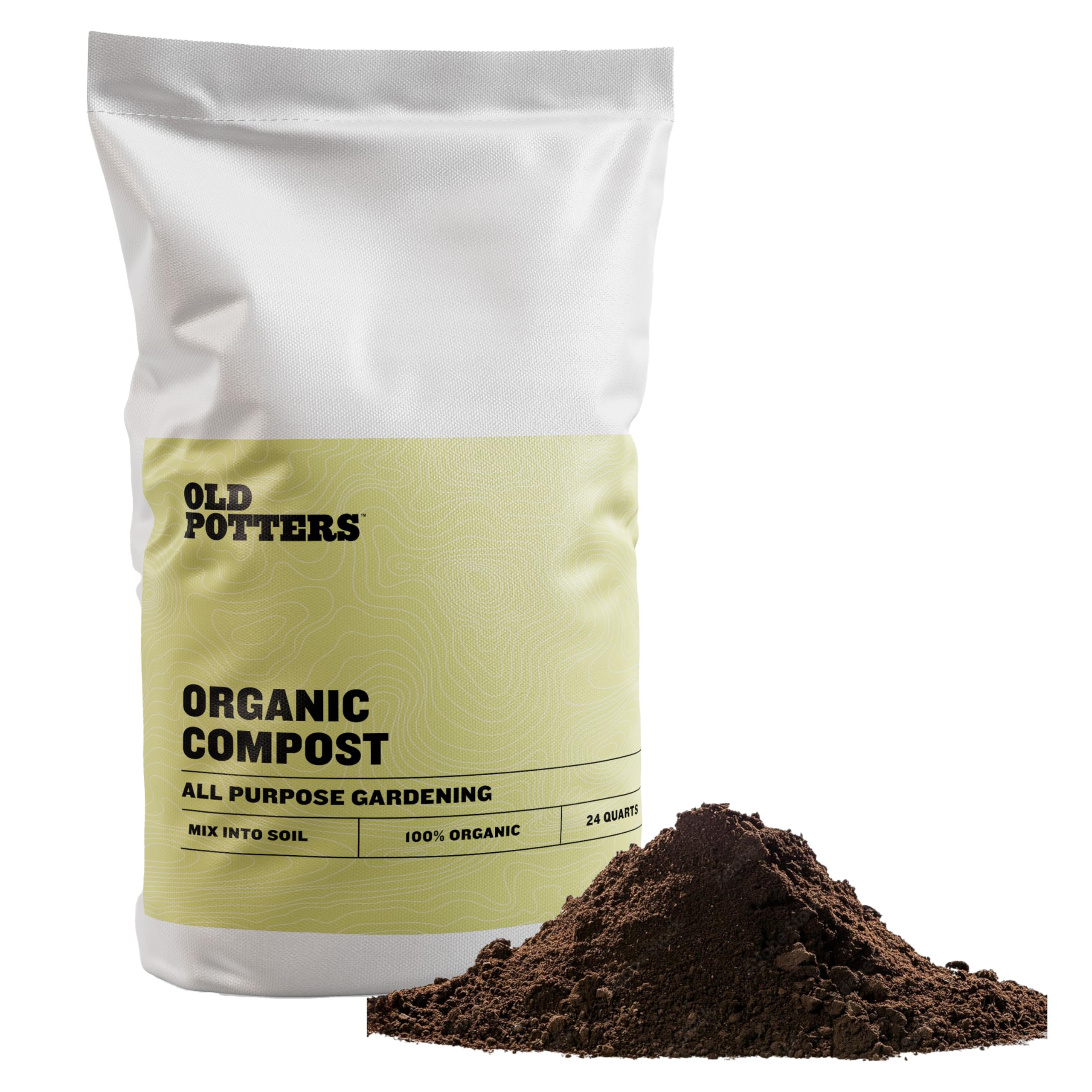
2. Old Potters Organic Compost
Plant-based compost that pushes heavy feeders into overdrive.
Built from 100% organic plant materials with no chemicals, this 25-pound bag (24 quarts) is a specialist tool for gardeners who want rapid, visible growth. Owners mention that banana plants shot up new leaves in under a week and bare-root roses established and bloomed early even in heavy clay and rocks — one buyer in zone 7a used it on 10 climbing rose varieties with worm castings and mycorrhizal fungi (beneficial root fungi) and saw vigorous growth across the board.
Here is where this differs from the cow-manure Wholly Cow above: the plant-based formula is gentler on roots and will not burn even stressed plants, but it comes with a serious odor trade-off. Multiple buyers describe the smell as “awful” and “extremely strong” even after the bag is resealed. That is the price of a truly active compost — the biology inside is alive and working. For outdoor use, the smell fades quickly once spread, but it is not a product you want sitting in a garage.
The other consideration is texture. Some bags arrive with clayish clumps that need manual crumbling before use. If you have a small raised bed or a few heavy-feeding plants, the results are worth the extra effort. For covering a whole lawn, the 24-quart size goes fast.
The Strong Points
- Plant-based formula is safe on roots and won’t burn
- Shows visible results on heavy feeders within a week
- Works well in challenging soil conditions like clay and rock
The Catch
- Very strong odor that lingers in the bag
- Can arrive clumpy with clayish chunks needing manual breaking
Perfect for: container growers and raised-bed gardeners who want maximum organic punch for a few high-value plants.
skip it if: you hate strong smells or need to cover a large lawn area with one bag.
3. Wonder Soil Premium Coco Coir Mix
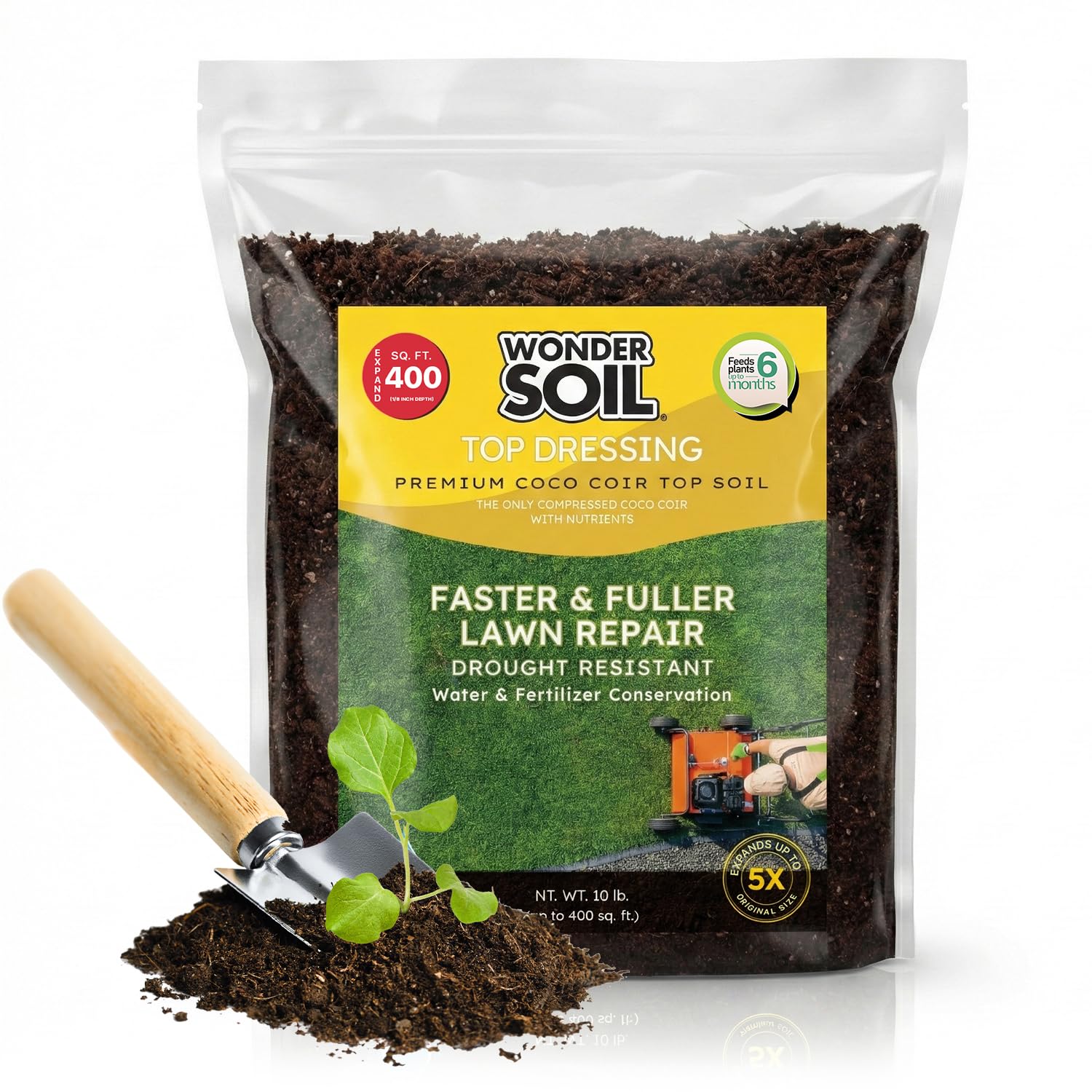
Dry coir that explodes into fluffy top dressing for spot repairs.
This 10-pound bag of compressed coco coir (the fibrous husk of a coconut) is premixed with worm castings, mycorrhizae (beneficial root fungi), kelp, pumice (a light volcanic rock), and water-saving polymers (gel crystals that absorb water). You add water and it expands into enough material to cover up to 400 square feet. The defining feature is how fast it works on grass seed. Customers note that seed germinates “way way faster” compared to hay or straw covers, and the coir holds the seed in place so birds and wind do not steal it.
That makes it a completely different tool from the heavy amendment bags like the Wholly Cow. This is a lightweight, dry product you activate at home. It excels for lawn repair — filling divots from digging dogs, patching bare spots, or top dressing a thin lawn. One owner with three Pomeranian diggers called it “perfect” for filling the holes. The resealable bag means you can use a little today and save the rest for next season.
The honest downside is cost. Multiple buyers call it “crazy expensive” and “very expensive” for what you get. A few bags arrived extremely dry and dusty, with nearly half the material lost to wind during spreading. If you have a large yard that needs full coverage, the per-square-foot cost adds up fast compared to traditional topsoil.
What Stands Out
- Germination speed is noticeably faster than hay or straw covers
- Light, dry bag stores easily and expands with water
- Premixed with nutrients and polymers for water retention
The Reality
- High cost per square foot compared to bagged topsoil
- Dry bags can be dusty and lose material to wind
Best for: targeted lawn patching, overseeding, and filling small holes where fast germination matters more than cost.
Not for: covering a whole yard on a budget — the economics favor traditional soil at scale.
4. Espoma Organic Raised Bed Mix

A purpose-built raised bed mix with mycorrhizae already blended in.
This 1.5-cubic-foot bag is formulated specifically for raised garden beds and outdoor containers, enriched with earthworm castings, alfalfa meal, kelp meal, and feather meal. It also contains Espoma’s proprietary Myco-Tone blend of endo and ecto mycorrhizae (two types of beneficial root fungi) that form a symbiotic (mutually beneficial) relationship with plant roots to improve nutrient uptake. The result is a soil that reviewers point out supports sturdy root growth for vegetables, herbs, and flowers with no synthetic chemicals.
Shoppers say that the 1.5 cu ft bag arrives perfectly sealed with no mold or dry spots, and the compost is evenly blended so it pours well without clumping. In subtropical Florida, owners noted excellent moisture retention and a fresh, clean smell with no manure odor. One buyer used it to support 9 vegetables and 12 flowering plants in wet California weather and called it good enough to repurchase.
The caveat, and several owners flag this, is that the mix can be wood-heavy. One buyer who bought 6 bags for new raised beds found it “mostly wood, looks like mulch” and reported that seedlings turned yellow after three weeks despite the claimed organic fertilizer content. The positive reviews heavily outweigh the critical ones, but if you are filling a brand-new bed, you may want to supplement this mix with a richer compost like the Wholly Cow.
Why It Works
- Ready-to-use with mycorrhizae and organic nutrients already mixed in
- Fresh, clean smell with no manure odor
- Excellent moisture retention for hot climates
The Watch-Out
- Can be wood-heavy; some bags are mostly fine mulch texture
- A few owners found it lacking for sustained growth without extra fertilizer
Grab this for: filling raised beds with a clean, all-organic blend that is ready to plant immediately.
Think twice if: you need the richest possible organic matter — consider layering in a manure compost for heavy feeders.
5. Michigan Peat Baccto Topsoil with Reed Sedge, Peat & Sand

The heavy 50-pound workhorse for filling holes and leveling lawns.
This is a classic topsoil blend of reed sedge peat and sand — dense, dark, and clean, with minimal wood products compared to many competitors. Buyers report that the sifting loss is far less than other brands, meaning more of what you pay for actually stays in the ground. At 50 pounds per bag, it is the heaviest option here, and that weight reflects a genuine lack of fluffy filler. Owners who bought 18 bags across multiple orders call it “really good, clean soil.”
Where this topsoil differs from the Wholly Cow compost is texture and purpose. The sand content gives it drainage and heft, making it ideal for filling yard holes, top-dressing lawns, and transplanting shrubs and trees. The peat holds moisture so the soil does not dry out as fast as straight sand. One buyer called it “the best product I’ve ever bought for my lawn” despite the premium cost, noting it improved grass growth and filled low spots effectively.
The honest truth is that this bag can contain twigs and small stones. Not every bag is the same — some owners mention “many large twigs requiring manual sifting” and estimate only three-quarters of the bag is usable black soil. If you need a perfectly fine, debris-free soil for a seed bed, you will want to screen it first. For general fill and leveling, the debris is less of an issue.
The Strong Suit
- Dark, clean topsoil with minimal wood filler compared to budget brands
- Excellent drainage and nutrition for all plant types
- Heavy bag means real soil volume, not air and bark
The Reality Check
- Some bags contain large twigs that need manual sifting
- Not ideal for fine seed beds without additional screening
Best for: filling holes, leveling lawns, and general garden work where weight and volume matter more than fine texture.
Pass if: you need a perfectly screened, debris-free soil for delicate seed-starting or fine top dressing.
6. Life Cycle Organics Compost 1 Gallon
A single gallon of OMRI-listed compost for the smallest garden jobs.
Sometimes you do not need 50 pounds of anything. This is a compact 1-gallon bag of organic compost certified by OMRI (the Organic Materials Review Institute, which verifies a product is suitable for organic production). Buyers call it the “perfect amount for small raised garden bed” — exactly the right size for a single container, a few window boxes, or topping off a small herb garden without leftover bags moldering in the shed.
This is the lightest option in the lineup by volume, and it is priced accordingly. It is a soil conditioner (a material you mix into existing dirt to boost organic content), not a fill soil, so you mix it into existing dirt to improve texture rather than using it as a standalone growing medium. The OMRI listing gives organic gardeners confidence that no synthetic chemicals or prohibited substances are in the bag.
The trade-off is simply scale. One gallon disappears fast. If you are amending a 4×8 raised bed, you will need many bags, and the per-gallon cost is significantly higher than buying a bulk bag of Wholly Cow or Baccto Topsoil. This one makes sense for precision work — not for spreading across a lawn.
Why It Works
- OMRI-listed for certified organic gardening
- Small, manageable size for containers and window boxes
- Good quality with no odor or debris issues reported
The Limitation
- Very small volume — not economical for large beds or lawns
- Higher per-gallon cost than bulk options
Ideal for: organic gardeners with one or two containers who want a certified soil conditioner in a no-waste size.
Not for: anyone covering ground — you will burn through bags fast and pay more per quart.
7. Michigan Peat All Purpose Potting Soil with Perlite (2 Pack)
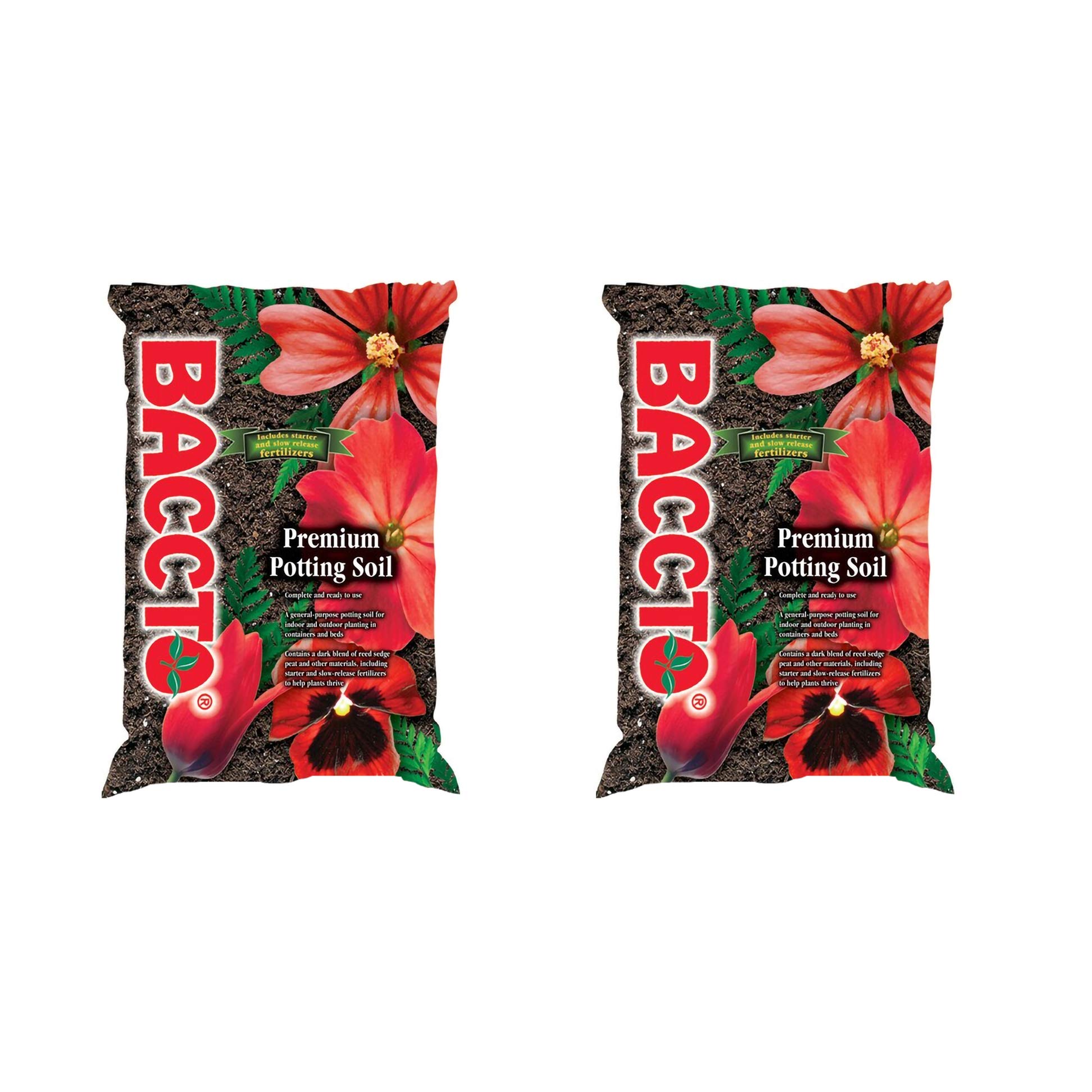
Two 50-pound bags of perlite-enriched soil for the biggest yard projects.
This two-pack gives you 100 pounds total of all-purpose potting soil that includes perlite (a white volcanic mineral that creates air pockets) for aeration, plus reed sedge peat and sand. The perlite is the key difference from the single-bag Baccto Topsoil — it creates air pockets in the soil that help roots breathe and prevent compaction. Owners describe it as a “good sandy base” that holds moisture without getting waterlogged, and it drains well enough for outdoor vegetables and seedlings.
The dual-bag format is designed for serious projects: filling multiple raised beds, top-dressing a large lawn, or transplanting shrubs. Buyers appreciate the “manageable size quantity” of each individual 50-pound bag and the convenience of having it delivered. The soil itself is rich and beautiful, with a dark color that speaks to high organic content. One reviewer noted that “everything I planted in this soil is still alive” — a simple but honest vote of confidence.
Be prepared for the delivery experience. Because each bag weighs 50 pounds, they can arrive in separate boxes and the shipping is slow. One bag in a two-pack arrived leaking, and multiple buyers mention poor handling by the carrier. The soil itself is solid, but the shipping logistics are the weak link here.
The Big Advantage
- Perlite provides aeration that plain topsoil lacks
- 100 pounds total for large-scale projects
- Rich, dark soil that supports healthy plant growth
The Shipping Reality
- Delivery is slow and bags can arrive leaking or damaged
- Two 50 lb bags ship separately, often on different days
Get this for: big projects where you need a hundred pounds of aerated soil delivered to your door.
Be ready for: a messy delivery — order early and plan for separate box arrivals.
Understanding the Specs
Base Material Composition
The primary ingredient determines how the soil behaves once wet. Peat (reed sedge peat) holds water and stays fluffy, making it great for moisture retention in sandy soils. Composted manure adds a quick-release nitrogen boost that greens up grass and vegetables fast. Coco coir expands dramatically and creates a light root zone that drains well. Sand adds weight and drainage — ideal for leveling and fill work. A good bag lists its base materials clearly; a bag that just says “topsoil” with no ingredient breakdown is a gamble.
Weight vs Volume
Soil weight is a reliable indicator of quality. A 50-pound bag of real topsoil is dense and heavy — it has actual mineral content and organic matter. A bag that feels light for its size is likely full of bark, wood chips, and air. Volume measurements like quarts or cubic feet tell you how much space the soil fills once spread, but the weight tells you how much actual soil you are getting. When comparing bags, look at both numbers: a 50-pound bag at 50 liters is denser than a 40-quart bag at 34 pounds.
FAQ
Can I use bagged topsoil directly on my lawn without mixing?
What is the difference between topsoil and compost for lawns?
How much bagged soil do I need to cover my lawn?
Will manure-based compost burn my lawn if I use too much?
Why does some bagged soil smell like sewage or ammonia?
Can I mix different brands of soil together?
What does OMRI listed mean for garden soil?
How long does bagged soil stay good if I store it?
Should I sift topsoil before using it for grass seed?
Final Thoughts: The Verdict
For the majority of shoppers, the good lawn soil winner is the Michigan Peat Baccto Wholly Cow because it delivers the highest nutrient density with zero odor and a uniform texture that works as both a top dressing and an amendment. If you want a plant-based compost that pushes heavy feeders into overdrive, grab the Old Potters Organic Compost. And for targeted lawn patching where fast germination is the goal, the Wonder Soil Coco Coir is the one to reach for.
How We Picked
We do not accept paid placement. Every pick is matched to a real buyer and a real use-case; we do not hands-on test units.
Sources & Methodology
Specifications: manufacturer listings and product documentation. Review insights: verified customer reviews, as of July 2026. Pricing: not shown on this page (it changes often); check the current price via the retailer link.
As an Amazon Associate, Lawn Gear Lab earns from qualifying purchases. This does not affect which products we feature.