
Specs are compiled from manufacturer listings and verified buyer reviews and can change over time — please confirm the key details on the product page before buying.
You lay down landscape fabric once, hoping that is the end of the weed saga. But the cheap stuff rips when you step on it, the thin rolls let crabgrass pierce through by midsummer, and some “heavy duty” mats degrade into plastic shreds after one season of sun. The real cost of a bad barrier is measured in hours spent on your knees pulling invaders you thought you buried. Good landscape fabric separates a one-and-done installation from an annual chore you swear you will fix next year — and the differences come down to material weight, weave density, and the tensile strength a manufacturer actually prints on the label.
I’m Rikta — the founder and writer behind Lawn Gear Lab. This guide is built by comparing the manufacturers’ published specifications and the patterns across verified customer reviews, so you get each pick’s real strengths and trade-offs instead of marketing spin.
Whether you are covering a vegetable patch, a gravel driveway, or a flower bed that slopes toward the house, the right good landscape fabric blocks sunlight without suffocating your soil — and the nine rolls below are the ones worth loading into your cart.
Our Picks at a Glance
How To Choose The Best Good Landscape Fabric
Not all black rolls are equal. The fabric that stops weeds for a decade under a gravel path might be the same one that starves your raised-bed tomatoes of water. Here are the three specs that make or break your buy.
Fabric Weight (oz per square yard)
This is the single best predictor of how long your barrier holds up. A 3 oz fabric is the entry point for light-duty flower beds. A 4 oz fabric starts to handle foot traffic and rock weight. Anything heavier — like the Dewitt 4.1 oz or the 4 oz Forimo — is built for commercial-grade abuse under driveways and erosion-control projects. The weight directly determines puncture resistance and UV longevity.
Woven vs. Non-Woven vs. Needle-Punched
Woven polypropylene is the standard: it lets water drip through the tiny gaps between the strands while blocking light. Non-woven felt-style fabrics look like a thick mat and drain faster, but they can tear more easily. Needle-punched construction — like VIVOSUN uses — physically bonds a woven layer to a non-woven layer, giving you the drainage of felt with the tear resistance of weave. For most landscaping, a quality woven fabric with a tight thread count is the safest call.
UV Stability and Burial Requirements
Every fabric degrades in direct sunlight. The Sandbaggy 50-year claim, for instance, only holds true when the fabric is buried under at least three inches of gravel or mulch. Exposed edges break down within a year. If your project involves exposed ground cover, look for a manufacturer that states a specific UV-resistance percentage — Sandbaggy guarantees 80% strength retention after 500 hours of UV exposure.
Quick Comparison
| Model | Best For | Weight | Dimensions | Weave Type | Amazon |
|---|---|---|---|---|---|
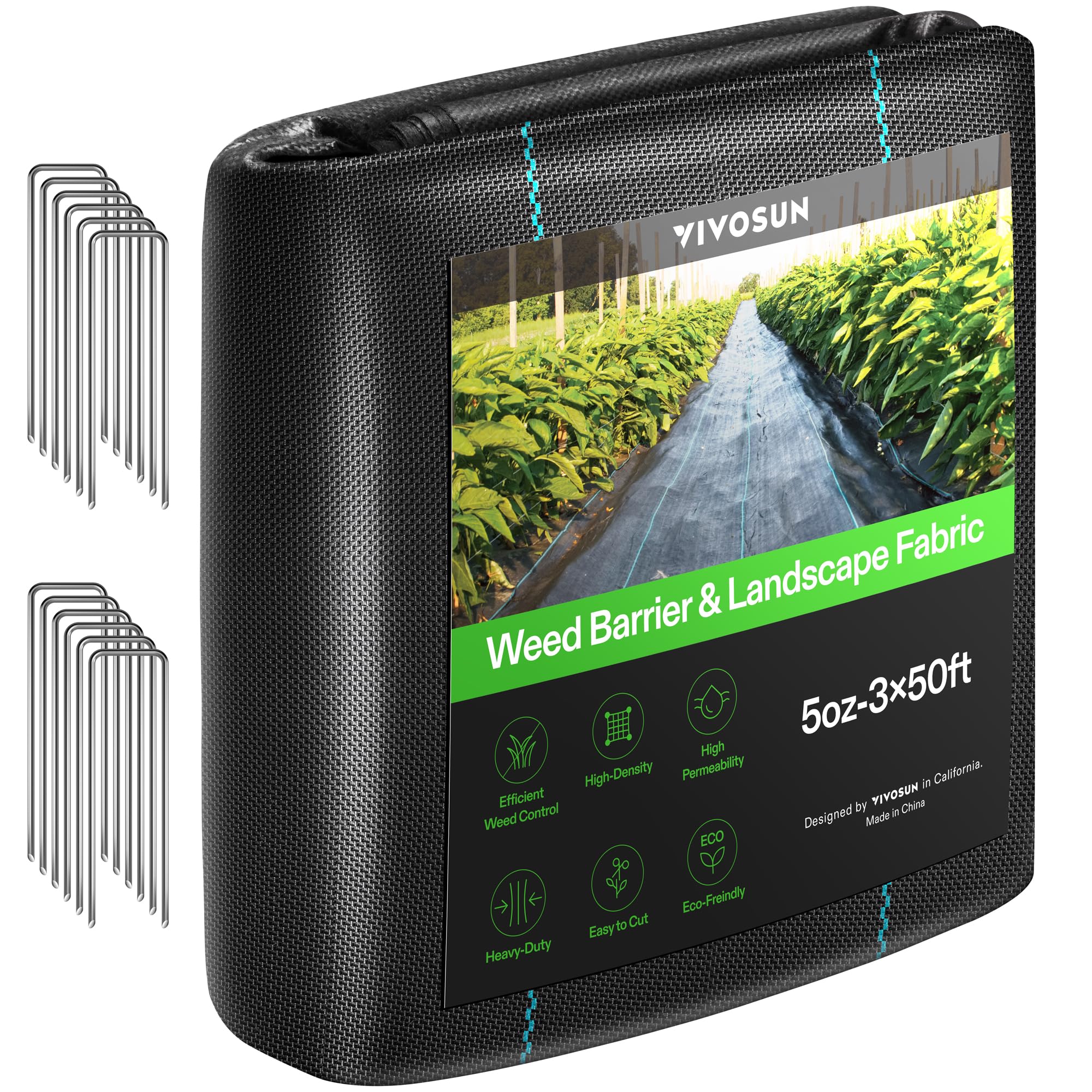
| VIVOSUN 3ft x 50ft★ Best Overall | Raised beds & tight gardens | 5 oz | 3 ft x 50 ft | Needle-punched woven + non-woven | Amazon |
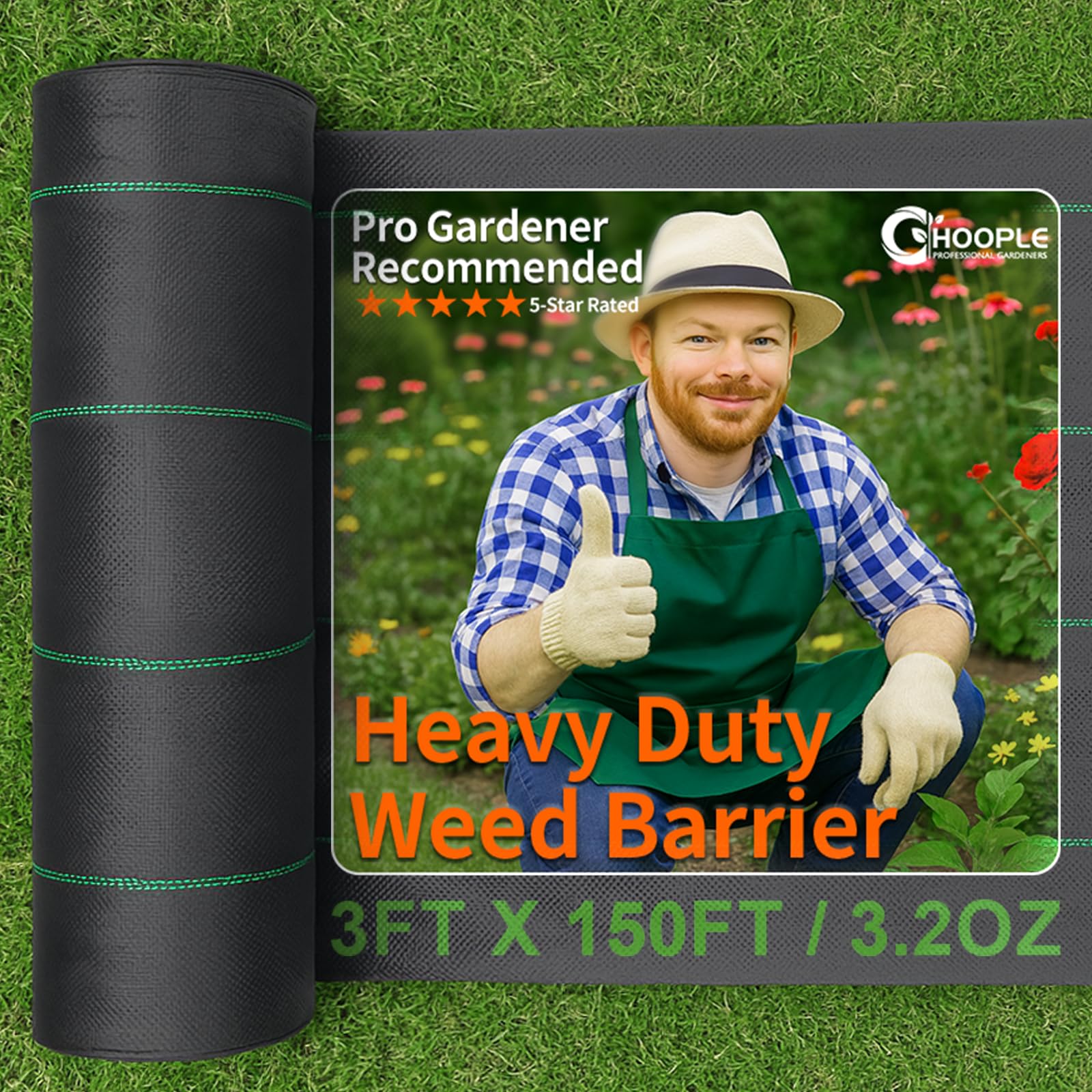
| HOOPLE 3ft x 150ftBest Value | Budget coverage at scale | — | 3 ft x 150 ft | Woven polypropylene | Amazon |
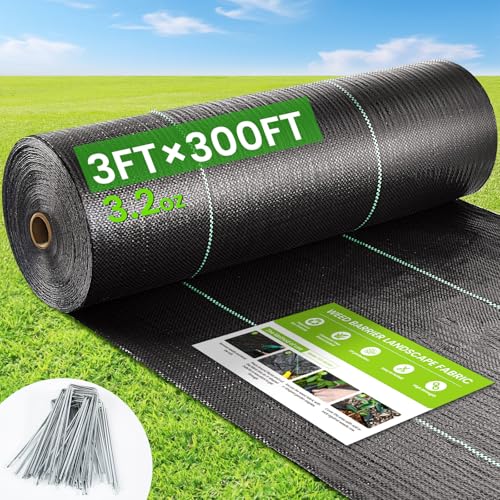
| Weed Barrier Fabric 3x300ftTop Performer | Long runs of flower beds | 3.2 oz | 3 ft x 300 ft | Woven polypropylene | Amazon |
| Vanver 3ft x 300ft | Precision planting with grid lines | — | 3 ft x 300 ft | Narrow-weave micro-porous | Amazon |
| Vanver 3ft x 300ft (Premium) | Driveway & gravel base layers | 3.2 oz | 3 ft x 300 ft | 100% polypropylene woven | Amazon |
| Rintea 4FT x 300FT | Wide-area commercial ground cover | 3.2 oz | 4 ft x 300 ft | Woven polypropylene | Amazon |
| Sandbaggy 3ft x 50ft | Long-term buried installations | 3 oz | 3 ft x 50 ft | Woven polypropylene (100% virgin resin) | Amazon |
| Dewitt Professional Max 3 x 250 ft | Pro-grade weed control in rows | 4.1 oz | 3 ft x 250 ft | Woven polypropylene (needle-punched) | Amazon |
| Forimo Driveway Fabric 5x500ft | Massive erosion & driveway projects | 4 oz | 5 ft x 500 ft | Woven polypropylene | Amazon |
In‑Depth Reviews
1. VIVOSUN Premium Weed Barrier Landscape Fabric 3ft x 50ft
Our pick — over 4.5★ from 900+ verified ratings; the strongest balance of quality and price.
The dual-layer needle-punched fabric that drains six times faster than standard woven ground covers.
The crowd favorite — owners give it a 4.6-star rating from over 900 buyers — and the reason is the construction. VIVOSUN bonds a non-woven layer to a woven layer using a needle-punching process, which creates microscopic channels that pull water down by molecular attraction. The result is a fabric that lets air and water move through at six times the rate of traditional woven barriers, so your plant roots breathe while the top surface stays dark and weed-free. At 5 oz per square yard, it is noticeably heavier than most competitors in this range, and the thickness is the first thing owners mention — quality earns the most praise, with over 70 owners calling it out.
It comes in a 3 ft by 50 ft roll with green line guides printed every foot, which makes spacing your plant rows straight without measuring. The cut edges fray less than standard woven fabric because of the bonded dual-layer construction. One buyer summed it up directly: “excellent quality working great around garden beds, we walk on everyday holding up great.” The only caveat is the mixed feedback on weed resistance — while most buyers report it stops growth cold, a portion say persistent nutgrass or morning glory can eventually work through. That is true of nearly every fabric under a thin mulch layer, but it is worth knowing if your yard runs to aggressive perennial weeds.
What wins owners over: The quality is the most-discussed trait — owners consistently say it is thicker and tougher than anything at the big-box stores, and they expect it to last years rather than a single season.
The honest trade-off: A few owners mention that determined weeds can still push through, especially where the mulch layer is thin. Lay down at least two inches of cover.
Reach for this if: You want a fabric that drains aggressively in a vegetable garden or flower bed, and you value thickness that survives foot traffic.
Look elsewhere if: You need a massive roll for a driveway — the 50-foot length runs out fast on big projects.
2. HOOPLE 3 ft x 150 ft Weed Barrier Landscape Fabric
A 150-foot roll that repeat buyers call “easy to install” and “works well” season after season.
HOOPLE delivers the biggest linear footage at the lowest cost-per-foot in this lineup, and the owner reviews match the value proposition — the fabric earns a 4.4-star average from over 900 ratings, and the most common sentiment is simple satisfaction. Customers note: “repeat purchase. Loved it first time. Love it now. Easy to install. Works well.” The 3 ft x 150 ft size covers garden beds, gravel paths, and mulch areas without needing to splice multiple rolls together.
The woven polypropylene construction lets water and air pass through to support root respiration while blocking sunlight to reduce weed germination. It weighs 9.18 pounds for the full roll — noticeably heavier than the VIVOSUN 50-foot roll despite being the same 3-foot width, which tells you the weave density is solid. The main complaint from owners is that the cut edges can shred and release plastic fibers. Reviewers point out that using scissors rather than a knife helps, and some recommend sealing the edges with a quick pass from a lighter or torch. For the price per square foot, this is the smart pick if you are covering a large area on a budget.
The standout spec: 150 feet of coverage from a single roll means fewer seams and less overlap work — you unroll once and staple it down.
The recurring gripe: Cut edges fray noticeably, and the fabric can shed fine plastic fibers during installation. Seal the cuts if appearance matters.
Best for: Large garden beds or gravel paths where you need maximum coverage at a minimum price — and you are fine doing a little edge-trimming after cutting.
Not for: Projects where a perfectly clean, professional edge finish is non-negotiable.
3. Weed Barrier Fabric, 3x300ft, 3.2oz Heavy Duty Durable Woven Geotextile
A 300-foot roll that landscaping crews told one owner was “very good” — and they were right.
This fabric punches above its 3.2 oz weight because of the narrow-strip weaving process. The tight weave creates a dense mat that still lets water and nutrients penetrate to the soil, but blocks light so effectively that shoppers say using it under pumpkins and in raised beds with zero weed breakthroughs all season. At 3600 inches long by 36 inches wide (the product dimensions put it at a 360x gap versus the HOOPLE roll’s packaging size), it delivers the second-longest single-run coverage in this guide. The roll also ships with 20 U-shaped securing pegs included, which saves a separate trip to the hardware store.
Buyers are enthusiastic about the value — quality is the top-mentioned positive aspect, with 43 owners praising it. Buyers report: “very impressed with this Weed Barrier fabric. Its nice and thick. Easy to roll out. I hired a landscaping company to come and clean up my yard. They told me this fabric was very good.” The fabric also helps stabilize soil temperature and reduces water evaporation, which means you water less often. The durability ratings are mixed, however — some owners describe it as very tough, while others say it frays at the edges when cut. Pre-sealing cut edges with a flame is the common fix.
What earns the praise
- High-density weave blocks weeds without choking the soil
- 300-foot roll covers long runs without splicing
- Professional landscapers volunteered positive feedback during installation
The catch
- Cut edges fray — sealing them adds a step to installation
- Deep-rooted perennial weeds can eventually push through thin mulch
Grab it when: You are covering a pumpkin patch, long flower bed, or large vegetable garden and want a single continuous roll with no overlap.
skip it if: You hate any extra finishing work — the fraying at cut edges will annoy you unless you seal them.
4. 3ft x 300ft Landscape Fabric with Visual Planting Grid

Printed grid lines every 13.4 inches turn this fabric into a planting ruler you never have to unspool.
Vanver built this fabric around the idea that spacing plants in a straight row is the most tedious part of gardening. The 13.4 x 13.4 inch grid is printed directly onto the fabric, so you can see exactly where to cut X-shaped slits for your seedlings or seeds without a tape measure. It is a small detail that saves time, and owners love it — quality is the most-praised aspect, with 34 owners mentioning it, and durability follows closely at 18 mentions.
The fabric uses a narrow-weave micro-porous construction that resists weed emergence while allowing air and water to pass through. It has held up well under foot traffic and stone loads, with one owner reporting “no weeds came through” after laying it under house-side stones. It weighs 18.16 pounds for the 300-foot roll, which gives it a substantial feel during unrolling. The primary downside is that it is a newer product with only 251 ratings so far — the durability story is still being written. But the early returns are excellent, with a 4.7-star average that tops every other product in this guide.
The clever feature: The 13.4 x 13.4 inch printed grid eliminates guesswork for vegetable bed spacing — just cut at the intersections.
What to know: This is the highest-rated fabric in the lineup at 4.7 stars, but it is still building its long-term reputation with a smaller review base.
Choose this for: Vegetable gardens where straight rows and even plant spacing matter — the grid pays for itself in the first planting.
Pass if: You are laying fabric under a driveway or gravel area where visible grid lines serve no purpose.
5. Vanver 3ft x 300ft Heavy Duty Weed Barrier Fabric (3.2 oz)
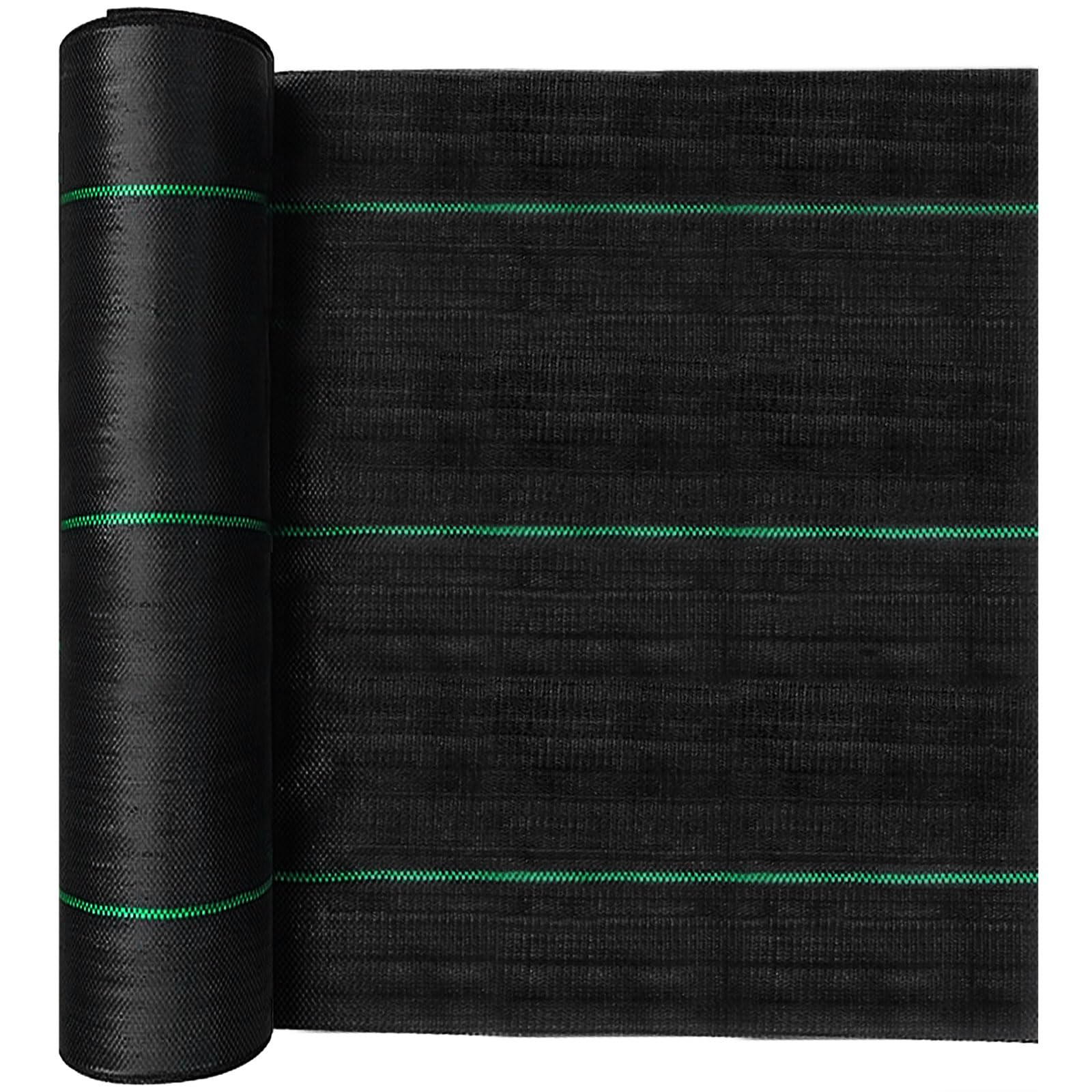
100% polypropylene woven fabric treated with anti-aging stabilizers to outlast the standard bargain roll.
Vanver’s second entry in this list focuses on longevity. The manufacturer adds anti-aging material to the polypropylene weave, which slows the UV degradation that turns most budget fabrics brittle after one or two seasons. The 3.2 oz weight sits in the middle of the pack — heavier than basic landscape plastic but lighter than the 5 oz VIVOSUN — and owners say it holds up well under decomposed granite and gravel. The fabric earned a 4.5-star average from over 500 ratings, and functionality is the top positive aspect with 27 mentions.
One owner installed it under decomposed granite and called it a “best weed preventer i have found,” while another who used it between vegetable rows noted that the width (3 ft x 300 ft) makes it easier to spread than the narrower rolls from big-box stores. The main tension in the reviews is around material feel — some owners expected a thicker, cloth-like fabric and instead got a woven plastic sheet. That is typical of polypropylene weed barrier, but worth flagging if you have only used heavy felt-style mats before. The fabric can also fray when cut; scissors work better than a knife, according to owners.
What makes it last: Anti-aging stabilizers in the polypropylene formulation slow the cracking and brittleness that sun exposure causes.
The honest difference: Several owners note that weeds can still push through if the mulch layer is very thin — this is not a magical force field, just a very good barrier.
Best for: Driveway bases, gravel paths, and areas where the fabric will be mostly covered — the anti-aging additives add real value when you cannot easily replace it.
Not for: Owners who expect a soft, cloth-like texture. This is a woven plastic sheet — it does the job but feels like what it is.
6. Rintea 4FT x 300FT Weed Barrier Fabric (3.2 oz)

Four feet wide and 300 feet long — this is the fabric that covers ground fast on large commercial or residential projects.
Most landscape fabric rolls are 3 feet wide, which means you need two parallel runs to cover a 6-foot bed. Rintea’s 4-foot width cuts down the number of seams and the labor of aligning them. At 3.2 oz with a woven polypropylene construction, it is thick enough to block weeds and strong enough to survive wheelbarrow traffic — owners mention it held up well under people walking and a wheelbarrow dropping mulch onto it. The fabric ships with 20 U-shaped securing pegs, and it has clear green guide lines printed on the surface to help with plant alignment.
Durability is the most-mentioned positive aspect, with 33 owners calling it out, and quality follows at 30 mentions. One owner reported it “doesn’t tear from the wind,” which is a meaningful detail if you have ever fought a flapping roll on a breezy day. The recommended installation tip in the product notes is to burn the edges after cutting to prevent fraying — a step that also applies to several other fabrics in this guide. At 23.1 pounds for the full roll, you will want a helper to unroll it, but the coverage area for the price is strong.
Why it stands out
- 4-foot width means fewer seams on wide beds — one roll covers 1,200 square feet
- Survived wheelbarrow traffic and foot traffic without tearing, per owner reports
The catch
- Manufacturer recommends burning cut edges to prevent fraying — a fire-safe extra step
- Some owners say the material feels more like plastic than traditional landscape fabric
Reach for this if: You are covering wide beds, large play areas, or commercial landscaping where every seam you eliminate saves installation time.
Think twice if: You prefer a softer fabric feel — this is a woven polypropylene sheet, and it behaves like one.
7. Sandbaggy Landscape Fabric | 50 Year Fabric | 3 ft x 50 ft Roll
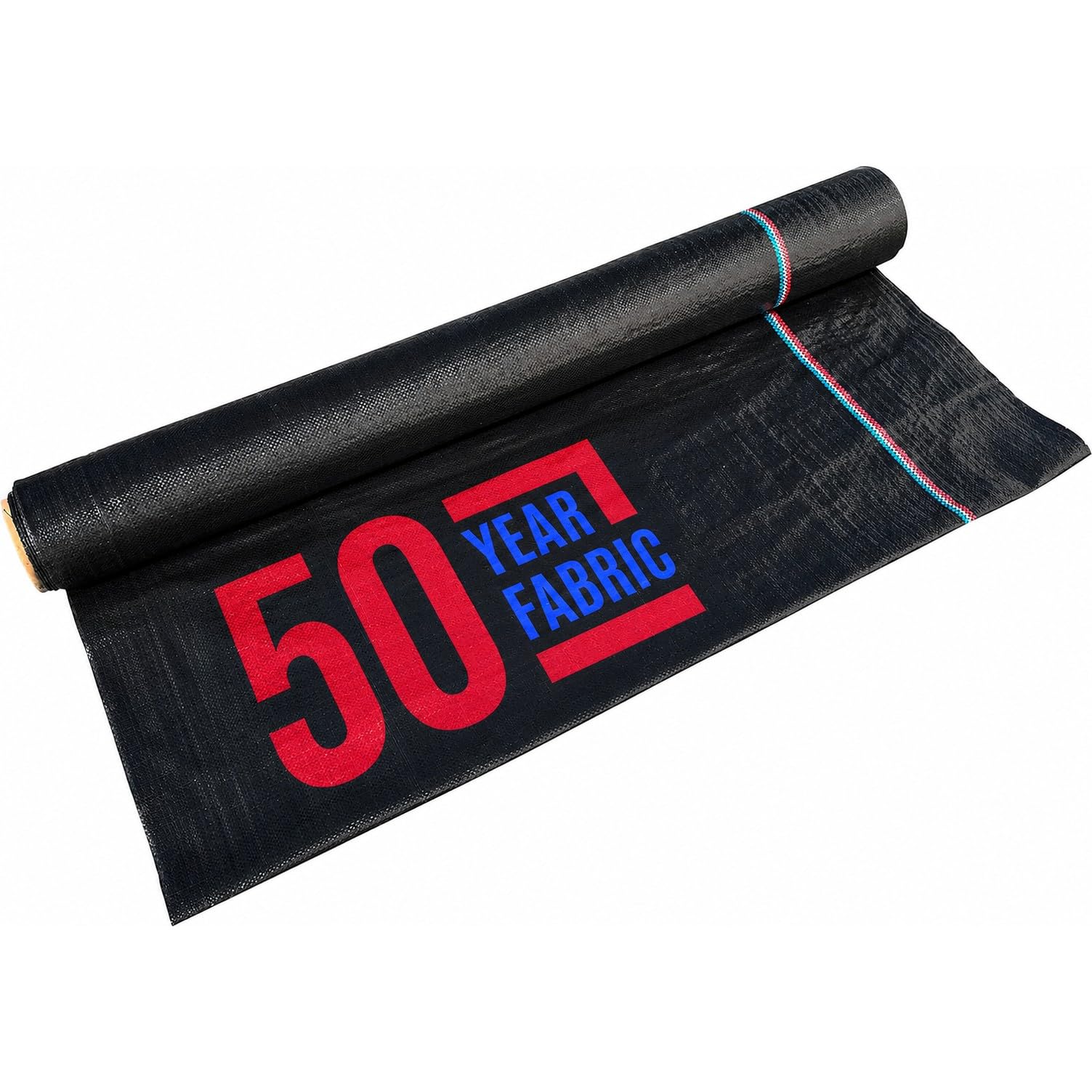
Engineered for 50-plus years underground, and lab-tested to retain 80% strength after 500 hours of UV baking.
Sandbaggy is the only fabric in this guide that quotes specific tensile and UV-retention numbers backed by ASTM standards. Made from 100% virgin polypropylene resin, the 3-ounce fabric is woven on industrial-grade looms to create a tight mat that blocks sunlight to underlying weeds. The “50-year” claim applies when the fabric is buried under at least three inches of gravel, mulch, or road base — exposed to direct sun, the lifespan drops to about one year. That is an honest disclosure you do not often see, and it tells you exactly where this fabric belongs: under a driveway, a gravel path, or a French drain.
Quality is the most-praised aspect, with 34 owners singling it out, and durability follows at 22 mentions. The owners who use it for its intended purpose — under rock hardscape or in erosion control — report that it is noticeably thicker and more tear-resistant than the rolls from big-box stores. One owner described it as “thicker and more tear-resistant than big box store options.” The main frustration in the reviews is packaging: the fabric sometimes arrives folded rather than rolled, which makes it difficult to unroll flat on a windy day. The smaller 50-foot roll (3 ft wide) is better suited to targeted projects than massive coverage.
The lab-backed claim: The fabric is ASTM-tested to maintain 80% strength after 500 hours of UV exposure — a rare spec in this category.
The installation rule: Bury it under at least three inches of material or the 50-year lifespan drops to roughly one year of exposed life.
Best for: Permanent installations like driveway bases, French drains, and erosion-control projects where you never plan to dig it up.
Skip if: You need it for a visible garden bed edge — this fabric is designed to be buried, not decoratively covered.
8. Dewitt Professional Max Weed Barrier Fabric 4.1 oz, 3 x 250 Feet

A 4.1-ounce woven fabric with needle-punched construction that owners say lasts five-plus years under heavy use.
Dewitt is a known name in professional landscaping, and this 4.1-ounce fabric explains why. The needle-punched construction — small holes mechanically punched through the weave — allows air, water, and nutrients to pass through while maintaining a dense barrier that blocks weed germination. The 3-foot by 250-foot roll is heavy at 22.5 pounds, and owners mention using a pole through the center to handle it during installation. Green stripes are printed every 12 inches to guide straight planting rows, a standard feature for commercial growers.
Quality is the top-mentioned aspect with 33 owners praising it, and functionality follows at 22. The durability feedback is consistent: owners say this fabric has lasted five years or more under mulch and rock, and one project owner reported it still holds up under daily foot traffic with no rips or weed breakthroughs. Owners specifically call out that it is superior to the box-store options that need replacing every four to five years. The investment is higher than most rolls here, but the price per year of service shifts in your favor if you keep it down for a decade. The only installation note: laying a layer of cardboard or removing existing weeds first improves results, since established roots can push through even good fabric if left underneath.
What makes it professional-grade: The 4.1-ounce weight is the second-heaviest fabric in this guide, and the needle-punched drainage keeps soil from waterlogging.
Who it is for: Gardeners and landscapers who plan to keep the same fabric down for a half-decade or more — the premium cost amortizes over time.
Choose this for: Permanent raised beds, rows of vegetables, or commercial landscaping where replacing fabric every few years is not an option.
Pass if: Your budget favors short-term projects — cheaper fabrics will do for a single season of annual flowers.
9. Forimo Driveway Fabric, 5×500 ft, 4 oz Commercial Weed Barrier

The biggest roll in the guide — 5 feet wide by 500 feet long — built for commercial driveways and erosion control.
Forimo targets a specific buyer: someone laying a new driveway, French drain, or large-scale erosion blanket. The 4-ounce weight is heavy enough to stabilize soil and separate aggregate from the ground below, and the 5-foot width means you can cover a standard single-car driveway width with one continuous strip. The product dimensions list it at 60 x 6000 x 0.1 inches in packaging, and the actual use dimensions are 5 ft by 500 ft. It ships folded rather than rolled, which makes transport easier but unrolling on a windy day more challenging.
With a 4.4-star average from nearly 600 ratings, the reviews tell a practical story. One owner used it as a pond liner underlayment and reported it frays a little but provides good thickness to protect the rubber liner from rocks and stone. Another installed it in April 2023 and reported after two years and four months that only a few weeds were appearing — a strong durability signal. The fabric is designed to let air and water pass through while maintaining its structural integrity, and the manufacturer says it will not decompose over time. The main drawback is that the folded packaging means you will have crease lines to work out, and the cut edges unravel easily — owners recommend duct tape for sealing cuts.
The big advantage
- 5-foot width covers a driveway in a single pass with no seam
- 4-ounce weight handles rock, gravel, and heavy equipment traffic
The downside
- Folded packaging leaves creases that do not lie perfectly flat
- Cut edges unravel aggressively — duct tape is essentially required for clean cuts
Best for: Driveways, large construction projects, and commercial erosion control where width and length save hours of overlapping.
Not for: Small garden beds or anyone who does not want to deal with fraying edges and folded creases.
Understanding the Specs
Fabric Weight (oz per square yard)
The number that predicts puncture resistance and lifespan. Light fabrics around 3 oz work for flower beds with a thick mulch layer. Fabrics at 4 oz and above handle foot traffic, wheelbarrows, and gravel bases. The 5 oz VIVOSUN and 4.1 oz Dewitt are the heaviest in this guide and earn the strongest durability praise from owners.
UV Protection & Burial Depth
Every landscape fabric degrades in direct sunlight. The Sandbaggy fabric specifies 80% strength retention after 500 hours of UV exposure — but only when buried under at least three inches of cover. Exposed fabric loses structural integrity within a single season. If your project has any exposed edges or thin mulch, choose a fabric with explicit UV-stabilizer additives.
FAQ
Does landscape fabric really stop weeds permanently?
How long does landscape fabric last once installed?
Can I put landscape fabric over existing weeds?
Should I use woven or non-woven landscape fabric?
How do I prevent the fabric edges from fraying?
Can I walk on landscape fabric after installation?
How much overlap do I need between fabric strips?
Is landscape fabric safe for vegetable gardens?
Final Thoughts: The Verdict
If you want one dependable pick, the good landscape fabric winner is the VIVOSUN 5 oz Dual-Layer Roll because it combines the best drainage of a needle-punched fabric with the tear resistance of a woven construction — and the 4.6-star average from over 900 owners confirms the value. If you want maximum coverage for the lowest cost, grab the HOOPLE 150-Foot Roll. And for a permanent driveway or erosion project, the Sandbaggy 50-Year Fabric is the one to reach for.
How We Picked
We do not accept paid placement. Every pick is matched to a real buyer and a real use-case; we do not hands-on test units.
Sources & Methodology
Specifications: manufacturer listings and product documentation. Review insights: verified customer reviews, as of July 2026. Pricing: not shown on this page (it changes often); check the current price via the retailer link.
As an Amazon Associate, Lawn Gear Lab earns from qualifying purchases. This does not affect which products we feature.