
Blackberry bushes are unforgiving. One wrong grab and you are left with dozens of micro-punctures, splintered thorns embedded in your palm, and a forearm scored by angry canes. Standard cotton or cheap leather gloves simply fold under that kind of pressure. You need a glove built with puncture-rated materials, extended gauntlet cuffs, and reinforced stitching that can handle repeated contact with woody, razor-sharp briars without letting a single barb through.
I’m Rikta — the co-founder and writer behind Lawn Gear Lab. I spend my time dissecting material compositions, comparing ANSI cut and puncture ratings, and analyzing thousands of owner reviews to understand exactly what stops a thorn cold versus what just slows it down.
Whether you are clearing a neglected patch or pruning a manicured row, the right pair stops the pain before it starts. This guide breaks down the seven best contenders for the title of gloves for blackberry bushes, ranked by real-world puncture defense, gauntlet coverage, and dexterity under duress.
How To Choose The Best Gloves For Blackberry Bushes
Not every glove labeled “thorn-proof” can handle blackberries. The canes are woody, dry, and lined with curved barbs that dig in when you pull away. Selecting the right pair requires filtering by material, gauntlet design, and puncture rating rather than a marketing tagline.
Material: Goatskin vs. Cowhide vs. Synthetic Blends
Goatskin offers the best balance of puncture resistance and dexterity for briar work — it is denser than cowhide yet remains flexible for handling pruning shears. Cowhide provides heavier, durable protection but can feel stiff until broken in. Synthetic blends with Kevlar liners add cut resistance but sometimes lack the abrasion strength needed to survive multiple seasons of blackberry clearing.
Gauntlet Length and Cuff Closure
A short-cuffed glove leaves your wrists and lower forearms exposed, which is where most blackberry scratches occur. Look for a gauntlet extending at least 5–6 inches past the wrist. A zipper or Velcro closure at the cuff keeps debris and thorns from entering, while a snug elastic band prevents the glove from sliding down during overhead reaching.
Puncture Ratings and Reinforced Zones
Blackberry thorns demand ANSI puncture Level 4 or higher. Many gloves advertise “thorn proof” but only reinforce the palm. Check for double-stitched or layered reinforcement on the thumb, index, and middle finger — these are the points that bear the brunt of gripping and pulling briars. Anecdotal reports from users handling cacti and Meyer lemon trees offer a real-world baseline.
Dexterity vs. Protection Balance
Overbuilt gloves can make tying twine or grasping small branches frustrating. The best blackberry gloves use thin yet dense leathers or Kevlar-lined nylon to maintain finger mobility. If you plan to wear them for extended pruning sessions, prioritize a pre-curved finger shape or 3D construction that reduces hand fatigue.
Quick Comparison
On smaller screens, swipe sideways to see the full table.
| Model | Category | Best For | Key Spec | Amazon |
|---|---|---|---|---|
| Zip-Up Rose Pruning Gloves | Gauntlet | Full-arm briar defense | Goatskin + Zipper Cuff | Amazon |
| Youngstown Kevlar Lined Utility | Hybrid | Cut + puncture combo | ANSI Level 3 Cut | Amazon |
| Leather Gardening Gauntlet | Leather | General thorn protection | Goatskin A-Grade | Amazon |
| Long Gardening Gloves (Water Repellent) | Leather | Wet-weather briar work | Water Repellent Cowhide | Amazon |
| Garden Gloves Thorn Proof Rose Pruning | Synthetic | Thick synthetic puncture | Puncture-Resistant Fabric | Amazon |
| Superior Glove Endura Cut & Water Resistant | Leather | Multi-hazard work site | ANSI A4 Cut | Amazon |
| Youngstown Leather Ground Utility (Kevlar Lined) | Heavy-Duty | Extreme puncture + flame | ANSI A4 Cut + Level 5 Puncture | Amazon |
In‑Depth Reviews
1. Zip-Up Rose Pruning Gloves | Leather Gauntlet Gardening Gloves
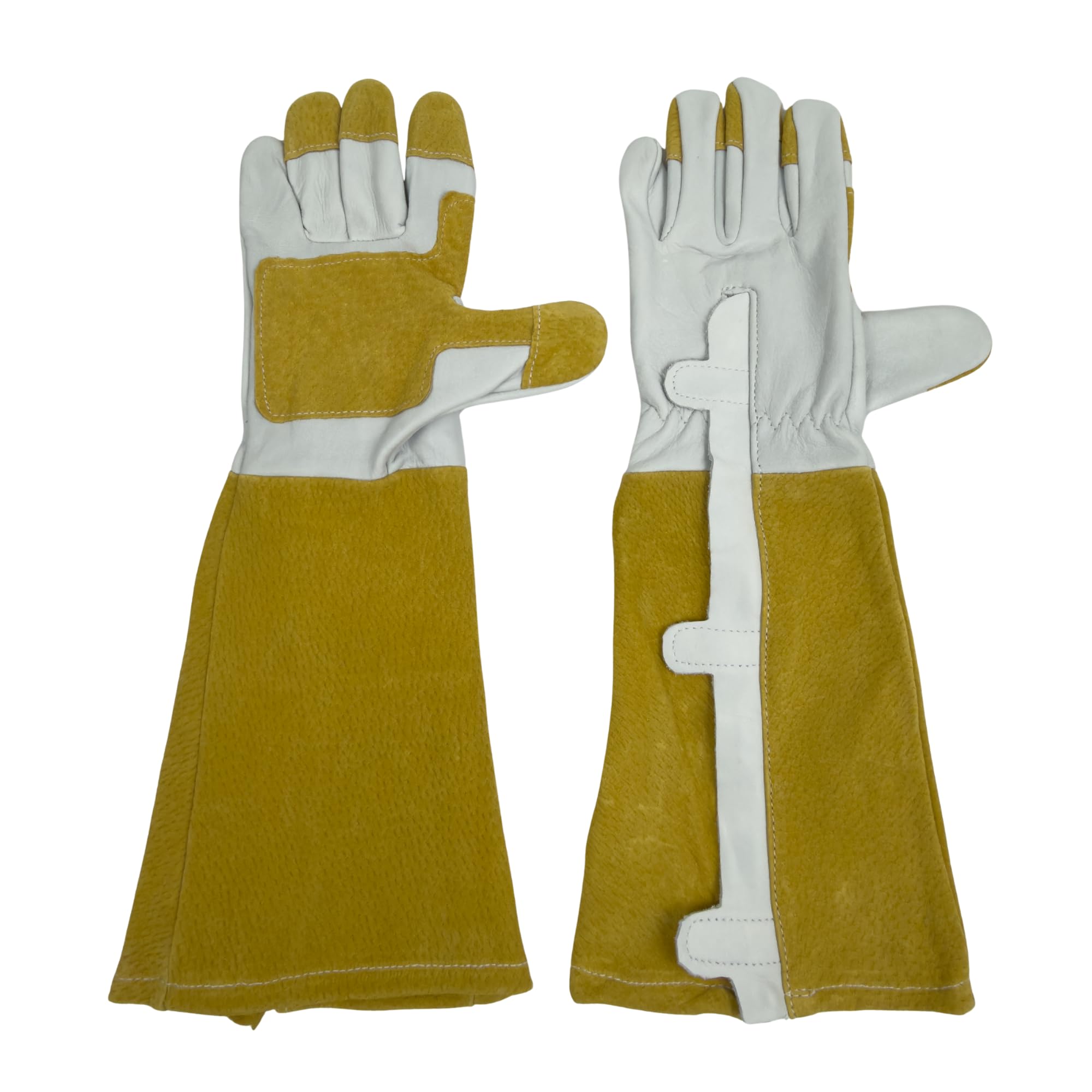
These gauntlet gloves solve the biggest frustration with standard rose gloves: the cuff gap. The full-length zipper combined with a Velcro tab cinches the gauntlet tight around your forearm, preventing sliding during overhead reaches into blackberry canes. The goatskin leather is soft enough for handling loppers and secateurs but dense enough to resist puncture from even the thickest briars, as confirmed by users tackling Meyer lemon trees and holly branches without a single scratch.
The 14-inch gauntlet offers the longest forearm coverage in this comparison, fully protecting the sensitive inner wrist area where most thorns sneak through. Reviewers note that the leather feels premium out of the box and molds to the hand after a few sessions. The zipper does add a touch of bulk around the wrist, but the trade-off for zero cuff creep is worth it when you are waist-deep in a thicket.
One sizing caveat: the tag may read Large while the glove itself is marked XL, so measure your hand circumference against the size chart. The fingers run slightly long for some users, but the overall build quality and ingenious closure system make this the most complete solution for dedicated blackberry work.
What works
- Zipper + Velcro closure locks the gauntlet in place
- Soft goatskin leather molds to hand with use
- Excellent protection for hands and full forearm
What doesn’t
- Sizing inconsistency between tag and actual glove
- Zipper adds slight stiffness at the wrist
2. Youngstown General Utility With Kevlar Gloves, PR

These are not traditional leather rose gloves. Youngstown wraps every inch of the palm, top, and finger sides in a Kevlar liner, then adds a synthetic leather palm reinforcement for grip. The result is a glove that resists both cuts from sharp canes and punctures from thorns. The ANSI Level 3 cut rating gives you documented protection that exceeds what most flimsy rose gloves offer on paper.
Dexterity is a key strength here. The stretch-nylon back allows your fingers to move freely, making it easy to grab individual blackberries or handle pruning shears without stripping them off. Owners have reported using these for clearing barbed wire, cutting wood, and even light heat resistance — a versatility that beats single-purpose leather gauntlets if you work mixed terrain.
The trade-off is forearm coverage. These stop at the wrist, so you will need a separate arm guard or long sleeves to protect against cane scratches. Sizing also shifted in recent years — large now fits more snugly, and XL fingers run long. If you prioritize cut resistance and dexterity over gauntlet length, these are the strongest contender.
What works
- Full Kevlar lining inside every part of the glove
- Excellent dexterity for tool handling
- Proven durability over months of heavy use
What doesn’t
- Short cuff leaves forearms exposed
- Sizing has changed; order accordingly
3. Leather Gardening Gloves for Women & Men, Cowhide Gauntlet Rose Pruning

Legacy Gardens uses A-grade goatskin leather that feels soft and supple from the first wear but still stops rose thorns and blackberry barbs cold. The extended gauntlet reaches nearly to the elbow, and the slim-fit elastic wrist keeps the glove from sagging. Double-stitched padding on the thumb, index, and middle finger reinforces the exact points where thorns dig in when you pull a cane.
Reviewers with tall builds (6’3″) appreciate the 2XL size that accommodates long arms without exposing the forearm. The goatskin offers superior grip on wet tools and branches compared to cowhide, which can become slippery when damp. Users handling prickly Arizona landscaping and poison ivy report excellent protection, though some noted that thin cactus spines can still penetrate the leather under heavy pressure.
The main durability complaint is stitching at the fingertips — a few users saw thread failure after three months of aggressive use. The brown leather also transfers dye to hands when wet. For the price, the combination of softness, gauntlet length, and slim fit makes these a strong mid-range choice for regular blackberry maintenance.
What works
- Soft goatskin molds quickly for excellent dexterity
- Gauntlet extends nearly to elbow
- Reinforced thumb and finger pads
What doesn’t
- Fingertip stitching can fail after heavy use
- Brown dye may transfer to hands when damp
4. Long Gardening Gloves for Women/Men – Thorn Proof Rose Pruning, Water Repellent Leather
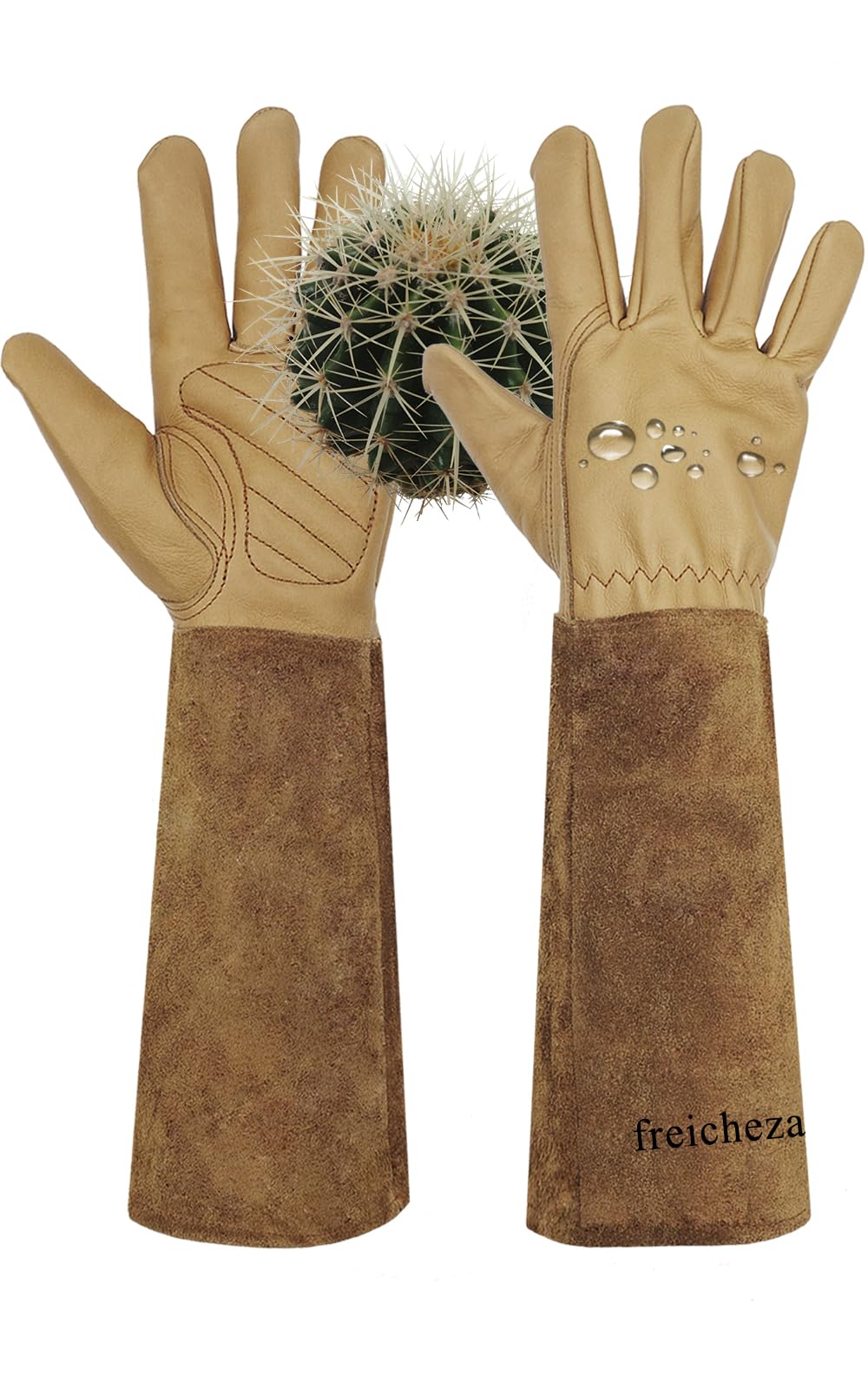
These gloves stand out for their water-repellent cowhide construction, a rare feature in the thorn-proof category. Morning dew and wet blackberry leaves quickly soak through standard leather, but this treated hide beads moisture and keeps your hands dry during early-season pruning. The gauntlet cuff is wide enough to fit over a light jacket or long-sleeved shirt, which adds another layer of forearm protection.
The leather is thick yet soft enough to allow natural finger movement for using shears. Owners report that thorns never penetrated during rose pruning, and the long cuff protected arms from poison ivy contact. The sizing runs true to measurement — a size L fits a hand circumference of 7.5 inches comfortably, with room to layer a thin liner beneath in cooler weather.
One limitation is that the wide cuff, while accommodating sleeves, does not cinch tight against the wrist. If you are reaching aggressively into thick briars, the cuff can slide down slightly. Mink oil treatment is recommended to maintain water resistance and extend leather life, but the initial quality and protection level make this a solid option for wet-condition blackberry work.
What works
- Effective water repellency for damp conditions
- Thick cowhide stops thorns completely
- True-to-size fit with room for liner
What doesn’t
- Wide cuff lacks tight closure against wrist
- Requires mink oil maintenance for longevity
5. Garden Gloves Thorn Proof Rose Pruning XS-3XL

This entry-level synthetic glove offers impressive puncture resistance for the cost, especially against blackberry thorns. Multiple users confirmed that these gloves eliminated embedded thorns in their palms, a common complaint with thinner leather options. The gauntlet extends almost to the elbow, and the fabric construction allows for a wide range of sizes from XS to 3XL, accommodating hands that standard leather gloves often leave out.
The material is thick and somewhat stiff initially, but it loosens up after a few wears. One reviewer with large hands reported a great fit and total protection while handling thorny cacti in Florida. Another specifically recommended these over leather for blackberry bushes, citing fewer punctures. The large cuffs protect the forearm from scratches effectively, making this a viable option for heavy brush clearing on a tight budget.
The catch is that sizing consistency is poor. One pair of XXL might fit perfectly while another runs tight, and the manufacturer recommends buying multiple pairs to test fit. The lack of leather means less breathability and a shorter lifespan if you work them hard every weekend. For occasional blackberry patches or as a backup pair, the protection-to-cost ratio is hard to beat.
What works
- Thick synthetic material stops thorns effectively
- Very wide size range available
- Long gauntlet covers forearm well
What doesn’t
- Inconsistent sizing between pairs
- Less breathable than leather
6. Superior Glove Endura Cut and Water Resistant Leather Work Gloves

Superior Glove brings industrial-grade protection to the garden. The ParaActiv knit liner provides ANSI A4 cut resistance, and the goatskin leather exterior offers natural puncture defense against thorns. The unpadded palm design preserves tactile feedback, which matters when you are trying to grip a single cane without crushing the fruit. These gloves are also arc-flash rated at 41 cal/cm², a feature completely unnecessary for blackberry work but indicative of the build quality.
Real-world users note that the leather outlasts standard hardware store gloves by roughly five times, even when exposed to barbed wire and metal debris. The snug elastic wrist keeps debris out, though it does not offer the extended forearm coverage of a gauntlet. The liner wicks sweat effectively, keeping hands cooler in hot climates where blackberry brambles thrive.
The leather runs slightly large in the finger diameter, so those with slender hands may find the fit too roomy despite correct finger length. The cut resistance is excellent for sawing through dead canes, but the wrist-length cuff means you still need long sleeves or separate arm protection. For mixed tasks requiring cut safety and thorn resistance, these deliver premium performance.
What works
- ANSI A4 cut resistance for sharp canes
- Leather outlasts standard gloves 5:1
- Sweat-wicking liner for hot work
What doesn’t
- Short cuff leaves forearms exposed
- Finger diameter may be too roomy for slim hands
7. Youngstown Glove Leather Ground Utility Gloves – Kevlar Lined

This is the heaviest-duty glove in the roundup. Youngstown layers goat grain leather over a full Kevlar liner and backs it with ANSI Level 5 puncture resistance and Level A4 cut resistance. The 3D construction shapes the fingers and knuckles for a pre-curved fit that reduces fatigue during extended clearing sessions. The double-layered thumb and first two fingers extend the lifespan in the high-wear zones where blackberry thorns concentrate.
Owners who handle saw briar, Russian olive, and other notoriously vicious vegetation confirm that these gloves are nearly impenetrable — only the tiniest thorn pokes made it through after repeated heavy pressure. The leather breaks in slowly but forms perfectly to the hand over time, and users report wearing the same pair for three to six years. The arc rating and flame resistance are overkill for berry patches but speak to the engineering.
The downsides are weight and cost. These are noticeably heavier than any other glove here, and the price reflects true industrial-grade materials. The fit runs slightly small, so sizing up is necessary for most. If your blackberry patch is a once-a-year chore, a lighter glove makes more sense. If you battle dense, years-overgrown brambles regularly, this is the pair that survives the war.
What works
- ANSI Level 5 puncture resistance is extreme
- Double-layered thumb and fingers extend life
- Long-term durability measured in years
What doesn’t
- Heavy and expensive for occasional use
- Sizing runs small; order one size up
Hardware & Specs Guide
Leather Type and Density
Goatskin is the gold standard for blackberry gloves because its high fiber density resists punctures while staying flexible. Cowhide offers similar protection but requires a longer break-in period. Synthetic fabrics can match leather for initial puncture resistance but degrade faster under repeated abrasion from woody canes.
Gauntlet Length and Closure
Gauntlet length determines how far up your arm protection extends. A 6-inch gauntlet covers the wrist; a 12- to 14-inch gauntlet reaches mid-forearm. Zippers and Velcro closures prevent the cuff from slipping down during overhead reaching, a critical feature when pulling branches down from tall bushes.
Puncture and Cut Resistance Ratings
ANSI/ISEA puncture ratings range from Level 1 (low) to Level 5 (extreme). Blackberry thorns typically require Level 4 or higher for reliable protection. Cut resistance (A1–A9) matters when handling dry, splintered canes that can saw against the glove material. Kevlar liners boost both ratings simultaneously.
Reinforced Zones and Stitching
The thumb, index, and middle finger absorb the highest force when gripping and pulling thorny canes. Double-stitched or layered leather in these zones prevents blowouts. Single-stitched seams on the fingertips are the most common failure point reported by heavy users, making reinforced stitching a top priority for longevity.
FAQ
Can I use leather work gloves for blackberry bushes?
How do I clean gloves after blackberry clearing?
Are Kevlar-lined gloves better than leather for thorns?
What size glove should I get for blackberry work?
Do I need gauntlet gloves or will wrist-length gloves work?
Final Thoughts: The Verdict
For most gardeners, the gloves for blackberry bushes winner is the Zip-Up Rose Pruning Gloves because the combination of goatskin leather, zippered gauntlet, and full forearm coverage addresses the two biggest failure points of standard gardening gloves — cuff slippage and exposed wrists. If you want maximum cut resistance and dexterity for mixed tasks, grab the Youngstown Kevlar Lined Utility. And for extreme overgrown patches that demand industrial-grade puncture protection, nothing beats the Youngstown Leather Ground Utility.