
Specs are compiled from manufacturer listings and verified buyer reviews and can change over time — please confirm the key details on the product page before buying.
A glass terrarium is a small, enclosed world where you can watch roots grow and leaves press against clear walls. This guide helps you find glass terrariums that actually work as a low-maintenance display.
I’m Rikta, founder of Lawn Gear Lab. This guide uses manufacturers’ published specs and patterns from verified customer reviews to highlight real strengths and trade-offs.
These are top-rated glass plant terrarium options that owners consistently praise for build quality, size, and style.
Our Picks at a Glance

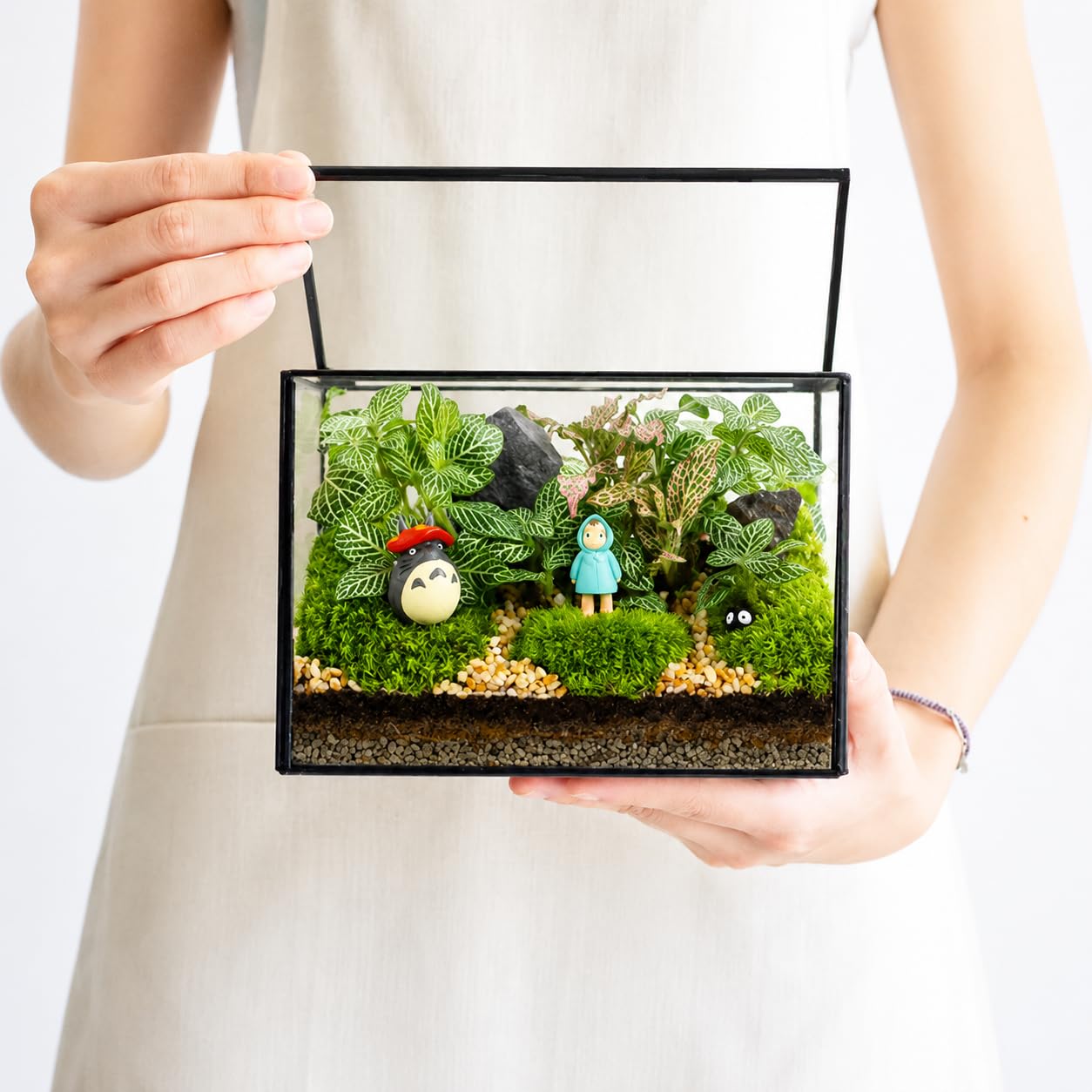

How To Choose The Best Glass Plant Terrarium
Finding the right glass terrarium means balancing the look you want with how the glass handles moisture and daily care. Here are the three things to focus on before you click buy.
Closed vs. Open Design
A closed terrarium (with a lid or cork) creates its own mini water cycle—great for ferns and mosses that love humidity, but a death sentence for succulents that prefer dry air. An open bowl or geometric planter lets soil dry out faster and gives you easier access for pruning, making it better for cacti and air plants. Pick the style based on the plant you want to keep alive, not just the one that looks prettiest on the shelf.
Glass Thickness and Seams
Thicker glass panels—anything around 3mm or more—resist cracking when you move them or when the soil expands from watering. Look at how the panels join: glued seams can leak over time, while a single-piece blown glass bowl has no weak points at all. If the listing says “sodium calcium glass” or “reinforced glass,” that signals better durability than basic soda-lime glass.
Size and Access
A terrarium that is 6 inches wide sounds big enough, but once you add a drainage layer of pebbles, a layer of charcoal, and soil, the planting space shrinks fast. Also check the opening: a narrow neck makes it hard to arrange plants or clean the glass later. For your first terrarium, look for one with a wide opening or a removable lid so your hands (and tools) can actually get inside.
Quick Comparison
| Model | Best For | Design Style | Volume | Weight | Amazon |
|---|---|---|---|---|---|
| NCYP Opened Geometric Glass Terrarium★ Best Overall | Best Overall | Pentagon Bowl | 2.2 Liters | 9.28 oz | Amazon |
| Small Glass Terrarium with LidSealed Pick | Sealed Ecosystems | Rectangle Box | — | 1.5 lbs | Amazon |
| THYGIFTREE Propagation StationRetro Vibe | Hydroponic Cuttings | Bulb Vase + Stand | — | 1.4 lbs | Amazon |
| PYEF CRAFTS DIY Terrarium Kit | First-Time Builders | Closed Jar | 34 fl oz | — | Amazon |
| CYZglass Propagation Station | Desktop Color | Heart Vase + Stand | — | 0.44 kg | Amazon |
| D’Eco Glass House Terrarium (Gold) | Wedding Decor | House Shape | 10x6x8″ | 1.86 kg | Amazon |
| D’Eco Large Glass Terrarium (Black) | Tall Displays | Tall Geometric | 6x5x11″ | 3.1 lbs | Amazon |
| Yimorence Large Greenhouse Terrarium | Humidity Lovers | House Shape | 8.7×5.9×10.6″ | 4.4 lbs | Amazon |
| YIMORENCE V Large Glass Terrarium | Cat-Proof Plant Homes | House Shape | 9.8×7.9×5.9″ | 1.42 kg | Amazon |
In‑Depth Reviews
1. NCYP Opened Geometric Glass Terrarium
Our pick — over 4.5★ from 900+ verified ratings; the strongest balance of quality and price.
Clear glass that weighs just 9.28 ounces (263 grams) yet feels solid in hand.
This pentagon-shaped bowl is the crowd favorite because it lets succulents breathe. Its open top is ideal for plants that hate soggy roots, giving you a 2.2-liter (about 74 fluid ounces) tank volume. Buyers report that it fits two cacti comfortably; three would overcrowd, they say. The glass is sodium calcium glass (a standard clear glass), and at 6.69 inches across each face, it sits neatly on a windowsill without dominating the space. The geometric facets catch light in a way a plain cylinder never could.
This option weighs 9.28 ounces (263 grams), while some other options weigh 1.5 pounds (680 grams), so moving it for cleaning is easy. The open top means no lid, but also zero humidity retention—perfect for dry-loving plants. It is sharper on style than the Small Glass Terrarium with Lid below, although it lacks that model’s 3mm thick panels and removable lid for a sealed environment.
One reviewer noted it fits “2 cacti comfortably; 3 would overcrowd,” so plan your planting accordingly.
Best open display: If you want a modern, lightweight bowl that lets succulents breathe and looks like a piece of art, this is the one.
Reach for this if: you want an open, photogenic home for succulents or air plants that is easy to move and clean.
Think twice if: you need a closed terrarium for humidity-loving plants like ferns or moss.
2. Small Glass Terrarium with Lid, Rectangle Geometric Planter Box
A rectangle box with 3mm thick glass panels that owners call “sturdy.”
This 6.7 x 3.9 x 4.7 inch terrarium stands out for its solid build. The 3mm thick clear glass panels and black geometric frame give it a weight of 1.5 pounds (680 grams), which is noticeably heavier than the NCYP bowl above. That extra heft means it stays put when you move it. The removable glass lid lets you create a humid microclimate for moss and ferns, or you can leave it off for succulents. Owners mention “no leakage after two waterings in months,” a strong sign for a container that is explicitly not watertight.
The rectangular shape works as a versatile display box for soil, sand, gravel, and moss. But the size is small—several owners wish it came larger. Weighs 1.5 pounds (680 grams); the THYGIFTREE propagation station weighs 1.4 pounds (635 grams)., making it a better tabletop option for tight desks.
Sturdy and sealed: The thick glass and lid make this a reliable choice for a closed terrarium, as long as you temper expectations on size.
Perfect for: building a closed moss or fern terrarium on a desk where durability matters.
Better choices exist if: you need a larger display or plan to use it with standing water—it needs silicone sealant for that.
3. THYGIFTREE Plant Propagation Stations with Wooden Stand
A desktop station with bulb vases that holds cuttings perfectly for root watching.
This takes a different approach—instead of a single terrarium, you get a wooden stand holding bulb-shaped glass vases designed for hydroponic propagation (growing plants in water, not soil). The 15.3-inch long stand with an arched metal frame is stable and easy to move. The C-shaped mouth of each vase makes it simple to swap water and check root growth. Buyers love that you can watch roots develop clearly through the glass. The main trade-off, as some customers note, is that the glass bulbs are thin and slippery, breaking easily during handling or cleaning, and no replacement bulbs are available.
Weighs 1.4 pounds (635 grams); the Small Glass Terrarium with Lid weighs 1.5 pounds (680 grams). The solid wood and metal frame ensure stability, though the wood does not appear waterproof, so be careful when changing water.
Great for propagation: If you love watching roots grow and want a stylish desktop station, this delivers—just handle the bulbs with care.
Best for: plant enthusiasts who propagate cuttings and want a decorative display that makes root growth visible.
Consider the downside: the thin glass bulbs are fragile and can’t be replaced individually, so handle them gently.
4. PYEF CRAFTS DIY Terrarium Kit
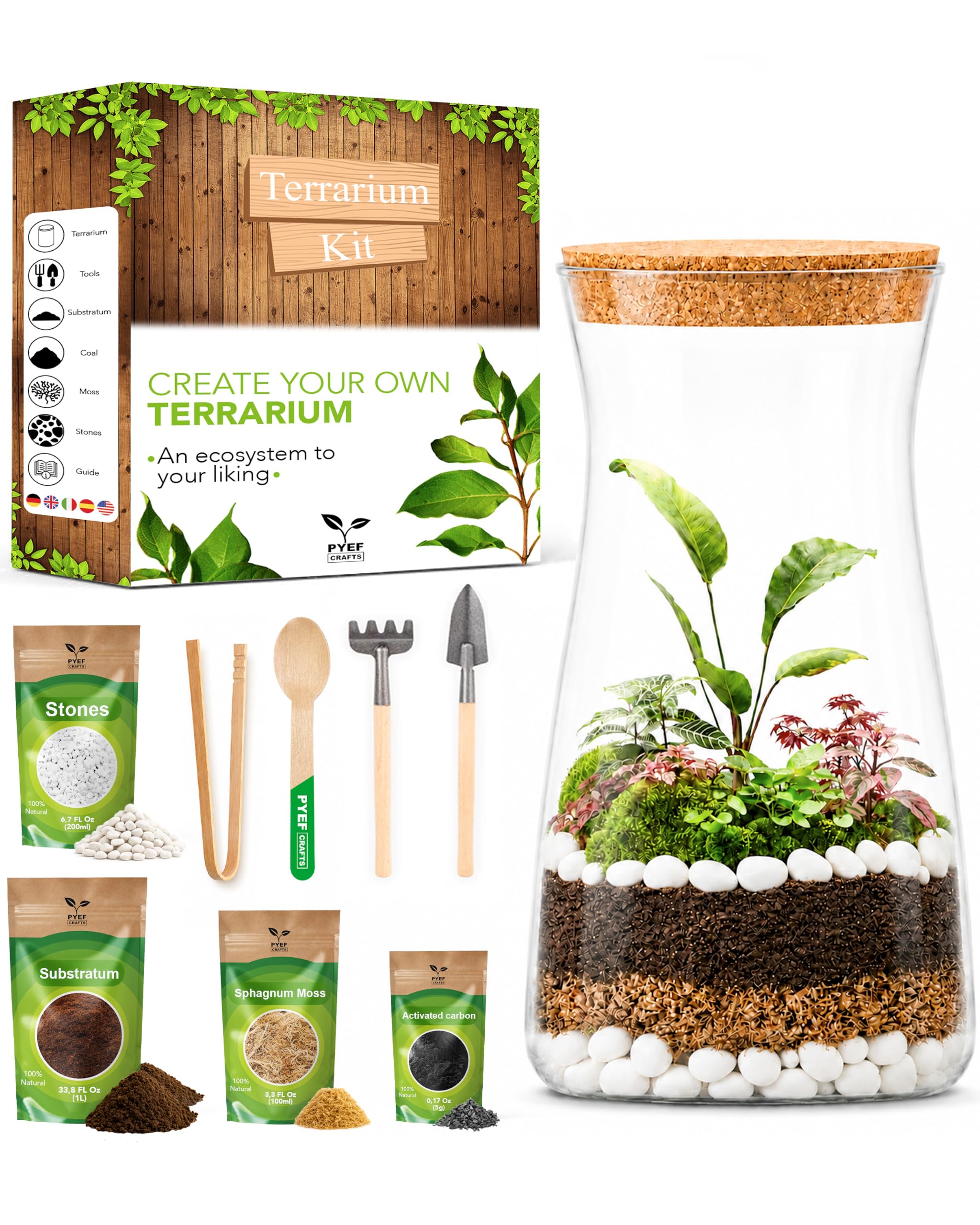
Everything but the plant in one box—no extra shopping needed.
This is the easiest way to get into terrariums. The 34 fl oz (1 liter) glass jar with a cork lid creates a self-sustaining closed ecosystem once sealed, with the water cycle handling itself through condensation and evaporation. The kit includes coconut soil, decorative stones, sphagnum moss, activated charcoal, bamboo tweezers, and a bamboo spoon—all pre-measured to fit the jar. It is designed for Fittonia, mini fern, Tillandsia (air plants), or moss. Reviewers point out it is “easy to set up” and one owner noted it “saved my fern’s life,” praising the value.
At 4.33 inches (11 centimeters) in diameter and 8.26 inches (21 centimeters) tall, the jar is a good size for beginners but not huge—you are working inside a narrow mouth. The bottle neck means you need tweezers (included) to arrange plants, which some find fiddly. It is a sealed system, so skip it if you want an open bowl for succulents.
All-in-one starter: Perfect for beginners—just add a plant and follow the simple instructions for a self-watering ecosystem.
Ideal for: first-time terrarium builders who want everything in one package without hunting for individual materials.
Not for: succulents or cacti that need dry conditions, or anyone who wants a wide-open display.
5. CYZglass Plant Terrarium Propagation Stations with Wooden Stand
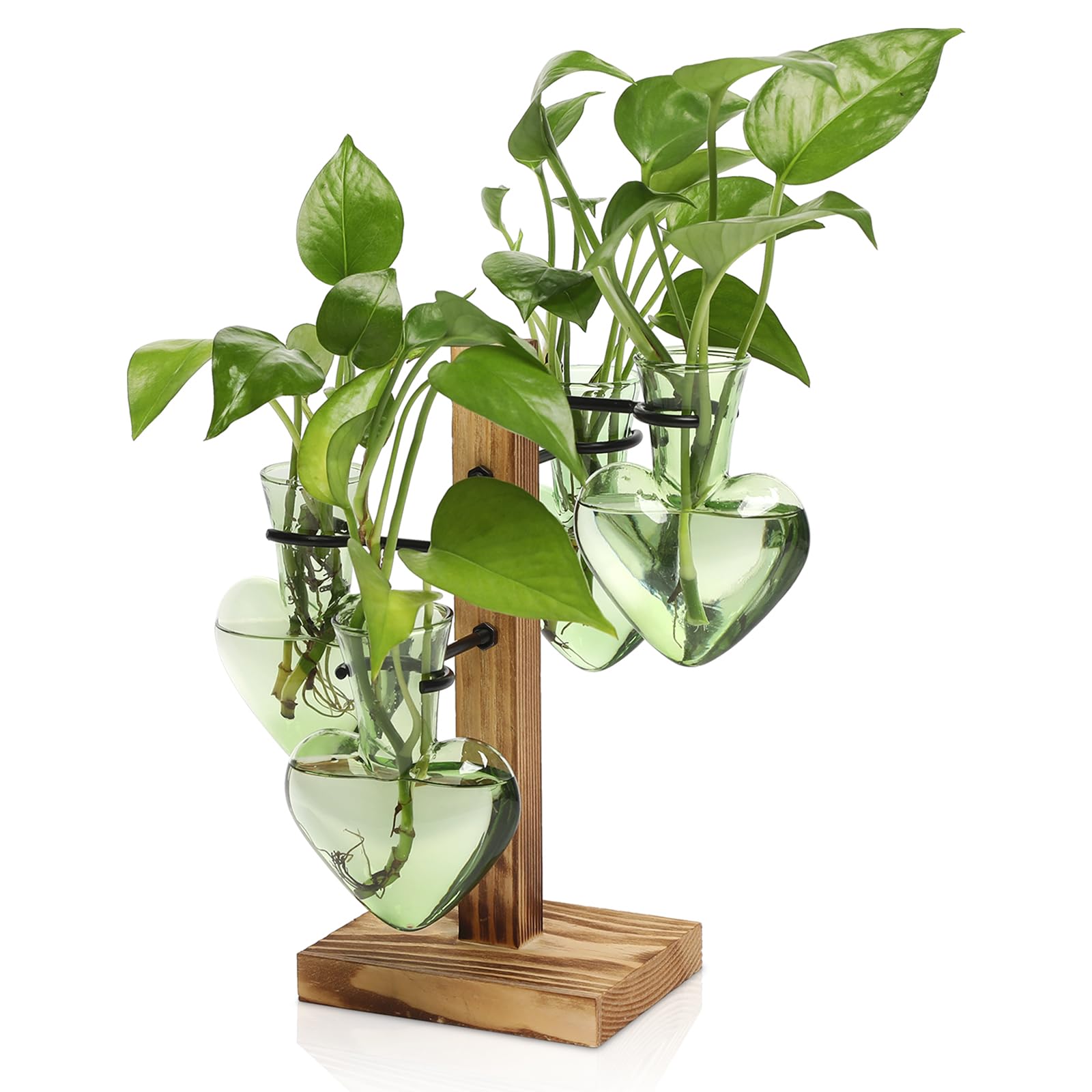
Colored glass heart vases on a T-shaped wooden stand that add personality to a desk.
This propagation station sets itself apart with colored glass—specifically high borosilicate glass (a heat-resistant type that handles thermal shock better than standard glass) that is handcrafted through high-temperature firing, giving it clear, bright colors that resist fading. The set comes with four heart-shaped vases in C-shaped hangers on a T-shaped wooden stand, making it a cheerful desk decoration. Buyers call it “very cute and easy to assemble,” and the appearance is the most-praised feature (56 positive mentions). The colored glass adds a pop of personality that clear vases lack.
Assembly is straightforward, but the C-shaped iron hangers need the weight of the water-filled vases to stay horizontal—shoppers say that not overtightening the screws is key. At 0.44 kg (about 0.97 lbs / 440 grams), it is lighter than the THYGIFTREE station, mainly because the stand is less bulky. Glass is fragile, and despite extra protective packaging, some owners received broken units.
Bright desk decor: The colored borosilicate glass vases are beautiful and durable, making this a lovely gift for plant lovers.
Choose this for: adding color to a desk or gifting to someone who loves gardening and pretty things.
Keep in mind: glass can break in transit, and the hangers need the weight of water to sit correctly.
6. D’Eco Glass House Plant Terrarium (Gold)

A house-shaped terrarium with gold accents that doubles as a wedding letterbox.
This 10 x 6 x 8 inch (25 x 15 x 20 cm) glass house is a statement piece. The gold accents and hinged roof opening add elegance, and it is large enough to hold standard wedding cards—many buyers use it exactly that way. The roof gives you access for watering and misting, and the open design works well for air plants and succulents that prefer drier conditions. The appearance gets the highest praise (69 positive mentions), and it ships fully assembled.
However, it is not watertight. Several owners note that the base leaks, requiring fish tank silicone sealant if you want to plant directly in it. It is best used with potted plants or as a decorative letter box. At 1.86 kg (about 4.1 lbs), weighs 1.86 kg (about 4.1 lbs); the Clear Glass Terrarium weighs 1.5 pounds (680 grams) and requires careful handling.
Stunning but not sealed: A beautiful display piece that shines as a card box or air plant holder, but don’t expect it to hold water.
Best for: weddings, events, or as a striking decorative centerpiece where you can display potted plants or cards.
Think twice if: you need a watertight terrarium for a planted ecosystem with soil and watering.
7. D’Eco Large Glass Plant Terrarium (Black)

An 11-inch (28 cm) tall geometric terrarium with black brass accents for vertical plants.
This tall 6 x 5 x 11 inch (15 x 13 x 28 cm) house-shaped terrarium is perfect for plants that grow upward—like mini orchids or a single Venus flytrap. The hinged roof props open for air flow, and the black brass accents give it a sleek, modern look. Buyers report it is “beautiful” and “gets compliments,” but they also consistently flag two issues: it leaks significantly (it is not sealed), and it is fragile. One owner noted that the lid doesn’t stay up on its own and there is a risk of shattering.
At 3.1 pounds (1.4 kg), it is the heaviest of the mid-tier options, giving it a substantial feel on the table. But that weight comes with a trade-off: multiple owners mention shattered units or broken bottom panes. It works best for potted plants placed inside, rather than direct soil planting.
Tall and elegant, but delicate: A great vertical display for orchids or air plants, but treat it gently and expect leakage.
Choose this for: a tall, eye-catching home for a single mini orchid or air plant where you don’t need a watertight seal.
Be prepared for: fragility and the need for a tray underneath if you add any moisture.
8. Yimorence Large Tall Plant Greenhouse Terrarium Glass with Lid

Reinforced glass house that keeps ferns humid in dry climates.
This 8.7 x 5.9 x 10.6 inch (22 x 15 x 27 cm) terrarium is built from reinforced glass, making it super sturdy at 4.4 pounds (2 kg)—the heaviest on this list. The top lift-off lid seals well, and a kickstand holds the door open for air flow. One owner in a dry Colorado climate reported it kept a fern alive by maintaining humidity for roughly 24 hours after each spritzing. The bottom part is not waterproof by design, allowing excess water to drain to avoid root rot. It arrives fully assembled, which is a nice bonus.
The main downsides are size and leakage. Many customers note it is smaller than expected (“user didn’t measure,” as one put it), and the bottom is not watertight—multiple reviewers point out leakage. The hinges may also unsolder over time with heavy use. It is best for plants that need humidity but not standing water.
Great for humidity lovers: The reinforced glass and good seal make this a strong choice for ferns and mosses, as long as you don’t overwater.
Best used with: potted plants that benefit from high humidity, like ferns or carnivorous plants, in a dry environment.
Watch out for: the smaller-than-expected planting space and the non-waterproof base that requires a tray.
9. YIMORENCE V Large Glass Terrarium House Planter

A swing-lid glass house that survived moves and cat attacks.
This 9.8 x 7.9 x 5.9 inch (25 x 20 x 15 cm) house-shaped terrarium comes with a swing lid and a kickstand to prop it open. One owner living in extreme temperatures who also has two cats that chew on plants called it “the perfect solution” and noted it survived multiple moves and looked pretty sturdy. The reinforced glass panels are heavy and none came loose. The appearance is the most-praised aspect (45 positive mentions), and the quality follows closely (29 mentions).
However, shoppers say that it holds moisture in even with the door open—one person almost killed their succulents. It is also not very large inside; the small opening makes it hard for people with larger hands to arrange plants. The construction has some rough spot welds, giving it a slightly unfinished look up close. Weighs 1.42 kg (about 3.13 lbs); the Yimorence weighs 4.4 lbs (2 kg).
A sturdy cat barrier: The heavy glass and good seal make it a strong defense against curious pets, but monitor moisture levels.
Great for: plant owners with pets or harsh climates who need a protective enclosure that still looks good.
Not ideal for: succulents (too humid) or anyone who needs to frequently rearrange plants (small opening).
Understanding the Specs
Glass Type
Sodium calcium glass and high borosilicate glass are the two main types you will see. Sodium calcium glass (used in the NCYP bowl) is standard and affordable, offering good clarity. High borosilicate glass (used in the CYZglass station) can handle higher temperatures and resists thermal shock (sudden temperature changes) better, making it a stronger choice if you ever need to sterilize it. Reinforced glass (found in the Yimorence and YIMORENCE V models) typically means thicker panels or tempered construction for added shatter resistance.
Watertight vs. Not
Most geometric glass terrariums are NOT watertight by design—they have glued seams or gaps that let water escape. This is intentional to prevent root rot, but it means you need a tray underneath if you water directly. A few models, like the Small Glass Terrarium with Lid, are designed for “damp soil and light misting only.” If you absolutely need a sealed container for a submerged or very wet setup, look for one explicitly described as “watertight” or be prepared to apply silicone sealant yourself.
FAQ
Can I put succulents in a closed terrarium with a lid?
Does a glass terrarium need drainage holes?
How do I clean the inside of a narrow-neck glass terrarium?
Is a glass terrarium safe for a Venus flytrap?
What size terrarium do I need for a single air plant?
Why does my glass terrarium leak?
Can I use a glass terrarium for a pet snail or insect?
How often should I water a closed terrarium?
What is the difference between sodium calcium glass and high borosilicate glass?
Final Thoughts: The Verdict
For the majority of shoppers, the glass plant terrarium winner is the NCYP Opened Geometric Glass Terrarium because it combines a stylish pentagon shape, lightweight 9.28-ounce build, and a crowd-pleasing 4.8-star rating across thousands of owners—all at a price that sits comfortably in the middle of the pack. If you want a sealed ecosystem for ferns and moss, grab the Small Glass Terrarium with Lid for its 3mm thick panels and removable lid. And for anyone looking to propagate cuttings on a desk, the CYZglass Propagation Station with colored borosilicate glass vases is the one to reach for.
How We Picked
We do not accept paid placement. Every pick is matched to a real buyer and a real use-case; we do not hands-on test units.
Sources & Methodology
Specifications: manufacturer listings and product documentation. Review insights: verified customer reviews, as of July 2026. Pricing: not shown on this page (it changes often); check the current price via the retailer link.
As an Amazon Associate, Lawn Gear Lab earns from qualifying purchases. This does not affect which products we feature.