
Specs are compiled from manufacturer listings and verified buyer reviews and can change over time — please confirm the key details on the product page before buying.
A well-chosen raised bed transforms a sore back and weedy patch into easy harvesting. A poor choice rusts, wobbles, and warps within one wet season. The core decision: steel for longevity, cedar for aesthetics, or a quick-setup option for instant planting. Each bed excels in its niche; the key is matching trade-offs to your garden’s needs.
I’m Rikta — the founder and writer behind Lawn Gear Lab. This guide is built by comparing the manufacturers’ published specifications and the patterns across verified customer reviews, so you get each pick’s real strengths and trade-offs instead of marketing spin.
Whether you are starting your first vegetable patch or expanding an existing one, the right gardening raised beds for vegetables can make the difference between a weekend project and a season-long success. This guide breaks down nine proven options to help you choose wisely.
Our Picks at a Glance
How To Choose The Best Gardening Raised Beds For Vegetables
Selecting a raised bed seems straightforward until you face the array of choices. Material determines longevity. Height dictates bending effort. Bottom design governs drainage and root health. These three specs are your real decision points.
Material: Steel, Cedar, or Vinyl
Galvanized steel offers the best rust-resistance for the money, with many owners reporting years of service with zero corrosion. Cedar wood gives you natural rot resistance and a warm, classic look, but you need to be careful with the screws to avoid splitting. Vinyl is the maintenance-free option — it never rusts, rots, or needs painting, though it is less rigid than metal.
Height and Back Strain
A 12-inch tall bed reduces bending a little. A 30-inch improve bed with legs lets you garden standing upright, which owners with back problems consistently praise. If you have mobility concerns, look for a bed that brings the soil surface to thigh height.
Open Bottom vs. Solid Base
Open-bottom beds let roots reach deep into the native soil and drain naturally — they prevent waterlogging and are easier to set up on grass. Solid-bottom beds are better for patios or decks but require careful watering. Most metal beds have open bottoms. All wooden beds here have a solid floor or liner.
Quick Comparison
| Model | Best For | Material | Dimensions | Capacity | Amazon |
|---|---|---|---|---|---|
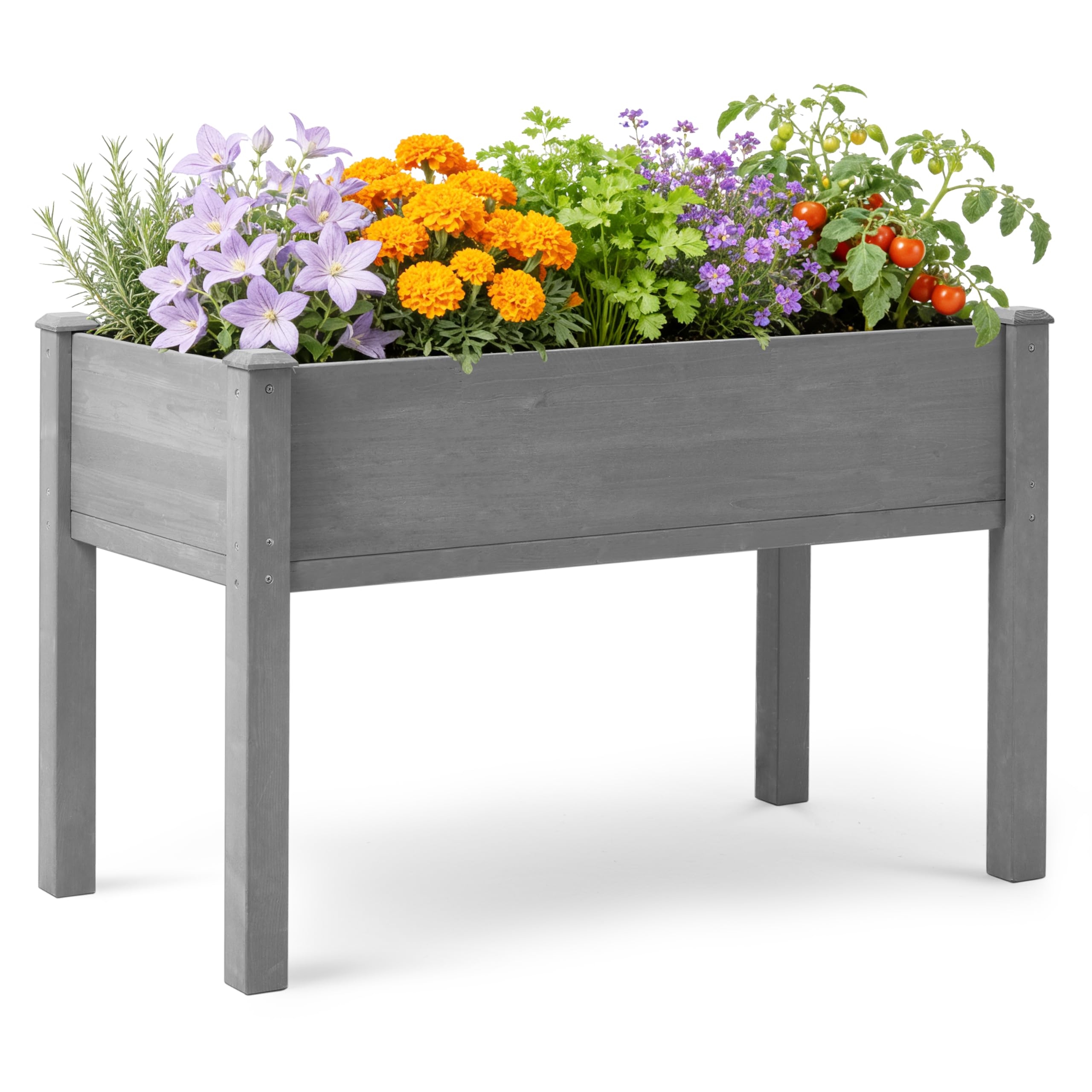
| SoliWood Raised Garden Bed★ Best Overall | improve, Back-Friendly Gardening | Cedar Wood | 48 x 24 x 30 inches | 6 cubic feet | Amazon |
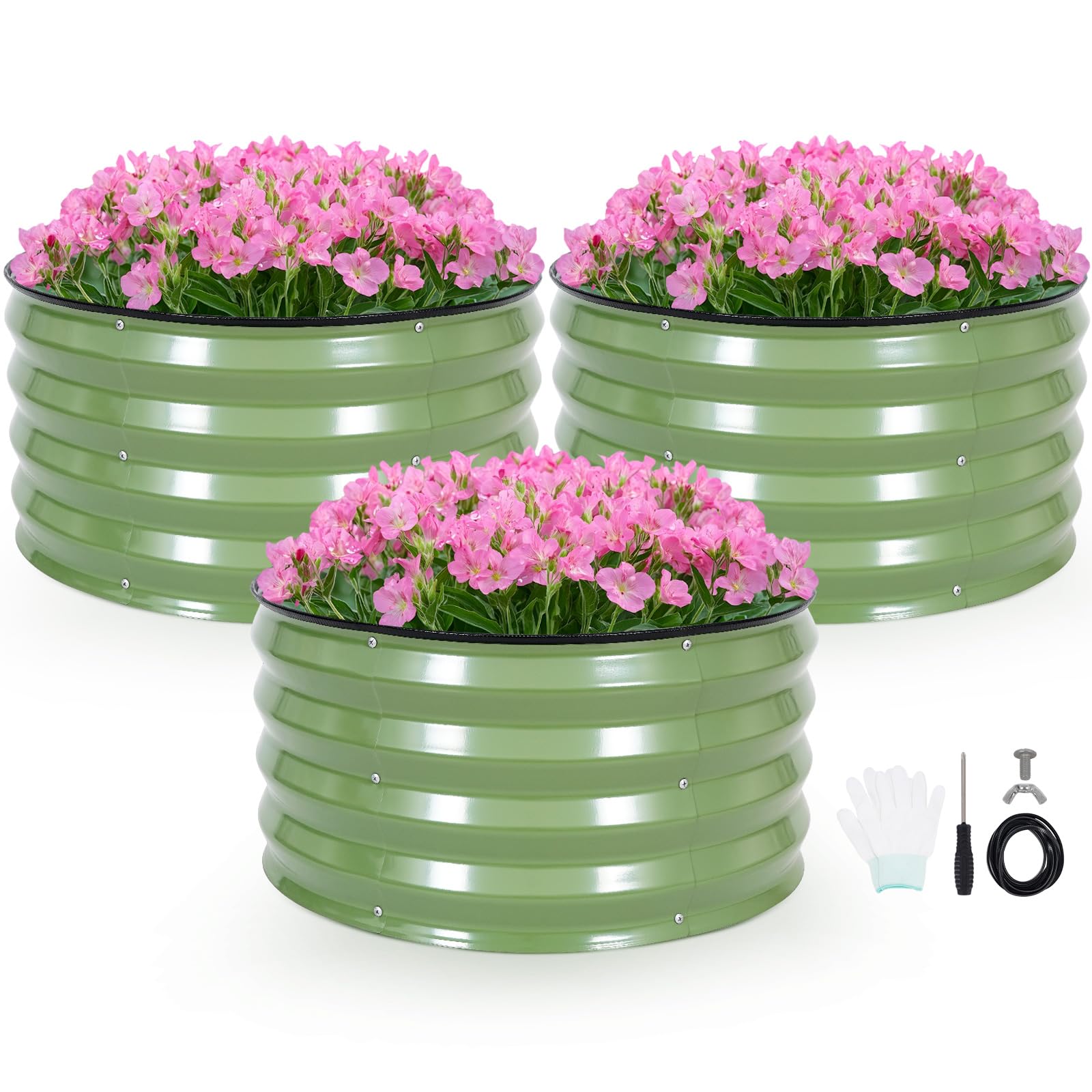
| INNO STAGE 3 Pcs Round BedsCompact Trio | Small Spaces, Modular Layout | Galvanized Steel | 24 x 24 x 12 inches | — | Amazon |
| Pattiumo Galvanized BedLarge-Volume Pro | Large, Deep-Rooted Vegetables | Metal | 96 x 24 x 18 inches | 24 cubic feet | Amazon |
| Keter Wood Look Bed | Fast, Tool-Free Setup | Resin | 48 x 48 x 12.6 inches | 117 gallons | Amazon |
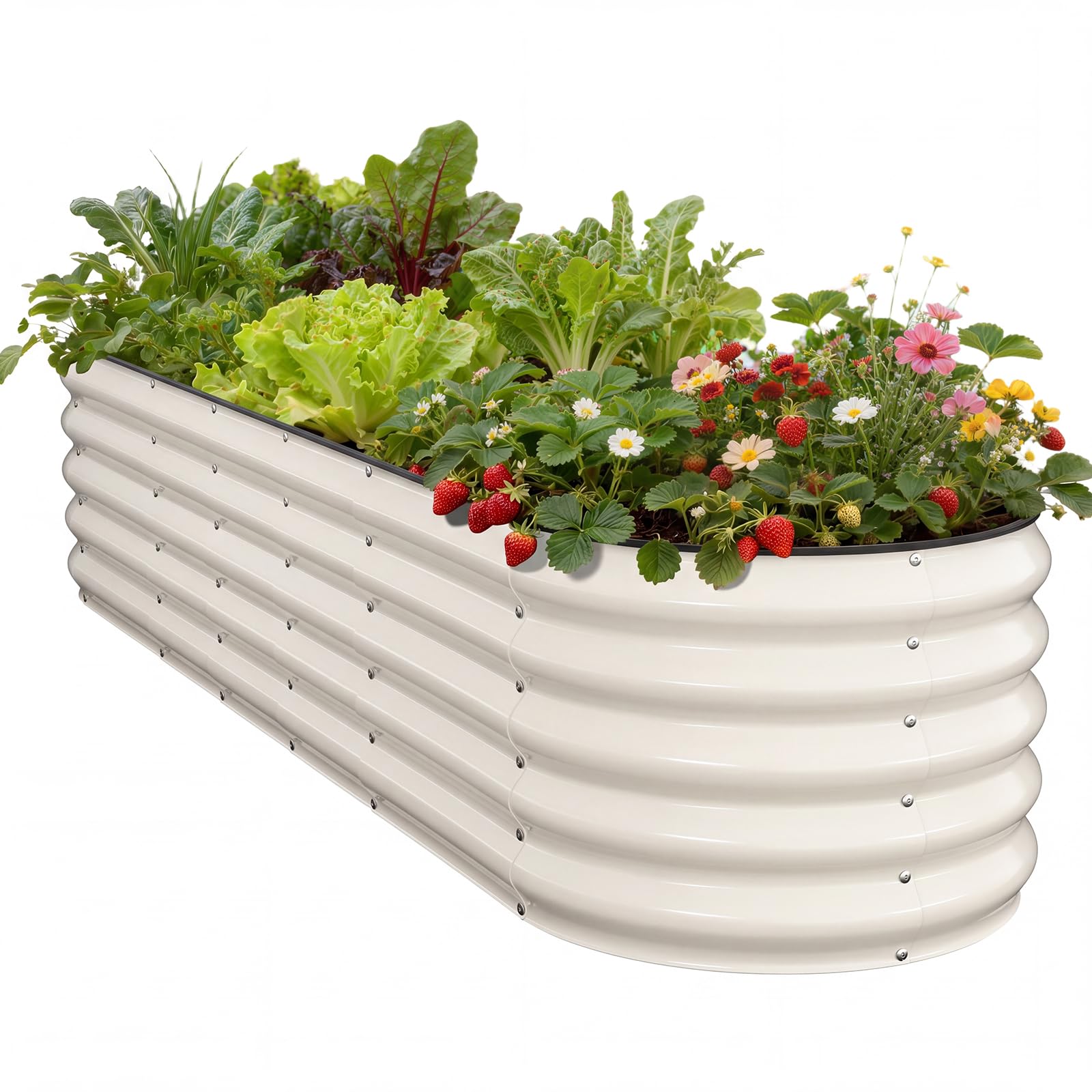
| Tegarbed Galvanized 2-Pack | Sturdy, Multi-Bed Gardens | Metal (1mm Thick) | 94.5 x 47.2 x 11.8 inches | — | Amazon |
| Patiobay improve Bed | Rust-Free improve Design | Metal (Zinc-Aluminum) | 48 x 24 x 32 inches | — | Amazon |
| AHEONLAR 2-Pack | Budget, Large Growing Area | Galvanized Steel | 96 x 48 x 12 inches | — | Amazon |
| PASAMIC Vinyl Bed | Maintenance-Free Gardening | Vinyl | 96 x 48 x 13.3 inches | — | Amazon |
| Land Guard Galvanized Bed | Deep Soil, Heavy Crops | Metal | 96 x 48 x 24 inches | 478 gallons | Amazon |
In‑Depth Reviews
1. SoliWood Raised Garden Bed with Legs
Our pick — over 4.5★ from 850+ verified ratings; the strongest balance of quality and price.
The cedar bed that lifts your garden to eye level and ends the stoop.
This planter is 48 by 24 by 30 inches, which means the top of the soil sits at a comfortable standing height — you will never crouch to weed or harvest again. One buyer, a 76-year-old, reported the assembly was simple enough to handle solo, which matches the clear consensus that putting it together is straightforward. Solid cedar construction gives it a rich, natural color that owners say looks better in person than in photos, and the water-based paint means no chemicals leach into your vegetables. The bed offers 6 cubic feet of growing space, which is far smaller than the 24 cubic feet of the Pattiumo below, but the trade-off is the back-saving elevation.
Assembly is the single most-praised feature here, with buyers noting the holes line up perfectly and the instructions are easy to follow. A few owners mention the wood can split slightly if you over-tighten the screws, so using a hand screwdriver with a gentle touch is the smart approach. The included liner adds a layer of protection between the soil and the cedar, which should help extend the bed’s life. The 38.9-pound weight means you can move it around your yard when empty without too much effort, but once filled with soil it stays put.
The catch is the depth — 6 cubic feet of soil volume means you are best suited for shallow-rooted vegetables like lettuce, peppers, and herbs, not tomatoes or deep-rooted crops. And while the cedar offers natural rot resistance, the wood may split if you are not careful with the drill.
Standing-Height Gardener: The raised height and easy assembly make this the best choice for anyone who wants to garden without back pain, backed by the highest owner satisfaction in the list.
Space Limitation: The 6-cubic-foot capacity is significantly smaller than the 24-cubic-foot Pattiumo bed, so plan your crop selection around shallow-rooted vegetables.
Reach for this if: you have back trouble, want a beautiful cedar look, and need an improve bed for easy access.
Look elsewhere if: you need massive soil volume for deep-rooted crops like tomatoes or potatoes.
2. INNO STAGE 3 Pcs Round Galvanized Raised Garden Bed
Three round steel beds that pack big planting into a tiny footprint.
Each of these beds measures 24 inches in diameter with a 12-inch height, so the circular shape boost growing area while keeping the reach easy from all sides. The galvanized steel construction resists rust and weather, and the olive green color is something owners consistently call out as beautiful — it looks good against any yard or patio. The assembly is remarkably simple: buyers report it takes just minutes, with one owner noting they have hit their bed repeatedly with a weed whacker with zero damage. That kind of accidental abuse is a real testimonial to the build quality. You get three planters, plus gloves and a screwdriver, in one package — so you can organize herbs, flowers, and vegetables in separate rings.
The open bottom allows roots to grow into the native soil, which is a huge advantage for plant health. The beds are wobble-free once assembled and the smooth edges protect your hands during setup. The round design also means you can place them anywhere — on grass, patio stones, or decking — without worrying about sharp corners. The 1-foot height is a solid compromise: enough to reduce bending without making the bed hard to water. These are a great price for three beds, and owners appreciate the value strongly.
On the downside, the 1-foot depth limits root vegetables like carrots or potatoes. They are best for shallow-rooted plants such as lettuce, herbs, strawberries, and peppers. At 24 inches across, each bed holds a modest volume, so plan for compact, high-density planting. Also, they are a premium option among smaller beds so you are paying for the trio convenience.
Modular Garden Starter: The three-piece set gives you immediate layout flexibility for under, making it a top pick for small-space vegetable gardens and beginners alike.
Shallow Root Zone: The 1-foot height means tomatoes and deep-rooted crops are off the table — stick to greens, herbs, and flowers.
Best for: anyone with limited space who wants an attractive, rust-resistant planter that sets up in minutes.
Think twice if: you need deep soil for root vegetables or want a single large bed rather than multiple small ones.
3. Pattiumo Galvanized Raised Garden Bed 8×2×1.5 FT
A massive 24-cubic-foot steel bed that survived an ice storm without a scratch.
This bed is the volume king in the lineup — 8 feet long, 2 feet wide, and 1.5 feet deep, with a capacity of 24 cubic feet. That is 24 cubic feet, compared to the SoliWood’s 6 cubic feet. The heavy-duty galvanized steel is what owners call out as genuinely sturdy, with one owner reporting that it “survived ice storm with no scratches” after two years. The open bottom design means water drains naturally and plant roots can reach deep into the earth below, which is ideal for tomatoes, peppers, squash, and any crop that needs room to spread. Assembly is the top-mentioned positive point, and while it takes about an hour, the included protective edging covers sharp edges during setup. The height sits at about 1.5 feet — enough to reduce bending significantly without needing legs.
Buyers love the value here, repeatedly noting it is the lowest-cost option for a 4-foot round, 1-foot high bed in this gauge steel. The heavy gauge metal is described as “2-4x stronger than expected.” The brown and white color options look natural in a yard. The protective plastic film on the panels comes off easily once assembled. A typical owner says three bags of 3-cubic-foot soil fill it exactly. The walls are sturdy enough to hold the soil without bowing, and the height makes weeding far easier than a ground-level patch. One owner noted the white inside and almond outside finish looks “expensive.”
The durability is rated as mixed by some — while most owners say it lasts, a few report the paint can scratch if you bump it hard. The key is not to over-torque the bolts, as owners warn that over-tightening can cause breakage. The included vinyl top edge liner is a plus but you may want to add a weed barrier underneath as owners recommend.
Serious Crop Producer: The 24-cubic-foot soil capacity is the largest here, making this the go-to for anyone planting deep-rooted vegetables or wanting a high-yield garden.
Paint Scratches: A few owners mention the finish can scratch with bumps — treat the galvanized surface with care if you want to keep it pristine.
Reach for this if: you want the biggest possible growing area for the money and plan to grow deep-rooted vegetables like tomatoes and squash.
Skip if: you need an improve bed to avoid bending — the 1.5-foot height helps but is not back-saving like a 30-inch improve bed.
4. Keter 48″ X 48″ Wood Look Raised Garden Bed

A resin bed that looks like wood, assembles in minutes, and never needs paint.
Keter uses its Evotech advanced composite material to make this bed — a resin that has a natural wood grain texture but weighs only 14.3 pounds and will never rot, rust, or fade. The 48-by-48-by-12.6-inch square design gives you 117 gallons of growing space in a compact footprint. The standout feature is the tool-free assembly: four screws per corner and the whole thing goes together in about five to ten minutes, according to owners. One buyer even repurposed it as a play pit with rubber mulch, showing how versatile the durable material is. It holds five tomato plants comfortably. The wood-look finish gives you the aesthetic of a cedar planter without the maintenance — no sealing, no staining, no splinters.
The BPA-free material means you can grow vegetables and herbs with confidence. Owners consistently praise the value, the appearance, and the ease of assembly. The 12.6-inch height is good for shallow-rooted crops. The square shape means every plant is within arm’s reach. The 2-year limited manufacturer warranty adds confidence.
The durability and sturdiness are rated as mixed by owners. Some say it holds up well through a full season of sun and rain. Others report the corners feel wobbly before you add soil — the weight of the dirt stabilizes it. A few mention the resin can flex more than metal or wood. It is not the choice for heavy clay soil or rough handling. And the 12.6-inch depth limits deep-rooted vegetables.
What wins people over
- Assembles without tools in about 5-10 minutes, as verified by multiple owners
- BPA-free resin material looks like wood but never needs painting or sealing
- Weighs just 14.3 pounds so you can move it easily when empty
- 117-gallon capacity fits a variety of vegetables, herbs, and flowers
The honest trade-offs
- Sturdiness is mixed — corners can feel wobbly before you add soil; not as rigid as steel
- 12.6-inch depth limits root vegetables; best for shallow crops like greens and peppers
Reach for this if: you want a beautiful, lightweight planter that sets up in under 10 minutes with no tools and zero maintenance.
Look elsewhere if: you need a rock-solid structure for heavy soil or want deep beds for large root vegetables.
5. Tegarbed Galvanized Raised Garden Bed 8x4x1ft (2 Pack)

Two heavy-gauge oval beds built with 1mm steel that refuses to bow under soil weight.
Most budget metal beds use 0.3mm steel that bends in a season. This one uses steel with an average thickness of 1mm, compared to the typical 0.3mm. The oval shape measures about 8 feet by 4 feet, giving you a classic vegetable garden footprint, and the two-pack means you can set up a substantial growing area immediately. Customers note the beds hold up to 200 quarts of soil without bulging. The open-bottom design provides natural drainage and lets roots access native soil nutrients. The 1-foot depth is ideal for a wide range of vegetables, including peppers, beans, carrots, and lettuce. The assembly is straightforward with clear instructions, though you need to be patient with the rounded corners during setup.
The galvanized finish resists rust well, and the smooth edge design reduces the risk of cuts during assembly. Owners describe the quality as excellent for the price, with many saying they quadrupled their vegetable harvest after switching to these beds. The narrow 4-foot width lets you reach every plant from either side without stepping into the bed. The bottomless design means you can place them directly on grass, dirt, or gravel without needing a base.
The assembly process has a quirk: the oval shape can make the seams flare a bit at the rounded corners, which some owners find awkward. The beds are lightweight when empty, so a strong wind could shift them before you add soil. And the 1-foot height is great for most crops but not enough for deep-rooted vegetables like potatoes or large tomatoes without companion planting.
Thick Steel Champ: The 1mm-thick galvanized steel is a standout in a market full of flimsy beds — this one will not warp or bow with heavy soil.
Assembly Quirk: The oval shape can cause slight flaring at seams during setup; patience and hand-tightening before final torque solves this.
Reach for this if: you want a pair of genuinely sturdy, long-lasting metal beds at a fair price for a full vegetable garden.
Skip if: you need an improve bed to avoid bending, or want a single bed rather than a two-pack.
6. Patiobay Raised Garden Bed with Legs
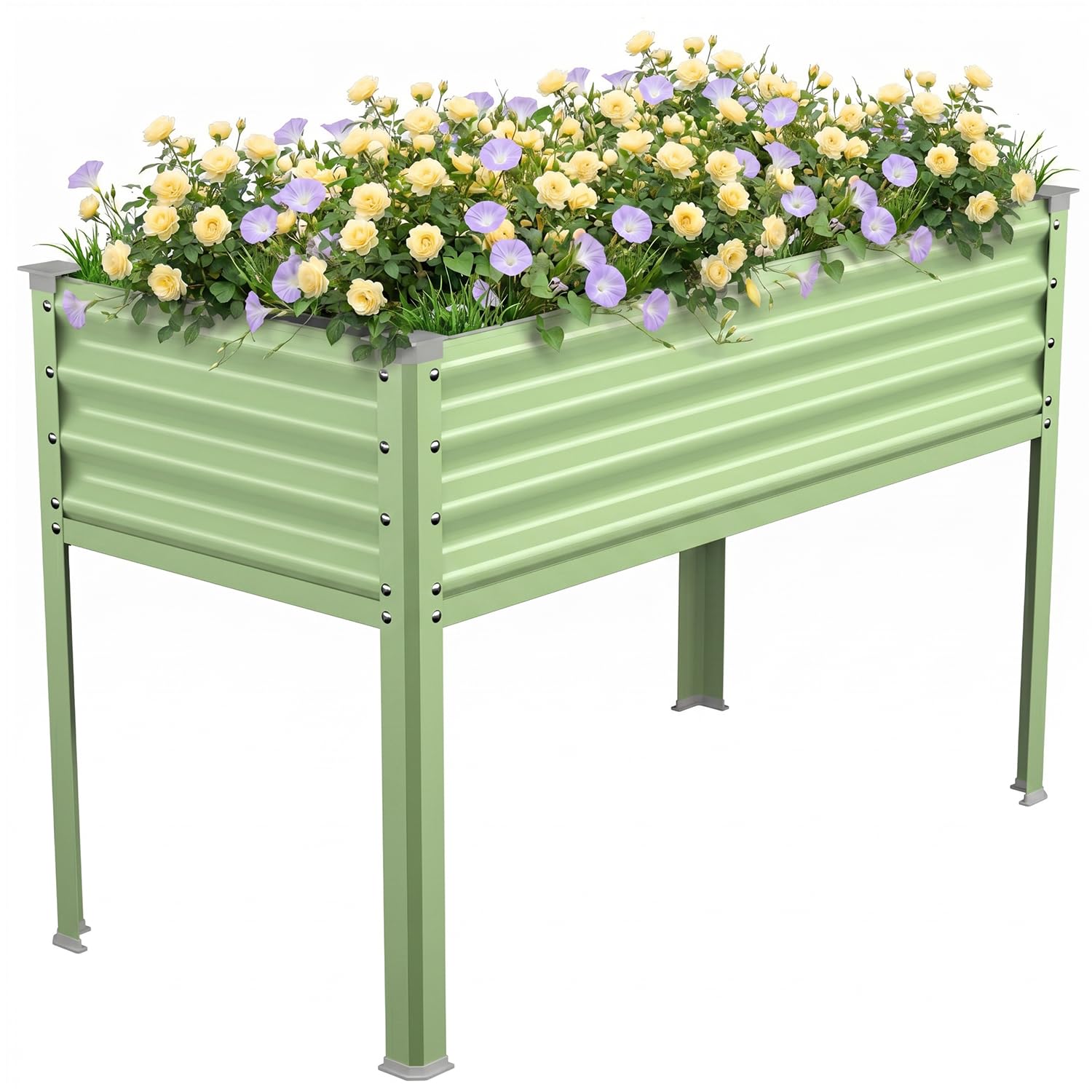
An improve metal bed so corrosion-proof it promises to never rust or rot.
This bed measures 48 by 24 by 32 inches and is made from 1.2mm thick solid steel plate with a zinc-aluminum coating — a step beyond standard galvanizing for anti-rust performance. The improve legs bring the soil surface to 32 inches off the ground, which is even taller than the SoliWood bed at 30 inches. That means you can garden standing fully upright. The design comes with corner cushions that prevent the sharp edges from poking you or scratching your patio floor. The four drainage slits at the corners help excess water escape, keeping the soil fresh. The included tools — hand wrench, screwdriver, and gloves — mean you have everything you need in the box.
Owners consistently praise the sturdiness and beautiful appearance. One described it as “better than advertised.” The assembly is straightforward and the small-box delivery is a nice surprise. The black rope top guard adds a finished look and protects against rough edges. The protective edge strip is a thoughtful inclusion. The green color with a light woodgrain finish is reported to match tan fences beautifully. The price is competitive for an improve metal bed of this thickness.
The assembly takes a little time — expect 30 to 45 minutes — but the tools are provided. The 48-by-24-inch surface area is generous but not as huge as the 8-foot long beds. If you are planting sprawling crops like squash or large tomatoes, the width may feel tight. Also, the improve design means the bed is lightweight when empty, so you may want to place it in its final spot before filling.
What makes it stand out
- Zinc-aluminum coating and 1.2mm steel thickness combine for exceptional rust and corrosion resistance
- 32-inch standing height is among the tallest improve beds, a genuine back-saver
- Includes all necessary tools plus gloves and corner cushions for a complete setup experience
The honest trade-offs
- 48-inch width can feel tight for sprawling vegetables; better suited for upright plants
- Assembly takes moderate time — not a 5-minute snap-together job
Reach for this if: you want the best rust protection available in an improve bed, plus genuine back-saving height.
Look elsewhere if: you need a massive growing surface area or want a budget-friendly option without improve legs.
7. AHEONLAR 2pack 8×4×1ft Raised Garden Bed

Two large metal beds that assemble in five minutes and resist rust for years.
Each bed measures 8 feet by 4 feet — the classic vegetable garden footprint — with a 1-foot depth. The galvanized steel uses double-layer anti-corrosion galvanizing, which is thicker than the single-layer on many cheap beds. Owners confirm these hold up through intense heat, heavy rain, and snowy winters without rust. The open-ended base means water drains naturally and roots can reach deep into the ground. Assembly is the top praise: most owners have the bed together in around five minutes, and even building multiple sets takes under two hours for one person. The whole two-pack is lightweight enough to move around empty. The oval structure design adds rigidity to prevent the walls from bowing under soil weight.
The value proposition here is clear — you get two large growing beds that outperform cheaper rectangular options. The quality exceeds expectations for the price point. Owners who have had them for two summers report they are “still standing strong and completely rust-free.” The depth is enough for most vegetables, and the 8-foot length gives you plenty of space to plan rows or companion planting. The silver color blends naturally into most yards.
The sturdiness receives mixed reviews — while the oval structure is rigid, the 0.8mm steel is not as thick as the 1mm of the Tegarbed, and some owners note the walls can flex if you overfill with heavy wet soil. The edges are sharp during assembly, so gloves are essential. A few owners wish the color blended better with their landscaping, though most are fine with the silver finish. The 1-foot depth again limits deep-rooted crops.
Blazing-Fast Setup: At roughly five minutes per assembly and a two-pack price point, this is the best option for covering large ground fast on a budget.
Wall Flex: The 0.8mm steel can flex with heavy, wet soil — the oval design helps but it is not as rigid as thicker alternatives.
Reach for this if: you need maximum growing area at minimum cost and assembly time.
Look elsewhere if: you need thicker steel walls for extremely heavy soil, or want an improve bed.
8. PASAMIC 8x4x1ft Vinyl Raised Garden Bed
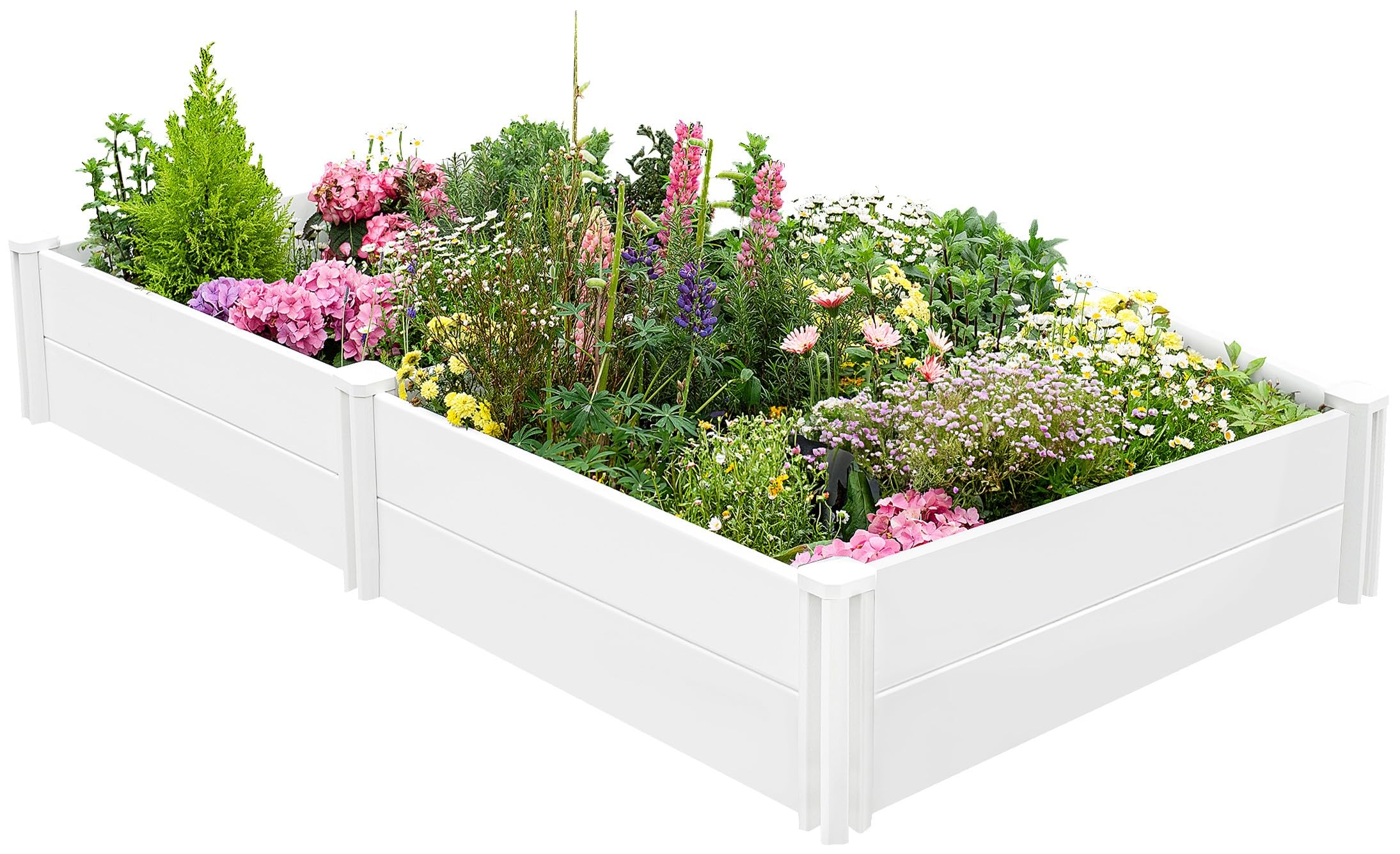
A white vinyl bed that resists Florida sun and never needs paint, seal, or stain.
This is the low-maintenance champion. Made from premium vinyl, it resists rust, rot, fading, and harsh weather without any painting or sealing. The 8-by-4-by-1-foot size provides generous planting space, and the interlocking assembly system requires zero tools — owners say it takes 15 to 20 minutes to put together. The open-bottom design allows natural drainage and root access to native soil, which prevents waterlogging. The smooth vinyl surface wipes clean easily, making seasonal maintenance simple. One owner in Florida confirms it holds up well through intense humid weather. The white finish gives a clean, polished look. Another owner stacked two units for extra height, showing the modular flexibility.
Buyers praise the durability, with one calling the plastic “thick, high-quality, and durable.” The fact that it is rust-proof means you never face the metal bed dilemma of corrosion. The tool-free assembly is a genuine time-saver. The vinyl material is lightweight at design, so you can move it around the yard easily when empty. The open bottom is particularly convenient — plants root well and excess water drains without effort. The product is perfect for growing vegetables, herbs, and flowers.
The vinyl is not as rigid as thick steel — a few owners note it flexes more than they expected. The 1-foot depth is again a limitation for deep-rooted vegetables. Some owners wish the bed was deeper, with one saying their older version was 4-5 inches deeper. And at a premium price point, it costs more than comparable metal beds, which is the trade-off for the maintenance-free material.
Why it wins
- Tool-free assembly in 15-20 minutes — the interlocking system is genuinely simple
- Vinyl never rusts, rots, fades, or needs maintenance; holds up in harsh Florida weather
- Thick, high-quality, durable material with smooth wipe-clean surface
- Open-bottom design promotes excellent drainage and natural root growth
The honest trade-offs
- 1-foot depth limits root vegetables; some owners wish it was 4-5 inches deeper
- Premium price compared to similar-sized metal beds, though you pay for the zero-maintenance vinyl
Reach for this if: you never want to paint, seal, or worry about rust again, and you live in a climate that is tough on metal or wood.
Look elsewhere if: you need deep soil for root vegetables or want the lowest possible price per cubic foot of growing space.
9. Land Guard Galvanized Raised Garden Bed 8x4x2ft

A 2-foot-deep metal bed that holds 478 gallons of soil for serious, deep-rooted crops.
Here is the bed for the gardener who wants to plant deep. At 8 feet by 4 feet by 2 feet deep, this Land Guard bed holds 478 gallons of soil — far more than any other bed here. The 2-foot depth is the critical spec: it means you can grow carrots, potatoes, tomatoes, and any root vegetable without restriction. The thickened galvanized metal includes reinforced corners and frame for structural integrity, and the environmentally friendly coating is designed not to pollute the soil. The open bottom provides excellent drainage while allowing roots to reach native soil for nutrients. Assembly takes about 15 minutes, according to the maker, though some owners note the number of screws makes it a longer process than advertised.
Owners consistently describe it as “heavy duty” and “well made,” noting that the four internal support braces prevent the walls from bulging when filled with soil. One owner calls it “huge” and plans to use it for potatoes and onions. The value is strong — reviewers point out it costs less than building a similar-sized bed from lumber. The classic silver finish looks clean and matches most yards. The 2-foot depth is a standout for gardeners who have been limited by shallower beds. The metal is thick enough to take repeated filling and re-soiling without damage.
The number of screws and assembly time is the main complaint — owners who expected a quick 15-minute setup report it takes longer, with multiple supports to attach. The support braces themselves are described by one experienced owner as “tedious, weak, and insufficient,” suggesting you may want to supplement them with sturdier braces. The sheer size means you need a huge amount of soil to fill it — budget accordingly. And at 8 feet long, it is not a small footprint, so measure your yard space carefully. The mixed assembly sentiment means this is not the instant-gratification option.
Root Vegetable Heaven: The 2-foot depth is the standout spec — no other bed here offers this much soil volume for deep-rooted crops like potatoes, carrots, and large tomatoes.
Assembly Effort: Plan for a longer build session with many screws and braces, not the quick 15-minute experience some expect.
Reach for this if: you grow deep-rooted vegetables and want the largest, deepest single-bed option available.
Skip if: you want a quick, tool-free setup or have a small yard that cannot accommodate an 8×4-foot footprint.
Understanding the Specs
Bed Depth (Height)
This is the single most important spec for what you can grow. A 1-foot (12-inch) deep bed works well for lettuce, herbs, peppers, strawberries, and flowers. A 1.5-foot (18-inch) deep bed opens up tomatoes, squash, and cucumbers. A 2-foot (24-inch) deep bed is what you need for carrots, potatoes, and large root vegetables. If you are not sure, deeper is almost always better — but you will need more soil to fill it.
Material: Steel vs. Cedar vs. Vinyl
Galvanized steel is the most common choice because it resists rust well and is relatively affordable. Thicker steel (1mm or above) is less likely to warp under soil pressure. Cedar wood looks beautiful and resists rot naturally, but you need to be careful with screws to avoid splitting. Vinyl is the new entry — it never rusts, rots, or fades, but it is less rigid than steel and costs more per bed. Your climate matters: steel in humid areas needs good galvanizing; cedar in dry areas lasts longer; vinyl handles both equally well.
Open Bottom vs. Solid Base
Open-bottom beds sit directly on the ground, allowing plant roots to extend into the native soil below. This helps with drainage and lets plants access deeper nutrients. Solid-bottom beds are better for patios, decks, or concrete surfaces, but you need to manage watering carefully to avoid waterlogging. Most metal beds have open bottoms. If you place an open-bottom bed on grass, the grass will eventually die under the soil, but it creates a weed barrier issue — many owners recommend putting down cardboard or a weed barrier first to prevent grass and weeds from growing up into the bed.
improve Beds with Legs
Beds with legs raise the soil surface to 30-32 inches off the ground, which is standing height for most adults. This eliminates bending entirely, which is a standout for anyone with back pain or mobility issues. The trade-offs are less total soil volume for the footprint (since the box is shallower) and a higher cost per cubic foot of soil. improve beds also tend to dry out faster since they are exposed on all sides, so you need to water more often in hot weather. They are excellent for herbs, lettuce, peppers, and flowers, but less suitable for deep-rooted crops.
FAQ
How deep should a raised bed be for vegetables?
Galvanized steel vs. cedar wood — which is better for raised beds?
Do raised garden beds need a bottom?
How many bags of soil do I need to fill a raised bed?
Will a raised bed cause my back to hurt less?
Can I place a raised garden bed on grass or concrete?
How long does a galvanized steel raised bed last?
What vegetables should I avoid in a shallow raised bed?
Is vinyl or resin a good material for a raised bed?
Should I put a weed barrier under my raised garden bed?
Final Thoughts: The Verdict
If you want one dependable pick, the gardening raised beds for vegetables winner is the SoliWood Raised Garden Bed with Legs because it combines a beautiful cedar wood finish with a 30-inch standing height that genuinely saves your back — all with the highest owner satisfaction and straightforward assembly. If you want the absolute easiest setup with zero tools and a natural wood look, grab the Keter Wood Look Raised Garden Bed. And for serious, deep-rooted vegetable production at an unbeatable volume, the Land Guard Galvanized Raised Garden Bed is the one to reach for.
How We Picked
We do not accept paid placement. Every pick is matched to a real buyer and a real use-case; we do not hands-on test units.
Sources & Methodology
Specifications: manufacturer listings and product documentation. Review insights: verified customer reviews, as of July 2026. Pricing: not shown on this page (it changes often); check the current price via the retailer link.
As an Amazon Associate, Lawn Gear Lab earns from qualifying purchases. This does not affect which products we feature.