
Specs are compiled from manufacturer listings and verified buyer reviews and can change over time — please confirm the key details on the product page before buying.
Staking out a spot for a gardening hoop house usually starts with big dreams and ends with a tangled mess of bent poles and ripped plastic after the first good storm. The real question is not whether a hoop house can extend your season — almost any of them can — but whether it can survive the season without constant patching, anchoring, and swearing. The difference between a temporary shelter and a long-term growing partner depends on the frame metal, the cover weight, and the number of ways you can manage airflow.
I’m Rikta — the founder and writer behind Lawn Gear Lab. This guide is built by comparing the manufacturers’ published specifications and the patterns across verified customer reviews, so you get each pick’s real strengths and trade-offs instead of marketing spin.
Whether you are hardening off seedlings or protecting mature tomatoes from frost, choosing the wrong structure wastes both money and patience. This breakdown of the best gardening hoop house models zeroes in on the exact details that separate a windy-season headache from a four-season asset.
Our Picks at a Glance

How To Choose The Best Gardening Hoop House
Every gardening hoop house on this list will protect your plants from a light frost. But the ones you actually enjoy using for more than one season share three core traits: a frame that does not fold under wind, a cover that does not disintegrate in the sun, and enough ventilation to keep your seedlings from cooking on a 70°F afternoon.
Understanding Cover GSM
GSM stands for grams per square meter, and it is the simplest number for predicting how long the fabric cover will last. A 100 GSM cover works fine for a single season of light use. A 150 GSM cover, like the Quictent model uses, resists tearing at stress points and diffuses sunlight better. Most budget models sit around 120 to 140 GSM — adequate for calm climates, but thin enough that a 140 GSM cover may tear if you over-tighten the straps.
Frame Material and Snow Load
Nearly every affordable hoop house uses a metal alloy frame, but the thickness differs. Standard tubing around 25 mm works for summer and mild falls. Heavier galvanized steel (like the 0.7 mm wall on the Quictent) handles snow accumulation and strong gusts. If you live where winter means real snow, you need either a reinforced metal frame or a plan to remove the cover each winter.
Ventilation and Access
A sealed house traps heat and humidity — exactly what you do not want on a sunny March morning. At least two ventilation windows are essential; six or more let you micro-manage temperature by opening only the low or high vents. Roll-up doors and mesh sidewalls also help you cross-ventilate without letting bugs in.
Quick Comparison
| Model | Best For | Cover Material | Frame Material | Vents | Amazon |
|---|---|---|---|---|---|
| EAGLE PEAK Walk-in★ Best Overall | Small yard versatility | Reinforced Polyethylene | Alloy Steel | 2 | Amazon |
| Ohuhu Pop UpFastest Setup | Fast, portable setup | Polyester / PE mesh | Fiberglass rods | 4 | Amazon |
| Phonjoroo 10x7x7Best Value Large | Large space, low cost | Polyethylene (140g) | Alloy Steel | 6 | Amazon |
| Outsunny 15x7x7 | Reinforced PE durability | 140 GSM PE with grid | Alloy Steel | 6 | Amazon |
| FDW Walk-in | Heavy plants & winter storage | Powder-coated steel | Alloy Steel | — | Amazon |
| Outsunny 13x10x6.5 | Large footprint, low height | 140 GSM PE with grid | 25 mm Galvanized Steel | 2 | Amazon |
| Sylviera 6×4 Polycarbonate | Year-round rigid structure | 4mm Polycarbonate | Aluminum | 2 | Amazon |
| Quictent 25x10x6.6 | Large-scale serious growing | 150 GSM PE reinforced | 0.7mm Galvanized Steel | 10 | Amazon |
| YITAHOME 12×6 Polycarbonate | Premium rigid long-term build | 4mm Polycarbonate | Aluminum Alloy | 2 | Amazon |
In‑Depth Reviews
1. EAGLE PEAK Walk in 3-Tier Greenhouse
Our pick — over 4★ from 800+ verified ratings; the strongest balance of quality and price.
The compact walk-in that fits a small yard but still lets you work standing up.
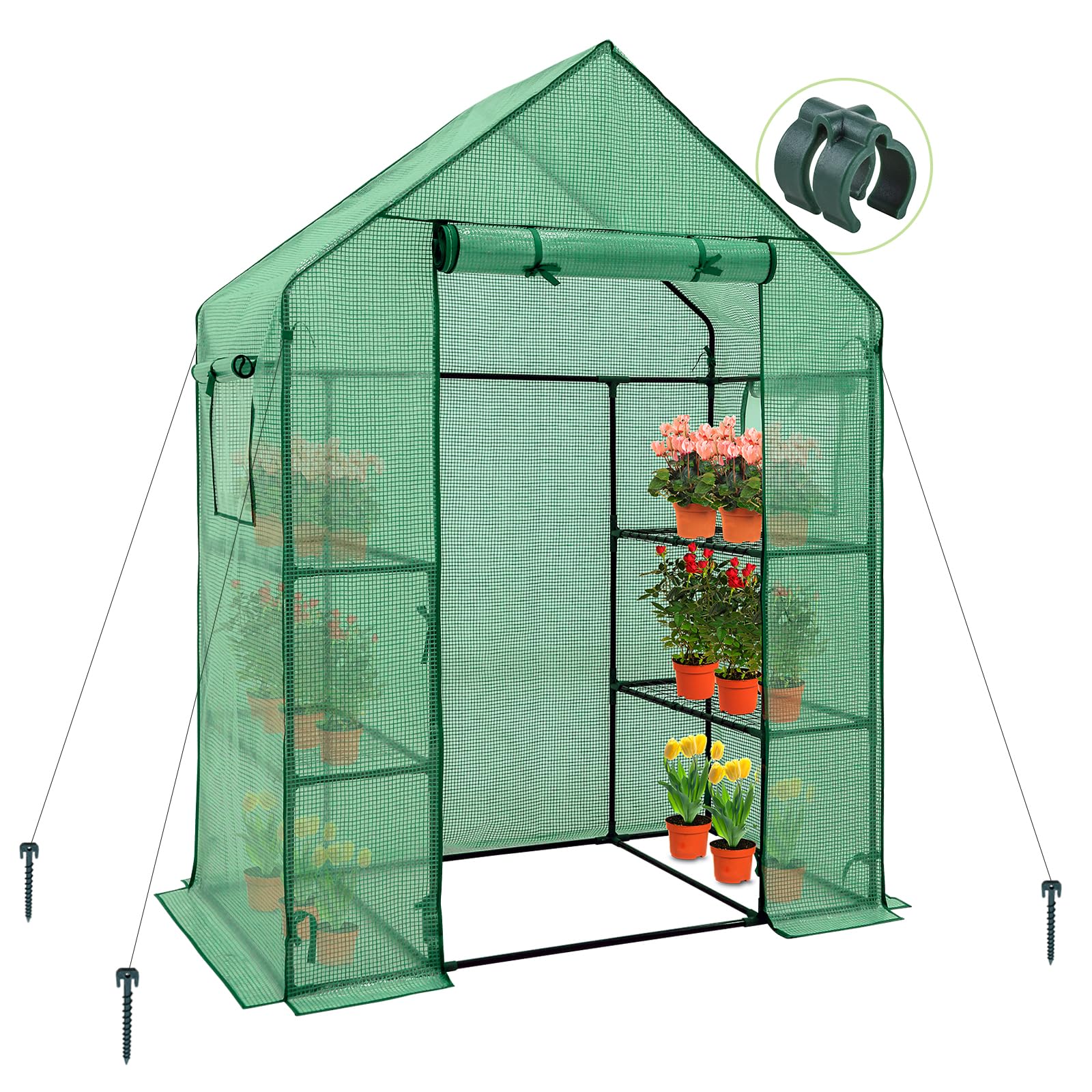
What wins most owners over here is the size — it is roomier than you expect at 61 by 28 by 79 inches, yet it squeezes into a narrow side-yard strip without dominating the space. The four included wire shelves (two per side) mean your seedlings, pots, and tools are organized from day one, and you can walk inside to water without crouching. The green reinforced PE cover blocks UV rays and handles light rain, and as regular owners note, this greenhouse has held up fine through South Florida’s downpours and wind.
The trade-off surfaces with wind: the included stakes and rope are too lightweight for an exposed site, and buyers who anchored it near a fence or with cinder blocks had no trouble, while one who left it empty on an open lawn watched it blow over. A few owners also mention that the cover can tear at the seams if you pull it too tight during a cold snap, though tape fixes it quickly. In terms of sheer value for the money, this is the most balanced starter greenhouse you can find — one owner was happy enough to order a second unit.
The biggest difference from the Ohuhu below is that the EAGLE PEAK gives you fixed shelving and a true walk-in feel, while the Ohuhu folds flat for storage. The EAGLE PEAK also has only 2 vents (the Ohuhu has 4), so on hot days you rely more on the roll-up door for airflow. For a gardener with a small patio or a modest raised-bed setup who wants a greenhouse that goes up in an hour and stays put with basic anchoring, this is the crowd favorite at 4.4 stars with several hundred ratings.
What wins people over
- Four wire shelves mean you can organize seedlings, pots, and tools immediately — no need to buy extra shelving.
- The 79-inch height lets most adults stand fully upright inside, making seed-starting and watering genuinely comfortable.
- Assembly takes roughly one hour, and the water-resistant PE cover seals up tight enough to keep cats and pests out.
The honest caveats
- The provided stakes and tie-down ropes are too flimsy for an exposed site — you will need heavier anchors or cinder blocks.
- The cover seams can tear under tension; repair tape is a routine fix, not a one-time emergency.
- Two roll-up windows provide less ventilation than larger models, so on 80°F+ days you rely on the zippered door.
Reach for this if: you want a no-surprises walk-in greenhouse that fits a small yard, stands you up comfortably, and costs less than a nice dinner out for two.
Look elsewhere if: your site gets constant strong winds or you need to grow in ground plots rather than on shelves — this is a freestanding shelf unit in a tent, not a row cover.
2. Ohuhu Pop Up Greenhouse
Five minutes from box to planted because the frame pops open like a camping tent.
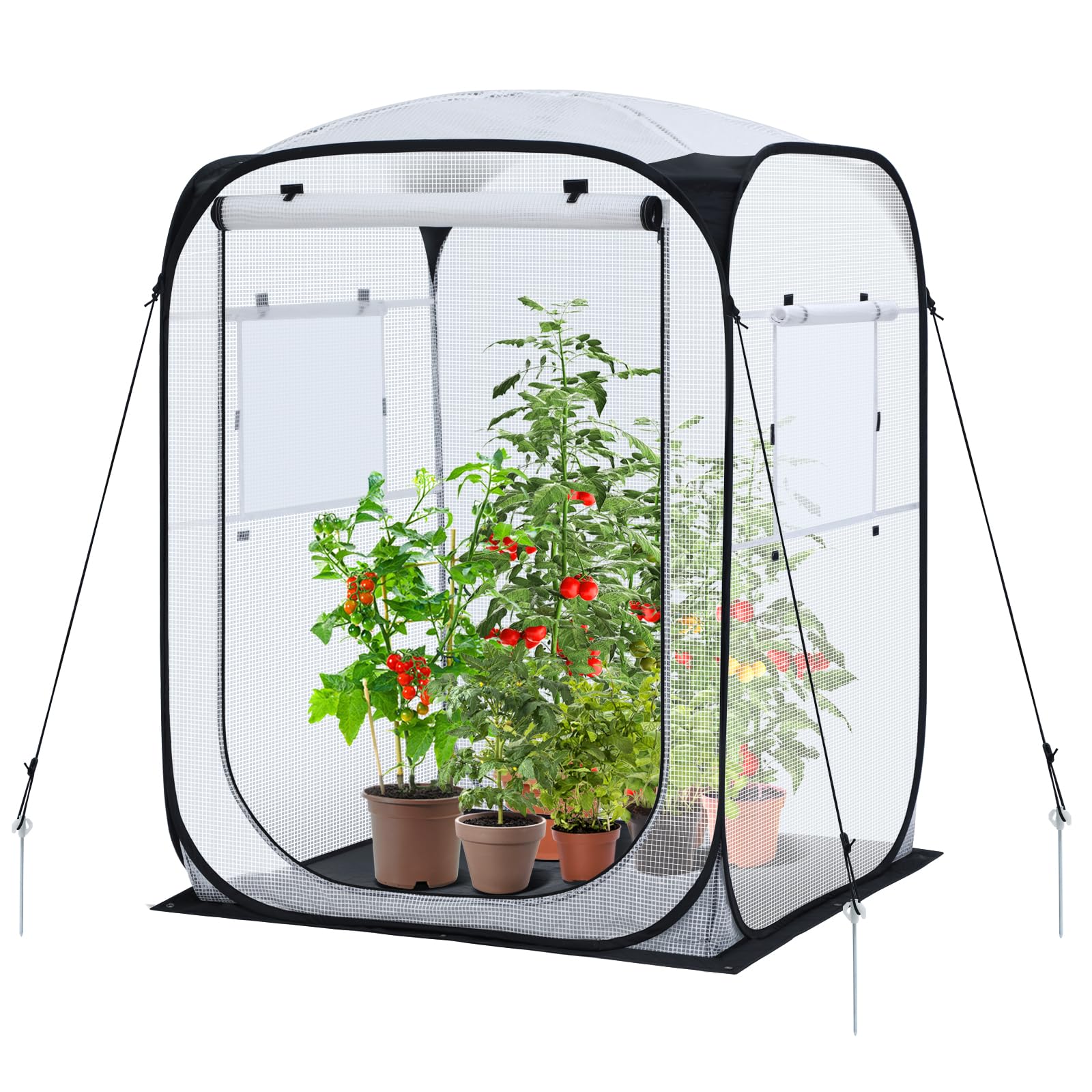
If you have ever assembled a greenhouse that took two hours and left you with a spare mystery screw, the Ohuhu is the antidote. The 48-inch-square footprint unfolds from a compact disc shape, and the brand claims assembly in five minutes. Buyers confirm it: one owner called it “well-made, easy 5-min assembly with clear large-print instructions.” At 10.5 pounds, you can pick it up and drag it across the yard to follow the sun or shelter a specific bed.
The white 210D Oxford fabric with double-layered PE mesh gives it better tear resistance than most budget PE wraps, and the fiberglass rods create a springy frame that absorbs wind instead of fighting it. The four mesh windows (a 3x gap over the EAGLE PEAK’s two vents) provide noticeably better airflow on warm days. A smaller number of owners did note a minor seam tear on arrival, so inspect the seams as soon as you unbox. The tie-down ropes are also on the cheap side — replace them with heavier stakes if your yard is exposed.
A surprising use-case that appears repeatedly: owners using the Ohuhu as a weatherproof shelter for outdoor cat houses, adding a reptile heat lamp for warmth. That same lightweight, easy-move flexibility makes it a strong pick if you want a greenhouse that does not commit to a permanent spot. The 63.7-inch height is shorter than the EAGLE PEAK, so taller gardeners will stoop, but for seed flats, small plants, and season extension, it is the fastest route from unboxing to growing.
Honest verdict: The Ohuhu is the pop-up tent of hoop houses — instant setup, easy relocation, and genuinely weather-resistant for its weight class. It trades standing headroom and shelf capacity for portability, so it fits the gardener who wants a movable season extender rather than a fixed garden room. Inspect the seams on arrival, and plan to upgrade the stakes.
3. Phonjoroo 10x7x7 Heavy Duty Tunnel Greenhouse
A 10-foot tunnel with a mountain of ventilation for less than a hundred dollars.
For gardeners who want maximum cubic feet per dollar, the Phonjoroo delivers a 10-by-7-by-7-foot growing envelope that fits over several raised beds or a small row of crops. The big story here is the six mesh windows — triple the vents of the EAGLE PEAK and Outsunny 13-foot models — which let you dial in cross-breeze on hot afternoons. The galvanized steel frame includes horizontal and diagonal crossbars that improve stability over a basic hoop design.
That said, the durability reviews split down the middle. Several buyers report the frame is not strong enough for real snow or sustained high winds, with one calling it “flimsy” and noting it blew to a neighbor’s yard. The consensus is that this is a three-season shelter for hardening off plants and protecting against light frosts, not a permanent winter structure. The PE cover at 140 GSM is standard for this price tier — adequate but not tear-proof, and the included stakes are basic. Owners who replaced them with heavier anchors and used sandbags on the skirt had better luck.
Compared to the Outsunny 15-footer below, the Phonjoroo costs less but uses a simpler frame design and a lighter cover. If you need a budget tunnel that you are willing to take down before heavy snow and anchor aggressively, this is the cheapest way to get 6 windows and walk-in height. One buyer summed it up as “good value,” noting the window covers sealed well against rain even if they were not an exact fit.
The honest read: Phenomenal value for the sheer volume and ventilation you get. But anyone living in a snow belt or an open prairie will need either extra anchoring and winter cover removal or a more substantial build like the Quictent. This is a fair-weather friend that can become a permanent fixture if you are handy with upgrades.
4. Outsunny 15x7x7 Walk-in Tunnel Greenhouse

A long tunnel with a reinforced PE cover that diffuses light while blocking UV.
The Outsunny 15-footer stands out for its two-layer 140 GSM PE cover embedded with a reinforcement grid — a small detail that makes the plastic notably harder to tear than the smooth covers on cheaper models. The grid lets 85% of sunlight through while filtering UV, and the 5.9-inch extended edges are meant to be buried in soil, creating a wind seal that keeps the cover from flapping loose. The white color reflects heat better than green, which helps keep interior temperatures manageable on early-spring afternoons.
Assembly is the most frequently praised aspect, with owners calling it straightforward. However, the sturdiness and zipper quality draw the most critical feedback — the highest count of mentions goes to sturdiness (53 mentions, rated mixed by Amazon) and zipper quality (16 mentions, rated negative). Several owners mention the lightweight steel frame bending in strong wind and the zippers jamming after a few uses. One buyer who properly anchored with rebar, mulched the base, and closed the vents survived a hurricane, while another had the structure blow over twice.
At nearly 15 feet long and 33 pounds, this is a mid-weight tunnel that needs careful site selection. If you have a wall, fence, or windbreak on at least one side, and you are ready to replace the stakes with serious anchors (or build a wooden base), the reinforced cover alone makes it a better long-term bet than the similarly priced Phonjoroo. The 6 mesh windows give you excellent ventilation control during shoulder seasons.
Key strengths
- The 140 GSM PE cover with built-in reinforcement grid resists tearing far longer than standard single-layer plastic — owners who survived hurricanes and heavy snow report the cover itself held firm.
- Six mesh windows plus a full roll-up door let you manage temperature across a 15-foot growing space with precision.
- The white color reduces solar heat gain compared to dark green covers, which helps prevent overheating on mild sunny days.
Real limitations
- The frame is lightweight and bends under sustained wind over 40 mph unless you reinforce it with guy lines, rebar, or a wooden base.
- Zippers are the weak point — they stick and break faster than owners expect, especially the bottom closure where the door meets the ground.
Best for: a gardener with a semi-sheltered yard who wants the longest possible tunnel for the money and plans to bury the cover edges for wind protection. The reinforced cover is genuinely better than the competition at this price.
skip it if: your garden sits in the open path of prevailing winds and you do not want to engineer your own anchoring system — the frame alone will not handle it.
5. FDW Walk-in Greenhouse 10x7x7

A powder-coated steel frame that weighed in as the budget pick with surprising snow fortitude.
The FDW may look like a typical budget tunnel on paper, but real-world customers note it surviving conditions that flatten cheaper units. The powder-coated steel frame resists rust, and several owners mentioned it handled 10 inches of snow and sub-freezing temperatures when paired with a small heater. At 37.5 pounds, it is noticeably heavier than the EAGLE PEAK or Ohuhu, which tells you the metal is thicker. One reviewer used it for winter tropical plant storage and said it made it through a second season with no issues.
The catch is height: the greenhouse is advertised as 7 feet tall, but multiple owners measure it at 5 to 8 inches shorter. If you are over six feet tall, you will be bending. The included tie-down straps are also too short for some raised bed setups — owners recommend screwing in your own anchors rather than relying on the supplied ones. Assembly with two people takes around 20 minutes, which is fast for a steel-frame unit.
Compared to the EAGLE PEAK, the FDW offers a larger ground footprint (10×7 vs 5×2.3) but no internal shelving, so you will need to add shelves or use it as a walk-over cover for in-ground beds. The observation windows on each side let you check on plants without stepping inside.
Verdict: A solid budget tunnel for winter plant storage if you are willing to work around the slightly shorter than advertised height and add your own anchoring. For the price, the frame durability outperforms pricier rivals — this is not a one-season throwaway.
6. Outsunny 13x10x6.5 Hoop House
A 13-foot tunnel with 25 mm galvanized tubes, but a cover that demands a calm home.
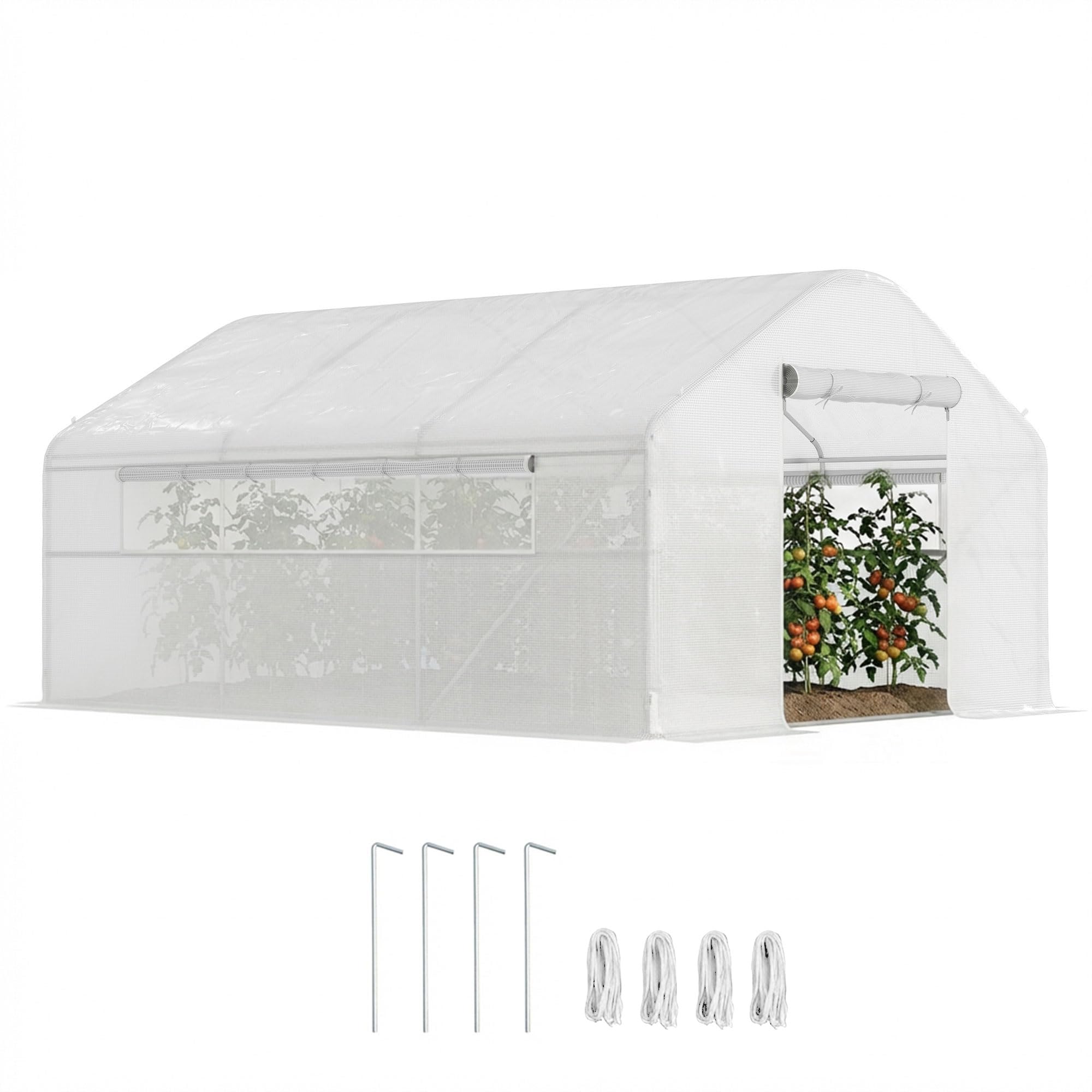
This Outsunny is the bigger sibling to the 15-foot model above, swapping length for width — a 10-foot-wide footprint that lets you fit two raised beds side by side with a path down the middle. The 25 mm galvanized steel tubes and slant bracing bars give the frame a noticeably more solid feel than the 15-foot Outsunny. The 140 GSM PE cover with the same reinforcement grid lets 85% of sunlight through and extends 5.9 inches below grade for soil burying.
Where this model stumbles is wind resistance. The sturdiness ranks as the most-discussed issue (14 mentions, rated negative), and durability is close behind at 12 mentions (negative). Reviewers point out the tie-down loops ripping off in the first wind, the frame bending after 20+ mph gusts, and the cover ripping at the seams. One upstate New York buyer watched it collapse under snow in less than 2 months. The company’s customer service is praised for quick replacements, but the structural reality is clear: this hoop house needs significant reinforcement (guy lines to porch posts, extra stakes, bracing) or a fully sheltered location.
At 45 pounds and 13 feet long, this is a heavy, spacious tunnel for the price. If you have a protected corner against a fence or wall, and you are ready to invest in extra anchoring hardware and seasonal cover removal, you get a massive growing area for the money. But anyone in an open field or a known wind corridor should look at the polycarbonate models below instead.
The honest trade-off: You get a 13-by-10-foot growing envelope for a remarkably low price, but the structure needs you to out-engineer its weaknesses. The frame metal and cover are adequate for a calm garden; they are not adequate for an exposed site or a real winter. Factor in the cost and time of ground anchors and potential replacement parts when you budget.
7. Sylviera 6×4 Polycarbonate Greenhouse
The first hard-walled greenhouse on the list — a real structure, not a tent.
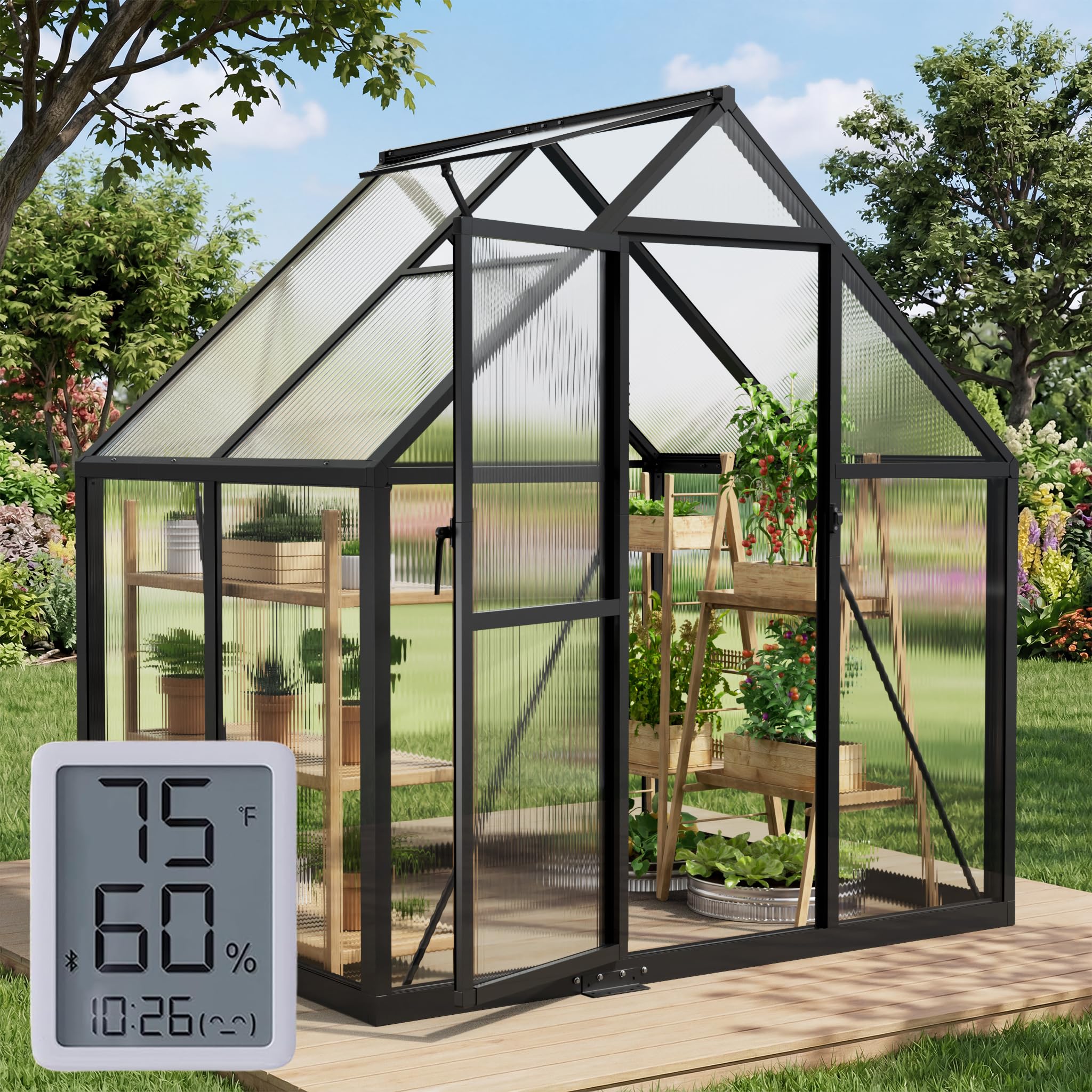
Moving from soft covers to rigid polycarbonate changes everything. The Sylviera uses 4 mm thick double-wall polycarbonate panels that transmit light while blocking UV and retaining heat far better than any PE fabric. The aluminum frame does not rust, and the twin-wall panel design creates a dead-air insulation layer that stabilizes interior temperature swings. Owners say it handles rain and wind with zero drama — one noted it survived two straight weeks of nonstop rain without a leak.
Assembly is the biggest hurdle. Several shoppers say the instructions contain errors and that removing the protective film from the polycarbonate panels is not mentioned (you must peel both sides). Two people and around 10 hours is a realistic estimate. The roof vents need rubber bands to stay open, and the interior can hit 93°F by 10 a.m. on a sunny spring day unless you add a fan. The base anchoring also requires either expansion screws into concrete or ground mounting in a prepared trench.
The YITAHOME below is larger (12×6 vs 6×4) and includes a sliding door, but the Sylviera is more approachable for a first-time polycarbonate buyer. If you want a greenhouse that feels like a permanent garden room rather than a temporary shelter, and you are ready for a proper half-day assembly project, the Sylviera justifies its premium price with real insulation and all-season durability. The included hygrometer is a nice touch for monitoring conditions without buying extra gear.
Why this is a step up
- 4 mm twin-wall polycarbonate provides genuine insulation — the interior stays noticeably warmer at night and cooler in direct sun compared to any PE cover.
- The aluminum frame is completely rust-proof, and the panels are impact-resistant, so a falling branch or hail will not punch through.
- Includes a hygrometer and a lockable door, small details that make daily use feel more like a proper garden room.
What to expect during setup
- Assembly takes around 10 hours for two people, and the instruction manual has known errors — plan time to figure out the sequence.
- Polycarbonate panels can delaminate at the edges if handled roughly, so treat them carefully during installation.
- Roof vents do not stay open on their own; you will need rubber bands or a prop rod for ventilation.
Who this works for: the homeowner who is tired of replacing ripped plastic covers every season and wants a greenhouse that will stand in the same spot for years. The Sylviera is not portable, and it is not a weekend project, but once built, it requires almost no annual maintenance.
Who should pass: renters, anyone who wants to move the greenhouse between beds, or a gardener who lacks a full day for assembly and a drill for the screws.
8. Quictent 25x10x6.6 Premium Greenhouse
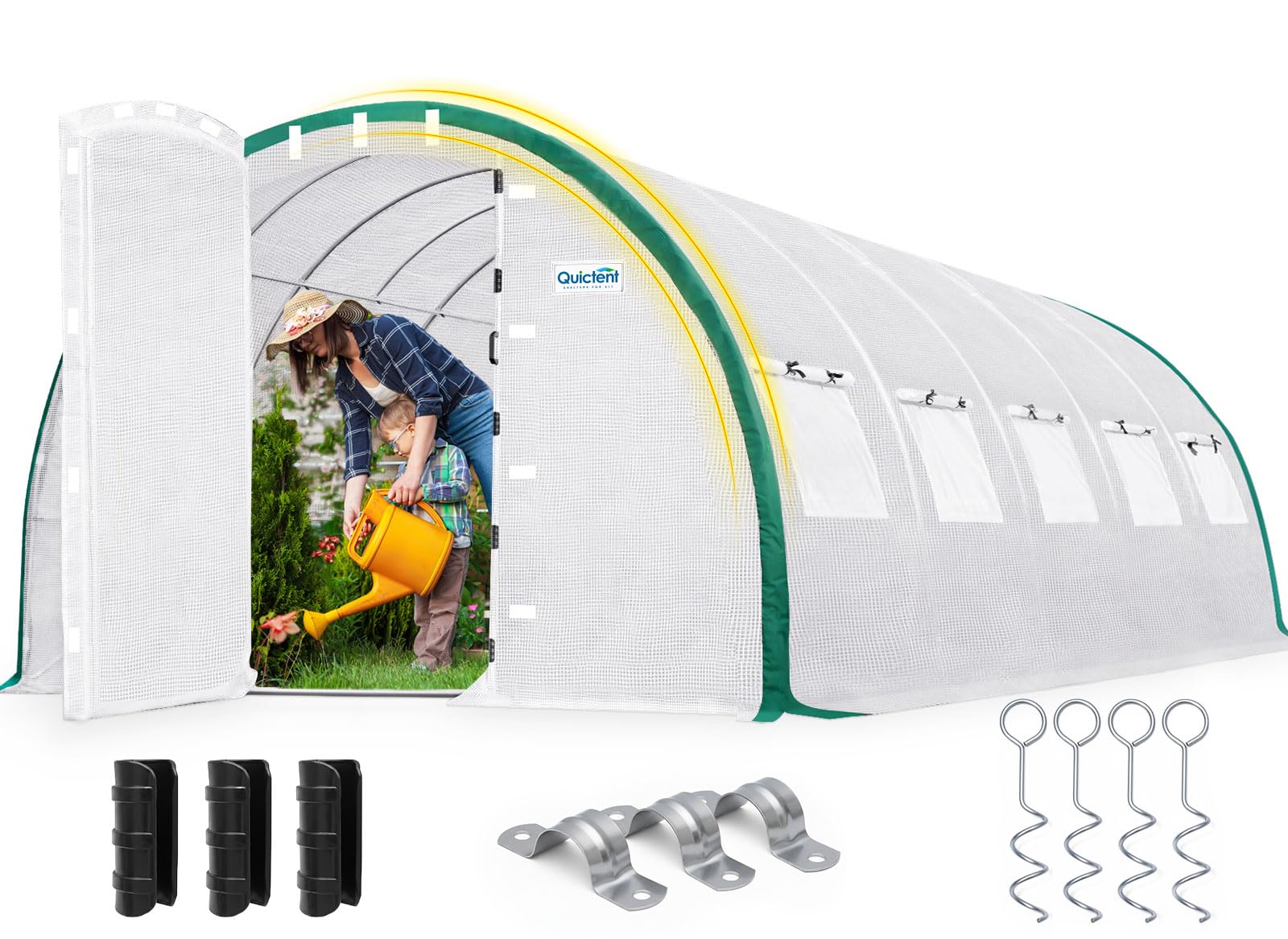
A 25-foot tunnel built for serious yields, with a reinforced top that sheds snow on its own.
The Quictent is the largest structure on this list, and it is the only one whose engineering addresses the two biggest PE-cover failures: snow collapse and tearing at the door. The reinforced top structure adds extra crossbars (4-5 depending on size) that prevent the roof from sagging under snow weight. The framed dual swing doors (a patented design) are rigid and lockable, so you are not fighting a zipper every time you enter with a full watering can. The 150 GSM PE cover is the heaviest among the soft-cover models here, and the 8-inch overlong bottom skirt can be buried for a wind-tight seal.
Assembly is manageable — owners say the instructions are clear enough to go up solo, though two people are recommended for the long frame sections. The cover fabric gets high marks for durability, with owners saying it feels solid and has withstood heavy rain and storms. One buyer who already owned a different brand tunnel replaced it with the Quictent and reported the interior temperature dropped from 140°F to 90°F after adding a shade cloth, which shows the 85% light transmission is accurate. The 10 mesh windows (depending on size) give you granular control over airflow across the full 25-foot length.
The honest downside: at 111.2 pounds and 25 feet long, this is a permanent installation that requires a dedicated garden plot and a serious time investment in assembly. The doors can occasionally come off their hinges (an easy fix, but worth noting). Compared to the Outsunny 13-foot tunnel, the Quictent is in a different durability class — the 0.7 mm galvanized steel, the 150 GSM cover, and the anti-sagging top make it the only PE tunnel on this list that owners genuinely trust for real winter conditions without taking the cover off.
The bottom line: The Quictent is the PE tunnel for the committed grower who needs commercial-like space without commercial cost. It is not cheap, but the reinforced frame and heavier cover mean it is the last tunnel you will buy for this bed size. The lifetime parts replacement and 365-day complimentary component warranty also suggest the company stands behind the build in a way budget brands do not.
9. YITAHOME 12×6 Polycarbonate Greenhouse
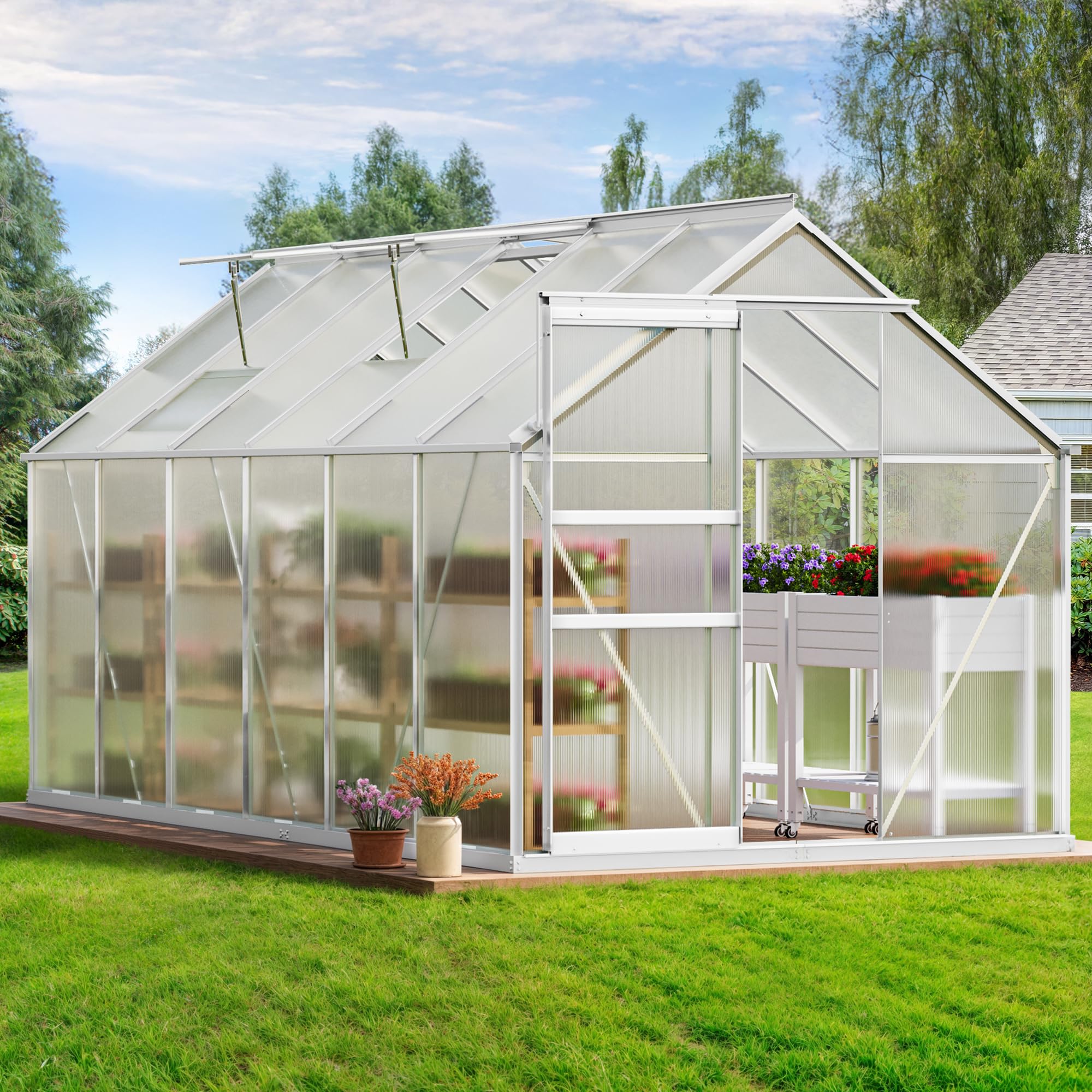
A polycarbonate house with a sliding door and a frame rated for real wind.
The YITAHOME is what you buy when you want the insulation and longevity of polycarbonate but need more floor space than the Sylviera offers. At 12 feet long by 6 feet wide, it fits over a standard raised-bed layout or serves as a dedicated winter nursery. The aluminum alloy frame uses reinforced rods on the sides and diagonal bracing, creating a rigid structure that owners say handles 60+ mph storms in coastal Virginia with only minor modifications. The 4 mm double-wall polycarbonate blocks 99% of UV radiation while letting natural light through, and the barrel-roof design sheds rain and snow without pooling.
The sliding door is the standout feature here: it glides smoothly, takes up no interior floorspace, and seals well when closed. Two adjustable roof vents provide thermal siphoning (hot air rises and escapes through the top), which helps manage the 93°F interior peaks that polycarbonate greenhouses can hit. Owners do note that some pieces arrive with off-center holes, requiring duct tape to compensate, and that applying glass-grade silicone sealant at the panel joints is strongly recommended for water protection. Assembly is straightforward but involves heavy panels and precise alignment — two people are mandatory.
Compared to the Quictent, the YITAHOME costs more per square foot but gives you a rigid structure that requires zero seasonal maintenance — no cover to replace, no fabric to patch, no zippers to break. It is the most expensive pick on this list, and a small number of buyers report flimsy thin metal in isolated units, but the majority report the frame surviving multiple seasons with no degradation. If you have the budget and want a greenhouse that looks like a permanent garden feature, this is it.
Strengths that justify the price
- Sliding door saves interior space and operates smoothly — no zippers to jam, no swinging door to block a pathway.
- 99% UV blocking polycarbonate protects delicate plants from scorching while the double-wall design insulates against temperature swings.
- Frame bracing (side rods + diagonal fixation) gives it wind resilience that PE tunnels simply cannot match at any price.
Installation considerations
- Some panels arrive with off-center screw holes — have duct tape and a drill handy for small adjustments.
- Recommended to seal panel joints with glass-grade silicone for weatherproofing; this is an extra supply run and 30 minutes of work.
- Assembly requires two people for the polycarbonate panels and the door track alignment — do not attempt solo.
Best for: the serious gardener who is done replacing covers and wants a turnkey rigid greenhouse that will stand for a decade with only cleaning and occasional sealant touch-ups.
Think twice if: your budget is tight, you need to move the greenhouse between seasons, or you are looking for a quick afternoon setup — this is a permanent structure that rewards careful assembly.
Understanding the Specs
GSM (Grams per Square Meter)
This is the density of the PE or polyester fabric cover. A higher GSM means a thicker, heavier, more tear-resistant material that lasts longer in sun and wind. Budget models use 120-140 GSM fabric — adequate for a season or two. Premium PE covers like the Quictent’s 150 GSM resist tearing at stress points and diffuse sunlight more evenly. If you live in a sunny, windy area, do not buy a greenhouse with a cover under 140 GSM unless you plan to replace it next year.
Number of Vents
Vents are your only defense against overheating on mild winter days or hot spring afternoons. A greenhouse with 2 vents relies heavily on its door being open. A model with 6 or 10 vents (like the Phonjoroo or Quictent) lets you open only the downwind vents to create a vacuum effect that pulls fresh air through without blasting your seedlings. More vents also mean better humidity control, which reduces mold risk on crowded seed trays.
Galvanized vs Alloy Steel Frame
Galvanized steel has a zinc coating that prevents rust even when the frame sits directly on damp soil. Standard alloy steel saves weight and cost but can corrode if the powder coating chips. For a greenhouse you plan to leave up year-round, galvanized tubing is worth the premium. The Quictent uses 0.7 mm wall galvanized steel, while most budget frames use thinner alloy tubes that flex more under wind load.
Polycarbonate vs PE Cover
Polycarbonate (PC) is a rigid twin-wall plastic that insulates like double-pane glass. It blocks UV, transmits light, and lasts 5-10 years without yellowing. PE (polyethylene) is the soft plastic cover on most budget tunnels — cheaper, lighter, but UV-degraded within 2-3 seasons. Polycarbonate greenhouses (Sylviera, YITAHOME) cost more upfront but need no annual cover replacement. PE tunnels trade long life for lower initial cost and easier relocation.
Snow Load Capacity
No budget greenhouse advertises a certified snow load. The practical rule: soft-cover tunnels (PE) need the cover removed or an active snow-melting strategy (heater, punching the ceiling from inside) before the first real snowfall. Rigid polycarbonate greenhouses handle moderate snow depths because the panels are rigid and the frame is braced. The Quictent’s reinforced top crossbars are specifically designed to prevent the roof dimpling under snow weight, making it the only PE tunnel on this list that can stay up through a snowstorm.
Walk-In Height
A greenhouse you can stand up in makes watering, pruning, and pest inspection dramatically more comfortable. Look for at least 75-80 inches of peak height if you are an average-height adult. The EAGLE PEAK (79 inches) and FDW (advertised 84 inches, actual ~76-78 inches) both let you stand fully upright. The Ohuhu (63.7 inches) forces you to stoop or work from the entrance. If back comfort matters, prioritize models with at least 6.5 feet of clearance.
FAQ
How long does a PE-covered hoop house typically last?
Can I leave my hoop house up all winter?
What is the difference between a hoop house and a greenhouse?
How do I anchor my hoop house so it does not blow away?
Will a hoop house protect plants from frost?
How many vents do I really need in a hoop house?
How long does it take to assemble a typical hoop house?
Can I use a hoop house on a balcony or patio?
Do I need a permit for a backyard hoop house?
What is the best way to clean and maintain my hoop house cover?
Final Thoughts: The Verdict
If you want one dependable pick, the gardening hoop house winner is the EAGLE PEAK Walk-in Greenhouse because it nails the balance of walk-around room, built-in shelving, and straightforward assembly at a price that does not hurt — and the thousands of positive reviews back up its day-to-day reliability. If you want instant setup and portability, grab the Ohuhu Pop Up, which goes from box to growing in five minutes. And for the serious gardener planning a permanent structure that will last for years without cover replacements, the Quictent 25×10 Tunnel or the YITAHOME Polycarbonate are the ones to reach for — one for massive tunnel space with true snow resistance, the other for rigid, zero-maintenance hard shell construction. No matter which size or budget fits your yard, the key is matching the structure’s wind and snow tolerance to your local climate, not just the number of shelves or the color of the cover.
How We Picked
We do not accept paid placement. Every pick is matched to a real buyer and a real use-case; we do not hands-on test units.
Sources & Methodology
Specifications: manufacturer listings and product documentation. Review insights: verified customer reviews, as of July 2026. Pricing: not shown on this page (it changes often); check the current price via the retailer link.
As an Amazon Associate, Lawn Gear Lab earns from qualifying purchases. This does not affect which products we feature.