
Specs are compiled from manufacturer listings and verified buyer reviews and can change over time — please confirm the key details on the product page before buying.
Breaking new ground with a bent or snapped fork is the fastest way to kill your gardening momentum. Your back deserves a spading fork that sinks in on the first jab, lifts a full load, and stays straight year after year — and the right one costs less than a weekend dinner.
I’m Rikta — the founder and writer behind Lawn Gear Lab. This guide is built by comparing the manufacturers’ published specifications and the patterns across verified customer reviews, so you get each pick’s real strengths and trade-offs instead of marketing spin.
You want a fork that digs deep, stays straight, and feels balanced in your hands — without guessing which ones actually last. Here is the shortlist for the best garden spading fork that will honestly earn its place in your shed.
Our Picks at a Glance


How To Choose The Best Garden Spading Fork
A spading fork looks simple, but a few key differences separate a tool that lasts decades from one that bends on its second job. Here is what to check before you buy.
Shaft Material: Steel vs. Wood vs. Fiberglass
The shaft is the backbone. A welded steel shaft — like the kind on the top pick — simply will not snap or splinter, making it the strongest option for rocky or clay-heavy ground. Wooden handles (ash or hardwood) absorb shock and feel warmer in the hand, but they can crack if used as a pry bar or left out in wet weather. Fiberglass resists rot and flexes a little, which helps if you want a bit of give on impact, but it can wear down over time. Your choice depends on whether you prioritize raw strength or natural feel.
Handle Length and Grip Style
Length determines leverage and back strain. Forks around 40 to 41 inches give you more mechanical advantage for deep digging and prying, while shorter 30-inch handles keep you closer to the work — good for tight spaces and raised beds but harder on your lower back. The D-handle and Y-grip both give you two-handed control, but a D-handle lets you choke up for precision, while a Y-grip spreads the load across your palms.
Tine Material and Construction
Forged carbon steel tines resist bending under heavy loads and stay sharp for years. Stainless steel tines resist rust and are ideal for moist soil and compost work, though they can be slightly more brittle if you hit a buried rock at the wrong angle. Look for tines that are welded or forged to the crossbar — a cheap clamp-on tine set is the first thing to fail.
Quick Comparison
| Model | Best For | Shaft Material | Total Length | Weight | Amazon |
|---|---|---|---|---|---|
| TABOR TOOLS J59A★ Best Overall | Heavy Clay & Rocky Soil | Welded Steel | 40 in | 5.5 lb | Amazon |
| VNIMTI Garden ForkBest Value | Budget-Friendly All-Rounder | Hardwood | 45 in | 4.5 lb | Amazon |
| VEVOR Garden ForkClay Specialist | Value in Hard Clay | Fiberglass | 45 in | 4.85 lb | Amazon |
| Truper 30293 | Compost & Mulch Turning | Wood | 30 in | 3.7 lb | Amazon |
| MUJO Digging Fork | Heavy-Duty Root Work | Metal (steel shaft) | 41 in | — | Amazon |
| Eadwiella Pitchfork | Rust-Free & Heirloom Quality | Ash Hardwood | 43 in | 4.4 lb | Amazon |
| Spear & Jackson Neverbend | Forged Carbon Steel Strength | Wood | 39.2 in | 5.4 lb | Amazon |
| Berry&Bird Digging Fork | Premium Build & Aesthetics | Ash Wood | 43.9 in | 6.24 lb | Amazon |
| Haliaatus Spading Fork | Light & Effective Weeding | Wood | 43.9 in | 5.74 lb | Amazon |
In‑Depth Reviews
1. TABOR TOOLS J59A Digging Fork
Our pick — over 4.5★ from 250+ verified ratings; the strongest balance of quality and price.
The steel-shafted beast that shrugs off heavy clay without a flinch.
This fork does not bend because its shaft is welded steel — not wood or fiberglass (a type of plastic reinforced with glass fibers) — so it cannot splinter or snap when you lean into it. You get serious leverage from the 40-inch total length, at 40 inches versus the Truper 30-inch fork, so you can pry deeper without hunching. At 5.5 lb it sinks into packed ground on its own, saving your stomping power. The four tines are forged (shaped under extreme heat and pressure) from hardened high-carbon steel with diamond points, meaning they stay sharp and resist bending even when you hit a rock. “I live in black clay land and the soil is very heavy but it does not slow this tool down,” one buyer reports, which is the real-world verdict for packed ground. Compared to the VNIMTI fork, this one is heavier and shorter, but it will not bend when you pry on a rock.
What wins people over is the sheer durability. The D-handle (a looped grip at the top) is roomy enough for a gloved hand, and the black oxide finish on the fork head fights rust through years of hard use. The trade-off is clear: if you want a tool that will not bend or crack, this forgives nothing else — it is a heavy, purposeful tool that feels industrial in the hand. For lighter work like turning fluffy compost, a lighter fork might feel more nimble. But for breaking new ground, double-digging beds, or wrestling with clay, this is the one you reach for.
What owners love
- Welded steel shaft outlasts wood and fiberglass handles — no splintering or flexing.
- Sharp diamond-point tines punch through compacted clay without bending.
- 40-inch length and 5.5 lb weight provide excellent digging power and leverage.
The honest trade-off
- At 5.5 lb it is noticeably heavier than a hardwood fork; prolonged overhead or one-handed use will tire you.
- Tall users (6’2″+ buyers) note they wish the 40-inch handle were a few inches longer for less bending.
Reach for this if: you work heavy clay, rocky ground, or need a fork that simply will not break under commercial-level use.
Look elsewhere if: you want a lighter tool for casual raised-bed work or need the longest possible handle to save your back from bending.
2. VNIMTI 45-Inch Steel Digging Fork
A longer, lighter hardwood fork that cuts gardening time in half.
This fork gives you the most reach in the budget tier at 45 inches total length — at 45 inches versus the TABOR TOOLS pick at 40 inches, so you bend less and get more leverage from a standing position. The hardwood handle is tougher than fiberglass (no cracking or splinters) and it is paired with a metal Y-grip (two separate prongs that spread pressure across your palms) that will not fade or crack in the sun like plastic. The steel fork head is polished and the four tines handle hard soil well. “It cuts my gardening in half,” one buyer reports, which is the kind of real-world efficiency that matters. At 4.5 lb it is noticeably lighter than the 5.5-lb TABOR TOOLS fork, so you can work longer without burning out your shoulders.
The honest trade-off is that a hardwood handle, while comfortable and environmentally friendly, lacks the absolute break-proof confidence of a welded steel shaft. If you are prone to prying up rocks or roots, you will want to treat this fork with a bit more care than the steel-shaft options. The Y-grip also takes some getting used to if you have always used a D-handle, though most owners adapt quickly and appreciate the extra hand room. For the price, this is a seriously well-built tool that outperforms what you would find at a big-box store for the same money.
Best for the budget-minded: a long, light, sturdy fork that handles daily garden work while staying affordable. The 45-inch length is a real back-saver.
A fair heads-up: the hardwood handle will eventually weather if left outdoors, and the Y-grip may feel unfamiliar if you are used to a D-handle.
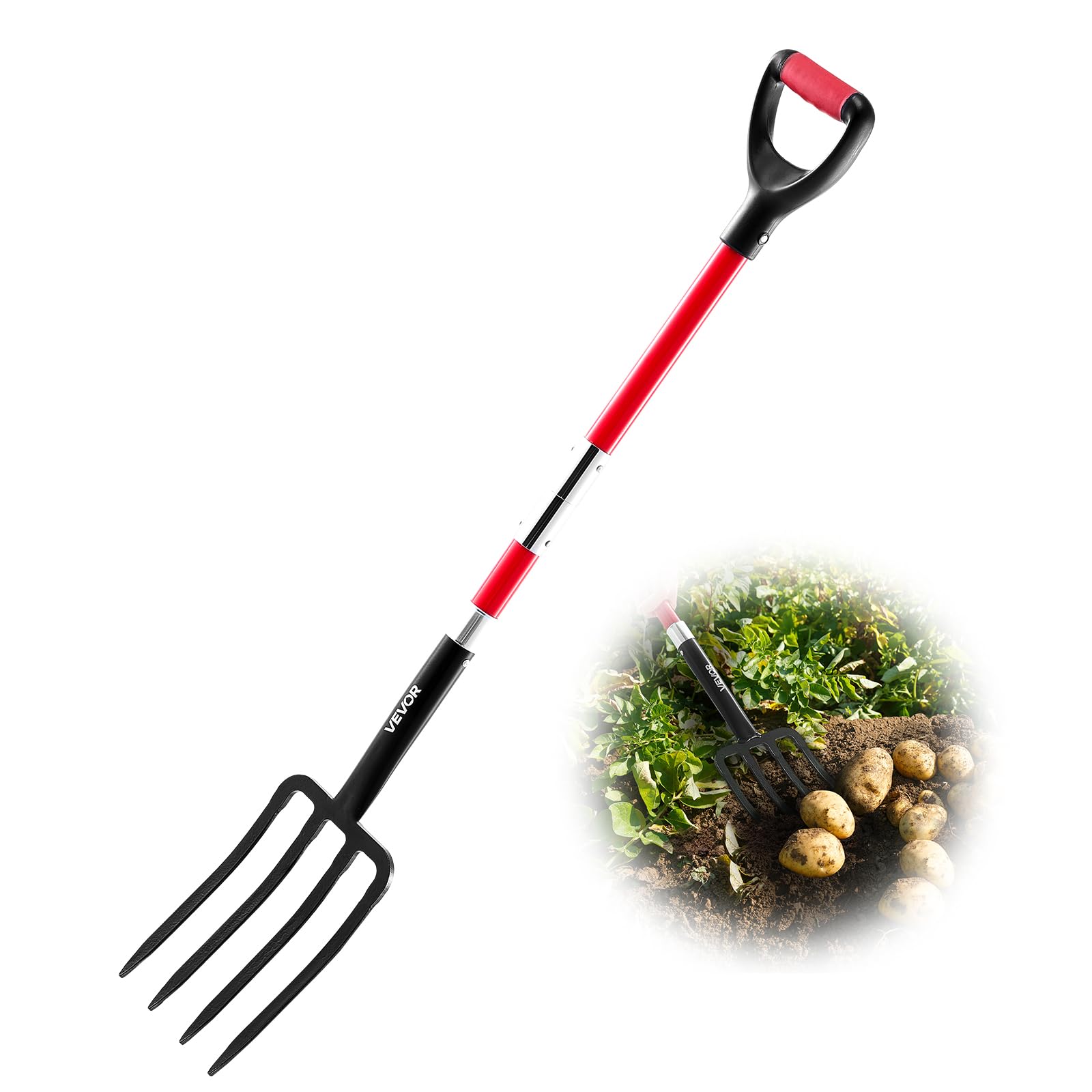
3. VEVOR 45-Inch Fiberglass Garden Fork
The budget-friendly pick that turned over hundreds of square feet of solid clay.
VEVOR designed this fork for hard, compacted soil. The 45-inch fiberglass handle gives you the same long reach as the VNIMTI fork, but here the fiberglass (a strong, slightly flexible plastic reinforced with glass fibers) adds a slight flex that absorbs shock when you hit a buried rock. The head is forged steel (integrated, not clamped), and at 4.85 lb it splits the difference between the lightweight VNIMTI at 4.5 lb and the heavy TABOR TOOLS fork at 5.5 lb — heavy enough to sink in, light enough to carry around all morning. “Turned over hundreds of sq ft of solid clay soil easily,” one owner reports, which is the honest work this fork is built for. The Y-grip is ergonomically shaped with a non-slip surface that helps even in wet or muddy conditions.
The thing customers praise most is the durability — it is a top aspect in nearly 20 reviews, and the functionality follows close behind. Assembly is straightforward, and the reinforced connection between head and handle stays tight. On the flip side, a few owners note the weight sits in the mixed column: it is not the lightest fork on the list, and if you are a smaller-framed gardener, you may find it a touch heavy for extended overhead compost turning. But for digging, aerating, and breaking ground, it is a fantastic value that punches above its price point.
The standout feature: the forged-steel head and reinforced fiberglass handle handle tough clay without bending or breaking, earning genuine praise from owners.
One thing to know: the Y-grip bolts ship facing inward — mount them with nuts outward to avoid catching your leg during use.
4. Truper 30293 30-Inch Spading Fork
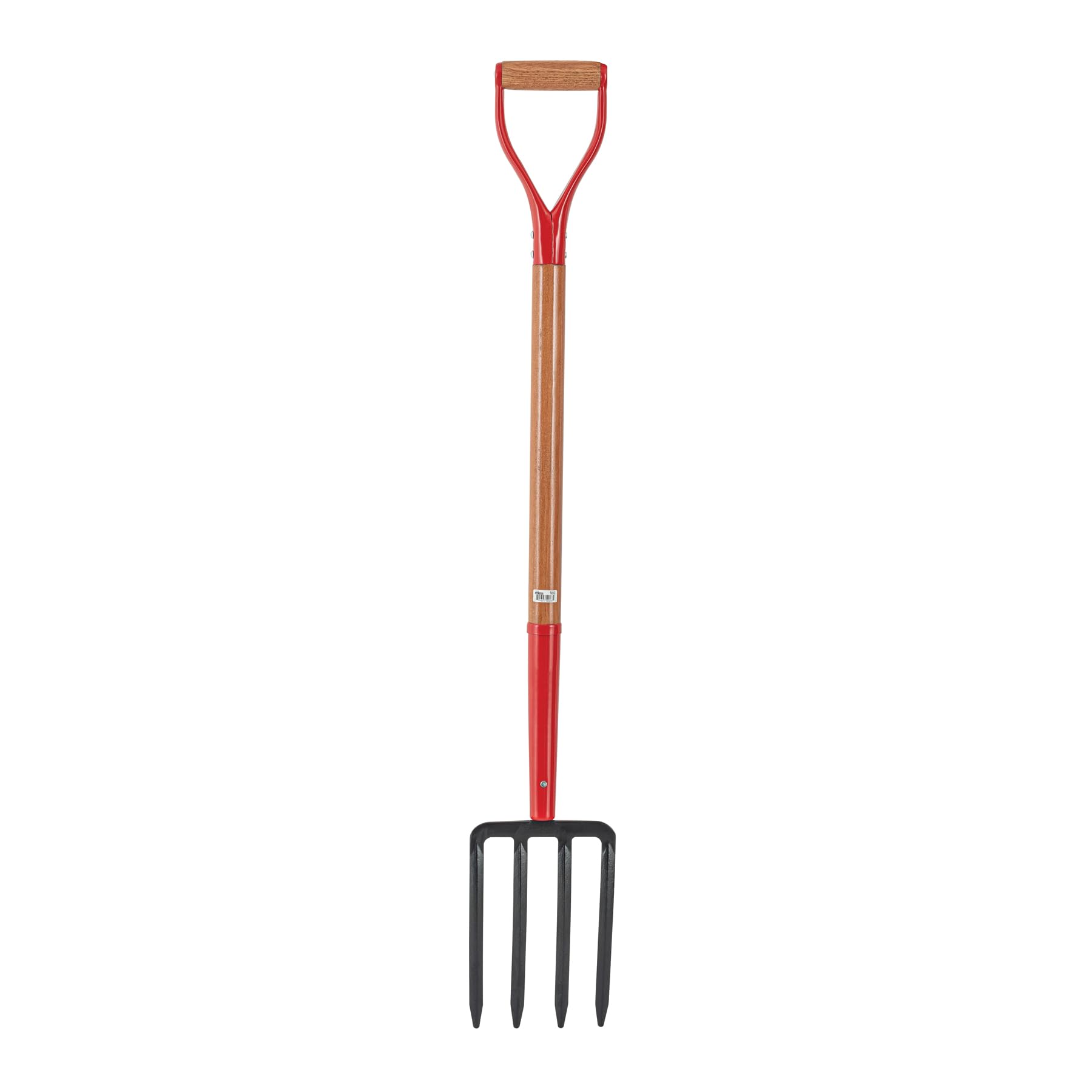
A short, maneuverable workhorse built for compost bins and tight beds.
At 30 inches, this is the shortest fork in this roundup — a full 12% shorter than the 40-inch TABOR TOOLS and 15 inches shorter than the 45-inch options. That is not a flaw; it is a design choice. The short handle puts you closer to the soil, giving you precise control for turning compost, weeding between plants, and working in raised beds or tight corners where a long handle would bump into everything. The 4-tine steel head is straightforward and durable, and the wood D-handle provides a secure grip. Quality and sturdiness win owners over — both mentioned by over 60 and 80 owners respectively. It is a simple, heavy-duty fork that does not try to be something it is not.
The catch is that the short handle means more bending, so it is not ideal for large-scale double-digging or for taller gardeners who already struggle with back strain. A small number of owners also note occasional tine bending in rocky soil, though for general garden turning and compost work it has held up very well for most. The Truper is a brilliant choice if your work is primarily in beds and bins; it is less suited to breaking new ground over a wide area.
Perfect for compost and raised beds: the 30-inch length gives you class-leading maneuverability in tight garden spaces.
skip it if: you need maximum leverage for deep digging in clay or you are tall and prone to back pain from bending.
5. MUJO 41-Inch Digging Fork

A metal-shaft fork with diamond-tipped tines that slice through roots and sod.
MUJO takes a straightforward approach: a 41-inch metal shaft (steel) paired with four diamond-point tines that are tempered (heat-treated for hardness) and powder-coated for rust resistance. The tines feature a forward-turned step for secure foot placement — a small detail that makes a big difference when you are pushing into hard ground. The D-handle gives you two-handed control, and the blade-like tines slice through dense root structures. Buyers have used it successfully for removing sod, harvesting sweet potatoes, and breaking up compacted soil and roots in tight garden spaces. One owner noted it is “great for desodding” and handled the job without bending.
The most-discussed aspect of this fork is its durability, and it carries mixed feedback — most owners find it plenty strong, but a few report that a single tine bent when digging through sunflower roots in hard clay. It is not the indestructible beast of the steel-shaft TABOR fork, but it is also significantly more affordable. If you work in moderately rocky soil and want a metal-shaft fork that is tough without being the most expensive, this is a solid middle-ground pick. Just know its limits: it is strong, but not pry-bar strong.
Great for the price: a sturdy metal-shaft fork with sharp tines that handle sod, roots, and compacted soil well for most owners.
Be mindful: the durability is mixed — one or two owners have bent a tine on very hard clay or thick roots, so ease into rocky ground with this one.
6. Eadwiella 43-Inch Stainless Steel Pitchfork
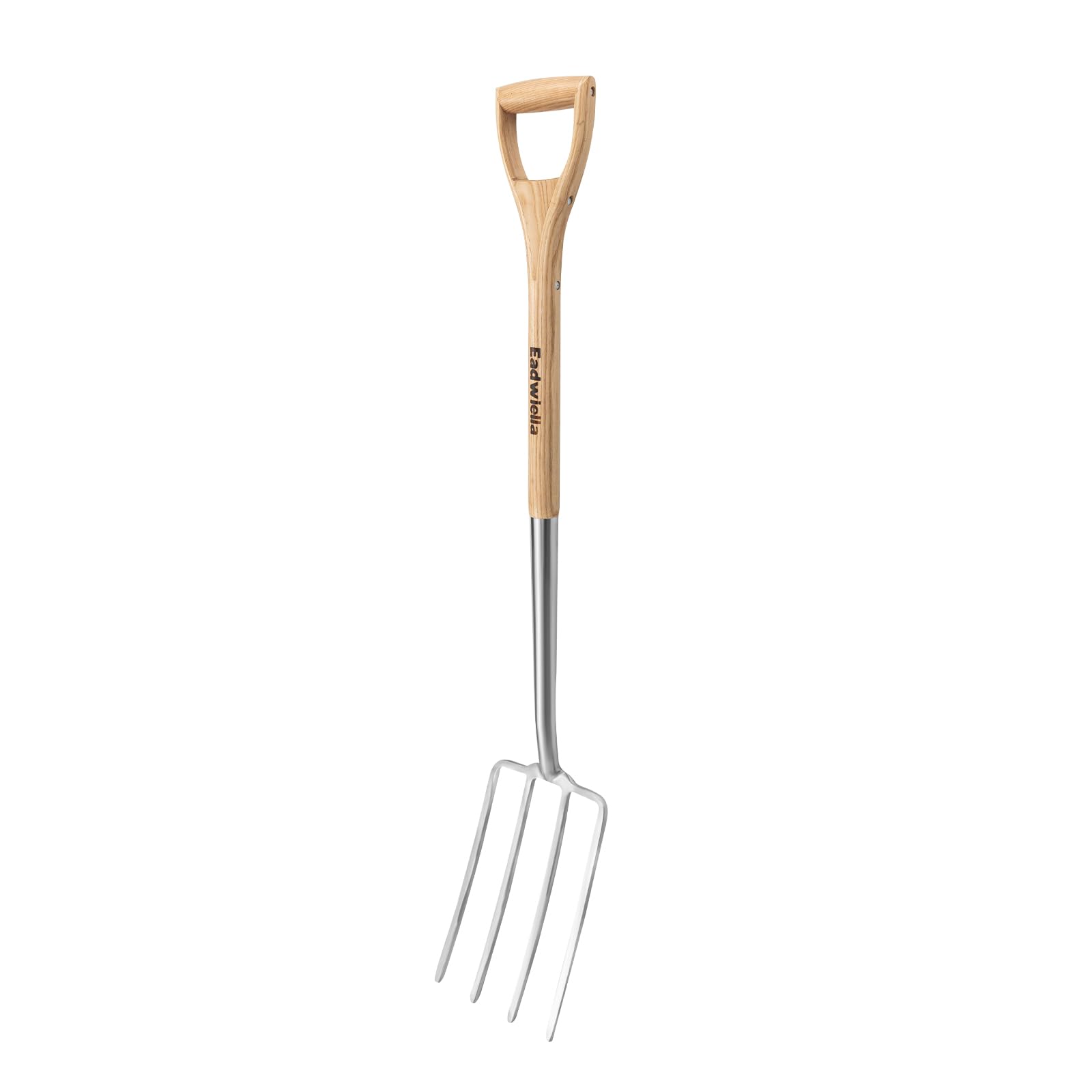
A mirror-polished stainless steel fork that looks like a tool your grandfather would have owned.
Eadwiella builds this fork with stainless steel tines that are mirror-polished to a finish one owner described as “almost food grade.” The rust resistance is immediate: stainless steel laughs at moist soil, manure, and compost that would corrode a carbon steel head over time. Each tine is 100% solid steel and over-welded to the crossbar — no weak clamp joints. The handle is FSC-certified ash hardwood (a durable, straight-grained wood certified as sustainably sourced) with a D-grip, and the socket is extra-long and riveted, which adds flex at the key joint to reduce strain when lifting heavy loads. At 43 inches and 4.4 lb, it is a well-balanced tool that feels premium in the hands. Owners describe it as “heirloom quality” and “a lifetime tool that will be passed down.”
The commitment to stainless steel and ash hardwood pushes the price higher, but the feedback is consistent: this is a beautifully made tool. The polished finish, however, means it shows dirt and scratches more readily than a black-coated fork, and the wood handle demands that you store it under cover to keep the ash from drying out. If you want a fork that resists rust, looks beautiful, and feels like a hand-crafted tool, this is the one. If you are purely utilitarian and want the toughest possible shaft, a steel-shaft fork like the TABOR TOOLS is more indestructible.
The beauty and the brawn: rust-resistant stainless steel tines with heirloom-level craftsmanship and a comfortable ash handle.
The maintenance note: the polished steel shows wear, and the wood handle needs to stay dry to last generations.
7. Spear & Jackson Neverbend Professional Digging Fork

A single-forged carbon steel fork that bears the name Neverbend for a reason.
Spear & Jackson has been making garden tools since the 18th century, and the Neverbend line is their professional answer to tough soil. The fork head is single-forged carbon steel — meaning the tines and the head are one continuous piece of metal, not welded or clamped. That makes it exceptionally strong under heavy prying and twisting. The weatherproofed hardwood shaft is designed to resist the elements, and at 5.4 lb it is heavy enough to sink into hard clay without bouncing off. The 39.17-inch total length is a happy medium between the short Truper and the long 45-inch options. Owners consistently call it a tank, praising its ability to break up heavy clay without bending. It is the fork that a 75-year-old owner found manageable enough for daily use but solid enough for serious digging.
The most-discussed aspect here is durability — 40 owners single that out as the top reason they bought it. But a small number of buyers report handle issues, so the handle gets mixed marks. One owner had the handle snap after limited use, though most find it durable. The weight is on the heavy side, which some love for penetration and others find tiring. The Neverbend is a classic, proven design; if you want a traditional hardwood fork with a forged head that can take on clay, this is the one. If you want maximum length, go with a 45-inch model.
A proven classic: single-forged carbon steel construction that resists bending in heavy clay — owners call it built like a tank.
Fair to know: the wood handle has mixed feedback — most are fine, but a small number have experienced handle failure; store it dry and avoid using it as a pry bar.
8. Berry&Bird 43.9-Inch Digging Fork

A beautifully balanced stainless steel fork with a long ash handle for comfortable cultivation.
Berry&Bird has earned a following for building tools that look as good as they work. This 43.9-inch digging fork uses a stainless steel head — rust-resistant and smooth through soil — paired with an FSC-certified ash wood handle that is designed to grow smoother with use. The D-grip handle is ergonomically shaped to reduce back strain, and the four straight tines are ideal for aerating raised beds and working soil without damaging tubers. At 6.24 lb it is the heaviest fork in this guide, which gives it excellent penetrating power into compacted ground. Quality is praised by 57 owners and durability by 55 — the highest positive mention counts for those traits in this roundup. One owner who had it for a year and a half called it a “great tool” for digging, breaking up soil between plants, and moving manure.
The weight is the defining trade-off here. At over 6 lb, this fork is a hefty tool — you feel it on the first lift, and it demands a bit of strength to swing all day. That heft translates into raw digging power, but it also means this is not the fork you grab for light surface work. The ash handle is gorgeous but, like any wood handle, it should be stored indoors to maintain its finish. If you appreciate fine craftsmanship and want a fork that excels at heavy digging with plenty of reach, the Berry&Bird is a top-tier choice.
Heirloom-grade build: premium stainless steel and ash wood construction that owners call beautifully made and highly durable.
Weight is a factor: at 6.24 lb it is the heaviest pick — ideal for powerful digging but tiring for lighter or all-day tasks.
9. Haliaatus 43.9-Inch Stainless Steel Spading Fork
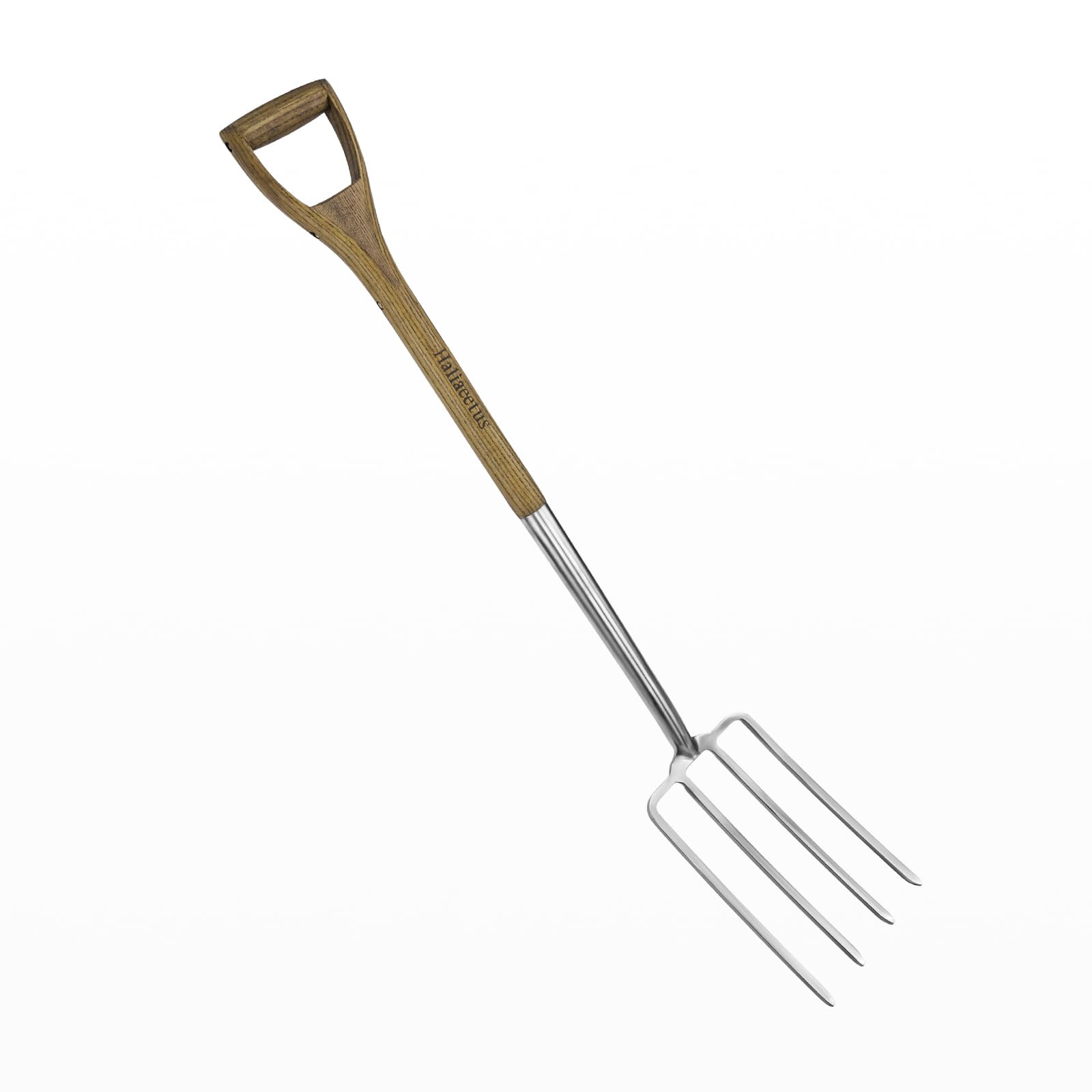
A stainless steel fork that makes weeding in rocky soil feel easy.
The Haliaatus fork targets a specific problem: getting weeds out of tough, rocky ground without breaking the tool. The stainless steel tines are thicker than average and use smooth welding technology for strength. At 43.9 inches, the extra height provides excellent leverage — “like cutting through butter” is how the manufacturer describes it in heavy clay, and owners confirm it handles compacted dirt and nut grass with ease. The D-grip handle is made from wood, which acts as a natural shock absorber, reducing wrist strain during extended use. At 5.74 lb it is on the heavier side of mid-range, which means it has enough mass to sink in but remains manageable for most users.
Functionality and durability are the top praised aspects here, and the feedback is overwhelmingly positive. One owner simply called it “my favorite gardening tool.” The lifetime warranty adds to the confidence. The honest caveat is that this is a newer entrant with a smaller review base — it has not been proven over decades like the Truper or Spear & Jackson. The stainless steel won’t rust, but it is generally not as hard as carbon steel, so extremely aggressive prying on buried roots might be a stretch. For weeding, cultivating, and general soil prep, it is a top contender.
Excellent for weeding and loose soil: the long handle and stainless steel tines make quick work of nut grass, weeds, and compacted raised beds.
One to watch: with a smaller review history, long-term durability is less proven than legacy brands, but the lifetime warranty offers confidence.
Understanding the Specs
Total Length (Reach)
Total length is the most important dimension for your back. A fork that is 40 to 45 inches lets you stand nearly upright while digging, which reduces the bending that causes lower back fatigue. Shorter forks (around 30 inches) give you more precise control but force you to stoop more — they belong in raised beds and tight corners, not broad-field digging. If you are over 5’10”, aim for at least a 40-inch total length.
Shaft Material (Strength)
A welded steel shaft is the toughest option — it will not snap, splinter, or crack, even if you use the fork as a lever to pry out rocks. Wooden handles (ash, hardwood) are lighter and absorb shock, but they can crack if left out in wet weather or used as a pry bar. Fiberglass handles are a middle ground: they resist rot and offer some flex on impact, but they can wear down over time. Your choice depends on whether you prioritize absolute durability or comfort.
Tine Material (Bend Resistance)
Forged carbon steel is the strongest and most durable tine material — it resists bending under heavy loads and holds a sharp edge. Stainless steel tines resist rust and are ideal for damp, acidic soil and compost work, but they can be slightly more brittle than carbon steel. Look for tines that are forged or welded to the crossbar; clamped-on tines are a sign of a cheap tool that will fail under load. Diamond-pointed tines penetrate harder soil than flat-pointed tines.
Weight (Digging Power)
Heavier forks (5 to 6 lb) sink into hard soil using gravity alone, so you do not have to stomp as hard. Lighter forks (4 to 4.5 lb) are easier to handle all day but require more downward force to penetrate compacted ground. The ideal weight is a balance between your upper body strength and the toughness of your soil. For heavy clay, a 5+ lb fork is usually the right call; for sandy loam or raised beds, 4 to 4.5 lb is plenty.
FAQ
What is the difference between a spading fork and a pitchfork?
How many tines should a good garden spading fork have?
Is a longer handle always better for a spading fork?
Will a stainless steel fork hold up in heavy clay soil as well as carbon steel?
How do I prevent my wooden handle from cracking?
Can I use a spading fork as a pry bar to lift rocks?
What does a D-grip handle do versus a Y-grip handle?
Will a garden spading fork damage the roots of my plants?
How heavy should a spading fork be for a 60-year-old gardener?
Final Thoughts: The Verdict
For most people, the best garden spading fork is the TABOR TOOLS J59A because its welded steel shaft and forged carbon steel tines simply will not break or bend, even in the heaviest clay. If you want a longer reach and a lighter swing for general garden work on a budget, grab the VNIMTI 45-Inch Fork. And for a rust-resistant, heirloom-quality tool that looks as good as it digs, the Eadwiella Stainless Steel Pitchfork is the one to reach for.
How We Picked
We do not accept paid placement. Every pick is matched to a real buyer and a real use-case; we do not hands-on test units.
Sources & Methodology
Specifications: manufacturer listings and product documentation. Review insights: verified customer reviews, as of July 2026. Pricing: not shown on this page (it changes often); check the current price via the retailer link.
As an Amazon Associate, Lawn Gear Lab earns from qualifying purchases. This does not affect which products we feature.