
The difference between a thriving vegetable bed and a disappointing, stunted harvest often comes down to what you put in the ground. Dense, heavy soils that hold too much water suffocate root systems, while mixtures lacking organic matter fail to support the microbial life that unlocks nutrients. The right blend creates an environment where roots can breathe, water drains efficiently, and beneficial biology does the heavy lifting.
I’m Rikta — the co-founder and writer behind Lawn Gear Lab. I’ve spent countless hours analyzing the composition of dozens of garden soil blends, cross-referencing their ingredient lists with real-user growth results, and breaking down the horticultural data that separates a well-balanced mix from one that needs significant amendment.
This guide filters the noise to help you find the ideal best garden soil mix for your specific beds, containers, and transplanting needs.
How To Choose The Best Garden Soil Mix
Selecting a soil mix requires you to look beyond the bag’s marketing claims. The texture, ingredient source, and the presence of aeration amendments define how your plants will perform. Focus on these three pillars.
Drainage vs. Water Retention
The ideal garden soil mix strikes a balance between holding enough moisture for root uptake and allowing excess water to flow away. Overly compacted soil leads to root rot, while a mix with too much sand or perlite may dry out too quickly. Look for ingredients like coco coir, sphagnum peat moss, or compost that retain moisture, paired with perlite or coarse sand for structural drainage.
Organic Material & Nutrient Foundation
The nutrient profile of your soil mix determines how much supplemental feeding you will need. Blends fortified with worm castings, kelp meal, alfalfa meal, or compost provide a slow-release nutritional base that supports steady plant growth. For transplants and seedlings, a mix with a moderate organic content prevents nitrogen burn, while established vegetable gardens benefit from richer blends.
Intended Application (In-Ground vs. Container)
Not all garden soil mixes are interchangeable. In-ground blends are designed to be tilled into native dirt to improve its structure, while container mixes are formulated to remain lightweight and free-draining within the confines of a pot. Using heavy garden soil in a container compacts quickly and suffocates roots. Always check the label for words like “potting mix” for containers or “garden soil” for raised beds and in-ground use.
Quick Comparison
On smaller screens, swipe sideways to see the full table.
| Model | Category | Best For | Key Spec | Amazon |
|---|---|---|---|---|
| Espoma Organic Potting Mix | Premium Potting Mix | High-value containers & houseplants | 2 cu ft bag; Myco-Tone blend | Amazon |
| Coast of Maine Bar Harbor Blend | Premium Potting Soil | Organic container gardening | 16 qt; lobster/crab shell meal | Amazon |
| Miracle-Gro Potting Mix 3-Pack | Feeder Potting Mix | Fast-establishing container plants | 8 qt x 3; feeds up to 6 months | Amazon |
| Michigan Peat General Purpose | All-Purpose Mix | Containers & raised beds, heavy feeding | 50 lb bag; slow-release fertilizer included | Amazon |
| Black Gold All Organic Potting Soil | Organic Container Mix | Indoor & outdoor containers | 8 qt x 2; gnat-free formulation | Amazon |
| Espoma Organic Vegetable & Flower Soil | In-Ground Planting Mix | Amending native garden beds | 1 cu ft bag; Myco-Tone & worm castings | Amazon |
| Avalution Coco Coir Bricks 6-Pack | Soil Amendment | Moisture control & seed starting | 6 bricks; expands to 36 qt total | Amazon |
In‑Depth Reviews
1. Espoma Organic Potting Soil Mix

The Espoma Organic Potting Mix is the clear benchmark for anyone looking for a single bag that works across indoor containers, outdoor pots, and raised bed vegetable gardens. Its proprietary Myco-Tone blend, combining endo and ecto mycorrhizae, actively colonizes root systems to improve nutrient uptake beyond what soil alone provides. The base ingredients — sphagnum peat moss, humus, and perlite — are enriched with earthworm castings, alfalfa meal, kelp meal, and feather meal, creating a slow-release nutrient profile that sustains plants for weeks without immediate supplemental feeding.
Users consistently note that this mix arrives with a loose, chunky texture rather than a compacted, dusty consistency. This structure allows for excellent aeration right out of the bag, and it resists the crusty surface formation that many potting soils develop after repeated watering. The lack of large wood chunks and sticks also means you get a uniform medium that handles moisture evenly across the entire container.
For the price per cubic foot, this delivers one of the highest concentrations of premium organic amendments on the market. Gardeners growing vegetables like tomatoes and peppers have reported significantly stronger growth compared to standard big-box potting mixes. It is a versatile, deeply effective soil foundation that demands serious consideration for any serious container garden.
What works
- Rich mycorrhizae blend for superior root development
- Loose, aerated texture resists compaction well
- Large 2 cu ft bag offers great value for the organic content
What doesn’t
- Premium pricing per bag; not the cheapest option
- Some users may need to add extra perlite for succulents
2. Coast of Maine Bar Harbor Blend Potting Soil
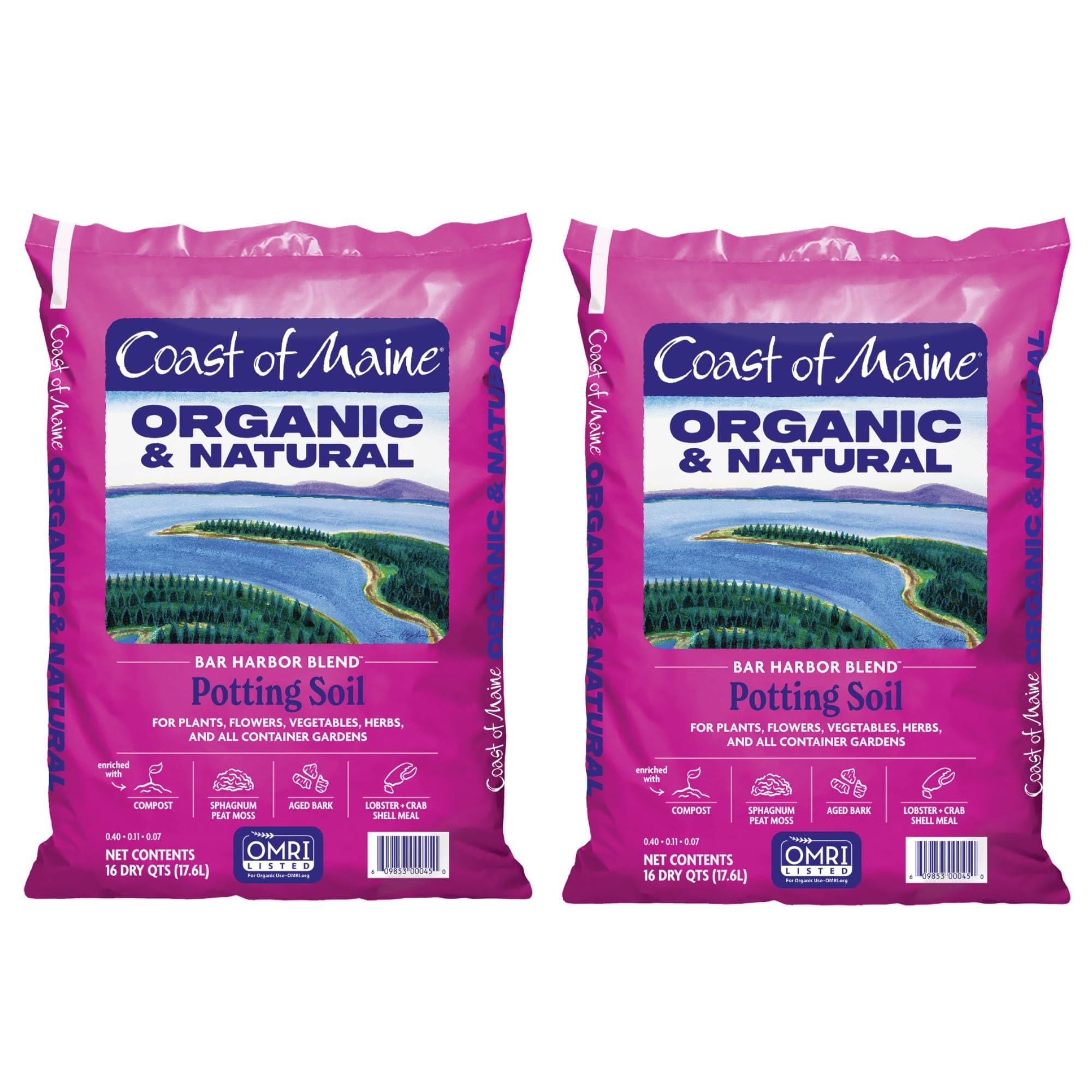
Coast of Maine’s Bar Harbor Blend stands out for its distinct marine-based organic amendment approach. This potting soil incorporates lobster and crab shell meal alongside kelp meal, providing a natural, slow-release source of calcium and chitin that supports plant cell wall integrity and can help suppress certain soil-borne pathogens. The base of sphagnum peat moss, compost, and perlite creates a dark, rich texture that holds moisture well without becoming soggy, making it ideal for both heavy-feeding vegetables and flowering ornamentals.
From a structural perspective, the blend feels noticeably more substantial than light, peat-only mixes. The compost content adds weight and microbial diversity, while the perlite inclusion ensures free drainage. Gardeners using this in potato bags and tomato containers have reported notably larger yields compared to previous seasons, with no signs of nutrient burn or weeds emerging from the bag.
Another strong point is the absence of a “funky” anaerobic smell often associated with poorly processed compost blends. The balanced pH and natural slow-release nitrogen from the marine meals mean plants receive consistent nourishment over time, reducing the need for frequent liquid feeding. It is a well-considered organic mix with a proven track record for container gardening.
What works
- Unique lobster/crab shell meal provides natural calcium
- Rich, dark texture with good microbial diversity
- Supports vigorous growth in heavy-feeding plants like tomatoes
What doesn’t
- Smaller bag size (16 qt) limits coverage for large projects
- Premium price point per quart compared to national brands
3. Miracle-Gro Potting Mix 3-Pack

The Miracle-Gro Potting Mix 3-Pack is the pragmatic choice for gardeners who want reliable, consistent results without overthinking the soil recipe. This is a proven medium formulated specifically for outdoor container plants, and its claim of feeding potted plants for up to six months is backed by the nutrient-release technology built into the mix. For annual flowers, vegetables like peppers and basil, and shrubs in containers, this provides a straightforward plug-and-plant experience.
Users consistently praise the moisture management of this mix — it does not compact into a hard brick after repeated watering cycles and retains enough water to reduce the daily watering burden during hot summer months. The 8-quart individual bags are also a practical size; they are easy to handle, store neatly, and each bag fills two standard 8-inch containers, which minimizes waste.
While it is not an organic formulation, the synthetic fertilizer component is precisely calibrated to deliver macro-nutrients during the critical establishment phase. Gardeners who prefer an all-natural approach may want to look elsewhere, but for sheer ease of use and consistently strong plant growth, this three-pack remains a go-to recommendation for container gardening.
What works
- Built-in fertilizer feeds container plants for up to 6 months
- Pleasant texture that resists compaction
- Convenient 8 qt bags are easy to handle and store
What doesn’t
- Not suitable for organic gardeners
- Feeding schedule may need adjustment for very heavy feeders
4. Michigan Peat General Purpose Premium Potting Soil

The Michigan Peat General Purpose mix is built for the gardener who needs volume and a reliable all-purpose medium for large containers and raised bed projects. This 50-pound bag delivers a proven blend of dark reed sedge peat, perlite, and sand, which provides a stable base for most common vegetables, flowers, and bulbs. The inclusion of both starter and slow-release fertilizers means immediate and sustained nutrition, reducing the frequency of supplemental feeding.
The texture is notably moister than some competitor mixes right out of the bag, which helps reduce initial dust and allows for immediate planting without lengthy pre-moistening. Users working with deep raised beds (2.5 feet or more) have reported that this mix provides the necessary mass and structural depth without settling too quickly. The 50-pound weight makes it ideal for large-scale projects where multiple smaller bags would be inconvenient.
However, the moisture retention that makes this mix convenient also requires attention to watering frequency, particularly in dense containers without adequate drainage. Some users have noted that the peat base can harbor fungus gnats if the bag is stored open or in a humid environment. For the price per pound, it remains a highly practical option for significant planting endeavors.
What works
- Excellent value for large container or raised bed projects
- Moist out of the bag, reducing dust and needing less prep
- Contains slow-release fertilizer for sustained feeding
What doesn’t
- Can be heavy and difficult to move for some gardeners
- Moisture content may promote fungus gnats in storage
5. Black Gold All Organic Potting Soil 2 Pack

The Black Gold All Organic Potting Soil 2-Pack is specifically designed for indoor and outdoor container gardeners who prioritize a gnat-free experience. Many organic potting soils arrive with pest larvae already present, but Black Gold has garnered a strong reputation among houseplant enthusiasts for arriving clean and bug-free. This is a critical consideration for anyone repotting sensitive indoor plants or starting a container garden on a patio where soil-borne insects are more noticeable.
The formulation itself is rich and pre-moistened, with a fine texture that allows for excellent root-to-soil contact without compacting into a dense block. Gardeners have noted that this mix promotes noticeable new growth within days of transplanting, and it does not develop standing water on the surface — a sign of good structural drainage. It is well-suited for a variety of container plants, including vegetables, herbs, and flowering ornamentals.
While the 8-quart bag size is convenient for small to medium containers, larger projects will require multiple packs. The premium for the organic designation and the clean formulation does reflect in the per-bag cost, but for gardeners who have fought fungus gnat infestations before, this peace of mind is well worth the extra investment.
What works
- Consistently arrives free of fungus gnats and pests
- Rich texture that promotes rapid new growth
- Organic formulation for clean indoor use
What doesn’t
- Small bag size requires multiple purchases for larger projects
- Premium pricing per quart compared to standard mixes
6. Espoma Organic Vegetable & Flower Garden Soil

The Espoma Organic Vegetable & Flower Garden Soil is formulated specifically for in-ground use, making it the targeted choice for gardeners preparing native soil for a new bed. Unlike container mixes designed to be self-contained, this blend is meant to be tilled into existing dirt to improve its structure and nutritional profile. The inclusion of Myco-Tone endo and ecto mycorrhizae is particularly valuable here, as these beneficial fungi establish symbiotic relationships with plant roots in the open soil environment.
The mix is enriched with earthworm castings, which add beneficial microbes and slow-release nutrients that do not burn tender transplants. Gardeners using this to plant tomatoes and marigolds have reported that plants in Espoma-amended beds significantly outperform those planted in unamended soil or even in bags of cheaper generic topsoil. The texture is well-structured, providing a good balance of moisture retention and drainage when incorporated into loamy or even clay-based native soil.
For gardeners who prefer a fully organic approach and have the ability to till this into an existing bed, this offers a focused solution. It is not designed as a standalone container mix — using it as such would result in compaction. But for its intended purpose of improving in-ground soil for vegetables and flowers, it performs at a level that has earned it a loyal following.
What works
- Myco-Tone mycorrhizae improve root-soil interaction
- Enriched with worm castings for gentle, slow-release feeding
- Excellent for amending in-ground vegetable and flower beds
What doesn’t
- Not suitable as a standalone potting mix for containers
- 1 cu ft bag may not cover large garden plots in one application
7. Avalution Premium Organic Coconut Coir Bricks 6-Pack
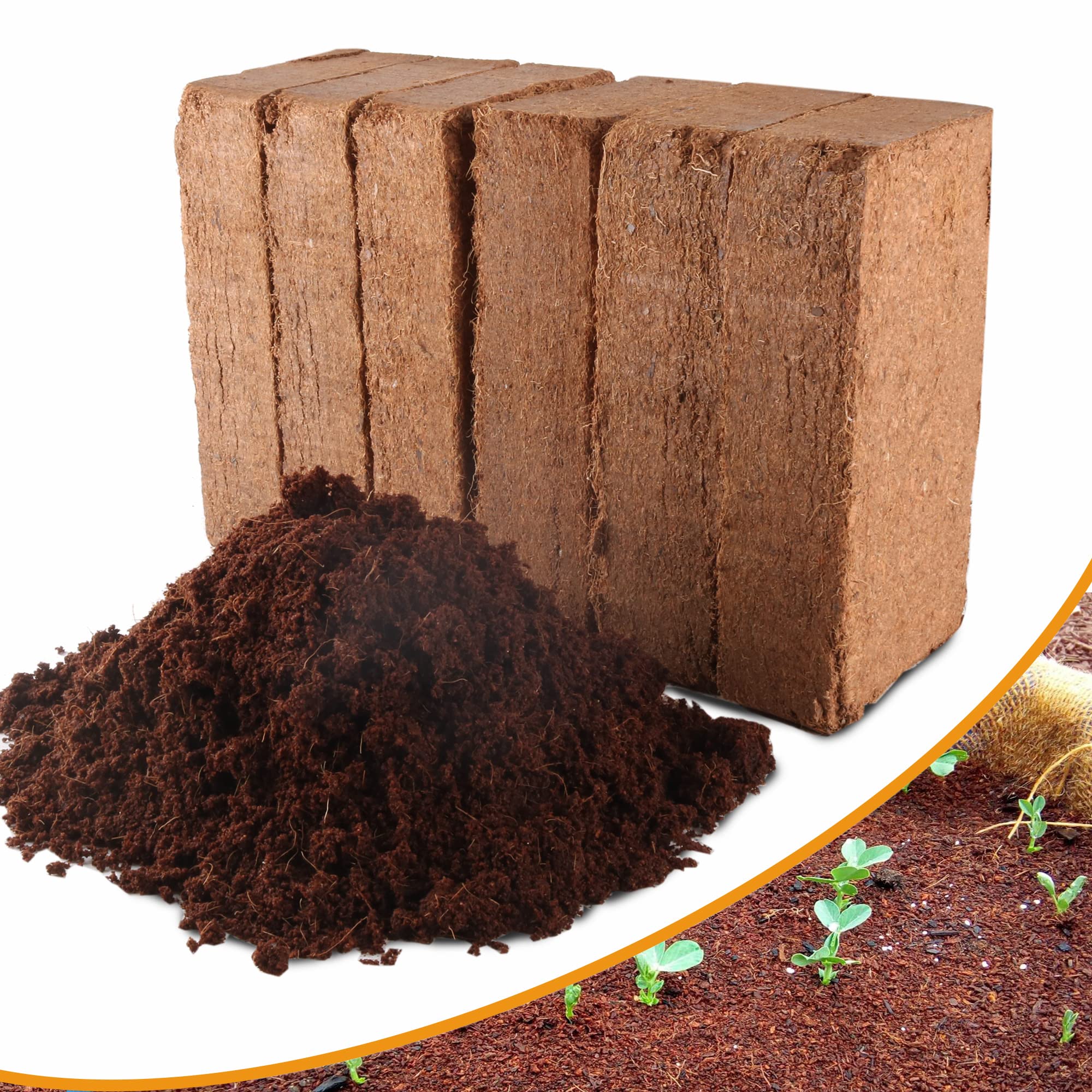
The Avalution Coco Coir Bricks serve not as a standalone soil mix but as a versatile amendment base that you can customize to your exact needs. These compressed bricks are made from coconut husk fiber, offering a low EC and pH-balanced medium that outperforms peat moss in water retention and re-wettability. When fully expanded, six bricks yield about 36 quarts of fluffy, fibrous coir — a volume that can be mixed with perlite, compost, or worm castings to create a tailored growing medium.
The primary advantage here is the exceptional water absorption rate: coir absorbs up to 8–10 times its weight in water, yet its fibrous structure resists waterlogging. This makes it ideal for mixing into heavy clay soils to improve drainage, or incorporating into container mixes to extend time between watering. Gardeners using coir as a top-dressing for lawn reseeding have reported improved germination rates due to the consistent moisture level at the soil surface.
Preparing the bricks requires pre-soaking in 4–5 quarts of water per brick, which some users may find less convenient than bagged soil. However, the space-saving storage of compressed bricks and the ability to control exactly what goes into the final mix makes this a smart purchase for the DIY gardener who wants to build their own custom blend without hauling heavy bags of wet soil.
What works
- Exceptional water retention without waterlogging roots
- Low EC and balanced pH safe for sensitive seedlings
- Compact brick form saves storage space
What doesn’t
- Requires pre-soaking and manual expansion before use
- Lacks nutrients; must be mixed with compost or fertilizer
Hardware & Specs Guide
Mycorrhizae Inoculants
Endo and ecto mycorrhizae are beneficial fungi that form a symbiotic relationship with plant roots. The fungi extend the root system’s reach, improving access to water and phosphorus. Look for this in mixes from Espoma and Coast of Maine, as it gives transplants a measurable head start in both in-ground and container settings.
Water Retention vs. Aeration
The ratio of peat moss or coco coir (which hold water) to perlite or sand (which create air pockets) defines how often you need to water. A mix with 30–40% perlite or coarse sand by volume provides robust drainage for succulents and herbs, while a higher peat/coir content suits moisture-loving vegetables like lettuce and tomatoes.
pH Balance
Most garden soil mixes should register between 5.8 and 6.8 on the pH scale. Sphagnum peat moss is naturally acidic and can lower soil pH, which benefits acid-loving plants like blueberries. Cocoa coir has a more neutral pH (5.5–6.5) and is less variable than peat, making it a forgiving base for general-purpose mixes.
Organic Certification
OMRI-listed products are approved for use in certified organic operations. This certification ensures the soil mix contains no synthetic pesticides, herbicides, or genetically modified organisms. If you are growing food crops and intend to maintain organic practices, seek out blends explicitly labeled with OMRI certification.
FAQ
What is the difference between garden soil and potting mix?
How much coco coir should I mix into heavy clay soil?
Can I reuse garden soil mix from last year’s containers?
Why does my bagged soil sometimes have fungus gnats?
Final Thoughts: The Verdict
For most gardeners, the best garden soil mix winner is the Espoma Organic Potting Soil Mix because it combines a rich organic ingredient list with the proven Myco-Tone mycorrhizae blend, making it incredibly versatile for both indoor containers and outdoor raised beds. If you want the unique marine-based fertility boost from lobster and crab shell meal, grab the Coast of Maine Bar Harbor Blend. And for a budget-friendly, DIY-focused amendment that improves moisture control like no other, nothing beats the Avalution Coco Coir Bricks.