
Specs are compiled from manufacturer listings and verified buyer reviews and can change over time — please confirm the key details on the product page before buying.
Roses are famously finicky about their dirt. They demand a pH that leans acidic, a texture that drains without drying out, and a steady supply of organic matter to fuel those repeat blooms. Picking the wrong bag of garden soil for roses can mean yellowing leaves, stubbornly closed buds, or a bush that just sits there.
I’m Rikta — the founder and writer behind Lawn Gear Lab. This guide is built by comparing the manufacturers’ published specifications and the patterns across verified customer reviews, so you get each pick’s real strengths and trade-offs instead of marketing spin.
The crowd loves the 20-quart Coast of Maine bag for a reason. Here is exactly what makes it and the other top contenders worth your time and your rose bed. This is the best garden soil for roses you can buy without second-guessing your decision.
Our Picks at a Glance

How To Choose The Best Garden Soil For Roses
Roses are heavy feeders that prefer soil with a pH between 6.0 and 6.5. If you grab a generic topsoil or a mix meant for vegetables, you risk a pH that is too alkaline, which locks up essential nutrients like iron and turns rose leaves a sickly yellow between the veins. The three picks here are all formulated with acid-loving plants in mind, which puts you in the right zone from the first shovel.
Volume Matters
Soil is sold by volume in quarts, not by weight. A 20-quart bag covers roughly two to three standard 18-inch containers or about a 4-by-4-foot in-ground bed with a 3-inch top-dress. If you are filling large raised beds or multiple pots, factor that in — the largest bag on this list is 20 quarts, so for bigger projects you might want two bags.
Ingredients + Drainage
Rose roots hate sitting in water. You want a mix that balances moisture-holding ingredients like sphagnum peat moss or composted manure with drainage aids like perlite or bark mulch. If a bag feels like wet concrete after a rain, the roots will rot. The best mixes feel loose and crumbly when you squeeze a handful.
Quick Comparison
| Model | Best For | Volume | Key Ingredient | OMRI Listed | Amazon |
|---|---|---|---|---|---|
| Coast of Maine (Acid)★ Best Overall | Acid lovers & fruit | 20 qt | Composted Manure | Yes | Amazon |
| Coast of Maine (Roses) | Roses & flowers | 20 qt | Composted Manure | Yes | Amazon |
| Soil Sunrise Acid Loving | Containers & indoor pots | 12 qt | Peat & Pine Mulch | No | Amazon |
In‑Depth Reviews
1. Coast of Maine Organic & Natural Planting Soil for Acid Loving Plants
Our pick — over 4.5★ from 600+ verified ratings; the strongest balance of quality and price.
The 20-quart bag that turns blueberry patches and rose beds into a sea of blooms.
This is the bag buyers keep coming back to for acid-loving plants — rhododendrons, azaleas, blueberries, and yes, roses. It is specifically formulated with a low pH and contains composted manure, sphagnum peat moss, and aged bark. Those ingredients work together to keep the soil loose and well-drained while holding enough moisture to satisfy plants during a dry stretch. The blend is OMRI listed for organic use, which matters if you are trying to keep your garden free of synthetic additives.
At 20 quarts, this bag is the same size as the dedicated rose formulation below, but it is 20 quarts, versus the Soil Sunrise’s 12 quarts. That makes it the better choice if you are filling a larger bed or multiple containers. Buyers report that “that bag was just the right size” for refreshing planter soil and that it helps plants grow quickly without any unpleasant smells. The aspect that draws the most praise is quality — the soil itself is consistent, dark, and ready to use straight from the bag. One thing to know: acidity gets mixed feedback. Some find it perfectly low for their blueberries, while others note it is not as acidic as expected. If your soil’s pH is a critical concern, keeping a cheap test strip handy is smart.
Why gardeners stock up
- Large 20-quart bag covers more ground than smaller premium mixes
- OMRI-listed organic ingredients you can trust for edible beds
- Naturally light texture that does not compact into mud
Things to keep in mind
- Acidity level varies; not all bags land at the same exact pH
- Not specifically labeled for roses — designed for all acid-loving plants
Your best bet if: You want the most volume for your money in an organic, low-pH blend that works for roses, blueberries, and every other acid-lover in your yard.
Think twice if: You need a guaranteed precisely calibrated pH out of the bag — test it yourself or adjust with additives if your plants are especially sensitive.
2. Coast of Maine Organic & Natural Planting Soil for Roses & Flowers

The organic mix that is labeled for roses and arrives at the same 20-quart bang for your buck.
If you prefer a bag that says “roses” right on the front, this is your pick. Coast of Maine makes a dedicated formulation for roses and flowers that uses the same core ingredients — composted manure and sphagnum peat moss — but it is blended specifically for the nutrient needs of flowering perennials. It works equally well in the ground and in containers, which is handy if you have a mix of raised beds and pots. Organic and OMRI listed, it is a straightforward swap-in for existing garden soil or a complete fill for new planting holes.
Buyers consistently call out the quality and richness of this soil. The description that keeps popping up in the review pages is “dark, rich soil” with a texture that signals good things to roots. One owner growing roses in the garden summed it up: “organic planting soil that works well and doesn’t smell.” A minority of bags have a noticeable odor, described as strong enough to attract attention from dogs or flies, but most owners mention no smell at all. At the same volume as the acid-lover blend above (20 quarts), this gives you identical coverage for a rose bed — roughly a 4-by-4-foot area dressed a few inches deep. The mixture of peat moss, bark, and soil ensures the drainage that roses crave, so you are less likely to deal with waterlogged roots after a heavy storm.
What wins people over
- Labeled for roses, so zero guesswork on compatibility
- Good size at 20 quarts for the money — buyers call it “great value”
- Works in containers and in-ground flower beds
One trade-off
- A few bags come with a strong compost smell that can linger outdoors
- Not formulated for general acid-loving plants like blueberries
Reach for this if: You want a dedicated rose-and-flower mix from a trusted regional brand, without worrying about pH adjustment.
Look elsewhere if: You are planting blueberries or azaleas alongside your roses — the acid-loving version above covers all those plants in one bag.
3. Soil Sunrise Acid Loving Plant Potting Soil Mix (12 Quarts)
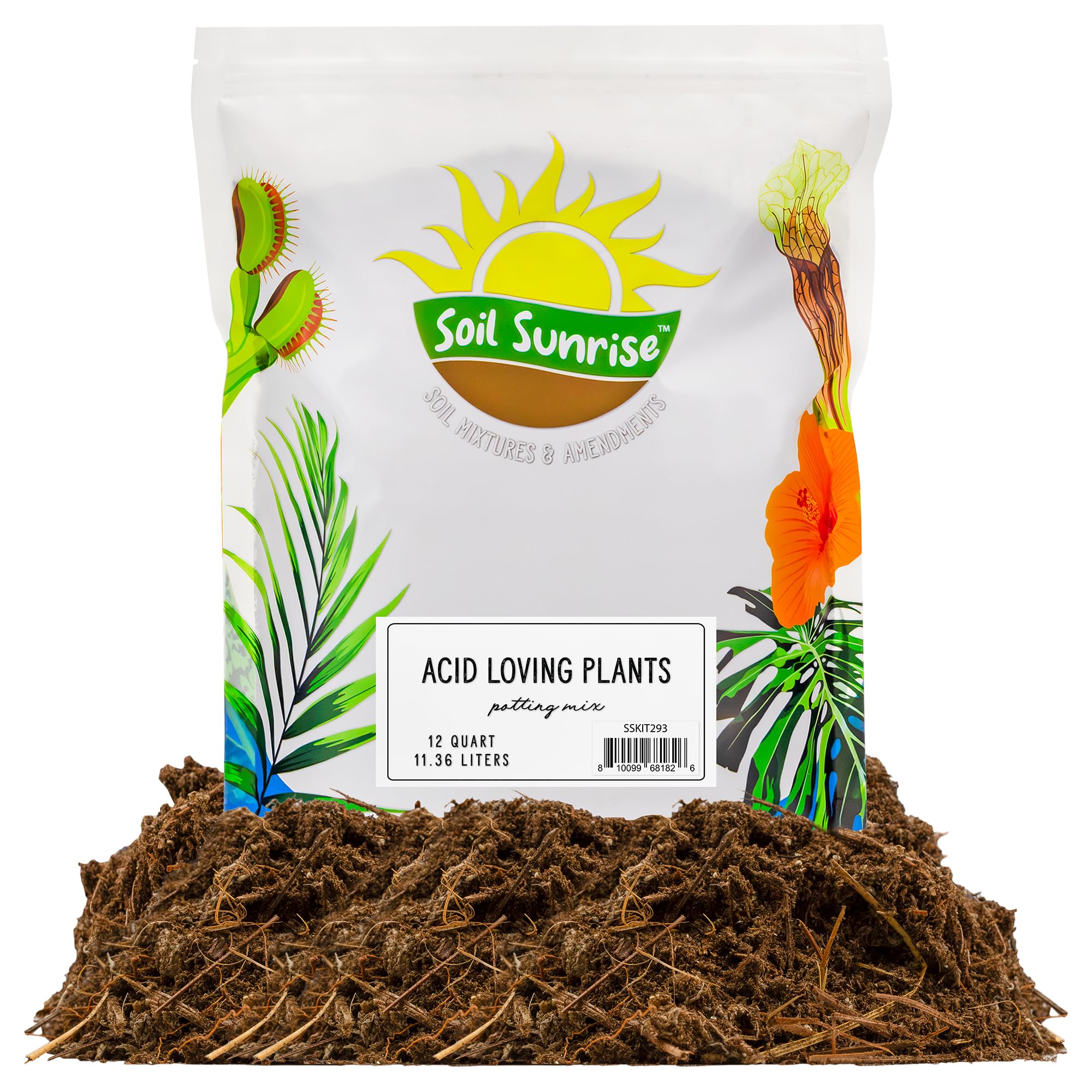
The artisan-crafted Kentucky blend that turned a 6-inch cutting into a five-foot bush.
Soil Sunrise takes a different approach from the Coast of Maine options. This is a container-focused mix formulated for the most demanding acid-loving plants — azaleas, rhododendrons, blueberries, gardenias, and fuchsias. The ingredients list is built around peat moss, pine needle mulch, pine bark mulch, sphagnum moss, and vermiculite. That combination creates exceptional aeration and drainage for pots, where roots are more prone to suffocation than they are in the ground.
Customers note dramatic results: one cutting of an olive tree grew from 6 inches to a 5-foot bush in three years, and a coffee plant “doubled in size after repotting.” At 12 quarts, however, this bag is noticeably smaller than the 20-quart Coast of Maine bags. Some buyers were caught off guard by the size, noting “the bag is tiny.” The company packages it in a thin resealable pouch, which works for storage but does not hold up to rough handling. One tip from the reviews: if the soil arrives feeling dry and resists water, you need to pre-moisten it thoroughly before potting — after that initial soak, it re-wets easily for all future waterings.
Why enthusiasts choose it
- Packed with pine-based ingredients that naturally lower and buffer pH
- Excellent drainage for container-grown roses and acid-loving plants
- Proven growth results — olive and gardenia owners see big gains
Worth noting
- 12 quarts is a small bag; be ready to buy multiple for larger containers
- Thin packaging can tear in transit or storage
Buy it for: Potted roses, gardenias, and fuchsias where aeration and pH precision make the difference between surviving and thriving.
Think twice if: You are filling a large in-ground bed — the 20-quart Coast of Maine bags will go further for less money.
Understanding the Specs
Volume (Quarts)
Bag size is the single most practical number to check. A 20-quart bag covers roughly a 4-by-4-foot bed with a 2- to 3-inch layer, or fills two large 18-inch pots. A 12-quart bag is best for a single large container or refreshing a couple of medium pots. When you compare two bags, the bigger number means more actual soil, not heavier or denser soil.
OMRI Listing
OMRI (Organic Materials Review Institute) listing means the product is allowed for use in certified organic production. It is a third-party check that the ingredients — composted manure, peat moss, bark — come from natural sources without synthetic fertilizers or prohibited chemicals. If organic gardening matters to you, look for this seal on the bag.
Key Drainage Ingredients
Perlite, vermiculite, pine bark mulch, and sphagnum moss all create air pockets in the soil. That prevents compaction and lets water drain freely so rose roots get oxygen between waterings. A soil that clumps into a hard ball when wet is missing these structural ingredients.
pH Balance
Roses thrive in slightly acidic soil (pH 6.0 to 6.5). Soils labeled “for acid-loving plants” are typically blended with peat moss, pine products, or elemental sulfur to keep the pH on the low side. If a bag includes composted manure, it also adds natural acidity as the manure breaks down.
FAQ
Can I use any potting soil for roses?
How many quarts of soil do I need for a rose bush?
Is organic soil better for roses?
What does OMRI listed mean for garden soil?
Does this soil work for both in-ground beds and containers?
Why does my rose soil smell bad?
Can this soil be used for blueberries or azaleas?
How do I know if my soil pH is right for roses?
What is the difference between peat moss and sphagnum moss in soil?
Does the Soil Sunrise mix need special preparation before potting?
Final Thoughts: The Verdict
For most rose gardeners, the strongest all-around pick is the Coast of Maine Organic & Natural Planting Soil for Acid Loving Plants because it delivers 20 quarts of OMRI-listed organic soil at a fair price, with proven performance from hundreds of buyers. If you want a bag that is labeled specifically for roses and flowers, grab the Coast of Maine Roses & Flowers version — same volume and quality, tailored for bloom production. And for container gardeners who want a premium pH-balanced mix that delivers dramatic growth results, the Soil Sunrise Acid Loving Plant Potting Soil Mix is the one to reach for, especially if you are growing fussy fuchsias or gardenias in pots.
How We Picked
We do not accept paid placement. Every pick is matched to a real buyer and a real use-case; we do not hands-on test units.
Sources & Methodology
Specifications: manufacturer listings and product documentation. Review insights: verified customer reviews, as of July 2026. Pricing: not shown on this page (it changes often); check the current price via the retailer link.
As an Amazon Associate, Lawn Gear Lab earns from qualifying purchases. This does not affect which products we feature.