
Specs are compiled from manufacturer listings and verified buyer reviews and can change over time — please confirm the key details on the product page before buying.
Staring at shelves of bagged and bottled plant food can leave anyone frozen. Every label shouts a different set of numbers and a different promise — bigger blooms, fatter vegetables, greener leaves. The real challenge isn’t finding a fertilizer. It is picking the one that actually matches what you grow, how you garden, and how much work you want to do. This guide cuts through the label noise to nine proven choices, each matched to a specific job in your yard or containers.
I’m Rikta — the founder and writer behind Lawn Gear Lab. This guide is built by comparing the manufacturers’ published specifications and the patterns across verified customer reviews, so you get each pick’s real strengths and trade-offs instead of marketing spin.
Whether you are coaxing roses into a second flush of blooms or pushing your tomato patch toward a record harvest, the right garden soil fertilizer makes the difference between a good season and a great one.
Our Picks at a Glance


How To Choose The Best Garden Soil Fertilizer
Garden fertilizer isn’t one-size-fits-all. The food that makes your rose bushes explode with flowers can send your tomato plants into leafy overdrive with very little fruit. Here are the three most important things to get right before you open a bag.
Match the N-P-K Ratio to Your Goal
The three numbers on every label stand for Nitrogen (N), Phosphorus (P), and Potassium (K). Nitrogen drives leafy green growth — perfect for lettuce and spinach. Phosphorus supports roots, flowers, and fruit — that is what your tomato and pepper plants need once they start setting fruit. Potassium strengthens stems and helps plants handle heat and drought. A balanced 4-4-4 or 3-4-4 works for general feeding. A high-mid-number like 4-3-2 leans toward flower production. Straight 0-0-60 is pure potassium for fruit trees that need a targeted boost.
Granular vs. Liquid — Choose Your Routine
Granular fertilizers — the kind you sprinkle on the soil and water in — release nutrients gradually over weeks. This makes them ideal for a monthly “set and forget” feeding schedule. Liquids mix with water and feed the plant immediately. They give faster results but require more frequent applications, typically every one to three weeks. Granules are easier for large garden beds. Liquids shine for containers and for giving ailing plants a quick turnaround.
Organic Certification and Your Soil Health
Organic fertilizers feed your soil’s biology along with your plants. Ingredients like bone meal, fish emulsion, worm castings, and kelp meal build organic matter and support beneficial microbes. Synthetic fertilizers deliver exact nutrient doses fast but do little for long-term soil structure. Look for the OMRI (Organic Materials Review Institute) seal if you want a certified organic product. An organic option is gentler — it is very hard to burn your plants with one, whereas a synthetic chemical fertilizer can damage roots if you apply too much.
Quick Comparison
| Model | Best For | NPK Ratio | Form | Weight | Amazon |
|---|---|---|---|---|---|
| Espoma Organic Rose-Tone 4-3-2★ Best Overall | Flowering plants & roses | 4-3-2 | Granules | 4 lbs (2-pack) | Amazon |
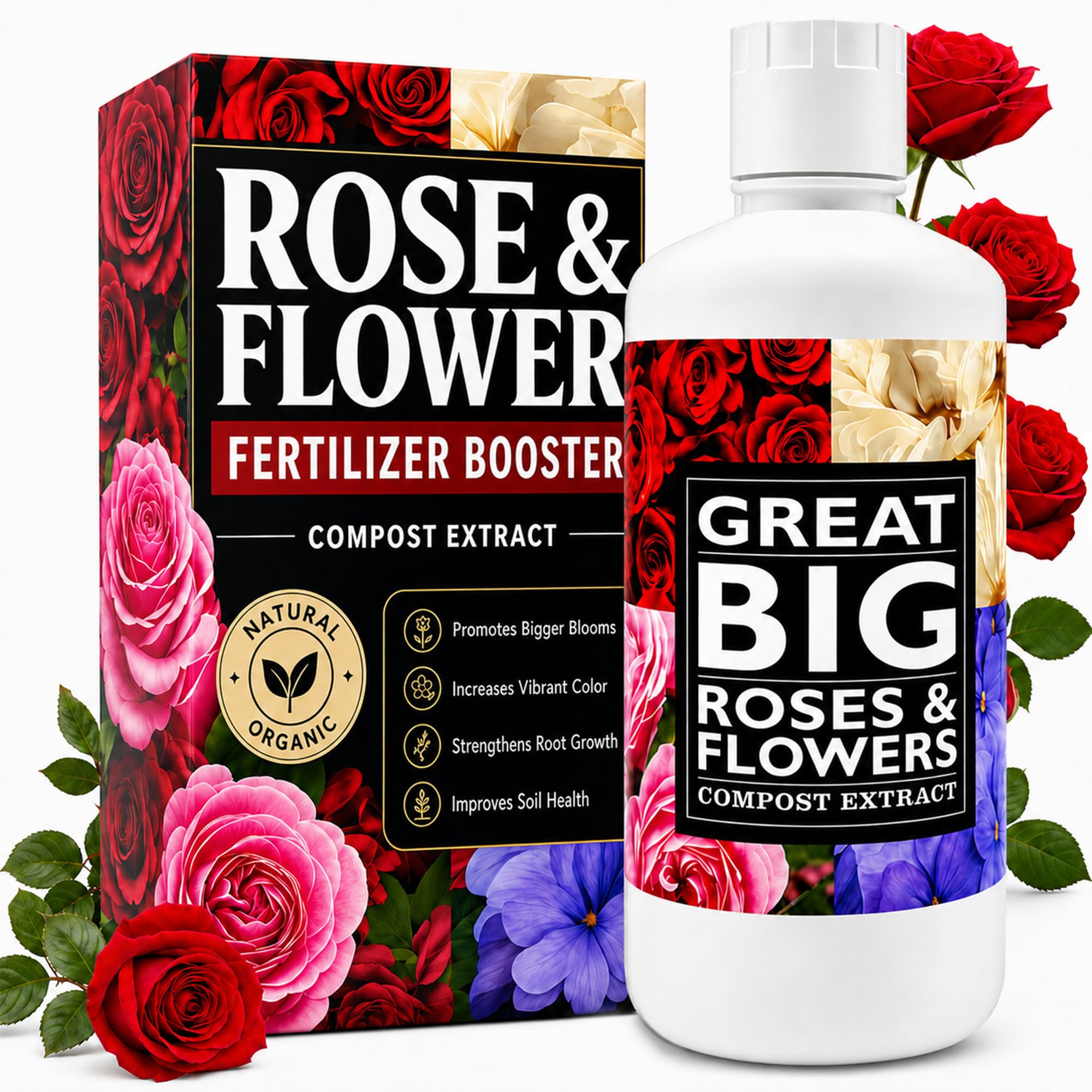
| Great Big Roses and Flowers Liquid FertilizerPremium Pick | Liquid rose & flower booster | Proprietary blend | Liquid | 32 oz | Amazon |
| Espoma Organic Garden-Tone 3-4-4Veggie Champion | Vegetables & herbs | 3-4-4 | Granules | 4 lbs (2-pack) | Amazon |
| Back to the Roots Organic Worm Castings | Gentle all-purpose soil amendment | Variable (natural) | Granules | 5 lbs | Amazon |
| Cz Garden Muriate of Potash 0-0-60 | Fruit & flower potassium boost | 0-0-60 | Granules | 5 lbs | Amazon |
| Down To Earth All Purpose 4-6-2 | All-purpose organic feeding | 4-6-2 | Granules | 5 lbs | Amazon |
| FoxFarm Happy Frog All Purpose 6-4-5 | Container & ornamental plants | 6-4-5 | Granules | 4 lbs | Amazon |
| Alaska Fish Fertilizer 5-1-1 | Leafy green growth & transplants | 5-1-1 | Liquid | 115 oz | Amazon |
| Jobe’s Organics All Purpose 4-4-4 | Large gardens & all-purpose feeding | 4-4-4 | Granules | 16 lbs | Amazon |
In‑Depth Reviews
1. Espoma Organic Rose-Tone 4-3-2 Organic Fertilizer (Pack of 2)
Our pick — over 4.5★ from 700+ verified ratings; the strongest balance of quality and price.
The rose whisperer that turned spindly drift roses into bloom factories.
This is the pick that rose lovers are most vocal about — and for good reason. The blend delivers a 4-3-2 ratio with 5% calcium, using Espoma’s proprietary Bio-tone formula made from natural and organic ingredients. No sludges, no toxic extras, just granules you sprinkle around the drip line once a month from May through September and water in.
Buyers report that an organic product dramatically improved drift roses’ flower production using just a cup per plant per month. “Within days I have growth popping up everywhere,” one owner sums up. The catch is the smell — some find it mild, others call it vile — but the bloom count wins the argument. The 4-3-2 ratio provides the middle number (phosphorus) that roses crave for abundant flowers without pushing excessive leafy growth. At nearly 4.8 stars across hundreds of ratings, the crowd is clear: this is the standard-setter.
What wins people over
- Effectiveness is the most-praised aspect — owners see greener leaves and more buds within weeks
- Approved for organic production; registered as an Organic Input Material
- Works on roses, viburnum, bougainvillea, and clematis from the same bag
The honest trade-off
- Odor is a mixed bag — what smells like good earth to you might smell like a barn to your partner
- The 4-pound bag looks small, though owners mention it “goes a long way” when applied monthly
Reach for this: you tend roses, bougainvillea, or clematis and want a monthly organic feed that produces visible bloom results.
Be aware: the scent is genuinely polarizing — if you are sensitive to organic smells, this one may test your tolerance.
2. Great Big Roses and Flowers Liquid Fertilizer Booster (32 oz)
The liquid booster that reawakens roses that have not bloomed in years.
Where the Espoma Rose-Tone works as a steady monthly granular feed, this concentrate goes straight to the root zone as a fast-acting liquid. Mix 4 ounces with one gallon of water and apply around the base — no digging, no tilling. The formula delivers humic acids, seaweed, and over 70 chelated trace minerals that open up nutrients already sitting in your soil. Customers note rose bushes that had not bloomed in years producing big flowers within weeks of application. One long-time owner calls it “proven reliable by me” over three years, noting that a single bottle makes 30 gallons of feed covering a full growing season.
The main sticking point is cost — the value-for-money verdict is negative in the review data, meaning you pay a premium for this kind of concentrated biological activity. But if you want visible results fast and love experimenting with liquid feeding schedules, this is in a league of its own.
The big wins here
- Effectiveness is the most-praised feature — owners see abundant early blooms and healthy foliage even after a harsh winter
- Works across roses, hydrangeas, citrus, hibiscus, and perennials
- Replaces the need for separate acidifier or compost starter
The hard truth
- Value for money is a genuine negative vote — you pay more per application than granular options
- Requires mixing every time; less convenient than a sprinkle-and-go granule
Best for: gardeners who want a liquid booster that can wake up stubborn perennials and who don’t mind mixing a gallon at a time.
Think twice if: you prefer a simple monthly sprinkle — the liquid routine is more hands-on than any granular.
3. Espoma Organic Garden-Tone 3-4-4 Organic Fertilizer (Pack of 2)
The vegetable patch’s best friend — especially for tomatoes and peppers.
If you grow food, this is the Espoma formula you want. The 3-4-4 analysis shifts the emphasis toward phosphorus (the middle number) and potassium, which support fruit development and plant resilience rather than just leaves. Reviewers point out that it “works very well for my tomatoes & peppers.” One gardener in zone 10b saw an urban garden produce 400 pounds of tomatoes and 100 pounds of carrots after switching to Espoma fertilizers. The 5% calcium is a bonus for blossom-end rot prevention in tomatoes and peppers.
The 64-ounce total unit count from the two-pack is smaller than the Rose-Tone 128-ounce pack, so heavy feeders in a large vegetable garden will go through it faster. But for targeted monthly feeding around the drip line of warm-season crops, this is the organic vegetable fertilizer that earns its place.
Why it works: Effectiveness is the most-discussed aspect — owners consistently praise how it pushes vegetable plants into high gear.
The limitation: It has a noticeable organic smell that some find off-putting, and the 64-ounce pack size runs out faster than the larger bags in this list for big gardens.
Best for: vegetable gardeners who want a monthly organic feed that is proven to boost tomato production and overall yield.
skip it if: you have a very large vegetable patch — the two-pack covers a medium garden, not acres.
4. Cz Garden Muriate of Potash 0-0-60 Fertilizer

The straight-potassium heavy hitter that finally put fruit on struggling trees.
This is not an all-purpose feed. It is a specialized tool for the moment your plants need a targeted potassium spike — specifically for fruit trees, flowering perennials, and heavy-fruiting vegetables. The 0-0-60 ratio contains zero nitrogen and zero phosphorus, delivering only potassium (K) in its most concentrated form. Shoppers say: “My dirt is not so good for fruit trees, finally I had fruit using this fertilizer!” Another owner reports their apple and peach trees produced noticeably more fruit after a spring treatment. The granules are water-soluble and come in a 5-pound resealable pouch, so you mix exactly what each plant needs.
The critical catch is that this is not a stand-alone feed. Since it lacks nitrogen and phosphorus, you must pair it with a balanced fertilizer or use it only when a soil test confirms a potassium deficiency. Used incorrectly, it can throw your soil chemistry out of balance. But for that specific gap, it is class-leading.
What it does well: The high potassium content makes plants more resilient to heat, stress, and disease while improving fruit density and size. Owners consistently call it good quality for the money.
Who it is not for: Anyone looking for a complete fertilizer. This is a specialist supplement for the potassium-deficiency diagnosis only.
Reach for this: your fruit trees need a specific potassium boost to set fruit or your soil test shows low K levels.
Pass on it: you want one bag that feeds everything — you need the N and P that this product intentionally omits.
5. Down To Earth All Natural Fertilizers Organic All Purpose 4-6-2

The 15-in-one organic mix that finally clears out the shed clutter.
If you are tired of buying separate products for your vegetable bed, your container herbs, and your flower border, this 5-pound box replaces them all. The 4-6-2 formula combines fish bone meal, blood meal, feather meal, rock phosphate, langbeinite, greensand, humates, and kelp meal — ingredients that cover almost every organic base. Buyers report that one 15-pound bag (this is sold as a 5-pound box, but the same product scales up) lasts nearly a year for an avid gardener. It is gentle enough not to burn transplants yet rich enough to revive ailing plants — one reviewer noted that pale, flimsy tomato plants turned around within two weeks after application.
The honest downsides: the fishy odor is noticeable and can attract raccoons if not worked into the soil, and opinions on value for money are mixed because the price feels higher per pound than some competitors.
Why owners love it: Quality is the most-mentioned aspect — the ingredient list reads like an organic gardener’s wish list, and it simplifies feeding to one box.
The trade-off: The smell is a genuine issue during application, and you need to cover it with soil or water to avoid unwanted visitors.
Best for: organic gardeners who want a single premium all-purpose blend that handles vegetables, ornamentals, and containers without mixing multiple products.
Think twice if: you garden near a patio or door where a fishy odor would be unwelcome — this needs watering in promptly.
6. FoxFarm Happy Frog All Purpose Fertilizer 6-4-5

The Monstera-approved feed that turned a container garden into a jungle.
FoxFarm’s Happy Frog formula sits at a 6-4-5 ratio — noticeably higher in nitrogen than most of the other balanced organic blends here. That higher first number is what makes it excellent for leafy ornamentals, container-grown vegetables, and especially Monstera lovers. Reviews confirm it “works very well with pretty much all Monstera plants” — Thai constellation, albos, the whole family. It contains beneficial soil microbes and mycorrhizal fungi that enhance nutrient and water uptake, which is a big deal for plants in pots where natural soil biology is missing. Owners of raised beds and Green Stalk vertical systems report success using it sparingly in each pocket.
The downside that keeps coming up: the smell. One owner puts it bluntly — “it stinks like poo big time” — and the odor can linger for days after watering. For outdoor container gardening, that is manageable. For indoor houseplant feeding, it might test your relationship with the plants.
What stands out: Quality is the top aspect — the OMRI listing and active soil biology make it a premium choice for ornamental growers who want visible results.
The major catch: That nitrogen-rich 6-4-5 ratio is less ideal for flowering and fruiting stages where a lower first number would push blooms instead of leaves.
Best for: container gardeners, houseplant collectors (especially Monstera fans), and anyone who wants active soil microbes in their pots.
pass on it if: you are sensitive to strong manure smells or you need a flower-and-fruit focused feed with a lower first NPK number.
7. Back to the Roots Organic Worm Castings (5 lb)

The soil supercharger with zero risk of burning your plants.
Worm castings are not a fertilizer in the traditional N-P-K sense. They are a soil amendment that adds beneficial microbes, improves soil structure, and provides a mild, slow-release nutrient profile that is nearly impossible to overdo. This 5-pound bag of pure USA vermicompost blends easily into chunky soil mixes — coco chips, perlite, charcoal — without compacting. One buyer reports using “a ton of this” across their garden, especially for milkweed, because it is safe for monarch butterfly caterpillars.
The biggest caveat: one batch contained a small steel cable fragment — an occasional quality-control miss that buyers should check before using. Also, the nutrient content is not standardized the way a bagged fertilizer’s N-P-K is, so you will still need a complete fertilizer for heavy feeders during the peak growing season. But as a base-layer soil builder, this is tough to beat.
What gardeners love: Quality is the most-praised aspect — the castings are cleaner and less dry than store brands, and the bag is resealable.
The honest limitation: It is not a complete plant food. Use it as a soil builder and microbial inoculant, then supplement with a balanced fertilizer for heavy feeders.
Reach for this: you want to improve soil biology with zero risk of fertilizer burn, especially for sensitive plants like seedlings and milkweed.
Look elsewhere if: you need a precise N-P-K ratio for heavy feeders — worm castings are a supplement, not a full feed.
8. Jobe’s Organics Granular All Purpose Fertilizer 4-4-4 (16 lbs)

The 16-pound bag that fed a garden and produced so much squash the family got sick of it.
If you have a large garden and want the best cost-per-pound among the organic granular options, Jobe’s 16-pound bag is the clear choice. The balanced 4-4-4 NPK ratio is safe for everything from vegetables to shrubs to trees. Owners use it as a dry top-dress and also as a liquid feed — one buyer steeped 1 cup of granules in 1 gallon of dechlorinated water for 24 hours and applied it weekly, producing such a massive harvest that they wrote “my family got really sick of eating squash last summer.” The OMRI listing confirms it is certified for organic production.
The downside is the strongest chicken manure smell of any product here — the odor verdict is negative in the data, meaning it is not just a passing whiff but a genuine presence that lingers for days after top-dressing. Also, the 4-4-4 ratio is middle-of-the-road; it will not give you the targeted phosphorus push that the Down To Earth 4-6-2 or Espoma Garden-Tone 3-4-4 deliver for fruiting crops.
The big draw: Effectiveness is the top aspect — owners see visible results within 1-2 days of application, and the 16-pound bag covers a huge area.
What to accept: The odor is the most-discussed negative, and the balanced 4-4-4 is a generalist, not a specialist.
Best for: gardeners with large plots or raised beds who need a cost-effective organic all-purpose feed and are not bothered by manure smell.
Pass on it if: your garden is near a frequently used outdoor space, or you need a higher-phosphorus formula for peak tomato and pepper production.
9. Alaska Fish Fertilizer OMRI Listed 5-1-1 (115 fl oz)

The cold-pressed fish that turns a greenhouse into a growth factory.
This is the nitrogen specialist in the lineup. The 5-1-1 ratio delivers a heavy dose of the first number — nitrogen — which is what leafy greens, transplants, and any plant coming out of a slow period needs most. The 115-ounce bottle is the largest liquid option here, offering excellent value per ounce in the liquid category. It is OMRI listed and uses a cold-pressed process to preserve micronutrients.
The big catch: fish fertilizer smells, and this one does not hide it. The scent is potent enough that “neighbors can smell it” during application, though it dissipates within a day. Also, the 5-1-1 profile is low in phosphorus and potassium, so you need a separate bloom booster or potash supplement if you want heavy flowering or fruiting.
What owners value most: It is easy to mix, safe around pets and kids when watered in, and produces strong stems and vibrant leaf color, especially on tomatoes.
The honest downside: The fish smell is intense during mixing and application, and the low P and K numbers mean this is not a complete feed for flowering plants.
Best for: leafy greens, transplant feeding, and any plant that needs a fast green-up from a concentrated organic nitrogen source.
it’s not for you if: you are feeding flowering or fruiting crops in their production stage, or you cannot stand the fishy smell even for a day.
Understanding the Specs
N-P-K Ratio
The three numbers every bag displays stand for Nitrogen (N), Phosphorus (P), and Potassium (K). Nitrogen drives leaf and stem growth — the higher the first number, the greener and bushier your plants get. Phosphorus (the middle number) powers root development, flowers, and fruit. Potassium (the last number) strengthens cell walls, helping plants resist disease and heat. A 4-3-2 is a flower-focused feed. A 5-1-1 is a nitrogen-heavy green-up tonic. A 0-0-60 is pure potassium for targeted deficiency correction.
Granular vs. Liquid Fertilizer
Granular fertilizer is dry pellets you scatter on the soil. It breaks down slowly, releasing nutrients over weeks to months depending on moisture and soil temperature. That makes it ideal for a monthly “once and done” feeding schedule. Liquid fertilizer is a concentrate you mix with water and apply immediately. Plants absorb it faster — you can see results in days rather than weeks — but you need to repeat every one to three weeks. Granules suit large gardens and busy schedules. Liquids suit containers and fast corrective feeding.
OMRI Listing and Organic Certification
OMRI stands for Organic Materials Review Institute. When you see the OMRI seal on a bag, it means the product has been reviewed and approved for use in certified organic production. It is a third-party verification, not a marketing claim. If you are gardening organically — avoiding synthetic chemicals — an OMRI-listed product is the safest way to know your fertilizer aligns with organic standards. Products without the seal may still be “natural” but have not passed the formal review.
Soil Microbes and Mycorrhizal Fungi
Some premium fertilizers include live soil biology — beneficial bacteria and fungi that form a partnership with plant roots. Mycorrhizal fungi extend the root system’s reach, helping the plant access water and nutrients several feet beyond the root zone. Soil bacteria help break down organic matter into plant-usable forms. These additives are most useful in containers and raised beds where the natural soil food web is limited. In open ground, the native biology is usually sufficient if you feed it with organic matter.
FAQ
How often should I apply fertilizer to my garden soil?
What does the three-number N-P-K ratio mean for my vegetables?
Can I use rose fertilizer on my vegetable garden?
How long does granular fertilizer take to work in the soil?
Is liquid or granular fertilizer better for container plants?
Will organic fertilizer burn my plants if I use too much?
What is the difference between fertilizer and soil amendment?
Why does my organic fertilizer smell bad and does the odor last?
Can I mix different fertilizers together for a custom blend?
Should I take a soil test before buying fertilizer?
Final Thoughts: The Verdict
For most gardeners, the garden soil fertilizer winner is the Espoma Organic Rose-Tone 4-3-2 because it delivers the most dramatic bloom results with a trusted organic pedigree and a very high owner satisfaction rate. If you want a liquid booster that can