
Specs are compiled from manufacturer listings and verified buyer reviews and can change over time — please confirm the key details on the product page before buying.
You want healthier plants, but staring at a shelf of bags and bottles leaves you guessing what your garden actually needs. This guide breaks down the real-world performance of the best garden soil amendments so you know exactly which one fixes your problem — from heavy clay to nutrient-starved pots.
I’m Rikta — the founder and writer behind Lawn Gear Lab. This guide is built by comparing the manufacturers’ published specifications and the patterns across verified customer reviews, so you get each pick’s real strengths and trade-offs instead of marketing spin.
We have dug into the formulas, the uses, and the owner experiences to find the best garden soil amendments for every situation — whether you are fixing acid-loving plants, loosening heavy clay, or feeding a thriving vegetable patch.garden soil amendments
Our Picks at a Glance


How To Choose The Best Garden Soil Amendments
Soil amendments are not a one-size-fits-all solution. The wrong choice can waste your money and do nothing for your plants, so it pays to match the product to your soil’s actual problem. Here is how to do that.
Identify Your Soil’s Core Problem First
If your soil is heavy, sticky clay that turns into concrete when dry, you need a physical conditioner like gypsum to break up the particles and improve drainage. If your plants look pale and weak but your soil drains fine, your issue is likely missing nutrients or wrong pH. A mineral-rich product like azomite or a targeted pH adjuster like sulfur solves that specific mismatch.
Check the Purity and Source
Some products add fillers or come from uncertain sources. Pure mined gypsum with no additives, organic biochar from wood trimmings, and 97% pure calcium sulfate all give you predictable, repeatable results. The label should state exactly what is inside, not just fancy marketing. OMRI-listing or similar organic certifications are a strong signal the product is clean and safe for your vegetable patch.
Decide Between Quick Fix and Long-Term Feeding
Liquids like the organic soil conditioner work fast to activate the microbes in your soil, making nutrients available immediately — great for stressed plants or container gardens. Granular products like worm castings or sulfur release their benefits slowly, building the soil structure and fertility over weeks or months. Choose based on your timeline: a quick boost for a struggling plant or a seasonal rebuild of your whole garden bed.
Quick Comparison
| Model | Best For | Primary Action | Form | Weight | Amazon |
|---|---|---|---|---|---|
| Down To Earth Azomite★ Best Overall | Trace mineral replenishment | Minerals + Nutrients | Granules | 5 lb | Amazon |
| Char Bliss BiocharBiochar Builder | Soil structure & water retention | Aeration + Moisture | Charcoal | 8 Qts | Amazon |
| Olympus Myco GypsumHigh-Purity Fix | Soil conditioning & mushrooms | Calcium + Sulfur | Powder | 5 lb | Amazon |
| Back to the Roots Worm Castings | Gentle all-purpose feeding | Organic Nutrients | Granules | 5 lb | Amazon |
| Espoma Garden Gypsum | Clay soil treatment | Soil Structure | Pellets | 6 lb | Amazon |
| Smart Grower Mycorrhizae | Root development boost | Fungal Inoculant | Powder | 125 g | Amazon |
| Earth Science Fast Acting Sulfur | Lowering soil pH | pH Reduction | Granules | 5 lb | Amazon |
| Fish Head Farms Liquid Conditioner | Microbial soil activation | Microbe Boost | Liquid | 250 ml | Amazon |
| Wiggle Worm Castings Plus Eggs | Large-scale soil building | Organic Nutrients | Granules | 40 lb | Amazon |
In‑Depth Reviews
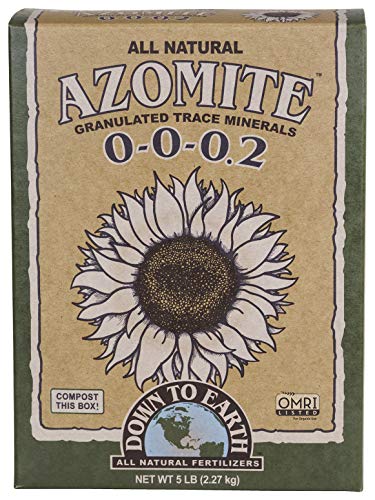
1. Down To Earth All Natural Fertilizers Organic Azomite Minerals – 5 lb
Our pick — over 4.5★ from 800+ verified ratings; the strongest balance of quality and price.
The all-in-one mineral boost for gardens that look tired for no obvious reason.
This granulated azomite brings over 70 trace minerals back into soil that has been depleted by repeated planting or heavy rain. It is a 0-0-0.2 formula, meaning it adds no nitrogen, phosphorus, or potassium — just the micronutrients your soil quietly runs out of. The 5-pound bag goes a long way, and the consensus from owners is that it lifts plant health without any risk of burning roots. Buyers report peppers growing beautifully in pots after adding this to the soil, and rose bushes respond just as well.
The thing everyone raves about is how it improves productivity — the top aspect owners praise, with real results visible across vegetables, flowers, and succulents. Compared to the more targeted gypsum options below, this one is the all-rounder: it fixes the invisible mineral shortage that most gardeners never know they have.
Mineral-rich soil booster: This is the best starting point for any garden that lacks vitality. If you have a specific pH or compaction problem, however, a targeted product like gypsum or sulfur will solve it faster.
Broad-spectrum minerals: you want one product that covers the micronutrient bases for everything from cacti to tomatoes.
Fine-powder mess: your soil test shows a high pH or heavy clay — those need a different fix.
2. Char Bliss (8 Qts) – Organic Biochar for Plants
The soil sponge that holds water and nutrients for months without washing away.
Biochar works like a long-term reservoir in your soil. This 8-quart bag of OMRI-listed charcoal from wood trimmings has a porous structure that traps moisture and nutrients, so your plants stay hydrated longer and you water less often. What wins people over is how it improves drainage — the most-praised feature by a wide margin — while also keeping the soil mix airy for roots to spread. Owners mention it works great in terrariums, staying healthy after months with no insects or bad smells.
You only need 5-10% by volume in any potting mix, as customers note. That makes this bag last for many containers. Unlike the granular azomite above, which adds minerals, biochar is a physical structure amendment that holds onto whatever you feed the soil, reducing runoff and waste. A few owners note the texture is finer than some other brands, but it still aerates well without being too dusty.
Carbon sequestration
- Drainage and quality tied as the top positive aspects
- Mixes well into chunky aroid soil mixes without clumping
- A little goes a long way — 5-10% of your mix is plenty
Needs pre-charging
- Some would prefer a coarser texture for terrarium charcoal layers
- Works best when paired with other soil components, not used alone
Long-term soil builder: potted plants, aroid mixes, and gardeners who want to cut back on watering frequency.
Slow initial effect: directly fixing a nutrient deficiency — that is what the azomite or worm castings handle.
3. Olympus Myco 97% Pure Gypsum Powder – 5 lbs
Premium gypsum that loosens clay and feeds calcium without raising pH.
This is a solution-grade calcium sulfate dihydrate with 97% to 99% purity — much higher than standard garden gypsum. It is a fine powder that mixes easily into topsoil, and it delivers two things at once: it breaks up compacted soil for better airflow and root penetration, and it supplies essential calcium and sulfur without altering your soil’s pH. That makes it perfect for mushroom growers and for gardens where salt buildup from fertilizer is turning leaves brown on avocado trees, as one owner found — the tree bounced back with new green growth.
The effectiveness is the top-rated aspect by owners, and the purity is the reason. Unlike the pelletized Espoma gypsum below, this powder dissolves faster and works quicker, which matters if you are correcting a soil problem mid-season or mixing a substrate for mushrooms. A buyer even used the full 5 pounds to clear up a muddy pond without harming the fish.
Clay soil fix: mushroom cultivation, container trees with salt buildup, and anyone who wants fast-acting calcium without lime’s pH shift.
Bulky storage: you need a slow-release option for heavy clay lawns — the pellets of the Espoma gypsum above spread more evenly with a broadcast spreader.
4. Back to the Roots Organic Worm Castings – 5lb

Gentle, odor-free worm castings that feed without any risk of burning.
This is pure vermicompost — worm castings with no synthetic additives and no strong smell. It is a gentle, slow-release nutrient source that works for everything from milkweed to citrus trees. Because it will not burn roots (there is no harsh nitrogen spike), you can sprinkle it directly around established plants or mix it into potting soil at any ratio. The top positive aspect by far is quality, followed closely by plant health, with owners reporting citrus trees coming back to life and monarch-safe milkweed thriving.
Odor is the most mixed aspect: most reviewers point out it just smells like good earth, but a few found it more noticeable than expected. Compared to the Wiggle Worm bag below, this 5-pound size is perfect for smaller gardens and containers. If you are growing on a larger scale, the 40-pound bag of Wiggle Worm gives you better value per pound.
Gentle nutrient source: organic vegetable gardens, houseplants, and any situation where you want to avoid chemical fertilizer risks.
Low quantity: you need an immediate mineral boost — worm castings release slowly, while the azomite above delivers trace minerals right away.
5. Espoma Organic Garden Gypsum Soil Conditioner – 6 lb

The pelletized gypsum that turns rock-hard clay into workable soil.
If your soil is heavy clay that bakes into a brick in summer, this is the go-to fix. Espoma’s garden gypsum is 100% all-natural mined gypsum with no fillers, formed into pellets that you can spread by hand or with a broadcast spreader. Over time, the calcium in the pellets helps clay particles clump together into larger crumbs, creating the air pockets that roots need. The effectiveness is the top-rated aspect — owners use it to revive shrubs, fix blossom end rot in tomatoes, and cure turf burns from winter ice-melt salts.
One owner has been using this alongside Holly-tone for four years to rescue shrubs in heavy clay, and those shrubs are now healthy green with new growth. It is a slower release than the powdered Olympus Myco gypsum above, but that works in your favor for lawn and garden-bed applications where you want steady improvement over a season. The 6-pound bag is a good trial size, but if you have a large clay-soil area, you may need multiple bags.
Lawn conditioner: you have clay soil that compacts easily, or you need a calcium boost for tomatoes and peppers without raising pH.
Immediate results: you need a fast-acting powder for mushroom substrate — the Olympus Myco gypsum is more soluble.
6. Smart Grower Mycorrhizal Fungi Root Enhancer – 125G
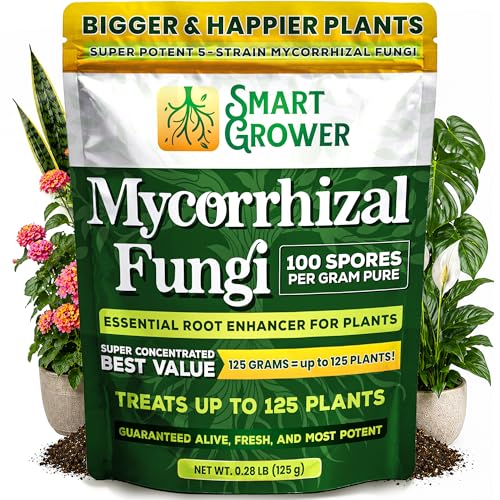
Living fungi that attach to roots and supercharge nutrient uptake.
This is not a fertilizer — it is a concentrated powder of living mycorrhizal fungi spores, 100 spores per gram across 5 different strains. When you dust it onto roots during transplanting or mix it with water, the fungi colonize the root system and effectively extend its reach, pulling more water and phosphorus from the soil. Shoppers say plants growing bigger than ever before, with one grower harvesting pea shoots and sunflower sprouts 1-2 days earlier when using this in a worm casting and coir mix.
Effectiveness is the most-praised aspect, with owners noting faster transplant recovery and better pest resistance. It treated 125 plants from one 125-gram bag, which is economical for small-scale growers. Unlike the mineral amendments on this list, this one is a biological tool — it works best when your soil already has decent fertility, and the fungi make sure your plants actually use what is there.
Transplant aid: transplanting, starting seeds, and cutting back on fertilizer use by making existing nutrients more available.
Short shelf life: fixing a soil pH or compaction issue — solve those first with gypsum or sulfur, then add mycorrhizae.
7. Earth Science Fast Acting Sulfur Granules – 5lb

The targeted sulfur that turns pink hydrangeas blue by lowering soil pH.
Acid-loving plants like blueberries, azaleas, and hydrangeas struggle when the soil pH is too high. This granulated sulfur uses elemental sulfur to naturally lower the pH, making iron and other nutrients available again. Buyers report pink hydrangeas turning a beautiful shade of blue after just one feeding in spring. The patented Nutri-Bond Technology helps the granules stay in place in the soil rather than washing away with rain.
Effectiveness and pH reduction are the top two aspects owners note, with strawberries growing bigger and rose bushes perking up visibly. A few buyers find it less “fast acting” than the name suggests — the pellets need several waterings to fully dissolve — but they confirm it works once the granules break down. Compared to the gypsum products above, which add calcium and sulfur without changing pH, this product’s whole job is to make alkaline soil more acidic for plants that demand it.
Blueberry soil: blueberries, hydrangeas, azaleas, and any acid-loving plant in high-pH soil.
Protective gear: your soil pH is already in the right range — lowering it further could harm other plants.
8. Fish Head Farms Organic Liquid Soil Conditioner – 250 ml

Liquid biology that wakes up your soil with billions of microbes per dose.
This is not a nutrient bottle — it is a concentrated liquid holding over 4,000 microbial species. When you mix 2 teaspoons per gallon of water and apply it to your soil, those microbes get to work mineralizing existing nutrients so your plants can actually absorb them. Owners mention it revives stressed plants and improves harvest and flavor across all varieties. It is OMRI-listed and USDA Bio preferred-certified with a 95% carbon based renewable rating, meaning it is about as sustainable as a soil product gets.
On odor, the feedback is mixed: some owners say it has no overpowering smell, while others find it stinks. If you are sensitive to that, you might want the granular worm castings instead. Compared to the dry amendments above, this liquid penetrates deeper into the root zone fast, making it ideal for a quick rescue of a struggling indoor plant or a mid-season soil refresh in a raised bed.
Quick uptake: houseplants, hydroponics, and any garden that needs a biological jump-start without added fertilizer salts.
Smelly indoors: you prefer non-liquid amendments or have a very large garden — the 250 ml bottle treats a moderate area.
9. Wiggle Worm 100% Pure Worm Castings Plus Worm Egg Material – 40lb
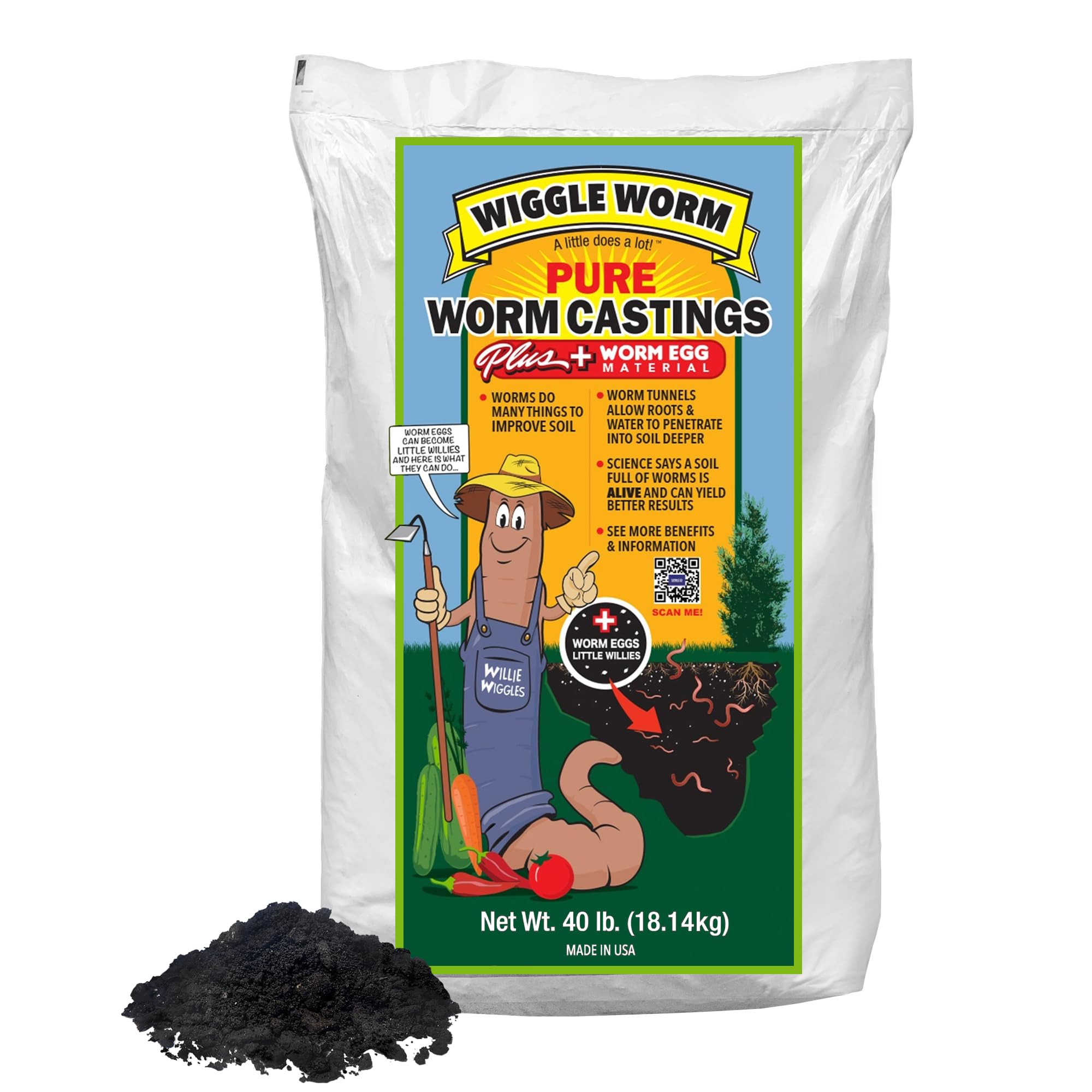
The big bag of castings that builds living soil from the ground up.
At 40 pounds, this is the heavy lifter of the group — a massive bag of pure worm castings blended with worm egg material. The egg material adds an extra layer of microbial activity, and there is a chance the eggs will hatch in your soil, creating live worms that tunnel, aerate, and produce even more castings. The top aspects owners praise most are quality and plant performance, with consistent reports of healthier color and steady growth in herbs, vegetables, and flowers without any burning.
The honest trade-off is debris content — some rocks and wood chips make it through the sifting process, and owners note it is not 100% pure castings. A few also report live worms in the bag, which is actually the intended purpose of the egg material. Compared to the 5-pound Back to the Roots bag above, this one gives you far more volume for extensive garden beds and raised rows. If you are creating living soil in harsh conditions, owners say this is the most important garden staple they buy.
Live biology: you are building or amending large garden beds, or you want to establish a self-sustaining worm population in your soil.
Inconsistent batch: you only have a few containers or houseplants — 40 pounds is a commitment.
Understanding the Specs
Purity and Form
The purity percentage (like 97-99% for gypsum) tells you how much actual active ingredient is in the bag versus inert filler. Higher purity means faster and more predictable results. The form — granules, pellets, powder, or liquid — changes how you apply it. Powders dissolve quickly for fast action, pellets are easier to spread over lawns without dust, and liquids penetrate the root zone immediately for a biological boost.
Spores per Gram
For biological products like mycorrhizal fungi, the spore count (measured in spores per gram) directly affects how much living fungi you are putting on your roots. A product with 100 spores per gram is more concentrated than one with lower numbers, meaning you need less product to colonize the root system. Living products require careful storage — heat or long shelf time can kill the spores.
FAQ
What is the difference between gypsum and lime for soil?
Can I use biochar in potting soil for houseplants?
Will worm castings burn my plants like synthetic fertilizer?
How long does it take for sulfur to lower soil pH?
What soil pH is best for blueberries?
Can I mix worm castings with other amendments at the same time?
How does azomite differ from regular fertilizer?
What is the best way to apply granular gypsum to an existing lawn?
Final Thoughts: The Verdict
For most buyers, the best garden soil amendments winner is the Down To Earth Azomite Minerals because it provides over 70 trace minerals that tired, depleted soil is missing most often — a simple, no-burn fix that works for almost every plant. If you want to improve drainage and water retention in containers or raised beds, grab the Char Bliss Biochar. And for taming heavy clay soil that resists roots and water, the Espoma Garden Gypsum is the one to reach for.
How We Picked
We do not accept paid placement. Every pick is matched to a real buyer and a real use-case; we do not hands-on test units.
Sources & Methodology
Specifications: manufacturer listings and product documentation. Review insights: verified customer reviews, as of July 2026. Pricing: not shown on this page (it changes often); check the current price via the retailer link.
As an Amazon Associate, Lawn Gear Lab earns from qualifying purchases. This does not affect which products we feature.