
Specs are compiled from manufacturer listings and verified buyer reviews and can change over time — please confirm the key details on the product page before buying.
You want vegetables that actually taste like something, flowers that hold their petals longer, and herbs that refuse to bolt early. The secret is what you fill your raised beds with — a mix that drains just enough, holds moisture like a sponge, and delivers steady nutrition without forcing you to measure and mix a dozen different bags. Picking the wrong soil is the single fastest way to turn a season of hope into a season of disappointment.
I’m Rikta — the founder and writer behind Lawn Gear Lab. This guide is built by comparing the manufacturers’ published specifications and the patterns across verified customer reviews, so you get each pick’s real strengths and trade-offs instead of marketing spin.
Whether you are topping off tired beds or building from scratch, finding the best garden raised bed soil means matching the bag to your crop plan, your climate, and how much time you want to spend watering. best garden raised bed soil depends on one honest question: will this bag support your plants from seed to harvest with no extra work?
Our Picks at a Glance
How To Choose The Best Garden Raised Bed Soil
Raised beds are a contained environment. Unlike in-ground soil that can pull nutrients and drainage from the surrounding earth, your raised bed holds whatever you pour into it — good or bad. That makes the bag choice your single most important gardening decision. Here is what separates a soil that works from one that fights you all season.
Drainage vs. Water Retention — The Real Trade-Off
The best raised bed soil walks a tight line between two conflicting needs. Your plants need water to reach the roots, but they also need air in the pore spaces between the soil particles. A bag that is too heavy on peat can turn your bed into a swamp after a rainy week. A bag with too much perlite or sand can dry out before the afternoon sun is done. Look for a mix that mentions both aeration (things like perlite, coco coir, or biochar) and organic matter (compost, worm castings, or aged bark) in the ingredient list. That combination gives you a forgiving window between waterings.
Nutrient Charge — How Long Does It Last?
Some bags are lean — they are basically a sterile base that expects you to supply all the food. Others come pre-charged with slow-release meals like kelp meal, bone meal, or feather meal. If you want to plant and walk away for the first month, a pre-charged mix is worth the higher price. If you are comfortable adding liquid fertilizer every couple of weeks, a leaner mix at a lower cost works fine. Check the description for phrases like “slow-release” or “pre-charged” versus “base mix” — that tells you exactly how much feeding responsibility is on you.
Weight and Volume — The Physical Reality
Wheelbarrows and back pain are part of gardening, but you should know what you are carrying. A standard raised bed roughly 4 by 8 feet and 12 inches deep needs about 32 cubic feet of soil. If you are buying 1.5 cubic foot bags, that is more than 20 trips to the garden. A 40-pound bag is heavy but covers a meaningful chunk of a small bed. A multi-pack or a bulk cubic-foot bag saves trips at the cost of a heavier lift. Match the bag size to how far you have to haul it and whether you can get delivery to the driveway.
Quick Comparison
| Model | Best For | Weight | Volume | Key Amendment | Amazon |
|---|---|---|---|---|---|
| Coast of Maine Castine Blend★ Best Overall | Best Overall / Organic growers | 40.3 lbs | 2 cu ft | Lobster & crab shell meal | Amazon |
In‑Depth Reviews
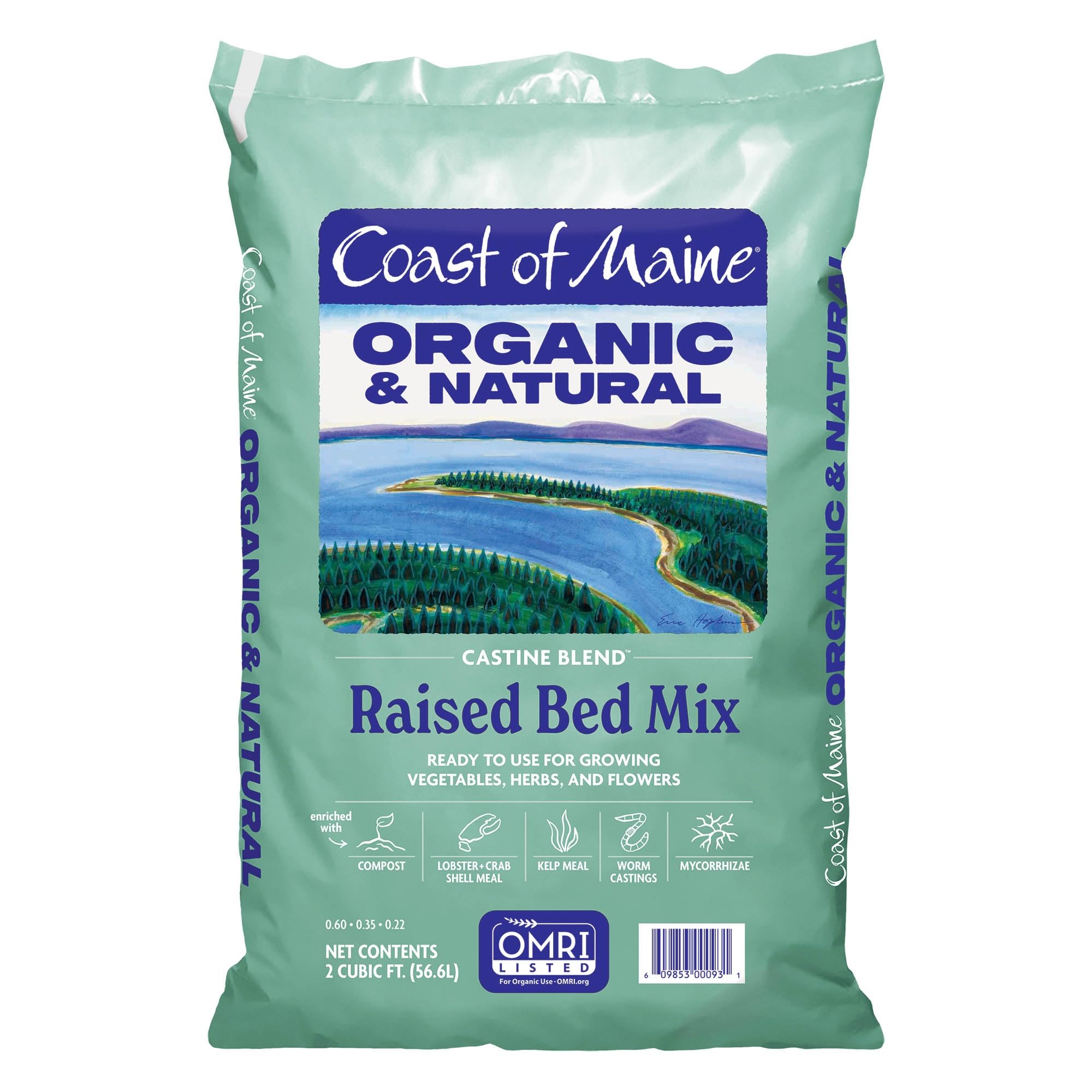
1. Coast of Maine Castine Blend Soil (2 cu ft)
Our pick — over 4.5★ from 400+ verified ratings; the strongest balance of quality and price.
The crowd-pleaser that turned tomatoes into a neighborhood legend in one summer.
This bag hits every note a raised-bed gardener wants. You get a noticeably denser, richer feel than lighter options like the Royal Gold Kings Mix — the Coast of Maine Castine Blend weighs 40.3 pounds and fills 2 cubic feet, which is 34% heavier per cubic foot than the Royal Gold’s 30-pound, 1.76-cubic-foot bag. Open the bag and you find a dark, soft texture with no twigs or bugs, which buyers repeatedly call out as a relief after lower-tier bags.
The ingredient list reads like a master gardener’s shopping list: worm castings, mycorrhizae (a beneficial fungus that attaches to roots and helps them absorb water and nutrients), biochar (a charcoal-like material that holds moisture and houses microbial life), green sand, kelp meal, and lobster and crab shell meal. That crab shell meal provides slow-release nitrogen — 0.6% of it — plus calcium and chitin, a natural substance that helps soil fight off certain pests. The soil is ready to use right out of the bag, so you do not need to mix anything.
Soil quality is the single most-praised feature here — owners call it “soft, rich, and dark” and note that it loosens compacted existing bed soil over time. Drainage and texture both get frequent positive mentions; the biochar and mycorrhizae work together to keep water moving while holding enough for the roots. The catch is the price: it sits in the mid-range, and some owners find it expensive for a single bag. A few have also flagged occasional debris, though most reviews describe a clean pour. One owner who used it all summer summed it up: “I did grow some pretty awesome tomatoes and sunflowers!”
What owners rave about
- Soil quality is the top point by a wide margin — over a third of all reviewers mention it, and they mean dark, crumbly, weed-free dirt.
- Plant growth results are the second most-praised aspect; tomatoes, sunflowers, and veggies thrive with no extra effort.
- Ingredient transparency: you get mycorrhizae, biochar, and lobster meal in a single bag without having to blend your own.
The practical trade-off
- Value for money is the main split — some owners feel the per-bag cost is steep for what amounts to a premium soil additive rather than a bulk filler.
- An occasional bag arrives with debris, though the overwhelming majority describe it as clean and ready to use.
Best bed filler for the organic die-hard: You get a biologically active, nutrient-dense mix that supports heavy feeders like tomatoes and squash .
Reach for a different bag if: You are filling a full 4×8 bed on a strict budget and need the lowest cost per cubic foot — a leaner base mix like the Michigan Peat Garden Magic may stretch further.
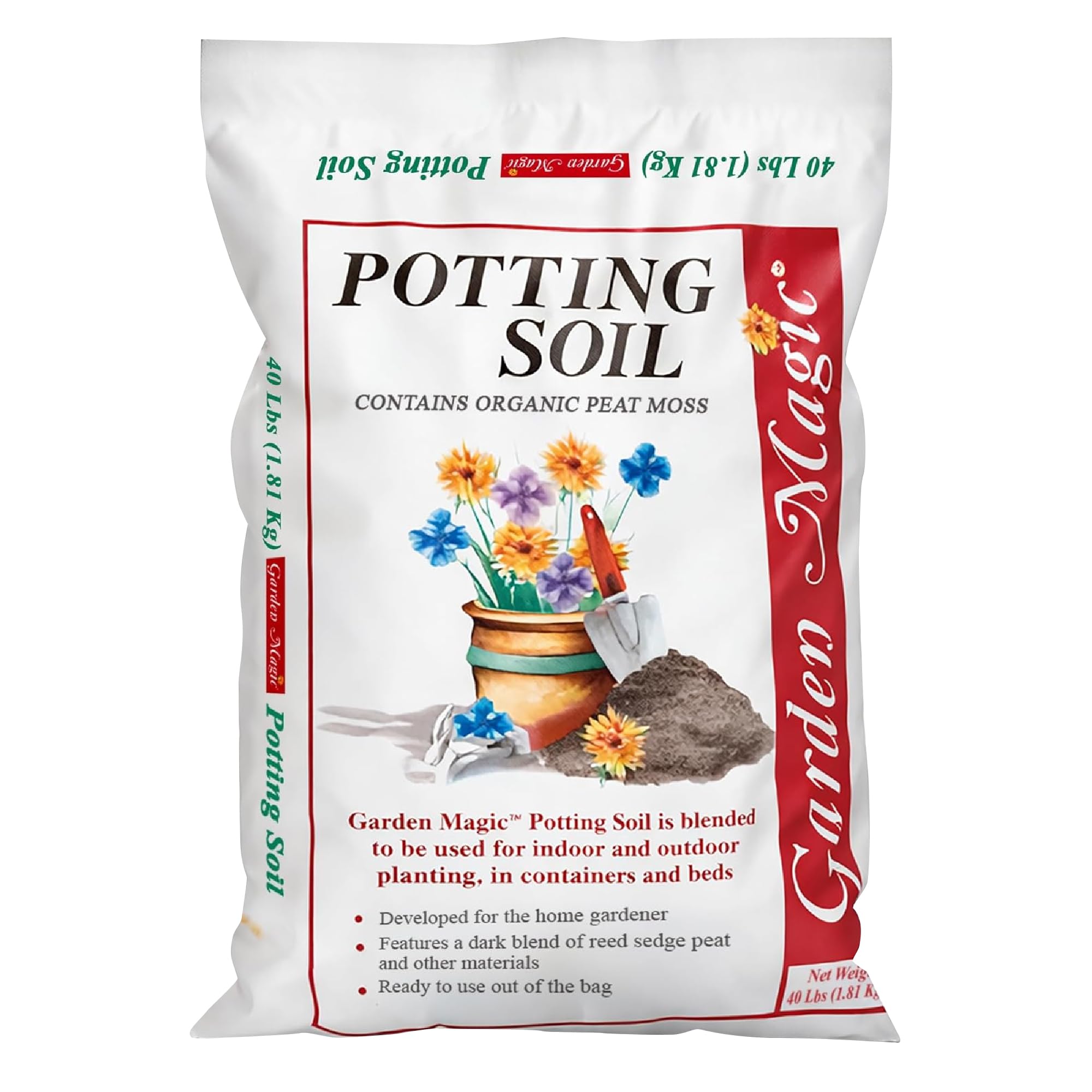
2. Michigan Peat Garden Magic Potting Soil (40 lbs)
The 40-pound workhorse that sprouted seeds in days and costs less than a pizza night.
This is the no-nonsense bag for the gardener who wants results without the price tag. Michigan Peat’s Garden Magic is a simple blend of reed sedge peat and organic peat moss, designed to retain moisture during dry spells — a practical advantage for raised beds that sit in full sun. At 40 pounds, it matches the Coast of Maine in sheer heft, but it costs noticeably less, making it a serious contender for filling large beds where the budget matters more than exotic ingredients.
Quality is the most-discussed aspect here, and the consensus is strong: owners describe it as clean, rich, and free of bugs and bad smells. Germination results are more variable — some buyers report seeds popping up “in a couple of days” while others say nothing takes. This is the classic trade-off of a lean peat-based mix: it holds water beautifully but provides limited built-in nutrition. You will need to supplement with your own compost, fertilizer, or worm castings for heavy-feeding crops like tomatoes or peppers. For flowers, herbs, and established transplants, it works straight from the bag.
The negative feedback centers on two things: occasional sticks or large wood chunks in the mix, and a texture that some find sticky when wet. Neither is a dealbreaker for most — the value proposition here is simply too strong for bulk bed filling. If you are amending existing soil, this is a fantastic way to add organic matter without spending a bag. One owner who used it for seed starting and repotting called it a “good size bag for the price” and reported healthy, vibrant plants with zero transplant shock.
Who it fits: The budget-focused grower who wants a clean, moisture-retentive base and is comfortable adding their own nutrients. Best for flower beds, herbs, and established transplants rather than seed-starting heavy feeders.
Best for stretching your dollar: 40 pounds of clean, bug-free peat soil at a price that lets you cover multiple beds without guilt.
Skip it for: Tomatoes or peppers in their first month — you will need to mix in compost or a balanced fertilizer to get real growth.
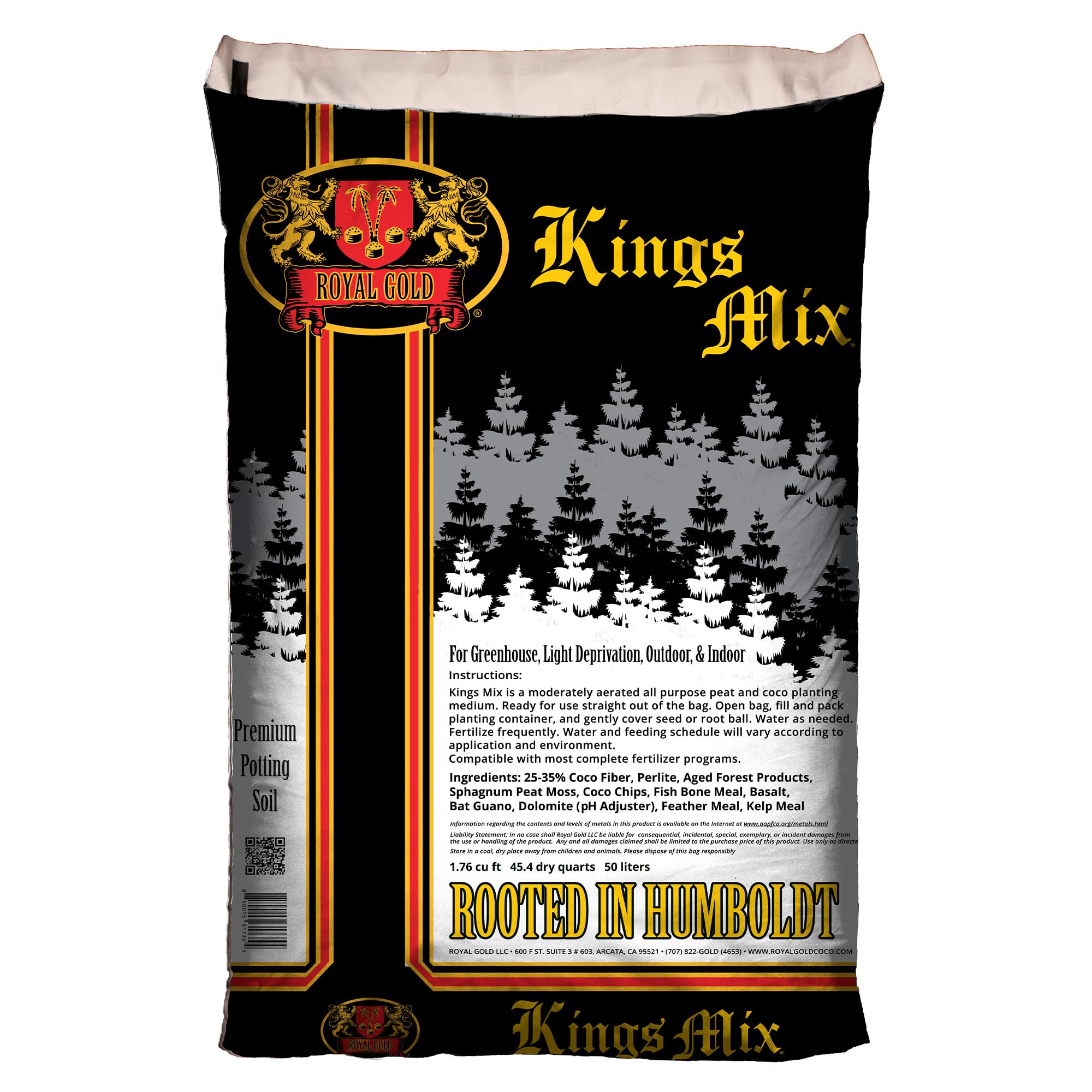
3. Royal Gold Kings Mix (1.76 cu ft)
The forgiving blend that rewards the over-waterer with deep, happy roots.
This bag is built by Royal Gold for one thing: root development. The Kings Mix combines coco fiber (coconut husk, which creates air pockets in the soil) with sphagnum peat moss, perlite, coco chip, and a moderate charge of organic meals including fish bone meal, bat guano, and kelp meal. The balance is designed to drain well enough to be called “great for someone who over waters a bit,” according to one owner. At 30 pounds and 1.76 cubic feet, it is lighter than the Coast of Maine by a noticeable margin, both in weight and density — the Coast of Maine is 34% heavier per cubic foot, reflecting a higher organic-matter and mineral content.
Growth performance is the top praised aspect, and the feedback is enthusiastic: “best medium product that I’ve ever used period” is a common refrain. Owners consistently say it takes nutrients well, supports 2-4 weeks of growth without additional fertilizer, and stays free of fungus gnats compared to other peat-based soils. The pre-charged nutrient load is moderate — enough to get seedlings established but not so strong that it risks burning tender roots. For gardeners using automatic watering systems or “autopots,” the consistent drainage and aeration are a clear advantage.
The main grey area is water retention. Some owners say it drains perfectly; others find it stays a bit wet and suggest adding extra perlite or coco for particularly moisture-sensitive plants. Given the target audience is the gardener who tends to over-water, this is less a flaw and more a feature alignment — if you are a careful waterer, you may want to cut it with something lighter. One owner who grew a plant to fruiting stage using only the amendments in the bag called it a “solid product” with no gnats and gentle texture.
The gardener it suits best: Anyone who tends to love their plants a little too much with the watering can, or anyone running an auto-water setup. Also a strong choice for container gardens and small raised beds where consistent moisture matters.
Choose this for: A low-maintenance, gnat-free medium that forgives heavy watering and supports steady root growth for the first few weeks without extra feeding.
Think twice if: You are in a humid climate or want a mix that dries fast between waterings — you may need to lighten it with extra perlite.
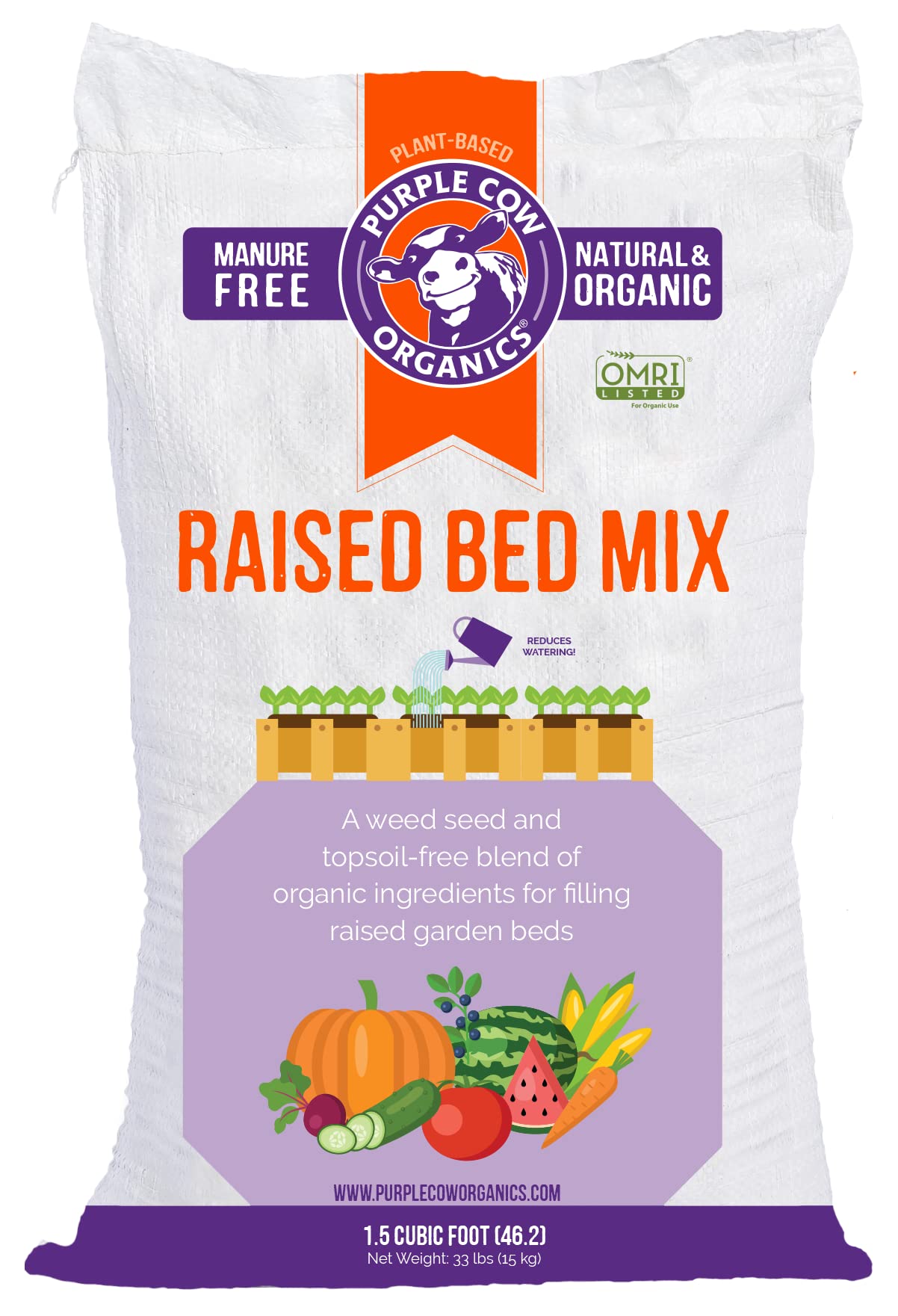
4. Purple Cow Organics Raised Bed Mix (1.5 cu ft)
The OMRI-stamped mix that grows safe, nutrient-dense food with zero synthetic chemicals.
Purple Cow Organics takes the guesswork out of organic certification. The bag is OMRI listed (Organic Materials Review Institute — a third-party seal that verifies the product meets organic farming standards) and made from plant-based compost with no topsoil, manure, or weed seeds. The 1.5 cubic foot bag is a manageable volume for topping off a small to medium raised bed, and the compost base acts like a sponge — holding moisture so you water less often, which is a real advantage in hot, dry climates.
The feedback from buyers paints a nuanced picture. Owners confirm the soil is “very light and fluffy” and say it holds water well even in heat, which reduces watering frequency. Seedlings grown with a 1/3 ratio of this mix to custom soil showed “more vigorous” growth. The OMRI listing and “no herbicide issues” are the main draws for cautious organic growers. At the same time, the price is a recurring point of tension — multiple owners describe it as expensive, with one calling it “the most expensive soil I’ve seen” and another noting that comparable quality is available at “half to quarter price.”
The ingredient list includes perlite and sphagnum peat moss, which some environmentally-conscious gardeners take issue with (peat harvesting carries sustainability concerns). The mix itself is well-sifted and free of mulch, with a light texture that drains a bit faster than a heavier compost blend. Purple Cow recommends pairing it with their BioActive All-Purpose Fertilizer for best results — a sign that the base mix, while clean and organic, benefits from a nutrient boost for heavy-feeding crops. If you value the OMRI seal and want a manure-free, weed-seed-free start for your organic vegetable beds, this delivers. If your priority is the lowest cost per cubic foot, it may feel steep.
Pick this for: Certified-organic vegetable gardens where avoiding synthetic chemicals and weed seeds is the top priority, and where you plan to supplement with your own fertilizer.
Pass if: You need to fill a large bed on a budget — the per-cubic-foot cost here is among the highest in this list, and another bag like the Michigan Peat will go further for the same money.
5. Gaia Green Organic Living Soil (1.5 cu ft)

The biologically alive bag that feeds plants naturally for weeks with zero measuring.
Gaia Green Living Soil takes the concept of “ready to use” seriously. The 1.5 cubic foot bag is pre-charged with slow-release organic meals — kelp meal, alfalfa, bone meal, glacial rock dust, and oyster shell — plus worm castings and insect frass (the droppings of insects like black soldier fly larvae, which add beneficial microbes and slow-release nutrients). The result is a soil that feeds your plants from day one without requiring you to measure, mix, or add liquid fertilizer for the first several weeks. It is also CDFA-registered organic.
Owners overwhelmingly rate this among the best bagged soils available — “one of the best out of the bag soils on the market” is a typical verdict. The mix is light, well-draining, and built from peat, perlite, and coco coir, which means roots get plenty of air. The biologically active component (worm castings plus insect frass) creates a living microbial environment that helps break down organic matter into plant-available nutrients over time. For indoor and outdoor potting, containers, and raised beds, this is a true plug-and-play option.
The notable caveat is moisture consistency. One owner reported receiving a bag that was “totally dry” and advised that good soil should be “moist enough to clump in the hand but fall apart easily.” Other owners received fresh, moist bags without issue, but the packaging appears to vary. At this price tier (the most expensive single bag in the lineup), inconsistency is a bigger risk than with a cheaper product. If you get a fresh bag, it is exceptional — consider inspecting the bag upon arrival and requesting a replacement if it feels dry and dusty rather than damp and clumpy.
The ideal grower for this bag: Someone setting up a small raised bed or a container garden who wants the absolute convenience of a living, pre-charged soil. Best for herbs, leafy greens, and flowering plants where you want steady, natural nutrition without the schedule.
Choose this when: You do not want to think about fertilizer — just open, plant, and water. The biological activity handles the rest for the first month.
Consider a different bag if: You are filling a very large bed and the per-bag premium adds up fast, or if you are concerned about receiving dry stock due to shipping conditions.
6. Coast of Maine Castine Blend 4-Pack (1 cu ft x 4)
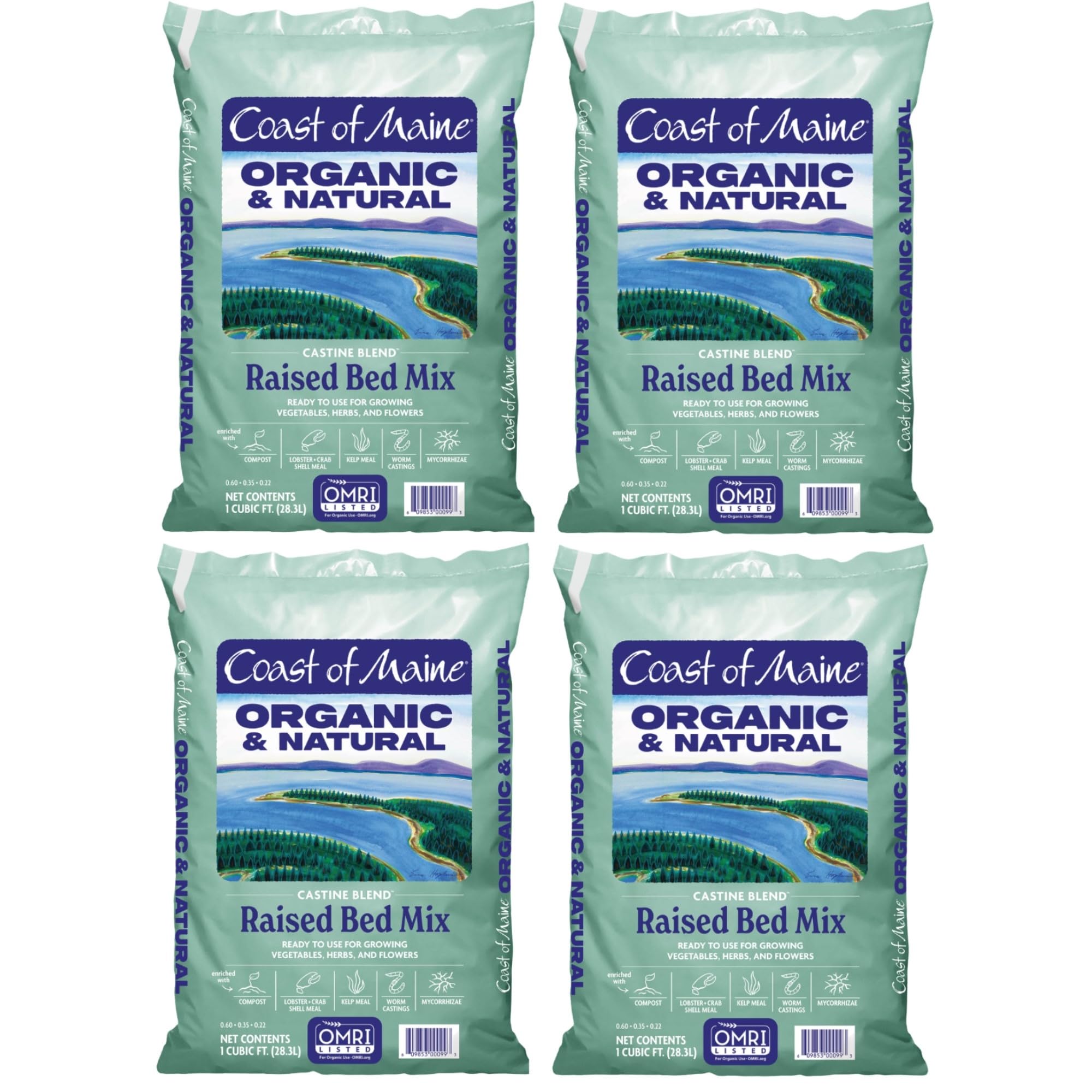
The multi-pack solution for gardeners who liked the first bag and want four times the richness.
This is the same Coast of Maine Castine Blend formula from our top pick, but in a 4-pack of 1 cubic foot bags. You get the same organic ingredients — compost, sphagnum peat moss, aged bark, wood biochar, mycorrhizae, and that distinctive slow-release nitrogen from lobster and crab shell meal and kelp meal — in individual bags that are easier to maneuver than one giant 40-pound sack. Each bag is roughly half the volume of the 2 cubic foot single, so you can top off beds one at a time without committing the whole bulk at once.
Owner reactions mirror the single-bag consistency: “great soil heavy and rich,” “grows great flowers,” “best organic soil ever.” The texture is consistently praised as fine and high-quality, with one owner noting it had “a lot less extra filter material” compared to a big-box store competitor. The per-bag size is ideal for smaller raised beds, planter boxes, or container gardens where you need to evenly distribute soil across multiple zones. The ready-to-use formula means you pour it in, plant, and water — no mixing.
The obvious question is whether the 4-pack is worth it versus buying two bags of the 2 cubic foot size. The answer depends on your bed geometry and handling strength. Four individual bags weigh less each, making them easier to carry from a car or shelf to the garden. If you have a large 4×8 bed, the 2-cubic-foot bag is more efficient per haul. Either way, you are getting the same premium mix that earns Coast of Maine its reputation. The only honest shortcoming is the same as the single bag: the price sits above basic peat or compost mixes, and if you are stretching to fill a very deep bed, it adds up.
Grab this for: Filling multiple small to medium raised beds, topping off planter boxes, or managing a garden where you want to work one bag at a time rather than wrestling a jumbo sack.
It is not for: The gardener who needs the absolute cheapest cubic foot — the Castine formula is premium-priced, and a straight peat or compost mix will cost less per bed.
7. Wiggle Worm Raised Bed Mix (3 x 40 lbs)
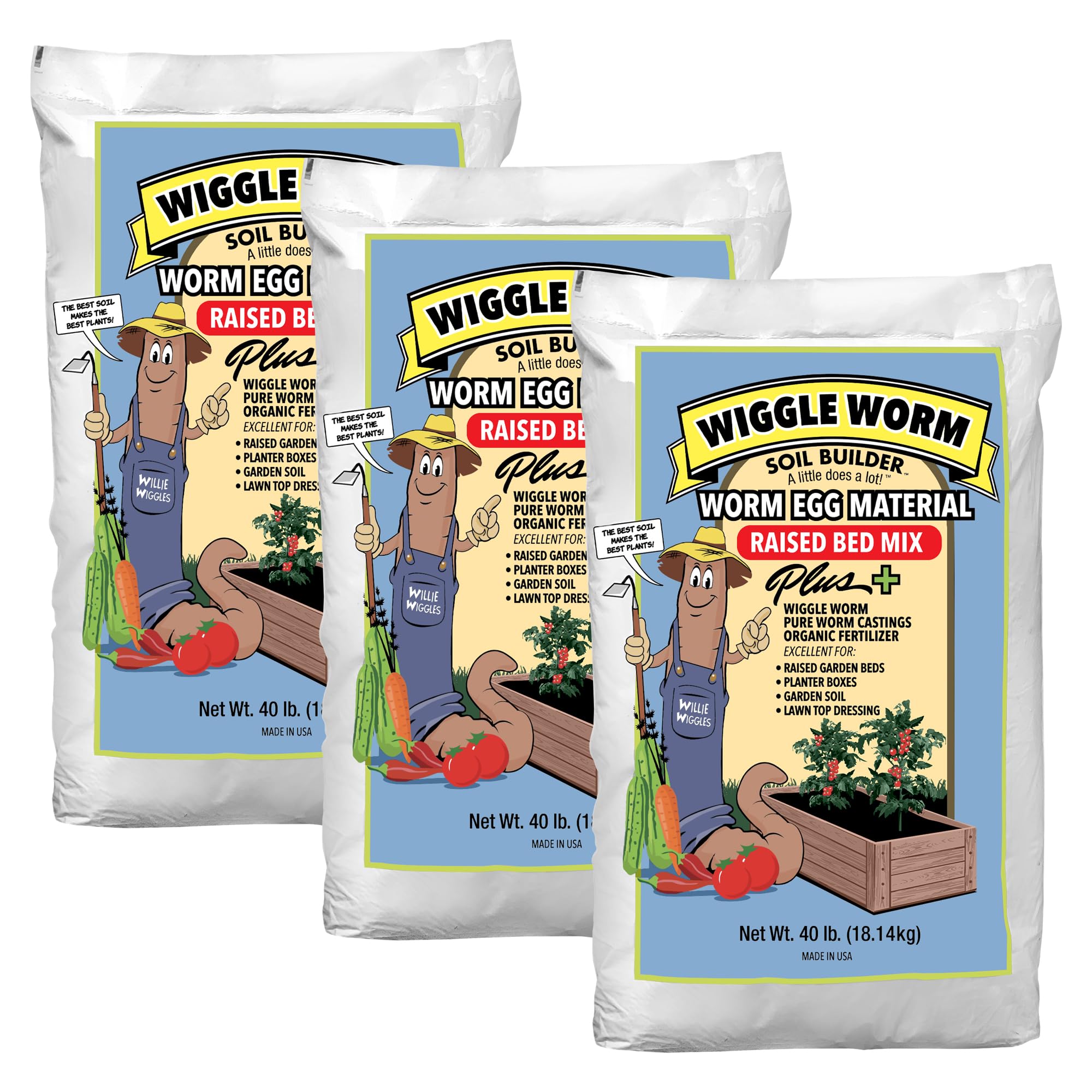
The three-bag behemoth that turns your raised bed into a worm-powered ecosystem.
Wiggle Worm approaches soil from a unique angle: the amendment is the star. You receive three 40-pound bags of compost soil blended with worm castings and worm eggs — meaning your raised bed becomes a self-sustaining environment where live worms may hatch, tunnel, and produce more castings over time. The product positions itself as an all-in-one soil and fertilizer, with the worm tunnels (called burrows) providing aeration and drainage while creating space for roots to expand. At 120 pounds total, this is the heaviest set in the lineup by a wide margin.
Quality is the top praised aspect, and results are visible: owners mention plants taking off “like wildfire” when the mix is used as a scoop in the planting hole. Flowers and vegetables grow big and healthy, and returning buyers use it every year as a soil amendment. The worm-casting component adds a microbial richness that standard compost simply does not have. For the gardener who wants to build living soil rather than just fill a bed with inert material, this is the most biologically active option available here.
The recurring negative is rock content. Multiple customers note finding gravel, pebbles, and small stones in the mix — one estimated about 15% rock material. A few bags arrive with no rocks at all, but the inconsistency is a real concern, especially for raised beds where large rocks interfere with root growth. The other variable is the worm eggs: some bags clearly have them, others do not, and it is hard to tell on delivery. If you want guaranteed-thriving worms, you may need to add live worms separately. The 3-bag set is also the most expensive option here on total cost, and the rock issue makes each bag feel slightly less premium than the price suggests.
The buyer who should consider this: The committed organic gardener who wants a biologically active bed from day one and is willing to accept some rock content in exchange for the worm-powered aeration and top-quality plant growth results.
Choose for: Deeply enriching a raised bed where you plan to grow heavy-feeding vegetables year after year — the worm castings build long-term soil health.
Look elsewhere if: You need a clean, ready-to-use soil with no rocks or inconsistency — the Coast of Maine single bag is a better fit for that standard.
Understanding the Specs
Drainage and Aeration
Drainage is how fast water runs through the soil; aeration is how much air sits in the pore spaces between particles. Roots need both oxygen and water, and the balance depends on your climate. In wet areas, look for perlite, coco coir, biochar, or coarse sand in the ingredient list — these create air channels that prevent root rot. In dry, hot climates, higher organic matter like peat moss, compost, and worm castings holds water longer so you do not have to water every afternoon. A bag that says “well-draining” but lists no aeration additives is probably not draining as well as you think.
Pre-Charged vs. Base Mix
A pre-charged soil has slow-release organic meals (kelp, bone meal, feather meal, bat guano, rock dust) already mixed in. You can plant immediately and go weeks without adding fertilizer. A base mix is lean — it provides structure and water retention but expects you to supply all the nutrition through liquid feeds or top-dressed amendments. Pre-charged bags cost more but save labor; base mixes cost less per bag but demand more attention. Match your choice to how much time you want to spend feeding, not just to the price tag.
Active Biology
Terms like “living soil,” “mycorrhizae,” “worm castings,” and “insect frass” point to a soil that contains living microorganisms and beneficial fungi. These microbes break down organic matter into nutrients that plant roots can actually absorb, creating a self-sustaining cycle. A soil with active biology reduces the need for synthetic fertilizers and builds long-term soil structure. The trade-off is that living soils are more sensitive to drying out, extreme temperatures, and storage conditions — a bag left in the sun too long can kill the biology you paid for.
Weight Per Cubic Foot
Two bags may claim similar volumes but weigh very differently. A heavier bag means more mineral content, less air, and typically more organic matter per scoop. A lighter bag contains more fluffy ingredients like perlite, coco coir, or peat, which improve aeration but settle quickly when watered. There is no right or wrong — just know that a lighter bag will “shrink” more in your bed as it settles. If you want a bag that stays fluffy and full-season, look for ingredients like aged bark or coco chips that resist compression.
FAQ
How much soil do I need for a 4×8 raised bed?
Can I mix raised bed soil with native dirt?
Is garden soil the same as raised bed soil?
Why does my raised bed soil look like it shrunk after watering?
Do I need to add fertilizer to pre-charged raised bed soil?
What does mycorrhizae do in raised bed soil?
Can I reuse raised bed soil from last year?
Why do some bags have rocks or debris?
Is coco coir better than peat moss in raised bed soil?
How long does a bag of raised bed soil last if I do not open it?
Final Thoughts: The Verdict
Across the board, the best garden raised bed soil winner is the Coast of Maine Castine Blend because it delivers the best combination of ready-to-use premium ingredients, proven plant growth results, and a dark, clean texture that owners consistently praise across hundreds of reviews. If you want the most forgiving mix for a heavy-handed watering style, grab the Royal Gold Kings Mix. And for the certified organic gardener building a long-term living bed, the Gaia Green Organic Living Soil is the one to reach for.
How We Picked
We do not accept paid placement. Every pick is matched to a real buyer and a real use-case; we do not hands-on test units.
Sources & Methodology
Specifications: manufacturer listings and product documentation. Review insights: verified customer reviews, as of July 2026. Pricing: not shown on this page (it changes often); check the current price via the retailer link.
As an Amazon Associate, Lawn Gear Lab earns from qualifying purchases. This does not affect which products we feature.