
Specs are compiled from manufacturer listings and verified buyer reviews and can change over time — please confirm the key details on the product page before buying.
You can water and fertilize all season, but if your soil pH is off, your plants will still struggle — pale leaves, stunted growth, and no fruit. A garden pH tester tells you whether your soil is acidic, neutral, or alkaline, so you know exactly which amendment to add to open up the nutrients your plants need.
I’m Rikta — the founder and writer behind Lawn Gear Lab. This guide is built by comparing the manufacturers’ published specifications and the patterns across verified customer reviews, so you get each pick’s real strengths and trade-offs instead of marketing spin.
Whether you are tending tomatoes on a patio, nursing blueberry bushes in the yard, or managing a full vegetable plot, understanding your soil’s chemistry is non-negotiable. This breakdown of the best garden ph tester options on Amazon will help you find the model that fits your skill level, your plants, and your budget.
Our Picks at a Glance

How To Choose The Best Garden pH Tester
Picking the right tester means matching the tool to how you garden. A casual houseplant owner needs something different than a serious vegetable grower or a blueberry enthusiast. Here are the three things that matter most.
Probe vs. Chemical Kit: Which Test Method Fits You?
Probe meters (both analog and digital) give you an instant reading by sticking a metal sensor into damp soil. They are fast, reusable, and perfect for spot-checking. Chemical test kits use powders or liquid reagents that you mix with a soil sample; the resulting color tells you the pH and nutrient levels. Kits offer more detailed data (nitrogen, phosphorus, potassium) but take more time and precision. If you want a quick yes/no on acidity, get a probe. If you need a full fertility picture, get a chemical kit.
Digital Display vs. Analog Dial: Readability Matters
Analog dials are simple and never need batteries, but the numbers can be small and hard to read in low light. Digital LCD screens are much clearer — especially for older eyes or dim garden sheds — and often include extras like soil temperature and air humidity. The trade-off is that digital meters require batteries (usually LR44 or AAA). Decide whether you prefer zero-maintenance analog simplicity or the precision and readability of a backlit digital screen.
Calibration: The Hidden Spec That Determines Accuracy
Budget probe meters typically come pre-calibrated and cannot be adjusted. If they drift out of spec, you replace them. Mid-range and premium digital meters let you re-calibrate using buffer powders or solutions (pH 4.01, 7.00, 10.01). This is essential if you are testing for acid-loving plants like blueberries or if you need lab-like consistency. If you just need a ballpark reading, skip calibration. If you need trustworthy numbers, buy a model that lets you dial it in.
Quick Comparison
| Model | Best For | Type | Measurements | Calibration | Amazon |
|---|---|---|---|---|---|
| HSLGOVE 7-in-One★ Best Overall | All-in-One Monitoring | Digital Probe | Moisture, pH, Fertility, Temp, Light | Pre-calibrated | Amazon |
| 2 Pack Soil TesterBudget Champion | Budget Multi-Pack | Analog Probe | Moisture, Light, pH | Pre-calibrated | Amazon |
| Soil Test Kit 140 TestsDeep Analysis | Full Fertility Analysis | Chemical Kit | pH, N, P, K, Ammonia | N/A | Amazon |
| Auduto 7-in-One | Beginner-Friendly Digital | Digital Probe | Moisture, pH, Fertility, Light, Temp | Pre-calibrated | Amazon |
| YINMIK Digital pH Tester | Bluetooth Monitoring | Digital Probe | pH, Temperature | User-calibrated | Amazon |
| LUVCOSY Digital pH Meter | High-Precision Soil Only | Digital Probe | pH | Pre-calibrated | Amazon |
| Tadeto Soil pH Tester | Versatile Multi-Media Testing | Digital Probe | pH, Temperature | User-calibrated (3-pt) | Amazon |
| YINMIK Soil pH Meter | Serious Gardeners & Hydroponics | Digital Probe | pH, Temperature | User-calibrated (3-pt) | Amazon |
| Tadeto Multifunctional pH Meter | Food & Soil Cross-Use | Digital Probe | pH, Temperature | User-calibrated (3-pt) | Amazon |
In‑Depth Reviews
1. HSLGOVE Soil Test Kit, 7-in-One
Our pick — 4.5★ from 250+ verified ratings; the strongest balance of quality and price.
The seven-in-one sensor that turns a beginner into a confident plant steward.
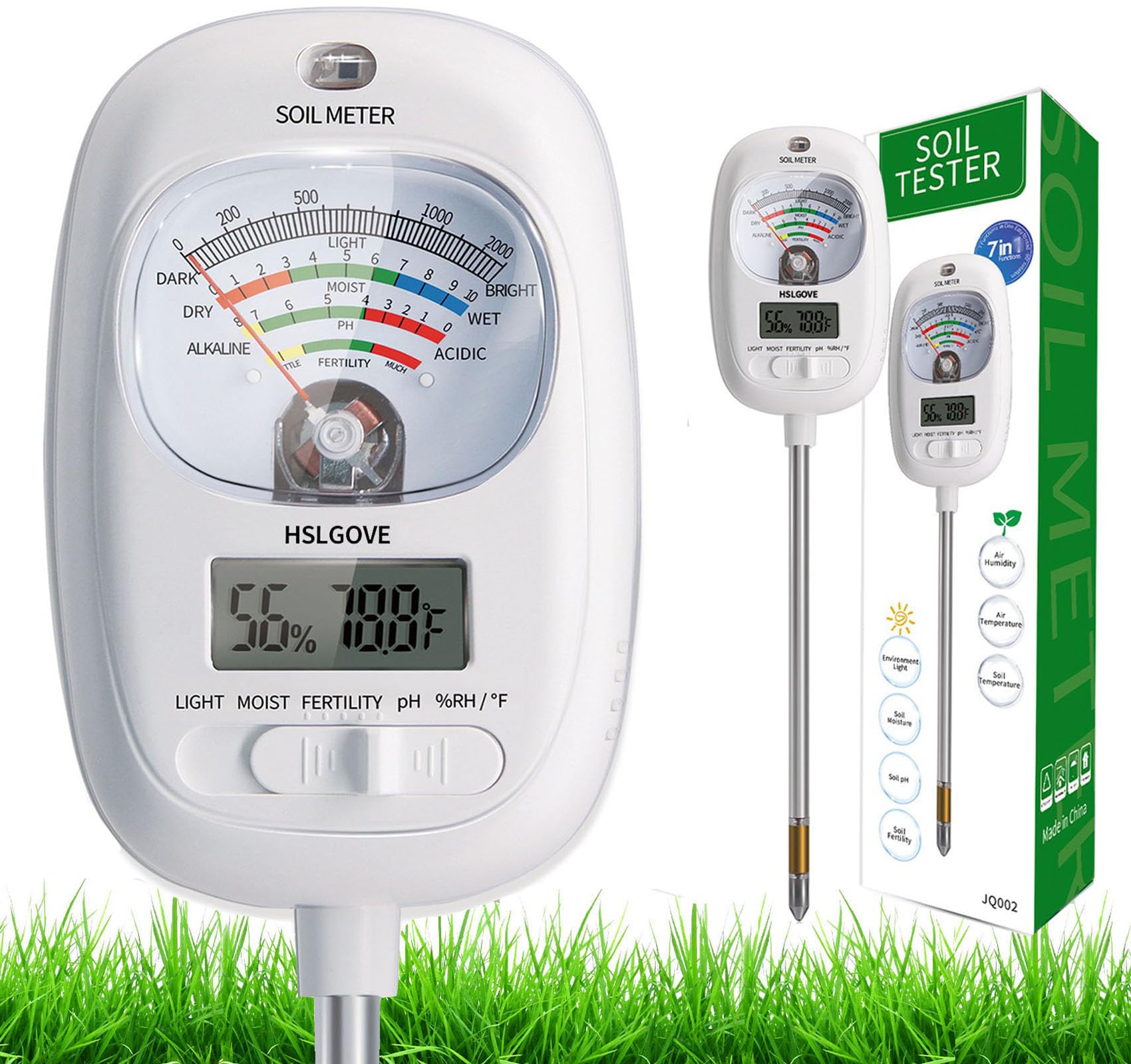
This is the rare gadget that combines an analog dial for instant moisture, pH, and fertility readings with a digital LCD screen that shows soil temperature, air temperature, and air humidity. You get seven measurements from a single probe that is about 6.8 inches long — deep enough for medium to large potted plants. The crowd favorite here is functionality (52 owners single it out) because it replaces the need for multiple separate tools cluttering your shed.
Accuracy gets consistent praise too (29 mentions), and buyers report that the dual-screen design makes it dead simple to check conditions at a glance. The one catch is that it is not a water moisture meter for liquid — you must insert it into damp soil, not a bucket of water. At 4.8 ounces, it is noticeably heavier than a basic analog probe (the 2 Pack Tester below is 3.52 ounces), but that weight comes from the electronics and the sturdy build that owners say holds up well.
What Wins People Over
- Seven parameters in one tool: moisture, pH, fertility, temperature, light, air temp, and humidity.
- Dual-screen design (analog dial plus digital LCD) for clear reading in all conditions.
- Single probe is less harmful to root systems and does not pull up extra soil when removed.
A Fair Caveat
- Requires three batteries (replace all at once for consistent performance).
- Not designed for testing liquids — strictly for damp soil.
- Digital screen takes about 3-5 minutes to stabilize for air temp/humidity readings.
Best for: The gardener who wants one tool that covers every soil and air metric without juggling multiple devices. It is especially strong for beginners who appreciate seeing both an analog sweep and a digital number.
Think twice if: You need a laboratory-grade calibratable pH meter — this unit is pre-calibrated and cannot be adjusted. For casual and intermediate gardening, it is more than sufficient.
2. 2 Pack Soil Tester, 3-in-1
Two meters for the price of one, with zero batteries to buy or replace.
These analog probes measure moisture, light, and pH — the three most common questions a new gardener has — and they do it without any power source. You push the probe into the soil and read the dial instantly. The 2-pack is the standout feature: keep one in the garden bed and one in the potting shed, or use both to compare readings across different sections of your lawn. Owners mention that it is simple to use and gives quick readings, with one owner summing it up: “It makes it much easier to tell when my plants actually need water instead of guessing.”
The honest trade-off is that the light meter gets mixed reviews — some owners find it unreliable, and a few call the overall accuracy “off.” At 3.68 ounces each and measuring 10.24 inches long, they are light enough to carry around and long enough to reach the root zone of most pots. Compared to the HSLGOVE above, you lose the digital display and the extra fertility/temperature readings, but you gain a second unit and zero battery dependency.
Who it fits: Budget-conscious plant owners with multiple containers who want a single-use tool they can leave in place. Great for checking moisture before watering day.
Where it falls short: The light meter is not trusted by many owners, and the pH reading is approximate rather than precise. Do not expect lab-grade accuracy at this price tier.
3. Soil Test Kit 140 Tests (2026 Updated Instructions)
The chemical kit that reveals what is really happening under the surface — nitrogen, phosphorus, potassium, and pH.
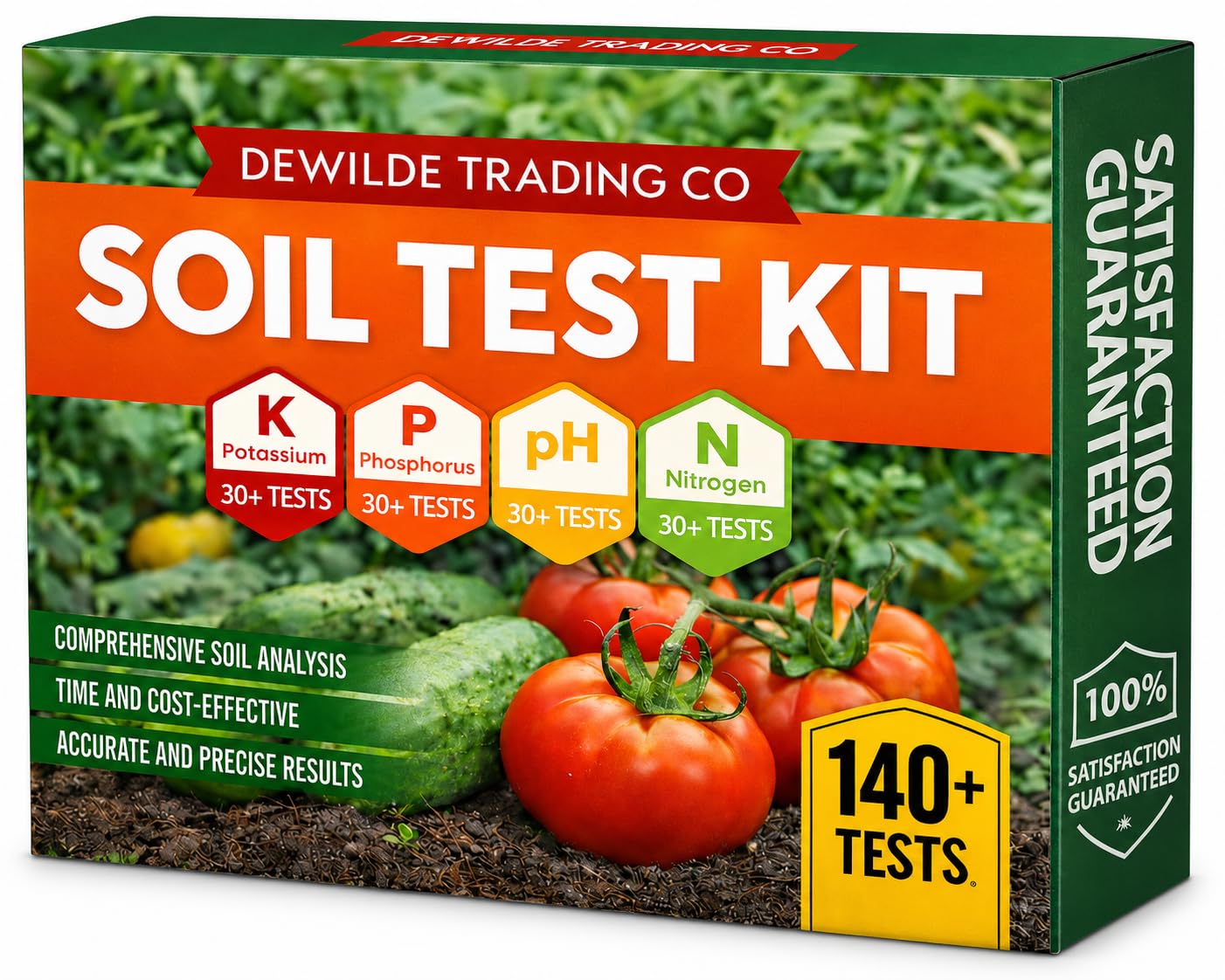
Unlike a probe that only reads pH and moisture, this liquid reagent kit tests for five parameters: pH, ammonia, nitrogen, phosphorus, and potassium. You get roughly 140 tests total (about 40 per parameter and around 20 for nitrogen). The procedure is simple — mix a soil sample with the provided solution, wait for a color change, and compare it to the included chart. A buyer using it for their garden noted that the results came in under an hour and helped them improve their flowerbeds significantly.
Accuracy gets mixed feedback here. Some owners find the results reliable enough to guide fertilizer choices, while others report questionable numbers compared to lab analysis or aquarium test kits. The instructions have been updated for 2026, which owners say helps, but the small beakers require careful handling — one reviewer noted doing the test in two stages because the beakers were so small. At 3.52 ounces, the whole kit is lighter than a single digital probe, making it easy to store on a shelf.
Strengths
- Comprehensive analysis: pH plus N, P, K, and ammonia in one affordable kit.
- Over 120-140 tests total — enough for a full growing season of weekly checks.
- Cost-effective compared to sending samples to a lab.
Limitations
- Results require careful color-matching, which some find subjective.
- Small beakers can be fiddly; you may need to run tests in two stages.
- Some customers note accuracy issues, particularly with nitrogen readings.
Reach for this if: You are managing a vegetable garden or lawn and need to know not just pH but also which nutrients are lacking — this kit is the only way to get that data without a lab.
Look elsewhere if: You only need a quick soil pH reading for a few houseplants. A probe meter will be faster and less messy.
4. Auduto 7-in-One Soil Test Kit
A beautifully simple digital meter that removes all guesswork for beginners and experts alike.
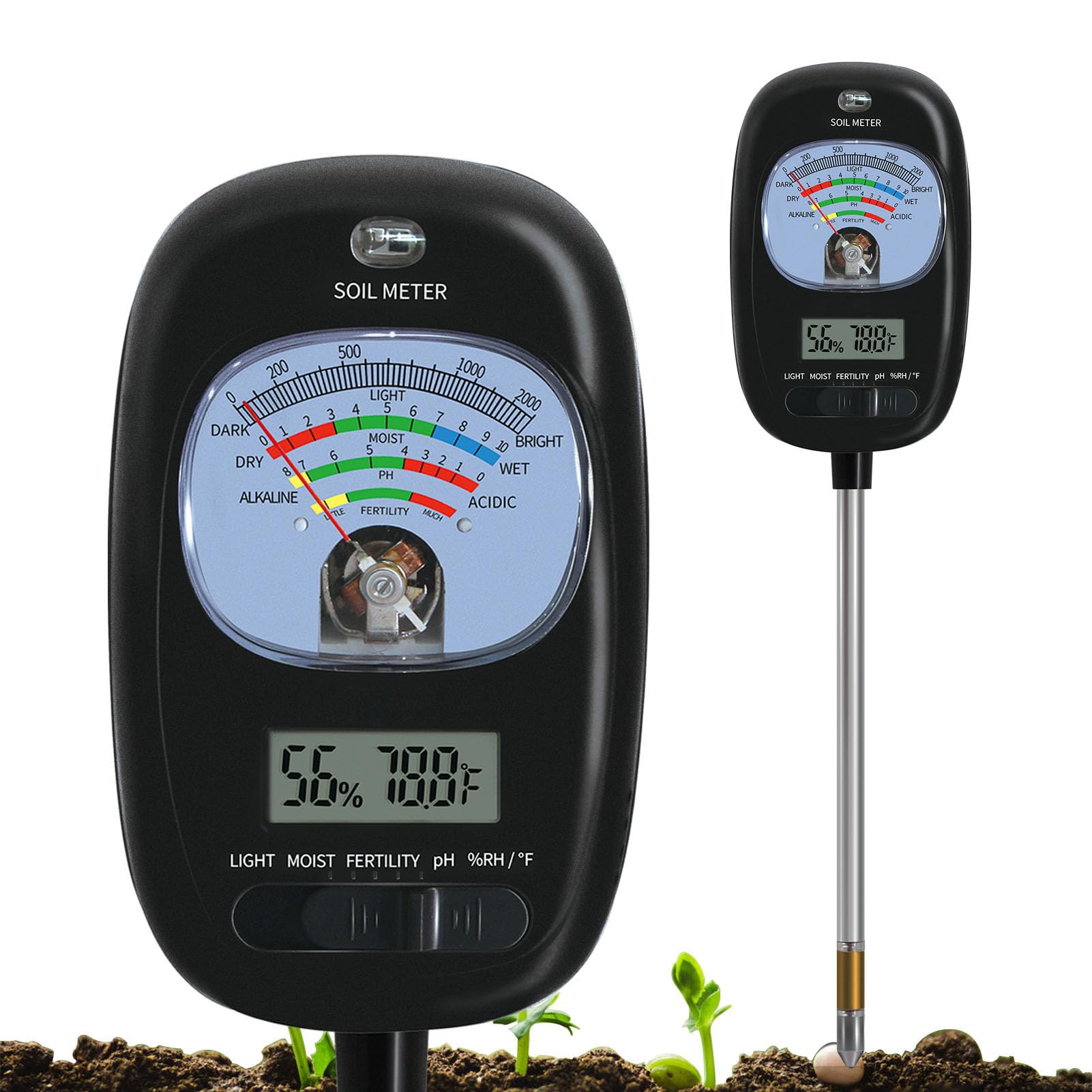
This 7-in-one tool measures moisture, pH, sunlight intensity, fertility, air temperature, air humidity, and soil temperature — all displayed on a clear LCD screen. The probes are made from corrosion-resistant metal that owners say reads quickly and consistently. The design is patented, and buyers praise how easy it is: you push the probe two-thirds into the soil, wait a moment, and the screen tells you everything you need. Overwhelmingly positive reviews (4.6 stars) highlight that it “removes the guesswork” from plant care.
The main guidance from the manufacturer is to avoid using it in rocks, extremely hard soil, or sandy soil — the probes work best in loose, moist garden soil. You should also clean and dry the probe after each use and not leave it in the soil long-term. At 5.6 ounces, it is the heaviest of the 7-in-1 probes here, but the weight comes from the durable metal build and the larger LCD panel that owners find very readable.
The thing everyone raves about: The clear LCD display that shows moisture (on a 1-10 scale), pH (3.5-8 range), and temperature all at once — no squinting at tiny analog lines.
The honest trade-off: The unit is pre-calibrated and cannot be adjusted. Also, it is not suitable for sandy or loose soil, so test a patch of denser earth first.
5. YINMIK Digital pH Tester for Soil

The only pH tester here that connects to your phone for 24-hour soil monitoring.
This is a different class of tool: a digital pH pen with a replaceable glass electrode protected by a tapered stainless-steel dibber. You push the dibber into the soil, and the sensor reads the pH of the root zone. The standout feature is the YINMIK App — you download it, connect via Bluetooth, and set up automatic data storage. That means you can check the soil pH conditions of your plants in real time from your mobile phone, making it ideal for tracking changes after you add amendments.
The kit includes six calibration buffer powders, a cleaning brush, three LR44 batteries, and the steel dibber. At 10.6 ounces, it has some heft, and the glass electrode does require gentle handling. Reliability gets mixed feedback: some reviewers point out it works great for monitoring blueberry bushes, while a few units stopped connecting via Bluetooth after several months. Compared to the HSLGOVE which weighs just 4.8 ounces, this is a heavier, more specialized tool for the dedicated soil scientist.
Standout Features
- Bluetooth app connectivity for tracking pH trends over time on your phone.
- Replaceable glass electrode and included calibration kit for long-term accuracy.
- Works for both soil and water testing (remove the stainless-steel dibber for liquids).
Potential Downsides
- Glass probe is fragile — handle with care, especially in rocky soil.
- Bluetooth connection issues reported by a minority of owners after extended use.
- Requires calibration with buffer solutions before first use, which adds a setup step.
Perfect for: The tech-savvy gardener who wants to log pH data over weeks and months, especially for acid-loving plants like blueberries, azaleas, and rhododendrons.
Not ideal for: Someone who just wants to poke the soil and get a number immediately without any app setup or calibration process.
6. LUVCOSY Digital Soil pH Meter
An industrial-grade meter that promises lab-like accuracy without ever needing calibration.
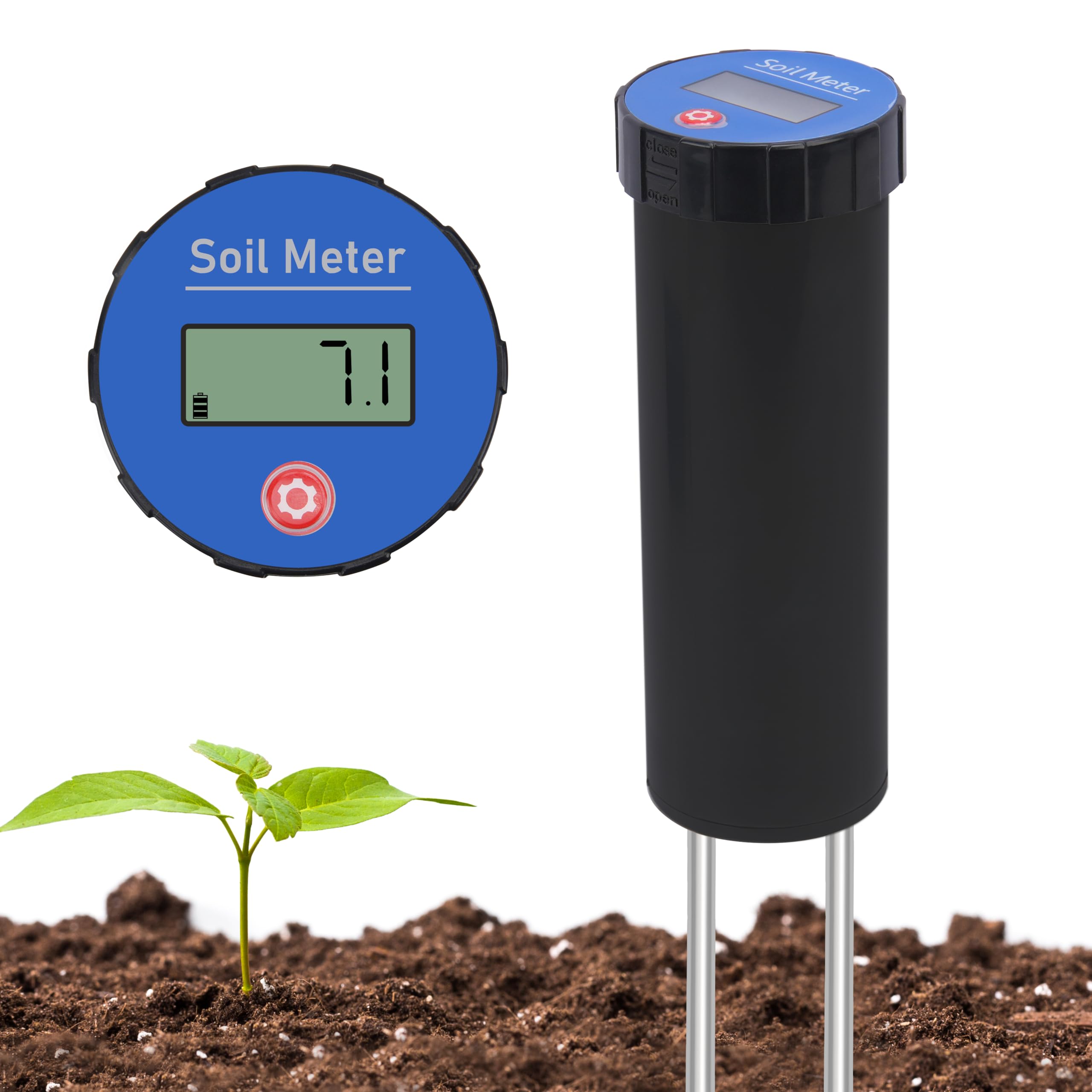
LUVCOSY markets this as an industrial-grade product, and the specs back it up: double-needled stainless-steel probes for high sensitivity, a sophisticated embedded algorithm, and a claim that three AA batteries can support up to 5 years of use. It is ready to use right from the start — no calibration powders, no buffer solutions, no waiting. You stick the probe in the ground and read the LCD display. Owners with crowded vegetable patios report that it works as described and helps them tweak growth conditions.
The strict limitation is that this meter can only measure soil pH, not liquids. If you need to test your hydroponic solution or aquarium water, this is not the tool. It weighs 11.3 ounces and measures 10 x 2 x 2.7 inches, making it a solid, desk-sized instrument. The near-perfect 4.9 stars (from a smaller review pool of 39) suggest early adopters are very satisfied, but the limited sample size means durability data is still light.
What wins people over: The calibration-free design — there is no setup, no learning curve, no powders to mix. Just push it in and read the number. Owners say it works “quickly and accurately.”
The catch: It is soil-only. If you ever need to test water, compost tea, or hydroponic nutrients, you will need a second device. Also, the small review count means long-term reliability is not yet proven at scale.
7. Tadeto Soil pH Tester

A professional-grade meter that spans soil, water, food, and industrial applications with three-point calibration.
The Tadeto uses a three-point calibration method (pH 4.01, 7.00, and 10.01) to deliver what owners call “extremely accurate” readings across a wide range of media: soil, plants, solutions, food, and water. The LCD screen has a backlight for dim conditions and a real-time temperature display. An alarm function lights up the screen red when pH drops below 3.5 or rises above 12 — a safety feature for strong acid or alkaline environments. The probe is protected by a hard conical zinc alloy cap that owners say makes testing harder materials less nerve-wracking.
The biggest friction point is the calibration process. While the functionality gets strong praise (29 mentions), the instructions are widely criticized as confusing, and the calibration packet quality receives mixed reviews. A few shoppers say receiving defective units or calibration inconsistencies. If you take the time to set it up properly, buyers report “you can trust this little beauty.” At 301 grams (about 10.6 ounces), it has a reassuring heft, and the replaceable glass tip extends its useful life.
Professional Strengths
- Three-point user calibration ensures high accuracy across acidity, neutrality, and alkalinity zones.
- Alloy protective cap shields the fragile electrode during soil testing.
- Backlit LCD with temperature display and data hold function for convenient reading.
Honest Frustrations
- Instruction manual is poorly written — plan to watch online calibration tutorials.
- Calibration packet quality is inconsistent; some users recommend buying fresh buffer solutions separately.
- Electrode needs to be stored in potassium chloride solution to stay active, adding ongoing maintenance.
Ideal for: The serious gardener or small farmer who wants lab-quality numbers and does not mind a learning curve. It is especially useful if you also need to test the pH of your well water or compost tea.
skip it if: You want a grab-and-go tool with no calibration fuss. The setup is genuinely involved, and the instructions will test your patience.
8. YINMIK Digital Soil pH Meter for Gardeners

The soil pH meter for avid gardeners that comes with a spare electrode right in the box.
This is a more fully-featured version of the YINMIK brand (compared to Product 5 above). It adds a replaceable electrode (a spare is included), automatic temperature compensation (ATC) for accurate readings in any season, a backlight for dim conditions, and a HOLD/TEMP button to lock readings. The three-point auto calibration makes the setup process much easier than manual calibration kits. It works for both soil and water testing, which is a major plus for hydroponic growers who need one tool for their growing media and their nutrient solutions.
The package is generous: the meter, a spare electrode, a stainless-steel dibber, a cleaning brush, three LR44 batteries, six calibration buffer packets, a dropper, and a plant pH chart. At 13.7 ounces, it is the heaviest unit here, but the weight reflects the full kit. Accuracy gets mixed feedback — some owners find it extremely reliable after calibration, while one buyer mentioned that dry soil gave falsely high alkaline readings compared to damp soil. Wetting the soil before testing is essential.
Highlights
- Comes with a free spare electrode, extending the meter’s lifespan significantly.
- Automatic temperature compensation (ATC) ensures accuracy regardless of season or soil temperature.
- Three-point auto calibration is much easier than manual buffer mixing.
Points to Watch
- Dry soil can produce inflated alkaline readings — always test in damp soil for accuracy.
- Glass probe is fragile; handle with care, especially in rocky or compacted ground.
- Some units arrive with calibration issues; the 90-day free return policy is worth noting.
Who it serves best: The committed gardener who wants a professional-grade tool with a backup electrode already included. The auto-calibration and ATC make it more forgiving than manual meters.
A reasonable hesitation: Accuracy is moisture-dependent, and the glass tip requires careful handling. Not for the “stab it and see” crowd.
9. Tadeto Multifunctional Digital pH Meter

The pH pen that bridges the kitchen and the garden — testing soil, water, and even your sourdough starter.
This meter is designed for multi-purpose use, which separates it from most competitors. It comes with three ready-to-use calibration solutions (pH 4.01, 7.00, and 10.01) rather than powders, simplifying the setup. The zinc alloy protective cap works for soil testing, while the probe itself is designed for food pH testing — lemons, yogurt, vinegar, bread, cheese, meat, and even vegetables like bitter melon and purple kale. It also features a backlight, a ℃/℉ switch for temperature display, and ships in a handbag-style carrying case.
Accuracy is the most-discussed aspect (16 mentions), and the verdict is genuinely mixed. Some owners mention it is extremely accurate and outperforms expensive lab pens, while others report wildly inaccurate readings — one owner compared Tadeto results of 8.8-9.0 pH against a university lab result of 5.5-6.5. The instruction manual does not clearly explain the stabilization time needed for temperature equilibration, which can lead to drifting readings. If you are buying this for food testing, calibrate carefully and compare against a known standard first.
What makes it unique: The ability to test pH of food items like bread, cheese, and vegetables — not just soil and water. It includes liquid calibration solutions instead of powders, which some find easier to measure.
The honest caution: Accuracy is inconsistent across units and users. If you get a good one, owners call it “lab-grade.” If you get a bad one, it can mislead you into harmful plant treatments. Buy from a seller with a solid return policy.
Understanding the Specs
pH Scale & What It Means for Your Garden
The pH scale runs from 0 (very acidic) to 14 (very alkaline), with 7 being neutral. Most garden plants prefer a pH between 6.0 and 7.0, where nutrients like nitrogen, phosphorus, and potassium are most available. Blueberries and azaleas need acidic soil around 4.5-5.5, while lavender and asparagus tolerate alkaline soil up to 8.0. Testing your soil tells you which side you are on and how much amendment (lime to raise pH, sulfur to lower it) you need to apply.
Calibratable vs. Pre-Calibrated Probes
A pre-calibrated meter (like most analog probes and the LUVCOSY digital meter) is ready to use immediately. The sensor is set at the factory, and you cannot adjust it. If it drifts over time, you replace it. A calibratable meter (like the Tadeto and YINMIK models) lets you re-set the sensor using buffer solutions of known pH (typically 4.01, 7.00, and 10.01). This is essential for accurate work because probes naturally drift with age and exposure to soil minerals.
FAQ
Do I need a digital pH meter or a chemical test kit?
How deep should I insert the probe into the soil?
Can I use a garden pH tester for water or hydroponics?
How often should I test my garden soil pH?
What does it mean if my soil pH is too high or too low?
Do analog pH testers need batteries?
How do I clean and store my pH probe?
Why does my digital pH meter give different readings each time?
What is three-point calibration and do I really need it?
Can I test the pH of my compost with these meters?
Final Thoughts: The Verdict
After comparing the specs, features, and real owner experiences across all nine testers, the best garden pH tester for most gardeners is the HSLGOVE 7-in-One Soil Test Kit. It delivers seven measurements from a single probe, combines an analog dial with a digital LCD screen, and has the strongest positive feedback from the largest number of owners who praise its ease of use and accuracy. If you prefer the simplicity of a chemical kit that reveals nitrogen and phosphorus levels, the Soil Test Kit 140 Tests is your best value. And for the tech-savvy grower who wants Bluetooth data logging and 24-hour soil monitoring, the YINMIK Digital pH Tester stands alone as the most innovative tool in this roundup.
How We Picked
We do not accept paid placement. Every pick is matched to a real buyer and a real use-case; we do not hands-on test units.
Sources & Methodology
Specifications: manufacturer listings and product documentation. Review insights: verified customer reviews, as of July 2026. Pricing: not shown on this page (it changes often); check the current price via the retailer link.
As an Amazon Associate, Lawn Gear Lab earns from qualifying purchases. This does not affect which products we feature.