
Specs are compiled from manufacturer listings and verified buyer reviews and can change over time — please confirm the key details on the product page before buying.
Nothing ruins a weekend of garden work faster than stepping off the lawn onto a wobbly stone that tips your ankle, or trudging across a mud-slick path every time it rains. Garden paving stones are meant to solve that—giving you a firm, clean place to walk without sinking a foundation or breaking your back on installation. The catch is you have to pick the right type for your ground, traffic, and patience level, because what works for a light flowerbed path collapses under a delivery truck.
I’m Rikta — the founder and writer behind Lawn Gear Lab. This guide is built by comparing the manufacturers’ published specifications and the patterns across verified customer reviews, so you get each pick’s real strengths and trade-offs instead of marketing spin.
if you want a classic walkway, a heavy-duty driveway, or a simple decorative strip, this look at the best garden paving stones focuses on what actually happens once they are in the ground — the durability, the installation effort, and whether they stay put season after season.
Our Picks at a Glance


How To Choose The Best Garden Paving Stones
Garden paving stones look simple — a flat thing you step on — but the wrong type will sink, crack, float away, or feel wobbly underfoot. The choice depends on three things: what surface you are placing them on, how much weight they need to carry, and how much work you want to put into installation.
Weight and Material
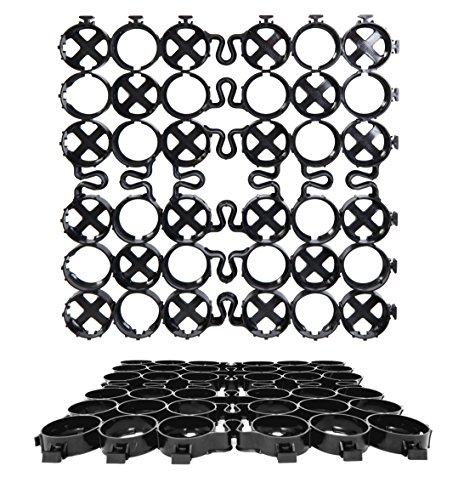
A solid stone paver (concrete, flagstone, or thick rubber) stays put by its own mass. Lightweight options — flexible mesh mats with glued-on pebbles — rely on ground contact and can shift if the soil underneath moves. Heavy rubber slabs (6+ pounds each) resist wind and light traffic but need a prepared base for heavy loads. Interlocking plastic grids weigh almost nothing yet handle huge loads because they distribute weight across the whole grid.
Load Class and Intended Use
Manufacturers rate their products for residential or heavy-duty use. A thin decorative stone is fine for a flowerbed path you walk on once a week. A permeable paver grid rated for 120,000 pounds is necessary if you plan to park an RV or drive a truck over the area. Check the label: “residential grade” usually means foot traffic and occasional garden carts; “heavy vehicle rated” means gravel-filled grids or thick reinforced rubber.
Installation and Maintenance
Some pavers are “drop and go” — place directly on soil or grass. Others require excavation, a compacted gravel base, and infill. Rubber mats and mesh-backed stones are the easiest: they go over earth or mulch with no digging. Plastic grid systems need about an inch of excavation and then gravel or soil filling. Solid stone or concrete requires the most prep: level ground, sand bed, and sometimes mortar.
Quick Comparison
| Model | Best For | Material | Load Rating | Coverage | Amazon |
|---|---|---|---|---|---|
| TRUEGRID PRO LITE★ Best Overall | Heavy-duty Driveways | Recycled HDPE Plastic | 120,000 lbs | 72 sq ft (18-pack) | Amazon |
| Vodaland HexPaveBest Value | Grass Patios & Shed Bases | Recycled PPE Plastic | 27,000 lbs | 65 sq ft (22-pack) | Amazon |
| Rubberific Dual Sided TilesTop Performer | Yard & Patio Floors | 100% Recycled Rubber | Residential | 5 tiles (16″x16″) | Amazon |
| TierraVerde Natural Rock | Medium Pathways | Recycled Rubber | Residential | 4 stones (18″x22″) | Amazon |
| Sekcen Rubber Pavers | Gravel Walkways | Recycled Rubber | Residential | 3 stones (18″x17″) | Amazon |
| EYZH Stepping Stones | Light Decorative Paths | River Pebble on Mesh | Decorative | 6 stones (9″ round) | Amazon |
| BIRDROCK HOME Rubber Stones | Simple Garden Paths | Rubber | Residential | 3 stones (12″x12″) | Amazon |
| River Rock Hexagon Mats | Flowerbed Decoration | River Pebble on PVC Mesh | Decorative | 6 mats (9.5″ hex) | Amazon |
| Quibbay Mexican Beach Pebbles | Loose Fill & Accents | Natural River Rock | N/A (bulk gravel) | 45 lbs | Amazon |
In‑Depth Reviews
1. TRUEGRID PRO LITE Permeable Paver (18-Pack)
Our pick — over 4.5★ from 850+ verified ratings; the strongest balance of quality and price.
The iron backbone for driveways, shed bases, and RV pads that refuse to turn into ruts.
This is a serious piece of hardscaping. The TRUEGRID PRO LITE is a hollow plastic grid — each cell is 1 inch deep — that you fill with gravel or soil. Once the gravel locks in, the whole surface acts like a single solid sheet. Buyers report it is “extremely durable under heavy vehicles (skid steer, F250) and foot traffic; no shifting or damage.” That makes sense given the load class: it handles 120,000 pounds. A typical pickup truck weighs maybe 6,000, so you are well within the safety margin even for an RV or a loaded dump truck.
Installation is straightforward for a DIYer. You remove about an inch of soil, lay the grids, and fill with gravel. The grids interlock and you cut them with a sawzall or skill saw. They are made in the USA from 100% post-consumer recycled HDPE plastic and each panel weighs only 2.5 pounds — so the 18-pack (covering 72 square feet) is manageable to move around. The grids are snow-plowable and drain instantly, which solves mud and standing water. Plan well before filling, because moving the grids after gravel is in is a major chore.
What Owners Rave About
- Easy to use — 84 owners single it out as the top positive, praising the simple interlocking and gravel-fill process.
- Eliminates muddy issues entirely; the 28 mentions of mud reduction are unanimous — puddles and ruts disappear.
- Versatile across surfaces: driveway, shed base, path, hot tub pad, pool skirt, dog run — 25 different use-cases reported.
The Honest Caveats
- Durability is mixed — 22 owners note it, with some reporting that sharp turns from heavy equipment can tear the grid edges under extreme lateral torque.
- Difficult to repair once installed; if a section gets damaged, replacing a single panel means digging out the gravel from that area.
- Cost is higher than drop-and-go stones; the value-for-money score is positive (31 mentions) but only if you need the load capacity.
Choose this if: you need a permanent, heavy-duty surface that won’t sink, rut, or puddle under cars, trucks, or foot traffic.
Think twice if: you want a quick decorative path — the grid requires gravel fill and a small excavation, so it is a project, not a weekend touch-up.
2. Vodaland HexPave System (22-Pack)
The concrete alternative that lets rain soak through while keeping your shed floor level.
This hexagonal plastic paver system is similar in concept to the TRUEGRID but with a different shape and load rating. The HexPave handles 27,000 pounds — not enough for heavy commercial trucks, but plenty for a pickup, trailer, or backyard shed base. It covers 65 square feet with 22 units and uses 1-inch-deep chambers that you fill with gravel or soil. The grid is made from 100% recycled PPE plastic and weighs 20.41 kg total (about 45 pounds for the whole box).
Assembly is tool-free — the hexagons snap together by hand. Owners mention it works “awesome for our backyard pea gravel install” and note that walking on the gridded section feels noticeably more stable than loose gravel. The material is permeable, so rainwater seeps through and reduces runoff. One owner used 10 boxes (220 units) to stabilize a large erosion-prone slope and called it “a lifesaver.” The main criticism: not enough anchoring stakes come in the box, so if you have dogs that dig, you may need to buy extras.
Why It Gets High Marks
- Stability on gravel is the standout — the grid keeps stones in place, making walking feel solid where loose gravel would shift underfoot.
- Installation is genuinely tool-free; connects by hand with no cutting needed for straight runs.
- Great for erosion control on slopes and for zones with runoff issues.
Where It Falls Short
- Anchoring stakes are insufficient — more are needed, especially if dogs or wildlife dig in the area.
- The load rating (27,000 lbs) is lower than the TRUEGRID PRO LITE, so it is not ideal for an RV pad or heavy commercial use.
- Cost per square foot is higher per grid than the TRUEGRID in some comparisons, though still budget-friendly.
Perfect for: shed bases, gravel patios, pea-stone walkways, and erosion control — where you want stability without concrete permanence.
Consider another if: you need the absolute highest load capacity for heavy truck traffic — the TRUEGRID is a better match at 120,000 lbs.
3. Rubberific Dual Sided Rubber Paver Tiles (5-Pack)
A reversible rubber tile that turns a muddy yard corner into a non-slip patio floor.
These 16×16 inch rubber tiles are 3/4 inch thick and weigh 6 pounds each. The “dual sided” name is literal: one side has a brick pattern, the other a flagstone pattern, so you choose the look. They are made from 100% recycled rubber and are built to survive freeze-thaw cycles without cracking. Owners rave about the durability — it is the most-mentioned positive aspect. The tiles are “very grippy” and can be pressure washed clean when muddy. One owner used them inside a raised garden bed to create a stable walking surface between rows.
Installation is simple — lay them directly on soil, dirt, or existing hard surfaces. If the ground is uneven, a 50-pound bag of sand underneath helps keep them flat. The tiles are heavy enough that they do not blow away in wind, and they are thick enough to feel substantial underfoot. The main concern is value: at this price tier, some owners feel they are expensive per tile, and one buyer received only 8 tiles from an order that should have been 16.
What Owners Applaud
- Durability is the hallmark — 38 positive mentions, calling them heavy-duty and long-lasting through all weather.
- Dual pattern design adds variety: switch between brick and flagstone looks without buying two products.
- Non-slip surface and washable material make them practical for muddy areas and around pool or hose.
What To Watch For
- Value for money gets mixed signals — they are pricey per square foot compared to loose stones or grids.
- Some units arrive with a different number of tiles than advertised; check packaging immediately on delivery.
Best for: creating a clean, non-slip floor in a garden shed, around a grill, or on a patio — where you want a solid surface without digging.
Not ideal for: large driveway projects — the cost per square foot adds up quickly and you need many tiles.
4. TierraVerde Natural Rock Rubber Stepping Stones (4-Pack)

A slate-look rubber stone that fools the eye but saves your back from lifting real rock.
At 18 x 22 inches each, these are the largest individual stepping stones on this list. They are made from recycled rubber molded to look like dark slate, and the texture is realistic enough that owners say “they look like slate” and “have the look of slate but much softer to walk on.” Each stone weighs enough to stay in place without stakes — even in strong wind — yet is light enough to carry home from the store. The pack covers a small pathway or a cluster around a focal point in the garden. Installation is truly “just lay them where you want them” — no base prep, no tools.
Owners praise the quality (the top aspect) and the durability, noting they have held up for months with no fading or cracking. The slip-resistant surface works well in rain. One owner bought multiple sets to replace 20-year-old concrete stones. The color is a dark gray slate gray — if you wanted a warm brown, that is not an option. The stones are noticeably softer underfoot than real slate, which some prefer and others miss for a “real stone” feel.
Why Buyers Are Impressed
- Realistic appearance fools visitors — 15 positive mentions specifically praise the slate-like look and color.
- Easy installation with no prep; they stay put by weight alone on grass, dirt, or gravel.
- Slip-resistant surface works wet or dry, making them safe for the hose area or dewy morning paths.
The Trade-Off
- Only available in one color — gray/black. If you want warm earth tones or brown, this is not the set.
- At for four large stones, the per-stone price is higher than smaller rubber options.
Reach for these if: you want a stylish, large-format pathway that takes ten minutes to install and looks like natural slate from a few feet away.
Skip this if: you need a warm-toned stone or you want dozens of small stepping stones — the 4-pack covers a limited area.
5. Sekcen 3-Pack Rubber Stepping Stones

A flagstone-look rubber paver that weathers into something more natural-looking over time.
Each stone measures 18 x 17 inches and is 0.75 inches thick — a squat, irregular shape that mimics cut flagstone. The Sekcen stones are made from recycled rubber with a textured, non-slip surface. At 8.55 kg per pack (about 18.8 pounds total) they are heavy enough to stay put on level ground. Owners found that rotating each stone in a different direction from its neighbor makes the pathway look much more natural. They also discovered that the stones “become more realistic looking over time as they weather and age.”
Appearance is the top positive aspect, with 35 positive mentions. The stones look natural on gravel, grass, and dirt, and they are easy to rearrange. A few owners note a strong “firestone tire store” smell when new — that dissipates over a few days outdoors. The quality score is also strong (20 positive mentions) and durability gets 18. The main negative is value: a mixed score of 6 mentions, with some feeling the price is high for a 3-pack. If you are covering a long path with many stones, the cost adds up quickly.
What Works Well
- Natural-looking flagstone texture fools the eye, especially when you vary the orientation of each stone.
- Thick, sturdy rubber (0.75 inches) feels solid underfoot and resists curling or warping.
- Non-slip surface gives confidence on wet days.
What To Watch For
- The initial rubber smell can be strong — needs a few days of outdoor airing before you use the path.
- High per-stone cost makes large areas expensive — better for short paths or focal clusters.
Best for: upgrading a gravel walkway or creating a natural-looking short path — the flagstone pattern blends beautifully.
Consider another if: you need to cover 40+ linear feet on a budget — a larger pack or plastic grid system will be more cost-effective.
6. EYZH Garden Stepping Stones (6-Pack, 9-Inch)

A hand-polished river stone mat that looks like cottage-garden whimsy but needs a little prep first.
These 9-inch round stepping stones are formed by attaching smooth, hand-polished river pebbles to a flexible plastic mesh backing. They are lightweight — just 1.9 pounds for the whole pack — and the mesh allows grass and soil to grow through the gaps, making the stone look like it settled naturally into the lawn. Owners say they are “adorable for cottage garden” and truly “add a stylish vibe to the flowerbeds.” The stones are smooth enough for bare feet.
The honest catch is durability. The mesh backing is visible and the stones can fall off if the mat is stepped on directly on uneven ground. One owner who did proper underlayment — a layer of sand, a cardboard cake board for stability, then sand over the top — reported the path “looks great” and prevents mulch from tracking. Without that prep, the stones feel flimsy. The appearance gets 72 positive mentions, but the durability score is 40 negative — the most-discussed downside. These are, as one owner put it, “not a stepping stone” so much as a decorative mat. If you want something that can take heavy daily foot traffic on raw soil, this is not it.
What They Do Right
- Gorgeous polished river pebble look — 72 owners call out the appearance positively, calling it beautiful and natural.
- Flexible mesh base allows the mat to conform to uneven ground and blend into flowerbeds.
- Lightweight and easy to move, reposition, or store indoors in winter.
The Limit
- Durability is a known issue — 40 negative mentions, with stones falling off the mesh in regular use.
- Not a hard stepping stone; needs underlayment and gap-filling to be a stable walking surface.
Great for: a decorative flowerbed accent, a small cottage-garden path on a prepared base, or a gift for a plant enthusiast.
Pass if: you need a heavy-duty walkway that can handle daily traffic without preparation or maintenance.
7. BIRDROCK HOME Rubber Stepping Stones (3-Pack)
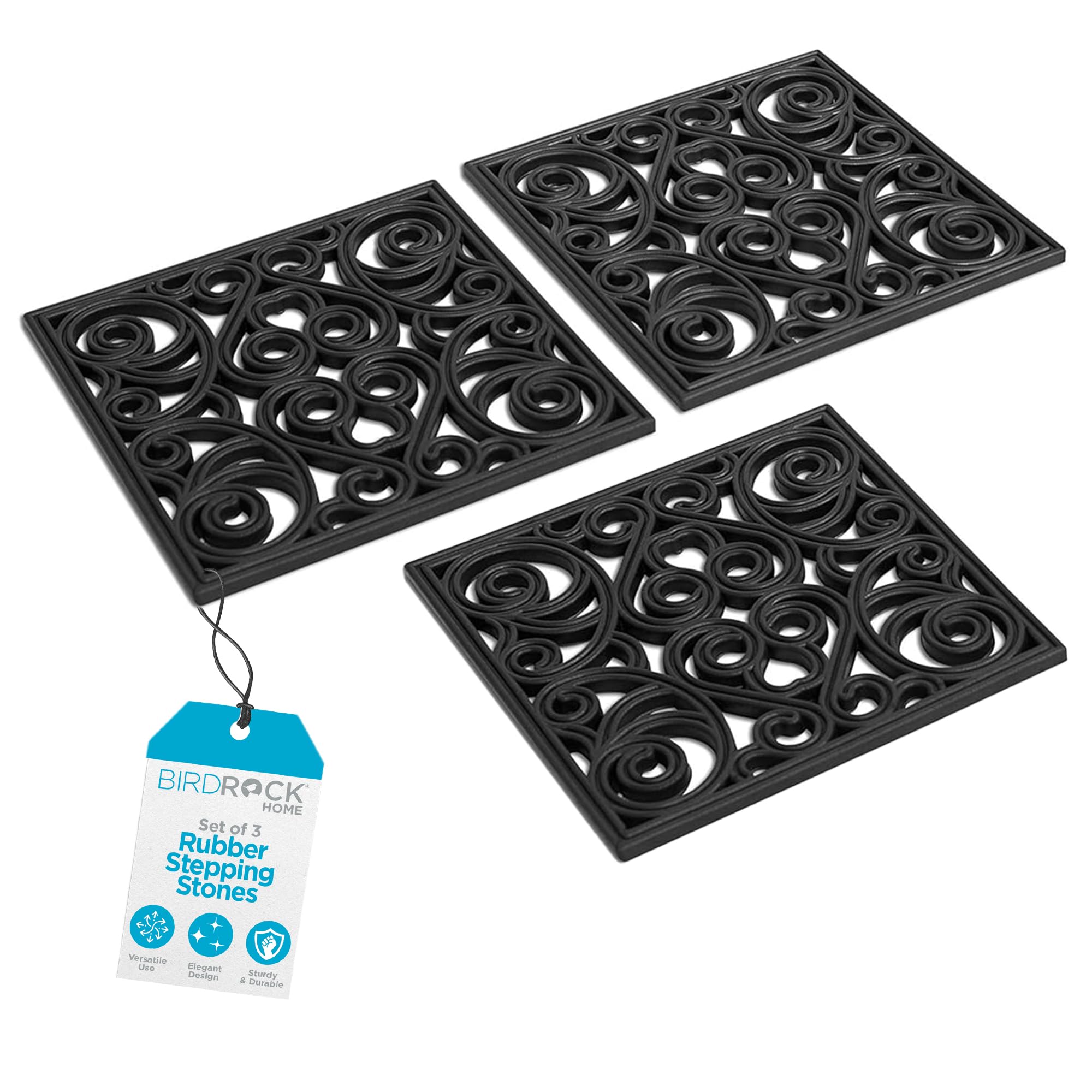
The straightforward rubber square that offers more style than you expect at this price.
Each stone is 12 x 12 inches and weighs 6.3 pounds — which is about two and a half times the weight of each TRUEGRID plastic grid panel (2.5 pounds). That weight gives these rubber squares a planted feel on grass, dirt, or gravel. They are made from quality rubber with an attractive design, and owners say they are “well made, sturdy and look beautiful.” Appearance is the top positive aspect, with 76 positive mentions — the most of any single aspect in this product’s data.
Installation is as simple as it gets: pick a spot and drop the stone. The flexible rubber conforms to slight ground imperfections. Some owners note that the stones can shift on very soft or loose soil, so they bought u-shaped stakes to pin them down. The durability score is strong at 50 positive mentions, and they are used in sandy soil gardens with success. For the price, you get a 3-pack — enough for a short path or a trivet for trash bins. If you want a longer path, you will need multiple packs.
Why It’s Popular
- Great looks for the price — appearance gets 76 positive mentions, the top aspect by a wide margin.
- Heavy enough (6.3 lbs each) to stay put in most garden conditions without stakes.
- Flexible rubber feels comfortable underfoot and resists cracking in freeze-thaw.
The Small Downside
- 3 stones cover a limited area — a short path may need 2-3 packs to look intentional.
- On very soft ground, owners recommend adding u-shaped stakes for security; not included in the box.
Best for: a quick, good-looking path for a small garden or a set of trivets for trash can pads — low effort, high visual return.
Not ideal for: long walkways or heavy foot traffic where multiple packs would make the cost similar to larger rubber mats.
8. River Rock Stepping Stones Hexagon Mat (6-Pack)

A hexagonal pebble mat that looks like a honeycomb of river stones but is fragile on its own.
These mats form a 9.5 x 8.7 inch hexagonal shape when placed, covered in smooth polished river pebbles set on a PVC mesh backing. The pattern is genuinely pretty — 72 owners praise the appearance. The mesh is flexible, so the mat conforms to the ground and looks natural when placed over mulch or soil. One owner used them in a flowerbed over mulch and called them “perfect.” Another put them around a chicken coop and loved how they “mold to the ground so you don’t have to worry about leveling.”
The durability problems are real. Durability gets 40 negative mentions — the worst score in this product’s data — and the gluing quality gets 19 negative mentions. Rocks fall off the mesh with regular stepping, and some units arrive with torn mesh or rocks already detached. One owner summed it bluntly: “product cheap dollar store fish net with hot glued on rocks that won’t hold up to foot traffic.” These are strictly decorative items, not true stepping stones. If you set them on a prepared base and use them as gentle accent pieces, they last longer. But daily foot traffic on raw ground will cause the pebbles to pop off.
The Upside
- Visually striking — 72 positive mentions for the polished river stone appearance.
- Flexible PVC base conforms to uneven ground, creating a natural look in flowerbeds.
- Great for low-traffic decorative areas like under a birdbath or around a garden statue.
The Downside
- Poor durability — 40 negative mentions report rocks falling off the backing with normal use.
- Not a real stepping stone for pathways; works best as a decorative mat on prepared ground.
Best if: you want a beautiful, natural-looking accent in a flowerbed where people will look but not stomp — on a prepared base, these shine.
Skip if: you intend to walk on them daily — the stones will loosen and the mesh will tear within a season.
9. Quibbay 45 lb Natural River Rocks Mexican Beach Pebbles

A bag of smooth, hand-selected river pebbles that bring a beach texture to your garden beds.
These are not stepping stones in the traditional sense — they are 0.3 to 0.6 inch natural river pebbles sold in 45-pound bags. Use them as loose fill in walkway gaps, as a weed-suppressing top layer around plants, or as a decorative accent in rock gardens and around stepping stones. The stones are natural, untreated, and unpolished — no dyes, coatings, or fillers. Owners value the quality (21 positive mentions) and the appearance (12 positive mentions), noting they “work beautifully” for accent pieces and for filling around larger stones.
The size gets mixed feedback. Some find them perfect for their project; others say they are smaller than expected. The stones also attract dust when dry, so the manufacturer recommends washing them 2-3 times before use if you want the vibrant wet color. Durability gets a mixed score — real rocks are naturally durable, but a few owners received broken rocks in the bag. Value for money is the biggest negative: 11 mentions say the price is high for a 45-pound bag of pebbles, and some call the bag “small for the price.”
What Works
- Natural, untreated stone safe for use around pets and in fish tanks.
- Versatile — 8 mentions for use in plant decor, aquarium bottoms, walkway gaps, and garden accents.
- Smooth texture is comfortable to walk on barefoot when used as a fill layer.
What Could Be Better
- Value for money is the biggest complaint — 11 negative mentions for the price per pound.
- Size is smaller than some buyers expected; measure your planned coverage area before ordering.
Great for: filling gaps between stepping stones, adding a decorative layer to planters or rock gardens, or accenting small areas with smooth natural stones.
Consider something else if: you need consistent large gravel for a pathway base — this is accent-grade pebbles, not bulk fill.
Understanding the Specs
Load Class
This is the weight a paver or grid can handle without cracking or shifting. For foot-traffic-only paths, a residential rating is fine. For driveways or areas where a vehicle will pass over, look for a specific load rating in pounds — you will see numbers like 27,000 or 120,000. The higher the number, the heavier the vehicle it can support.
Permeability
A permeable paver lets rainwater soak through the surface into the ground below rather than running off. Plastic grid systems and rubber mats with drainage holes are permeable. Solid concrete or mortared stone is not. If you have drainage issues or want to reduce runoff, pick permeable pavers.
Coverage Area
The total area a pack covers is often more useful than the number of pieces. A 6-pack of small stones might cover only 5 square feet, while an 18-pack of large grids could cover 72 square feet. Always check the “coverage” spec — your path or pad area should match or exceed that number.
Thickness
Thicker pavers (1 inch or more) generally handle more weight and resist cracking. Thinner stones (0.75 inches) are lighter and easier to move but may flex under heavy loads. For pathways, 0.75 to 1 inch is enough. For driveways, 1 inch or thicker is preferred.
FAQ
Will garden paving stones sink into soft soil?
Do I need to dig up the ground before installing pavers?
How long do rubber garden paving stones last?
Can I drive a car on garden paving stones?
Are natural river pebble mats really stepping stones?
What is the difference between permeable and non-permeable pavers?
How do I stop weeds from growing between paving stones?
Can I install garden paving stones over existing concrete or asphalt?
How many paving stones do I need for a small garden path?
Why do my stepping stones feel wobbly?
Final Thoughts: The Verdict
If you need to park a truck, build a shed base, or stop a muddy driveway, the garden paving stones that deliver are the TRUEGRID PRO LITE — the 120,000-pound load rating and the “no shifty, no damage” reports from real buyers make it the definitive heavy-duty pick. For a gravel patio or a stable yard path, the Vodaland HexPave offers a lower-cost alternative that still holds 27,000 pounds. And if you just want a simple, good-looking pathway you can lay in an afternoon without tools, grab the TierraVerde Natural Rock stones — they look like slate, weigh enough to stay put, and won’t crack in winter.
How We Picked
We do not accept paid placement. Every pick is matched to a real buyer and a real use-case; we do not hands-on test units.
Sources & Methodology
Specifications: manufacturer listings and product documentation. Review insights: verified customer reviews, as of July 2026. Pricing: not shown on this page (it changes often); check the current price via the retailer link.
As an Amazon Associate, Lawn Gear Lab earns from qualifying purchases. This does not affect which products we feature.