
Watching prized tomatoes, rose bushes, or a thriving vegetable bed fall to aphids, spider mites, and caterpillars is frustrating. The market is flooded with options, but choosing the wrong garden insecticide wastes money and can harm the very plants you are trying to protect. Finding a solution that delivers fast, visible results without collateral damage to your soil or beneficial insects is the real challenge every gardener faces.
I’m Rikta — the co-founder and writer behind Lawn Gear Lab. I spend my time cross-referencing active ingredient concentrations, reading through hundreds of verified owner experiences, and breaking down the label fine print so you know exactly what you are applying to your plants.
After analyzing concentrate ratios, target species lists, and organic certifications across dozens of formulas, this guide cuts through the noise to help you match the right product to your specific pest pressure and growing style. This is the definitive resource for finding the best garden insecticide that fits your plants and peace of mind.
How To Choose The Best Garden Insecticide
Choosing the right insecticide isn’t about picking the strongest poison. It is about matching the active ingredient to the specific pest and the stage of the plant. Understanding the label is the most important skill you can learn.
Identify the Pest First
Every insecticide targets a specific class of insect. Bacillus thuringiensis (B.t.) only works on caterpillars and worm-type larvae. Spinosad excels against thrips, leafminers, and chewing insects. Malathion is a broad-spectrum organophosphate that hits aphids and spider mites hard. Spraying the wrong compound is a waste of time and money.
Consider Organic vs. Synthetic
OMRI-listed products like Monterey B.t. and Dr. Earth use naturally derived ingredients that break down faster in the environment. Synthetic options like Malathion offer powerful knockdown but require strict safety gear and longer pre-harvest intervals. If you grow edibles or have pets, lean toward the organic side of the aisle.
Concentrate vs. Ready to Use
Ready-to-spray (RTS) bottles attach to a hose for quick coverage of large lawns or shrub lines. Concentrates, like the Organic Insecticide & Fungicide, require mixing but yield multiple gallons of spray, making them more economical for ongoing maintenance. For spot treatment on houseplants or a small raised bed, a ready-to-use trigger sprayer is simpler.
Check for Broad-Spectrum Damage
Some insecticides are non-selective. They kill the bad bugs but also wipe out ladybugs, lacewings, and earthworms. Products containing neem oil extract, like Garden Safe Fungicide3, offer a softer approach that targets fungal diseases and soft-bodied insects while preserving beneficial insect populations when applied correctly in the evening.
Quick Comparison
On smaller screens, swipe sideways to see the full table.
| Model | Category | Best For | Key Spec | Amazon |
|---|---|---|---|---|
| Control Solutions Cyonara | Synthetic | Lawn & Mosquito Control | 32 oz RTS bottle | Amazon |
| Monterey B.t. | Organic | Caterpillar & Worm Control | 8 oz concentrate | Amazon |
| Organic Insecticide & Fungicide | Organic | Fungus Gnats & Aphids | 16 oz concentrate | Amazon |
| Garden Safe Fungicide3 | Organic | Powdery Mildew & Mites | 1 Gal RTS (Neem Oil) | Amazon |
| Hi-Yield Malathion | Synthetic | Spider Mites & Scale | 32 oz, 55% Malathion | Amazon |
| Dr. Earth Yard & Garden | Organic | Pet-Friendly Gardens | 32 oz RTS | Amazon |
| Ferti-lome Spinosad | Organic | Bagworms & Leafminers | 32 oz concentrate | Amazon |
In‑Depth Reviews
1. Control Solutions Cyonara Lawn & Garden RTS

The Cyonara RTS is a ready-to-spray synthetic pyrethroid that delivers rapid knockdown across a massive 16,000 sqft coverage area. Users consistently report immediate results against grasshoppers, mosquitoes, and general yard pests, often noting that a single hose-end application dramatically reduces visible insect activity within hours. The 32-ounce bottle connects directly to a garden hose, eliminating the need for mixing or measuring.
Customer feedback shows it is particularly effective against lubber grasshoppers that devastate ornamentals and roses. The formula is designed to protect lawns and garden perimeters, though some users noted that over-application on turf can cause temporary browning. The product is labeled for a wide range of pests, making it a strong all-purpose choice for the homeowner who wants one bottle to cover the entire yard.
One caveat involves springtail control, where multiple applications were needed to see a reduction. The synthetic nature means it should be used with care around blooming plants to avoid harming pollinators. For general mosquito and grasshopper suppression with minimal effort, this is the most effective ready-to-use option in the lineup.
What works
- Immediate knockdown of grasshoppers and mosquitoes
- Large 16,000 sqft coverage per bottle
- Simple hose-end attachment, no mixing
What doesn’t
- Can brown grass if overdosed
- Requires caution around bees and blooms
2. Monterey B.t. Caterpillar & Worm Killer
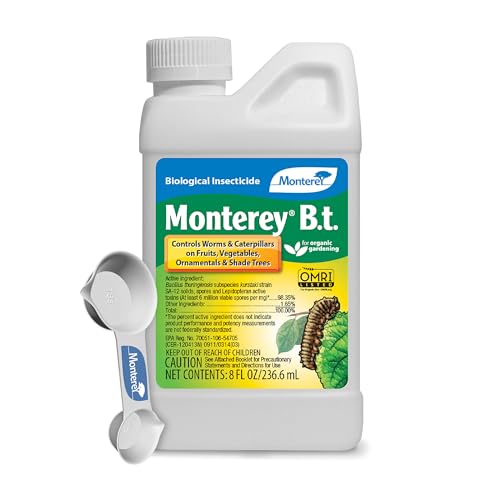
Monterey B.t. uses Bacillus thuringiensis, a naturally occurring soil bacterium that specifically targets the digestive systems of caterpillars and worm-type larvae. This OMRI-listed concentrate is safe for earthworms, honeybees, and ladybugs when used as directed, making it the first choice for organic vegetable growers. Users report it stopped cabbage loopers from destroying flower seedlings within days of application.
The 8-ounce bottle mixes with water and applies easily via a trigger sprayer or pressure tank. Reviews highlight its effectiveness against bagworms, gypsy moths, and fall cankerworms on trees and ornamentals. Gardeners appreciate that it does not leave a toxic residue on edible crops like broccoli, tomatoes, and melons, allowing harvests to continue safely.
A minor complaint is the small container size relative to the price per ounce, but since the concentrate goes a long way, the actual cost per treatment is reasonable. For any gardener dealing with leaf-eating worms on vegetables or shade trees, this is the safest and most targeted tool available.
What works
- Zero harm to bees, earthworms, or beneficial insects
- Highly effective on cabbage loopers and bagworms
- Safe for vegetables up to day of harvest
What doesn’t
- Only targets caterpillars and worm larvae
- Small 8 oz bottle, need to mix batches
3. Organic Insecticide & Fungicide Concentrate

This bio-based concentrate from Evergreen Way Inc handles both insect infestations and fungal outbreaks in one pass. The formula targets spider mites, aphids, whiteflies, thrips, and fungus gnats while simultaneously suppressing powdery mildew and leaf spot. Users report that a 10-drop dose in 32 ounces of water killed bugs on contact in under ten seconds.
Indoor gardeners found it eliminated severe fungus gnat infestations after a single soil soak, with weekly maintenance keeping plants thriving. The fungicide component improved leaf color and reduced spotting on houseplants and raised beds. The concentrate yields multiple refills, making it economical for weekly misting routines.
The product has a mild scent and clear mixing instructions, which reviewers appreciated. A few users noted that for heavy caterpillar pressure, a dedicated B.t. product might be more effective. For the gardener battling both leaf disease and sap-sucking insects simultaneously, this combo approach saves time and shelf space.
What works
- Treats insects and fungal disease with one mix
- Fast contact kill on aphids and gnats
- Concentrate provides many refills
What doesn’t
- Less effective on large caterpillar populations
- Requires evening application to avoid leaf burn
4. Garden Safe Fungicide3 Neem Oil
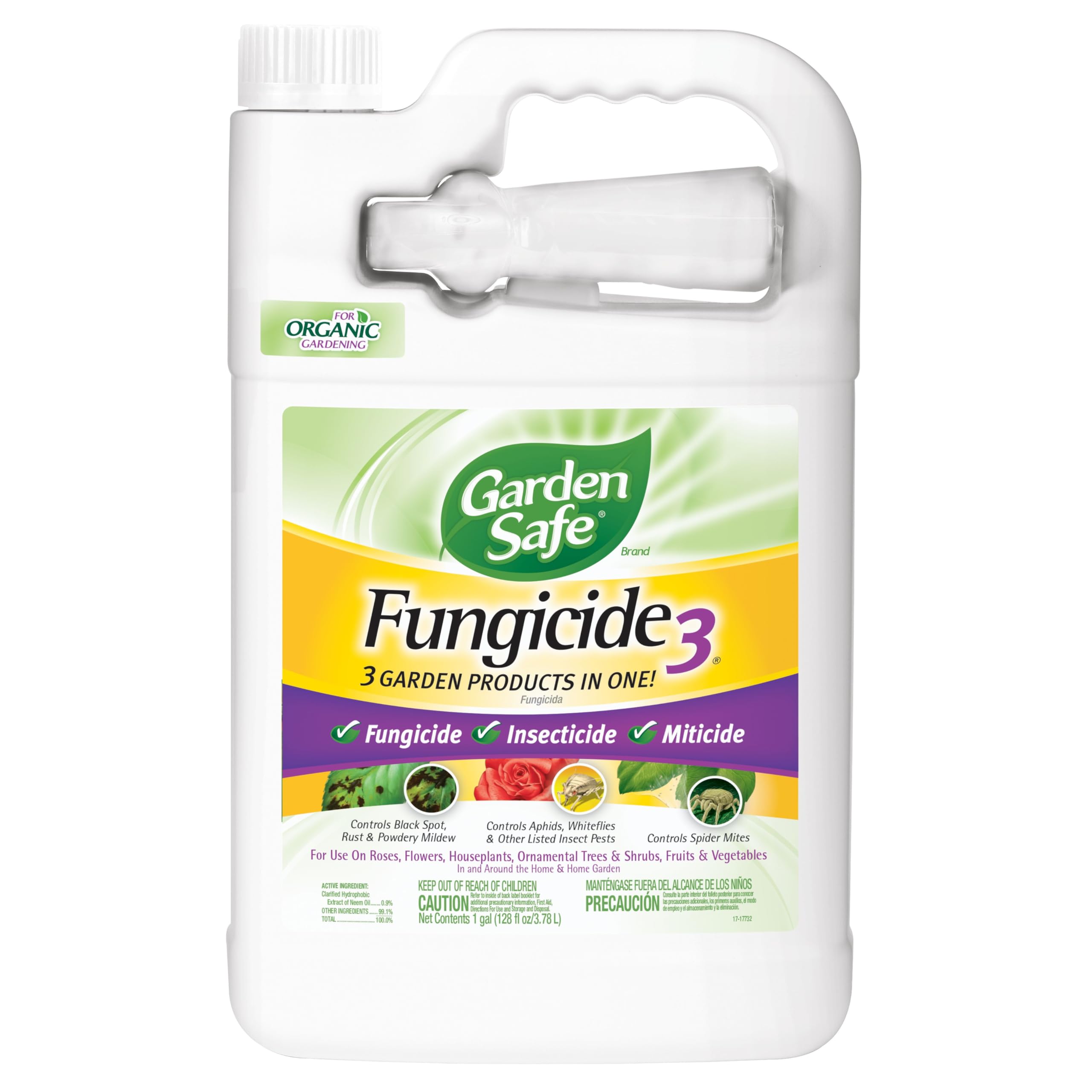
Garden Safe Fungicide3 is a three-in-one product combining fungicide, insecticide, and miticide in a single gallon-sized ready-to-spray bottle. The active ingredient is clarified hydrophobic extract of neem oil, which kills eggs, larvae, and adult stages of listed insects while preventing fungal attacks on plant tissues. It controls black spot, rust, and powdery mildew alongside aphids, whiteflies, and spider mites.
Users praise its effectiveness on orchids, roses, and vegetable gardens. One reviewer noted it completely eliminated powdery mildew on hibiscus and tomatoes with weekly application, leading to lush foliage and higher yields. The attached sprayer is convenient for direct use, though several customers reported the sprayer design is poor—the coiled hose is only a few inches long, making it awkward to reach lower leaves.
The product is EPA-registered and suitable for organic gardening. For those wanting a single bottle that handles both disease and soft-bodied pests, this is a proven workhorse.
What works
- Effective control of powdery mildew and black spot
- Kills aphids, whiteflies, and spider mites
- Large 1-gallon size for extended use
What doesn’t
- Included sprayer has short, unusable hose
- Can burn leaves if applied in direct sunlight
5. Hi-Yield 55% Malathion Spray
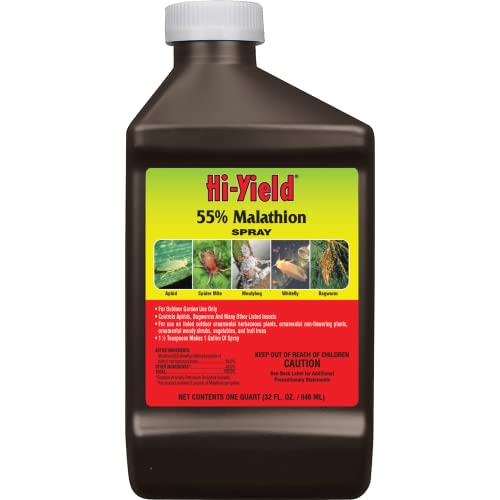
Hi-Yield 55% Malathion is a potent synthetic organophosphate concentrate for serious infestations of aphids, thrips, spider mites, lace bugs, and scale. With a 55% malathion concentration, this is one of the strongest formulations available to homeowners. Users describe it as “kryptonite for mosquitoes” and report it works where other approaches failed, particularly against scale insects and red spider mites.
The product requires careful handling—several reviewers stressed the need for full protective gear, as malathion is a suspected carcinogen. It must be applied using a hose-end or tank sprayer in calm weather when rain is not forecast for 24 hours. The 32-ounce bottle treats a substantial area, and users confirm it keeps pests under control all season long.
This is not a casual product. It is a last-resort tool for aggressive pests that have resisted organic treatments. The main complaints involve the strong odor and the need for caution around pets and wildlife. For the gardener ready to bring maximum force to a persistent mite or mosquito problem, this is the top synthetic choice.
What works
- Extremely effective against scale, mites, and mosquitoes
- High 55% concentration for tough jobs
- Long-lasting seasonal control
What doesn’t
- Requires protective gear during application
- Strong chemical odor and potential toxicity concerns
6. Dr. Earth Ready to Spray Yard & Garden Insect Killer

Dr. Earth Ready to Spray is an organic, OMRI-listed formula designed for homes with pets and children. It connects to a garden hose for easy application on vegetables, fruit trees, turf, and ornamentals. Users report effective control of mites, flies, and fungus while noting the product is gentle enough to use on edible crops up to the day of harvest.
Customer reviews highlight its safety around dogs and grandchildren, with one user calling it a “wonderful addition” to their organic care routine. The bottle is made from ocean plastic, adding an eco-friendly touch. It kills aphids on contact, though some users noted it does not affect ants. The formula requires early morning or late afternoon application to avoid leaf burn.
Weekly use is recommended for aggressive bug populations, particularly on strawberries, tomatoes, and beans. The spray is a deterrent for mosquitoes and flying insects as well. For the gardener prioritizing non-toxic solutions that allow pets to roam freely minutes after spraying, this is the top tier option.
What works
- Safe for use around pets and children
- Effective on mites, aphids, and flying insects
- Ocean plastic bottle, eco-conscious design
What doesn’t
- Does not control ants
- Requires evening or early morning application
7. Fertilome Spinosad Insecticide

Fertilome Spinosad is an OMRI-listed concentrate derived from a naturally occurring soil bacterium that targets leafminers, borers, thrips, bagworms, tent caterpillars, and Colorado potato beetles. This is the go-to product for orchard owners and serious vegetable gardeners dealing with persistent chewing insects. Users report it dramatically increased apple yield by preventing worm damage to the fruit.
The 32-ounce concentrate dilutes at 4 tablespoons per gallon of water and applies via a standard sprayer. It is available in both concentrate and ready-to-spray formats. Reviewers mention it is effective against webworms, crickets, and some grasshoppers when used with a battery-operated sprayer for full yard coverage. It is compatible with neem oil for a comprehensive integrated pest management strategy.
The product is easy to use, but some users found the concentrate requires careful measuring to avoid waste. It is not a contact killer for aphids or mites, so pairing it with a neem-based spray is recommended for complete garden coverage. For targeted control of leafminers and fruit tree pests, this is the most effective organic option.
What works
- Excellent against bagworms, leafminers, and borers
- OMRI listed for organic orchards and gardens
- Can be mixed with neem oil for broader coverage
What doesn’t
- Not effective on aphids or spider mites
- Requires precise mixing measurements
Hardware & Specs Guide
Active Ingredient Concentration
The concentration of the active ingredient determines how much product you need and how aggressive the kill is. Malathion at 55% is a high-dose synthetic requiring dilution. Neem oil extract (Garden Safe) offers gentle, multi-surface protection. Spinosad and B.t. use biological agents that need precise mixing to remain effective. Always match the concentration to the pest pressure level you are facing.
OMRI Listing & Organic Compliance
OMRI-listed products (Monterey B.t., Dr. Earth, Fertilome Spinosad) meet USDA organic standards. This matters if you grow vegetables, herbs, or fruit for consumption. Non-organic synthetics like Cyonara and Malathion offer faster knockdown but leave longer residues. Check the pre-harvest interval on the label before spraying edibles.
Ready to Spray vs. Concentrate
Ready-to-spray (RTS) bottles connect directly to a hose and require no mixing, making them ideal for quick perimeter treatments and large lawns. Concentrates require a sprayer but give you control over dosage and cost less per application. For indoor plants and small raised beds, a trigger sprayer with a diluted concentrate is easier to manage than a full RTS bottle.
Target Pest Spectrum
No single insecticide covers everything. Cyonara and Malathion are broad-spectrum synthetics. B.t. only kills caterpillars. Spinosad kills thrips, leafminers, and chewing worms. Neem oil controls soft-bodied insects and fungi. Identify your pest first—spraying a broad-spectrum product when you only have caterpillars wastes money and kills beneficial insects unnecessarily.
FAQ
Can I use B.t. and neem oil together in the same sprayer?
How long should I wait before harvesting vegetables after spraying?
Will these products kill bees if I spray during the day?
Why did my leaves turn yellow after using neem oil insecticide?
Final Thoughts: The Verdict
For most gardeners, the garden insecticide winner is the Control Solutions Cyonara RTS because it offers the fastest knockdown of mosquitoes and grasshoppers with minimal effort. If you want a safe, organic option for vegetable beds and pollinators, grab the Monterey B.t.. And for a combined insect and fungus treatment that saves you from buying two bottles, nothing beats the Organic Insecticide & Fungicide Concentrate.