
Specs are compiled from manufacturer listings and verified buyer reviews and can change over time — please confirm the key details on the product page before buying.
A garden hand cultivator is the tool you reach for when your fingers can’t get leverage or a trowel is too clumsy — it breaks crusty soil, yanks taproots, and aerates tight corners around your plants. But the difference between a cultivator that glides through clay and one that bends on the first rock depends on a few specific specs: the steel, the tine count, and the handle length. This guide cuts through the noise to the picks that actually deliver the grip and durability you need.
I’m Rikta — the founder and writer behind Lawn Gear Lab. This guide is built by comparing the manufacturers’ published specifications and the patterns across verified customer reviews, so you get each pick’s real strengths and trade-offs instead of marketing spin.
Whether you are cultivating a raised bed, breaking up heavy clay, or weeding between delicate perennials, getting the right garden hand cultivator means choosing between tine count, handle material, and steel quality that match your soil type and reach.
Our Picks at a Glance


How To Choose The Best Garden Hand Cultivator
Picking a hand cultivator is not just about grabbing the cheapest claw on the rack. The right tool depends on your soil, the size of your garden, and how much bending you are willing to do. Here are the factors that matter most.
Tine Count: 3 vs. 5 vs. 6
The number of tines (the curved prongs that dig into the dirt) changes how the tool behaves. A 3-tine cultivator, like the Dewit, cuts deep and pulls out clumps with minimal resistance — buyers report it is excellent for removing crabgrass clumps with roots. A 5-tine or 6-tine design, like the Nisaku or the 15″ Gardeners Claw, spreads the work over more points, pulverizing soil and aerating more evenly. More tines also mean better raking and leveling, but they can drag in sticky clay.
Handle Length and Material
Handle length determines your stance. A short handle (under 12 inches) gives you precise control in raised beds and containers but forces you to crouch. A longer handle (15 inches or more) lets you stand upright and use your arm and shoulder muscles, reducing back strain — one buyer of the 15″ Claw said it is a great length for a short person. Handle material also affects grip and shock. Ash wood (found on the Dewit) absorbs vibration well and feels warm. Fiberglass (on the Truper) handles moisture and impact better. Recycled plastic (the CobraHead) offers a consistent non-slip surface.
Steel Quality and Durability
The steel in the head dictates how long the tines stay sharp and whether they bend on rocks. Heat-treated boron steel, used in the Dewit, is extremely hard and tough — owners say it is tough enough to pull out Bermuda grass. Stainless steel, as with the Corona and Garden Guru models, resists rust but can be slightly softer. Forged steel, found on the Truper, is heavy and can hold an edge for years. Japanese carbon stainless steel, on the Nisaku, offers a middle path: tough, sharp, and resistant to corrosion.
Quick Comparison
| Model | Best For | Tine Count | Handle Length | Material (Head) | Amazon |
|---|---|---|---|---|---|
| Dewit Cultivator Hand Tiller★ Best Overall | Deep weeding & root removal | 3 | 11.5 in | Boron Steel | Amazon |
| Corona Premium Stainless Steel CultivatorPremium Pick | Scooping soil & all-around use | 4 | 17 in | Stainless Steel | Amazon |
| 15″ Gardeners Claw RakeBest Value | Surface leveling & low-cost value | 6 | 15 in | Alloy Steel | Amazon |
| Garden Guru Stainless Steel Hand Rake | Raking mulch & delicate beds | 5 | — | Stainless Steel | Amazon |
| Nisaku NJP555 Kumade | Compact precision in raised beds | 5 | 6 in | Japanese Carbon Stainless Steel | Amazon |
| Grampa’s Garden Hook Weeder | Deep root weeding & edging | 1 (hook) | 15 in | Alloy Steel | Amazon |
| Truper Rapid Tiller | Heavy clay breaking & dual-purpose | 3 + blade | 14 in | Forged Steel | Amazon |
| CobraHead Mini Weeder | Precision weeding in tight spots | 1 (hook) | — | Forged Alloy Steel | Amazon |
In‑Depth Reviews
1. Dewit Cultivator Hand Tiller – 3-Tine, Short Handle, Steel/Wood
Our pick — over 4.5★ from 400+ verified ratings; the strongest balance of quality and price.
The cult favorite for gardeners who value steel that stays sharp.
The Dewit is the pick that keeps showing up in “my favorite garden tool” conversations, and for good reason. Its head is made from heat-treated boron steel — a material hard enough to tackle tough roots without dulling. The tool weighs just 6.08 ounces, so it feels almost weightless in the hand, yet it can pull out crabgrass clumps with roots intact, according to owners. The 11.5-inch handle is ash wood sourced from FSC-certified forests, which means it is sustainably harvested and provides a warm, comfortable grip that reduces fatigue during long sessions.
What wins people over is the quality — it is the most-mentioned aspect by a wide margin. Buyers call it very sturdy and sharp, with one noting it digs better than straight-pronged cultivators. The 3-tine design runs 11.5 inches deep and 3 inches wide, which is ideal for aerating and loosening soil in raised beds and tight spaces. One owner noted the handle could be longer to reduce bending. For container work and small gardens, the precision is worth the crouch.
Versus the Corona cultivator below, the Dewit has dimensions of 11.5″D x 3″W x 2.5″H, compared to the Corona’s 5″D x 8″W x 17″H. This makes the Dewit a more precise tool for close-quarters weeding, while the Corona is built for broader soil movement.
Built to Last
- Heat-treated boron steel head stays sharp and resists bending on tough roots
- Weighs only 6.08 ounces — easy to maneuver for long periods
- Ash wood handle from FSC-certified forests offers a comfortable, shock-absorbing grip
Who Should Skip This
- Short 11.5-inch handle requires bending; not ideal for gardeners with back issues
- 3-tine design is less effective for broad surface raking than 5- or 6-tine models
Reach for the Dewit if: your main tasks are removing deep-rooted weeds and aerating tight spaces, and you value a tool that will not bend.
Look elsewhere if: you need a longer handle to stand upright, or you want a multi-purpose rake for spreading mulch.
2. Corona Premium Stainless Steel ComfortGEL Cultivator
The stainless-steel scoop that doubles as a transplanting tool.
This cultivator from Corona Clipper is less of a claw and more of a hybrid — its long, tapered tines are designed for scooping and moving soil, not just breaking it. The head is made from true solid stainless steel, so rust is not a concern even if you leave it in the rain. The extra-wide reinforced tang (the part that connects the head to the handle) adds stability, and the ComfortGEL grip provides lasting comfort and control. Owners mention this scoop works like a charm for transferring soil in large amounts, making transplanting or filling pots much quicker.
The durability is the standout feature here. Owners consistently praise the corrosion-resistant construction and the comfortable handle, noting the weight is sturdy without being heavy. The squared scoop design prevents spillage, which is a real plus when you are filling small pots. A few owners in humid climates mention the rubber handle can degrade and get sticky over time, but they solved it by covering it with pipe insulation. The 17-inch handle, versus the Dewit’s 11.5-inch handle, means you can stand more upright while working.
Where the Corona falls short of the Garden Guru is in sheer versatility for raking — its tines are wider-spaced, making it less effective at gathering leaves or mulch. But for moving soil, it is class-leading here.
What Makes It Shine
- Stainless steel head is rust-proof and built to last a lifetime — buyers call it a scoop for the ages
- ComfortGEL grip reduces hand fatigue during repetitive scooping
- Extra-wide reinforced tang adds stability and prevents head separation
One Trade-Off
- Squared scoop design is excellent for moving soil, but less efficient for raking mulch or leaves
- Rubber grip can degrade in high humidity; some owners add an aftermarket cover
Best suited for: gardeners who spend a lot of time transplanting, filling pots, and scooping soil — this tool eliminates the need for a separate trowel and scoop.
Not ideal if: your primary need is scraping and raking surface debris rather than digging and transferring soil.
3. 15″ Gardeners Claw Rake — Military Grade Steel 6 Tines
A six-tine claw that rakes and cultivates while staying affordable.
The 15-inch Gardeners Claw Rake from TOYPOPOR brings a 6-tine design — more than most competitors — at a budget-friendly price. The head is made from military-grade alloy steel, which owners describe as strong and sharp. The ergonomic wooden handle comes with a double rivet, so the head will not slip off during heavy use. The 15.1-inch length is a notable advantage: buyers confirm it offers great length for a short person and is perfect for reaching into hedges and scraping dead moss out of lawns. The hoop ring on the end makes hanging it in a shed easy.
The crowd overwhelmingly approves of its functionality and quality. It excels at surface work like removing weeds, leveling soil, and aerating. The 6-tine pattern pulverizes dirt more thoroughly than a 3-tine cultivator. The catch is that durability has mixed reviews in the data. While many say it will last a long time, a small number report the head breaking during use. Given its position as a value pick, this is a tool for lighter to medium-duty gardening, not for prying rocks out of hard clay year after year.
Compared to the Nisaku (below), this claw offers a longer handle (15 inches vs. 6 inches) and an extra tine, making it better for standing work and wider coverage, but the Nisaku’s Japanese carbon steel is sharper and more durable for heavy tilling.
The Upside
- 6 tines provide more raking coverage and pulverize soil faster than 3-tine designs
- 15-inch handle reduces back strain compared to shorter tools
- Double-riveted head attachment adds security during use
The Downside
- Mixed durability reports — some owners experienced breakage with heavy use
- Alloy steel is not as rust-resistant as stainless or boron steel
Go for this one if: you want an affordable 6-tine rake for weeding, aerating, and leveling soil in flower beds and raised beds.
Pass if: you need a tool for breaking up heavy clay or prying rocks — the head may not withstand that level of punishment.
4. Garden Guru Stainless Steel Hand Rake — Soil Tiller & Mulch Rake

The stainless-steel rake that handles everything from mulch to leaves.
The Garden Guru Hand Rake is a 5-tine stainless steel rake built for versatility. The tines are solid and close together — owners note they do not bend or get deformed even when raking pebbles. This tool is a favorite for clearing leaves, removing mulch, and cleaning up ornamental grasses. It is compact enough to use one-handed, yet sturdy enough for serious soil tilling. The ergonomic grip is designed to alleviate pressure on the palm and fingers, which matters during extended raking sessions.
Size is the aspect owners talk about the most — it is compact enough to get between flower bed plants and under shrubs. One gardener uses it to remove helicopters (maple seeds) from the bed, praising how it reaches where a larger rake cannot. The stainless steel construction resists warping and rust. A few owners wish the handle were a bit longer, and some note they would prefer a few more tines for larger jobs. But the combination of a lifetime warranty and a 90-day no-questions-asked satisfaction guarantee makes this a low-risk buy.
Versus the CobraHead Mini (below), this rake is better for sweeping and gathering surface debris, while the CobraHead is superior for digging out individual deep taproots.
Why It Works
- Stainless steel tines are solid, close together, and resist bending on hard objects
- Ergonomic handle reduces palm and finger pressure during extended use
- Carbon-neutral certified and backed by a lifetime warranty
Consider This
- Some owners wish the handle were longer for standing work
- A few more tines would improve efficiency on large surface raking tasks
Reach for the Garden Guru when: you need one tool for light tilling, weeding, and raking mulch or leaves in tight garden beds.
skip it if: your primary task is heavy digging in compacted clay — this rake is tune for surface-level work.
5. Nisaku NJP555 Kumade — 5 Tine Japanese Claw Rake

A hand-crafted Japanese tool that slices through hard soil.
The Nisaku Kumade is a 5-tine cultivator made from high-quality Japanese carbon stainless steel. The tines are sharpened at the factory, and owners confirm they cut through hard dry dirt without bending. The cultivating width is 4.75 inches — narrower than the 6-tine competitor above, but the trade-off is precision: it feels like an extension of the hand, as one buyer put it. The 6-inch hardwood handle is rugged and comfortable, though the data shows handle length is the most common negative aspect — several owners note it is about an inch too short for large hands.
The front-heavy design is deliberate: it adds momentum to the tilling stroke, helping the tines dig deeper with less arm effort. The quality and effectiveness are the top-rated aspects, with the tool being called probably the best hand-held cultivator you can buy. It comes in a retail-ready gift box, which is a nice touch. Compared to the Dewit’s 3 tines at 11.5 inches deep, the Nisaku’s 5 tines cover 4.75 inches of width — better for broader soil loosening but less effective at deep single-point root extraction.
the balance
- Japanese carbon stainless steel tines are factory-sharp and hold an edge through hard dry dirt
- Front-heavy design adds momentum for easier tilling without extra arm force
- 5 tines improve efficiency over 3-tine models for soil loosening and weeding
The Catch
- 6-inch handle is short; large-handed users may find it cramped
- No cushioned grip — owners add a DIY wrap for comfort
Choose the Nisaku for: precision work in raised beds and containers where you need sharp tines that slice through compacted soil.
Consider another if: you have large hands or prefer a longer handle that lets you work without stooping.
6. Grampa’s Garden Hook Weeder & Cultivator

A curved hook that pries out roots that other tools leave behind.
This tool from Grampa’s Gardenware Co. is a different animal than the tine-based cultivators above. Instead of multiple prongs, it has a single curved steel hook — like a miniature claw. The design is tune for one thing: hooking onto deep taproots and prying them out without breaking. Owners say it removes roots completely from beds and concrete blocks, and it digs holes for bulbs quickly. The 15-inch handle is made from classic wood and provides leverage, while the alloy steel head is strong enough to break clumps and handle weeding in tough soil.
Effectiveness is the most-discussed aspect, and the consensus is that it is a solid gardening tool that works well. One owner even found it valuable for dismantling beaver dams, noting it hooks onto sticks and digs into mud. A few owners find the weight to be mixed — some appreciate the heft for momentum, while others prefer a lighter tool for extended work. The tool is made by an American company, family owned and operated in the Pacific Northwest.
Versus the CobraHead Mini (the other hook-style tool here), the Grampa’s Hook has a longer handle (15 inches vs. around 5-6 inches) and a different curve geometry — it is better for standing work and larger weeds, but less nimble for ultra-precise work between tightly spaced perennials.
What Owners Love
- Curved hook design grabs and pries out deep taproots without breaking them off
- 15-inch wood handle provides enough leverage to work standing up
- Family-owned American company with a focus on durability
One Thing to Know
- Single-hook design is not a rake — it is less effective for surface soil loosening or mulching
- Weight is mixed in reviews; some find it heavy for prolonged use
Grab this if: you battle deep-rooted weeds like dandelions and thistles and want a tool that gets the whole root out in one pull.
pass on it if: your main need is aerating soil or raking mulch — a multi-tine rake will serve you better.
7. Truper Rapid Tiller — 14-Inch Dual-Head Digger & Cultivator
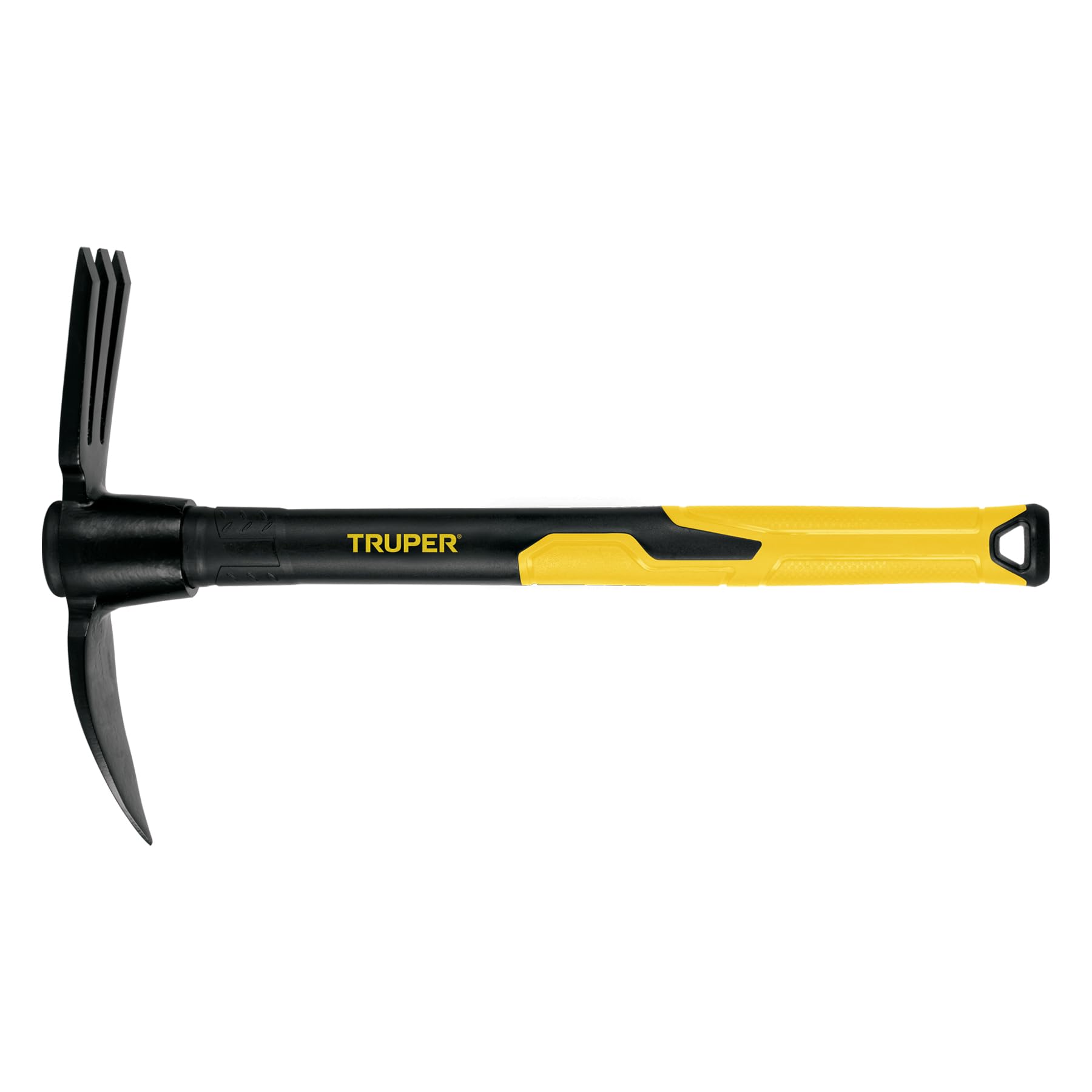
Two tools in one — a digging blade on one side, cultivator tines on the other.
The Truper Rapid Tiller solves a common problem: needing both a digging tool and a cultivator but only wanting to carry one handle. One end of the head features a sharp digging blade for cutting through roots and breaking hard soil, and the other end has three cultivator tines for aerating and weeding. The head is forged steel, which owners say can tear through heavy red clay soil without issue. The 14-inch fiberglass handle is a key advantage over wood — it absorbs impact better and resists weather damage. The comfortable cushion grip reduces vibration and hand fatigue.
Durability is the top-rated aspect, and the reviewers confirm it: one owner used it on a farm for six years, and another left it out in the rain with no rust. The weight is a point of debate — at 16 ounces, it is the heaviest tool here. Some love the heft for momentum, while others say after a few hours you will get sore. The balanced weight distribution and the ability to twirl the tool to switch between heads make it efficient for serious gardening sessions.
Compared to the lightweight Dewit at 6.08 ounces, the Truper weighs 16 ounces — that weight gives you power in clay but will tire you out faster. This is a tool for the dedicated gardener, not the casual planter.
The Heavyweight Advantage
- Dual-head design: sharp digging blade on one side, 3 cultivator tines on the other
- Forged steel head is durable enough for heavy red clay and professional-grade use
- Fiberglass handle absorbs shock and resists weather better than wood
The Weight Trade-Off
- At 16 ounces, it is noticeably heavy — customers note arm fatigue after extended use
- Fiberglass handle, while durable, does not provide the same warm grip as wood
Reach for the Truper if: you garden in heavy clay or rocky soil and need a dual-purpose tool that can dig and cultivate without switching tools.
Think twice if: you prefer a lightweight tool for quick weeding sessions or have arthritis concerns with heavier gear.
8. CobraHead Mini Weeder & Cultivator — USA Made

The miniature claw that makes weeding almost addictive.
The CobraHead Mini is the weapon of choice for gardeners who hate pulling weeds by hand. The tempered, forged alloy steel blade is curved like a snake’s head — it hooks under weeds at the root and pries them out without breaking. Owners say it is the best tool they have ever used for weeding, and it outperforms multiple other tools they have owned. At just 5 ounces, it is remarkably light. The handle is made from recycled plastic and is designed for both right and left-hand use. The shape is intentionally compact: it excels at reaching into tightly spaced gardens and around perennials and bulbs where larger tools would cause damage.
The quality and weeding effectiveness are the most-praised aspects. One owner cleared a large overgrown area in just 2 hours. The tool is extremely versatile — it can also be used as a small spade, stirrup hoe, and for removing weed trees. The size is the main point of debate: some say the mini is perfect for their medium-sized hands, while others find it laughably small. If you have large hands or want to cover a big garden, the full-size CobraHead might be a better fit. The one-year unconditional warranty from the Wisconsin-based company adds confidence.
Unlike the Grampa’s Hook which has a longer handle for levering out large taproots, the CobraHead Mini is built for precision in small spaces — it is the tool for the meticulous gardener who values control over brute force.
Why Gardeners Love It
- Forged alloy steel blade is sharp, durable, and easily hooks under deep taproots
- Recycled plastic handle is comfortable, non-slip, and ambidextrous
- Weighs only 5 ounces — easy to use for extended weeding sessions
Who It’s Not For
- Mini size is compact; owners with large hands or extensive gardens may prefer the full-size version
- Blisters and calluses possible without gloves during prolonged use
Buy the CobraHead Mini if: your main gardening chore is meticulous weeding in flower beds, raised beds, and around established plants where precision matters.
Look at the full-size model if: you have larger hands or your garden covers a lot of square footage and you want more leverage.
Understanding the Specs
Tine Count
The number of tines (prongs) on the head changes how the tool interacts with soil. A 3-tine cultivator, like the Dewit, concentrates force into fewer points — it digs deeper with each stroke and is excellent for extracting individual root clumps. A 5-tine or 6-tine design spreads the load across more prongs, which pulverizes and aerates the soil more evenly and is better for raking. More tines also mean more surface contact, which can be a drawback in sticky clay where the tool might drag.
Handle Length and Material
Handle length dictates your posture. A short handle (6 to 12 inches) gives you precise control for container gardening and raised beds, but it forces you to crouch or kneel. A long handle (14 to 17 inches, like the Truper or Corona) lets you work standing up, which reduces back strain. The material also matters: ash wood (Dewit) absorbs vibration and feels warm; fiberglass (Truper) stands up to moisture and impact; and recycled plastic (CobraHead) offers a consistent non-slip surface that does not splinter.
Steel Type and Construction
The steel in the head determines sharpness retention and rust resistance. Heat-treated boron steel (Dewit) is exceptionally hard and tough, ideal for rocky soil. Stainless steel (Garden Guru, Corona) resists rust but is slightly softer. Forged steel (Truper, CobraHead) is dense and heavy — it can hold a sharp edge and withstands professional-grade use. Japanese carbon stainless steel (Nisaku) offers a balance: very sharp, rust-resistant, and heat-treated for durability. The tang (the shank that connects head to handle) should be reinforced to prevent separation under pressure.
Weight and Balance
Weight affects both power and fatigue. A heavier tool (16 ounces for the Truper) provides momentum for breaking hard clay but will tire your arm over time. A lighter tool (5 to 8 ounces for the Dewit or CobraHead) allows longer sessions but may lack the heft for deep digging in compacted soil. Front-heavy designs deliver more force to the tines with less arm effort, which is why the Nisaku is built with deliberate forward weight distribution. Choose based on the soil you work with most.
FAQ
How do I choose between a 3-tine and a 5-tine cultivator?
Will a stainless steel cultivator rust?
Is a longer handle always better?
Can I use a hand cultivator in heavy clay soil?
What is the difference between a cultivator and a rake?
How do I maintain a wooden handle?
Are hand cultivators good for raised bed gardening?
How does the CobraHead differ from a traditional cultivator?
What does the weight of the tool mean for my gardening?
Can I use a cultivator for edging?
Final Thoughts: The Verdict
For most gardeners, the garden hand cultivator you want is the Dewit Cultivator Hand Tiller — it has the highest customer satisfaction in the group and the boron steel head is built to last through years of tough weeding. If you need a dual-purpose tool that digs and cultivates without switching, grab the Truper Rapid Tiller. And for precision weeding in tight flower beds where other tools are too clumsy, the CobraHead Mini Weeder is the one to reach for. Each of these picks earned its spot through real owner experience, not marketing hype — and the right one for you depends entirely on your soil and your stance.
How We Picked
We do not accept paid placement. Every pick is matched to a real buyer and a real use-case; we do not hands-on test units.
Sources & Methodology
Specifications: manufacturer listings and product documentation. Review insights: verified customer reviews, as of July 2026. Pricing: not shown on this page (it changes often); check the current price via the retailer link.
As an Amazon Associate, Lawn Gear Lab earns from qualifying purchases. This does not affect which products we feature.