
Specs are compiled from manufacturer listings and verified buyer reviews and can change over time — please confirm the key details on the product page before buying.
A sudden dip to 28°F can turn a thriving vegetable patch into wilted brown mush in a single night. The right garden frost cloth is the difference between waking up to a frozen disaster and harvesting lettuce through December. The good news is you do not need to spend a fortune, but you also cannot grab any old piece of fabric and hope for the best — the weight, size, and weave of the material determine whether your plants survive a hard freeze or simply get a bit of shade.
I’m Rikta — the founder and writer behind Lawn Gear Lab. This guide is built by comparing the manufacturers’ published specifications and the patterns across verified customer reviews, so you get each pick’s real strengths and trade-offs instead of marketing spin.
Below you will find seven of the most reliable options for winter garden protection, each one judged by its real-world performance, material thickness, and the honest feedback of hundreds of gardeners who have already put these covers to the test in freezing conditions. This is your complete walkthrough for finding the best garden frost cloth that actually holds up when the mercury drops.
Our Picks at a Glance
How To Choose The Best Garden Frost Cloth
Not all frost cloths are created equal. A lightweight cover that works for a light spring chill will tear apart in a snowstorm, while a heavy-duty blanket can crush delicate seedlings under its own weight. Here are the three factors that matter most.
Fabric Weight and Density
The weight of a frost cloth is measured in ounces per square yard (oz/yd²). This single number tells you how much cold it can block. A 0.5 oz cloth is very light — it traps a little warmth but tears easily. A 1.5 oz cloth is heavy enough to shrug off a hard freeze and a season of wind. Heavier fabric also means less light passes through, so you have to balance protection with the need for sunlight during the day.
Size and Coverage
Measure your garden beds or the height of your shrubs before buying. A 10ft x 20ft cloth is great for covering a long row of vegetables, but you need something with a drawstring or zipper for a 5-foot-tall rose bush. Buy a size larger than you think you need — you can always fold or cut the excess, but you cannot stretch a too-small cover over a frost-sensitive citrus tree.
Reusability and Durability
A good frost cloth should survive at least two or three winters. Look for UV-stabilized polypropylene and reinforced stitching if the cloth has seams. Thin, cheap fabric often disintegrates after one season of sun exposure or tears the first time the wind picks up. Spending a few extra dollars on a thicker, well-reviewed brand usually pays for itself the second year.
Quick Comparison
| Model | Best For | Weight (oz/yd²) | Size | Weight | Amazon |
|---|---|---|---|---|---|
| DeWitt Supreme 1.5 oz★ Best Overall | Hard freezes & multi-season use | 1.5 oz/yd² | 6′ x 50′ | 3.1 lb | Amazon |
| AlpineReach 1.2 ozPremium Pick | Large garden plots & single-digit temps | 1.2 oz/yd² | 10′ x 50′ | 4.09 lb | Amazon |
| Harvest Guard 5′ x 25′ | Seed germination & pest barrier | — | 5′ x 25′ | 6.4 oz | Amazon |
| Gardzen 5-Pack Drawstring | Individual trees & shrubs | 2.06 oz/yd² | 31″ x 40″ | 0.63 kg | Amazon |
| SnugNiture 1.1 oz | Budget-friendly row coverage | 1.1 oz/yd² | 10′ x 33′ | 1.96 lb | Amazon |
| YFFSIDMY 0.9 oz | Light frost & sun shade combo | 0.9 oz/yd² | 10′ x 20′ | 1.26 lb | Amazon |
| Garutom 1.1 oz | Versatile multi-season garden cover | 1.1 oz/yd² | 10′ x 33′ | 15.7 oz | Amazon |
In‑Depth Reviews
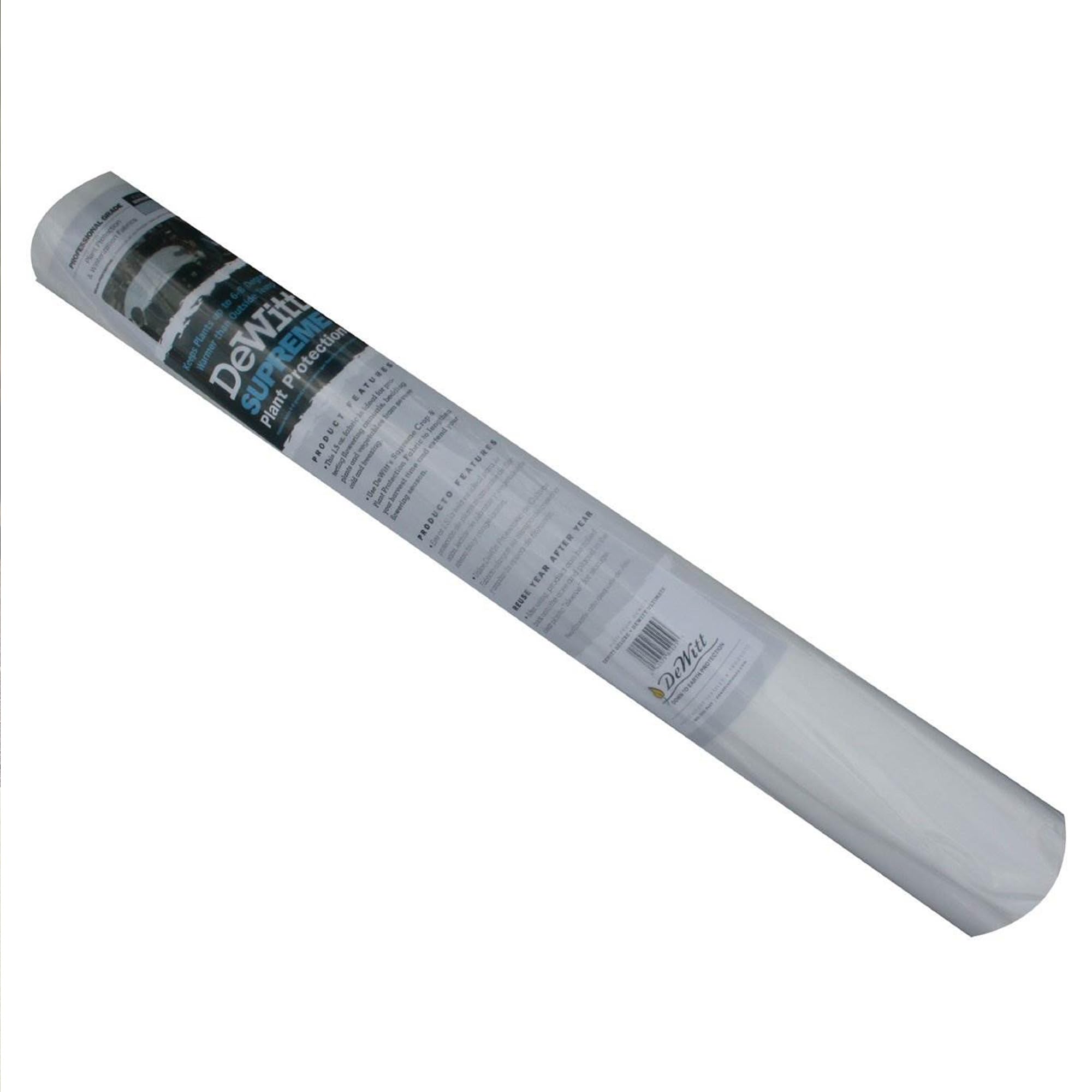
1. DeWitt Supreme Crop Protection Fabric, 1.5 oz, White, 6′ x 50′
Our pick — over 4.5★ from 400+ verified ratings; the strongest balance of quality and price.
The heavyweight champion that shrugs off 20°F nights and keeps on going.
This is the cloth you grab when the forecast says “hard freeze” and you are not messing around. At 1.5 oz/yd², the DeWitt Supreme is the heaviest standard frost blanket on this list — it is the fabric that buyers report “survived 20°F lows and rain” without the plants underneath taking a hit. The material is thick enough that you can drape it directly over sensitive perennials and trust it to hold in ground heat, yet porous enough to let light and air circulation through during the day.
Gardeners who have pushed this cloth through two winters note it does eventually show wear in high-wind areas — the trade-off for a fabric that still breathes. But the consensus among the hundreds of owners who rate this highly is that it outperforms pricier brand-name alternatives. It covers a generous 6- by 50-foot area, which is enough for several raised beds or a long row of vegetables. The 3.1-pound weight of the roll makes it noticeably heavier than the budget options (the YFFSIDMY below weighs just 1.26 pounds), but that density is exactly what buys you three extra degrees of freeze protection.
The thing everyone raves about is the effectiveness — the top-mentioned aspect by a wide margin. “My lettuce survived unscathed,” one owner reported after temps hit the mid-20s. The cloth also cuts cleanly with scissors so you can tailor it to oddly shaped beds without fraying.
Why it earns the top spot
- Heaviest standard weight (1.5 oz/yd²) gives the best cold protection here
- Survives two seasons of heavy frost and rain according to verified owners
- Easy to cut and customize for any garden layout
The one honest downside
- Heavier than competing cloths, making it harder to drape over tall bushes without support
Reach for it if: you face regular hard freezes (mid-20s and below) and want a cloth that lasts multiple winters without degrading.
Consider a lighter option if: you only need a seasonal cover for light fall frosts and prefer something easier to handle.
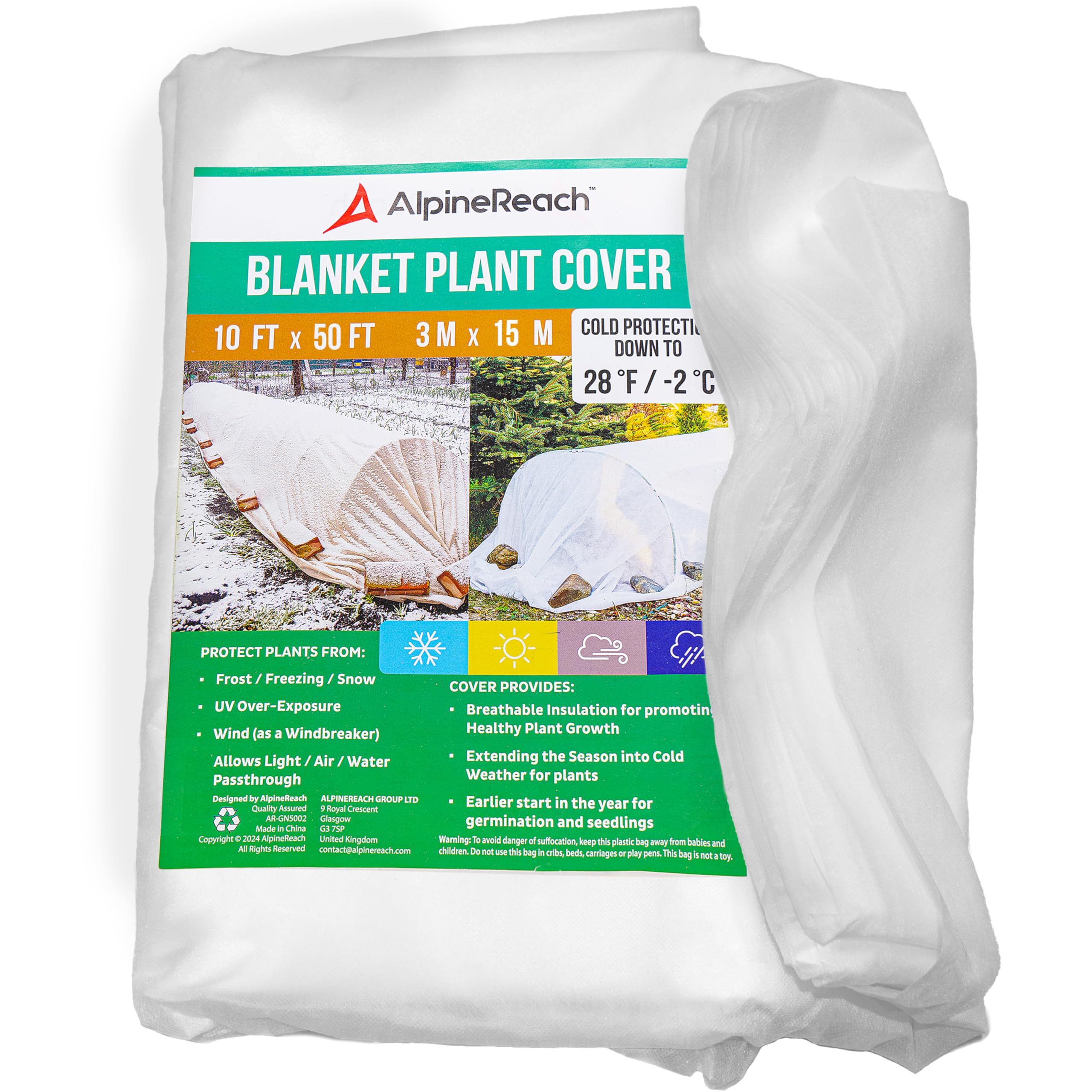
2. AlpineReach Plant Covers Frost & Sun Protection 10 x 50 ft
Massive coverage that does not tear when caught on thorns.
If you have a big garden and a tight budget, this is the one to beat for pure square footage. The AlpineReach cloth is rated down to 28°F, but buyers in Texas report it saved their Indian Hawthorns during a single-digit freeze — proof of how well the 1.2 oz/yd² fabric traps ground heat. At 10 feet wide and 50 feet long, it covers a massive area that most other cloths cannot match, giving you the flexibility to drape entire rows or cut the fabric into smaller sections for multiple beds.
The fabric’s standout quality is its resistance to snags. One owner noted it got caught on rose thorns repeatedly but “didn’t tear,” which is a rare compliment for a breathable non-woven material. It holds up well during windy desert conditions too, a recurring point in the feedback. The aesthetic quality also earns high marks — owners consistently praise the build feel, calling it “very well made and breathable.” Note that some gardeners found the material not as thick as they expected from the listing, so if you need absolute armor for sub-zero temperatures, the DeWitt above is a denser option.
Protection is the most-praised aspect here by a wide margin, with quality running a strong second. It works as a winter freeze cloth and a summer UV shade cover, giving you year-round utility from a single purchase.
The big advantages
- Enormous 10×50 ft size covers entire garden sections in one go
- Thorn-resistant fabric survives contact with roses and spiky shrubs
- Doubles as a UV shade cloth for summer heat protection
A fair trade-off
- Some owners mention the material feels thinner than the 1.2 oz label suggests
Best suited for: large vegetable plots or rows of shrubs where you need single-piece coverage and snag resistance.
Think twice if: you need maximum insulation for repeated hard freezes — the DeWitt is a better winter fortress.
3. Harvest Guard Freeze Protection Plant Cover, 5′ x 25′

The all-rounder that protects seeds, seedlings, and full-grown plants alike.
Harvest Guard is a different kind of frost cloth — it is made from a lighter, non-woven fabric designed to “float” directly on top of crops without any support structure. This makes it the best pick for seed germination and young transplants in early spring, because it traps heat and moisture right at soil level. Owners in Northern California use it year-round for lettuce, reporting that it survives deep freezes and 100°F+ heat when sprayed with water. It also doubles as an excellent bird and slug barrier.
The cloth weighs just 6.4 ounces for the whole 5×25 ft section, making it the lightest option here by far. That featherweight feel means it is a breeze to handle, but it also means the material can tear if you staple it down too aggressively in strong winds. The experienced owners recommend using hoops and 2x4s to keep the fabric suspended above the plants — this prevents tearing and also creates a larger air buffer for frost protection. A few buyers noted rips at stapled corners, but even they admitted the cloth was “not ruined” and still functional.
It is made in the USA from US-sourced materials, which gives it a quality edge that shows in the consistent positive feedback about seed germination rates. The top aspect owners mention is plant protection, followed closely by the cloth’s ability to warm the soil and accelerate growth.
Why gardeners love it
- Promotes seed germination by trapping heat and moisture at ground level
- Light enough to lay directly on crops without crushing them
- Works as pest barrier against birds, rabbits, and slugs
The main caution
- Delicate material can tear if pinned too tightly in high wind
Perfect for: spring seed starting, extending the fall season, and keeping pests off tender greens.
Not the right call if: you need a heavy-duty freeze blanket for deep winter snow loads.
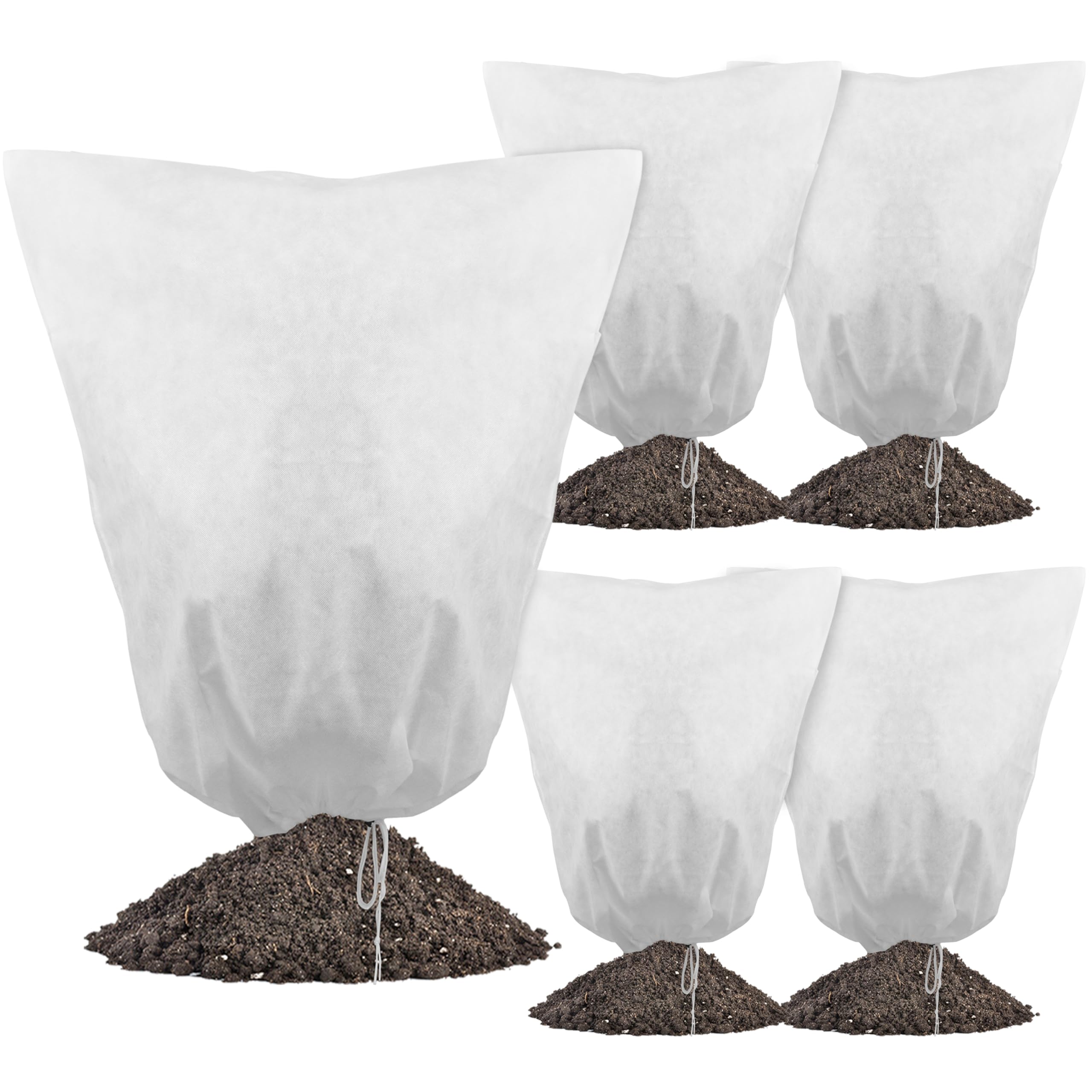
4. Gardzen 5-Pack Drawstring Tree Cover, 31″ x 40″
Five individual jackets for your most frost-sensitive trees and shrubs.
For gardeners who need to protect a collection of potted trees, rose bushes, or young saplings, the Gardzen drawstring covers are a radically different solution from the big roll-up cloths. Each of the five covers measures 31 by 40 inches and is made from a 2.06 oz/yd² non-woven fabric — the thickest material by weight on this list. The drawstring cinches tight around the trunk to seal in warmth, and a zipper makes wrapping and unwrapping a 30-second job. “Unzip and wrap around the tree or plant and zip back up. Easy peasy,” one owner sums up.
The Gardzen covers are especially practical for shrub protection because they do not require hoops, stakes, or any support structure. One buyer in a cold climate used them to protect 5-foot lemon and lime trees outdoors all winter instead of hauling them inside — the drawstring kept the fabric snug through wind and snow. A few owners did mention that the material is not heavy enough for extreme sub-zero temperatures (wind chill is the limiting factor), but for temps just below freezing they work very reliably. The trade-off for their convenience is that some units have shown wear after a single season of heavy sun exposure, though the majority report the fabric holds up well year after year.
Protection is the most-discussed aspect, and quality is a close second. The 5-pack covers multiple plants at once, which is a solid value compared to buying individual tree bags.
What makes these special
- Thickest fabric here (2.06 oz/yd²) for maximum insulation
- Drawstring and zipper make installation 10 seconds per plant
- Five covers in one pack — protect a whole row of shrubs
Keep in mind
- Not designed for hard freezes below 20°F without supplemental heat
Ideal for: lemon trees, rose bushes, and any plant where a loose blanket would blow off or get tangled.
Better options exist if: you have a long vegetable row — a single large cloth is cheaper per square foot.
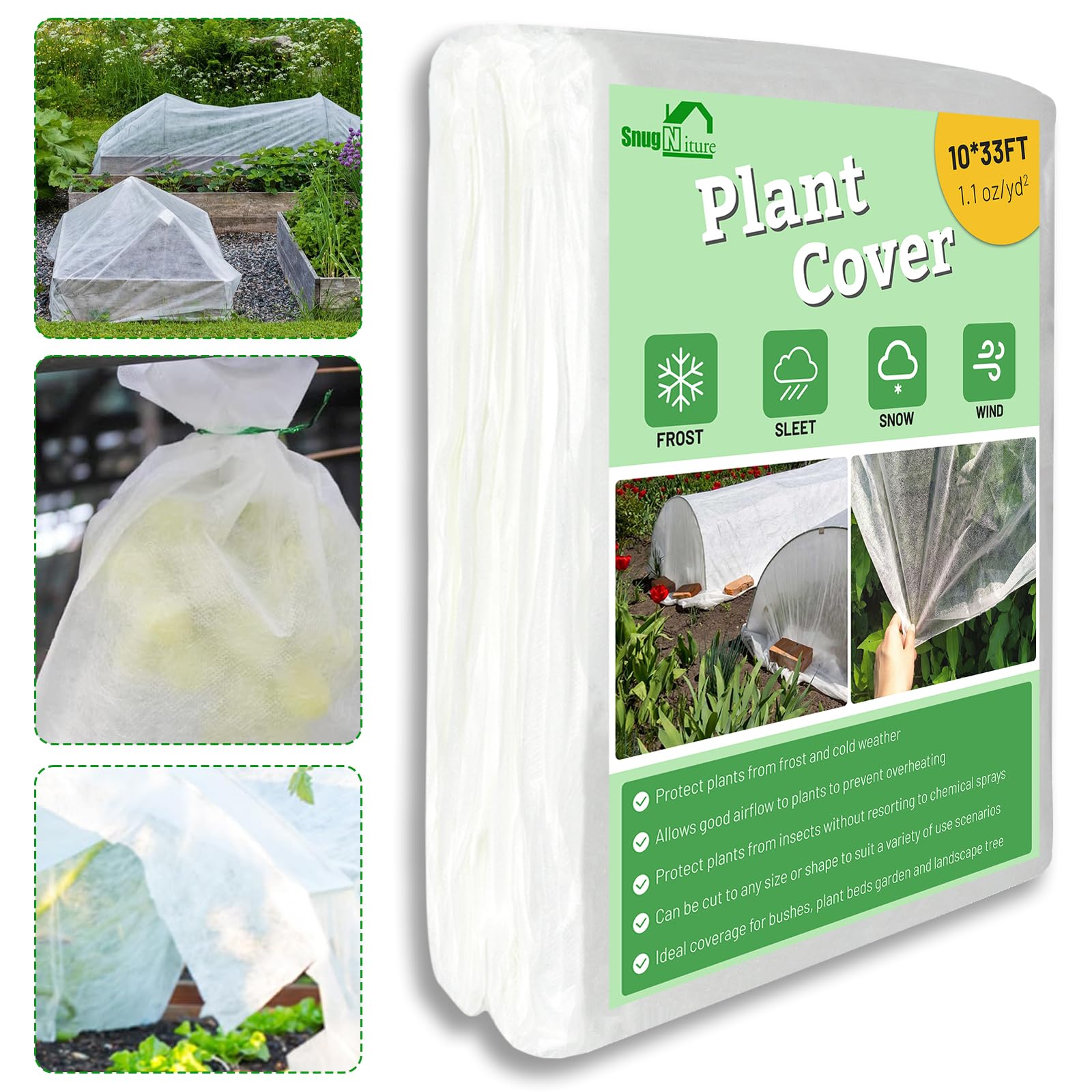
5. SnugNiture Plant Covers Freeze Protection, 10ft x 33ft
A 330-square-foot shield that costs less than a dinner out.
The SnugNiture frost cloth delivers the most square footage per dollar on this list. For the price of a takeout meal, you get a 10-by-33-foot roll of 1.1 oz/yd² polypropylene fabric that is thin enough to let rain and sunlight reach the soil but dense enough to trap ground heat. Buyers in Texas used it during a freeze where temperatures stayed below freezing for three days — “not plant damage occurred” was the direct report. That kind of performance at this price is why it has earned a strong following.
At 1.96 pounds for the roll, it is noticeably lighter than the DeWitt (which is 3.1 pounds), making it easier to drape over a large area alone. The trade-off is that the lightweight material has drawn mixed feedback on durability — some owners say it is strong enough for multiple seasons, while others report it tearing in gusty winds. The cloth does not come with stakes or clips, so you will need bricks, soil, or garden pins to hold it in place. That is a minor inconvenience for the price, but worth factoring in if you live in a windy area.
The top positive aspects are plant protection and frost protection, both of which are consistently praised in the customer consensus. It also scores well for how easy it is to cut and customize to different bed shapes.
Why it is a smart buy
- Excellent value — covers 330 sq ft for the lowest cost on this list
- Lightweight enough for one person to handle a large roll
- Proven to protect plants through multi-day freezing events
Honest limitations
- Durability is mixed in high-wind situations where the fabric can tear
- No included stakes or anchor accessories
Best for: covering large plots on a budget, especially if you already have bricks or staples to weigh it down.
Pass on this if: you need a multi-winter investment — the heavier DeWitt will outlast it.
6. Plant Covers Freeze Protection 10x20ft, 0.9 oz/yd²

The paper-thin cover that is perfect for late frosts and summer shade duty.
At 0.9 oz/yd², this cloth is the lightest by density on the list — and it is designed for a specific purpose: protecting plants from a light frost rather than a deep freeze. The fabric is UV-stabilized polypropylene that lets a lot of light and air through, so it is also marketed as a shade cloth for summer heat. Buyers in Houston used it to guard against typical winter lows and reported it “withstood heavy winds, dogs, ice, rain” without falling apart. The big caveat is that it did not protect sub-tropical plants during a hard freeze — the cloth is simply too thin for extreme cold.
The size, 10 by 20 feet, covers 200 square feet, and the roll weighs only 1.26 pounds. The DeWitt cloth weighs 3.1 lb, while this cloth weighs only 1.26 lb, and for good reason — this one is meant to be a temporary shield you can toss over a bed on a chilly evening and pull off the next morning. It also works well as a floating row cover that does not bend plants under its own weight. The thin material has drawn some mixed feedback: some buyers find it adequately durable, while others describe it as “thin” and note it needs bricks or stones to hold it down against the wind.
The top aspect owners praise is plant protection, and the cloth is especially popular with gardeners who like having a multi-purpose cover that transitions from spring frost protection to summer insect barrier without needing to buy separate products.
What it does best
- Lightweight enough to throw on plants at a moment’s notice
- Allows high light transmission — ideal for day-long use during cool spells
- Can double as a summer shade cloth and bird barrier
Where it falls short
- Not suitable for hard freezes below 28°F; does not trap enough heat
Get this if: you live in a mild climate and need a versatile cover for light frost, sun protection, and pest control.
Look elsewhere if: your winters hit the teens or single digits — you need a heavier cloth for that.
7. Garutom Plant Covers Freeze Protection 10ft x 33ft, 1.1 oz

A breathable 330 sq ft blanket that lets 85% of sunlight through.
The Garutom cloth sits in the middle of the pack with the same 1.1 oz/yd² density as the SnugNiture but with an important extra: the manufacturer states it transmits 85% of available light. That is a meaningful spec for gardeners who want to leave the cover on for several days during a cold snap and still have their plants photosynthesize. The breathable non-woven polypropylene allows rain and sun through while trapping enough warm air to make a real difference during spring and fall frosts.
The 10-by-33-foot size is practical for covering a full raised-bed garden or a row of small fruit trees — customers note cutting it to custom sizes with scissors and using the leftover pieces for other projects. The cloth is not water-resistant, which is intentional: you can water your plants right through the material without having to remove it. That earns praise from owners who have raised beds with drip irrigation. Durability does get a mixed verdict; some owners find it sturdy enough for reuse, while others note that the material is “not very thick” and requires careful handling to avoid tears. A few buyers also mentioned that the cloth seems thin for the price — something to evaluate if you plan to rely on it for more than one winter.
Frost protection is the most-praised feature by far, and the cloth’s ability to work as a winter freeze blanket and a summer shade cloth gives it year-round utility. The feedback consistently notes that the fabric “allows sun and water through” without suffocating plants.
Strong points
- 85% light transmission keeps plants growing even when covered for days
- Breathable fabric lets water through — no need to remove for irrigation
- Easy to cut and customize for multiple bed shapes and sizes
Honest catch
- Thin material requires care to avoid tears during windy weather or handling
Perfect for: gardeners who need a cover they can leave on for extended cold spells without harming plant growth.
Not the right fit if: you need a heavy cloth for deep winter snow — go with the 1.5 oz DeWitt.
Understanding the Specs
Fabric Weight (oz/yd²)
This is the density of the cloth, measured in ounces per square yard. A higher number means a thicker, more insulating fabric that traps more ground heat. A 1.5 oz cloth like the DeWitt can handle a hard freeze into the low 20s, while a 0.9 oz cloth is better for light frosts around 30°F. The heavier the cloth, the less light passes through, so you have to weigh protection against the need for daytime sunlight.
Light Transmission
This tells you how much sunlight reaches the plants through the cover. A cloth that transmits 85% of light, like the Garutom, can be left on for multiple days without stunting growth. Covers with very high density (around 2 oz/yd²) let in significantly less light and should generally be removed during the day unless the forecast stays well below freezing. If you need a cloth you can throw on and leave for a week, prioritize a higher transmission percentage.
FAQ
Can a frost cloth protect plants below 28°F?
Do I need to remove the cloth every morning?
How do I keep the frost cloth from blowing away in wind?
Can I use a garden frost cloth as a shade cloth in summer?
Can I cut a frost cloth to a custom size without it unraveling?
What is the difference between a frost cloth and a floating row cover?
How many seasons will a good frost cloth last?
Should I buy a single large cloth or multiple smaller covers?
Will a frost cloth kill my plants if it gets wet and freezes?
Final Thoughts: The Verdict
For most people, the garden frost cloth winner is the DeWitt Supreme 1.5 oz because it offers the heaviest protection for hard freezes, has proven multi-year durability, and carries the highest overall rating from hundreds of owners. If you need to cover a very large garden at a lower cost, grab the AlpineReach 10×50 ft for its enormous coverage and thorn resistance. And for protecting individual trees or shrubs with zero setup time, the Gardzen 5-Pack Drawstring Covers are the easiest option on the market. Pick the weight and size that matches your local winter, and you will be harvesting greens well past the first frost.
How We Picked
We do not accept paid placement. Every pick is matched to a real buyer and a real use-case; we do not hands-on test units.
Sources & Methodology
Specifications: manufacturer listings and product documentation. Review insights: verified customer reviews, as of July 2026. Pricing: not shown on this page (it changes often); check the current price via the retailer link.
As an Amazon Associate, Lawn Gear Lab earns from qualifying purchases. This does not affect which products we feature.