
Specs are compiled from manufacturer listings and verified buyer reviews and can change over time — please confirm the key details on the product page before buying.
A garden fork isn’t a shovel’s backup — it is the tool you reach for first when ground turns rock-hard or clay-heavy, because its tines slice in where a blade just bounces. The real puzzle is which head shape, handle length, and build material actually makes the work lighter rather than just shifting the strain to your back. This guide breaks down nine contenders by the specs and owner experience that separate a lifetime tool from a bent-tine regret.
I’m Rikta — the founder and writer behind Lawn Gear Lab. This guide is built by comparing the manufacturers’ published specifications and the patterns across verified customer reviews, so you get each pick’s real strengths and trade-offs instead of marketing spin.
Whether you face cement-like clay, a sprawling compost pile, or a raised bed you need to aerate without wrecking your back, the right garden fork tool turns that job from a chore into something almost satisfying.
Our Picks at a Glance


How To Choose The Best Garden Fork Tool
Before you click “buy,” three decisions separate the fork that makes gardening easier from the one that ends up rusting in the shed. Nail these first.
Tine Count and Head Design
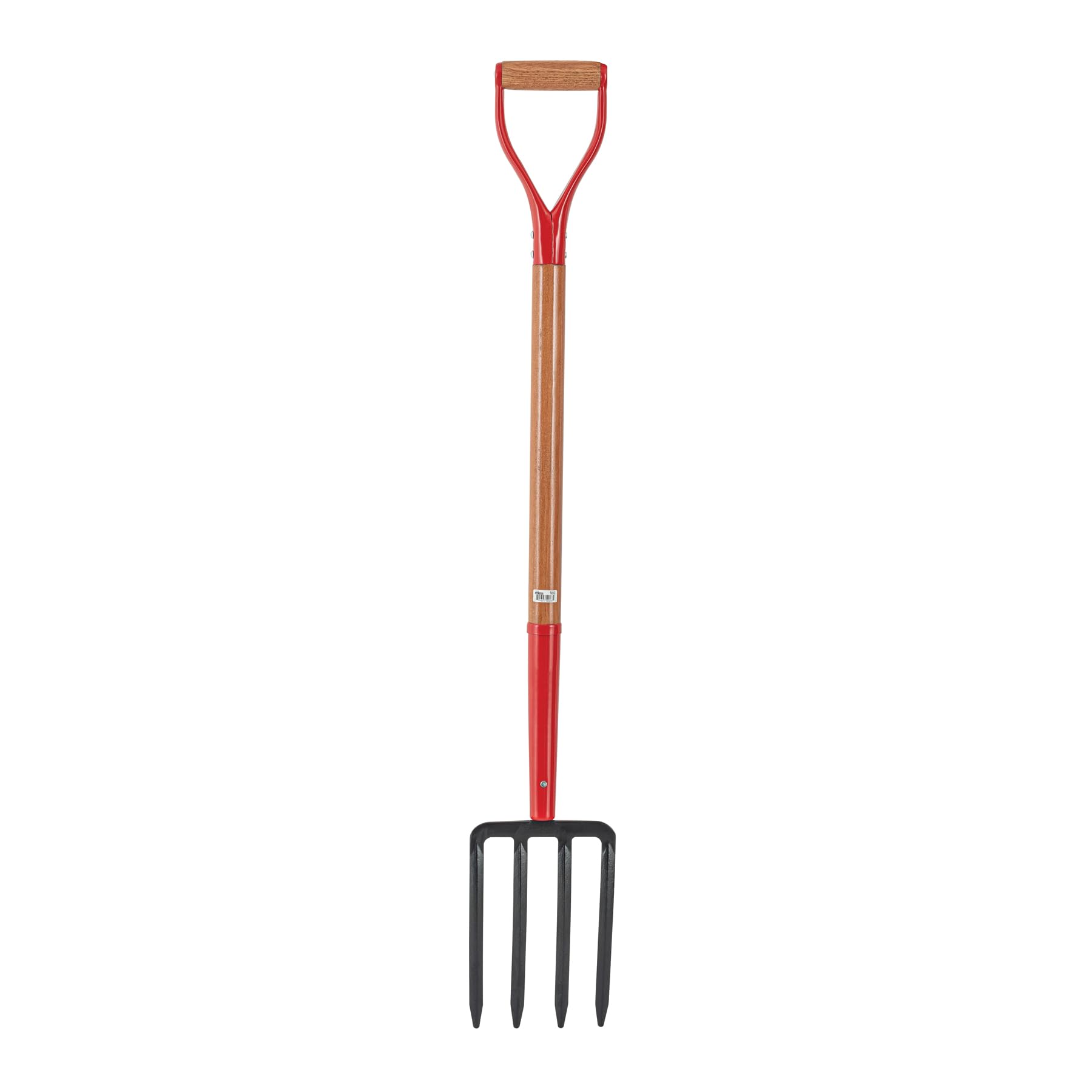
Four tines is the standard for a spading fork — it slices through compacted soil and pries apart root clumps without too much resistance. Five tines, found on pitchforks and some digging forks, carries more material per plunge (great for mulch, hay, or compost) but pushes harder going in. Square tines break up clods and turn soil; diamond-point tines penetrate rocky or hard-packed ground more easily. Match the tine style to what you dig most often — not what looks aggressive in the listing photo.
Handle Material and Length
Wood handles (ash or hardwood) feel warm and absorb vibration, but they can crack under heavy prying or if left in the rain. Fiberglass is lighter than wood, won’t splinter, and shrugs off moisture — a strong middle ground. Solid steel shafts are the toughest option but add serious weight; they almost never break, but your arms will feel every swing. As for length: a 40-inch handle gives good leverage for average-height users, while a 50-inch or longer fork lets you stand more upright, shifting strain from your lower back to your legs.
Grip Style and Foot Step
A D-grip handle gives you two-handed control and leverage for twisting and prying roots loose. A T-handle distributes wrist pressure more evenly and can be easier on the hands during repetitive pushing. The foot step (the crossbar you press down on) matters more than most buyers realize: a wide, flat step lets you drive tines deep with your whole boot, while a narrow or round step can be uncomfortable under sustained pressure. If you dig more than a few square feet at a time, prioritize a fork with a well-designed step.
Quick Comparison
| Model | Best For | Head Material | Handle | Weight | Amazon |
|---|---|---|---|---|---|
| Ymachray 5-Tine★ Best Overall | Breaking up clay soil | Alloy / Stainless Steel | Steel shaft, T-handle | 6.0 lb | Amazon |
| VNIMTI 4-TineBest Value | Compost & bulb work | Polished Metal | Hardwood, Y-Grip | 4.5 lb | Amazon |
| Truper 30293Pro Grade | General garden turning | Gray Steel | Wood D-Handle | 3.7 lb | Amazon |
| Nohovu 5-Tine | Mulching & hay moving | Carbon Steel | Fiberglass, dual grip | 3.9 lb | Amazon |
| Bully Tools Spading | Heavy clay & rocky soil | Solid Steel | Fiberglass D-Grip | 6.0 lb | Amazon |
| Spear & Jackson Neverbend | Tough soil cultivation | Forged Carbon Steel | Weatherproofed Hardwood | 5.4 lb | Amazon |
| Berry&Bird Digging Fork | Raised beds & aerating | Stainless Steel | Ash Wood D-Grip | 6.2 lb | Amazon |
| TABOR Tools J59A | Heavy-duty / commercial | High Carbon Alloy Steel | Steel shaft D-Handle | 5.5 lb | Amazon |
| Bully Tools Broadfork | Large bed aeration | 10-Gauge Steel | Fiberglass, rubber grip | 11.8 lb | Amazon |
In‑Depth Reviews
1. Ymachray 5-Tine Heavy Duty Pitch Fork
Our pick — over 4.5★ from 650+ verified ratings; the strongest balance of quality and price.
The garden fork that cuts through Georgia red clay like butter — and owners say so.
This 5-tine fork turns compacted soil into workable ground faster than a rototiller, according to buyers who praise its sharp tines and sturdy build. The stainless steel head resists rust and sheds soil with each plunge, while the welded boron steel shaft (2.72 kg total) won’t flex or splinter like wood or fiberglass. A T-handle design eases stress on the hand and wrist, which matters when you are breaking up a whole bed.
Durability is the single most-discussed strength here — owners repeatedly call it well-constructed and effective. The rear bracket lever helps lift weeds with long tap roots intact, and the square tines are ideal for turning soil, moving mulch, or digging potatoes. On the flip side, the handle feels slightly short for taller users, and prying sideways can stress the tines. This is the crowd favorite for a reason, outrating even pricier competitors.
Praise Points
- Sharp tines sink into heavy clay without excessive force
- Welded steel shaft outlasts wood-handled tools
- T-handle reduces wrist fatigue during repetitive pushing
The Trade-offs
- Handle could be 6 inches longer for users near 5’10”
- Not designed for rocky soil or side-to-side prying
Reach for this if: you battle clay, hardpan, or compacted beds and want a fork that makes the first pass easy.
Think twice if: you work in very rocky ground or are over 6 feet tall — the handle length may leave you hunched.
2. VNIMTI Garden Fork, 4-Tine Spading Fork
A 4.5-pound hardwood fork that “cuts my gardening in half,” as one owner puts it.
This fork delivers a 45-inch overall length and a metal Y-grip that won’t fade or crack in the sun — a step up from plastic-handled alternatives at the same price. The polished metal head and sturdy hardwood handle feel heavier than expected, which buyers appreciate for turning compost bins and double-digging new beds. It weighs 4.5 pounds, making it light enough for a woman or older gardener to handle yet stout enough for rocky soil.
Owners call it heavy-duty and well-made, noting that it serves as a potato fork, bedding fork, or general cultivating fork without missing a beat. The shorter handle makes it easy to get on top of the tool for leverage, and the steel tines have held up without bending in normal use. The catch? A few note that the wooden handle demands care — don’t leave it soaking in the rain. For the price, this is the fork that surprises buyers in the best way.
Bottom-line verdict: Best fork for the gardener who wants one tool that does everything from compost turning to bulb planting while staying affordable.
3. Truper Spading Fork, 4-Tine, 30-Inch, Wood D-Handle
The fork that one buyer uses to clean out a barn — it is genuinely that tough.
This 4-tine spading fork weighs 1.7 kg with a 30-inch wood D-handle, making it the most compact fork on this list. The shorter length trades sweeping leverage for maneuverability — you can work in tight raised beds or between established plants without smacking your neighbor’s tomatoes. The steel head is built for turning, loosening, and aerating soil, and buyers report it handles compost, mulch, and even dense perennial root structures with ease.
Quality and sturdiness are the two most-praised aspects. One buyer specifically mentions using it for barn-cleaning “not light work” and came away impressed. But for a gardener who values control over raw reach, this Truper is a workhorse that has earned its loyal following over years of use.
The straight truth: Ideal for smaller gardens, compost aeration, and close-quarters work — less suited for breaking new ground on a large plot.
4. Nohovu 5 Tine Pitchfork, 58 Inches

The 58-inch length that lets you stand tall while pitching mulch or hay.
This fork is built for productivity: the 5 tine head is 8.26 inches wide, so you carry more material per load, and the thickened fiberglass handle keeps the weight down to 3.88 pounds. Two non-slip grips prevent your hands from sliding even when sweaty, and the overall 58-inch length reduces bending — your lower back gets a real break. The carbon steel head has a rust-resistant coating, so it holds up in damp barn or garden conditions.
Quality and durability lead the praise, with owners reporting it handled 12 yards of mulch in a single day and still looked new. It works equally well for compost turning, cleaning out a barn, or managing a burn pile. The word “sturdy” appears consistently, though a handful of owners mention the fiberglass handle can feel slightly less solid than wood. If you move bulk material by the pile, this pitchfork cuts the trips and the strain.
Who needs this: Anyone with larger beds, a compost operation, or a barn — the extended reach and lighter weight make it a back-friendly choice.
5. Bully Tools Spading Fork, 44″ Fiberglass Handle
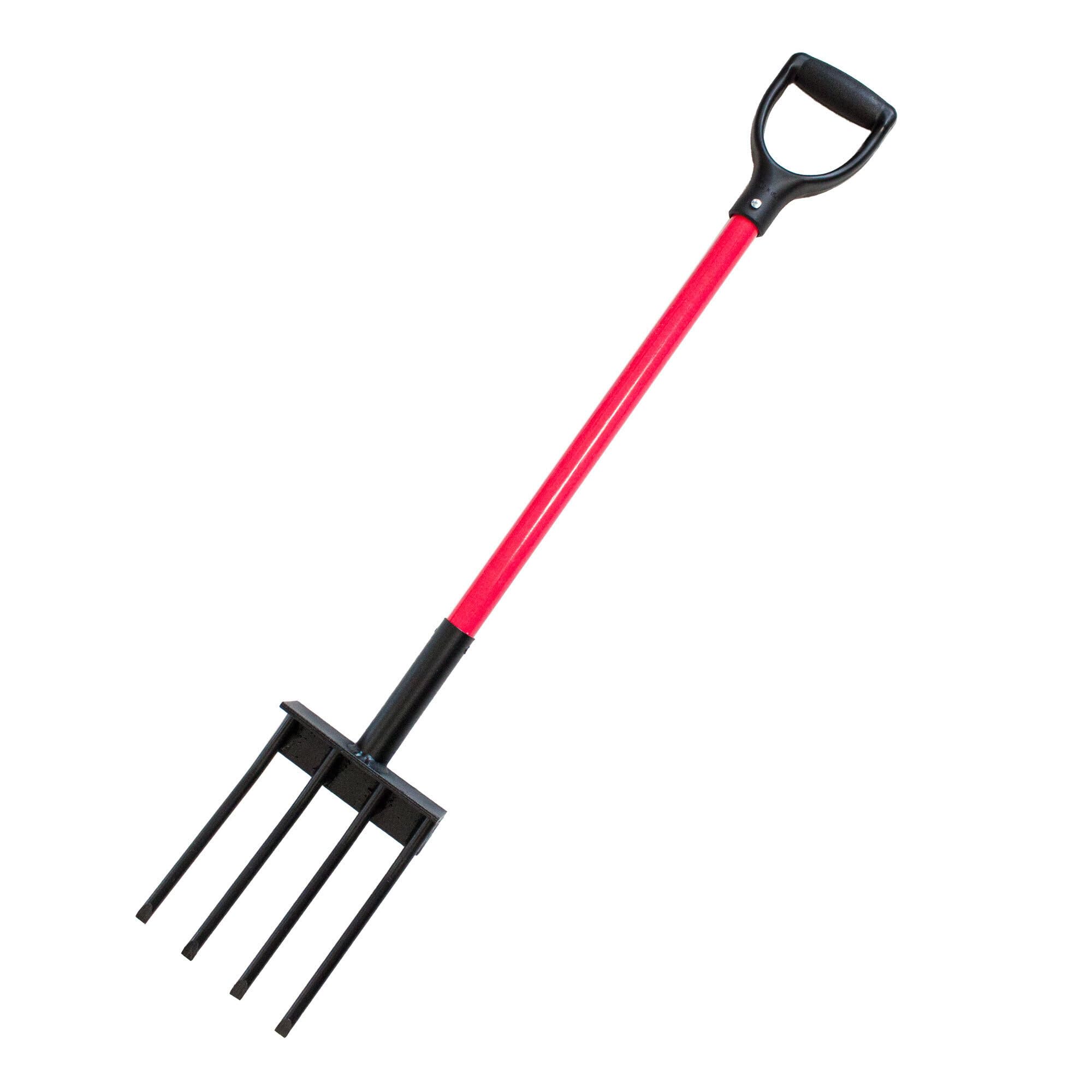
Over-welded tines and a fiberglass handle built like “armor plate,” per one owner.
This 6-pound spading fork has a 44-inch fiberglass handle and a D-grip that gives you real leverage for driving tines into heavy ground. The over-welded solid steel tines are up to 30% more durable than foreign competitors, and the extended steel up the handle protects the fork neck — the typical weak point on garden forks. The 2.25-inch footstep provides a stable platform for deep soil penetration, making lawn aeration and bed prep noticeably quicker.
Durability is the standout quality here; owners repeatedly mention it breaks up clay and mixes topsoil without any bend or strain. The fiberglass handle is coated in a polyester veil to prevent splintering. The honest downside is the weight — at 6 pounds, it is one of the heavier forks, and some older or smaller gardeners find it tiring over a long session. If you have tough, rocky soil and want a fork that simply will not quit, this American-made tool is the one.
Perfect if: you are breaking new ground in clay or rocky soil and value indestructible construction over light weight.
6. Spear & Jackson Neverbend Professional Digging Fork

A single-forged carbon steel head that a 75-year-old gardener calls “manageable.”
This digging fork is forged from one piece of carbon steel — no welds to fail, no joints to loosen. Tines are broad and flat, designed to penetrate heavy clay and break up compacted ground without bending. The weatherproofed hardwood shaft stands up to damp conditions better than raw wood, and the overall dimensions (39.17 x 8.07 x 3.94 inches) at 5.4 pounds strike a balance between heft and maneuverability.
Owners consistently call it heavy-duty and note that the tines do not bend like cheaper alternatives. One described it as a “clay buster” that easily punctures cement-like ground, allowing you to add sand or amendments directly into the holes. The handle fit suits taller users well — one buyer at 6’3″ found it comfortable. The main gripe is that a small number of handles have snapped at unusual points, though the majority report years of reliable service. For traditionalists who want forged strength, this is a fork to pass down.
The decision: Pick this if you prize single-piece forging and a classic hardwood feel; be gentle with the handle on extreme prying.
7. Berry&Bird Gardening Digging Fork, 43.9″

A stainless steel fork with an FSC-certified ash handle that looks as good as it works.
This fork uses a 4-tine stainless steel head that resists rust and a solid ash wood D-grip handle from a certified sustainable forest. At 6.24 pounds, it has a substantial feel that owners appreciate for breaking up soil between plants and aerating container beds. The stainless steel won’t flake or rust even after years of use, and the ergonomic Y-handle (ash wood) fits comfortably in a gloved hand.
Quality and durability are praised most, with one owner reporting a year and a half of heavy use with no issues — digging, shoveling manure, and moving mulch. The fork makes quick work of hard soil without bending, and the design earns compliments for its looks as much as its function. The main trade-off is the weight: at over 6 pounds, it is one of the heavier options here, and extended sessions may tire smaller gardeners. For those who value sustainable materials and stainless durability, this is a beautiful tool that lasts.
Best for: the gardener who wants a rust-resistant, environmentally-conscious fork and doesn’t mind a few extra pounds for premium materials.
8. TABOR Tools J59A Digging Fork, Steel Shaft

The “virtually unbreakable” fork that one owner has abused for years without failure.
This fork is built from hardened and tempered high carbon alloy steel with a welded steel shaft — no wood, no fiberglass, no weak points. At 5.5 pounds with a 40-inch total length and an 8-inch head width, it is engineered for heavy-duty commercial and industrial use. The black oxide finish on the 4-tine forkhead resists rust, and the D-handle provides a secure hold that accommodates a gloved hand easily. Diamond-point tines penetrate rocky ground more aggressively than flat tines.
Owners consistently call it solid and long-lasting. One buyer states the tines don’t bend and the metal handle won’t break, even in black clay soil that snapped a previous wood-handled spade on first use. Another reports it has survived years of outdoor abuse and heavy use, with only slight tine bending from prying rocks that didn’t affect function. The honest caveat is the weight and the shorter handle — taller users around 6’2″ wish it were longer. If you want a fork that genuinely outlasts you, this is it.
This one is for: the gardener or homesteader who breaks tools regularly and needs something that simply will not fail under heavy abuse.
9. Bully Tools 5-Tine Broadfork, 56″, Fiberglass Handles

The 11.8-pound broadfork that loosens 312 feet of raised beds without heavy lifting.
This is not a spading fork — it is a broadfork, designed to aerate and loosen soil without turning it over, preserving soil structure and earthworm habitat. The 10-gauge American steel tines measure 11 inches long with a total tool length of 56 inches, and the detachable fiberglass handles feature rubber grips for comfort. The steel encasement around the handles, reinforced with a wood core, increases the fork’s strength significantly. Owners mention it sticks into the ground halfway with body weight alone, making it ideal for those with back issues.
Soil loosening is the most-praised feature, with one buyer (5’2″, in their late 50s) reporting they aerated 312 feet of raised beds with minimal lifting. It is repeatedly described as better than a rototiller for not disrupting soil layers. The catch is durability is mixed — some customers note tines breaking without much effort, though the majority find it well worth the price. For anyone with large garden beds who wants to aerate without power tools, this broadfork is transformative.
Perfect for: no-till gardeners with large beds who want deep aeration without back strain; check the durability reviews if you have extremely rocky soil.
Understanding the Specs
Tine Material & Construction
The tine material determines how a fork handles tough soil without bending. Carbon steel is the toughest — it stays sharp and resists deformation under heavy loads, though it can rust if left wet. Stainless steel resists rust and sheds soil better but is slightly more brittle. Alloy steel (often used in welded constructions) balances strength and weight. The weakest forks use welded tines that can snap at the joint; the best forks over-weld or forge the head as a single piece.
Handle Length & Shaft Type
Handle length directly affects leverage and back strain. A 30-inch handle (like the Truper) gives you control in tight spaces but forces you to bend more. A 40-to-45-inch handle (like the Bully Tools Spading Fork) offers a good balance for average-height users. A 50-to-58-inch handle (like the Nohovu pitchfork) lets you stand nearly upright, shifting work to your legs. Shaft material matters too: solid steel is nearly unbreakable but heavy; fiberglass is lighter and won’t splinter; wood feels warm and absorbs vibration but can crack over time.
D-Grip vs. T-Handle vs. Y-Grip
The grip style changes how force transfers from your arms to the tines. A D-grip gives you two-handed control for twisting and prying — ideal for breaking up compacted soil or extracting deep roots. A T-handle distributes pressure across your palm and can be more comfortable for repetitive straight-down pushing. A Y-grip (metal or plastic) offers a secure hold without rotating in your hand, though plastic versions can fade or crack in sunlight. For heavy digging, a D-grip with enough room for a gloved hand is usually the best choice.
Weight & Balance
Weight is a double-edged sword in garden forks. A heavier fork (5.5 to 6 pounds) drives tines deeper with less effort from you but fatigues your arms over a long session. A lighter fork (3.5 to 4.5 pounds) is easier to maneuver all day but may require more downward force to penetrate hard ground. The ideal weight depends on your soil type and how large your garden is. For clay soil, a heavier fork saves energy in the short term; for sandy soil or raised beds, a lighter fork is more practical.
FAQ
What is the difference between a spading fork and a pitchfork?
What does a broadfork do that a regular garden fork does not?
How many tines should a garden fork have for breaking up clay soil?
Is a steel shaft or a wood handle better for a garden fork?
Can I use a garden fork to harvest potatoes?
What handle length should I choose for my height?
How do I prevent my garden fork from rusting?
What does “over-welded” mean on a garden fork?
Is a D-grip or T-handle better for heavy digging?
How do I know if a garden fork is good quality without holding it?
Final Thoughts: The Verdict
Across the board, the garden fork tool winner is the Ymachray 5-Tine Heavy Duty Pitch Fork because it combines a stainless steel head, a welded steel shaft that won’t flex, and the strongest owner praise for cutting through clay soil. If you want a value pick for compost and general garden work, grab the VNIMTI 4-Tine Spading Fork. And for breaking large beds or serious heavy-duty abuse, the Bully Tools Spading Fork or the TABOR Tools J59A are the ones to reach for — built like a tank and ready for anything your soil throws at them.
How We Picked
We do not accept paid placement. Every pick is matched to a real buyer and a real use-case; we do not hands-on test units.
Sources & Methodology
Specifications: manufacturer listings and product documentation. Review insights: verified customer reviews, as of July 2026. Pricing: not shown on this page (it changes often); check the current price via the retailer link.
As an Amazon Associate, Lawn Gear Lab earns from qualifying purchases. This does not affect which products we feature.